Flashlights
NEBO vs COAST
Two brands sold in the same aisles making opposite bets. One publishes output and hides the runtime; the other publishes the runtime and will disappoint you on output.
By Scooter M. · Published September 6, 2026
Short answer
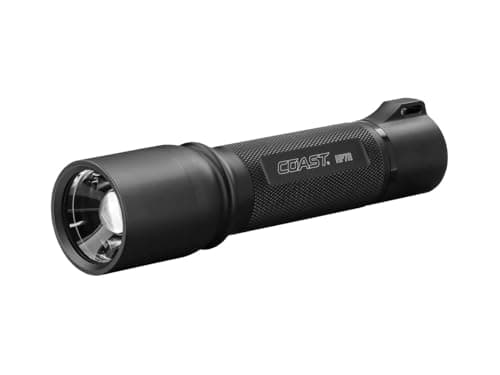
COAST HP7R
Three hundred lumens, a 352-meter beam and up to 33 hours of runtime on a removable ZITHION-X pack. It is the opposite of a turbo-number light: modest output, enormous endurance, and a cell you can replace.
We show a price only when we have pulled a live one. #ad How we earn
Disclosure — we earn a commission on qualifying purchases made through the Amazon links on this page, at no extra cost to you. It does not change which lights we pick or what we say about them. The full version.
How we rank. Published ANSI FL1 output divided by the live retail price, with sealed-battery lights marked down because a light you cannot re-cell is a light with an expiry date. Units we claim to have tested: 0 — we compile manufacturers' published figures and show the arithmetic instead. How we work this out.
The short answer
Buy COAST if you want a light that runs for a long time on a cell you can replace: the HP7R publishes 300 lumens, a 352-meter beam and up to 33 hours on a removable pack. Buy NEBO if you want the most output for the money from a shop you can drive to, and buy the NEBO models that take ordinary cells rather than the sealed flagships. Both brands leave a row blank, and which blank row matters more depends on the job.
These two brands compete for the same shelf. Both are sold through hardware stores, big-box retailers and automotive chains; both are bought by people who want a light today with a receipt and a returns counter. What they disagree about is what a flashlight is for, and the disagreement is visible in their own published numbers.
Published specifications, side by side
| COAST HP7R | NEBO TORCHY 3K | NEBO Newton 2000 | |
|---|---|---|---|
| Headline output | 300 lumens | 3,000 lumens | 2,000 lumens |
| Runtime at headline output | Up to 33 h | Not published | 2.5 h |
| Next mode down | Not published per mode | 800 lm for 2 h | 600 lm for 6 h |
| Beam distance | 352 m | 150 m at turbo | 188 m at high |
| Battery | ZITHION-X pack, removable | 2,200 mAh Li-ion, built in | 9 x AA alkaline |
| Water rating | Not published | IPX6 | IPX7 |
| Charging | Rechargeable pack | USB-C, 2 h | Not applicable |
NEBO's bet: output, published in full except for one row
NEBO publishes more of its specification than most brands sold in the same aisles, and that deserves saying before any criticism. The TORCHY 3K's page lists 800 lumens for two hours on high, 250 for three and a half, and 50 for twenty. The Newton 2000 lists three modes with a runtime for each, including two and a half hours at its full 2,000 lumens. The FRANKLIN TaskBar lists seven modes with a runtime for every one.
The row that is consistently missing is the one on the box. TORCHY 3K: no runtime beside 3,000 lumens. LEO 1800 Flex: 1,000 lumens for one hour published, nothing beside the 1,800 in the name. In both cases the mode you will actually use is the one below the model number, and NEBO tells you what it does — you just have to read past the name.
COAST's bet: hours, with the output row left small
COAST goes the other way on the HP7R and publishes the number most brands avoid: up to 33 hours of runtime. It pairs that with 300 lumens and a 352-meter beam, which is the interesting part — 352 meters of throw out of 300 lumens is a statement about optics, not about power, and it is more reach than the TORCHY 3K publishes at ten times the output.
The cost is that 300 lumens will disappoint anybody shopping by the headline figure, and COAST publishes no water rating on that product page at all. On a light sold partly to tradespeople, a missing IP rating is a real gap, and it is the one place where NEBO's sheet is more complete than COAST's.
| # | Light | Max output | Battery | Lumens / $ | Price |
|---|---|---|---|---|---|
| 1 | COAST HP7R Longest published runtime in this roundup | 300 | Replaceable | Needs a live price | Check price on Amazon We show a price only when we have pulled a live one. #ad How we earn |
| 2 | No listing image NEBO Newton 2000 Best outage light you can feed from a stockpile | 2,000 | AA / AAA | Needs a live price | Check price on Amazon We show a price only when we have pulled a live one. #ad How we earn |
| 3 | 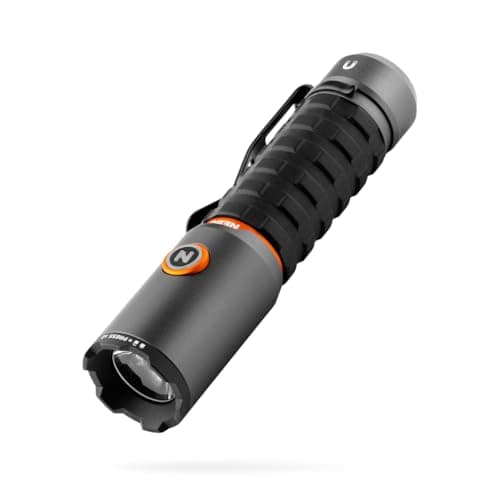 NEBO TORCHY 3K Best big-box light if you want the headline number | 3,000 | Sealed | Needs a live price | Check price on Amazon We show a price only when we have pulled a live one. #ad How we earn |
| 4 | No listing image NEBO LEO 1800 Flex Best dual-power light for a car | 1,800 | Replaceable | Needs a live price | Check price on Amazon We show a price only when we have pulled a live one. #ad How we earn |
| 5 | 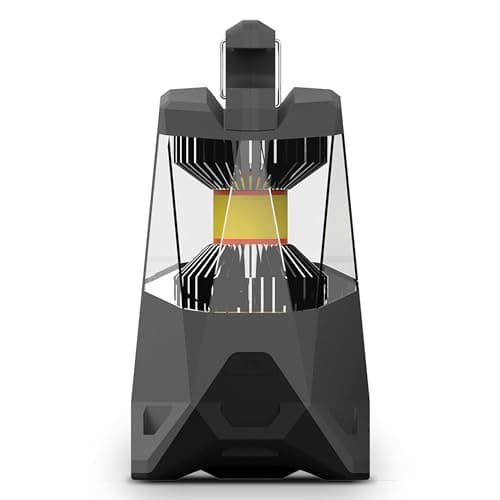 NEBO GALILEO 1000 Best dual-power lantern for an outage | 1,000 | Replaceable | Needs a live price | Check price on Amazon We show a price only when we have pulled a live one. #ad How we earn |
Lumens per dollar is the manufacturer's published maximum output divided by the price the light is selling for. Where we have not pulled a live price, the column says so instead of showing you a number we cannot stand behind. See how we work this out.
The battery line, which decides more than either headline
COAST's HP7R uses a removable ZX800 ZITHION-X pack, sold as a separate part. NEBO's flagship rechargeables — the TORCHY 3K and the SLIM Mini 500 — use built-in cells that an ordinary owner cannot replace. On this site's rubric that is the most heavily weighted difference there is, because a light with a sealed cell has a service life and a light with a replaceable one does not.
NEBO does not lose this argument outright, though, and that is worth being precise about. The LEO 1800 Flex and the GALILEO 1000 use what NEBO calls Flex-Power — the rechargeable pack, or ordinary AAA or D cells when the pack is flat — and the Newton 2000 runs on nine AA alkalines. Those three can be kept alive indefinitely, and for a car or a storm shelf a dual-power light is arguably better than either brand's sealed flagship.
1. Longest published runtime in this roundup
COAST HP7R
Lumens per dollar
Computed the moment we have a live price for it
Three hundred lumens, a 352-meter beam and up to 33 hours of runtime on a removable ZITHION-X pack. It is the opposite of a turbo-number light: modest output, enormous endurance, and a cell you can replace.
- Max output
- 300 lm
- Runtime
- Up to 33 h
- Battery
- Replaceable cell
- Water rating
- None published
What it gets right
- Thirty-three hours of published runtime, which almost nothing else here approaches
- Removable battery pack sold as a separate part
- 352 m of throw from only 300 lumens — good optics beat brute force
What it gets wrong
- Three hundred lumens will disappoint anyone shopping by the big number
- COAST does not publish a water rating on this product page
- Its lumens-per-dollar figure will always look poor next to an 18650 light
Published specification
- Maximum output: 300 lumens — COAST published specification
- Beam distance: 352 m — COAST published specification
- Runtime: Up to 33 hours — COAST published specification
- Battery: ZX800 ZITHION-X, 2,400 mAh 3.7V, removable — COAST published specification
- Focus: Pure Beam focusing optic — COAST published specification
- Water rating: Not published on the product page
Skip this one if
you are ranking purely on lumens per dollar. This light loses that contest and wins the runtime one, and which of those matters is a question about you, not the light.
Buy it if: long shifts, night walks and anyone who would rather have light for a day than light for an hour.
- Output 5.5
- Battery 8.5
- Build 8.0
- Usability 8.0
- Overall 7.5
We show a price only when we have pulled a live one. #ad How we earn
listing
image
2. Best outage light you can feed from a stockpile
NEBO Newton 2000
Lumens per dollar
Computed the moment we have a live price for it
Two thousand lumens for two and a half hours on nine AA alkalines, IPX7, with the runtime published for every mode. It is heavy and it is not clever, and for a week without power that is the correct set of trade-offs.
- Max output
- 2,000 lm
- Runtime
- 2.5 h
- Battery
- AA / AAA
- Water rating
- IPX7
What it gets right
- Runtime published at maximum output, which is the number that actually matters
- AA cells store for years and can be bought anywhere, including during an outage
- IPX7 — it survives being dropped in standing water
What it gets wrong
- Nine AA cells is a real weight and a real running cost
- Zoom optics trade beam quality for a party trick
- Nothing about it is pocketable
Published specification
- High: 2,000 lumens, 2.5 hours, 188 m — NEBO published specification
- Medium: 600 lumens, 6 hours, 120 m — NEBO published specification
- Low: 100 lumens, 20 hours, 50 m — NEBO published specification
- Battery: 9 x AA alkaline — NEBO published specification
- Water rating: IPX7 — NEBO published specification
- Body: Aircraft-grade aluminum, impact resistant — NEBO published specification
Skip this one if
you want one light for everything. Running this daily on disposable alkalines costs more in a year than the light did.
Buy it if: the hall closet, the basement, and the shelf you go to when the power has been off for two days.
- Output 8.5
- Battery 7.5
- Build 7.5
- Usability 7.0
- Overall 7.6
We show a price only when we have pulled a live one. #ad How we earn
3. Best big-box light if you want the headline number
NEBO TORCHY 3K
Lumens per dollar
Computed the moment we have a live price for it
Three thousand lumens on the box, and NEBO publishes a runtime for every mode except that one. High is 800 lumens for two hours, which is the number to plan around. Read the spec table and the light tells you what it really is.
- Max output
- 3,000 lm
- Runtime
- Not published at turbo; 2 h at 800 lm high
- Battery
- Sealed
- Water rating
- IPX6
What it gets right
- NEBO publishes a full mode-by-mode table, which is more than several rivals manage
- USB-C, magnetic base, detachable clip
- Sold in stores you can drive to, and returnable to the same counter
What it gets wrong
- The battery is built in — when it dies the whole light is refuse
- No runtime published for the 3,000-lumen mode the box is named after
- IPX6 is splash and rain, not submersion
Published specification
- Turbo: 3,000 lumens, 150 m — no runtime published — NEBO published specification
- High: 800 lumens, 2 hours, 80 m — NEBO published specification
- Medium: 250 lumens, 3.5 hours, 40 m — NEBO published specification
- Low: 50 lumens, 20 hours, 20 m — NEBO published specification
- Battery: 2,200 mAh 3.7V Li-ion, built in — NEBO published specification
- Recharge time: 2 hours, USB-C — NEBO published specification
- Water rating: IPX6 — NEBO published specification
Skip this one if
you expect the 3K on the label to be a mode you can use. The mode you will actually use is the 800-lumen one, and there are cheaper lights that do 800 lumens for two hours.
Buy it if: somebody who wants a decent light today, from a shop, with a receipt.
- Output 8.5
- Battery 4.0
- Build 7.5
- Usability 8.0
- Overall 7.0
We show a price only when we have pulled a live one. #ad How we earn
listing
image
4. Best dual-power light for a car
NEBO LEO 1800 Flex
Lumens per dollar
Computed the moment we have a live price for it
Runs on its own rechargeable pack or on three AAA cells, which is the single most useful feature a car light can have. The catch is on the spec sheet: turbo is 1,800 lumens with no runtime beside it, and high is 1,000 lumens for exactly one hour.
- Max output
- 1,800 lm
- Runtime
- Not published at turbo; 1 h at 1,000 lm high
- Battery
- Replaceable cell
- Water rating
- IPX7
What it gets right
- Dual power: rechargeable pack normally, AAA cells when the pack is flat
- IPX7 and a magnetic base — a genuinely good roadside combination
- Runtime published for every mode except turbo
What it gets wrong
- One hour at 1,000 lumens is short for a light this size
- No runtime published for the mode on the label
- Zoom optics again, with the doughnut-shaped beam that comes with them
Published specification
- Turbo: 1,800 lumens, 200 m — no runtime published — NEBO published specification
- High: 1,000 lumens, 1 hour, 150 m — NEBO published specification
- Medium: 400 lumens, 3 hours, 90 m — NEBO published specification
- Low: 100 lumens, 10 hours, 40 m — NEBO published specification
- Battery: Flex-Power: included rechargeable pack or 3 x AAA — NEBO published specification
- Water rating: IPX7 — NEBO published specification
- Fittings: Magnetic base, 6x zoom — NEBO published specification
Skip this one if
you want a clean beam. Zoom heads always cost you beam quality, and at this price they cost you more of it.
Buy it if: the glovebox of a car that occasionally has to change a tire in the dark.
- Output 8.0
- Battery 7.5
- Build 7.0
- Usability 7.5
- Overall 7.4
We show a price only when we have pulled a live one. #ad How we earn
5. Best dual-power lantern for an outage
NEBO GALILEO 1000
Lumens per dollar
Computed the moment we have a live price for it
A thousand lumens for ninety minutes, or a hundred lumens for ten and a half hours, and it takes D cells when the pack is flat. In an outage the second number and the D cells are the ones that matter.
- Max output
- 1,000 lm
- Runtime
- 1.5 h
- Battery
- Replaceable cell
- Water rating
- None published
What it gets right
- Runs on D cells when the rechargeable pack is dead, which is the whole point in an outage
- Runtime published for all five modes
- USB output doubles it as a phone power bank
What it gets wrong
- NEBO states water resistance without publishing an IP figure
- Ninety minutes at full output is short for a lantern
- Half a pound before you add D cells
Published specification
- High 360 degrees: 1,000 lumens, 1.5 hours, 21 m — NEBO published specification
- High 120 degrees: 300 lumens, 6 hours, 17 m — NEBO published specification
- Low, fully dimmed: 100 lumens, 10.5 hours, 7 m — NEBO published specification
- Red high: 15 lumens, 12 hours — NEBO published specification
- Red low: 2 lumens, 30 hours — NEBO published specification
- Battery: Flex-Power: included rechargeable pack or D cells — NEBO published specification
- Weight: 0.5 lb — NEBO published specification
- Water rating: Water and impact resistant; no IP figure published — NEBO published specification
Skip this one if
you want a lantern for camping in the rain. Without a published IP rating, plan on keeping it under cover.
Buy it if: a kitchen table during a storm, and the shelf it lives on the rest of the year.
- Output 7.5
- Battery 7.5
- Build 7.0
- Usability 8.0
- Overall 7.5
We show a price only when we have pulled a live one. #ad How we earn
Which brand for which job
- Long shifts, night walks, anything where you want light for a day rather than an hour: COAST, for the published 33 hours and the replaceable pack.
- A storm shelf or a basement: NEBO, specifically the Newton 2000 or a Flex-Power model, because a light you can feed from a pack of AA cells beats a light with a sealed battery that has been flat since last winter.
- A car: NEBO LEO 1800 Flex. Dual power and IPX7 is the right combination for a glovebox, and the one-hour high-mode figure is honest about what it is.
- The biggest number for the money, bought in a store today: NEBO, with your eyes open about the sealed cell and about which mode the runtime belongs to.
- Seeing a long way: COAST, on the published beam distance. 352 meters from 300 lumens is the most efficient throw figure either brand publishes.
Where you buy them is part of the comparison
Both brands are chosen at least partly for a reason that has nothing to do with the specification: you can hold the light before buying it and return it to the same counter afterward. That is worth real money and the enthusiast brands do not offer it. A Sofirn or a Wurkkos arrives in a box from a warehouse; if it is faulty you are managing a return by email.
The two brands are stocked differently, though. NEBO's distribution is broad — hardware, big-box and automotive — which is why our retailer pages keep meeting it in the aisle. COAST is more common in tool and outdoor channels than in supermarkets. If buying locally today matters to you, that difference is likely to decide the question before any specification does, and it is worth checking what is actually on the shelf near you rather than assuming.
What neither brand sells
Two things, and it is fair to name them. Neither publishes a high-CRI option in the models we cover, so if you need color to read correctly — wiring, paint, an engine bay — you are better served by a budget enthusiast light with a 90-CRI emitter than by either of these. And neither publishes a per-mode runtime for its brightest setting: NEBO leaves the turbo row blank, and COAST publishes a single up-to figure without breaking it down by mode.
The other thing to watch on the NEBO side is the optics. Several models, including the LEO 1800 Flex and the Newton 2000, use zoom heads. Zoom is a good demonstration in a shop and a compromise in use: it costs beam quality, and at this price it costs more of it, typically producing a square or doughnut-shaped hotspot when focused. A fixed reflector of the same money will almost always give a cleaner beam.
How we ranked these
Published output over live price, adjusted for battery architecture, published ratings and usability, with battery architecture weighted hardest. On this page one further adjustment is stated openly: a runtime published beside the headline output counts for more than a larger headline output with no runtime beside it. That is why a 300-lumen light finishes above a 3,000-lumen one here, and it is a judgment rather than an arithmetic result.
Units we claim to have tested: 0
Every publisher in this category says they tested twenty flashlights. We have not tested any, and we say so. What we do instead: compile the manufacturer's own published ANSI FL1 figures, pull the price the light is selling for right now, and divide one by the other. Every number on this page is one you can check yourself in about two minutes.
What we cannot tell you
We have not used lights from either brand. We cannot tell you whether COAST's 33 hours is at a usable output or at a level you would call a nightlight, because COAST does not publish a per-mode breakdown; we cannot tell you how either brand's switches feel after a year, how the anodizing survives a toolbox, or how the warranties compare in practice. What we can do is read two specification sheets and tell you which rows each brand chose to leave empty.
Common questions
Is NEBO or COAST better?
They optimize for different things. NEBO publishes far higher headline output and full mode tables, but seals the battery into its flagship rechargeables and publishes no runtime beside the number on the box. COAST publishes up to 33 hours of runtime and a removable battery pack on the HP7R, but only 300 lumens and no water rating. For endurance and repairability, COAST. For output per dollar off a shelf, NEBO.
Can you replace the battery in a NEBO flashlight?
It depends on the model and NEBO states which is which. The TORCHY 3K and SLIM Mini 500 use built-in cells an ordinary owner cannot replace. The LEO 1800 Flex and GALILEO 1000 use NEBO's Flex-Power system and accept AAA or D cells as a fallback, and the Newton 2000 runs on nine AA alkalines. Check the battery line before you buy.
Which is better for a car, NEBO or COAST?
NEBO, and specifically a Flex-Power model such as the LEO 1800 Flex. A glovebox light meets heat, cold and two years of neglect, and the failure mode that matters is a flat cell rather than a dim beam. A light that runs on its rechargeable pack normally and accepts three AAA cells when the pack is dead removes that failure, and NEBO publishes IPX7 and a magnetic base on that model as well. The COAST is the better light for a long shift; it is not the better light for a drawer.
Why does the COAST HP7R only have 300 lumens?
Because it is built for endurance and reach rather than peak output. COAST publishes up to 33 hours of runtime and a 352-meter beam from those 300 lumens, which is more throw than several lights here publish at many times the output. Good optics move light further than raw power does. If you shop on the headline figure this light will look wrong; if you shop on hours it is one of the strongest specifications on this site.
How many lumens do I actually need?
For walking a dog, finding a fuse box or reading a map, 100 to 300 lumens is plenty and will run far longer. For a garage, a yard or a campsite, 500 to 1,000 lumens is comfortable. Above about 2,000 lumens you are buying a burst rather than a mode, because almost no handheld light can shed that much heat continuously.
Sources
- NEBO published product specifications — mode-by-mode lumen, runtime and beam figures, read 2026-09-01; LUXTREME SL75 and SL50 read 2026-09-22; OMNI 2K and SLYDE KING 4K read 2026-10-18
- COAST published product specifications — read 2026-09-01
- Lumen & Ledger method — how every figure on this page is derived
Who writes this
Scooter M. — I am an enthusiast who is genuinely into this. I read the manuals, compile the published specs, and do the math. No lab coat, no test bench, no drawer of free samples. What I can tell you is exactly what a light claims on paper, exactly what it costs right now, and what those two numbers mean when you divide one by the other.
Read next
NEBO rechargeable flashlight review
Three NEBO lights, their published spec tables, and what the missing rows tell you.
COAST HP7R review
Three hundred lumens, thirty-three hours, and why that trade is often the right one.
The best budget flashlight brands
Who publishes real numbers, who does not, and what each brand is good at.
NEBO vs Streamlight
One prints the bigger number. The other prints how long it lasts.
The 10,000-lumen problem
Why the biggest number on the box is the one you can use for the shortest time.
The Ledger
Every light we cover in one ranked table, sorted by lumens per dollar.