Where to Buy
Rechargeable Flashlights at Costco: What's Actually Worth Buying
Multipacks change the arithmetic, and sometimes they change it in your favor. Here is how to work out which case you are in.
By Scooter M. · Published September 2, 2026
Short answer
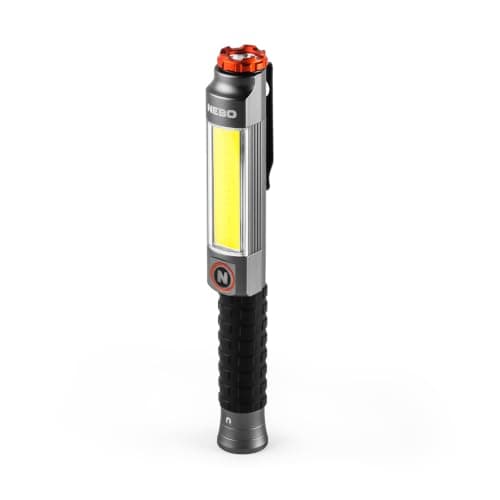
NEBO BIG LARRY 3
A 600-lumen COB panel, a 220-lumen spot and a red task mode, on three AA cells, with a magnet strong enough to hold it under a hood. It is the least glamorous light here and it is the one that gets used most.
Price as of October 18, 2026 — 50 lumens per dollar. #ad How we earn
Disclosure — we earn a commission on qualifying purchases made through the Amazon links on this page, at no extra cost to you. It does not change which lights we pick or what we say about them. The full version.
How we rank. Published ANSI FL1 output divided by the live retail price, with sealed-battery lights marked down because a light you cannot re-cell is a light with an expiry date. Units we claim to have tested: 0 — we compile manufacturers' published figures and show the arithmetic instead. How we work this out.
The multipack arithmetic
A warehouse-club multipack is good value if and only if you genuinely want that many lights. Divide the pack price by the number of lights and compare the per-light figure against a single light elsewhere. Then ask the harder question: would you have bought four? If the honest answer is no, the multipack is not a discount, it is three lights you did not need.
For flashlights specifically, the answer is more often yes than for most categories — a house genuinely benefits from four lights in four places, and our emergency guidance says exactly that. The failure mode is buying four identical lights that all take a battery type you own no spares for.
| # | Light | Max output | Battery | Lumens / $ | Price |
|---|---|---|---|---|---|
| 1 | NEBO BIG LARRY 3 Best cheap magnetic work light | 600 | AA / AAA | 50 | $11.92 on Amazon Price as of October 18, 2026 — 50 lumens per dollar. #ad How we earn |
| 2 | 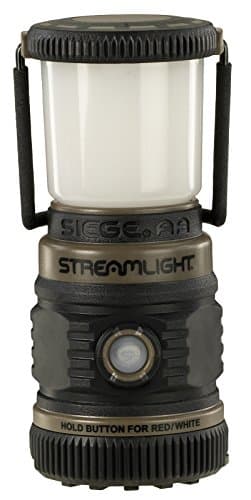 Streamlight Siege AA Best outage lantern that floats | 200 | AA / AAA | 6 | $32.49 on Amazon Price as of October 18, 2026 — 6 lumens per dollar. #ad How we earn |
| 3 | No listing image NEBO Newton 2000 Best outage light you can feed from a stockpile | 2,000 | AA / AAA | Needs a live price | Check price on Amazon We show a price only when we have pulled a live one. #ad How we earn |
| 4 | No listing image Energizer Vision HD Rechargeable Metal The sealed-battery cautionary tale | 1,200 | Sealed | Needs a live price | Check price on Amazon We show a price only when we have pulled a live one. #ad How we earn |
Prices pulled October 18, 2026. Lumens per dollar is the manufacturer's published maximum output divided by that price, recomputed every time the price moves.
Two questions before you buy four of anything
1. Will they all take the same battery you already stock?
Four lights that take AA cells and one box of AAs is an excellent household arrangement. Four lights that take four sealed lithium packs is four things to charge and four things that will be flat in two years. For a multipack destined to be distributed around a house, ordinary cells are worth more than output.
2. Is there a published specification for the pack?
Multipack packaging is often thinner on detail than single-unit packaging, because the value proposition is the count rather than the specification. If there is no runtime, no cell type and no water rating on the box, you are buying a number of lights rather than a light — which may be fine for spares and is not fine for anything you rely on.
Where warehouse clubs are genuinely strong
- Batteries. If your lights run on AA or D cells, buying them by the crate is the cheapest running cost in the category by a wide margin.
- Lanterns and area lights for a household, which is a category where owning several is genuinely useful.
- Return policies, which tend to be generous and which matter when specifications are thin.
- Seasonal outage stock before winter, which is when most people think about this at all.
1. Best cheap magnetic work light
NEBO BIG LARRY 3
Lumens per dollar
50
A 600-lumen COB panel, a 220-lumen spot and a red task mode, on three AA cells, with a magnet strong enough to hold it under a hood. It is the least glamorous light here and it is the one that gets used most.
- Max output
- 600 lm
- Runtime
- Not published per mode
- Battery
- AA / AAA
- Water rating
- None published
What it gets right
- A flood panel is the right shape of light for working on something close up
- AA cells, so it survives a year in a toolbox and still lights
- The magnet is strong enough to matter
What it gets wrong
- NEBO publishes no runtime and no water rating for this model
- COB panels have poor color rendering as a class
- Not rechargeable, so the running cost is AA cells
Published specification
- COB work light: 600 lumens high / 150 lumens low — NEBO published specification
- Spot flashlight: 220 lumens high / 60 lumens low — NEBO published specification
- Red task light: 40 lumens high / 12 lumens low — NEBO published specification
- Battery: 3 x AA (included) — NEBO published specification
- Weight: 0.42 lb — NEBO published specification
- Fittings: Magnetic base, steel belt clip, wall-mount hole — NEBO published specification
- Per-mode runtime: Not published on the product page
- Water rating: Not published on the product page
Skip this one if
you need to see color accurately. For paint matching or diagnosing a wiring loom, a high-CRI light is worth the extra money.
Buy it if: the toolbox, the trunk and the shelf above the workbench.
- Output 6.5
- Battery 7.0
- Build 7.5
- Usability 8.5
- Overall 7.3
Price as of October 18, 2026 — 50 lumens per dollar. #ad How we earn
2. Best outage lantern that floats
Streamlight Siege AA
Lumens per dollar
6
Two hundred lumens for seven hours, fifty for thirty-seven, and a red night-vision mode Streamlight rates at 192 hours. It runs on AA cells, it is IPX7, and it floats. For a storm shelf that is the correct specification.
- Max output
- 200 lm
- Runtime
- 7 h
- Battery
- AA / AAA
- Water rating
- IPX7
What it gets right
- AA cells store for a decade and are available anywhere, including mid-outage
- IPX7 and it floats, which is the correct answer for a flooded basement
- Runtime published for all five modes, including the 8-day red mode
What it gets wrong
- Two hundred lumens is dim next to a rechargeable lantern
- No rechargeable option in this version
- Removable cover changes the beam pattern and is easy to lose
Published specification
- White high: 200 lumens, 7 hours — Streamlight published specification
- White medium: 100 lumens, 15.5 hours — Streamlight published specification
- White low: 50 lumens, 37 hours — Streamlight published specification
- Red high: 0.7 lumens, 192 hours (8 days) — Streamlight published specification
- SOS flash: 0.7 lumens, 288 hours (12 days) — Streamlight published specification
- Battery: AA alkaline — Streamlight published specification
- Water rating: IPX7, 1 m — and it floats — Streamlight published specification
- Impact: 2 m tested — Streamlight published specification
Skip this one if
you want a bright camp lantern. This is an endurance light, not an area light.
Buy it if: the storm shelf, the boat and the basement that occasionally has water in it.
- Output 4.5
- Battery 9.5
- Build 9.0
- Usability 8.5
- Overall 7.9
Price as of October 18, 2026 — 6 lumens per dollar. #ad How we earn
listing
image
3. Best outage light you can feed from a stockpile
NEBO Newton 2000
Lumens per dollar
Computed the moment we have a live price for it
Two thousand lumens for two and a half hours on nine AA alkalines, IPX7, with the runtime published for every mode. It is heavy and it is not clever, and for a week without power that is the correct set of trade-offs.
- Max output
- 2,000 lm
- Runtime
- 2.5 h
- Battery
- AA / AAA
- Water rating
- IPX7
What it gets right
- Runtime published at maximum output, which is the number that actually matters
- AA cells store for years and can be bought anywhere, including during an outage
- IPX7 — it survives being dropped in standing water
What it gets wrong
- Nine AA cells is a real weight and a real running cost
- Zoom optics trade beam quality for a party trick
- Nothing about it is pocketable
Published specification
- High: 2,000 lumens, 2.5 hours, 188 m — NEBO published specification
- Medium: 600 lumens, 6 hours, 120 m — NEBO published specification
- Low: 100 lumens, 20 hours, 50 m — NEBO published specification
- Battery: 9 x AA alkaline — NEBO published specification
- Water rating: IPX7 — NEBO published specification
- Body: Aircraft-grade aluminum, impact resistant — NEBO published specification
Skip this one if
you want one light for everything. Running this daily on disposable alkalines costs more in a year than the light did.
Buy it if: the hall closet, the basement, and the shelf you go to when the power has been off for two days.
- Output 8.5
- Battery 7.5
- Build 7.5
- Usability 7.0
- Overall 7.6
We show a price only when we have pulled a live one. #ad How we earn
listing
image
4. The sealed-battery cautionary tale
Energizer Vision HD Rechargeable Metal
Lumens per dollar
Computed the moment we have a live price for it
Twelve hundred lumens, four hours of runtime, and a battery Energizer itself describes as non-removable — in a light made by a battery company. It works well and it has an expiry date, and the spec sheet says so out loud.
- Max output
- 1,200 lm
- Runtime
- Up to 4 h
- Battery
- Sealed
- Water rating
- IPX4
What it gets right
- Four hours at 1,200 lumens is a genuinely useful published pairing
- Doubles as a phone charger, which matters in an outage
- Available in essentially every supermarket in the country
What it gets wrong
- The cell is not removable — Energizer states this plainly
- IPX4 only, so rain but not submersion
- A lithium cell in a drawer self-discharges, and you cannot swap in a fresh one
Published specification
- Maximum output: 1,200 lumens, high — Energizer published specification
- Runtime: Up to 4 hours on a full charge — Energizer published specification
- Battery: Non-removable lithium-ion — Energizer published specification
- Water rating: IPX4, water resistant against splashing — Energizer published specification
- Impact: Drops up to 1 m — Energizer published specification
- Modes: Seven, including spot and wide — Energizer published specification
- Extra: Second USB port for use as a power bank — Energizer published specification
Skip this one if
this is going into an emergency kit. A sealed lithium cell left for two years is the classic outage failure, and there is nothing you can do about it in this light.
Buy it if: regular use where it gets charged often, and someone who accepts the light is a consumable.
- Output 8.0
- Battery 3.5
- Build 7.5
- Usability 8.0
- Overall 6.8
We show a price only when we have pulled a live one. #ad How we earn
How we ranked these
Published output over live price, battery architecture, published ratings and usability, with a preference on this page for lights that run on ordinary cells — because a multipack distributed around a house should be feedable from one box of batteries.
Units we claim to have tested: 0
Every publisher in this category says they tested twenty flashlights. We have not tested any, and we say so. What we do instead: compile the manufacturer's own published ANSI FL1 figures, pull the price the light is selling for right now, and divide one by the other. Every number on this page is one you can check yourself in about two minutes.
We do not publish a stock list for this retailer. Assortments change week to week and store to store, and a list written today would be wrong by the time you read it. What does not change is how to read the shelf, and that is what this page is for.
Common questions
Are flashlight multipacks good value?
Only if you actually want that many lights. Divide the pack price by the count and compare against a single light elsewhere, then ask whether you would have bought four. For flashlights the answer is more often yes than in most categories — a house benefits from lights in four rooms — but only if they all take a battery you already stock.
How many flashlights does a household need?
Four, covering four roles: a lantern where people sit, a handheld near the bed, a headlamp for anyone working with their hands, and a spare near the electrical panel. Distribution beats quality here, because the most common failure is owning a good light that is in the wrong room.
Can you replace the battery in a rechargeable flashlight?
It depends entirely on the model, and it is the single most consequential thing to check before buying. Lights built around a standard cell — an 18650, a 21700, a 14500, a 16340 — take a screw-off tailcap and a five-dollar replacement. Lights with a built-in cell, which manufacturers describe as 'integrated' or 'non-removable', cannot be re-celled by an ordinary owner: when the battery reaches the end of its cycle life the whole light is refuse. Energizer, for example, states plainly that the Vision HD Rechargeable uses non-removable lithium-ion batteries.
Sources
- NEBO published product specifications — mode-by-mode lumen, runtime and beam figures, read 2026-09-01; LUXTREME SL75 and SL50 read 2026-09-22; OMNI 2K and SLYDE KING 4K read 2026-10-18
- Streamlight published product specifications — per-mode lumens, runtime, beam distance, impact and IP ratings, read 2026-09-01; Waypoint 400 and Waypoint C-cell read 2026-09-22; FlipMate read 2026-10-18
- Energizer published product specifications — read 2026-09-01
- Lumen & Ledger method — how every figure on this page is derived
Who writes this
Scooter M. — I am an enthusiast who is genuinely into this. I read the manuals, compile the published specs, and do the math. No lab coat, no test bench, no drawer of free samples. What I can tell you is exactly what a light claims on paper, exactly what it costs right now, and what those two numbers mean when you divide one by the other.
Read next
Best emergency lights for home
How many lights a house actually needs, and where each one should live.
Rechargeable flashlights at Walmart
What the aisle stocks, what those brands publish, and what the same money buys online.
Best rechargeable lanterns
Lanterns are runtime instruments. Ranked on hours, not on peak output.
Best flashlights for power outages
The outage specification is shelf life, not brightness. That changes the answer.
Rechargeable vs battery flashlights
Five dimensions, one table, and a verdict that depends on where the light lives.
The Ledger
Every light we cover in one ranked table, sorted by lumens per dollar.