Work Lights & Lanterns
Best Rechargeable Lanterns
A lantern is a runtime instrument. Peak output tells you almost nothing about whether it will get you through a night.
By Scooter M. · Published September 2, 2026
Short answer
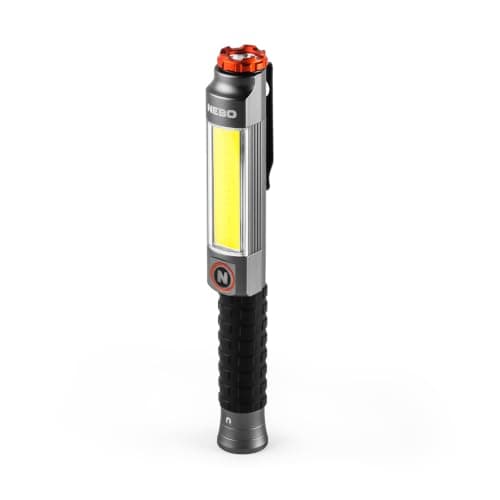
NEBO BIG LARRY 3
A 600-lumen COB panel, a 220-lumen spot and a red task mode, on three AA cells, with a magnet strong enough to hold it under a hood. It is the least glamorous light here and it is the one that gets used most.
Price as of October 18, 2026 — 50 lumens per dollar. #ad How we earn
Disclosure — we earn a commission on qualifying purchases made through the Amazon links on this page, at no extra cost to you. It does not change which lights we pick or what we say about them. The full version.
How we rank. Published ANSI FL1 output divided by the live retail price, with sealed-battery lights marked down because a light you cannot re-cell is a light with an expiry date. Units we claim to have tested: 0 — we compile manufacturers' published figures and show the arithmetic instead. How we work this out.
Rank a lantern by its hours
A lantern's job is to make a room usable for a whole evening, so the specification is hours at a comfortable brightness, not peak output. NEBO publishes 1,000 lumens for 1.5 hours on the GALILEO 1000, and 100 lumens for 10.5 hours. The second figure is the lantern. The first is a demonstration.
One hundred lumens spread across a room is a comfortable light to sit and eat under. A thousand lumens in the same room is unpleasant and will empty the battery before you have finished dinner. Almost nobody uses a lantern at maximum for more than a few minutes, which makes the low and medium runtimes the only figures worth comparing.
| # | Light | Max output | Battery | Lumens / $ | Price |
|---|---|---|---|---|---|
| 1 | NEBO BIG LARRY 3 Best cheap magnetic work light | 600 | AA / AAA | 50 | $11.92 on Amazon Price as of October 18, 2026 — 50 lumens per dollar. #ad How we earn |
| 2 | 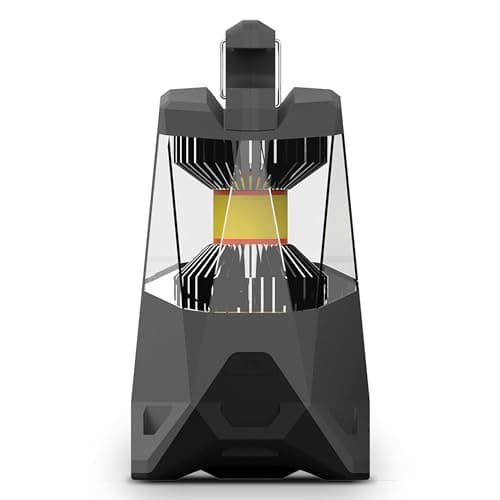 NEBO GALILEO 1000 Best dual-power lantern for an outage | 1,000 | Replaceable | 19 | $51.99 on Amazon Price as of October 18, 2026 — 19 lumens per dollar. #ad How we earn |
| 3 | 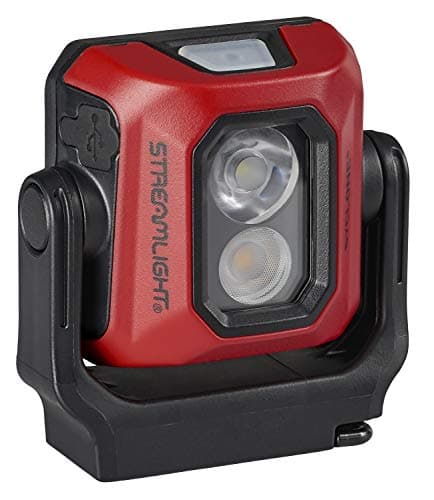 Streamlight Syclone Best work light with a 90 CRI flood | 400 | Sealed | 7 | $60.99 on Amazon Price as of October 18, 2026 — 7 lumens per dollar. #ad How we earn |
| 4 | 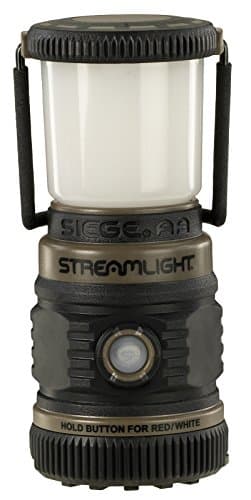 Streamlight Siege AA Best outage lantern that floats | 200 | AA / AAA | 6 | $32.49 on Amazon Price as of October 18, 2026 — 6 lumens per dollar. #ad How we earn |
Prices pulled October 18, 2026. Lumens per dollar is the manufacturer's published maximum output divided by that price, recomputed every time the price moves.
Published runtimes, compared honestly
| Lantern | Comfortable setting | Published runtime there | Power source |
|---|---|---|---|
| Streamlight Siege AA | 50 lumens (low) | 37 hours | AA alkaline |
| Streamlight Siege AA | 100 lumens (medium) | 15.5 hours | AA alkaline |
| NEBO GALILEO 1000 | 100 lumens (low, dimmed) | 10.5 hours | Rechargeable pack or D cells |
| NEBO GALILEO 1000 | 300 lumens (120 degrees) | 6 hours | Rechargeable pack or D cells |
| Streamlight Siege AA | 0.7 lumens (red) | 192 hours | AA alkaline |
That table shows why the lumens-per-dollar ranking on this page should be read with care. The Siege AA publishes only 200 lumens maximum and will finish low in that column — and it publishes 37 hours at 50 lumens and floats. For a storm shelf that is the correct light, and the ratio cannot see it.
Dual power is the lantern feature that matters most
A lantern is usually bought for the times when the power is out, which is exactly when you cannot recharge it. NEBO's Flex-Power arrangement on the GALILEO 1000 — the rechargeable pack or ordinary D cells — is therefore worth more than several hundred lumens. Streamlight's answer is simpler: run the whole thing on AAs, which store for a decade.
A lantern with a sealed lithium cell and no fallback is the worst possible combination for outage use, because it will be at whatever charge it held when you last put it away, minus two years of self-discharge.
1. Best cheap magnetic work light
NEBO BIG LARRY 3
Lumens per dollar
50
A 600-lumen COB panel, a 220-lumen spot and a red task mode, on three AA cells, with a magnet strong enough to hold it under a hood. It is the least glamorous light here and it is the one that gets used most.
- Max output
- 600 lm
- Runtime
- Not published per mode
- Battery
- AA / AAA
- Water rating
- None published
What it gets right
- A flood panel is the right shape of light for working on something close up
- AA cells, so it survives a year in a toolbox and still lights
- The magnet is strong enough to matter
What it gets wrong
- NEBO publishes no runtime and no water rating for this model
- COB panels have poor color rendering as a class
- Not rechargeable, so the running cost is AA cells
Published specification
- COB work light: 600 lumens high / 150 lumens low — NEBO published specification
- Spot flashlight: 220 lumens high / 60 lumens low — NEBO published specification
- Red task light: 40 lumens high / 12 lumens low — NEBO published specification
- Battery: 3 x AA (included) — NEBO published specification
- Weight: 0.42 lb — NEBO published specification
- Fittings: Magnetic base, steel belt clip, wall-mount hole — NEBO published specification
- Per-mode runtime: Not published on the product page
- Water rating: Not published on the product page
Skip this one if
you need to see color accurately. For paint matching or diagnosing a wiring loom, a high-CRI light is worth the extra money.
Buy it if: the toolbox, the trunk and the shelf above the workbench.
- Output 6.5
- Battery 7.0
- Build 7.5
- Usability 8.5
- Overall 7.3
Price as of October 18, 2026 — 50 lumens per dollar. #ad How we earn
2. Best dual-power lantern for an outage
NEBO GALILEO 1000
Lumens per dollar
19
A thousand lumens for ninety minutes, or a hundred lumens for ten and a half hours, and it takes D cells when the pack is flat. In an outage the second number and the D cells are the ones that matter.
- Max output
- 1,000 lm
- Runtime
- 1.5 h
- Battery
- Replaceable cell
- Water rating
- None published
What it gets right
- Runs on D cells when the rechargeable pack is dead, which is the whole point in an outage
- Runtime published for all five modes
- USB output doubles it as a phone power bank
What it gets wrong
- NEBO states water resistance without publishing an IP figure
- Ninety minutes at full output is short for a lantern
- Half a pound before you add D cells
Published specification
- High 360 degrees: 1,000 lumens, 1.5 hours, 21 m — NEBO published specification
- High 120 degrees: 300 lumens, 6 hours, 17 m — NEBO published specification
- Low, fully dimmed: 100 lumens, 10.5 hours, 7 m — NEBO published specification
- Red high: 15 lumens, 12 hours — NEBO published specification
- Red low: 2 lumens, 30 hours — NEBO published specification
- Battery: Flex-Power: included rechargeable pack or D cells — NEBO published specification
- Weight: 0.5 lb — NEBO published specification
- Water rating: Water and impact resistant; no IP figure published — NEBO published specification
Skip this one if
you want a lantern for camping in the rain. Without a published IP rating, plan on keeping it under cover.
Buy it if: a kitchen table during a storm, and the shelf it lives on the rest of the year.
- Output 7.5
- Battery 7.5
- Build 7.0
- Usability 8.0
- Overall 7.5
Price as of October 18, 2026 — 19 lumens per dollar. #ad How we earn
3. Best work light with a 90 CRI flood
Streamlight Syclone
Lumens per dollar
7
Four hundred lumens of spot for two hours or 300 lumens of 90-CRI flood for the same, in a 5.3-ounce body that clips, magnets and stands. Every mode's runtime is published, including the flood modes most brands ignore.
- Max output
- 400 lm
- Runtime
- 2 h
- Battery
- Sealed
- Water rating
- IPX4
What it gets right
- A 90 CRI flood, which matters more than lumens when you are diagnosing anything
- Spot and flood in one body with runtimes published for both
- Magnet, clip and a stand that lets it point where you need it
What it gets wrong
- Sealed lithium-polymer cell
- IPX4 — it handles a splash and not a puddle
- Four hundred lumens is modest if you want to light a whole garage
Published specification
- Spot high: 400 lumens, 141 m, 2 hours — Streamlight published specification
- Spot medium: 200 lumens, 95 m, 4.5 hours — Streamlight published specification
- Spot low: 100 lumens, 72 m, 9.5 hours — Streamlight published specification
- Flood high: 300 lumens, 48 m, 2 hours, 90 CRI — Streamlight published specification
- Flood low: 75 lumens, 24 m, 8 hours — Streamlight published specification
- Battery: Lithium-polymer, USB rechargeable, 4.5 h charge — Streamlight published specification
- Water rating: IPX4 — Streamlight published specification
- Impact: 2 m tested — Streamlight published specification
- Weight: 5.3 oz (150 g) — Streamlight published specification
Skip this one if
you need to flood a large space. This is an arm's-reach light; a lantern or a panel does big areas better.
Buy it if: mechanics and electricians who need to see true color at close range.
- Output 6.5
- Battery 5.0
- Build 8.5
- Usability 9.0
- Overall 7.6
Price as of October 18, 2026 — 7 lumens per dollar. #ad How we earn
4. Best outage lantern that floats
Streamlight Siege AA
Lumens per dollar
6
Two hundred lumens for seven hours, fifty for thirty-seven, and a red night-vision mode Streamlight rates at 192 hours. It runs on AA cells, it is IPX7, and it floats. For a storm shelf that is the correct specification.
- Max output
- 200 lm
- Runtime
- 7 h
- Battery
- AA / AAA
- Water rating
- IPX7
What it gets right
- AA cells store for a decade and are available anywhere, including mid-outage
- IPX7 and it floats, which is the correct answer for a flooded basement
- Runtime published for all five modes, including the 8-day red mode
What it gets wrong
- Two hundred lumens is dim next to a rechargeable lantern
- No rechargeable option in this version
- Removable cover changes the beam pattern and is easy to lose
Published specification
- White high: 200 lumens, 7 hours — Streamlight published specification
- White medium: 100 lumens, 15.5 hours — Streamlight published specification
- White low: 50 lumens, 37 hours — Streamlight published specification
- Red high: 0.7 lumens, 192 hours (8 days) — Streamlight published specification
- SOS flash: 0.7 lumens, 288 hours (12 days) — Streamlight published specification
- Battery: AA alkaline — Streamlight published specification
- Water rating: IPX7, 1 m — and it floats — Streamlight published specification
- Impact: 2 m tested — Streamlight published specification
Skip this one if
you want a bright camp lantern. This is an endurance light, not an area light.
Buy it if: the storm shelf, the boat and the basement that occasionally has water in it.
- Output 4.5
- Battery 9.5
- Build 9.0
- Usability 8.5
- Overall 7.9
Price as of October 18, 2026 — 6 lumens per dollar. #ad How we earn
How we ranked these
Published output over live price, battery architecture, published ratings and usability — with runtime at a comfortable setting treated as the headline figure. A lantern with a long published low-mode runtime and a battery fallback outranks a brighter one without either.
Units we claim to have tested: 0
Every publisher in this category says they tested twenty flashlights. We have not tested any, and we say so. What we do instead: compile the manufacturer's own published ANSI FL1 figures, pull the price the light is selling for right now, and divide one by the other. Every number on this page is one you can check yourself in about two minutes.
Warm light, and why it matters indoors
A cool white lantern makes a room look like a car park. Warmer light is more comfortable to sit under for hours and interferes less with sleep at the end of the evening. Manufacturers rarely publish a color temperature for lanterns, which is a genuine gap in the specifications — where a figure exists it is worth weighting, and where it does not, a product photograph is the only clue available.
Common questions
How many lumens do you need in a lantern?
Between 50 and 200 lumens makes a room comfortably usable, and that is where a lantern will spend nearly all of its hours. Manufacturers publish maximum figures ten times higher, but those modes are short: NEBO quotes 1.5 hours at 1,000 lumens on the GALILEO 1000 against 10.5 hours at 100 lumens. Buy on the second figure.
Are rechargeable lanterns good for power outages?
Only if they also take ordinary batteries, because an outage is exactly when you cannot recharge. NEBO's Flex-Power arrangement on the GALILEO 1000 accepts D cells as a fallback and Streamlight's Siege AA runs on AA cells entirely. A sealed-cell lantern with no fallback is the worst option for a storm shelf, whatever its output.
How long does a rechargeable flashlight battery last?
Lithium-ion cells are generally rated in charge cycles rather than years, and a cell that has lost enough capacity to be annoying is usually still working — just for half as long. Some manufacturers publish the figure: Petzl rates the CORE pack at 2 years or 300 charging cycles, and Maglite quotes up to 2,000 cycles for the LiFePO4 pack in the ML150LRS. Most brands publish nothing at all, which is why a replaceable cell matters more than any published cycle rating.
Sources
- Streamlight published product specifications — per-mode lumens, runtime, beam distance, impact and IP ratings, read 2026-09-01; Waypoint 400 and Waypoint C-cell read 2026-09-22; FlipMate read 2026-10-18
- NEBO published product specifications — mode-by-mode lumen, runtime and beam figures, read 2026-09-01; LUXTREME SL75 and SL50 read 2026-09-22; OMNI 2K and SLYDE KING 4K read 2026-10-18
- Lumen & Ledger method — how every figure on this page is derived
Who writes this
Scooter M. — I am an enthusiast who is genuinely into this. I read the manuals, compile the published specs, and do the math. No lab coat, no test bench, no drawer of free samples. What I can tell you is exactly what a light claims on paper, exactly what it costs right now, and what those two numbers mean when you divide one by the other.
Read next
Best rechargeable lanterns for camping
Weight, warm light and the low-mode figure that gets you through a night.
Best flashlights for power outages
The outage specification is shelf life, not brightness. That changes the answer.
Best emergency lights for home
How many lights a house actually needs, and where each one should live.
Best rechargeable lanterns for power outages
Shelf life outranks brightness here, which puts the alkaline lanterns on top.
Rechargeable vs battery flashlights
Five dimensions, one table, and a verdict that depends on where the light lives.
The Ledger
Every light we cover in one ranked table, sorted by lumens per dollar.