Emergency & Outage
Best Flashlights for Power Outages
An outage light spends 99.9 percent of its life doing nothing. That single fact makes the usual ranking wrong, and it is why the answer here is often not a rechargeable.
By Scooter M. · Published September 2, 2026

Short answer
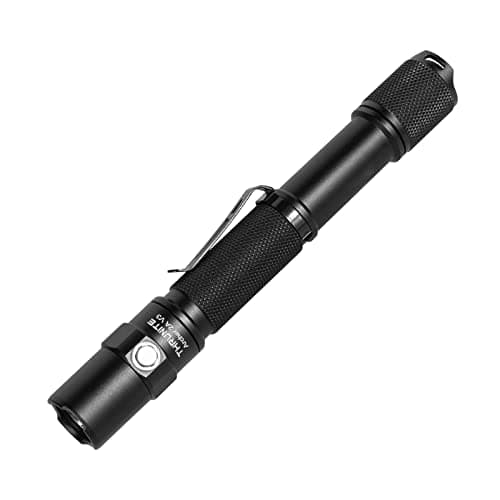
ThruNite Archer 2A V3
Five hundred lumens on two AA cells. It will never win a lumens-per-dollar contest against an 18650 light, and it does not need to: it is the light that still works when you are three days into an outage and the only thing left in the store is alkalines.
Price as of October 18, 2026 — 22 lumens per dollar. #ad How we earn
Disclosure — we earn a commission on qualifying purchases made through the Amazon links on this page, at no extra cost to you. It does not change which lights we pick or what we say about them. The full version.
How we rank. Published ANSI FL1 output divided by the live retail price, with sealed-battery lights marked down because a light you cannot re-cell is a light with an expiry date. Units we claim to have tested: 0 — we compile manufacturers' published figures and show the arithmetic instead. How we work this out.
The outage specification is shelf life
An outage light must work on the first press after two years of doing nothing. That makes shelf life the specification and brightness a secondary concern, which is why lights running on AA or D alkaline cells often beat rechargeables here: alkalines hold usable charge for a decade on a shelf, and a lithium cell left in a drawer self-discharges and ages whether you use it or not.
This is the one page on the site where our headline metric leads you astray, and we would rather say so than quietly rank around it. Lumens per dollar measures what you get on the day you buy. An outage light is judged on what it does on a day several years later that you cannot predict, and no ratio computed today captures that.
| # | Light | Max output | Battery | Lumens / $ | Price |
|---|---|---|---|---|---|
| 1 | ThruNite Archer 2A V3 Best light that runs on batteries from any gas station | 500 | AA / AAA | 22 | $22.95 on Amazon Price as of October 18, 2026 — 22 lumens per dollar. #ad How we earn |
| 2 | 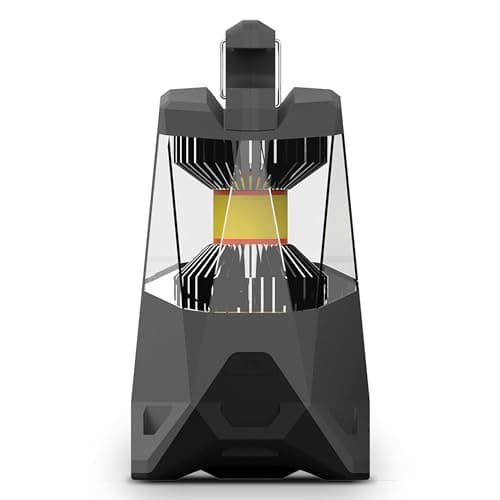 NEBO GALILEO 1000 Best dual-power lantern for an outage | 1,000 | Replaceable | 19 | $51.99 on Amazon Price as of October 18, 2026 — 19 lumens per dollar. #ad How we earn |
| 3 | 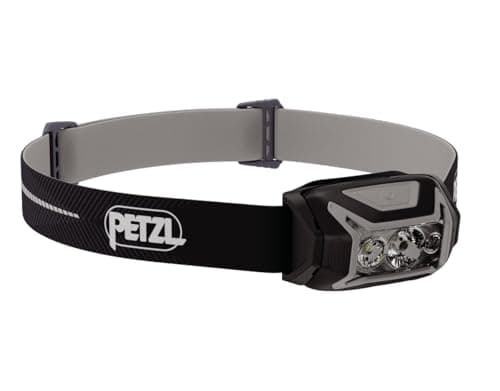 Petzl ACTIK CORE Best hybrid: rechargeable or AAA cells | 625 | Replaceable | 8 | $79.98 on Amazon Price as of October 18, 2026 — 8 lumens per dollar. #ad How we earn |
| 4 | 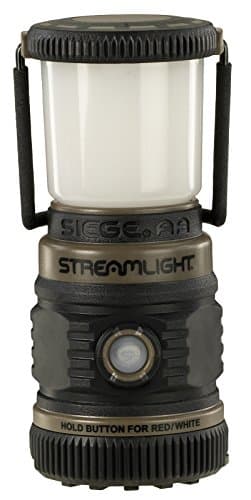 Streamlight Siege AA Best outage lantern that floats | 200 | AA / AAA | 6 | $32.49 on Amazon Price as of October 18, 2026 — 6 lumens per dollar. #ad How we earn |
| 5 | No listing image NEBO Newton 2000 Best outage light you can feed from a stockpile | 2,000 | AA / AAA | Needs a live price | Check price on Amazon We show a price only when we have pulled a live one. #ad How we earn |
| 6 | No listing image Energizer Vision HD Rechargeable Metal The sealed-battery cautionary tale | 1,200 | Sealed | Needs a live price | Check price on Amazon We show a price only when we have pulled a live one. #ad How we earn |
Prices pulled October 18, 2026. Lumens per dollar is the manufacturer's published maximum output divided by that price, recomputed every time the price moves.
The failure mode, described properly
Lithium-ion cells lose charge slowly while sitting and lose capacity permanently as they age, faster when stored fully charged or fully flat and faster in heat. A rechargeable light put away at 80 percent in June is not at 80 percent two winters later. If it was put away nearly empty, it may not recover at all.
The compounding problem is that you cannot do anything about it in the moment. A sealed-cell light that is flat during an outage is a paperweight until power returns — which is precisely when you do not have it. Energizer states plainly that the Vision HD uses non-removable lithium-ion batteries; that is a good light and the wrong light for a drawer.
What to buy instead
| Approach | Example with published figures | Why it works |
|---|---|---|
| Alkaline handheld | NEBO Newton 2000 — 2,000 lm for 2.5 h on 9 x AA, IPX7 | AA cells store for years and can be bought during an outage |
| Alkaline lantern | Streamlight Siege AA — 50 lm for 37 h, red at 192 h, IPX7, floats | Long runtime at a usable setting; survives a wet basement |
| Dual-power lantern | NEBO GALILEO 1000 — rechargeable pack or D cells, 100 lm for 10.5 h | Convenience day to day, a fallback when the pack is flat |
| Hybrid headlamp | Petzl ACTIK CORE — CORE pack or 3 x AAA, 625 lm ANSI/PLATO FL1 | Hands free, and re-powerable from a shop shelf |
1. Best light that runs on batteries from any gas station
ThruNite Archer 2A V3
Lumens per dollar
22
Five hundred lumens on two AA cells. It will never win a lumens-per-dollar contest against an 18650 light, and it does not need to: it is the light that still works when you are three days into an outage and the only thing left in the store is alkalines.
- Max output
- 500 lm
- Runtime
- Not published per mode
- Battery
- AA / AAA
- Water rating
- None published
What it gets right
- Runs on the most widely stocked battery on earth
- No lithium cell to self-discharge in a glovebox for two years
- Forward clicky switch, so you can signal without cycling modes
What it gets wrong
- AA alkalines sag hard under load; 500 lumens is a brief 500 lumens on them
- No published runtime or water rating on the product page
- Rechargeable it is not — the running cost is on you
Published specification
- Maximum output: 500 lumens, turbo — ThruNite published specification
- Battery: 2 x AA alkaline or 2 x AA NiMH (not included) — ThruNite published specification
- Modes: Five — ThruNite published specification
- Switch: Forward clicky with momentary-on — ThruNite published specification
- Protection: Reversed-polarity protection — ThruNite published specification
- Clip: Reversible, removable, titanium coated — ThruNite published specification
- Per-mode runtime: Not published on the product page
- Water rating: Not published on the product page
Skip this one if
this is your only light and you will use it daily. Feeding a daily-use light on disposable AAs is the single most expensive way to own a flashlight, which is the entire reason this site exists.
Buy it if: the glovebox, the storm kit, and the drawer you open twice a year.
- Output 6.0
- Battery 7.0
- Build 8.0
- Usability 8.5
- Overall 7.4
Price as of October 18, 2026 — 22 lumens per dollar. #ad How we earn
2. Best dual-power lantern for an outage
NEBO GALILEO 1000
Lumens per dollar
19
A thousand lumens for ninety minutes, or a hundred lumens for ten and a half hours, and it takes D cells when the pack is flat. In an outage the second number and the D cells are the ones that matter.
- Max output
- 1,000 lm
- Runtime
- 1.5 h
- Battery
- Replaceable cell
- Water rating
- None published
What it gets right
- Runs on D cells when the rechargeable pack is dead, which is the whole point in an outage
- Runtime published for all five modes
- USB output doubles it as a phone power bank
What it gets wrong
- NEBO states water resistance without publishing an IP figure
- Ninety minutes at full output is short for a lantern
- Half a pound before you add D cells
Published specification
- High 360 degrees: 1,000 lumens, 1.5 hours, 21 m — NEBO published specification
- High 120 degrees: 300 lumens, 6 hours, 17 m — NEBO published specification
- Low, fully dimmed: 100 lumens, 10.5 hours, 7 m — NEBO published specification
- Red high: 15 lumens, 12 hours — NEBO published specification
- Red low: 2 lumens, 30 hours — NEBO published specification
- Battery: Flex-Power: included rechargeable pack or D cells — NEBO published specification
- Weight: 0.5 lb — NEBO published specification
- Water rating: Water and impact resistant; no IP figure published — NEBO published specification
Skip this one if
you want a lantern for camping in the rain. Without a published IP rating, plan on keeping it under cover.
Buy it if: a kitchen table during a storm, and the shelf it lives on the rest of the year.
- Output 7.5
- Battery 7.5
- Build 7.0
- Usability 8.0
- Overall 7.5
Price as of October 18, 2026 — 19 lumens per dollar. #ad How we earn
3. Best hybrid: rechargeable or AAA cells
Petzl ACTIK CORE
Lumens per dollar
8
Six hundred and twenty-five lumens stated to ANSI/PLATO FL1, 88 grams, and — the part that matters — it runs on the CORE rechargeable pack or on three AAA cells when the pack is flat. That is the answer to the sealed-battery problem, from the only brand here that bothered.
- Max output
- 625 lm
- Runtime
- Published per mode by Petzl
- Battery
- Replaceable cell
- Water rating
- IPX4
What it gets right
- Explicitly states ANSI/PLATO FL1 conformity, which most brands here do not
- Hybrid power: the pack for daily use, AAA cells as the fallback that never fails
- Petzl publishes the CORE pack's cycle rating, so its service life is a stated number
What it gets wrong
- IPX4 — weather resistant, not submersible
- Eighty-eight grams is not ultralight
- The CORE pack is a Petzl part rather than a standard cell
Published specification
- Maximum output: 625 lumens (ANSI/PLATO FL1) — Petzl published specification
- Weight: 88 g — Petzl published specification
- Battery: CORE rechargeable 1,250 mAh / 3.6 V / 4.5 Wh, or 3 x AAA — Petzl published specification
- Battery compatibility: Alkaline, lithium or Ni-MH — Petzl published specification
- Water rating: IPX4, weather resistant — Petzl published specification
- Warranty: Lamp 5 years; CORE battery 2 years or 300 cycles — Petzl published specification
- Lighting levels: MAX BURN TIME, STANDARD, MAX POWER, plus red — Petzl published specification
Skip this one if
you want a submersible headlamp. IPX4 covers rain and nothing beyond it.
Buy it if: anyone whose headlamp has to work at the end of a long trip, when charging is not an option.
- Output 7.5
- Battery 9.0
- Weight 7.0
- Usability 8.5
- Overall 8.3
Price as of October 18, 2026 — 8 lumens per dollar. #ad How we earn
4. Best outage lantern that floats
Streamlight Siege AA
Lumens per dollar
6
Two hundred lumens for seven hours, fifty for thirty-seven, and a red night-vision mode Streamlight rates at 192 hours. It runs on AA cells, it is IPX7, and it floats. For a storm shelf that is the correct specification.
- Max output
- 200 lm
- Runtime
- 7 h
- Battery
- AA / AAA
- Water rating
- IPX7
What it gets right
- AA cells store for a decade and are available anywhere, including mid-outage
- IPX7 and it floats, which is the correct answer for a flooded basement
- Runtime published for all five modes, including the 8-day red mode
What it gets wrong
- Two hundred lumens is dim next to a rechargeable lantern
- No rechargeable option in this version
- Removable cover changes the beam pattern and is easy to lose
Published specification
- White high: 200 lumens, 7 hours — Streamlight published specification
- White medium: 100 lumens, 15.5 hours — Streamlight published specification
- White low: 50 lumens, 37 hours — Streamlight published specification
- Red high: 0.7 lumens, 192 hours (8 days) — Streamlight published specification
- SOS flash: 0.7 lumens, 288 hours (12 days) — Streamlight published specification
- Battery: AA alkaline — Streamlight published specification
- Water rating: IPX7, 1 m — and it floats — Streamlight published specification
- Impact: 2 m tested — Streamlight published specification
Skip this one if
you want a bright camp lantern. This is an endurance light, not an area light.
Buy it if: the storm shelf, the boat and the basement that occasionally has water in it.
- Output 4.5
- Battery 9.5
- Build 9.0
- Usability 8.5
- Overall 7.9
Price as of October 18, 2026 — 6 lumens per dollar. #ad How we earn
listing
image
5. Best outage light you can feed from a stockpile
NEBO Newton 2000
Lumens per dollar
Computed the moment we have a live price for it
Two thousand lumens for two and a half hours on nine AA alkalines, IPX7, with the runtime published for every mode. It is heavy and it is not clever, and for a week without power that is the correct set of trade-offs.
- Max output
- 2,000 lm
- Runtime
- 2.5 h
- Battery
- AA / AAA
- Water rating
- IPX7
What it gets right
- Runtime published at maximum output, which is the number that actually matters
- AA cells store for years and can be bought anywhere, including during an outage
- IPX7 — it survives being dropped in standing water
What it gets wrong
- Nine AA cells is a real weight and a real running cost
- Zoom optics trade beam quality for a party trick
- Nothing about it is pocketable
Published specification
- High: 2,000 lumens, 2.5 hours, 188 m — NEBO published specification
- Medium: 600 lumens, 6 hours, 120 m — NEBO published specification
- Low: 100 lumens, 20 hours, 50 m — NEBO published specification
- Battery: 9 x AA alkaline — NEBO published specification
- Water rating: IPX7 — NEBO published specification
- Body: Aircraft-grade aluminum, impact resistant — NEBO published specification
Skip this one if
you want one light for everything. Running this daily on disposable alkalines costs more in a year than the light did.
Buy it if: the hall closet, the basement, and the shelf you go to when the power has been off for two days.
- Output 8.5
- Battery 7.5
- Build 7.5
- Usability 7.0
- Overall 7.6
We show a price only when we have pulled a live one. #ad How we earn
listing
image
6. The sealed-battery cautionary tale
Energizer Vision HD Rechargeable Metal
Lumens per dollar
Computed the moment we have a live price for it
Twelve hundred lumens, four hours of runtime, and a battery Energizer itself describes as non-removable — in a light made by a battery company. It works well and it has an expiry date, and the spec sheet says so out loud.
- Max output
- 1,200 lm
- Runtime
- Up to 4 h
- Battery
- Sealed
- Water rating
- IPX4
What it gets right
- Four hours at 1,200 lumens is a genuinely useful published pairing
- Doubles as a phone charger, which matters in an outage
- Available in essentially every supermarket in the country
What it gets wrong
- The cell is not removable — Energizer states this plainly
- IPX4 only, so rain but not submersion
- A lithium cell in a drawer self-discharges, and you cannot swap in a fresh one
Published specification
- Maximum output: 1,200 lumens, high — Energizer published specification
- Runtime: Up to 4 hours on a full charge — Energizer published specification
- Battery: Non-removable lithium-ion — Energizer published specification
- Water rating: IPX4, water resistant against splashing — Energizer published specification
- Impact: Drops up to 1 m — Energizer published specification
- Modes: Seven, including spot and wide — Energizer published specification
- Extra: Second USB port for use as a power bank — Energizer published specification
Skip this one if
this is going into an emergency kit. A sealed lithium cell left for two years is the classic outage failure, and there is nothing you can do about it in this light.
Buy it if: regular use where it gets charged often, and someone who accepts the light is a consumable.
- Output 8.0
- Battery 3.5
- Build 7.5
- Usability 8.0
- Overall 6.8
We show a price only when we have pulled a live one. #ad How we earn
How we ranked these
Published output over live price, then heavily adjusted for storage behavior: a light that can be re-powered from ordinary cells scores far above one that cannot, regardless of ratio. Runtime at a low, usable setting is treated as the headline figure, because an outage is measured in days.
Units we claim to have tested: 0
Every publisher in this category says they tested twenty flashlights. We have not tested any, and we say so. What we do instead: compile the manufacturer's own published ANSI FL1 figures, pull the price the light is selling for right now, and divide one by the other. Every number on this page is one you can check yourself in about two minutes.
How many lights a household actually needs
More than one and fewer than you think. The realistic minimum is three: one where you will be when it happens, one on the way to wherever the electrical panel is, and one for whoever else is in the house. A lantern for a table and a headlamp for anyone who has to do something with their hands makes it a genuinely comfortable arrangement rather than a survivable one.
Standardize the battery. If everything in the house takes AA cells, one box covers the lot and you will actually have spares. Mixing AA, AAA, D and three proprietary lithium packs guarantees that whichever one you reach for is the one you have no spare for.
Store them charged, store them cool, check them twice a year
- Remove alkaline cells from a light stored for years — alkaline leakage is the most common cause of a dead emergency light, and it ruins the contacts.
- Store spare alkalines in their packaging, somewhere cool and dry. They will still be good in a decade.
- If a light is rechargeable, top it up when the clocks change. Twice a year is enough and it is a date you will remember.
- Check the light actually turns on when you do. A charge indicator is not the same as a working light.
- Keep one light where you sit in the evening, not only where you think it belongs.
Common questions
What is the best flashlight for a power outage?
One that runs on ordinary alkaline cells, because those hold usable charge for years on a shelf and can be bought during an outage. NEBO's Newton 2000 publishes 2,000 lumens for 2.5 hours on nine AA cells with an IPX7 rating; Streamlight's Siege AA lantern publishes 50 lumens for 37 hours and floats. A rechargeable light with a sealed cell is the least dependable choice for storage, however good it is in daily use.
How long should an emergency flashlight last on one set of batteries?
Look for tens of hours at a usable low setting rather than hours at maximum. Streamlight publishes 37 hours at 50 lumens and 192 hours on red for the Siege AA; NEBO publishes 20 hours at 100 lumens for the Newton 2000. Those are the figures that matter across a multi-day outage — the maximum-output number will be spent in the first evening.
Can you replace the battery in a rechargeable flashlight?
It depends entirely on the model, and it is the single most consequential thing to check before buying. Lights built around a standard cell — an 18650, a 21700, a 14500, a 16340 — take a screw-off tailcap and a five-dollar replacement. Lights with a built-in cell, which manufacturers describe as 'integrated' or 'non-removable', cannot be re-celled by an ordinary owner: when the battery reaches the end of its cycle life the whole light is refuse. Energizer, for example, states plainly that the Vision HD Rechargeable uses non-removable lithium-ion batteries.
Should I keep rechargeable flashlights charged all the time?
Not continuously plugged in. Lithium cells age fastest when held at full charge or left completely flat, so the practical routine is to top up twice a year — when the clocks change is an easy date to remember — and to check the light actually turns on rather than trusting a charge indicator.
Sources
- NEBO published product specifications — mode-by-mode lumen, runtime and beam figures, read 2026-09-01; LUXTREME SL75 and SL50 read 2026-09-22; OMNI 2K and SLYDE KING 4K read 2026-10-18
- Streamlight published product specifications — per-mode lumens, runtime, beam distance, impact and IP ratings, read 2026-09-01; Waypoint 400 and Waypoint C-cell read 2026-09-22; FlipMate read 2026-10-18
- ThruNite published product specifications — read 2026-09-01
- Petzl published product specifications — ANSI/PLATO FL 1 conformity stated by the manufacturer. ACTIK CORE read 2026-09-01 and re-read per mode 2026-09-21; TIKKA CORE read 2026-09-21
- Energizer published product specifications — read 2026-09-01
- Lumen & Ledger method — how every figure on this page is derived
Who writes this
Scooter M. — I am an enthusiast who is genuinely into this. I read the manuals, compile the published specs, and do the math. No lab coat, no test bench, no drawer of free samples. What I can tell you is exactly what a light claims on paper, exactly what it costs right now, and what those two numbers mean when you divide one by the other.
Read next
Best emergency lights for home
How many lights a house actually needs, and where each one should live.
Best flashlights for car emergency kits
Heat, cold and two years of neglect. Very few lights survive all three.
Best rechargeable lanterns for power outages
Shelf life outranks brightness here, which puts the alkaline lanterns on top.
Best AA flashlights
The cell that is never flat when you need it, and the six lights worth putting it in.
Best flashlights for seniors
One switch, a grip you can hold, and a light that is never flat when it is needed.
The Ledger
Every light we cover in one ranked table, sorted by lumens per dollar.