Flashlights
Best AA Flashlights
This site argues for rechargeable lights on almost every other page. Here is the one format that beats them, and the specific circumstances where it does.
By Scooter M. · Published September 19, 2026
Short answer
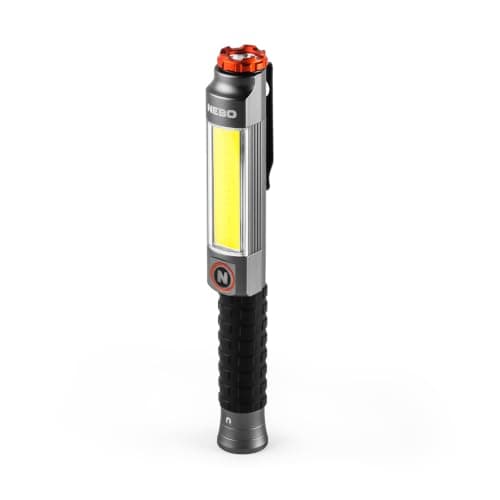
NEBO BIG LARRY 3
A 600-lumen COB panel, a 220-lumen spot and a red task mode, on three AA cells, with a magnet strong enough to hold it under a hood. It is the least glamorous light here and it is the one that gets used most.
Price as of September 19, 2026 — 39 lumens per dollar. #ad How we earn
Disclosure — we earn a commission on qualifying purchases made through the Amazon links on this page, at no extra cost to you. It does not change which lights we pick or what we say about them. The full version.
How we rank. Published ANSI FL1 output divided by the live retail price, with sealed-battery lights marked down because a light you cannot re-cell is a light with an expiry date. Units we claim to have tested: 0 — we compile manufacturers' published figures and show the arithmetic instead. How we work this out.
Why anyone buys an AA light in 2026
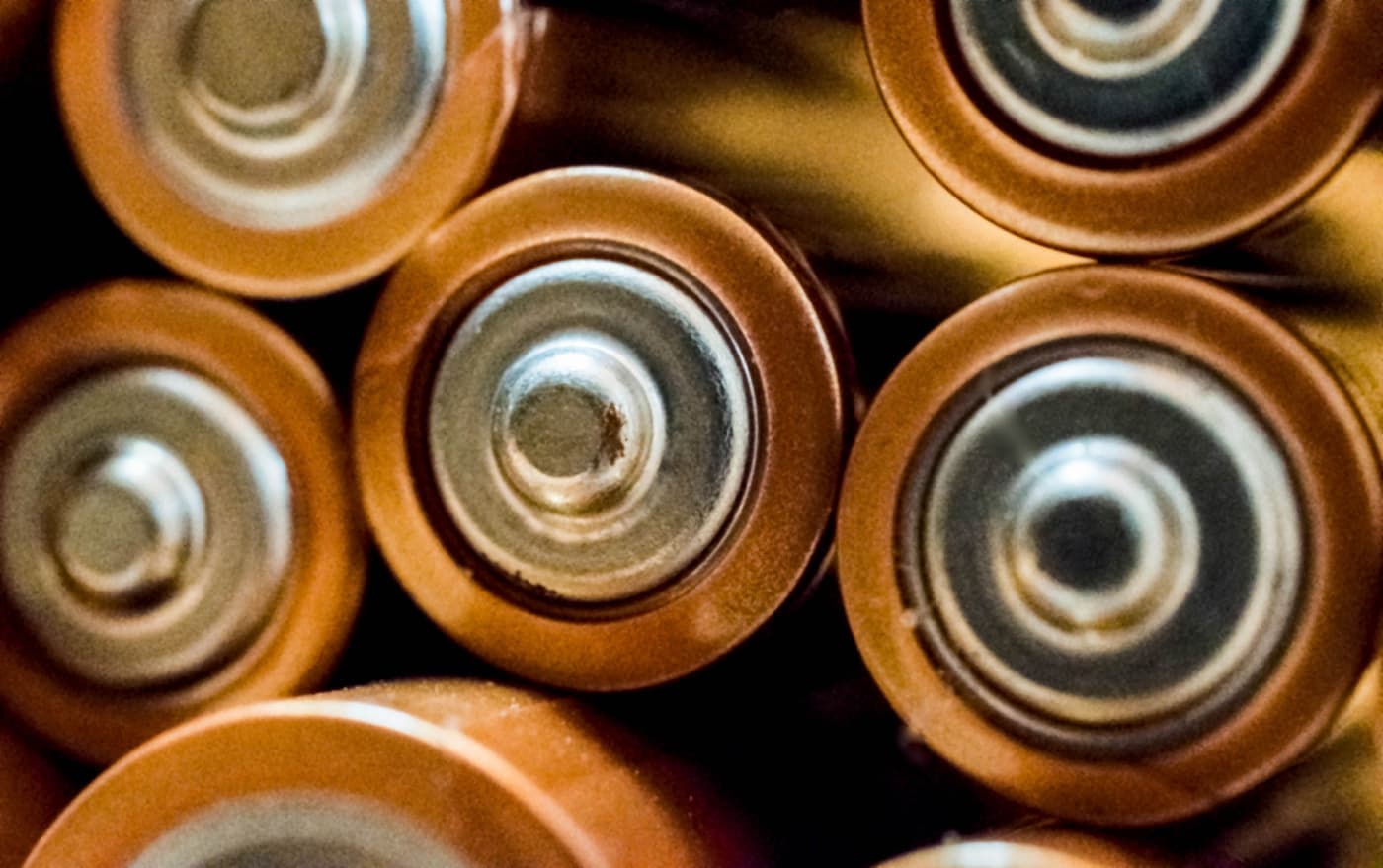
One reason, and it is decisive for a specific job: an AA light is never flat for long. Alkaline cells hold usable charge on a shelf for years and are sold everywhere on earth, while a lithium cell self-discharges and ages whether you use it or not. So rank AA lights on published runtime, how many cells they eat, and water rating — and buy one for the drawer, the car and the storm shelf rather than for daily use.
That is the whole argument, and this site has been making it in pieces across a dozen pages — in our outage rankings, our car-kit picks, our travel guide and our comparison of rechargeable against disposable lights. This page is where the format gets judged on its own terms, including the part that counts against it.
The honest case against AA, stated first
If you use a light every day, AA is the most expensive way to own one. A light running on disposable cells has a running cost that never stops, and over a few years of regular use it will cost more in batteries than the light cost to buy. Almost every ranking on this site exists to argue the opposite of this page, and our flagship value ranking is where to go if the light will be used rather than stored.
There is a second cost that is easy to miss. Alkaline cells have high internal resistance, so they sag under a heavy draw in a way a lithium cell does not. A light rated for several hundred lumens on alkalines will hold that figure briefly and settle lower, which is why the AA lights worth buying tend to be the ones whose makers publish a runtime rather than only a peak.
So the honest framing is not that AA beats rechargeable. It is that the two answer different questions: rechargeable for the light you use, AA for the light you store. Buy the format that matches the job and the argument disappears.
Criterion one: a published runtime, because alkalines sag
On a lithium light, the output figure is most of the story. On an AA light it is less than half of it, because the cell's behavior under load does so much of the work. That makes the published runtime the single most useful number on the box, and the brands worth buying print it.
| Light | Cells | Brightest published mode | Longest published mode | Water rating |
|---|---|---|---|---|
| NITECORE MT2A Pro | 2 x AA or 14500 | 1,000 lm | 20 h at 50 lm | IP68, 2 m |
| ThruNite Archer 2A V3 | 2 x AA | 500 lm, turbo | Not published | Not published |
| NEBO Newton 2000 | 9 x AA | 2,000 lm for 2.5 h | 100 lm for 20 h | IPX7 |
| NEBO BIG LARRY 3 | 3 x AA | 600 lm COB | Not published | Not published |
| Streamlight Siege AA | AA | 200 lm for 7 h | 0.7 lm red for 192 h | IPX7, and it floats |
| NEBO FRANKLIN TaskBar | 3 x AA | 500 lm for 2 h 30 m | 60 lm spot for 24 h | Not published |
Read the fourth column rather than the third. Streamlight publishes 37 hours at 50 lumens and 192 hours on the Siege AA's red mode; NEBO publishes 20 hours at 100 lumens for the Newton 2000 and 24 hours at 60 lumens on the FRANKLIN TaskBar's spot. Those are the figures that describe a light doing its actual job during a long outage. ThruNite and NEBO publish no runtime at all for the Archer 2A V3 and the BIG LARRY 3, which is marked against both below.
| # | Light | Max output | Battery | Lumens / $ | Price |
|---|---|---|---|---|---|
| 1 | NEBO BIG LARRY 3 Best cheap magnetic work light | 600 | AA / AAA | 39 | $15.50 on Amazon Price as of September 19, 2026 — 39 lumens per dollar. #ad How we earn |
| 2 | 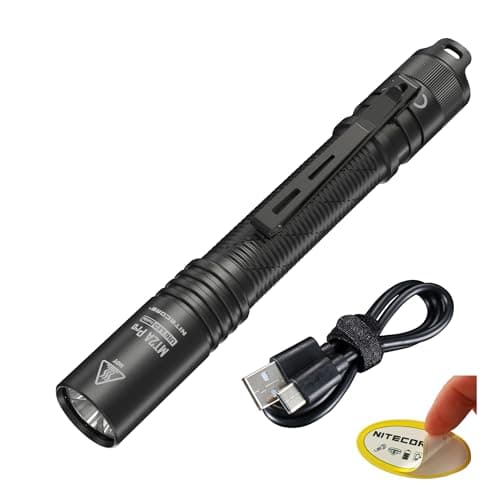 NITECORE MT2A Pro Best dual-power pocket light | 1,000 | Replaceable | 22 | $44.95 on Amazon Price as of September 19, 2026 — 22 lumens per dollar. #ad How we earn |
| 3 | 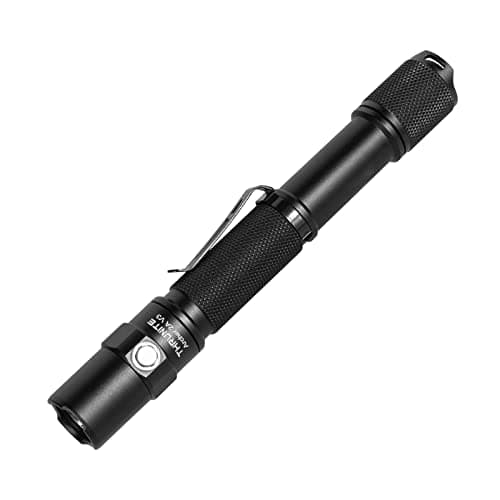 ThruNite Archer 2A V3 Best light that runs on batteries from any gas station | 500 | AA / AAA | 22 | $22.95 on Amazon Price as of September 19, 2026 — 22 lumens per dollar. #ad How we earn |
| 4 | 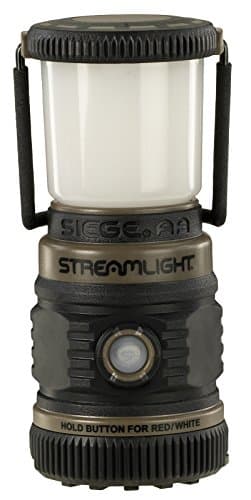 Streamlight Siege AA Best outage lantern that floats | 200 | AA / AAA | 6 | $32.49 on Amazon Price as of September 19, 2026 — 6 lumens per dollar. #ad How we earn |
| 5 | No listing image NEBO Newton 2000 Best outage light you can feed from a stockpile | 2,000 | AA / AAA | Needs a live price | Check price on Amazon We show a price only when we have pulled a live one. #ad How we earn |
| 6 | No listing image NEBO FRANKLIN TaskBar Best published runtime on a budget work light | 500 | AA / AAA | Needs a live price | Check price on Amazon We show a price only when we have pulled a live one. #ad How we earn |
Prices pulled September 19, 2026. Lumens per dollar is the manufacturer's published maximum output divided by that price, recomputed every time the price moves.
Criterion two: how many cells it eats
Cell count is the specification nobody compares and it decides three things at once: how bright the light can get, how long it runs, and how much of your battery stockpile a single evening consumes.
- Two cells is the pocket format. The MT2A Pro and the Archer 2A V3 both run on two, which keeps them the size of a pen and makes a spare pair trivial to carry. Output tops out in the hundreds of lumens.
- Three cells is the work-light format. The BIG LARRY 3 and the FRANKLIN TaskBar use three, which buys a flood panel and hours of runtime in something that still fits a toolbox.
- Nine cells is the outage brick. The Newton 2000 publishes 2,000 lumens for two and a half hours on nine AA cells, which is a genuinely useful amount of light and a genuinely serious bite out of a battery pack.
The practical consequence is about stockpiles rather than lights. If your emergency kit is standardized on AA, a nine-cell light run for two evenings has eaten eighteen cells, and that is the arithmetic to do before you buy the brightest thing on the shelf. Our guide to lights for the home works through how many lights a house actually needs.
Criterion three: the three chemistries in one cell size
AA is a size, not a chemistry, and three different cells fit the same slot with genuinely different behavior. Choosing the wrong one for the job is the most common way an AA light disappoints.
- 1.Alkaline. The default, the cheapest, and the one that holds charge on a shelf for years. It sags under heavy load, so it suits low and medium modes and stored lights rather than sustained high output.
- 2.NiMH rechargeable. Holds its output far better under load and removes the running cost, which makes it the right choice for a light you use often. The trade is that it self-discharges in storage, which removes the exact advantage that makes an AA light worth owning as an emergency light. Low-self-discharge versions narrow that gap considerably.
- 3.Lithium primary. The most expensive per cell and the best performer in cold and on the shelf. For a light that lives in an unheated garage, a car or a cabin, this is the chemistry that behaves when you need it.
Manufacturers state which they support and it is worth checking: ThruNite lists the Archer 2A V3 as running on two AA alkaline or two AA NiMH, and NITECORE lists the MT2A Pro as taking two AA or its own rechargeable 14500. We are not going to publish capacity or temperature figures for any cell, because we have no datasheet reading of our own to cite and a number invented for a page like this would be exactly the sort of thing this site exists to call out.
1. Best cheap magnetic work light
NEBO BIG LARRY 3
Lumens per dollar
39
A 600-lumen COB panel, a 220-lumen spot and a red task mode, on three AA cells, with a magnet strong enough to hold it under a hood. It is the least glamorous light here and it is the one that gets used most.
- Max output
- 600 lm
- Runtime
- Not published per mode
- Battery
- AA / AAA
- Water rating
- None published
What it gets right
- A flood panel is the right shape of light for working on something close up
- AA cells, so it survives a year in a toolbox and still lights
- The magnet is strong enough to matter
What it gets wrong
- NEBO publishes no runtime and no water rating for this model
- COB panels have poor color rendering as a class
- Not rechargeable, so the running cost is AA cells
Published specification
- COB work light: 600 lumens high / 150 lumens low — NEBO published specification
- Spot flashlight: 220 lumens high / 60 lumens low — NEBO published specification
- Red task light: 40 lumens high / 12 lumens low — NEBO published specification
- Battery: 3 x AA (included) — NEBO published specification
- Weight: 0.42 lb — NEBO published specification
- Fittings: Magnetic base, steel belt clip, wall-mount hole — NEBO published specification
- Per-mode runtime: Not published on the product page
- Water rating: Not published on the product page
Skip this one if
you need to see color accurately. For paint matching or diagnosing a wiring loom, a high-CRI light is worth the extra money.
Buy it if: the toolbox, the trunk and the shelf above the workbench.
- Output 6.5
- Battery 7.0
- Build 7.5
- Usability 8.5
- Overall 7.3
Price as of September 19, 2026 — 39 lumens per dollar. #ad How we earn
2. Best dual-power pocket light
NITECORE MT2A Pro
Lumens per dollar
22
A thousand lumens and 255 meters out of a penlight body that runs on its own removable 14500 or on two AA cells from any shop on earth. IP68 on top. It is the rare light that answers the shelf-life problem and the output problem in the same package.
- Max output
- 1,000 lm
- Runtime
- 20 h
- Battery
- Replaceable cell
- Water rating
- IP68
What it gets right
- Dual power: a removable 14500 for output, or two AA cells when there is no charger
- IP68 to two meters, which almost nothing at this size publishes
- Two hundred and fifty-five meters of throw from a penlight-shaped body
- The charging port is in the cell, so a spare cell charges while the light is in use
What it gets wrong
- NITECORE publishes only the maximum runtime, not a figure per mode
- On alkaline AA cells the output is far below the 1,000-lumen headline
- A penlight body is long for its diameter and rolls off a sloped surface
Published specification
- Maximum output: 1,000 lumens — NITECORE published specification
- Peak beam intensity: 16,500 cd — NITECORE published specification
- Beam distance: 255 m — NITECORE published specification
- Battery: 2 x AA, or 1 x NL1416R 14500 Li-ion with USB-C charging in the cell — NITECORE published specification
- Water rating: IP68, submersible to 2 m — NITECORE published specification
- Impact: 1 m — NITECORE published specification
- Weight: 40 g (1.41 oz) without battery — NITECORE published specification
- Length: 142.8 mm — NITECORE published specification
- Modes: Three brightness levels, single tail switch — NITECORE published specification
- Maximum runtime: 20 hours at 50 lumens — NITECORE published specification
- Per-mode runtime: Not published on the product page
Skip this one if
you want the smallest possible pocket light. At 142.8 mm this is a long, thin light rather than a short one, and that shape suits a shirt pocket better than a jeans pocket.
Buy it if: anyone who wants one light for both daily use and the drawer, and refuses to be stopped by a flat cell.
- Output 8.0
- Battery 9.5
- Build 9.0
- Usability 8.0
- Overall 8.6
Price as of September 19, 2026 — 22 lumens per dollar. #ad How we earn
3. Best light that runs on batteries from any gas station
ThruNite Archer 2A V3
Lumens per dollar
22
Five hundred lumens on two AA cells. It will never win a lumens-per-dollar contest against an 18650 light, and it does not need to: it is the light that still works when you are three days into an outage and the only thing left in the store is alkalines.
- Max output
- 500 lm
- Runtime
- Not published per mode
- Battery
- AA / AAA
- Water rating
- None published
What it gets right
- Runs on the most widely stocked battery on earth
- No lithium cell to self-discharge in a glovebox for two years
- Forward clicky switch, so you can signal without cycling modes
What it gets wrong
- AA alkalines sag hard under load; 500 lumens is a brief 500 lumens on them
- No published runtime or water rating on the product page
- Rechargeable it is not — the running cost is on you
Published specification
- Maximum output: 500 lumens, turbo — ThruNite published specification
- Battery: 2 x AA alkaline or 2 x AA NiMH (not included) — ThruNite published specification
- Modes: Five — ThruNite published specification
- Switch: Forward clicky with momentary-on — ThruNite published specification
- Protection: Reversed-polarity protection — ThruNite published specification
- Clip: Reversible, removable, titanium coated — ThruNite published specification
- Per-mode runtime: Not published on the product page
- Water rating: Not published on the product page
Skip this one if
this is your only light and you will use it daily. Feeding a daily-use light on disposable AAs is the single most expensive way to own a flashlight, which is the entire reason this site exists.
Buy it if: the glovebox, the storm kit, and the drawer you open twice a year.
- Output 6.0
- Battery 7.0
- Build 8.0
- Usability 8.5
- Overall 7.4
Price as of September 19, 2026 — 22 lumens per dollar. #ad How we earn
4. Best outage lantern that floats
Streamlight Siege AA
Lumens per dollar
6
Two hundred lumens for seven hours, fifty for thirty-seven, and a red night-vision mode Streamlight rates at 192 hours. It runs on AA cells, it is IPX7, and it floats. For a storm shelf that is the correct specification.
- Max output
- 200 lm
- Runtime
- 7 h
- Battery
- AA / AAA
- Water rating
- IPX7
What it gets right
- AA cells store for a decade and are available anywhere, including mid-outage
- IPX7 and it floats, which is the correct answer for a flooded basement
- Runtime published for all five modes, including the 8-day red mode
What it gets wrong
- Two hundred lumens is dim next to a rechargeable lantern
- No rechargeable option in this version
- Removable cover changes the beam pattern and is easy to lose
Published specification
- White high: 200 lumens, 7 hours — Streamlight published specification
- White medium: 100 lumens, 15.5 hours — Streamlight published specification
- White low: 50 lumens, 37 hours — Streamlight published specification
- Red high: 0.7 lumens, 192 hours (8 days) — Streamlight published specification
- SOS flash: 0.7 lumens, 288 hours (12 days) — Streamlight published specification
- Battery: AA alkaline — Streamlight published specification
- Water rating: IPX7, 1 m — and it floats — Streamlight published specification
- Impact: 2 m tested — Streamlight published specification
Skip this one if
you want a bright camp lantern. This is an endurance light, not an area light.
Buy it if: the storm shelf, the boat and the basement that occasionally has water in it.
- Output 4.5
- Battery 9.5
- Build 9.0
- Usability 8.5
- Overall 7.9
Price as of September 19, 2026 — 6 lumens per dollar. #ad How we earn
listing
image
5. Best outage light you can feed from a stockpile
NEBO Newton 2000
Lumens per dollar
Computed the moment we have a live price for it
Two thousand lumens for two and a half hours on nine AA alkalines, IPX7, with the runtime published for every mode. It is heavy and it is not clever, and for a week without power that is the correct set of trade-offs.
- Max output
- 2,000 lm
- Runtime
- 2.5 h
- Battery
- AA / AAA
- Water rating
- IPX7
What it gets right
- Runtime published at maximum output, which is the number that actually matters
- AA cells store for years and can be bought anywhere, including during an outage
- IPX7 — it survives being dropped in standing water
What it gets wrong
- Nine AA cells is a real weight and a real running cost
- Zoom optics trade beam quality for a party trick
- Nothing about it is pocketable
Published specification
- High: 2,000 lumens, 2.5 hours, 188 m — NEBO published specification
- Medium: 600 lumens, 6 hours, 120 m — NEBO published specification
- Low: 100 lumens, 20 hours, 50 m — NEBO published specification
- Battery: 9 x AA alkaline — NEBO published specification
- Water rating: IPX7 — NEBO published specification
- Body: Aircraft-grade aluminum, impact resistant — NEBO published specification
Skip this one if
you want one light for everything. Running this daily on disposable alkalines costs more in a year than the light did.
Buy it if: the hall closet, the basement, and the shelf you go to when the power has been off for two days.
- Output 8.5
- Battery 7.5
- Build 7.5
- Usability 7.0
- Overall 7.6
We show a price only when we have pulled a live one. #ad How we earn
listing
image
6. Best published runtime on a budget work light
NEBO FRANKLIN TaskBar
Lumens per dollar
Computed the moment we have a live price for it
Five hundred lumens of flood for two and a half hours, 200 lumens of spot for eight, and a red mode for twenty — every one of those numbers printed by NEBO rather than inferred by us. For a light at this price that is unusually complete.
- Max output
- 500 lm
- Runtime
- 2 h 30 min
- Battery
- AA / AAA
- Water rating
- None published
What it gets right
- Runtime published for all seven modes — the exception rather than the rule at this price
- Flood, spot and red in one body with a magnetic base
- AA cells, wall-mount hole, steel belt clip
What it gets wrong
- No water rating published anywhere on the product page
- 500 lumens of COB flood is modest next to a rechargeable panel
- Disposable AAs again
Published specification
- Work light high: 500 lumens, 2 h 30 min, 31 m — NEBO published specification
- Work light low: 150 lumens, 14 h 30 min, 18 m — NEBO published specification
- Flashlight high: 200 lumens, 8 hours, 75 m — NEBO published specification
- Flashlight low: 60 lumens, 24 hours, 50 m — NEBO published specification
- Red task light: 40 lumens, 20 hours — NEBO published specification
- Battery: 3 x AA (included) — NEBO published specification
- Weight: 0.45 lb — NEBO published specification
- Water rating: Not published on the product page
Skip this one if
the light will live outdoors. Without a published IP rating we cannot tell you what it survives, and neither can NEBO.
Buy it if: the person who wants one bar-shaped light that does flood, spot and red without a menu.
- Output 6.0
- Battery 7.0
- Build 7.5
- Usability 8.5
- Overall 7.2
We show a price only when we have pulled a live one. #ad How we earn
The hybrid lights, which are the real answer for most people
The most interesting lights in this field refuse the choice. NITECORE's MT2A Pro runs on its own removable 14500 with USB-C charging built into the cell, and on two ordinary AA cells when that is dead — lithium output when you have a charger, universal availability when you do not.
Two more lights on the site do the same in other categories. NEBO's LEO 1800 Flex takes its rechargeable pack or three AAA cells, and Petzl's ACTIK CORE takes the CORE pack or three AAA. If you are shopping this page because you want the AA safety net without the AA running cost, a hybrid is the answer and it is worth paying for.
The failure mode specific to this format: leaks
There is one way an AA light dies that a rechargeable never does, and it is the reason to read this section before putting a light in a cupboard for two years. Alkaline cells can leak, and they are most likely to do it sitting forgotten inside a device. What comes out corrodes the contacts and the tube, and the light is usually finished — killed by the very cells that were supposed to make it dependable.
That is an argument about storage habits rather than against the format, and the habits are simple. For a light going into long storage, keep the cells beside it rather than in it — a light with no cells in it cannot leak and cannot switch itself on in a drawer either. For a light you want loaded and ready, check it once or twice a year, which is the same calendar reminder our charging guide recommends for topping up a stored rechargeable. If a light lives somewhere hot, check it more often; heat is what accelerates the problem.
This is also the strongest practical argument for the lithium primary cells mentioned above in a light that genuinely cannot be checked — a cabin, a boat, a bag that lives in a car. They cost several times what an alkaline costs, and for a light you will not look at for three years that is cheap insurance.
What about AAA?
AAA is the same argument in a smaller package, and the trade is capacity. A AAA cell holds considerably less energy than an AA, so a AAA light is dimmer, runs shorter, or both — which is why the format shows up mostly in headlamps and slim penlights where the size of the cell is the point.
On this site the AAA lights are the hybrids rather than the dedicated ones. Petzl's ACTIK CORE takes three AAA when its CORE pack is flat, and NEBO's LEO 1800 Flex takes three AAA when its pack is done, which is the same never-stranded insurance the MT2A Pro offers in AA. If you are choosing between the two sizes for a stored light, take AA: more capacity per cell, and a stockpile that also feeds the bigger lights on this page.
Where AA still wins outright
- The storm shelf and the hall closet. A light used twice a year should not depend on a charge you gave it eight months ago.
- The car. Heat, cold and long neglect are the three things a lithium cell handles worst, and our car-kit ranking picks on exactly this basis.
- Anywhere far from a socket for a long time. Our hiking picks favor AA-capable lights for trail-town resupply, and our travel guide favors them because AA is sold in every country without a plug adapter.
- A light other people will use. There is nothing to explain, nothing to charge, and no menu.
What to skip
Two things. First, any AA light quoting a four-figure lumen number with no runtime beside it — on alkalines that figure describes an instant rather than a mode, and the absence of a published duration is the tell. Second, buying an AA light for daily carry because it seems simpler; a pocket light gets used every day, which is precisely the case where the running cost bites and a rechargeable wins. Our pocket flashlight ranking covers that end properly.
How we ranked these
The four scored attributes published on our methodology page — output against live price, battery architecture, build as evidenced by published ratings, and usability — with battery architecture read as availability rather than running cost, which is the whole premise of the format. One further adjustment is stated openly: a light that publishes a runtime scores above one that publishes only a peak, because on a sagging cell the peak is the least informative number on the box.
Units we claim to have tested: 0
Every publisher in this category says they tested twenty flashlights. We have not tested any, and we say so. What we do instead: compile the manufacturer's own published ANSI FL1 figures, pull the price the light is selling for right now, and divide one by the other. Every number on this page is one you can check yourself in about two minutes.
What we cannot tell you
We have not run any of these lights down on a set of cells, so we cannot tell you how far the published figures drift on cheap alkalines, how much the output actually settles after the first minutes, or how any of them behave below freezing — which is exactly where cell chemistry matters most and where published runtimes stop being reliable. We also publish no capacity or temperature figures of our own for any battery. What we can do is put six published mode tables side by side and be precise about which manufacturers left the runtime row blank.
Common questions
Are AA flashlights still worth buying?
For a light you store rather than use, yes, and nothing else comes close. Alkaline cells hold usable charge for years on a shelf and are sold everywhere, while a lithium cell in an unused light self-discharges and ages and is frequently flat when you reach for it. For a light you use daily the answer flips: disposable cells are the most expensive way to own a flashlight, and a rechargeable is the better buy.
What is the best AA flashlight?
Among the lights we cover, the NITECORE MT2A Pro makes the strongest case because it refuses the trade-off — NITECORE publishes 1,000 lumens, IP68 to two meters and 255 meters of beam, running on its own removable 14500 or on two ordinary AA cells. For a simpler light, ThruNite's Archer 2A V3 publishes 500 lumens on two AA with a forward clicky switch. For an outage, NEBO publishes 2,000 lumens for two and a half hours on nine AA cells for the Newton 2000.
Should I use alkaline, NiMH or lithium batteries in a flashlight?
Match the chemistry to the job. Alkaline is cheapest and holds charge on a shelf for years, which suits stored and emergency lights, though it sags under heavy load. NiMH rechargeables hold output better and remove the running cost, which suits a light you use often, but they self-discharge in storage. Lithium primary cells cost the most and perform best in cold and after long storage, which suits a car or an unheated garage.
Can you replace the battery in a rechargeable flashlight?
It depends entirely on the model, and it is the single most consequential thing to check before buying. Lights built around a standard cell — an 18650, a 21700, a 14500, a 16340 — take a screw-off tailcap and a five-dollar replacement. Lights with a built-in cell, which manufacturers describe as 'integrated' or 'non-removable', cannot be re-celled by an ordinary owner: when the battery reaches the end of its cycle life the whole light is refuse. Energizer, for example, states plainly that the Vision HD Rechargeable uses non-removable lithium-ion batteries.
Sources
- NITECORE published product specifications — NU25 MCT UL read 2026-09-01; MT2A Pro read 2026-09-13
- ThruNite published product specifications — read 2026-09-01
- NEBO published product specifications — mode-by-mode lumen, runtime and beam figures, read 2026-09-01
- Streamlight published product specifications — per-mode lumens, runtime, beam distance, impact and IP ratings, read 2026-09-01
- Petzl published product specifications — ANSI/PLATO FL 1 conformity stated by the manufacturer, read 2026-09-01
- Lumen & Ledger method — how every figure on this page is derived
Who writes this
Scooter M. — I am an enthusiast who is genuinely into this. I read the manuals, compile the published specs, and do the math. No lab coat, no test bench, no drawer of free samples. What I can tell you is exactly what a light claims on paper, exactly what it costs right now, and what those two numbers mean when you divide one by the other.
Read next
Rechargeable vs battery flashlights
Five dimensions, one table, and a verdict that depends on where the light lives.
Best flashlights for power outages
The outage specification is shelf life, not brightness. That changes the answer.
Best flashlights for travel
What TSA actually says about flashlights and spare cells, and the light that runs on any country's batteries.
Best flashlights for car emergency kits
Heat, cold and two years of neglect. Very few lights survive all three.
18650 vs 21700
Two cell sizes, two philosophies, and which one your next light should take.
The Ledger
Every light we cover in one ranked table, sorted by lumens per dollar.