Flashlights
The Best Maglite Flashlights, and Why the Range Is Not a Ladder
Maglite does not sell a good, better and best. It sells the same light in AA, C and D, plus two rechargeables — and on published runtime the cheap alkaline ones humiliate the expensive rechargeable ones.
By Scooter M. · Published October 13, 2026
Short answer
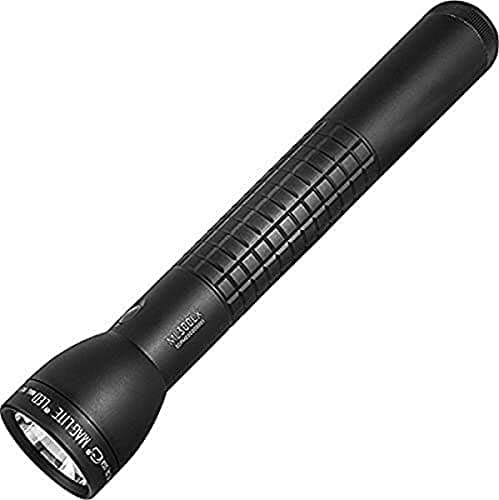
Maglite ML300LX 3-Cell D
Seven hundred and forty-six lumens, 40,596 candela and 403 meters from three D cells — and 32 hours of it on high. Not 32 hours on a dim setting: 32 hours at the output on the box, published by Maglite. No rechargeable light on this site comes within a factor of ten of that figure.
Price as of October 18, 2026 — 15 lumens per dollar. #ad How we earn
Disclosure — we earn a commission on qualifying purchases made through the Amazon links on this page, at no extra cost to you. It does not change which lights we pick or what we say about them. The full version.
How we rank. Published ANSI FL1 output divided by the live retail price, with sealed-battery lights marked down because a light you cannot re-cell is a light with an expiry date. Units we claim to have tested: 0 — we compile manufacturers' published figures and show the arithmetic instead. How we work this out.
The short answer
For most people the right Maglite is the ML50LX 2-Cell C: 466 lumens, 21,197 candela, 291 meters, and eight and a quarter hours at full output from a 361-gram body on two C cells. Buy the Mini Maglite Pro LED instead if it has to fit a pocket, the ML300LX 3-Cell D if you want the 32-hour runtime and do not mind carrying three quarters of a kilogram, the MAG-TAC Rechargeable if you want a rechargeable duty light, and the ML150LR if you want the flagship with the replaceable pack and the ten-year warranty.
What makes this range confusing is that it is not ordered by brightness. Maglite sells essentially one engineering idea in three battery sizes, plus two rechargeables that sit outside the pattern. The 746-lumen D-cell light is not an upgrade on the 466-lumen C-cell light; it is the same light with more fuel and more weight.
The figure that reframes the whole lineup
Thirty-two hours. That is Maglite's published runtime for the ML300LX 3-Cell D at its full 746 lumens — not at a dimmed setting, at the output printed on the box. The ML50LX manages eight and a quarter hours at its 466 lumens. The Mini Pro LED on two AA cells manages two and a half.
Now put the rechargeables beside them. Maglite publishes one hour on high for the MAG-TAC Rechargeable and over three hours at full output for the ML150LR. So the cheapest, most old-fashioned light in the range outruns the most expensive rechargeable one by roughly ten to one, and outruns the tactical rechargeable by thirty-two to one, on figures the same manufacturer published.
This matters because runtime at the rated output is the figure most of this category hides, and it is the one Maglite publishes most generously. Across the whole site the usual pattern is a big lumen number with no duration beside it. Here there is a duration beside every mode of every model, including a 298-hour eco figure that makes the D-cell light a twelve-day outage light.
Maglite publishes candela. Most brands do not.
Throw is governed by beam intensity rather than total output, and the figure that describes it is peak beam intensity in candela. Maglite publishes it on every model here: 40,596 candela and 403 meters on the ML300LX, 21,197 and 291 meters on the ML50LX, 8,545 and 185 meters on the MAG-TAC Rechargeable, 7,399 and 172 meters on the Mini Pro LED.
For comparison, Streamlight — a brand we rate highly for its paperwork — publishes no candela figure for any handheld in its range. That is why a 746-lumen D-cell Maglite can be compared numerically against a thrower and a 2,000-lumen Streamlight cannot.
And the gap that runs through the whole range
Water resistance. Every Maglite on this page that publishes a rating publishes IPX4, which covers rain and splashing and does not cover submersion. Not one of them is rated to go into water.
The ML150LR is worse than that: on its product page Maglite publishes no IP rating at all. On the company's flagship rechargeable, sold for duty and vehicle use at the top of this range, the water column is simply blank. We treat a missing rating as missing rather than as a pass, which is why the flagship does not finish top of our table despite having the best output and the best warranty in the lineup.
| # | Light | Max output | Battery | Lumens / $ | Price |
|---|---|---|---|---|---|
| 1 | Maglite ML300LX 3-Cell D The longest published runtime on this site | 746 | Replaceable | 15 | $49.99 on Amazon Price as of October 18, 2026 — 15 lumens per dollar. #ad How we earn |
| 2 | 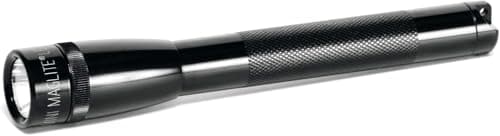 Maglite Mini Maglite Pro LED Best AA pocket light in either range | 332 | AA / AAA | 13 | $24.99 on Amazon Price as of October 18, 2026 — 13 lumens per dollar. #ad How we earn |
| 3 | 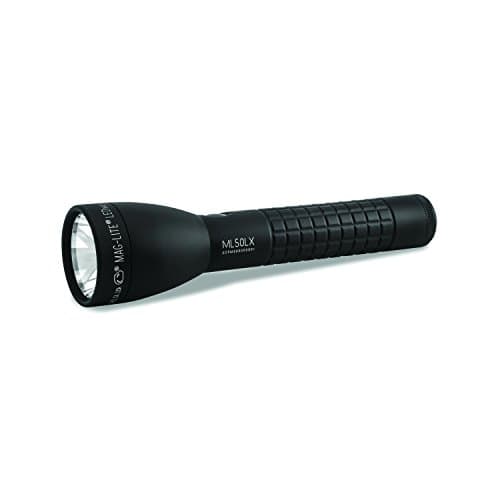 Maglite ML50LX 2-Cell C Best all-round Maglite | 466 | Replaceable | 12 | $39.99 on Amazon Price as of October 18, 2026 — 12 lumens per dollar. #ad How we earn |
| 4 | 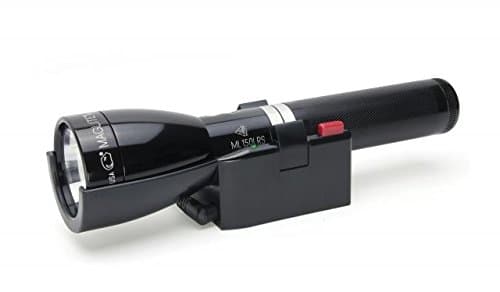 Maglite ML150LR Mag Charger The one built to be repaired instead of replaced | 1,082 | Replaceable | 11 | $99.99 on Amazon Price as of October 18, 2026 — 11 lumens per dollar. #ad How we earn |
| 5 | 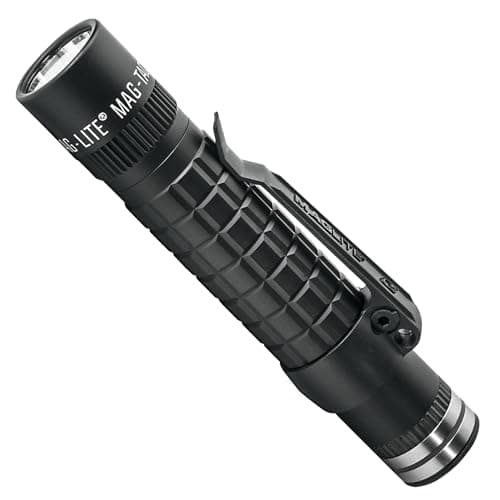 Maglite MAG-TAC Rechargeable Best Maglite for a duty belt | 740 | Sealed | 8 | $94.99 on Amazon Price as of October 18, 2026 — 8 lumens per dollar. #ad How we earn |
Prices pulled October 18, 2026. Lumens per dollar is the manufacturer's published maximum output divided by that price, recomputed every time the price moves.
Start from the cell, then the job
Because the range is organized by battery size, the useful question is not how bright you want the light but where it is going to live and how long it has to run there.
- A pocket, a toolbag or a handbag — the Mini Maglite Pro LED. Two AA cells, 332 lumens, 7,399 candela and 172 meters, at 118 grams and under twenty-five dollars. Two and a half hours on high and 13 on low. It is the cheapest light in the range and the only one that disappears.
- One light for the house, carried in a hand — the ML50LX 2-Cell C. Four hundred and sixty-six lumens, 291 meters, 8 hours 15 minutes at full output, 361 grams. This is the size the rest of the range is measured against, and the one we would buy.
- A truck, a workshop or a storm cupboard — the ML300LX 3-Cell D. Seven hundred and forty-six lumens, 403 meters, 32 hours on high and 298 in eco. At 748 grams it is not going anywhere in a bag, and that is the point: it sits still and it works after two years untouched.
- A duty belt, rechargeable — the MAG-TAC Rechargeable. Seven hundred and forty lumens, 8,545 candela, 185 meters, on a LiFePO4 pack that charges in two and a half hours. One hour on high is the published figure, so read that before choosing it over a C-cell light.
- The flagship, and the decade argument — the ML150LR. One thousand and eighty-two lumens, 458 meters, over three hours at full output, 79 hours in eco, a replaceable pack and a ten-year limited warranty. No published water rating, which is the one thing holding it back.
What each one publishes
| Light | Cell | Max output | Runtime at max | Throw | Water |
|---|---|---|---|---|---|
| Mini Maglite Pro LED | 2 x AA | 332 lumens | 2 h 30 min | 172 m, 7,399 cd | IPX4 |
| ML50LX 2-Cell C | 2 x C | 466 lumens | 8 h 15 min | 291 m, 21,197 cd | IPX4 |
| ML300LX 3-Cell D | 3 x D | 746 lumens | 32 hours | 403 m, 40,596 cd | IPX4 |
| MAG-TAC Rechargeable | LiFePO4 pack | 740 lumens | 1 hour | 185 m, 8,545 cd | IPX4 |
| ML150LR Mag Charger | Rechargeable pack | 1,082 lumens | Over 3 hours | 458 m | Not published |
Read the runtime column and the output column together and the ordering of this range stops looking like a price ladder. The two cheapest lights on the page post the first and third longest runtimes at full output. The most expensive light posts the shortest but one. If runtime at the rated output is what you are buying, the arrow points down the price list rather than up it.
1. The longest published runtime on this site
Maglite ML300LX 3-Cell D
Lumens per dollar
15
Seven hundred and forty-six lumens, 40,596 candela and 403 meters from three D cells — and 32 hours of it on high. Not 32 hours on a dim setting: 32 hours at the output on the box, published by Maglite. No rechargeable light on this site comes within a factor of ten of that figure.
- Max output
- 746 lm
- Runtime
- 32 h
- Battery
- Replaceable cell
- Water rating
- IPX4
What it gets right
- Thirty-two hours at full output — the longest published high-mode runtime anywhere on this site
- Forty thousand candela and 403 meters, with the candela figure published rather than implied
- Runs on D cells from any shop, so there is no pack to degrade and nothing to charge
- Two hundred and ninety-eight hours in eco mode turns it into a twelve-day outage light
What it gets wrong
- Seven hundred and forty-eight grams with cells in — this is a club, not a carry light
- IPX4 is a splash rating; it is not a light you can drop in water
- Three D cells are not cheap, and the running cost is real if you use it regularly
- No USB-C and no rechargeable option in this model
Published specification
- Maximum output: 746 lumens — Maglite published specification
- Peak beam intensity: 40,596 cd — Maglite published specification
- Beam distance: 403 m — Maglite published specification
- Runtime, high: 32 hours — Maglite published specification
- Runtime, low: 112 hours — Maglite published specification
- Runtime, eco: 298 hours — Maglite published specification
- Battery: 3 x D cell alkaline, not included — Maglite published specification
- Water rating: IPX4 — Maglite published specification
- Drop resistance: 1 m — Maglite published specification
- Weight: 26.4 oz (748.42 g) with batteries — Maglite published specification
- Length: 11.75 in (298.45 mm) — Maglite published specification
- Barrel diameter: 1.5 in (38.1 mm) — Maglite published specification
- Head diameter: 2.25 in (57 mm) — Maglite published specification
- Per-mode output: The specification table publishes a runtime for low and eco but not their lumen figures
Skip this one if
the light has to be carried. At 298 millimeters and three quarters of a kilogram this lives in a truck, a cupboard or a hand, and anybody expecting to put it in a bag will leave it at home instead.
Buy it if: a vehicle, a workshop or a storm cupboard — anywhere the light sits still, has to work after two years untouched, and may need to stay on all night.
- Output 7.0
- Battery 9.5
- Build 8.5
- Usability 5.5
- Overall 7.6
Price as of October 18, 2026 — 15 lumens per dollar. #ad How we earn
2. Best AA pocket light in either range
Maglite Mini Maglite Pro LED
Lumens per dollar
13
Three hundred and thirty-two lumens, 7,399 candela and 172 meters on two AA cells, for less than twenty dollars. It is the cheapest light either of these brands sells here, the only pocket light of the six that takes a battery from a corner shop, and it publishes a runtime for both its modes.
- Max output
- 332 lm
- Runtime
- 2 h 30 min
- Battery
- AA / AAA
- Water rating
- IPX4
What it gets right
- Runs on two AA cells, which store for a decade and can be bought absolutely anywhere
- Three hundred and thirty-two lumens and 7,399 candela published, at the lowest price of any light here
- Runtime published for both modes: 2 hours 30 minutes high, 13 hours low
- Nothing to charge, so it works after two years in a drawer
What it gets wrong
- IPX4 only, so rain is fine and submersion is not
- A 167.8 mm barrel is long for a pocket, and it rolls
- No USB-C charging and no rechargeable option in this model
- Three hundred and thirty-two lumens is modest next to a sealed-cell pocket light of the same size
Published specification
- Maximum output: 332 lumens — Maglite published specification
- Peak beam intensity: 7,399 cd — Maglite published specification
- Beam distance: 172 m — Maglite published specification
- Runtime, high: 2 hours 30 minutes — Maglite published specification
- Runtime, low: 13 hours — Maglite published specification
- Battery: 2 x AA, included — Maglite published specification
- Water rating: IPX4 — Maglite published specification
- Drop resistance: 1 m — Maglite published specification
- Weight: 4.15 oz (117.75 g) with batteries — Maglite published specification
- Length: 6.607 in (167.8 mm) — Maglite published specification
- Head diameter: 1 in (25.4 mm) — Maglite published specification
- Barrel diameter: 0.709 in (18 mm) — Maglite published specification
Skip this one if
you want the smallest possible pocket light or the brightest one. This is a long, thin AA body, and a sealed-cell light of the same length will produce several times the output.
Buy it if: a glovebox, a toolbag or a drawer — anywhere a light has to work the first time without having been charged, and where losing it should not be expensive.
- Output 5.0
- Battery 9.0
- Build 7.5
- Usability 7.5
- Overall 7.4
Price as of October 18, 2026 — 13 lumens per dollar. #ad How we earn
3. Best all-round Maglite
Maglite ML50LX 2-Cell C
Lumens per dollar
12
Four hundred and sixty-six lumens, 21,197 candela and 291 meters on two C cells, for eight and a quarter hours on high and 109 in eco. At 361 grams it is the one size in this range that is genuinely useful in a hand and still runs all evening at full output.
- Max output
- 466 lm
- Runtime
- 8 h 15 min
- Battery
- Replaceable cell
- Water rating
- IPX4
What it gets right
- Eight and a quarter hours at full output, which almost nothing rechargeable here approaches
- Twenty-one thousand candela and 291 meters published, from a light you can hold comfortably
- C cells store for years and are sold everywhere, so nothing degrades on a shelf
- The best size-to-runtime balance in the whole Maglite range
What it gets wrong
- IPX4 only — rain is fine, submersion is not
- Four hundred and sixty-six lumens is modest against a rechargeable of the same price
- C cells are less common and more expensive than AA
- No USB-C, no rechargeable variant of this model
Published specification
- Maximum output: 466 lumens — Maglite published specification
- Peak beam intensity: 21,197 cd — Maglite published specification
- Beam distance: 291 m — Maglite published specification
- Runtime, high: 8 hours 15 minutes — Maglite published specification
- Runtime, low: 13 hours — Maglite published specification
- Runtime, eco: 109 hours — Maglite published specification
- Battery: 2 x C cell alkaline, not included — Maglite published specification
- Water rating: IPX4 — Maglite published specification
- Drop resistance: 1 m — Maglite published specification
- Weight: 12.72 oz (360.61 g) with batteries — Maglite published specification
- Length: 8.184 in (207.87 mm) — Maglite published specification
- Barrel diameter: 1.2 in (30.48 mm) — Maglite published specification
- Head diameter: 1.977 in (50.22 mm) — Maglite published specification
- Per-mode output: The specification table publishes a runtime for low and eco but not their lumen figures
Skip this one if
you want the brightest light for the money. A direct-selling rechargeable will produce several times this output for the same price; what you give up is the eight-hour runtime and the shelf life.
Buy it if: the person who wants one Maglite and does not want a club — a kitchen drawer, a glovebox, or a hand on a long walk.
- Output 6.0
- Battery 9.0
- Build 8.5
- Usability 7.5
- Overall 7.8
Price as of October 18, 2026 — 12 lumens per dollar. #ad How we earn
4. The one built to be repaired instead of replaced
Maglite ML150LR Mag Charger
Lumens per dollar
11
A thousand and eighty-two lumens for over three hours, 79 hours in eco, a 458-meter beam, and a LiFePO4 pack rated for cycle counts nothing else here quotes. It costs several times what the value picks cost and it is the only light here likely to outlive its owner's interest in flashlights.
- Max output
- 1,082 lm
- Runtime
- Over 3 h
- Battery
- Replaceable cell
- Water rating
- None published
What it gets right
- Runtime published at full output, not just at the mode that flatters it
- Replaceable pack, spare parts, and a ten-year warranty
- Charging cradle that lives in a vehicle or on a wall
What it gets wrong
- Its lumens-per-dollar figure is poor and always will be
- No published IP rating on the product page
- The cradle system is convenient in a truck and awkward anywhere else
Published specification
- Maximum output: 1,082 lumens — Maglite published specification
- Runtime at full output: Over 3 hours — Maglite published specification
- Eco mode runtime: Up to 79 hours — Maglite published specification
- Beam distance: 500 yards (458 m) — Maglite published specification
- Battery: Rechargeable Mag Charger pack, replaceable — Maglite published specification
- Fast charge: To 80% in about 30 minutes — Maglite published specification
- Weight: Under 1 lb — Maglite published specification
- Warranty: Ten-year limited — Maglite published specification
- Water rating: Not published on the product page
Skip this one if
you are shopping on value. This light is bought for its service life and its parts availability, and if those do not matter to you it is simply expensive.
Buy it if: someone buying a tool for a decade rather than a purchase for this year.
- Output 8.0
- Battery 9.0
- Build 9.5
- Usability 7.5
- Overall 8.0
Price as of October 18, 2026 — 11 lumens per dollar. #ad How we earn
5. Best Maglite for a duty belt
Maglite MAG-TAC Rechargeable
Lumens per dollar
8
Seven hundred and forty lumens, 8,545 candela and 185 meters from a 159-gram machined body on a LiFePO4 pack that recharges in two and a half hours. Maglite publishes the candela figure Streamlight withholds, and then rates the light IPX4 where Streamlight rates its equivalent IPX7.
- Max output
- 740 lm
- Runtime
- 1 h
- Battery
- Sealed
- Water rating
- IPX4
What it gets right
- Publishes peak beam intensity in candela, which Streamlight does not do for any handheld
- Runtime published for both of its output levels, 1 hour high and 18 hours low
- LiFePO4 chemistry, which tolerates far more charge cycles than ordinary lithium-ion
- Machined aluminum body at 159 grams, with Maglite's US parts and service behind it
What it gets wrong
- IPX4 is a splash rating — the Streamlight tactical light it competes with publishes IPX7
- One hour on high is short for a duty shift, and it is the honest published figure
- Maglite does not state the pack capacity or whether an owner may replace it
- Seven hundred and forty lumens is modest for the money against a direct-selling brand
Published specification
- Maximum output: 740 lumens — Maglite published specification
- Peak beam intensity: 8,545 cd — Maglite published specification
- Beam distance: 185 m (approx. 607 ft) — Maglite published specification
- Runtime, high: 1 hour — Maglite published specification
- Runtime, low: 18 hours — Maglite published specification
- Battery: Lithium Iron Phosphate (LiFePO4) rechargeable pack — Maglite published specification
- Recharge time: Approximately 2.5 hours — Maglite published specification
- Water rating: IPX4 — Maglite published specification
- Drop resistance: 1 m (approx. 3.3 ft) — Maglite published specification
- Weight: 5.61 oz (159 g) with battery — Maglite published specification
- Length: 5.8 in (147.32 mm) — Maglite published specification
- Head diameter: 1.050 in (26.67 mm) — Maglite published specification
- Modes: Full Power, Momentary, Power Save and Strobe via the tail-cap switch — Maglite published specification
- Battery capacity: Not published on the specification page
- Battery replaceability: Not stated on the specification page; the pack is listed as an included component
Skip this one if
the light will get wet. IPX4 handles rain and a splash, not a dropped-in-a-puddle recovery, and a tactical light that cannot be submerged is a narrower tool than one that can.
Buy it if: somebody who wants a machined-aluminum duty light from a company that still sells parts for it, and who values a published candela figure over a published submersion rating.
- Output 7.0
- Battery 6.0
- Build 8.5
- Usability 7.5
- Overall 7.3
Price as of October 18, 2026 — 8 lumens per dollar. #ad How we earn
The argument that is not on the spec sheet
Maglite's real pitch is a ten-year limited warranty, a company that still sells spare parts for lights it made decades ago, and a LiFePO4 pack in the ML150LR rated for up to 2,000 charge and discharge cycles — a figure almost nobody in this category publishes.
That changes the arithmetic over any period longer than a warranty, and our lumens-per-dollar column cannot see it. A light that costs three times as much and lasts four times as long is cheaper. The three alkaline models make the same point more bluntly: there is no cell to degrade at all, so the service life is set by the aluminum and by whether you lose it.
None of which is a claim we have tested. Maglite's reputation for durability is long-standing and we have not put any of these lights through anything.
Where Maglite is the wrong answer
- The light will get wet. Every rating here is IPX4 and the flagship publishes none at all. If submersion is a real possibility, buy a brand that publishes IPX7 or IP68 — Streamlight and NITECORE both do across most of their ranges.
- You want the most light for the money. A direct-selling brand will produce two to four times these outputs at these prices on a standard 18650 cell. What you give up is the runtime at full output, the shelf life and the warranty.
- You want a modern pocket light. The smallest Maglite here is a 167-millimeter AA tube. A sealed-cell pocket light of the same length will produce several times the output, and a flat-bodied one will sit better in a pocket.
- You need USB-C. Only the two rechargeables charge at all, and neither is a USB-C-in-the-body design of the kind the rest of this site is full of.
How we ranked these
Published output over the live price, adjusted for battery architecture and published ratings — the same method as every page here. Two adjustments decide this particular table. A missing water rating counts as missing rather than as a pass, which costs the ML150LR its place at the top. And an alkaline light that needs no charging and has no cell to degrade is credited for that, which is why two sub-forty-dollar lights finish above two rechargeables costing three times as much. The write-ups below run in editorial order from the most generally useful model outward; the table sorts by the arithmetic.
Units we claim to have tested: 0
Every publisher in this category says they tested twenty flashlights. We have not tested any, and we say so. What we do instead: compile the manufacturer's own published ANSI FL1 figures, pull the price the light is selling for right now, and divide one by the other. Every number on this page is one you can check yourself in about two minutes.
What we cannot tell you
We have not used any of these five lights. Nothing here is a claim about how a Maglite survives a drop from a tailgate, how its warranty service behaves in practice, or how the LiFePO4 pack ages against its published cycle count. We also cannot compare Maglite's beam figures to another brand's with real precision, because Maglite does not state ANSI FL1 conformity on the pages we read — so treat the ordering within this range as sound and cross-brand margins as approximate. This page compares what Maglite publishes against what each light costs today.
Common questions
Which Maglite flashlight should I buy?
The ML50LX 2-Cell C is the best all-round choice: 466 lumens, 21,197 candela, 291 meters of throw, and 8 hours 15 minutes at full output from a 361-gram body on two ordinary C cells. Choose the Mini Maglite Pro LED if it must fit a pocket, the ML300LX 3-Cell D if you want 32 hours of runtime and can carry 748 grams, the MAG-TAC Rechargeable for a rechargeable duty light, or the ML150LR for the flagship with its replaceable pack and ten-year warranty.
Are Maglite flashlights waterproof?
No, and this is the weakest part of the range. Every model here that publishes a rating publishes IPX4, which covers rain and splashing but not submersion, and on the ML150LR flagship Maglite publishes no IP rating at all. If the light needs to survive going into water, Streamlight publishes IPX7 and NITECORE publishes IP68 to two meters across most of their ranges.
Which Maglite has the longest battery life?
The ML300LX 3-Cell D, by a wide margin, and it is not close. Maglite publishes 32 hours at its full 746 lumens, 112 hours on low and 298 hours in eco mode. For comparison the MAG-TAC Rechargeable publishes one hour on high and the ML150LR publishes over three hours at full output, so the cheap alkaline light outruns the rechargeables by between ten and thirty-two to one on the manufacturer's own figures.
Is a Maglite worth the money?
It depends entirely on which figure you are buying. On lumens per dollar, no — a direct-selling brand will give you several times the output for the same money. On runtime at the rated output, Maglite is among the strongest on this site, and the alkaline models have no cell to degrade at all. Add a ten-year limited warranty and parts still available for decades-old lights and the cost-per-decade case is genuinely good, which is a different question from whether it is cheap today.
Can you replace the battery in a rechargeable flashlight?
It depends entirely on the model, and it is the single most consequential thing to check before buying. Lights built around a standard cell — an 18650, a 21700, a 14500, a 16340 — take a screw-off tailcap and a five-dollar replacement. Lights with a built-in cell, which manufacturers describe as 'integrated' or 'non-removable', cannot be re-celled by an ordinary owner: when the battery reaches the end of its cycle life the whole light is refuse. Energizer, for example, states plainly that the Vision HD Rechargeable uses non-removable lithium-ion batteries.
Sources
- Maglite published product specifications — ML150LR read 2026-09-01; MAG-TAC Rechargeable (plain bezel) and Mini Maglite Pro LED read 2026-10-10; ML300LX 3-Cell D and ML50LX 2-Cell C read 2026-10-13
- Streamlight published product specifications — per-mode lumens, runtime, beam distance, impact and IP ratings, read 2026-09-01; Waypoint 400 and Waypoint C-cell read 2026-09-22; FlipMate read 2026-10-18
- Sofirn published product specifications — read 2026-09-01
- Lumen & Ledger method — how every figure on this page is derived
Who writes this
Scooter M. — I am an enthusiast who is genuinely into this. I read the manuals, compile the published specs, and do the math. No lab coat, no test bench, no drawer of free samples. What I can tell you is exactly what a light claims on paper, exactly what it costs right now, and what those two numbers mean when you divide one by the other.
Read next
Maglite ML150LR review
Poor value on paper, excellent value over a decade. Both statements are true.
Maglite vs Streamlight
Maglite throws farther and publishes candela. Streamlight publishes IPX7.
Best duty flashlights
Where cheapest lumens per dollar is the wrong answer, and what replaces it.
Best AA flashlights
The cell that is never flat when you need it, and the six lights worth putting it in.
Best Streamlight flashlights
Eight models sorted by job, and the four that seal the cell in.
The Ledger
Every light we cover in one ranked table, sorted by lumens per dollar.