Flashlights
Best Duty Flashlights for Police, Fire and EMS
Everywhere else on this site the cheap light wins the arithmetic. On a duty belt the arithmetic changes, because the cost of the light stops being the biggest number involved.
By Scooter M. · Published September 26, 2026
Short answer
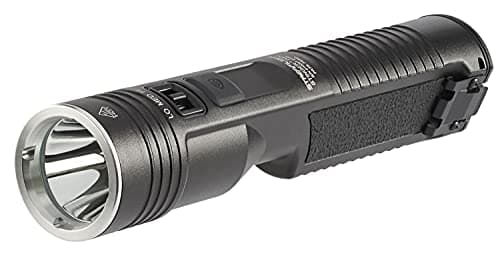
Streamlight Stinger 2020
Two thousand lumens for two hours, 850 for four, 100 for twenty-four, 315 meters of throw, IPX7. This is what a 2,000-lumen claim looks like when the manufacturer stands behind it with a duration.
Price as of September 26, 2026 — 13 lumens per dollar. #ad How we earn
Disclosure — we earn a commission on qualifying purchases made through the Amazon links on this page, at no extra cost to you. It does not change which lights we pick or what we say about them. The full version.
How we rank. Published ANSI FL1 output divided by the live retail price, with sealed-battery lights marked down because a light you cannot re-cell is a light with an expiry date. Units we claim to have tested: 0 — we compile manufacturers' published figures and show the arithmetic instead. How we work this out.
The short answer
For occupational use, buy on three things: a published runtime at a level you can work by for the length of your shift, a stated impact and water rating rather than a claim of toughness, and spare parts you can still buy in three years. The Streamlight Stinger 2020 publishes 2,000 lumens for two hours and 100 lumens for twenty-four, which is the clearest shift arithmetic here. The ProTac 2L-X does the same job cheaper and takes CR123A primaries when the pack is flat. Do not buy a duty light on its maximum output figure.
This site normally answers every question the same way: find the light with the most published output per dollar and buy that. On this page that answer is wrong, and it is worth being explicit about why rather than quietly changing the rules.
Lumens per dollar measures what you get for your money. It says nothing about what it costs you when the light does not work. For most buyers a failed flashlight is an annoyance worth about twenty dollars. If you are holding it at a traffic stop, in a smoke-filled stairwell or over a patient, the failure is expensive in a way no spec sheet captures, and the correct response is to pay for documentation and durability instead of brightness.
This is not the same as a tactical flashlight
We have a separate page about budget tactical lights, and it exists mostly to point out that the word tactical has no definition attached to it — it is a styling cue and a price premium more often than a specification. This page is the opposite problem.
Duty use is a real set of requirements you can write down: how long the light runs at a usable level, whether it survives being dropped on concrete, whether it still works wet, whether it charges in a vehicle, and whether you can buy a replacement cell for it in three years. None of those is a marketing word, all of them are published by at least some manufacturers, and the lights that satisfy them cost more than the ones with the aggressive bezels.
The criteria, before any pick
- 1.A published runtime at a working level — not at maximum. Maximum output is a burst on every light ever made. The figure that matters is how long it runs at the 100 to 300 lumens you will actually use.
- 2.A stated impact rating. A 1-meter or 2-meter tested figure is a claim with a standard behind it. A paragraph about aircraft-grade aluminum is not.
- 3.A stated water rating. IPX7 means immersion to a meter for thirty minutes; water resistant with no figure beside it means nothing at all.
- 4.Replaceable power. A pack you can buy a spare of, or primaries you can find in any hardware store. A sealed cell puts an expiry date on a tool you depend on.
- 5.Spares and warranty you can actually use in year three. This is the one criterion that does not appear on any spec sheet and is the main thing the extra money buys.
- 6.A second light. Every list like this should end with a small backup, because the failure mode you are buying against is having no light at all.
What each one publishes
| Light | Maximum output | Runtime at maximum | Longest published mode | Water / impact | Power |
|---|---|---|---|---|---|
| Streamlight Stinger 2020 | 2,000 lumens | 2 hours | 100 lm for 24 hours | IPX7 / 2 m | Replaceable pack, cradle |
| Streamlight ProTac 2L-X | 500 lumens | 2 h 45 min on CR123A | 40 lm for 30 hours | IPX7 / 2 m | 2 x CR123A or SL-B26 pack |
| Maglite ML150LR | 1,082 lumens | Over 3 hours | Up to 79 hours in eco | Not published | Replaceable pack, cradle |
| COAST HP7R | 300 lumens | Up to 33 hours | 33 hours | Not published | Removable ZITHION-X pack |
| Streamlight MicroStream | 250 lumens | 1 h 30 min | 50 lm for 3.5 hours | IPX4 / 1 m | Sealed cell |
| Streamlight Waypoint 400 | 1,400 lumens | 3 h 15 min | 38 lm for 84 hours | IPX8 / 1 m | Rechargeable, see note |
Read the fourth column rather than the second, because it contains the actual answer. Every light here covers a ten or twelve hour shift comfortably at a modest setting — twenty-four hours, thirty hours, thirty-three hours, seventy-nine hours. Not one of them covers a shift at maximum output, and the closest is three and a quarter hours.
That reframes the whole purchase. You are not choosing between a 2,000-lumen light and a 300-lumen light. You are choosing a light you will run at 100 to 300 lumens nearly all the time, which occasionally needs to do something much brighter for a couple of minutes. Once you see it that way, the ProTac 2L-X's 500 lumens stops looking modest and the COAST's 300 stops looking disqualifying.
| # | Light | Max output | Battery | Lumens / $ | Price |
|---|---|---|---|---|---|
| 1 | Streamlight Stinger 2020 Highest output with a published runtime to match | 2,000 | Replaceable | 13 | $149.48 on Amazon Price as of September 26, 2026 — 13 lumens per dollar. #ad How we earn |
| 2 | 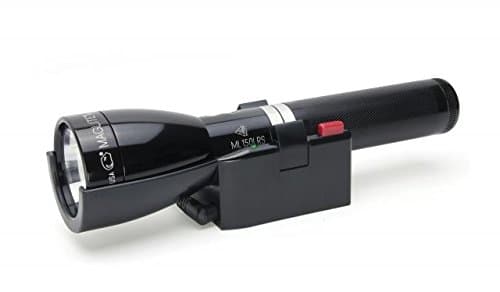 Maglite ML150LR Mag Charger The one built to be repaired instead of replaced | 1,082 | Replaceable | 11 | $99.99 on Amazon Price as of September 26, 2026 — 11 lumens per dollar. #ad How we earn |
| 3 | 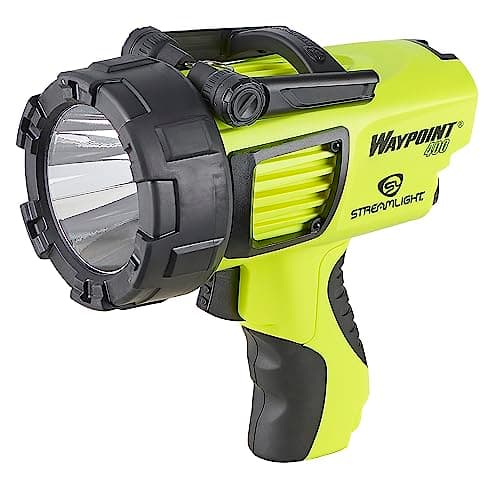 Streamlight Waypoint 400 Longest published throw here | 1,400 | Sealed | 10 | $134.00 on Amazon Price as of September 26, 2026 — 10 lumens per dollar. #ad How we earn |
| 4 | 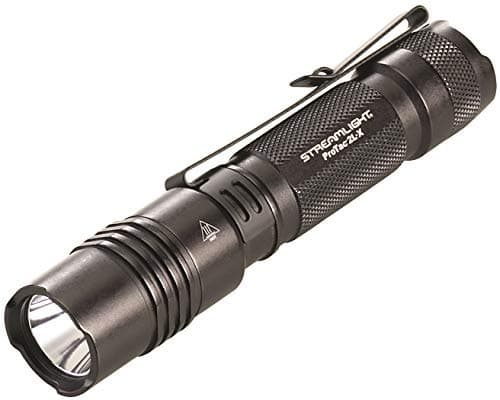 Streamlight ProTac 2L-X Best documented tactical light | 500 | Replaceable | 7 | $66.99 on Amazon Price as of September 26, 2026 — 7 lumens per dollar. #ad How we earn |
| 5 | 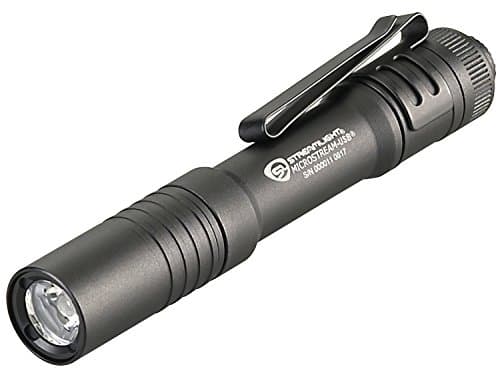 Streamlight MicroStream USB Best pen-clip light with published runtimes | 250 | Sealed | 7 | $37.81 on Amazon Price as of September 26, 2026 — 7 lumens per dollar. #ad How we earn |
| 6 | 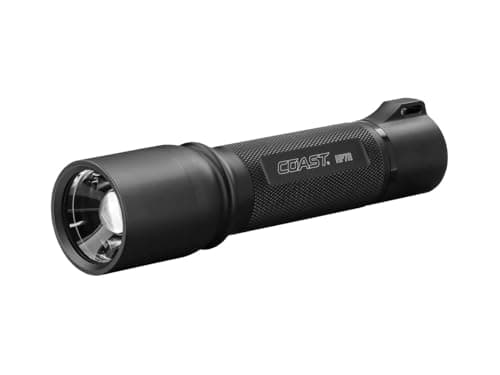 COAST HP7R Longest published runtime in this roundup | 300 | Replaceable | 3 | $112.69 on Amazon Price as of September 26, 2026 — 3 lumens per dollar. #ad How we earn |
Prices pulled September 26, 2026. Lumens per dollar is the manufacturer's published maximum output divided by that price, recomputed every time the price moves.
1. Highest output with a published runtime to match
Streamlight Stinger 2020
Lumens per dollar
13
Two thousand lumens for two hours, 850 for four, 100 for twenty-four, 315 meters of throw, IPX7. This is what a 2,000-lumen claim looks like when the manufacturer stands behind it with a duration.
- Max output
- 2,000 lm
- Runtime
- 2 h
- Battery
- Replaceable cell
- Water rating
- IPX7
What it gets right
- Two thousand lumens with two hours beside it, published together
- Twenty-four hours on low makes it viable as an outage light
- Duty-grade build with the warranty and spares to match
What it gets wrong
- Twelve and a half ounces — this is a belt light, not a pocket light
- Priced well above everything else in the value tier
- Charging is via a cradle, which is another thing to own
Published specification
- High: 2,000 lumens, 315 m, 2 hours — Streamlight published specification
- Medium: 850 lumens, 200 m, 4 hours — Streamlight published specification
- Low: 100 lumens, 70 m, 24 hours — Streamlight published specification
- Strobe: 3.25 hours — Streamlight published specification
- Water rating: IPX7 — Streamlight published specification
- Impact: 2 m tested — Streamlight published specification
- Weight: 12.3 oz (350 g) — Streamlight published specification
- Length: 7.67 in (19.48 cm) — Streamlight published specification
Skip this one if
you want value. On lumens per dollar it will lose to a Sofirn every time; what it buys is the certainty that the number is real.
Buy it if: professional use, and anyone comparing a budget light's 2,000-lumen claim against a documented one.
- Output 9.5
- Battery 8.5
- Build 9.5
- Usability 7.5
- Overall 8.4
Price as of September 26, 2026 — 13 lumens per dollar. #ad How we earn
2. The one built to be repaired instead of replaced
Maglite ML150LR Mag Charger
Lumens per dollar
11
A thousand and eighty-two lumens for over three hours, 79 hours in eco, a 458-meter beam, and a LiFePO4 pack rated for cycle counts nothing else here quotes. It costs several times what the value picks cost and it is the only light here likely to outlive its owner's interest in flashlights.
- Max output
- 1,082 lm
- Runtime
- Over 3 h
- Battery
- Replaceable cell
- Water rating
- None published
What it gets right
- Runtime published at full output, not just at the mode that flatters it
- Replaceable pack, spare parts, and a ten-year warranty
- Charging cradle that lives in a vehicle or on a wall
What it gets wrong
- Its lumens-per-dollar figure is poor and always will be
- No published IP rating on the product page
- The cradle system is convenient in a truck and awkward anywhere else
Published specification
- Maximum output: 1,082 lumens — Maglite published specification
- Runtime at full output: Over 3 hours — Maglite published specification
- Eco mode runtime: Up to 79 hours — Maglite published specification
- Beam distance: 500 yards (458 m) — Maglite published specification
- Battery: Rechargeable Mag Charger pack, replaceable — Maglite published specification
- Fast charge: To 80% in about 30 minutes — Maglite published specification
- Weight: Under 1 lb — Maglite published specification
- Warranty: Ten-year limited — Maglite published specification
- Water rating: Not published on the product page
Skip this one if
you are shopping on value. This light is bought for its service life and its parts availability, and if those do not matter to you it is simply expensive.
Buy it if: someone buying a tool for a decade rather than a purchase for this year.
- Output 8.0
- Battery 9.0
- Build 9.5
- Usability 7.5
- Overall 8.0
Price as of September 26, 2026 — 11 lumens per dollar. #ad How we earn
3. Longest published throw here
Streamlight Waypoint 400
Lumens per dollar
10
Four hundred thousand candela and a published 1,265 meters of beam distance, with a runtime printed beside every one of its three modes. It is the furthest-throwing light on this site and the rare spotlight whose maker documents the whole spec sheet rather than the headline.
- Max output
- 1,400 lm
- Runtime
- 3 h 15 min
- Battery
- Sealed
- Water rating
- IPX8
What it gets right
- Lumens, candela, beam distance AND runtime published for all three modes
- Four hundred thousand candela is the highest published beam intensity on this site
- IPX8 to two meters and it floats, which is the right specification for a boat
- Eighty-four hours on low turns a throw light into a usable outage light
What it gets wrong
- Streamlight does not state whether the cell is user-replaceable on the page we read
- Three and a quarter hours on high is short if you are working rather than searching
- It is a pistol-grip spotlight, so it is not going anywhere near a pocket
- Costs several times what a capable handheld flashlight costs
Published specification
- High: 1,400 lumens, 400,000 cd, 1,265 m, 3.25 hours — Streamlight published specification
- Medium: 600 lumens, 165,000 cd, 812 m, 7.5 hours — Streamlight published specification
- Low: 38 lumens, 10,000 cd, 200 m, 84 hours — Streamlight published specification
- Battery: Rechargeable lithium-ion, 4-hour charge — Streamlight published specification
- Battery replaceability: Not stated on the product page we read
- Water rating: IPX8, waterproof to 2 m — and it floats — Streamlight published specification
- Impact: 1 m tested — Streamlight published specification
- Weight: 1.52 lb (691 g) — Streamlight published specification
Skip this one if
you want one light for general use. A 400,000-candela beam puts its light in a tight circle a long way away, which is close to useless indoors or at arm's length.
Buy it if: boaters, search volunteers, large-property owners and anyone whose actual problem is identifying something several hundred meters away.
- Output 9.5
- Battery 6.0
- Build 9.5
- Usability 8.0
- Overall 8.6
Price as of September 26, 2026 — 10 lumens per dollar. #ad How we earn
4. Best documented tactical light
Streamlight ProTac 2L-X
Lumens per dollar
7
Five hundred lumens with the runtime published for both battery types, 165 meters of throw, IPX7 and a 2-meter impact rating. Streamlight publishes what most brands leave out, and the numbers hold up when you divide them.
- Max output
- 500 lm
- Runtime
- 2 h 45 min (CR123A) / 3 h 15 min (SL-B26)
- Battery
- Replaceable cell
- Water rating
- IPX7
What it gets right
- Runtime published for every mode and both battery chemistries
- IPX7 plus a stated 2 m impact test, not a vague claim of toughness
- Runs on CR123A primaries when the rechargeable pack is flat
What it gets wrong
- Five hundred lumens is modest for the money in raw terms
- CR123A cells are expensive if you run it on primaries
- No high-CRI option
Published specification
- High: 500 lumens, 165 m, 2.75 h on CR123A / 3.25 h on SL-B26 — Streamlight published specification
- Low: 40 lumens, 49 m, 30 hours on either battery — Streamlight published specification
- Strobe: Up to 3.25 h (CR123A) / 4.5 h (SL-B26) — Streamlight published specification
- Battery: 2 x CR123A or the SL-B26 rechargeable pack — Streamlight published specification
- Water rating: IPX7, 1 m for 30 minutes — Streamlight published specification
- Impact: 2 m tested — Streamlight published specification
- Weight: 3.9 oz with CR123A / 4.4 oz with SL-B26 — Streamlight published specification
Skip this one if
you want the biggest number per dollar. Streamlight charges for documentation, warranty and consistency, and none of those show up in a lumens-per-dollar column.
Buy it if: someone whose light has to work every time and who would rather have a small honest number than a large unverifiable one.
- Output 6.5
- Battery 8.5
- Build 9.0
- Usability 8.5
- Overall 8.1
Price as of September 26, 2026 — 7 lumens per dollar. #ad How we earn
5. Best pen-clip light with published runtimes
Streamlight MicroStream USB
Lumens per dollar
7
Two hundred and fifty lumens for an hour and a half, fifty for three and a half, at 1.2 ounces. The battery is sealed, which caps its lifespan, but every other number on the sheet is published and checkable.
- Max output
- 250 lm
- Runtime
- 1 h 30 min
- Battery
- Sealed
- Water rating
- IPX4
What it gets right
- Every mode's runtime is published, which is why it scores well here despite modest output
- Deep pocket clip that actually holds in a shirt pocket
- 1.2 ounces — it is easy to forget you have it
What it gets wrong
- The cell is sealed in; when it fails the light is finished
- IPX4 splash rating only
- 250 lumens is not enough to light a yard
Published specification
- High: 250 lumens, 68 m, 1.5 hours — Streamlight published specification
- Low: 50 lumens, 31 m, 3.5 hours — Streamlight published specification
- Battery: Lithium-ion, charges in-product in 4 hours — Streamlight published specification
- Water rating: IPX4 — Streamlight published specification
- Impact: 1 m tested — Streamlight published specification
- Weight: 1.2 oz (34.1 g) — Streamlight published specification
- Length: 3.87 in (9.83 cm) — Streamlight published specification
Skip this one if
you want a light you can re-cell. For a keychain-sized light with a replaceable battery, look at the Sofirn SC21 Pro instead.
Buy it if: a shirt pocket, a scrubs pocket, or anyone who wants a light without a bulge.
- Output 5.5
- Battery 4.5
- Build 8.5
- Usability 9.0
- Overall 7.2
Price as of September 26, 2026 — 7 lumens per dollar. #ad How we earn
6. Longest published runtime in this roundup
COAST HP7R
Lumens per dollar
3
Three hundred lumens, a 352-meter beam and up to 33 hours of runtime on a removable ZITHION-X pack. It is the opposite of a turbo-number light: modest output, enormous endurance, and a cell you can replace.
- Max output
- 300 lm
- Runtime
- Up to 33 h
- Battery
- Replaceable cell
- Water rating
- None published
What it gets right
- Thirty-three hours of published runtime, which almost nothing else here approaches
- Removable battery pack sold as a separate part
- 352 m of throw from only 300 lumens — good optics beat brute force
What it gets wrong
- Three hundred lumens will disappoint anyone shopping by the big number
- COAST does not publish a water rating on this product page
- Its lumens-per-dollar figure will always look poor next to an 18650 light
Published specification
- Maximum output: 300 lumens — COAST published specification
- Beam distance: 352 m — COAST published specification
- Runtime: Up to 33 hours — COAST published specification
- Battery: ZX800 ZITHION-X, 2,400 mAh 3.7V, removable — COAST published specification
- Focus: Pure Beam focusing optic — COAST published specification
- Water rating: Not published on the product page
Skip this one if
you are ranking purely on lumens per dollar. This light loses that contest and wins the runtime one, and which of those matters is a question about you, not the light.
Buy it if: long shifts, night walks and anyone who would rather have light for a day than light for an hour.
- Output 5.5
- Battery 8.5
- Build 8.0
- Usability 8.0
- Overall 7.5
Price as of September 26, 2026 — 3 lumens per dollar. #ad How we earn
Shift arithmetic, done properly
Work out the sum before you buy rather than after. If your shift is ten hours and you estimate the light is genuinely on for ninety minutes of it — walk-ups, interiors, paperwork in a vehicle, a search — then you need ninety minutes at a working level, plus a margin for the night it turns into four hours.
Against that, a published twenty-four hours at 100 lumens is not merely adequate, it is enormous headroom, and it means the light will still be working at the end of a bad night rather than at the end of an average one. This is why the low-mode figure is the one to compare and the turbo figure is the one to ignore.
The one thing the arithmetic cannot tell you is how the light behaves as the cell empties. A regulated light holds output and then stops; an unregulated one dims gradually and warns you. None of these manufacturers publishes which behavior its light has, so plan around the published number rather than around a warning you may not get.
Carry two lights, and make the second one small
The single most useful recommendation on this page is not a product, it is a habit: carry a primary and a backup. The failure you are buying insurance against is not a dim light, it is no light, and the cheapest insurance against no light is a second one in a shirt pocket.
The MicroStream is here for exactly that role and for no other reason. At 1.2 ounces and 250 lumens with every mode's runtime published, it is not a substitute for a duty light — its cell is sealed and its water rating is IPX4, which is splash resistance and nothing more. As the thing you reach for when the primary is flat, on a charger, or in the other vehicle, it is close to ideal.
The same logic argues for the Waypoint 400 as a third light kept in the vehicle rather than on the belt. A 400,000-candela spotlight is the wrong tool for anything at arm's length and the right one for a treeline, a field or a water search, and no handheld duty light does that job.
Rechargeable pack or primaries
The two strategies fail differently and the choice should follow how your light gets charged. A rechargeable pack in a vehicle cradle is the lowest-friction option by a wide margin: the Stinger 2020 and the Maglite both charge that way, and a light that lives in a cradle is a light that is always full.
Primaries answer the other problem. The ProTac 2L-X runs on two CR123A cells or on Streamlight's SL-B26 rechargeable pack, and publishes a runtime for both. CR123A cells are expensive per hour and they sit on a shelf for years without going flat, which makes them the right answer for a light that waits in a bag, a locker or a glovebox between uses rather than one that runs every shift.
The Maglite is worth a specific mention on service life rather than on output. Maglite publishes a ten-year limited warranty and sells the pack as a separate part, which is a stated commitment to the light still being repairable in year eight. Almost nothing else at this price says anything at all about year eight.
By service
For patrol and general policing the constraints are belt carry, vehicle charging and a long low mode. That points at a rechargeable pack in a cradle, with a small backup in a shirt pocket, and it is the configuration the Stinger 2020 and the MicroStream cover between them.
For fire service the constraints shift toward ingress protection and impact. A stated IPX7 rating and a 2-meter tested impact figure are worth more here than any amount of output, and the two Streamlights are the only lights on this page that publish both. We would add that we have no basis to comment on intrinsic safety or any hazardous-location rating, and none of these manufacturers claims one on the pages we read — if your role requires a certified light, that requirement is outside what we can verify.
For EMS the job is mostly close-range assessment rather than distance, which changes the priorities completely. Output above a few hundred lumens is actively unhelpful at arm's length, a flood beam beats a hotspot, and color rendering genuinely matters when you are looking at skin — which is the one specification none of these lights publishes. Our high-CRI page covers what does.
What to skip
- Any light whose only published figure is a maximum output. On a duty belt the undocumented light is the disqualified light.
- Sealed-cell lights as a primary. When the cell reaches the end of its life the tool is finished, and you do not get to choose when that happens.
- Buying on lumens per dollar. It is the right measure almost everywhere on this site and the wrong one here, and we would rather say so than pretend our usual arithmetic covers every case.
- Strike bezels and aggressive crenellation as a buying reason. They are a styling decision on most lights at this price, and we have covered that separately.
- A single light. Whatever you buy, buy something small as well.
How we ranked these
Published output over the live price still sets the baseline, but the weighting on this page is deliberately different from the rest of the site: published runtime at a working level counts for more than maximum output, a stated impact and water rating counts heavily, and replaceable power and parts availability count as much as either. A light that publishes no IP figure loses points here even where it is excellent otherwise, which is why the Maglite and the COAST are marked down despite both being well built.
Units we claim to have tested: 0
Every publisher in this category says they tested twenty flashlights. We have not tested any, and we say so. What we do instead: compile the manufacturer's own published ANSI FL1 figures, pull the price the light is selling for right now, and divide one by the other. Every number on this page is one you can check yourself in about two minutes.
What we cannot tell you
We have not used any of these lights on a shift, dropped one on concrete, or run a cell to empty. Every figure above is the manufacturer's own, with its source and read date recorded.
Three limits are worth stating plainly. We have no information about what any agency issues, requires or approves, and we are not going to imply otherwise — treat your own department's policy as the authority over anything on this page. We cannot speak to intrinsic safety, hazardous-location or any certification beyond the IP and impact figures the manufacturers publish. And we have not tested a warranty claim with any of these companies, which means the parts-availability argument rests on what they publish rather than on anything we have verified.
Common questions
What flashlight do police use?
We have no verified information about what any department issues, and we are not going to guess. What we can say is what the requirement looks like on a spec sheet: a published runtime at a working level long enough to cover a shift, a stated impact and water rating, vehicle charging or primaries, and spares available in a few years. The Streamlight Stinger 2020 publishes 2,000 lumens for two hours and 100 lumens for twenty-four, which is the clearest example of that arithmetic among the lights we cover.
How many lumens should a duty flashlight have?
Fewer than the marketing suggests, and the more useful question is for how long. Most work happens between 100 and 300 lumens, and every light on this page publishes twenty-four hours or more at a level in that range. Maximum output matters for short bursts only — not one of these lights runs for more than three and a quarter hours at its maximum, and most are under three.
Is a rechargeable or battery flashlight better for duty use?
It depends on how the light gets charged rather than on which is better. If you have a vehicle cradle, a rechargeable pack is the lowest-friction option and the light is always full — that is the Stinger 2020 and the Maglite ML150LR. If the light waits in a bag or locker between uses, CR123A primaries hold their charge on a shelf for years, and the ProTac 2L-X takes either and publishes a runtime for both.
Can you replace the battery in a rechargeable flashlight?
It depends entirely on the model, and it is the single most consequential thing to check before buying. Lights built around a standard cell — an 18650, a 21700, a 14500, a 16340 — take a screw-off tailcap and a five-dollar replacement. Lights with a built-in cell, which manufacturers describe as 'integrated' or 'non-removable', cannot be re-celled by an ordinary owner: when the battery reaches the end of its cycle life the whole light is refuse. Energizer, for example, states plainly that the Vision HD Rechargeable uses non-removable lithium-ion batteries.
Sources
- Streamlight published product specifications — per-mode lumens, runtime, beam distance, impact and IP ratings, read 2026-09-01; Waypoint 400 and Waypoint C-cell read 2026-09-22
- Maglite published product specifications — read 2026-09-01
- COAST published product specifications — read 2026-09-01
- Streamlight, ANSI Information — definitions of light output, beam distance, run time, impact and water resistance under the FL1 standard, read 2026-09-01
- Lumen & Ledger method — how every figure on this page is derived
Who writes this
Scooter M. — I am an enthusiast who is genuinely into this. I read the manuals, compile the published specs, and do the math. No lab coat, no test bench, no drawer of free samples. What I can tell you is exactly what a light claims on paper, exactly what it costs right now, and what those two numbers mean when you divide one by the other.
Read next
Best budget tactical flashlights
What the word actually buys once you strip the marketing out of it.
Best flashlights under $100
Where you stop buying lumens and start buying documentation, sealing and spare parts.
Best rechargeable spotlights
Throw is candela, not lumens. The four that publish theirs, and the fiction to avoid.
Best high-CRI flashlights
The four lights we cover that publish a color rendering figure, and what it costs in lumens.
Flashlight runtime explained
Why a published runtime can be honest and still describe a light that dimmed an hour ago.
The Ledger
Every light we cover in one ranked table, sorted by lumens per dollar.