Flashlights
NITECORE MH25 Pro Review: The Longest Throw You Can Put in a Pocket
Four lights on this site publish a longer reach than this one. Every one of them is a pistol-grip spotlight weighing five to seven times as much. That is the whole case for the MH25 Pro, and NITECORE still leaves the most useful column blank.
By Scooter M. · Published November 7, 2026
Short answer
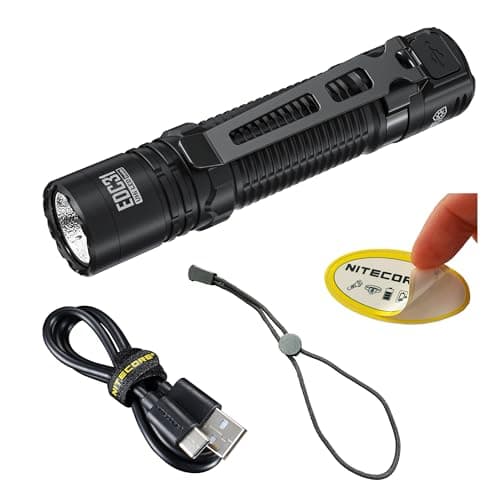
NITECORE EDC31
Thirty-five hundred lumens and 35,630 candela out of a 113-millimeter flat body, with IP68 to two meters and a 2-meter impact rating. NITECORE publishes the figures that describe the beam and then publishes a runtime for exactly one of its four modes, which is the pattern that keeps this brand off the top of our tables.
Price as of November 7, 2026 — 64 lumens per dollar. #ad How we earn
Disclosure — we earn a commission on qualifying purchases made through the Amazon links on this page, at no extra cost to you. It does not change which lights we pick or what we say about them. The full version.
How we rank. Published ANSI FL1 output divided by the live retail price, with sealed-battery lights marked down because a light you cannot re-cell is a light with an expiry date. Units we claim to have tested: 0 — we compile manufacturers' published figures and show the arithmetic instead. How we work this out.
The verdict
Buy the MH25 Pro if your actual problem is identifying something several hundred meters away and you do not want to carry a spotlight to do it. NITECORE publishes 3,300 lumens, 124,300 candela and 705 meters of beam distance from a 130-gram body, on a standard 21700 cell, with IP68 submersion to two meters and a 1-meter impact rating. The catch is the same one that runs through this brand: there is no runtime published for the 3,300-lumen mode, or for any mode — only a 650-hour maximum at a setting the product page does not name.
We have not used this light. What earns it a dedicated page is not the hardware, which is a conventional 21700 tube with a good reflector. It is where the published figures place it against everything else we cover, which is somewhere no other handheld gets close to.
The published specification
| Specification | Published figure |
|---|---|
| Maximum output | 3,300 lumens |
| Peak beam intensity | 124,300 cd |
| Beam distance | 705 m |
| Maximum runtime | 650 hours, at a mode the page does not name |
| Battery | 1 x 21700, 5,300 mAh, USB-C charging in the body |
| Water rating | IP68, submersible to 2 m |
| Impact resistance | 1 m |
| Weight | 130 g (4.59 oz) |
| Length | 153.6 mm (6.05 in); head 40 mm (1.57 in) |
| Emitter | NiteLab UHi 40 |
| Modes | Five brightness levels and three special modes |
Where 705 meters actually places it
Sixteen of the fifty-four products in our registry publish a peak beam intensity in candela at all — that figure is the one that governs reach, and most manufacturers skip it. Ranking those sixteen puts the MH25 Pro fifth, and the company it keeps is the point.
| Rank | Light | Candela | Beam distance | Weight as published |
|---|---|---|---|---|
| 1 | Streamlight Waypoint 400 | 400,000 cd | 1,265 m | 1.52 lb (691 g) |
| 2 | NEBO LUXTREME SL75 | 362,500 cd | 1,200 m | 2.1 lb |
| 3 | NEBO LUXTREME SL50 | 160,000 cd | 800 m | Not published |
| 4 | Streamlight Waypoint (C-cell) | 150,000 cd | 775 m | 1.8 lb (816 g) with cells |
| 5 | NITECORE MH25 Pro | 124,300 cd | 705 m | 130 g (4.59 oz) |
| 6 | Sofirn Q8 Plus | 76,666 cd | 554 m | 492 g without cells |
Brighter is not farther, and this brand proves it twice
Put the MH25 Pro beside its own stablemate. The NITECORE EDC31 publishes 3,500 lumens — two hundred more than the MH25 Pro — and 35,630 candela for 380 meters of beam distance. The MH25 Pro publishes 3,300 lumens and 124,300 candela for 705 meters. Slightly less light, three and a half times the beam intensity, and nearly double the reach.
The difference is the reflector. The MH25 Pro has a 40-millimeter head and the EDC31 is a flat pocket body with no room for one. That is the entire mechanism, and it is why this site keeps saying that shopping a thrower on lumens is shopping on the wrong number. If you want the argument in full we set it out in our guide to lumens against candela.
| # | Light | Max output | Battery | Lumens / $ | Price |
|---|---|---|---|---|---|
| 1 | NITECORE EDC31 Most output from a flat pocket body | 3,500 | Sealed | 64 | $54.95 on Amazon Price as of November 7, 2026 — 64 lumens per dollar. #ad How we earn |
| 2 | 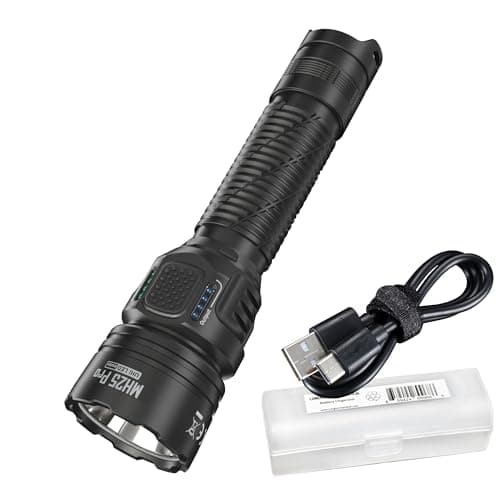 NITECORE MH25 Pro Longest published reach in the range | 3,300 | Replaceable | 33 | $99.95 on Amazon Price as of November 7, 2026 — 33 lumens per dollar. #ad How we earn |
| 3 | 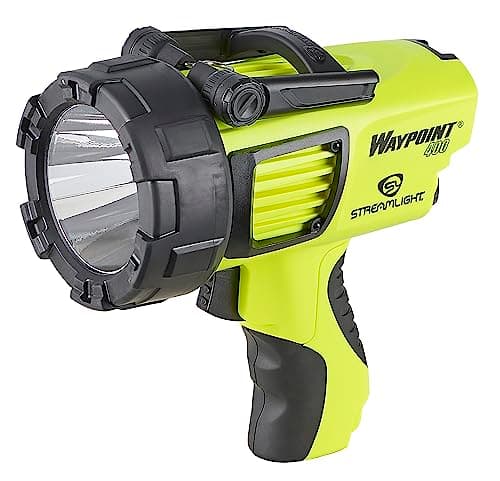 Streamlight Waypoint 400 Longest published throw here | 1,400 | Sealed | 10 | $135.99 on Amazon Price as of November 7, 2026 — 10 lumens per dollar. #ad How we earn |
Prices pulled November 7, 2026. Lumens per dollar is the manufacturer's published maximum output divided by that price, recomputed every time the price moves.
What NITECORE does not publish
Three gaps, and the first is the one that matters.
- 1.No runtime for any named mode. The sheet gives a 650-hour maximum and does not say which of the five brightness levels produces it. A maximum runtime is by definition the figure from a light's lowest setting, so what you are being told is how long the dimmest mode lasts — and nothing at all about the 3,300 lumens on the box. A 3,300-lumen output from a 130-gram tube is physically a burst, because there is nowhere for that much heat to go, and the duration of that burst is the single figure a buyer most needs.
- 2.No charge time. On a 5,300 mAh cell charging over USB-C in the body, how long a full charge takes is a practical question with a practical answer, and NITECORE does not give it.
- 3.No statement that the cell is user-replaceable. NITECORE specifies a 21700, which is a standard removable format and a much stronger signal than a vague rechargeable lithium-ion, but it never says in words that an owner may swap it. We treat the format as the substantive claim and flag the missing sentence rather than assuming either way.
What it does publish is worth saying plainly, because plenty of brands do not: IP68 to two meters as a code rather than an adjective, a 1-meter impact figure, candela alongside beam distance, and a named emitter. On the disclosure that describes the beam, this light is better documented than most of the site. On the disclosure that describes time, it is among the worst.
1. Most output from a flat pocket body
NITECORE EDC31
Lumens per dollar
64
Thirty-five hundred lumens and 35,630 candela out of a 113-millimeter flat body, with IP68 to two meters and a 2-meter impact rating. NITECORE publishes the figures that describe the beam and then publishes a runtime for exactly one of its four modes, which is the pattern that keeps this brand off the top of our tables.
- Max output
- 3,500 lm
- Runtime
- 57 h at 5 lm
- Battery
- Sealed
- Water rating
- IP68
What it gets right
- Thirty-five hundred lumens and 380 meters from a body that still fits a pocket
- IP68 to two meters plus a 2-meter impact rating — the strongest pair NITECORE publishes here
- Publishes peak beam intensity in candela, which is the figure that actually governs throw
- Fifty-seven hours at 5 lumens makes it usable as a long-reserve light as well as a bright one
What it gets wrong
- The 3,800 mAh 18650 is built in and NITECORE states it is non-removable, so the light has a service life
- A runtime is published for the ultralow mode only — nothing for the three modes you will actually use
- Three and a half thousand lumens in a 100-gram body is a burst, and NITECORE does not say how long it lasts
- Two separate momentary modes on top of four levels is a lot of interface for a pocket light
Published specification
- Maximum output: 3,500 lumens — NITECORE published specification
- Peak beam intensity: 35,630 cd — NITECORE published specification
- Beam distance: 380 m — NITECORE published specification
- Maximum runtime: 57 hours at 5 lumens — NITECORE published specification
- Battery: Built-in 3,800 mAh 18650 Li-ion, non-removable — NITECORE published specification
- Charge time: About 1 h 45 min with a 5V/2A adapter — NITECORE published specification
- Water rating: IP68, submersible to 2 m — NITECORE published specification
- Impact: 2 m — NITECORE published specification
- Weight: 100 g (3.53 oz) — NITECORE published specification
- Length: 113.2 mm (4.46 in) — NITECORE published specification
- Emitter: NiteLab UHi 20 MAX — NITECORE published specification
- Per-mode runtime: Not published except the 5-lumen ultralow
Skip this one if
you want to re-cell the light rather than replace it. NITECORE states the 18650 is non-removable, which on an otherwise excellent specification is the one thing you cannot work around.
Buy it if: somebody who wants the most output and throw available in a flat pocket body and is willing to treat the light as a consumable to get it.
- Output 9.5
- Battery 4.5
- Build 9.0
- Usability 7.5
- Overall 8.0
Price as of November 7, 2026 — 64 lumens per dollar. #ad How we earn
2. Longest published reach in the range
NITECORE MH25 Pro
Lumens per dollar
33
Thirty-three hundred lumens, 124,300 candela and a published 705 meters out of a 130-gram body running on a standard 21700 cell, with IP68 to two meters. It is the most capable light NITECORE sells here, and it still will not tell you how long the turbo mode lasts.
- Max output
- 3,300 lm
- Runtime
- 650 h at its lowest mode
- Battery
- Replaceable cell
- Water rating
- IP68
What it gets right
- Seven hundred and five meters and 124,300 candela — the longest published reach of any NITECORE here
- Runs on a standard 21700, so the cell is an ordinary part rather than a proprietary pack
- IP68 to two meters on a light that is still only 130 grams
- Publishes peak beam intensity in candela, which is the figure that actually governs throw
What it gets wrong
- No runtime is published beside 3,300 lumens, or beside any mode except the 650-hour maximum
- NITECORE does not state in words that the 21700 is user-removable, only that the light takes one
- At 153.6 mm this is a duty-length light, not a pocket light
- The charge time is absent from the product page, which matters on a 5,300 mAh cell
Published specification
- Maximum output: 3,300 lumens — NITECORE published specification
- Peak beam intensity: 124,300 cd — NITECORE published specification
- Beam distance: 705 m — NITECORE published specification
- Maximum runtime: 650 hours, at a mode the product page does not name — NITECORE published specification
- Battery: 1 x 21700, 5,300 mAh, USB-C charging in the body — NITECORE published specification
- Water rating: IP68, submersible to 2 m — NITECORE published specification
- Impact: 1 m — NITECORE published specification
- Weight: 130 g (4.59 oz) — NITECORE published specification
- Length: 153.6 mm (6.05 in) — NITECORE published specification
- Head diameter: 40 mm (1.57 in) — NITECORE published specification
- Emitter: NiteLab UHi 40 — NITECORE published specification
- Modes: Five brightness levels and three special modes — NITECORE published specification
- Per-mode runtime: Not published on the product page — only the 650-hour maximum is given
- Battery replaceability: Not stated in words, though the cell is specified as a standard 21700
- Charge time: Not published on the product page
Skip this one if
you need to plan around a runtime. A 3,300-lumen turbo with no published duration is a burst of unknown length, and if your light has to last a measurable number of hours at a usable output, a brand that prints that number is the safer buy.
Buy it if: anyone whose actual problem is identifying something several hundred meters away, who wants a standard cell and a sealed body rather than a pistol-grip spotlight.
- Output 9.5
- Battery 7.5
- Build 9.5
- Usability 7.0
- Overall 8.4
Price as of November 7, 2026 — 33 lumens per dollar. #ad How we earn
3. Longest published throw here
Streamlight Waypoint 400
Lumens per dollar
10
Four hundred thousand candela and a published 1,265 meters of beam distance, with a runtime printed beside every one of its three modes. It is the furthest-throwing light on this site and the rare spotlight whose maker documents the whole spec sheet rather than the headline.
- Max output
- 1,400 lm
- Runtime
- 3 h 15 min
- Battery
- Sealed
- Water rating
- IPX8
What it gets right
- Lumens, candela, beam distance AND runtime published for all three modes
- Four hundred thousand candela is the highest published beam intensity on this site
- IPX8 to two meters and it floats, which is the right specification for a boat
- Eighty-four hours on low turns a throw light into a usable outage light
What it gets wrong
- Streamlight does not state whether the cell is user-replaceable on the page we read
- Three and a quarter hours on high is short if you are working rather than searching
- It is a pistol-grip spotlight, so it is not going anywhere near a pocket
- Costs several times what a capable handheld flashlight costs
Published specification
- High: 1,400 lumens, 400,000 cd, 1,265 m, 3.25 hours — Streamlight published specification
- Medium: 600 lumens, 165,000 cd, 812 m, 7.5 hours — Streamlight published specification
- Low: 38 lumens, 10,000 cd, 200 m, 84 hours — Streamlight published specification
- Battery: Rechargeable lithium-ion, 4-hour charge — Streamlight published specification
- Battery replaceability: Not stated on the product page we read
- Water rating: IPX8, waterproof to 2 m — and it floats — Streamlight published specification
- Impact: 1 m tested — Streamlight published specification
- Weight: 1.52 lb (691 g) — Streamlight published specification
Skip this one if
you want one light for general use. A 400,000-candela beam puts its light in a tight circle a long way away, which is close to useless indoors or at arm's length.
Buy it if: boaters, search volunteers, large-property owners and anyone whose actual problem is identifying something several hundred meters away.
- Output 9.5
- Battery 6.0
- Build 9.5
- Usability 8.0
- Overall 8.6
Price as of November 7, 2026 — 10 lumens per dollar. #ad How we earn
Who should skip it
- Anyone who needs to plan around a runtime. If the light has to last a stated number of hours at a usable output, buy Streamlight — it publishes a duration beside every mode of every model it sells, which is exactly the column NITECORE leaves blank.
- Anyone who wants a pocket light. At 153.6 millimeters this is a duty-length tube. It goes in a coat, a bag or a belt carrier, not a trouser pocket, and the flat-bodied EDC31 exists for that job.
- Anyone buying on lumens per dollar. Sofirn publishes 3,800 lumens with a full five-mode table including candela for roughly half the money, and we compare the two brands directly.
- Anyone whose real problem is close-up work. A 124,300-candela hotspot is actively unhelpful at arm's length — it blows out your pupil response and blacks out everything around it. This is a light for distance and it is bad at the opposite job.
How we rated it
Published output over the live price, adjusted for battery architecture and published ratings, as on every page here. Two adjustments apply to this light specifically. A maximum runtime with no mode attached earns no credit as a runtime, because a duration you cannot locate on the light is not something a buyer can use — and that is the main thing holding this light back in our table. Against that, a published candela figure is credited, because it is the number that decides whether a thrower throws, and only sixteen of our fifty-four products provide one.
Units we claim to have tested: 0
Every publisher in this category says they tested twenty flashlights. We have not tested any, and we say so. What we do instead: compile the manufacturer's own published ANSI FL1 figures, pull the price the light is selling for right now, and divide one by the other. Every number on this page is one you can check yourself in about two minutes.
What we cannot tell you
We have not used this light, so nothing here is a claim about how it survives a season on a belt, how NITECORE's warranty service behaves, or whether the beam looks as clean as the candela figure implies. We particularly cannot tell you how long it holds 3,300 lumens before stepping down, because NITECORE does not publish it and we will not estimate it — that blank is the finding of this review rather than a gap we can fill. The throw ranking above is compiled from manufacturers' own figures, and since none of these makers states a test standard on the pages we read, treat the ordering as directional rather than as a measured shoot-out.
Common questions
Is the NITECORE MH25 Pro worth it?
It is if you need reach in something carryable. NITECORE publishes 124,300 candela and 705 meters of beam distance at 130 grams, which puts it fifth for throw among everything we cover and first among lights that are not spotlights — the four above it weigh from 691 grams upward. It is not worth it if you need to plan around a runtime, because NITECORE publishes no duration for any named mode, only a 650-hour maximum at an unnamed setting.
How far does the MH25 Pro actually throw?
NITECORE publishes 705 meters of beam distance from 124,300 candela. For context from our own registry: the Streamlight Waypoint 400 publishes 1,265 meters at 400,000 candela but weighs 691 grams, and the Sofirn Q8 Plus searchlight publishes 554 meters at 76,666 candela and 492 grams. So the MH25 Pro out-throws a searchlight four times its weight. Since no manufacturer here states a test standard, treat the comparison as directional rather than measured.
MH25 Pro or EDC31?
MH25 Pro for distance, EDC31 for carry. The EDC31 publishes slightly more light — 3,500 lumens against 3,300 — and far less reach: 35,630 candela and 380 meters against 124,300 and 705. The MH25 Pro's 40-millimeter head is doing that work, and it costs you size: 153.6 millimeters and 130 grams against a flat 113-millimeter body at 100 grams. Neither publishes a runtime for the mode on its box.
Does the MH25 Pro have a replaceable battery?
NITECORE specifies a standard 21700 cell rated 5,300 mAh, which is an ordinary removable format you can buy anywhere, but the product page never states in words that an owner may replace it. We record the format as the substantive claim and the missing sentence as a gap. That is a materially better position than the brand's EDC31, where NITECORE states plainly that the built-in 18650 is non-removable.
How many lumens do I actually need?
For walking a dog, finding a fuse box or reading a map, 100 to 300 lumens is plenty and will run far longer. For a garage, a yard or a campsite, 500 to 1,000 lumens is comfortable. Above about 2,000 lumens you are buying a burst rather than a mode, because almost no handheld light can shed that much heat continuously.
Sources
- NITECORE published product specifications — NU25 MCT UL read 2026-09-01; MT2A Pro read 2026-09-13; EDC31 read 2026-10-03; MH25 Pro and Tiki LE read 2026-10-10
- NitecoreLights, ANSI / NEMA FL-1 Guide — FL1 definitions plus a published account of the standard's runtime limitation, read 2026-09-01
- Streamlight published product specifications — per-mode lumens, runtime, beam distance, impact and IP ratings, read 2026-09-01; Waypoint 400 and Waypoint C-cell read 2026-09-22; FlipMate read 2026-10-18
- Sofirn published product specifications — SC31 Pro and SC21 Pro read 2026-09-01; ST10, SP35T and Q8 Plus read 2026-10-24 on the US Sofirn store
- Lumen & Ledger method — how every figure on this page is derived
Who writes this
Scooter M. — I am an enthusiast who is genuinely into this. I read the manuals, compile the published specs, and do the math. No lab coat, no test bench, no drawer of free samples. What I can tell you is exactly what a light claims on paper, exactly what it costs right now, and what those two numbers mean when you divide one by the other.
Read next
Best NITECORE flashlights
Five models sorted by job, and the runtime the brand never prints.
Streamlight Waypoint 400 review
Four hundred thousand candela with a runtime beside every mode.
Lumens vs candela
One measures how much light there is. The other measures how far it goes.
Best rechargeable spotlights
Throw is candela, not lumens. The four that publish theirs, and the fiction to avoid.
Best duty flashlights
Where cheapest lumens per dollar is the wrong answer, and what replaces it.
The Ledger
Every light we cover in one ranked table, sorted by lumens per dollar.