Flashlights
The Best NITECORE Flashlights, and the One Number They Leave Out
NITECORE publishes the beam physics almost nobody else does: peak intensity in candela, IP68 to two meters, weights to the tenth of a gram. Then it tells you how long the light runs on its dimmest setting and stops.
By Scooter M. · Published October 10, 2026
Short answer
NITECORE EDC31
Thirty-five hundred lumens and 35,630 candela out of a 113-millimeter flat body, with IP68 to two meters and a 2-meter impact rating. NITECORE publishes the figures that describe the beam and then publishes a runtime for exactly one of its four modes, which is the pattern that keeps this brand off the top of our tables.
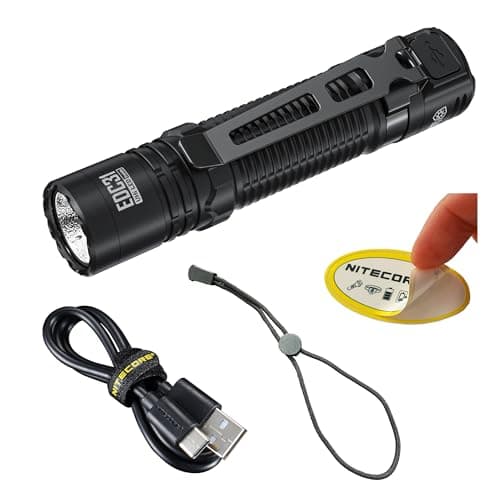
Price as of October 18, 2026 — 64 lumens per dollar. #ad How we earn
Disclosure — we earn a commission on qualifying purchases made through the Amazon links on this page, at no extra cost to you. It does not change which lights we pick or what we say about them. The full version.
How we rank. Published ANSI FL1 output divided by the live retail price, with sealed-battery lights marked down because a light you cannot re-cell is a light with an expiry date. Units we claim to have tested: 0 — we compile manufacturers' published figures and show the arithmetic instead. How we work this out.
The short answer
For most people the right NITECORE is the MT2A Pro: 1,000 lumens, 255 meters, IP68 to two meters, and it runs on its own removable 14500 or on two AA cells from any shop when that is flat. If you want the most output from a flat pocket body, the EDC31 publishes 3,500 lumens and 380 meters. If your problem is distance, the MH25 Pro publishes 705 meters and 124,300 candela on a standard 21700. For a keyring, the Tiki LE is 10.5 grams. For hands-free, the NU25 MCT UL is the lightest headlamp here with a real published runtime.
Sorted by job rather than by output, because the NITECORE range is not a ladder. The brightest light here is a 153-millimeter duty light and the smallest is a fob that weighs less than four sheets of paper, and they are not alternatives to each other at any price.
Before the picks, the thing that separates this brand from the others on this site — and the single figure it declines to publish.
What NITECORE publishes that almost nobody else does
Peak beam intensity, in candela. That sounds like trivia and it is the most useful number in the category. Lumens measure total light leaving the head; candela measures how concentrated the beam is, and concentration is what determines whether you can identify something at distance. Two lights with identical lumen figures can differ by a factor of ten in throw, and only the candela figure tells you which is which.
Most brands publish lumens and stop. NITECORE publishes candela and beam distance together on all four flashlights here: 1,260 candela and 71 meters on the Tiki LE, 16,500 and 255 meters on the MT2A Pro, 35,630 and 380 meters on the EDC31, 124,300 and 705 meters on the MH25 Pro. Only the NU25 headlamp breaks the pattern, publishing its 132-meter beam distance without a candela figure. The Streamlight range, which we rate highly for its paperwork, publishes no candela at all for its handhelds.
It is thorough in the other unglamorous places too. IP68 submersion to two meters is published on three of these five lights, which is a stronger rating than most of this site carries. Impact resistance is stated in meters. Weights are published to the tenth of a gram and lengths to the tenth of a millimeter, which sounds obsessive until you are deciding whether something fits a watch pocket.
And the number it leaves out
A runtime beside the output you will actually use. This is not a small gap on a site whose entire premise is that a headline number without a duration is half a specification.
The EDC31 publishes 3,500 lumens, and the only runtime on its sheet is 57 hours at 5 lumens. The MH25 Pro publishes 3,300 lumens and a 650-hour maximum, at a mode the product page does not even name. The Tiki LE publishes 300 lumens and a 40-hour maximum. A maximum runtime is, by definition, the figure a light produces on its lowest setting — so in every case the duration on offer describes the dimmest thing the light does, and the mode printed on the box has no duration beside it at all.
Why it matters: at these outputs the turbo mode is physically a burst. A 100-gram aluminum body has nowhere to put the heat from 3,500 lumens, so the driver steps the output down within seconds or minutes. That is not a defect and every manufacturer knows it. The question is only whether they tell you the duration before you pay, and on this brand the answer is no.
| # | Light | Max output | Battery | Lumens / $ | Price |
|---|---|---|---|---|---|
| 1 | NITECORE EDC31 Most output from a flat pocket body | 3,500 | Sealed | 64 | $54.95 on Amazon Price as of October 18, 2026 — 64 lumens per dollar. #ad How we earn |
| 2 | 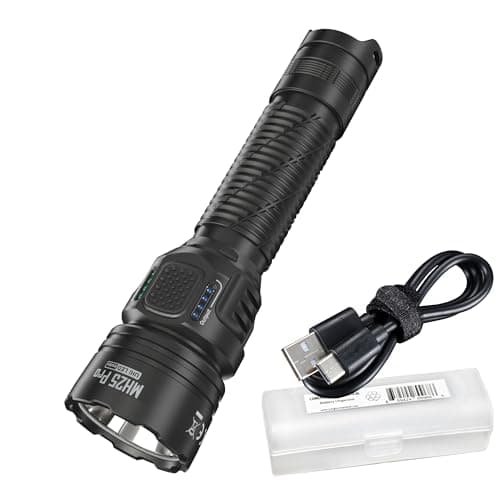 NITECORE MH25 Pro Longest published reach in the range | 3,300 | Replaceable | 33 | $99.95 on Amazon Price as of October 18, 2026 — 33 lumens per dollar. #ad How we earn |
| 3 | 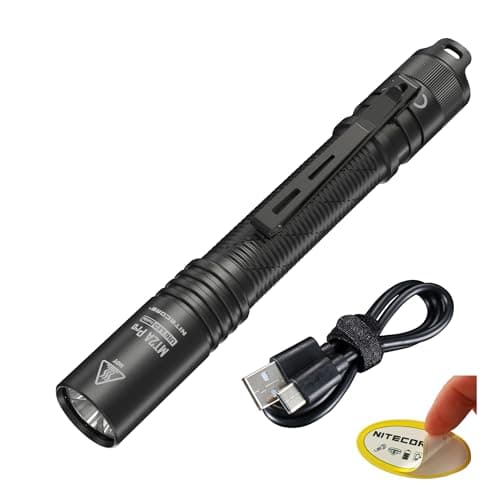 NITECORE MT2A Pro Best dual-power pocket light | 1,000 | Replaceable | 22 | $44.95 on Amazon Price as of October 18, 2026 — 22 lumens per dollar. #ad How we earn |
| 4 | 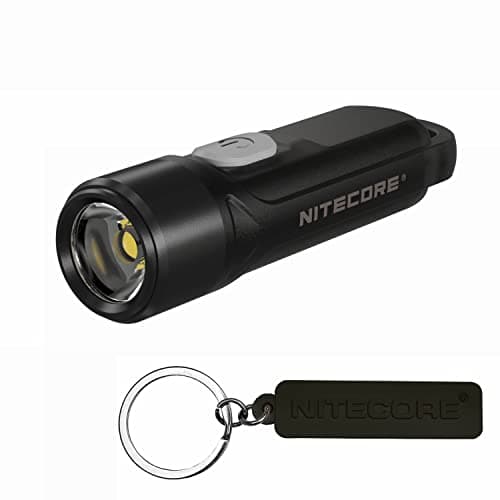 NITECORE Tiki LE Smallest light in the range | 300 | Sealed | 15 | $19.95 on Amazon Price as of October 18, 2026 — 15 lumens per dollar. #ad How we earn |
| 5 | 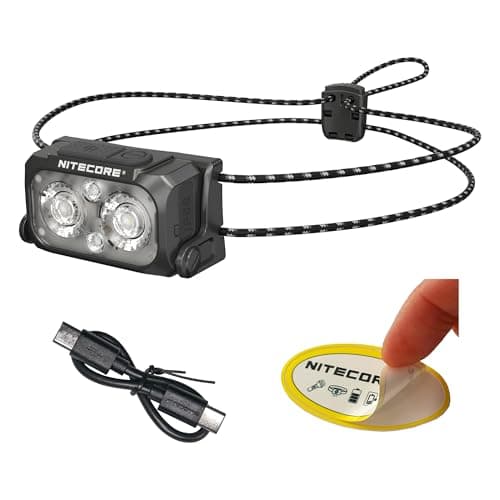 NITECORE NU25 MCT UL Lightest headlamp with a real published runtime | 400 | Sealed | 11 | $36.95 on Amazon Price as of October 18, 2026 — 11 lumens per dollar. #ad How we earn |
Prices pulled October 18, 2026. Lumens per dollar is the manufacturer's published maximum output divided by that price, recomputed every time the price moves.
Start from where the light lives
The commonest way this purchase goes wrong is buying the biggest candela figure that fits the budget and then finding it is the wrong object for the place it was bought for. Work from the location first.
- A keyring or a coin pocket — the Tiki LE. At 10.5 grams and 55 millimeters it genuinely disappears, and 300 lumens with 71 meters is a real beam rather than a token one. Read the sealed-cell section below before buying it: the 130 mAh battery is built in.
- A shirt pocket, a bag, or a drawer that waits — the MT2A Pro. This is the default answer in the range: 1,000 lumens, 255 meters, IP68 to two meters, 20 hours at 50 lumens, and dual power. It takes its own removable 14500 or two ordinary AA cells, which means it works after two years in a drawer and can be revived anywhere on earth.
- A jeans pocket, maximum output — the EDC31. Thirty-five hundred lumens and 380 meters from a 113-millimeter flat body, IP68 to two meters and a 2-meter impact rating. NITECORE states the 3,800 mAh 18650 is non-removable, so this is the pick you treat as a consumable in exchange for the output.
- Reaching several hundred meters, or a duty belt — the MH25 Pro. Seven hundred and five published meters and 124,300 candela, on a standard 21700 you can buy as an ordinary part, with IP68 to two meters and 130 grams. At 153.6 mm it is a duty-length light, not a pocket one.
- Hands-free — the NU25 MCT UL. The lightest headlamp we cover that still publishes a real runtime, with three color temperatures almost nobody else prints. A headlamp is not a substitute for any of the above; it is the answer to a different question, which is whether you need your hands.
What each one publishes
| Light | Maximum output | Candela / beam | Cell | Water rating | Runtime published |
|---|---|---|---|---|---|
| Tiki LE | 300 lumens | 1,260 cd / 71 m | Built-in 130 mAh | IP66 | 40 h maximum only |
| MT2A Pro | 1,000 lumens | 16,500 cd / 255 m | 2 x AA or 14500, removable | IP68, 2 m | 20 h at 50 lm |
| EDC31 | 3,500 lumens | 35,630 cd / 380 m | Built-in 18650, stated non-removable | IP68, 2 m | 57 h at 5 lm |
| MH25 Pro | 3,300 lumens | 124,300 cd / 705 m | 1 x 21700, 5,300 mAh | IP68, 2 m | 650 h maximum only |
| NU25 MCT UL | 400 lumens | No candela / 132 m | Built-in 700 mAh, sealed | IP66 | 45 h at 6 lm |
Read the last column down the page and the brand's habit is obvious. Three of these five at least name the mode their runtime belongs to — and in all three cases it is the dimmest setting on the light. The other two publish a bare maximum without saying which mode produced it. Not one of the five publishes a runtime beside its headline output. The MT2A Pro is the most useful sheet in the range anyway, because 20 hours at 50 lumens is a figure you can plan an evening around.
1. Most output from a flat pocket body
NITECORE EDC31
Lumens per dollar
64
Thirty-five hundred lumens and 35,630 candela out of a 113-millimeter flat body, with IP68 to two meters and a 2-meter impact rating. NITECORE publishes the figures that describe the beam and then publishes a runtime for exactly one of its four modes, which is the pattern that keeps this brand off the top of our tables.
- Max output
- 3,500 lm
- Runtime
- 57 h at 5 lm
- Battery
- Sealed
- Water rating
- IP68
What it gets right
- Thirty-five hundred lumens and 380 meters from a body that still fits a pocket
- IP68 to two meters plus a 2-meter impact rating — the strongest pair NITECORE publishes here
- Publishes peak beam intensity in candela, which is the figure that actually governs throw
- Fifty-seven hours at 5 lumens makes it usable as a long-reserve light as well as a bright one
What it gets wrong
- The 3,800 mAh 18650 is built in and NITECORE states it is non-removable, so the light has a service life
- A runtime is published for the ultralow mode only — nothing for the three modes you will actually use
- Three and a half thousand lumens in a 100-gram body is a burst, and NITECORE does not say how long it lasts
- Two separate momentary modes on top of four levels is a lot of interface for a pocket light
Published specification
- Maximum output: 3,500 lumens — NITECORE published specification
- Peak beam intensity: 35,630 cd — NITECORE published specification
- Beam distance: 380 m — NITECORE published specification
- Maximum runtime: 57 hours at 5 lumens — NITECORE published specification
- Battery: Built-in 3,800 mAh 18650 Li-ion, non-removable — NITECORE published specification
- Charge time: About 1 h 45 min with a 5V/2A adapter — NITECORE published specification
- Water rating: IP68, submersible to 2 m — NITECORE published specification
- Impact: 2 m — NITECORE published specification
- Weight: 100 g (3.53 oz) — NITECORE published specification
- Length: 113.2 mm (4.46 in) — NITECORE published specification
- Emitter: NiteLab UHi 20 MAX — NITECORE published specification
- Per-mode runtime: Not published except the 5-lumen ultralow
Skip this one if
you want to re-cell the light rather than replace it. NITECORE states the 18650 is non-removable, which on an otherwise excellent specification is the one thing you cannot work around.
Buy it if: somebody who wants the most output and throw available in a flat pocket body and is willing to treat the light as a consumable to get it.
- Output 9.5
- Battery 4.5
- Build 9.0
- Usability 7.5
- Overall 8.0
Price as of October 18, 2026 — 64 lumens per dollar. #ad How we earn
2. Longest published reach in the range
NITECORE MH25 Pro
Lumens per dollar
33
Thirty-three hundred lumens, 124,300 candela and a published 705 meters out of a 130-gram body running on a standard 21700 cell, with IP68 to two meters. It is the most capable light NITECORE sells here, and it still will not tell you how long the turbo mode lasts.
- Max output
- 3,300 lm
- Runtime
- 650 h at its lowest mode
- Battery
- Replaceable cell
- Water rating
- IP68
What it gets right
- Seven hundred and five meters and 124,300 candela — the longest published reach of any NITECORE here
- Runs on a standard 21700, so the cell is an ordinary part rather than a proprietary pack
- IP68 to two meters on a light that is still only 130 grams
- Publishes peak beam intensity in candela, which is the figure that actually governs throw
What it gets wrong
- No runtime is published beside 3,300 lumens, or beside any mode except the 650-hour maximum
- NITECORE does not state in words that the 21700 is user-removable, only that the light takes one
- At 153.6 mm this is a duty-length light, not a pocket light
- The charge time is absent from the product page, which matters on a 5,300 mAh cell
Published specification
- Maximum output: 3,300 lumens — NITECORE published specification
- Peak beam intensity: 124,300 cd — NITECORE published specification
- Beam distance: 705 m — NITECORE published specification
- Maximum runtime: 650 hours, at a mode the product page does not name — NITECORE published specification
- Battery: 1 x 21700, 5,300 mAh, USB-C charging in the body — NITECORE published specification
- Water rating: IP68, submersible to 2 m — NITECORE published specification
- Impact: 1 m — NITECORE published specification
- Weight: 130 g (4.59 oz) — NITECORE published specification
- Length: 153.6 mm (6.05 in) — NITECORE published specification
- Head diameter: 40 mm (1.57 in) — NITECORE published specification
- Emitter: NiteLab UHi 40 — NITECORE published specification
- Modes: Five brightness levels and three special modes — NITECORE published specification
- Per-mode runtime: Not published on the product page — only the 650-hour maximum is given
- Battery replaceability: Not stated in words, though the cell is specified as a standard 21700
- Charge time: Not published on the product page
Skip this one if
you need to plan around a runtime. A 3,300-lumen turbo with no published duration is a burst of unknown length, and if your light has to last a measurable number of hours at a usable output, a brand that prints that number is the safer buy.
Buy it if: anyone whose actual problem is identifying something several hundred meters away, who wants a standard cell and a sealed body rather than a pistol-grip spotlight.
- Output 9.5
- Battery 7.5
- Build 9.5
- Usability 7.0
- Overall 8.4
Price as of October 18, 2026 — 33 lumens per dollar. #ad How we earn
3. Best dual-power pocket light
NITECORE MT2A Pro
Lumens per dollar
22
A thousand lumens and 255 meters out of a penlight body that runs on its own removable 14500 or on two AA cells from any shop on earth. IP68 on top. It is the rare light that answers the shelf-life problem and the output problem in the same package.
- Max output
- 1,000 lm
- Runtime
- 20 h
- Battery
- Replaceable cell
- Water rating
- IP68
What it gets right
- Dual power: a removable 14500 for output, or two AA cells when there is no charger
- IP68 to two meters, which almost nothing at this size publishes
- Two hundred and fifty-five meters of throw from a penlight-shaped body
- The charging port is in the cell, so a spare cell charges while the light is in use
What it gets wrong
- NITECORE publishes only the maximum runtime, not a figure per mode
- On alkaline AA cells the output is far below the 1,000-lumen headline
- A penlight body is long for its diameter and rolls off a sloped surface
Published specification
- Maximum output: 1,000 lumens — NITECORE published specification
- Peak beam intensity: 16,500 cd — NITECORE published specification
- Beam distance: 255 m — NITECORE published specification
- Battery: 2 x AA, or 1 x NL1416R 14500 Li-ion with USB-C charging in the cell — NITECORE published specification
- Water rating: IP68, submersible to 2 m — NITECORE published specification
- Impact: 1 m — NITECORE published specification
- Weight: 40 g (1.41 oz) without battery — NITECORE published specification
- Length: 142.8 mm — NITECORE published specification
- Modes: Three brightness levels, single tail switch — NITECORE published specification
- Maximum runtime: 20 hours at 50 lumens — NITECORE published specification
- Per-mode runtime: Not published on the product page
Skip this one if
you want the smallest possible pocket light. At 142.8 mm this is a long, thin light rather than a short one, and that shape suits a shirt pocket better than a jeans pocket.
Buy it if: anyone who wants one light for both daily use and the drawer, and refuses to be stopped by a flat cell.
- Output 8.0
- Battery 9.5
- Build 9.0
- Usability 8.0
- Overall 8.6
Price as of October 18, 2026 — 22 lumens per dollar. #ad How we earn
4. Smallest light in the range
NITECORE Tiki LE
Lumens per dollar
15
Ten and a half grams and 55 millimeters, for 300 lumens, 71 meters and auxiliary red and blue LEDs. It is genuinely the size of a keyring fob. The cell is a built-in 130 mAh, which at that capacity makes the light a consumable rather than a tool — the same objection we raise against every sealed keychain light, including Olight's.
- Max output
- 300 lm
- Runtime
- 40 h at its lowest mode
- Battery
- Sealed
- Water rating
- IP66
What it gets right
- Ten and a half grams and 55 millimeters — small enough that it genuinely is not noticed on a keyring
- Three hundred lumens and 71 meters is a real beam, not a token one, at this size
- Auxiliary red and blue LEDs on a light this small, with the candela figure published
- USB-C charging straight into the body, so it needs nothing you do not already carry
What it gets wrong
- The 130 mAh cell is built in, so the light is a consumable with a service life, not a tool you keep
- IP66 is the weakest water rating of any NITECORE here — rain yes, submersion no
- No runtime is published beside 300 lumens; only the 40-hour maximum is given
- At 130 mAh the high mode cannot last long, and NITECORE does not say how long
Published specification
- Maximum output: 300 lumens — NITECORE published specification
- Peak beam intensity: 1,260 cd — NITECORE published specification
- Beam distance: 71 m — NITECORE published specification
- Maximum runtime: 40 hours — NITECORE published specification
- Battery: Built-in 130 mAh Li-ion, USB-C charging — NITECORE published specification
- Water rating: IP66 — NITECORE published specification
- Impact: 1 m — NITECORE published specification
- Weight: 10.5 g (0.37 oz) — NITECORE published specification
- Length: 55 mm (2.17 in) — NITECORE published specification
- Head diameter: 14.7 mm (0.58 in) — NITECORE published specification
- Emitter: OSRAM P8, plus an auxiliary red LED and an auxiliary blue LED — NITECORE published specification
- Per-mode runtime: Not published on the product page — only the 40-hour maximum is given
Skip this one if
you want to keep the light. A built-in 130 mAh cell is the smallest battery on this site, and when it reaches the end of its cycles the whole light is refuse. For a keychain light with a cell you can swap, the Sofirn SC21 Pro takes a standard 16340.
Buy it if: a keyring, a coin pocket or a bag liner — somewhere a light has to be present and completely unnoticed.
- Output 3.5
- Battery 3.0
- Build 7.0
- Usability 8.5
- Overall 6.0
Price as of October 18, 2026 — 15 lumens per dollar. #ad How we earn
5. Lightest headlamp with a real published runtime
NITECORE NU25 MCT UL
Lumens per dollar
11
Forty-seven grams including the headband, 400 lumens, and 45 hours at its 6-lumen setting. On a headlamp the weight figure matters more than the lumen figure, because the lamp you stop wearing produces no light at all.
- Max output
- 400 lm
- Runtime
- 45 h at 6 lm
- Battery
- Sealed
- Water rating
- IP66
What it gets right
- Forty-seven grams with the band on — you forget it is there
- Three color temperatures plus red, which is unusual at any price
- IP66 and a published 45-hour low-mode runtime
What it gets wrong
- Sealed 700 mAh cell; no way to carry a spare
- Four hundred lumens is modest for trail running at speed
- Flat band with no over-the-top strap on the ultralight version
Published specification
- Maximum output: 400 lumens — NITECORE published specification
- Beam distance: 132 m — NITECORE published specification
- Runtime: Up to 45 hours at 6 lumens — NITECORE published specification
- Battery: Built-in 700 mAh Li-ion, USB-C — NITECORE published specification
- Weight: 47 g (1.66 oz) including bracket and headband — NITECORE published specification
- Water rating: IP66 — NITECORE published specification
- Color temperatures: 3,000K / 4,500K / 6,500K plus auxiliary red — NITECORE published specification
Skip this one if
you need to swap a battery mid-shift. A sealed 700 mAh cell means your night ends when it does.
Buy it if: hikers, campers and anyone whose complaint about headlamps is that they bounce.
- Output 6.5
- Battery 4.5
- Weight 9.5
- Usability 8.5
- Overall 7.8
Price as of October 18, 2026 — 11 lumens per dollar. #ad How we earn
Three of these five seal the cell in
The Tiki LE has a built-in 130 mAh cell. The EDC31's 3,800 mAh 18650 is built in and NITECORE states plainly that it is non-removable. The NU25 is sealed. In each case the light has a service life rather than a lifespan: when the battery reaches the end of its cycles, the aluminum, the optics and the switch go in the bin with it.
The Tiki LE deserves the sharper version of that criticism, and we are going to apply it consistently. Elsewhere on this site we criticize the Olight i1R 2 PRO because its 130 mAh cell is not user replaceable, which at that capacity makes the light a consumable rather than a tool. The Tiki LE has a built-in 130 mAh cell. It is the same objection and it earns the same words, and it would be dishonest to soften it because the brand is one we otherwise rate well for disclosure.
Two lights here solve it. The MT2A Pro takes a removable 14500 or two AA cells, and the MH25 Pro takes a standard 21700. One caveat on the MH25 Pro, in fairness: NITECORE specifies the cell as a 21700 but does not say in words that the owner may remove it. A named standard cell format is a much stronger signal than a vague rechargeable lithium-ion, and it is still not the explicit statement we would prefer to cite.
Where NITECORE is the wrong answer
A brand page that cannot say when to buy something else is an advertisement. Three cases here.
- Your light has to last a measurable number of hours. Buy Streamlight. It publishes a runtime beside every mode of every model, which is exactly the figure NITECORE withholds, and it prints its turbo durations outright. You will give up candela figures and some output per dollar.
- You want the most light for the money. Buy a Sofirn or a Wurkkos. They publish competitive output, take standard 18650 or 14500 cells, and cost a fraction of the equivalent NITECORE. You give up documentation and warranty coverage, and on the arithmetic you are still ahead.
- You want a keychain light you can keep. Nothing in this range answers that: the Tiki LE is sealed. A light taking a standard 16340 solves it for similar money.
How we ranked these
Published output over the live price, adjusted for battery architecture and published ratings, exactly as everywhere else on this site — which is why a 1,000-lumen penlight can finish above a 3,500-lumen pocket light. Within one brand the adjustment does most of the work: all five publish candela and IP figures, so the disclosure advantage that separates NITECORE from a no-name brand cancels out, and what remains is the cell, the ratings and the price. The write-ups below run in editorial order from the most generally useful model to the most specialized; the table above sorts by the arithmetic.
Units we claim to have tested: 0
Every publisher in this category says they tested twenty flashlights. We have not tested any, and we say so. What we do instead: compile the manufacturer's own published ANSI FL1 figures, pull the price the light is selling for right now, and divide one by the other. Every number on this page is one you can check yourself in about two minutes.
What we cannot tell you
We have not used any of these lights. Nothing here is a claim about how a NITECORE holds up after a year in a pocket, how its warranty service behaves, or whether its tolerances are better than a cheaper brand. We also cannot tell you how long the turbo mode lasts on three of these five lights, because the manufacturer does not publish it and we are not going to estimate it. This page compares what NITECORE publishes against what the light costs today, which is the part a buyer can verify before paying.
Common questions
Which NITECORE flashlight should I buy?
The MT2A Pro is the best general answer: 1,000 lumens, 255 meters, IP68 to two meters, 20 hours at 50 lumens, and dual power from either a removable 14500 or two ordinary AA cells. Choose differently when the job is specific — the EDC31 for maximum output from a flat pocket body, the MH25 Pro for 705 meters of published reach on a standard 21700, the Tiki LE for a keyring, or the NU25 MCT UL when you need your hands free.
Are NITECORE flashlights worth the money?
They are if you value beam figures you can check. NITECORE is one of very few brands that publishes peak beam intensity in candela alongside beam distance, which is the pair that actually tells you how far a light reaches, and it publishes IP68 submersion ratings and impact figures in meters. The real catch is not the price, it is a gap: on most models the only runtime published belongs to the dimmest mode, so you cannot tell how long the headline output lasts. If your light has to work on a schedule, that gap matters more than the candela figure.
Which NITECORE flashlights have replaceable batteries?
Of the five we cover, two. The MT2A Pro takes a removable 14500 or two AA cells, and the MH25 Pro takes a standard 21700 — though NITECORE specifies the format without stating in words that the owner may remove it. The EDC31's 18650 is built in and NITECORE states it is non-removable, the Tiki LE has a built-in 130 mAh cell, and the NU25 headlamp is sealed.
What is the brightest NITECORE flashlight?
Of the models we cover, the EDC31 at 3,500 lumens, with the MH25 Pro just behind at 3,300. The more useful comparison is throw rather than output: the MH25 Pro publishes 124,300 candela and 705 meters against the EDC31's 35,630 candela and 380 meters, so the slightly dimmer light reaches almost twice as far. Neither publishes a runtime beside its maximum output, so treat both headline figures as bursts of undisclosed length.
Can you replace the battery in a rechargeable flashlight?
It depends entirely on the model, and it is the single most consequential thing to check before buying. Lights built around a standard cell — an 18650, a 21700, a 14500, a 16340 — take a screw-off tailcap and a five-dollar replacement. Lights with a built-in cell, which manufacturers describe as 'integrated' or 'non-removable', cannot be re-celled by an ordinary owner: when the battery reaches the end of its cycle life the whole light is refuse. Energizer, for example, states plainly that the Vision HD Rechargeable uses non-removable lithium-ion batteries.
Sources
- NITECORE published product specifications — NU25 MCT UL read 2026-09-01; MT2A Pro read 2026-09-13; EDC31 read 2026-10-03; MH25 Pro and Tiki LE read 2026-10-10
- NitecoreLights, ANSI / NEMA FL-1 Guide — FL1 definitions plus a published account of the standard's runtime limitation, read 2026-09-01
- Streamlight published product specifications — per-mode lumens, runtime, beam distance, impact and IP ratings, read 2026-09-01; Waypoint 400 and Waypoint C-cell read 2026-09-22; FlipMate read 2026-10-18
- Lumen & Ledger method — how every figure on this page is derived
Who writes this
Scooter M. — I am an enthusiast who is genuinely into this. I read the manuals, compile the published specs, and do the math. No lab coat, no test bench, no drawer of free samples. What I can tell you is exactly what a light claims on paper, exactly what it costs right now, and what those two numbers mean when you divide one by the other.
Read next
NITECORE vs Streamlight
One publishes every mode runtime, the other publishes IP68 and candela.
NITECORE vs Olight
Batteries you can buy anywhere against cells only one company sells.
NITECORE vs Fenix
Two enthusiast brands that both publish properly. The split is dual power against raw output.
NITECORE NU25 MCT UL review
Forty-seven grams and three color temperatures almost nobody else prints.
Best Streamlight flashlights
Eight models sorted by job, and the four that seal the cell in.
The Ledger
Every light we cover in one ranked table, sorted by lumens per dollar.