Where to Buy
Rechargeable Flashlights at Harbor Freight: What's Actually Worth Buying
A discount tool retailer is where the are-cheap-lights-any-good question gets its sharpest test. The answer is more nuanced than either side usually admits.
By Scooter M. · Published September 2, 2026
Short answer
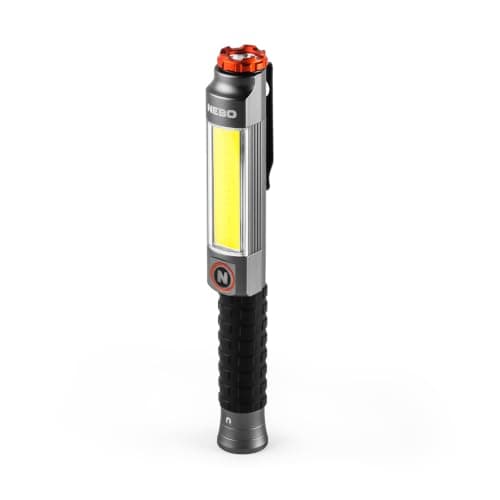
NEBO BIG LARRY 3
A 600-lumen COB panel, a 220-lumen spot and a red task mode, on three AA cells, with a magnet strong enough to hold it under a hood. It is the least glamorous light here and it is the one that gets used most.
Price as of October 18, 2026 — 50 lumens per dollar. #ad How we earn
Disclosure — we earn a commission on qualifying purchases made through the Amazon links on this page, at no extra cost to you. It does not change which lights we pick or what we say about them. The full version.
How we rank. Published ANSI FL1 output divided by the live retail price, with sealed-battery lights marked down because a light you cannot re-cell is a light with an expiry date. Units we claim to have tested: 0 — we compile manufacturers' published figures and show the arithmetic instead. How we work this out.
When cheap is the right answer
A cheap light is the right answer when the alternative is no light within reach: a spare in a car, one in each room, one in a toolbox you rarely open. It is the wrong answer when the light has to work reliably at a specific moment — a shift, a search, an emergency — because that is exactly where undocumented specifications and untested tolerances show up.
The honest position on discount lights is neither dismissal nor enthusiasm. The commodity parts inside a cheap light are frequently the same parts inside an expensive one. What differs is quality control between units, documentation, and whether the warranty means anything. Those things matter enormously for some uses and not at all for others.
| # | Light | Max output | Battery | Lumens / $ | Price |
|---|---|---|---|---|---|
| 1 | NEBO BIG LARRY 3 Best cheap magnetic work light | 600 | AA / AAA | 50 | $11.92 on Amazon Price as of October 18, 2026 — 50 lumens per dollar. #ad How we earn |
| 2 | 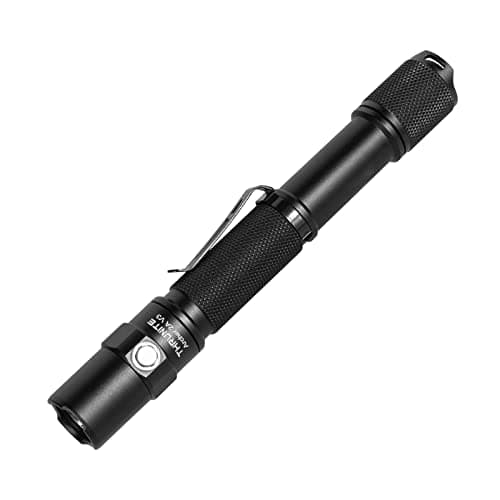 ThruNite Archer 2A V3 Best light that runs on batteries from any gas station | 500 | AA / AAA | 22 | $22.95 on Amazon Price as of October 18, 2026 — 22 lumens per dollar. #ad How we earn |
| 3 | 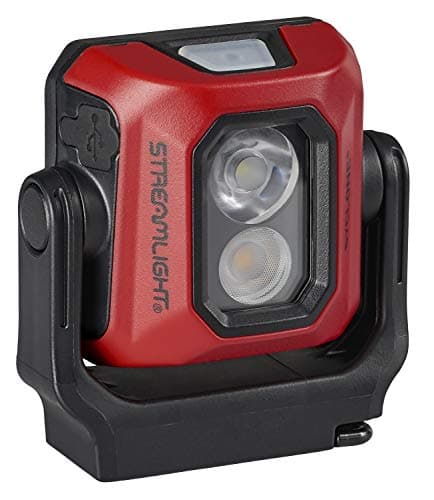 Streamlight Syclone Best work light with a 90 CRI flood | 400 | Sealed | 7 | $60.99 on Amazon Price as of October 18, 2026 — 7 lumens per dollar. #ad How we earn |
| 4 | No listing image NEBO SLIM Mini 500 Best pocket task light for a toolbag | 500 | Sealed | Needs a live price | Check price on Amazon We show a price only when we have pulled a live one. #ad How we earn |
Prices pulled October 18, 2026. Lumens per dollar is the manufacturer's published maximum output divided by that price, recomputed every time the price moves.
The redundancy argument, properly made
The most common household lighting failure is not that the light was dim. It is that the good light was in the kitchen and the problem was in the basement. Three cheap lights in three places beat one excellent light in one place, and that remains true even if each cheap one is half as good.
The rule that makes this work is standardizing the battery. If every spare takes AA cells, one box covers all of them and you will actually have spares. NEBO's BIG LARRY 3 publishes a 600-lumen flood on three AA cells; the ThruNite Archer 2A V3 publishes 500 lumens on two.
What to check on a discount shelf
- 1.Is there a specification on the packaging at all? A light with no published runtime, water rating or cell type is a light nobody will stand behind.
- 2.Does it take ordinary cells? For a spare that will sit unused, this matters far more than output — a lithium cell in a drawer for two years is frequently flat.
- 3.Is the switch a simple one? Cheap electronic switches fail more often than cheap mechanical ones, and mode memory is where cheap firmware misbehaves.
- 4.Is there a warranty, and does it require the receipt? For a spare it hardly matters. For anything you rely on, it matters a lot.
- 5.Would you be annoyed if it failed in two years? If yes, buy from further up the table.
1. Best cheap magnetic work light
NEBO BIG LARRY 3
Lumens per dollar
50
A 600-lumen COB panel, a 220-lumen spot and a red task mode, on three AA cells, with a magnet strong enough to hold it under a hood. It is the least glamorous light here and it is the one that gets used most.
- Max output
- 600 lm
- Runtime
- Not published per mode
- Battery
- AA / AAA
- Water rating
- None published
What it gets right
- A flood panel is the right shape of light for working on something close up
- AA cells, so it survives a year in a toolbox and still lights
- The magnet is strong enough to matter
What it gets wrong
- NEBO publishes no runtime and no water rating for this model
- COB panels have poor color rendering as a class
- Not rechargeable, so the running cost is AA cells
Published specification
- COB work light: 600 lumens high / 150 lumens low — NEBO published specification
- Spot flashlight: 220 lumens high / 60 lumens low — NEBO published specification
- Red task light: 40 lumens high / 12 lumens low — NEBO published specification
- Battery: 3 x AA (included) — NEBO published specification
- Weight: 0.42 lb — NEBO published specification
- Fittings: Magnetic base, steel belt clip, wall-mount hole — NEBO published specification
- Per-mode runtime: Not published on the product page
- Water rating: Not published on the product page
Skip this one if
you need to see color accurately. For paint matching or diagnosing a wiring loom, a high-CRI light is worth the extra money.
Buy it if: the toolbox, the trunk and the shelf above the workbench.
- Output 6.5
- Battery 7.0
- Build 7.5
- Usability 8.5
- Overall 7.3
Price as of October 18, 2026 — 50 lumens per dollar. #ad How we earn
2. Best light that runs on batteries from any gas station
ThruNite Archer 2A V3
Lumens per dollar
22
Five hundred lumens on two AA cells. It will never win a lumens-per-dollar contest against an 18650 light, and it does not need to: it is the light that still works when you are three days into an outage and the only thing left in the store is alkalines.
- Max output
- 500 lm
- Runtime
- Not published per mode
- Battery
- AA / AAA
- Water rating
- None published
What it gets right
- Runs on the most widely stocked battery on earth
- No lithium cell to self-discharge in a glovebox for two years
- Forward clicky switch, so you can signal without cycling modes
What it gets wrong
- AA alkalines sag hard under load; 500 lumens is a brief 500 lumens on them
- No published runtime or water rating on the product page
- Rechargeable it is not — the running cost is on you
Published specification
- Maximum output: 500 lumens, turbo — ThruNite published specification
- Battery: 2 x AA alkaline or 2 x AA NiMH (not included) — ThruNite published specification
- Modes: Five — ThruNite published specification
- Switch: Forward clicky with momentary-on — ThruNite published specification
- Protection: Reversed-polarity protection — ThruNite published specification
- Clip: Reversible, removable, titanium coated — ThruNite published specification
- Per-mode runtime: Not published on the product page
- Water rating: Not published on the product page
Skip this one if
this is your only light and you will use it daily. Feeding a daily-use light on disposable AAs is the single most expensive way to own a flashlight, which is the entire reason this site exists.
Buy it if: the glovebox, the storm kit, and the drawer you open twice a year.
- Output 6.0
- Battery 7.0
- Build 8.0
- Usability 8.5
- Overall 7.4
Price as of October 18, 2026 — 22 lumens per dollar. #ad How we earn
3. Best work light with a 90 CRI flood
Streamlight Syclone
Lumens per dollar
7
Four hundred lumens of spot for two hours or 300 lumens of 90-CRI flood for the same, in a 5.3-ounce body that clips, magnets and stands. Every mode's runtime is published, including the flood modes most brands ignore.
- Max output
- 400 lm
- Runtime
- 2 h
- Battery
- Sealed
- Water rating
- IPX4
What it gets right
- A 90 CRI flood, which matters more than lumens when you are diagnosing anything
- Spot and flood in one body with runtimes published for both
- Magnet, clip and a stand that lets it point where you need it
What it gets wrong
- Sealed lithium-polymer cell
- IPX4 — it handles a splash and not a puddle
- Four hundred lumens is modest if you want to light a whole garage
Published specification
- Spot high: 400 lumens, 141 m, 2 hours — Streamlight published specification
- Spot medium: 200 lumens, 95 m, 4.5 hours — Streamlight published specification
- Spot low: 100 lumens, 72 m, 9.5 hours — Streamlight published specification
- Flood high: 300 lumens, 48 m, 2 hours, 90 CRI — Streamlight published specification
- Flood low: 75 lumens, 24 m, 8 hours — Streamlight published specification
- Battery: Lithium-polymer, USB rechargeable, 4.5 h charge — Streamlight published specification
- Water rating: IPX4 — Streamlight published specification
- Impact: 2 m tested — Streamlight published specification
- Weight: 5.3 oz (150 g) — Streamlight published specification
Skip this one if
you need to flood a large space. This is an arm's-reach light; a lantern or a panel does big areas better.
Buy it if: mechanics and electricians who need to see true color at close range.
- Output 6.5
- Battery 5.0
- Build 8.5
- Usability 9.0
- Overall 7.6
Price as of October 18, 2026 — 7 lumens per dollar. #ad How we earn
listing
image
4. Best pocket task light for a toolbag
NEBO SLIM Mini 500
Lumens per dollar
Computed the moment we have a live price for it
The most honest spec sheet in this whole roundup, and not in the way NEBO intended: turbo is 500 lumens for thirty seconds. High is 250 lumens for two hours. That thirty-second figure is printed by the manufacturer, and it is the clearest illustration of the whole turbo problem you will find.
- Max output
- 500 lm
- Runtime
- 30 seconds at turbo; 2 h at 250 lm high
- Battery
- Sealed
- Water rating
- IPX4
What it gets right
- Genuinely flat — it disappears into a work-pants pocket
- Magnetic base plus green and red modes for inspection work
- NEBO states the turbo duration outright, which is rare and creditable
What it gets wrong
- Turbo lasts half a minute; treat 250 lumens as the real specification
- 450 mAh sealed cell, so this is a light with a service life rather than a lifespan
- IPX4 is splash resistance and nothing more
Published specification
- Turbo: 500 lumens for 30 seconds, 100 m — NEBO published specification
- High: 250 lumens, 2 hours, 250 m — NEBO published specification
- Low: 50 lumens, 5 hours, 50 m — NEBO published specification
- Battery: 450 mAh 3.7V (1.66 Wh) Li-ion, built in — NEBO published specification
- Recharge time: 2 hours, USB-C — NEBO published specification
- Water rating: IPX4 — NEBO published specification
- Weight: 0.07 lb — NEBO published specification
Skip this one if
you want a light for walking outdoors. This is a task light for arm's-length work and it does not throw usefully far in practice.
Buy it if: electricians, mechanics and anyone whose light spends its life eighteen inches from the thing it is lighting.
- Output 6.0
- Battery 4.5
- Build 7.5
- Usability 8.5
- Overall 6.8
We show a price only when we have pulled a live one. #ad How we earn
How we ranked these
Published output over live price, battery architecture, published ratings and usability. On this page the picks skew toward lights that run on ordinary cells, because a spare that cannot be re-powered from a shop shelf is not much of a spare.
Units we claim to have tested: 0
Every publisher in this category says they tested twenty flashlights. We have not tested any, and we say so. What we do instead: compile the manufacturer's own published ANSI FL1 figures, pull the price the light is selling for right now, and divide one by the other. Every number on this page is one you can check yourself in about two minutes.
What we cannot tell you about any discount light
House-brand lights frequently publish little or no specification, and we do not write about products whose figures we cannot cite. That is a real limit on what this page can say and we would rather state it than fill the gap with a guess. Where a house-brand light does publish a runtime, a cell type and a water rating, judge it on those exactly as you would judge anything else.
We do not publish a stock list for this retailer. Assortments change week to week and store to store, and a list written today would be wrong by the time you read it. What does not change is how to read the shelf, and that is what this page is for.
Common questions
Are cheap rechargeable flashlights any good?
Many are, and for a specific reason: the LED emitters, drivers and 18650 cells that budget brands buy are the same commodity parts the expensive brands buy. What you give up at the low end is documentation, quality control between batches, and a warranty worth using. The way to shop it is to look for a brand that publishes runtime figures — a manufacturer willing to print how long the turbo mode lasts is telling you something about the rest of the specification.
Are cheap flashlights worth buying?
For redundancy, yes — three adequate lights in three rooms solve a problem one excellent light in one room does not, and the most common lighting failure is having no light within reach. For anything you depend on at a specific moment, buy documentation instead: a published runtime, a cell type and a real water rating are what separate a tool from a gamble.
What should I check before buying a cheap flashlight?
Four things: whether there is any published specification at all, whether it takes ordinary replaceable cells, whether the switch is simple, and whether you would be annoyed if it failed in two years. A light with no published runtime, no cell type and no water rating is one nobody is prepared to stand behind.
Sources
- NEBO published product specifications — mode-by-mode lumen, runtime and beam figures, read 2026-09-01; LUXTREME SL75 and SL50 read 2026-09-22; OMNI 2K and SLYDE KING 4K read 2026-10-18
- ThruNite published product specifications — read 2026-09-01
- Streamlight published product specifications — per-mode lumens, runtime, beam distance, impact and IP ratings, read 2026-09-01; Waypoint 400 and Waypoint C-cell read 2026-09-22; FlipMate read 2026-10-18
- Lumen & Ledger method — how every figure on this page is derived
Who writes this
Scooter M. — I am an enthusiast who is genuinely into this. I read the manuals, compile the published specs, and do the math. No lab coat, no test bench, no drawer of free samples. What I can tell you is exactly what a light claims on paper, exactly what it costs right now, and what those two numbers mean when you divide one by the other.
Read next
Are cheap flashlights any good?
Increasingly yes, for a specific reason, with three failure modes to watch.
Best cheap flashlights under $20
What twenty dollars actually buys, and the two categories where it buys plenty.
Best emergency lights for home
How many lights a house actually needs, and where each one should live.
Rechargeable flashlights at Walmart
What the aisle stocks, what those brands publish, and what the same money buys online.
Best rechargeable work lights
Flood beats throw at arm's length, and color rendering beats both.
The Ledger
Every light we cover in one ranked table, sorted by lumens per dollar.