Flashlights
Streamlight Waypoint 400 Review: The Longest Throw We Can Verify
A spotlight that publishes four figures for every one of its three modes, which in this category is close to unheard of.
By Scooter M. · Published September 27, 2026
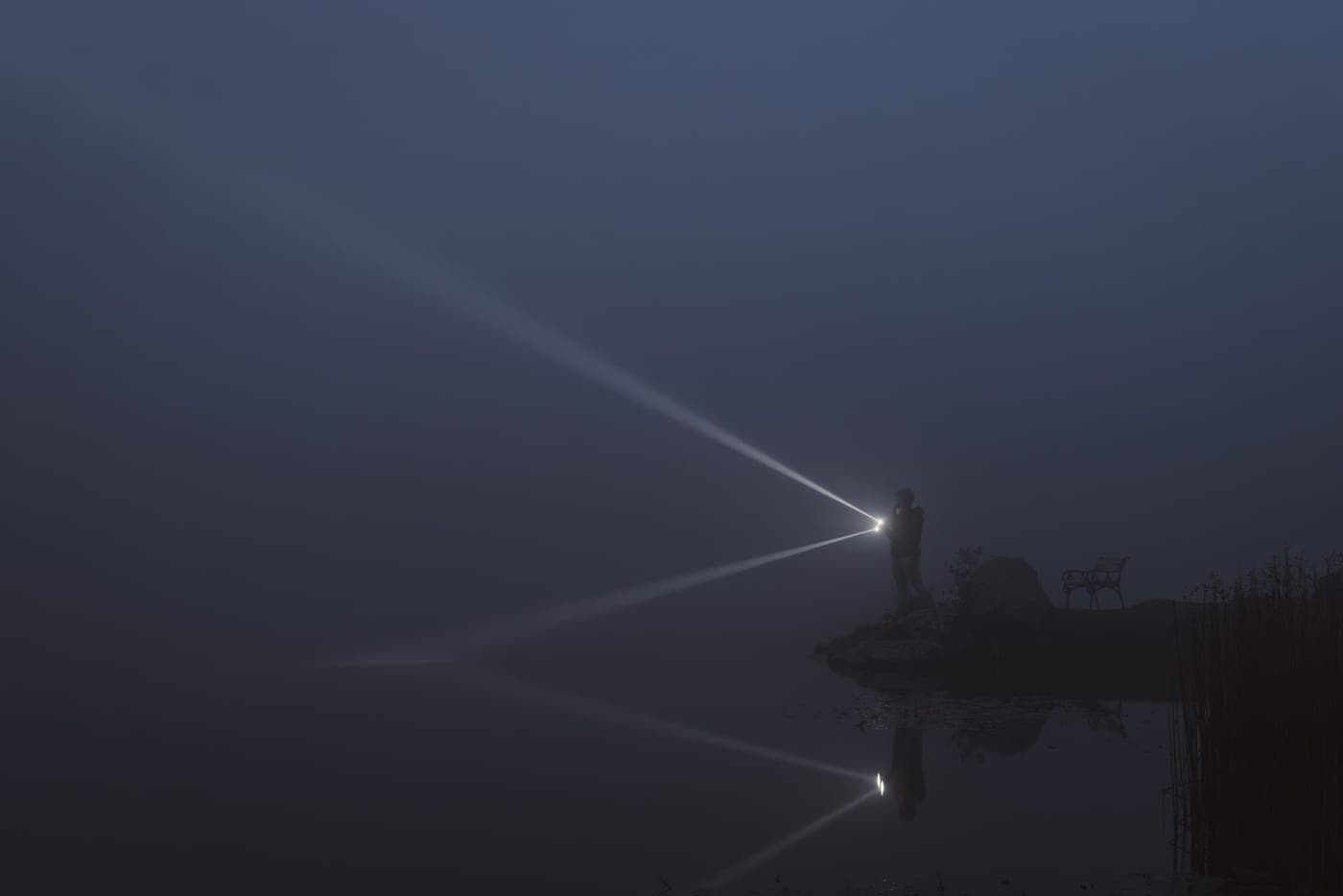
Short answer
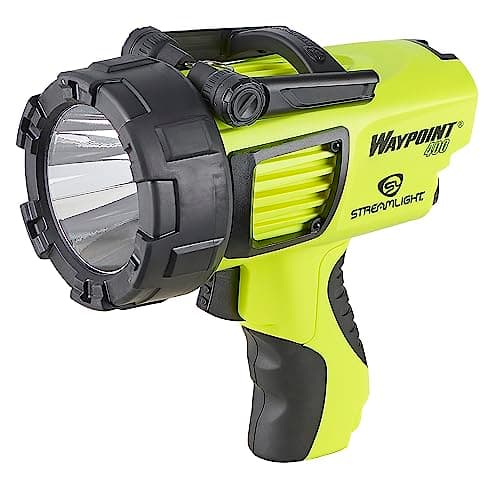
Streamlight Waypoint 400
Four hundred thousand candela and a published 1,265 meters of beam distance, with a runtime printed beside every one of its three modes. It is the furthest-throwing light on this site and the rare spotlight whose maker documents the whole spec sheet rather than the headline.
Price as of September 27, 2026 — 10 lumens per dollar. #ad How we earn
Disclosure — we earn a commission on qualifying purchases made through the Amazon links on this page, at no extra cost to you. It does not change which lights we pick or what we say about them. The full version.
How we rank. Published ANSI FL1 output divided by the live retail price, with sealed-battery lights marked down because a light you cannot re-cell is a light with an expiry date. Units we claim to have tested: 0 — we compile manufacturers' published figures and show the arithmetic instead. How we work this out.
The verdict
The Waypoint 400 is the furthest-throwing light on this site and the best-documented spotlight we have found. Streamlight publishes 1,400 lumens, 400,000 candela, 1,265 meters and 3.25 hours on high, and then does the same for medium and low — four figures for every mode, which almost nothing in this category manages. It is IPX8 to two meters and it floats. The one gap is that Streamlight does not state whether the cell is user-replaceable.
We have not used this light. It earns a dedicated page because of how much Streamlight is willing to publish about it, in a category where the search results are dominated by listings claiming two million lumens and publishing nothing at all.
The published specification, all three modes
| Mode | Output | Candela | Beam distance | Runtime |
|---|---|---|---|---|
| High | 1,400 lumens | 400,000 cd | 1,265 m | 3 h 15 min |
| Medium | 600 lumens | 165,000 cd | 812 m | 7 h 30 min |
| Low | 38 lumens | 10,000 cd | 200 m | 84 hours |
Read that table against how spotlights are normally sold. Four figures per mode, three modes, no gaps. You can calculate throw per dollar, runtime per mode, and the exact cost in reach of dropping from high to medium — which is 453 meters for four and a quarter extra hours, a trade most people would take.
Candela is the number that matters, and this is why
Lumens measure total light in every direction; candela measures intensity in the direction you are pointing. Throw comes from candela. A spotlight sold on lumens is being sold on the wrong axis, and 400,000 candela is the highest published beam intensity of anything we cover.
One caution about the meter figure, because it is the one buyers respond to. Under the ANSI FL 1 convention, beam distance is the range at which the beam has fallen to 0.25 lux — roughly the illumination of a full moon. That is enough light to detect that something is there, not to identify it. A published 1,265 meters does not mean you can recognize a person at 1,265 meters, and practical recognition distance is a fraction of the rated figure on every light ever made.
The same arithmetic explains why the medium mode still reaches 812 meters on 165,000 candela. Because illumination falls with the square of distance, roughly quadrupling candela is what it takes to double beam distance, so a large cut in intensity costs a much smaller fraction of the range.
The 84-hour low mode changes what this light is for
Thirty-eight lumens for eighty-four hours is the specification that turns a single-purpose search tool into something you would keep. A spotlight that only does 1,400 lumens for three hours is a thing you fetch twice a year; one that also runs for three and a half days at a usable low level is a legitimate outage light as well.
Combined with IPX8 to two meters and a float claim, that makes this a genuinely good boat light — the one use case where a long throw, submersion survival and a long reserve all matter at once, and where losing the light over the side is a real possibility.
| # | Light | Max output | Battery | Lumens / $ | Price |
|---|---|---|---|---|---|
| 1 | Streamlight Waypoint 400 Longest published throw here | 1,400 | Sealed | 10 | $134.82 on Amazon Price as of September 27, 2026 — 10 lumens per dollar. #ad How we earn |
| 2 | 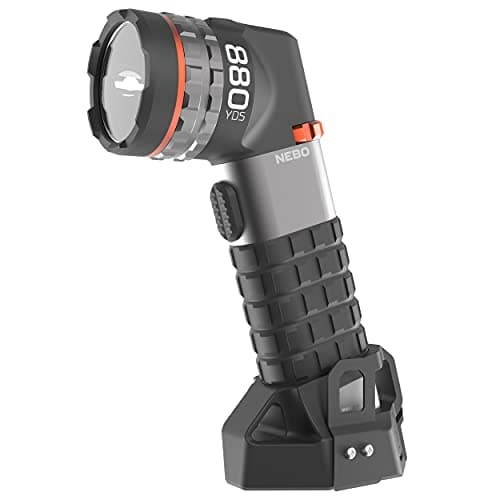 NEBO LUXTREME SL75 Best throw per lumen | 780 | Replaceable | 7 | $120.00 on Amazon Price as of September 27, 2026 — 7 lumens per dollar. #ad How we earn |
| 3 | 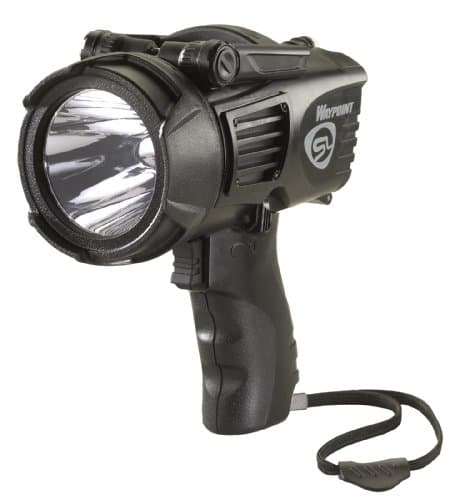 Streamlight Waypoint (C-cell) Best spotlight for a drawer | 750 | Replaceable | 7 | $105.98 on Amazon Price as of September 27, 2026 — 7 lumens per dollar. #ad How we earn |
Prices pulled September 27, 2026. Lumens per dollar is the manufacturer's published maximum output divided by that price, recomputed every time the price moves.
1. Longest published throw here
Streamlight Waypoint 400
Lumens per dollar
10
Four hundred thousand candela and a published 1,265 meters of beam distance, with a runtime printed beside every one of its three modes. It is the furthest-throwing light on this site and the rare spotlight whose maker documents the whole spec sheet rather than the headline.
- Max output
- 1,400 lm
- Runtime
- 3 h 15 min
- Battery
- Sealed
- Water rating
- IPX8
What it gets right
- Lumens, candela, beam distance AND runtime published for all three modes
- Four hundred thousand candela is the highest published beam intensity on this site
- IPX8 to two meters and it floats, which is the right specification for a boat
- Eighty-four hours on low turns a throw light into a usable outage light
What it gets wrong
- Streamlight does not state whether the cell is user-replaceable on the page we read
- Three and a quarter hours on high is short if you are working rather than searching
- It is a pistol-grip spotlight, so it is not going anywhere near a pocket
- Costs several times what a capable handheld flashlight costs
Published specification
- High: 1,400 lumens, 400,000 cd, 1,265 m, 3.25 hours — Streamlight published specification
- Medium: 600 lumens, 165,000 cd, 812 m, 7.5 hours — Streamlight published specification
- Low: 38 lumens, 10,000 cd, 200 m, 84 hours — Streamlight published specification
- Battery: Rechargeable lithium-ion, 4-hour charge — Streamlight published specification
- Battery replaceability: Not stated on the product page we read
- Water rating: IPX8, waterproof to 2 m — and it floats — Streamlight published specification
- Impact: 1 m tested — Streamlight published specification
- Weight: 1.52 lb (691 g) — Streamlight published specification
Skip this one if
you want one light for general use. A 400,000-candela beam puts its light in a tight circle a long way away, which is close to useless indoors or at arm's length.
Buy it if: boaters, search volunteers, large-property owners and anyone whose actual problem is identifying something several hundred meters away.
- Output 9.5
- Battery 6.0
- Build 9.5
- Usability 8.0
- Overall 8.6
Price as of September 27, 2026 — 10 lumens per dollar. #ad How we earn
2. Best throw per lumen
NEBO LUXTREME SL75
Lumens per dollar
7
Three hundred and sixty-two thousand candela out of only 780 lumens, which is the whole argument of this page in one product: it throws almost as far as a 1,400-lumen light using 44 percent fewer lumens, because throw is optics and intensity rather than raw output.
- Max output
- 780 lm
- Runtime
- 5 h
- Battery
- Replaceable cell
- Water rating
- IP67
What it gets right
- Candela, lumens, beam distance and runtime published for every mode
- Nine thousand milliamp-hours across two standard 21700 cells
- IP67 plus a magnetic base and a tripod thread, which is unusual on a spotlight
- Thirty hours on low, so it doubles as an outage light rather than a single-purpose tool
What it gets wrong
- NEBO does not explicitly state that the 21700 cells are user-replaceable
- Two point one pounds is heavy to hold up for any length of time
- Seven hundred and eighty lumens looks unimpressive next to the fictional numbers its shelf rivals print
- IP67 rather than the IPX8 Streamlight publishes, and it is not stated to float
Published specification
- High: 780 lumens, 362,500 cd, 1,200 m, 5 hours — NEBO published specification
- Medium: 400 lumens, 157,500 cd, 793 m, 10.5 hours — NEBO published specification
- Low: 100 lumens, 35,000 cd, 374 m, 30 hours — NEBO published specification
- Battery: 2 x 21700 Li-ion, 7.4 V, 9,000 mAh, included — NEBO published specification
- Recharge time: About 3 hours, depending on USB output — NEBO published specification
- Water rating: IP67 — NEBO published specification
- Weight: 2.1 lb — NEBO published specification
- Fittings: Magnetic base, tripod mount, steel clip — NEBO published specification
Skip this one if
you need flood light. This is a thrower, and a thrower is the wrong instrument for lighting a space you are standing in.
Buy it if: anyone who wants maximum distance per dollar and would rather have a documented 780 lumens than an invented two million.
- Output 8.0
- Battery 9.0
- Build 8.5
- Usability 8.5
- Overall 8.5
Price as of September 27, 2026 — 7 lumens per dollar. #ad How we earn
3. Best spotlight for a drawer
Streamlight Waypoint (C-cell)
Lumens per dollar
7
The same Waypoint body running on four C cells instead of a rechargeable pack: 750 lumens, 150,000 candela, 775 meters, and ten hours on high. It is here for one reason — alkaline cells sit on a shelf for years and a lithium pack does not.
- Max output
- 750 lm
- Runtime
- 10 h
- Battery
- Replaceable cell
- Water rating
- IPX4
What it gets right
- Ten hours on high, the longest high-mode runtime of the four
- C alkalines store for years, so it works after two years in a cupboard
- Ninety-two hours on low and a published 82-hour emergency signal mode
- Full published figures for every mode, candela included
What it gets wrong
- Not rechargeable, so the running cost is C cells
- IPX4 only — the rechargeable Waypoint 400 publishes IPX8 and floats
- One point eight pounds with cells in, and C cells are not cheap
- One hundred and fifty thousand candela is the lowest throw figure on this page
Published specification
- High: 750 lumens, 150,000 cd, 775 m, 10 hours — Streamlight published specification
- Low: 60 lumens, 12,000 cd, 219 m, 92 hours — Streamlight published specification
- Emergency signal: 82 hours — Streamlight published specification
- Battery: 4 x C alkaline — Streamlight published specification
- Water rating: IPX4, water resistant — Streamlight published specification
- Impact: 1 m tested — Streamlight published specification
- Weight: 1.8 lb (816 g) with batteries — Streamlight published specification
Skip this one if
the light will be used regularly. Feeding a spotlight on disposable C cells is an expensive way to own one, and the rechargeable models cost less to run within a year.
Buy it if: the boat locker, the storm shelf and the truck of somebody who needs it to work the first time after a long wait.
- Output 6.5
- Battery 8.0
- Build 9.0
- Usability 8.0
- Overall 7.9
Price as of September 27, 2026 — 7 lumens per dollar. #ad How we earn
Where it is weak
Streamlight does not state whether the lithium-ion cell is user-replaceable on the page we read, and we tried the datasheet PDF without success — it would not parse. So we have treated the battery as sealed, which is the conservative reading on a site that counts sealed cells against a product, and we have published the gap rather than an assumption. If long-term repairability matters to you, ask before buying.
Three and a quarter hours on high is short if you are working rather than searching. This is a light for looking at something for a minute, not for lighting a task for an evening — the low mode is the one that runs long.
It is a pistol-grip spotlight weighing 1.52 pounds, so it goes nowhere near a pocket, and it is the wrong tool for anything within about thirty feet: a 400,000-candela beam at close range is glare that contracts your pupils and makes everything outside the hotspot darker than before you switched it on.
And it costs several times what a capable general-purpose handheld costs, which is the honest framing for the whole category — this is a second light bought for a specific problem.
How it compares
Against NEBO's LUXTREME SL75 the comparison is closer than the price suggests. The SL75 publishes 362,500 candela and 1,200 meters on only 780 lumens — 65 meters less reach for 620 fewer lumens — and adds a magnetic base, a tripod thread and two standard 21700 cells. The Waypoint wins on throw, on IPX8 against IP67, and on floating; the NEBO wins on mounting and on naming its cells.
Against Streamlight's own C-cell Waypoint the trade is chemistry. That version publishes 750 lumens, 150,000 candela and ten hours on high running on four C alkalines, which sit on a shelf for years without going flat. For a light that waits in a boat locker between uses rather than living on a charger, the older model is arguably the better buy.
The pistol grip is a real ergonomic decision
At 1.52 pounds this light is held rather than carried, and the grip shape matters more than it would on a pocket light. A pistol grip lets you hold a heavy light steady with a straight wrist and aim it at something distant for a sustained period, which a barrel-shaped light of the same mass does not — try holding a 1.5-pound tube level at arm's length for two minutes and the difference becomes obvious.
It also costs you something. The grip makes the light bulky in a way that has nothing to do with the optic, so it does not stow flat in a bag, and it commits a whole hand. On a boat, where you may be holding something else, that is worth thinking about before buying — and it is the main practical argument for NEBO's magnetic base and tripod thread, which let you put the light down still aimed.
Who should buy it
- Boaters, for the combination of 1,265 meters, IPX8 to two meters and a float claim — no other light we cover has all three.
- Anyone with a large property who needs to check a treeline, a gate or a field without walking out to it.
- Search and rescue volunteers and anyone whose problem is genuinely identifying something several hundred meters away.
- Anyone who wants a spotlight whose maker publishes candela, beam distance and runtime for every mode rather than a lumen claim and nothing else.
Who should not
- Anyone wanting one light for general use. A tight, intense beam is close to useless indoors or at arm's length.
- Anyone who needs to know the cell is replaceable before buying, because Streamlight does not say.
- Anyone buying on lumens per dollar, where a spotlight will always lose to a general-purpose handheld.
Units we claim to have tested: 0
Every publisher in this category says they tested twenty flashlights. We have not tested any, and we say so. What we do instead: compile the manufacturer's own published ANSI FL1 figures, pull the price the light is selling for right now, and divide one by the other. Every number on this page is one you can check yourself in about two minutes.
What we cannot tell you
We have not used this light, measured a beam or stood at the far end of a field with a light meter. Every figure above is Streamlight's own, with the read date recorded. We cannot tell you whether the cell is user-replaceable, how quickly the light steps down from 1,400 lumens if it does, how the beam looks against real terrain, or how the grip and switch feel in cold and wet. Streamlight also publishes no CRI figure, so how accurately it renders color at distance is unknown to us.
Common questions
How far does the Streamlight Waypoint 400 throw?
Streamlight publishes 1,265 meters on high, from 400,000 candela and 1,400 lumens, with 812 meters on medium and 200 meters on low. Read the headline figure carefully though: under the ANSI FL 1 convention beam distance is measured to 0.25 lux, roughly the light of a full moon, which is enough to detect that something is there rather than to identify it. Practical recognition distance is a fraction of the rated number on every light.
Is the Streamlight Waypoint 400 waterproof?
Streamlight publishes IPX8, waterproof to two meters, and states that the light floats. That is the strongest water rating of any light we cover and the float claim is unusual — together they make it the best-specified option here for use on a boat, where both submersion and losing the light over the side are real risks. It is also impact tested to one meter.
Does the Waypoint 400 have a replaceable battery?
Streamlight publishes a rechargeable lithium-ion battery with a four-hour charge time but does not state on the product page we read whether it is user-replaceable, and the datasheet PDF would not parse for us. We have therefore treated it as sealed, which is the cautious reading, and flagged the gap rather than guessing. If repairability matters to you, confirm it with Streamlight before buying.
Can you replace the battery in a rechargeable flashlight?
It depends entirely on the model, and it is the single most consequential thing to check before buying. Lights built around a standard cell — an 18650, a 21700, a 14500, a 16340 — take a screw-off tailcap and a five-dollar replacement. Lights with a built-in cell, which manufacturers describe as 'integrated' or 'non-removable', cannot be re-celled by an ordinary owner: when the battery reaches the end of its cycle life the whole light is refuse. Energizer, for example, states plainly that the Vision HD Rechargeable uses non-removable lithium-ion batteries.
Sources
- Streamlight published product specifications — per-mode lumens, runtime, beam distance, impact and IP ratings, read 2026-09-01; Waypoint 400 and Waypoint C-cell read 2026-09-22
- NEBO published product specifications — mode-by-mode lumen, runtime and beam figures, read 2026-09-01; LUXTREME SL75 and SL50 read 2026-09-22
- Streamlight, ANSI Information — definitions of light output, beam distance, run time, impact and water resistance under the FL1 standard, read 2026-09-01
- Lumen & Ledger method — how every figure on this page is derived
Who writes this
Scooter M. — I am an enthusiast who is genuinely into this. I read the manuals, compile the published specs, and do the math. No lab coat, no test bench, no drawer of free samples. What I can tell you is exactly what a light claims on paper, exactly what it costs right now, and what those two numbers mean when you divide one by the other.
Read next
Best rechargeable spotlights
Throw is candela, not lumens. The four that publish theirs, and the fiction to avoid.
Lumens vs candela
One measures how much light there is. The other measures how far it goes.
Best duty flashlights
Where cheapest lumens per dollar is the wrong answer, and what replaces it.
Best waterproof rechargeable flashlights
Ranked strictly by the published IP digit, because on this one spec the marketing word is worthless.
The 10,000-lumen problem
Why the biggest number on the box is the one you can use for the shortest time.
The Ledger
Every light we cover in one ranked table, sorted by lumens per dollar.