Flashlights
Best Waterproof Rechargeable Flashlights
Waterproof is a word anyone can print. The digit after IPX is a claim a manufacturer has to stand behind, and it is the only thing this page ranks on.
By Scooter M. · Published September 13, 2026
Short answer
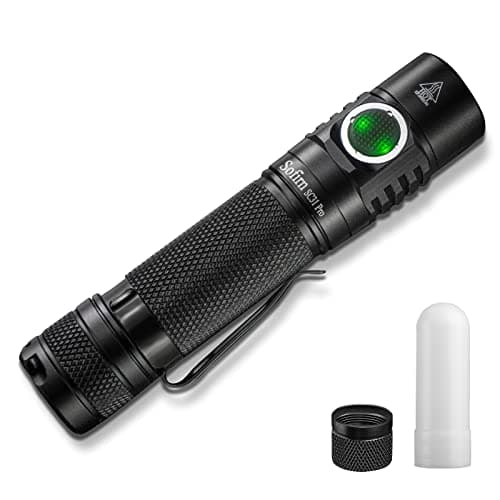
Sofirn SC31 Pro
Two thousand published lumens out of a standard 18650 you can buy anywhere for a few dollars, in a light that costs less than most brands charge for a keychain. The cell is the whole argument: when it dies in three years you replace a battery, not a flashlight.
Price as of September 14, 2026 — 47 lumens per dollar. #ad How we earn
Disclosure — we earn a commission on qualifying purchases made through the Amazon links on this page, at no extra cost to you. It does not change which lights we pick or what we say about them. The full version.
How we rank. Published ANSI FL1 output divided by the live retail price, with sealed-battery lights marked down because a light you cannot re-cell is a light with an expiry date. Units we claim to have tested: 0 — we compile manufacturers' published figures and show the arithmetic instead. How we work this out.
The only thing this page ranks on
Buy on the published IP code and ignore the word waterproof entirely. The second digit is the water claim: 4 means splashing, 7 means immersion to one meter for thirty minutes, 8 means immersion beyond one meter at a depth the manufacturer defines. NITECORE publishes IP68 to two meters for the MT2A Pro and Fenix publishes IP68 for the C7 V2.0. A light described as waterproof with no code attached has told you nothing.
This is a short criteria section because the criterion is short. Every other page on this site balances four or five attributes; this one has a single specification in the title, so the ranking follows that specification and the scored attributes only break ties within it. Saying so up front is more useful than pretending to a more sophisticated method.
What each code actually promises
| Light | Published rating | What the manufacturer is claiming |
|---|---|---|
| NITECORE MT2A Pro | IP68, 2 m | Dust-tight, and submersible to two meters |
| Fenix C7 V2.0 | IP68 | Dust-tight, and submersible beyond 1 m at Fenix's stated depth |
| Sofirn SC31 Pro | IPX8 | Submersible beyond 1 m; dust not rated |
| Wurkkos TS10 V2 | IPX8, 2 m | Submersible to two meters; dust not rated |
| Streamlight Siege AA | IPX7 — and it floats | Immersion to 1 m for 30 minutes, and it comes back up |
| Wurkkos FC11 | IPX7 | Immersion to 1 m for 30 minutes |
An X in the first position is not a failure — it means the dust ingress rating was not tested, which is common and usually irrelevant for a flashlight. The genuinely meaningful distinction is 7 against 8: a 7 covers the accident of dropping a light in a puddle or a sink, while an 8 covers deliberate use underwater at a depth the maker specifies. Our guide to IP ratings works through the whole scale.
Why the word on the box is worthless
Waterproof, water-resistant and weatherproof are marketing terms with no agreed definition, no test behind them and nobody to hold the manufacturer to. A seller can print waterproof on a listing for a light with a bare USB port and break no rule. An IP code is different in kind: it names a defined test, and printing one is a claim a manufacturer has chosen to be accountable for.
That is why this page ranks strictly on the code and ignores the adjective entirely, and why a missing rating counts against a light rather than being treated as neutral. NEBO describes the GALILEO 1000 as water and impact resistant without publishing any IP figure at all, which is a fair example of a claim that cannot be checked — our page on reading an Amazon listing covers how often that pattern appears in this category.
Why the floating lantern outranks its own digit
Streamlight's Siege AA publishes IPX7, which is a lower claim than four other lights here, and it is on this page for something none of them can match: it floats. A light rated IP68 that sinks in four meters of water is a light with an excellent rating at the bottom of a lake.
That is not a joke about specifications, it is the difference between a recoverable accident and a lost light. If your use case is a boat, a dock or a river, buoyancy is worth more than the extra digit, and it is the sort of attribute that never appears in a ranking sorted purely by IP code. Our fishing headlamp ranking makes the same argument from the other direction.
| # | Light | Max output | Battery | Lumens / $ | Price |
|---|---|---|---|---|---|
| 1 | Sofirn SC31 Pro Best lumens per dollar overall | 2,000 | Replaceable | 47 | $42.99 on Amazon Price as of September 14, 2026 — 47 lumens per dollar. #ad How we earn |
| 2 | 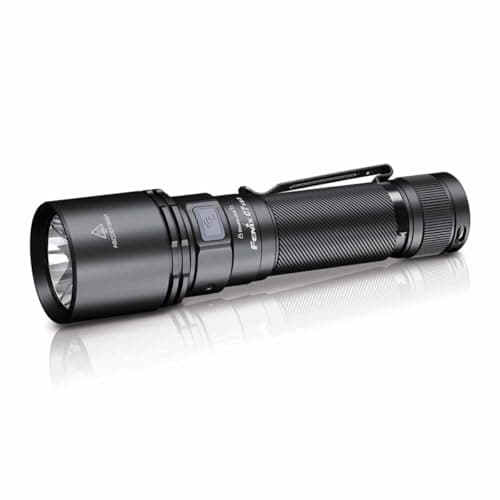 Fenix C7 V2.0 The throw comparison, not a value pick | 3,300 | Replaceable | 41 | $79.95 on Amazon Price as of September 14, 2026 — 41 lumens per dollar. #ad How we earn |
| 3 | 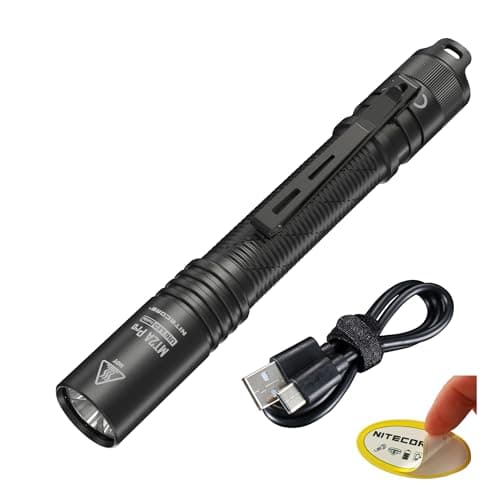 NITECORE MT2A Pro Best dual-power pocket light | 1,000 | Replaceable | 22 | $44.95 on Amazon Price as of September 14, 2026 — 22 lumens per dollar. #ad How we earn |
| 4 | 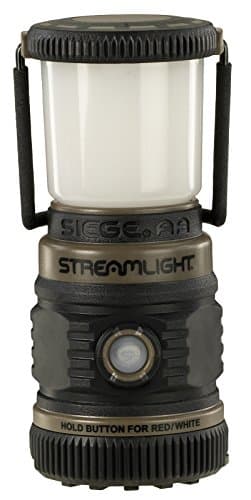 Streamlight Siege AA Best outage lantern that floats | 200 | AA / AAA | 6 | $32.49 on Amazon Price as of September 14, 2026 — 6 lumens per dollar. #ad How we earn |
| 5 | No listing image Wurkkos TS10 V2 Best pocket light under two ounces | 1,400 | Replaceable | Needs a live price | Check price on Amazon We show a price only when we have pulled a live one. #ad How we earn |
| 6 | No listing image Wurkkos FC11 Best color quality per dollar | 1,300 | Replaceable | Needs a live price | Check price on Amazon We show a price only when we have pulled a live one. #ad How we earn |
Prices pulled September 14, 2026. Lumens per dollar is the manufacturer's published maximum output divided by that price, recomputed every time the price moves.
What an IP rating does not cover
- 1.Salt water. IP tests use fresh water. Salt attacks contacts, charge ports and threads in ways immersion testing does not describe, and none of these manufacturers publishes a corrosion figure. Rinse after a salt trip and expect a shorter service life than the rating implies.
- 2.Age. The rating describes a new unit with an intact O-ring. Seals harden, and a light that passed at the factory two years ago is an unknown today. Replacing an O-ring on a light that has a serviceable one is cheap insurance.
- 3.Pressure over time. IPX8 is a depth and a duration the manufacturer chooses. It is not a licence for indefinite submersion at that depth, and manufacturers rarely spell out the duration.
- 4.An open charge port. Nearly every rating on this page assumes the port cover is closed and seated. A light charged in a workshop and left open is an unrated light.
- 5.Water that is hot. Thermal cycling pulls air and then water through seals. Hot tubs and dishwashers defeat ratings that handle cold immersion fine.
1. Best lumens per dollar overall
Sofirn SC31 Pro
Lumens per dollar
47
Two thousand published lumens out of a standard 18650 you can buy anywhere for a few dollars, in a light that costs less than most brands charge for a keychain. The cell is the whole argument: when it dies in three years you replace a battery, not a flashlight.
- Max output
- 2,000 lm
- Runtime
- Not published per mode
- Battery
- Replaceable cell
- Water rating
- IPX8
What it gets right
- Standard 18650 cell — replacements cost a few dollars and are sold everywhere
- IPX8, the strongest water rating in this price class
- USB-C charging built into the light, so no separate charger to lose
- Anduril firmware gives real ramping control rather than four fixed steps
What it gets wrong
- Sofirn publishes no per-mode runtime figures on the product page
- Anduril is genuinely confusing for the first week
- Tint varies between batches, which is the price of this price
Published specification
- Maximum output: 2,000 lumens — Sofirn published specification
- Beam distance: 226 m — Sofirn published specification
- Battery: 1 x 18650 Li-ion, user replaceable — Sofirn published specification
- Charging: USB-C, 2.5 hours with a 2A adapter — Sofirn published specification
- Water rating: IPX8 — Sofirn published specification
- Weight: 59 g without battery — Sofirn published specification
- Length: 117.5 mm — Sofirn published specification
- Emitter: SST40, 5000K or 6500K — Sofirn published specification
- Per-mode runtime: Not published on the product page
Skip this one if
you want to press one button and get one brightness. Anduril has a shortcut for everything and a menu for everything else, and if that sounds tiring you will be happier with a three-mode light.
Buy it if: anyone who intends to keep the light for longer than the battery lasts, and does not mind reading a manual once.
- Output 9.0
- Battery 9.5
- Build 8.0
- Usability 7.0
- Overall 8.6
Price as of September 14, 2026 — 47 lumens per dollar. #ad How we earn
2. The throw comparison, not a value pick
Fenix C7 V2.0
Lumens per dollar
41
Thirty-three hundred lumens and 575 meters of throw with an IP68 rating. It appears here as a reference point: this is what a well-built high-output light costs, and it is the number every budget 10,000-lumen claim should be measured against.
- Max output
- 3,300 lm
- Runtime
- Not published per mode on the retail page
- Battery
- Replaceable cell
- Water rating
- IP68
What it gets right
- Five hundred and seventy-five meters is real throw, not a marketing figure
- IP68 and a magnetic tail
- Removable cell
What it gets wrong
- Expensive by this site's standards
- No per-mode runtime on the retail page
- A dedicated thrower is the wrong shape of light for most jobs
Published specification
- Maximum output: 3,300 lumens — Fenix published specification
- Beam distance: 1,886 ft (575 m) — Fenix published specification
- Water rating: IP68 — Fenix published specification
- Body: Ultra-thick A6061-T6 aluminum — Fenix published specification
- Charging: Inner-waterproofed USB-C — Fenix published specification
- Fittings: Magnetic tail, lockout mode — Fenix published specification
- Per-mode runtime: Not published on the retail page we read
Skip this one if
you want one light for the house. A thrower puts its light in a small circle a long way away, which is not what you want indoors.
Buy it if: search work, large properties and anyone who genuinely needs to see a third of a mile.
- Output 9.5
- Battery 9.0
- Build 9.5
- Usability 8.0
- Overall 8.5
Price as of September 14, 2026 — 41 lumens per dollar. #ad How we earn
3. Best dual-power pocket light
NITECORE MT2A Pro
Lumens per dollar
22
A thousand lumens and 255 meters out of a penlight body that runs on its own removable 14500 or on two AA cells from any shop on earth. IP68 on top. It is the rare light that answers the shelf-life problem and the output problem in the same package.
- Max output
- 1,000 lm
- Runtime
- 20 h
- Battery
- Replaceable cell
- Water rating
- IP68
What it gets right
- Dual power: a removable 14500 for output, or two AA cells when there is no charger
- IP68 to two meters, which almost nothing at this size publishes
- Two hundred and fifty-five meters of throw from a penlight-shaped body
- The charging port is in the cell, so a spare cell charges while the light is in use
What it gets wrong
- NITECORE publishes only the maximum runtime, not a figure per mode
- On alkaline AA cells the output is far below the 1,000-lumen headline
- A penlight body is long for its diameter and rolls off a sloped surface
Published specification
- Maximum output: 1,000 lumens — NITECORE published specification
- Peak beam intensity: 16,500 cd — NITECORE published specification
- Beam distance: 255 m — NITECORE published specification
- Battery: 2 x AA, or 1 x NL1416R 14500 Li-ion with USB-C charging in the cell — NITECORE published specification
- Water rating: IP68, submersible to 2 m — NITECORE published specification
- Impact: 1 m — NITECORE published specification
- Weight: 40 g (1.41 oz) without battery — NITECORE published specification
- Length: 142.8 mm — NITECORE published specification
- Modes: Three brightness levels, single tail switch — NITECORE published specification
- Maximum runtime: 20 hours at 50 lumens — NITECORE published specification
- Per-mode runtime: Not published on the product page
Skip this one if
you want the smallest possible pocket light. At 142.8 mm this is a long, thin light rather than a short one, and that shape suits a shirt pocket better than a jeans pocket.
Buy it if: anyone who wants one light for both daily use and the drawer, and refuses to be stopped by a flat cell.
- Output 8.0
- Battery 9.5
- Build 9.0
- Usability 8.0
- Overall 8.6
Price as of September 14, 2026 — 22 lumens per dollar. #ad How we earn
4. Best outage lantern that floats
Streamlight Siege AA
Lumens per dollar
6
Two hundred lumens for seven hours, fifty for thirty-seven, and a red night-vision mode Streamlight rates at 192 hours. It runs on AA cells, it is IPX7, and it floats. For a storm shelf that is the correct specification.
- Max output
- 200 lm
- Runtime
- 7 h
- Battery
- AA / AAA
- Water rating
- IPX7
What it gets right
- AA cells store for a decade and are available anywhere, including mid-outage
- IPX7 and it floats, which is the correct answer for a flooded basement
- Runtime published for all five modes, including the 8-day red mode
What it gets wrong
- Two hundred lumens is dim next to a rechargeable lantern
- No rechargeable option in this version
- Removable cover changes the beam pattern and is easy to lose
Published specification
- White high: 200 lumens, 7 hours — Streamlight published specification
- White medium: 100 lumens, 15.5 hours — Streamlight published specification
- White low: 50 lumens, 37 hours — Streamlight published specification
- Red high: 0.7 lumens, 192 hours (8 days) — Streamlight published specification
- SOS flash: 0.7 lumens, 288 hours (12 days) — Streamlight published specification
- Battery: AA alkaline — Streamlight published specification
- Water rating: IPX7, 1 m — and it floats — Streamlight published specification
- Impact: 2 m tested — Streamlight published specification
Skip this one if
you want a bright camp lantern. This is an endurance light, not an area light.
Buy it if: the storm shelf, the boat and the basement that occasionally has water in it.
- Output 4.5
- Battery 9.5
- Build 9.0
- Usability 8.5
- Overall 7.9
Price as of September 14, 2026 — 6 lumens per dollar. #ad How we earn
listing
image
5. Best pocket light under two ounces
Wurkkos TS10 V2
Lumens per dollar
Computed the moment we have a live price for it
Thirty-two grams, three 90-CRI emitters, and one of the very few budget lights whose maker publishes the runtime at maximum output: one hour fourteen at 1,400 lumens. Publishing that number at all puts Wurkkos ahead of several brands ten times its size.
- Max output
- 1,400 lm
- Runtime
- 1 h 14 min
- Battery
- Replaceable cell
- Water rating
- IPX8
What it gets right
- Wurkkos publishes runtime at maximum output, which most brands quietly do not
- Thirty-two grams — light enough that you stop noticing it in a pocket
- Standard 14500 cell, replaceable
- Documented automatic step-down instead of an undocumented one
What it gets wrong
- A 14500 is a small cell; sustained output is not this light's job
- RGB auxiliary LEDs are a toy, and they draw from the same cell
- Anduril again, with the same learning curve
Published specification
- Maximum output: 1,400 lumens — Wurkkos published specification
- Runtime at maximum: 1 h 14 min — Wurkkos published specification
- Runtime at 1 lumen: 6 h 43 min — Wurkkos published specification
- Battery: 1 x 14500 Li-ion, user replaceable — Wurkkos published specification
- Water rating: IPX8, 2 m — Wurkkos published specification
- Weight: 32 g +/- 1 g without battery — Wurkkos published specification
- Length: 71.5 mm — Wurkkos published specification
- Thermal behavior: Automatic step-down from turbo to high — Wurkkos published specification
Skip this one if
you need something to run for an hour on high without getting hot. A light this small has nowhere to put the heat, and the step-down is not optional.
Buy it if: the person who wants a real light on them at all times and will not carry anything heavier than a pen.
- Output 8.0
- Battery 8.0
- Build 7.5
- Usability 7.5
- Overall 8.2
We show a price only when we have pulled a live one. #ad How we earn
listing
image
6. Best color quality per dollar
Wurkkos FC11
Lumens per dollar
Computed the moment we have a live price for it
A 90-CRI emitter at a price where nobody else bothers, which means colors look like colors rather than like a parking lot. Same replaceable 18650 story as the Sofirn, plus a magnetic tail that turns it into a work light.
- Max output
- 1,300 lm
- Runtime
- Not published per mode
- Battery
- Replaceable cell
- Water rating
- IPX7
What it gets right
- 90 CRI at a price where 70 CRI is normal — skin, wiring and paint read correctly
- Magnetic tailcap sticks it to anything ferrous and frees both hands
- Standard 18650, USB-C charging in the light
- Two mode groups, so you can pick a simple ramp or a stepped set
What it gets wrong
- IPX7 rather than IPX8 — fine for rain, not for a river
- High CRI costs raw lumens; the Sofirn is visibly brighter on turbo
- No per-mode runtime published on the product page
Published specification
- Maximum output: 1,300 lumens — Wurkkos published specification
- Beam distance: 144 m (157 yd) — Wurkkos published specification
- Battery: 1 x 18650 Li-ion, user replaceable — Wurkkos published specification
- Water rating: IPX7 — Wurkkos published specification
- Weight: 65 g +/- 1 g without battery — Wurkkos published specification
- Length: 116.23 mm — Wurkkos published specification
- Emitter: Nichia 519A / LH351D, 90 CRI — Wurkkos published specification
- Body: 6061 aluminum, type III hard anodized — Wurkkos published specification
Skip this one if
the only number you care about is peak output. You are paying part of this light's budget for color accuracy, and if you will never notice that, the money is better spent elsewhere.
Buy it if: anyone who uses a flashlight to look at things closely — wiring, paint, engine bays, a face — rather than to light up a field.
- Output 7.5
- Battery 9.5
- Build 8.0
- Usability 8.0
- Overall 8.4
We show a price only when we have pulled a live one. #ad How we earn
How water actually gets into a flashlight
Understanding the failure modes is more useful than memorizing the codes, because it tells you which rating is doing work for your particular use and which is decoration.
- 1.The charge port. A hole in the body under a rubber flap that gets opened regularly. The flap is the part that ages, and it is the part people leave open. This is the single most common leak on a rechargeable light.
- 2.The tailcap threads and their O-ring. Rubber hardens with age and with heat, and grit on the threads holds the seal open by a fraction of a millimeter. This is why a two-year-old light is an unknown regardless of what it was rated new.
- 3.The switch boot. The rubber over a tail or side switch flexes thousands of times and eventually splits. On a well-made light this is a serviceable part; on most it is not.
- 4.The lens seal, which is the one that rarely fails. If a light leaks, it is almost never through the front.
- 5.Thermal cycling, which is the mechanism people miss. A warm light plunged into cold water contracts, and the pressure differential pulls water past seals that would hold fine at a steady temperature. It is why hot lights and cold water are a bad combination even within a rating.
Read that list against the products and NITECORE's decision on the MT2A Pro stands out: putting the charge port in the cell rather than the body removes failure mode one entirely from the light itself, which is a large part of how a penlight reaches IP68 to two meters.
What to do when a light does get soaked
Three steps, and the order matters. Do not press the switch or plug anything in while it is wet — a charge port with water bridging the contacts is the one way to turn a wet light into a dead one. Open the tailcap, take the cell out if it is removable, and let everything dry separately with the port cover open.
Then, before reassembling, look at the O-ring. If it is dry, flattened or gritty, that is your leak and a replacement costs almost nothing on a light that has a serviceable one. A thin film of silicone grease on the threads restores the seal and is the single cheapest piece of flashlight maintenance there is. Our page on a light that will not charge covers the diagnostic order if it does not come back.
The port is where water actually gets in
On a rechargeable light the weakest point is almost always the USB port, because it is a hole in the body covered by a rubber flap that has to be opened regularly. The flap is the part that wears, and it is the part people leave open.
NITECORE's MT2A Pro sidesteps this by putting the charging port in the cell rather than in the light body, so the body itself has no port to seal — which is a large part of how a penlight-sized light reaches IP68 to two meters. That is a genuinely clever piece of design and worth understanding when comparing ratings, because two lights with the same code can have very different numbers of ways to fail.
Which rating you actually need
Buying more rating than the job requires is a real cost, because water resistance competes with other things you want — a sealed body is harder to make light, harder to make serviceable, and frequently more expensive. Matching the rating to the use is better shopping than maximizing it.
- Household, car and general carry: IPX4 is genuinely enough. The light meets rain and spills and nothing else, and money spent on a higher rating here buys nothing you will use.
- Work outdoors, dog walks, camping, anything in weather: IPX7. This is the band where a light survives being dropped in a puddle or left out in a downpour, which is the accident that actually happens.
- Boats, kayaks, fishing, wading, cave work: an 8. Deliberate contact with water rather than accidental, and here the extra digit is doing real work.
- Diving: none of these. Recreational dive lights are a separate product category with depth ratings in the tens of meters, and nothing on this page is one.
The useful consequence is that most readers of this page need IPX7 rather than IP68, and several lights in our wider rankings that publish IPX7 are better buys overall than the higher-rated options here. Our flagship value ranking is where to go if water resistance is a requirement rather than the requirement.
How we ranked these
The published water rating sets the order, and the four scored attributes from our methodology page break ties within each tier. One stated adjustment: the Streamlight Siege AA is promoted above lights with higher codes because it floats, which is a recovery property no IP digit captures. Everything else follows the codes as published, including where that puts a light we otherwise rate more highly further down.
Units we claim to have tested: 0
Every publisher in this category says they tested twenty flashlights. We have not tested any, and we say so. What we do instead: compile the manufacturer's own published ANSI FL1 figures, pull the price the light is selling for right now, and divide one by the other. Every number on this page is one you can check yourself in about two minutes.
What we cannot tell you
We have not put any of these lights in water. Every rating on this page is a manufacturer's own claim about a new unit under a defined test, cited with the date it was read. We cannot tell you how any of them behaves after two years of seal ageing, after salt exposure, or if the port cover is not quite seated — and those three cover most of the real-world failures. A published rating is the best evidence available at a distance, and it is evidence about the factory rather than about the light in your hand today. Treat it as a claim about a new unit with an intact seal, and re-check the O-ring yourself before you trust it around deep water.
Common questions
What IP rating do I need for a waterproof flashlight?
For rain, washing up and the occasional drop in a puddle, IPX7 is enough — it means immersion to one meter for thirty minutes. For deliberate use in or around water, look for an 8: NITECORE publishes IP68 to two meters for the MT2A Pro and Wurkkos publishes IPX8 to two meters for the TS10 V2. IPX4 is splash resistance only, and a light described as waterproof with no code at all is making no checkable claim.
What is the difference between IPX8 and IP68?
Only the first digit, which covers dust. IPX8 means the dust rating was not tested; IP68 means it was tested and the light is dust-tight. The water claim is identical: submersible beyond one meter at a depth the manufacturer specifies. For a flashlight the dust digit rarely matters, so treat IPX8 and IP68 as equivalent on the specification that counts.
Can you use a rechargeable flashlight in salt water?
The IP ratings on this page are fresh-water tests and none of these manufacturers publishes a salt-water or corrosion specification, so we will not claim one. Salt attacks contacts, charge ports and threads in ways immersion testing does not describe. If you use a light around salt, rinse it in fresh water afterwards, dry the charge port before plugging anything in, and expect a shorter service life than the rating suggests.
Can you replace the battery in a rechargeable flashlight?
It depends entirely on the model, and it is the single most consequential thing to check before buying. Lights built around a standard cell — an 18650, a 21700, a 14500, a 16340 — take a screw-off tailcap and a five-dollar replacement. Lights with a built-in cell, which manufacturers describe as 'integrated' or 'non-removable', cannot be re-celled by an ordinary owner: when the battery reaches the end of its cycle life the whole light is refuse. Energizer, for example, states plainly that the Vision HD Rechargeable uses non-removable lithium-ion batteries.
Sources
- NITECORE published product specifications — NU25 MCT UL read 2026-09-01; MT2A Pro read 2026-09-13
- Fenix published product specifications — read 2026-09-01
- Sofirn published product specifications — read 2026-09-01
- Wurkkos published product specifications and user manuals — read 2026-09-01
- Streamlight published product specifications — per-mode lumens, runtime, beam distance, impact and IP ratings, read 2026-09-01
- Lumen & Ledger method — how every figure on this page is derived
Who writes this
Scooter M. — I am an enthusiast who is genuinely into this. I read the manuals, compile the published specs, and do the math. No lab coat, no test bench, no drawer of free samples. What I can tell you is exactly what a light claims on paper, exactly what it costs right now, and what those two numbers mean when you divide one by the other.
Read next
IP and IPX ratings explained
What IPX4, IPX7 and IP68 mean, and why a missing rating is information too.
Best rechargeable headlamps for fishing
The water rating leads this ranking, and one popular lamp is disqualified by it.
Best flashlights for hiking and backpacking
Grams carried against hours delivered, and the cell you can buy in a trail town.
ANSI FL1 explained
The standard behind the numbers, and what a brand is telling you by not citing it.
The best rechargeable flashlights for the money
The flagship ranking: every pick scored on output over price, with the arithmetic shown.
The Ledger
Every light we cover in one ranked table, sorted by lumens per dollar.