Headlamps
Best Rechargeable Headlamps for Fishing
Every other headlamp ranking treats the water rating as a footnote. On the water it is the first column, and it eliminates a lamp we recommend everywhere else.
By Scooter M. · Published September 6, 2026
Short answer
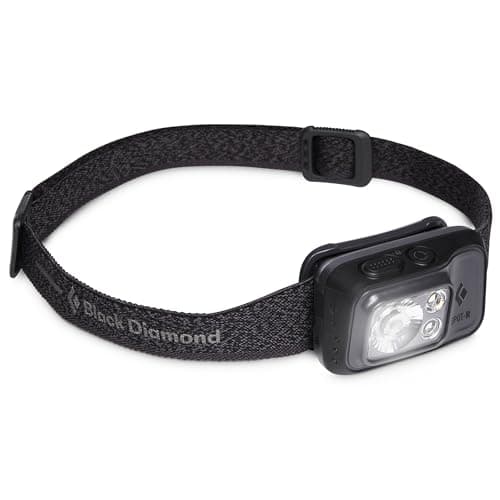
Black Diamond Spot 400-R
Four hundred lumens for four hours, 200 for eight, 6 for two hundred and twenty-five. Black Diamond publishes lumens, runtime and beam distance for all three modes, and IP67 on top. There is nothing to guess at here.
We show a price only when we have pulled a live one. #ad How we earn
Disclosure — we earn a commission on qualifying purchases made through the Amazon links on this page, at no extra cost to you. It does not change which lights we pick or what we say about them. The full version.
How we rank. Published ANSI FL1 output divided by the live retail price, with sealed-battery lights marked down because a light you cannot re-cell is a light with an expiry date. Units we claim to have tested: 0 — we compile manufacturers' published figures and show the arithmetic instead. How we work this out.
The water rating leads this ranking, and it is the only page where it does
For fishing, buy a headlamp with a published IP rating whose second digit is 7 or 8 — Black Diamond publishes IP67 on the Spot 400-R, tested to one meter for thirty minutes, and Fenix publishes IP68 on the HM65R V2.0. A lamp rated IPX4 is weather resistant only, which covers rain and nothing you drop. Then look for red mode and a low-mode runtime, in that order. Output is the fourth question here, not the first.
This is the one use case on this site where we let a single specification decide the order. Everywhere else, a water rating is a tiebreaker; on a boat, a bank or a pier at night, it is the difference between a lamp that survives an ordinary accident and one that does not. Lamps get dropped, splashed, rained on, and set down on wet gunwales, and the failure is total when it comes.
What the digits actually promise
In an IP code the second digit covers water. IPX4 means splashing from any direction — rain, spray, a wet hand. IP66 adds powerful water jets and a sealed enclosure against dust. IP67 means immersion to one meter for thirty minutes. IP68 means immersion beyond one meter, at a depth and duration the manufacturer defines rather than a universal figure. An X in the first position simply means the dust rating was not tested, not that it failed.
| Lamp | Published water rating | What that covers |
|---|---|---|
| Fenix HM65R V2.0 | IP68 | Immersion beyond 1 m, depth set by Fenix |
| Black Diamond Spot 400-R | IP67 | Immersion to 1 m for 30 minutes |
| NITECORE NU25 MCT UL | IP66 | Powerful jets, not immersion |
| Streamlight Siege AA | IPX7 | Immersion to 1 m for 30 minutes; it also floats |
| Petzl ACTIK CORE | IPX4 | Rain and splashes only |
Why the value pick is IP67 rather than IP68
The Fenix has the strongest published rating on this page and it is also several times the price of the Black Diamond. That matters on a site built around what a light costs, so here is the honest reading: for a lamp on your head, IP67 covers every realistic fishing accident. A dropped lamp goes into shallow water and comes out within thirty minutes, or it goes into deep water and you are not getting it back regardless of its rating.
The Fenix earns its place for a different reason — the removable 21700 and a genuinely enormous output for after-dark navigation — not because IP68 buys you meaningfully more protection on a headband. Buy the cheaper lamp unless you have a specific reason for the expensive one. That is this site's standing position and it applies here.
The lamp we like everywhere else and cannot recommend here
The Petzl ACTIK CORE is the best-rated headlamp on this site by our own rubric. It states ANSI/PLATO FL 1 conformity, which almost nothing else here does, it publishes 625 lumens, and its hybrid power system — the CORE pack or three ordinary AAA cells — solves the sealed-battery problem outright.
It is rated IPX4. Petzl says weather resistant, and that is a rain rating. It is last on this page for that one reason, and it is included rather than quietly dropped because a reader who owns one deserves to know exactly where the limit is rather than discovering it. If you fish from a bank in fair weather and you already own it, it is fine. If you are buying a lamp for the water, buy one of the four above it.
| # | Light | Max output | Battery | Lumens / $ | Price |
|---|---|---|---|---|---|
| 1 | Black Diamond Spot 400-R Most complete published runtime table | 400 | Sealed | Needs a live price | Check price on Amazon We show a price only when we have pulled a live one. #ad How we earn |
| 2 | No listing image Fenix HM65R V2.0 Most output with a removable 21700 | 2,200 | Replaceable | Needs a live price | Check price on Amazon We show a price only when we have pulled a live one. #ad How we earn |
| 3 | 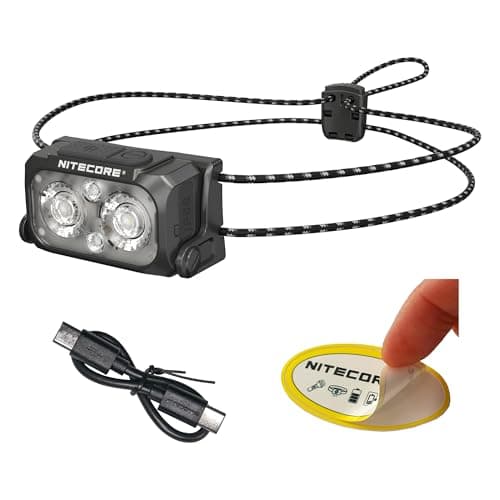 NITECORE NU25 MCT UL Lightest headlamp with a real published runtime | 400 | Sealed | Needs a live price | Check price on Amazon We show a price only when we have pulled a live one. #ad How we earn |
| 4 | 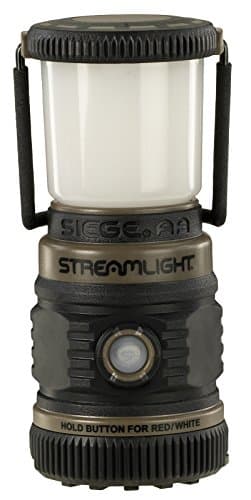 Streamlight Siege AA Best outage lantern that floats | 200 | AA / AAA | Needs a live price | Check price on Amazon We show a price only when we have pulled a live one. #ad How we earn |
| 5 | 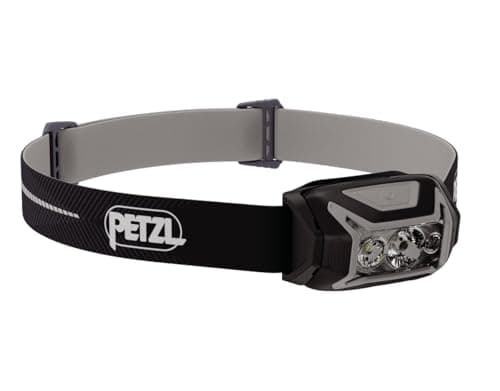 Petzl ACTIK CORE Best hybrid: rechargeable or AAA cells | 625 | Replaceable | Needs a live price | Check price on Amazon We show a price only when we have pulled a live one. #ad How we earn |
Lumens per dollar is the manufacturer's published maximum output divided by the price the light is selling for. Where we have not pulled a live price, the column says so instead of showing you a number we cannot stand behind. See how we work this out.
Red mode, and why it earns its place on the water
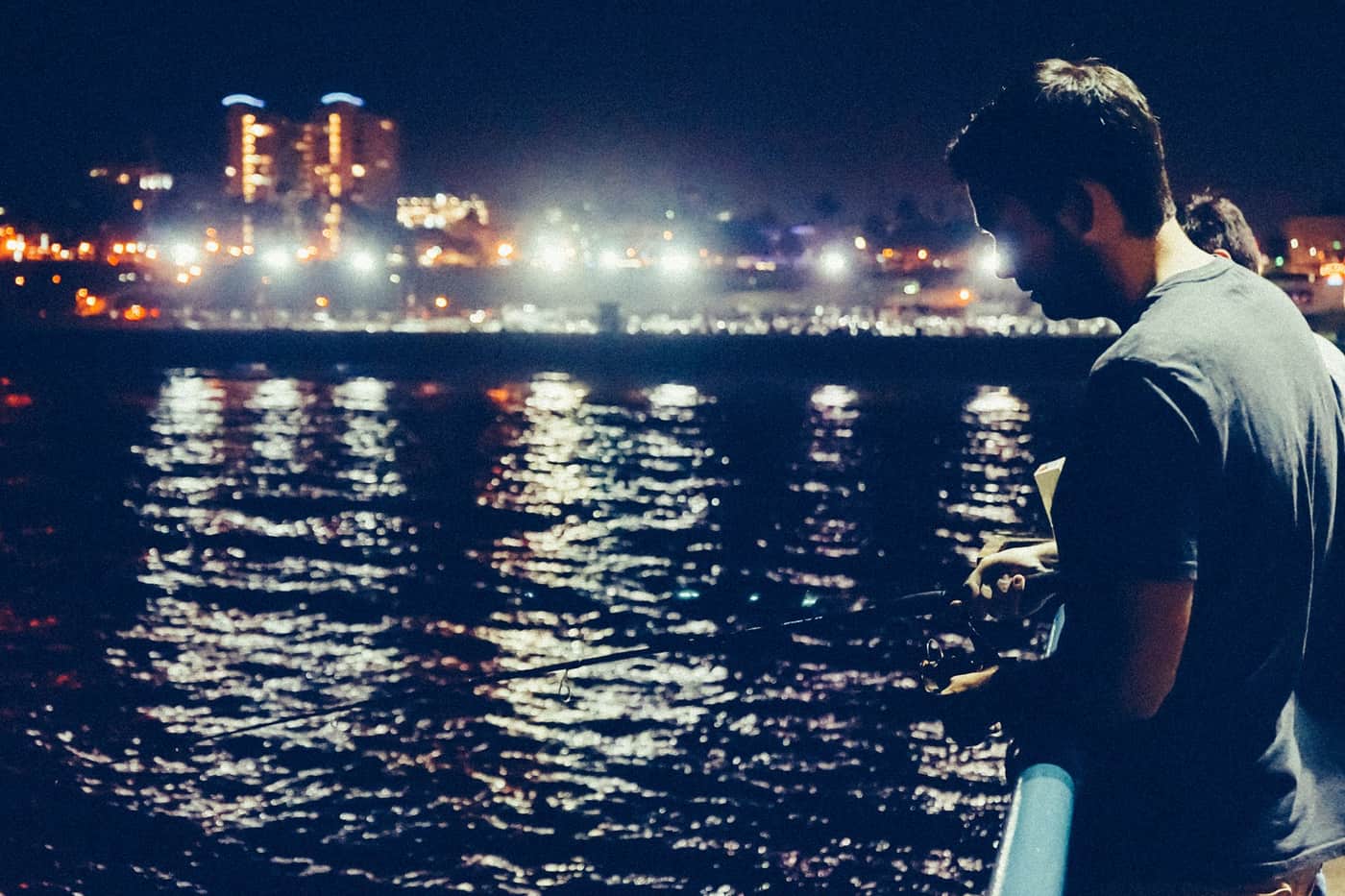
Red light preserves dark adaptation, which is worth as much on a pier at midnight as it is anywhere else — you can rig a line, unhook a fish or find something in a tackle box and still be able to see the water afterward. It is also less disruptive to everyone fishing within fifty meters of you, which is a social argument rather than a technical one and no less real.
Every lamp on this page has a red mode. The NU25 goes further and offers three white color temperatures — 3,000K, 4,500K and 6,500K — plus an auxiliary red, which is unusual at any price and genuinely useful when a warmer beam cuts less glare off wet surfaces.
1. Most complete published runtime table
Black Diamond Spot 400-R
Lumens per dollar
Computed the moment we have a live price for it
Four hundred lumens for four hours, 200 for eight, 6 for two hundred and twenty-five. Black Diamond publishes lumens, runtime and beam distance for all three modes, and IP67 on top. There is nothing to guess at here.
- Max output
- 400 lm
- Runtime
- 4 h
- Battery
- Sealed
- Water rating
- IP67
What it gets right
- Lumens, runtime and distance published for every mode
- Two hundred and twenty-five hours on low is a genuine emergency reserve
- IP67 and a battery meter that shows an actual percentage
What it gets wrong
- Micro-USB in a year when everything else is USB-C
- Integrated battery — no spare, no re-cell
- Eighty-six grams is heavy next to the ultralight class
Published specification
- High: 400 lumens, 4 hours, 100 m — Black Diamond published specification
- Medium: 200 lumens, 8 hours, 60 m — Black Diamond published specification
- Low: 6 lumens, 225 hours, 12 m — Black Diamond published specification
- Battery: Integrated 1,500 mAh Li-ion, micro-USB — Black Diamond published specification
- Water rating: IP67, tested to 1.0 m for 30 minutes — Black Diamond published specification
- Weight: 86 g — Black Diamond published specification
Skip this one if
you have standardized on USB-C. Carrying a second cable for one device is a small annoyance that compounds on a long trip.
Buy it if: camp, dog walks and anyone who wants a headlamp whose numbers are all on the box.
- Output 6.5
- Battery 5.5
- Weight 7.0
- Usability 9.0
- Overall 7.7
We show a price only when we have pulled a live one. #ad How we earn
listing
image
2. Most output with a removable 21700
Fenix HM65R V2.0
Lumens per dollar
Computed the moment we have a live price for it
Twenty-two hundred lumens, 226 meters, IP68, a 2-meter impact rating and a removable 3,400 mAh 21700. It costs several times what a budget headlamp costs and it is the only one here you can carry a spare cell for.
- Max output
- 2,200 lm
- Runtime
- Not published per mode on the retail page
- Battery
- Replaceable cell
- Water rating
- IP68
What it gets right
- Removable 21700, so a spare cell turns a four-hour night into an eight-hour one
- IP68 — the strongest water rating in this roundup
- Independent spot and flood control, which is what work actually needs
What it gets wrong
- Its lumens-per-dollar figure will be poor against any budget lamp
- Heavy on the head compared with the ultralight class
- No per-mode runtime on the page we read
Published specification
- Maximum output: 2,200 lumens, spot and flood combined — Fenix published specification
- Beam distance: 741 ft (226 m) — Fenix published specification
- Battery: 3,400 mAh 21700, removable, USB-C — Fenix published specification
- Water rating: IP68 — Fenix published specification
- Impact: 2 m — Fenix published specification
- Body: Magnesium alloy — Fenix published specification
- Per-mode runtime: Not published on the retail page we read
Skip this one if
you are buying on value. This is a work tool priced as one.
Buy it if: night shifts, cave work and anyone who has run a headlamp flat halfway through a job.
- Output 9.5
- Battery 9.0
- Weight 5.5
- Usability 8.5
- Overall 8.4
We show a price only when we have pulled a live one. #ad How we earn
3. Lightest headlamp with a real published runtime
NITECORE NU25 MCT UL
Lumens per dollar
Computed the moment we have a live price for it
Forty-seven grams including the headband, 400 lumens, and 45 hours at its 6-lumen setting. On a headlamp the weight figure matters more than the lumen figure, because the lamp you stop wearing produces no light at all.
- Max output
- 400 lm
- Runtime
- 45 h at 6 lm
- Battery
- Sealed
- Water rating
- IP66
What it gets right
- Forty-seven grams with the band on — you forget it is there
- Three color temperatures plus red, which is unusual at any price
- IP66 and a published 45-hour low-mode runtime
What it gets wrong
- Sealed 700 mAh cell; no way to carry a spare
- Four hundred lumens is modest for trail running at speed
- Flat band with no over-the-top strap on the ultralight version
Published specification
- Maximum output: 400 lumens — NITECORE published specification
- Beam distance: 132 m — NITECORE published specification
- Runtime: Up to 45 hours at 6 lumens — NITECORE published specification
- Battery: Built-in 700 mAh Li-ion, USB-C — NITECORE published specification
- Weight: 47 g (1.66 oz) including bracket and headband — NITECORE published specification
- Water rating: IP66 — NITECORE published specification
- Color temperatures: 3,000K / 4,500K / 6,500K plus auxiliary red — NITECORE published specification
Skip this one if
you need to swap a battery mid-shift. A sealed 700 mAh cell means your night ends when it does.
Buy it if: hikers, campers and anyone whose complaint about headlamps is that they bounce.
- Output 6.5
- Battery 4.5
- Weight 9.5
- Usability 8.5
- Overall 7.8
We show a price only when we have pulled a live one. #ad How we earn
4. Best outage lantern that floats
Streamlight Siege AA
Lumens per dollar
Computed the moment we have a live price for it
Two hundred lumens for seven hours, fifty for thirty-seven, and a red night-vision mode Streamlight rates at 192 hours. It runs on AA cells, it is IPX7, and it floats. For a storm shelf that is the correct specification.
- Max output
- 200 lm
- Runtime
- 7 h
- Battery
- AA / AAA
- Water rating
- IPX7
What it gets right
- AA cells store for a decade and are available anywhere, including mid-outage
- IPX7 and it floats, which is the correct answer for a flooded basement
- Runtime published for all five modes, including the 8-day red mode
What it gets wrong
- Two hundred lumens is dim next to a rechargeable lantern
- No rechargeable option in this version
- Removable cover changes the beam pattern and is easy to lose
Published specification
- White high: 200 lumens, 7 hours — Streamlight published specification
- White medium: 100 lumens, 15.5 hours — Streamlight published specification
- White low: 50 lumens, 37 hours — Streamlight published specification
- Red high: 0.7 lumens, 192 hours (8 days) — Streamlight published specification
- SOS flash: 0.7 lumens, 288 hours (12 days) — Streamlight published specification
- Battery: AA alkaline — Streamlight published specification
- Water rating: IPX7, 1 m — and it floats — Streamlight published specification
- Impact: 2 m tested — Streamlight published specification
Skip this one if
you want a bright camp lantern. This is an endurance light, not an area light.
Buy it if: the storm shelf, the boat and the basement that occasionally has water in it.
- Output 4.5
- Battery 9.5
- Build 9.0
- Usability 8.5
- Overall 7.9
We show a price only when we have pulled a live one. #ad How we earn
5. Best hybrid: rechargeable or AAA cells
Petzl ACTIK CORE
Lumens per dollar
Computed the moment we have a live price for it
Six hundred and twenty-five lumens stated to ANSI/PLATO FL1, 88 grams, and — the part that matters — it runs on the CORE rechargeable pack or on three AAA cells when the pack is flat. That is the answer to the sealed-battery problem, from the only brand here that bothered.
- Max output
- 625 lm
- Runtime
- Published per mode by Petzl
- Battery
- Replaceable cell
- Water rating
- IPX4
What it gets right
- Explicitly states ANSI/PLATO FL1 conformity, which most brands here do not
- Hybrid power: the pack for daily use, AAA cells as the fallback that never fails
- Petzl publishes the CORE pack's cycle rating, so its service life is a stated number
What it gets wrong
- IPX4 — weather resistant, not submersible
- Eighty-eight grams is not ultralight
- The CORE pack is a Petzl part rather than a standard cell
Published specification
- Maximum output: 625 lumens (ANSI/PLATO FL1) — Petzl published specification
- Weight: 88 g — Petzl published specification
- Battery: CORE rechargeable 1,250 mAh / 3.6 V / 4.5 Wh, or 3 x AAA — Petzl published specification
- Battery compatibility: Alkaline, lithium or Ni-MH — Petzl published specification
- Water rating: IPX4, weather resistant — Petzl published specification
- Warranty: Lamp 5 years; CORE battery 2 years or 300 cycles — Petzl published specification
- Lighting levels: MAX BURN TIME, STANDARD, MAX POWER, plus red — Petzl published specification
Skip this one if
you want a submersible headlamp. IPX4 covers rain and nothing beyond it.
Buy it if: anyone whose headlamp has to work at the end of a long trip, when charging is not an option.
- Output 7.5
- Battery 9.0
- Weight 7.0
- Usability 8.5
- Overall 8.3
We show a price only when we have pulled a live one. #ad How we earn
The lantern nobody puts on a headlamp list
The Streamlight Siege AA is on this page deliberately, and it is not a headlamp. It publishes IPX7, it runs on AA cells, and it floats — which is the specification that matters in a boat, because a lantern that goes over the side and comes back is a lantern you still own. Its 200 lumens will not impress anyone. It lights a cockpit or a bank swim so nobody has to hold anything, and it will still be working next season on cells bought at a gas station.
A headlamp for your hands and a lantern for the space is a better setup than two headlamps, and standardizing both on the same cell size is better still.
Glare off water, and why the brightest lamp is the wrong one
Water is a mirror, and a headlamp aimed at it sends a large fraction of its output straight back into your own eyes. That is the single most common complaint about lighting on the water and it gets worse, not better, as output goes up. A 2,000-lumen lamp pointed at a flat surface at night is genuinely unpleasant and destroys the dark adaptation you need to see a float, a rod tip or the bank.
Two things help and neither costs money. Use a low mode — most of what you do on the water happens within a meter of your hands, and fifty lumens is plenty for it. And use a warmer beam where the lamp offers one: the NITECORE NU25 publishes three color temperatures, 3,000K, 4,500K and 6,500K, and the 3,000K setting scatters and reflects noticeably less harshly off wet surfaces than a cool white does. That is the practical case for a lamp with color-temperature options, and it is a better reason to buy one than the specification sheet makes it sound.
Retention: the specification nobody publishes
A lamp on a boat wants a tether, and none of these manufacturers publishes anything about attachment points because it is not a measured quantity. It is still the difference between a bad evening and a lost lamp. A headband is a retention system as long as it is on your head; the moment you take it off to hand someone a net it is an object on a wet, sloping surface.
The Streamlight lantern on this page is the exception that proves the point — it floats, so a retention failure is recoverable. For everything else, a short lanyard to a jacket loop is worth more than any rating on this page, and it is the one improvement you can make to a lamp you already own.
Charging where there is no wall
A fishing trip is one of the few contexts where you are away from power for a long stretch but not carrying weight over distance, which changes the charging calculation. A small USB power bank in a dry bag covers a sealed lamp for several nights and weighs nothing you will notice in a boat or on a bank.
The alternative, and the more robust one, is a lamp whose cell you can swap: the Fenix takes a removable 21700, and the Petzl accepts three ordinary AAA cells when its pack is flat. Either removes the need to find power at all. Our guide to charging a rechargeable flashlight covers the port-and-cable habits that matter most when everything you own is slightly damp.
Salt water, which no rating on this page covers
None of these manufacturers publishes a salt-water or corrosion specification, and an IP rating is a fresh-water test. Salt attacks contacts, charge ports and threads in a way immersion testing does not describe. We are not going to invent a durability claim none of these brands makes, so the honest advice is procedural rather than a product recommendation: rinse the lamp in fresh water after a salt trip, dry the charge port before you plug anything into it, and expect a shorter service life than the rating suggests.
Runtime for a night session, worked through
A serious night session is eight to twelve hours, and almost none of that is spent at a lamp's maximum. The realistic pattern is a long stretch on a low or red setting with short bursts of white for landing a fish, retying or moving. That pattern is what the published mode tables should be read against.
On those terms Black Diamond's numbers cover a session comfortably: 200 lumens for eight hours, and 6 lumens for two hundred and twenty-five. NITECORE publishes up to 45 hours at 6 lumens. Both of those mean the lamp is not the constraint on the night. What will catch you out is running white high because it is there — four hours at 400 lumens is a published figure and it is also the fastest way to end up in the dark at 3 a.m. with a wet charging port.
The lamps that avoid the problem entirely are the ones with a cell you can change: a spare 21700 for the Fenix, or three AAA cells for the Petzl if you are fishing somewhere its IPX4 rating is genuinely adequate. Our guide to flashlight runtime explains why an up-to figure so rarely describes the mode you are actually using.
How we ranked these
The same four scored attributes as every other page — output against live price, battery architecture, weight, and usability — with one stated override for this use case: the published water rating sets the order first, and the scored attributes break ties within it. That override is the reason a lamp that outscores the field overall finishes last here, and saying so plainly is better than adjusting the scores until the ranking looks tidy.
Units we claim to have tested: 0
Every publisher in this category says they tested twenty flashlights. We have not tested any, and we say so. What we do instead: compile the manufacturer's own published ANSI FL1 figures, pull the price the light is selling for right now, and divide one by the other. Every number on this page is one you can check yourself in about two minutes.
What we cannot tell you
We have not tested any of these lamps in or near water. We cannot tell you how any of them behaves after a season of salt exposure, whether the charge-port covers stay sealed once the gasket has aged, how the beams read against wet ground and open water, or whether a lamp that passed its factory IP test still passes it after two years in a tackle bag. Published ratings describe a new unit under a defined test, and that is all any of us knows.
Common questions
What IP rating do I need for a fishing headlamp?
Aim for a second digit of 7 or 8. IP67 means immersion to one meter for thirty minutes, which covers a dropped lamp; IP68 means immersion beyond that at a depth the manufacturer defines. IPX4 is rain and splashes only and is not enough for the water — that is why the Petzl ACTIK CORE, which we rate highly elsewhere, finishes last on this page.
Is a red headlamp better for night fishing?
For your own vision, yes. Red preserves dark adaptation, so you can rig a line or unhook a fish and still see the water afterward, and it is far less disruptive to anyone fishing nearby. We have no basis to tell you what it does to fish behavior and are not going to speculate. Every lamp on this page includes a red mode; what varies is how many presses away it is.
Will a rechargeable headlamp survive being dropped in the water?
It depends entirely on the published rating and on how deep it goes. A lamp rated IP67 is stated to survive one meter for thirty minutes, which is most realistic accidents. Nothing here is rated for salt water specifically, because none of these manufacturers publishes such a figure — rinse in fresh water after a salt trip and dry the charge port before plugging in.
Can you replace the battery in a rechargeable flashlight?
It depends entirely on the model, and it is the single most consequential thing to check before buying. Lights built around a standard cell — an 18650, a 21700, a 14500, a 16340 — take a screw-off tailcap and a five-dollar replacement. Lights with a built-in cell, which manufacturers describe as 'integrated' or 'non-removable', cannot be re-celled by an ordinary owner: when the battery reaches the end of its cycle life the whole light is refuse. Energizer, for example, states plainly that the Vision HD Rechargeable uses non-removable lithium-ion batteries.
Sources
- Black Diamond published product specifications — Spot 400-R read 2026-09-01; Storm 500-R read 2026-09-14
- Fenix published product specifications — read 2026-09-01; PD36R Pro product page read 2026-10-18
- NITECORE published product specifications — NU25 MCT UL read 2026-09-01; MT2A Pro read 2026-09-13; EDC31 read 2026-10-03; MH25 Pro and Tiki LE read 2026-10-10
- Streamlight published product specifications — per-mode lumens, runtime, beam distance, impact and IP ratings, read 2026-09-01; Waypoint 400 and Waypoint C-cell read 2026-09-22; FlipMate read 2026-10-18
- Petzl published product specifications — ANSI/PLATO FL 1 conformity stated by the manufacturer. ACTIK CORE read 2026-09-01 and re-read per mode 2026-09-21; TIKKA CORE read 2026-09-21
- Lumen & Ledger method — how every figure on this page is derived
Who writes this
Scooter M. — I am an enthusiast who is genuinely into this. I read the manuals, compile the published specs, and do the math. No lab coat, no test bench, no drawer of free samples. What I can tell you is exactly what a light claims on paper, exactly what it costs right now, and what those two numbers mean when you divide one by the other.
Read next
Best rechargeable headlamps for hunting
Red on one press, a cell you can swap in the cold, and a low mode that lasts the sit.
IP and IPX ratings explained
What IPX4, IPX7 and IP68 mean, and why a missing rating is information too.
Best rechargeable headlamps
Ranked on weight and published runtime, because a lamp you stop wearing lights nothing.
Best flashlights for camping
Three nights off-grid is a runtime problem with a weight constraint.
Best rechargeable lanterns
Lanterns are runtime instruments. Ranked on hours, not on peak output.
The Ledger
Every light we cover in one ranked table, sorted by lumens per dollar.