Headlamps
Best Rechargeable Headlamps for Hunting
A hunting lamp is judged on the hours it spends nearly off, not on the seconds it spends at maximum. That inverts almost every headlamp ranking you will read.
By Scooter M. · Published September 6, 2026

Short answer
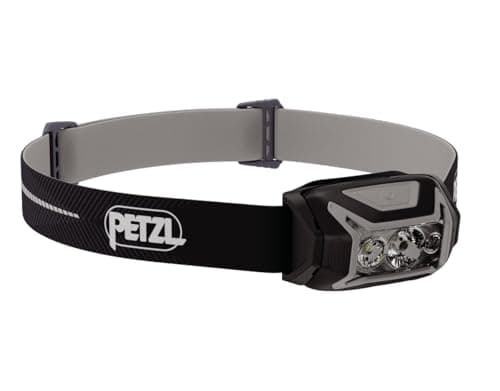
Petzl ACTIK CORE
Six hundred and twenty-five lumens stated to ANSI/PLATO FL1, 88 grams, and — the part that matters — it runs on the CORE rechargeable pack or on three AAA cells when the pack is flat. That is the answer to the sealed-battery problem, from the only brand here that bothered.
We show a price only when we have pulled a live one. #ad How we earn
Disclosure — we earn a commission on qualifying purchases made through the Amazon links on this page, at no extra cost to you. It does not change which lights we pick or what we say about them. The full version.
How we rank. Published ANSI FL1 output divided by the live retail price, with sealed-battery lights marked down because a light you cannot re-cell is a light with an expiry date. Units we claim to have tested: 0 — we compile manufacturers' published figures and show the arithmetic instead. How we work this out.
What actually decides a hunting headlamp
Rank a hunting headlamp on four things in this order: whether red mode is reachable without cycling through white, whether you can swap the battery when it is cold, the published runtime on the lowest usable mode, and weight under a cap for hours. Maximum output comes fifth. A 2,200-lumen lamp whose sealed cell died at 4 a.m. produced less light that morning than a 6-lumen setting that lasted.
Almost every headlamp roundup ranks on lumens, because lumens are the number on the box and they are easy to sort. That is defensible for a camp lamp. It is close to useless here, because the hunting use case is hours of near-darkness punctuated by a few seconds of light, followed — if the morning goes well — by a period where you genuinely do need to see, on foot, in the dark, with both hands busy.
Before anything else: light color, light use and legal hours are regulated differently in every state, and some regulations address artificial light directly. We are not going to tell you what is permitted where you hunt, because we do not know and guessing would be worse than useless. Check your own state's current regulations. Everything below is about hardware.
Criterion one: red on one press
Red light preserves dark adaptation. Your eyes take something like twenty minutes to fully adjust to darkness and a fraction of a second of white light to undo it. That is the entire argument for red mode, and it is why the useful question is not whether a lamp has red but how far away the red is.
A lamp that reaches red with a long press from off is usable in the dark with gloves on. A lamp that requires you to turn on white first, then cycle through modes to reach red, has already cost you the adaptation you were protecting. Every lamp below has a red mode; they differ in how buried it is, and that is worth checking on the specific unit you buy because manufacturers change interfaces between revisions.
Criterion two: the cell you can change in the cold
Lithium-ion cells lose usable capacity as they get cold, and the runtime figures manufacturers publish are not measured on a frosty morning in a treestand. This is the single most consequential difference between the lamps below, and it splits them cleanly.
Petzl's ACTIK CORE runs on the CORE rechargeable pack or on three ordinary AAA cells, and it detects which it has. Petzl calls this the HYBRID CONCEPT, and for a lamp that has to work at the end of a cold morning it outranks several hundred lumens. Fenix's HM65R V2.0 takes a removable 3,400 mAh 21700, so a spare cell in a chest pocket — where it stays warm — turns a short night into a long one. NITECORE's NU25 uses a built-in 700 mAh cell and Black Diamond's Spot 400-R an integrated 1,500 mAh cell: both excellent lamps, and with both, when the cell is flat your morning is over.
Criterion three: the low-mode runtime, published
Nobody sits in the dark on turbo. The mode that matters is the lowest one you can still function on, and the brands that publish a figure for it are telling you something about the rest of the specification.
Black Diamond publishes the most complete table here: 400 lumens for four hours, 200 for eight, and 6 lumens for two hundred and twenty-five hours. That last figure is the specification for this use case. Two hundred and twenty-five hours at 6 lumens means the lamp is effectively an unlimited reserve for finding gear in a pack, reading a tag or moving slowly along a known trail. NITECORE publishes up to 45 hours at 6 lumens on the NU25. Petzl publishes runtimes by lighting level under ANSI/PLATO FL 1, and states its conformity to that standard outright, which most brands here do not. Fenix publishes no per-mode runtime on the retail page we read, and that is marked against it below.
| # | Light | Max output | Battery | Lumens / $ | Price |
|---|---|---|---|---|---|
| 1 | Petzl ACTIK CORE Best hybrid: rechargeable or AAA cells | 625 | Replaceable | Needs a live price | Check price on Amazon We show a price only when we have pulled a live one. #ad How we earn |
| 2 | 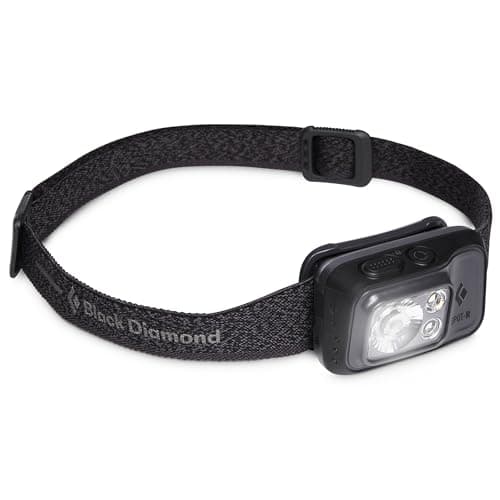 Black Diamond Spot 400-R Most complete published runtime table | 400 | Sealed | Needs a live price | Check price on Amazon We show a price only when we have pulled a live one. #ad How we earn |
| 3 | 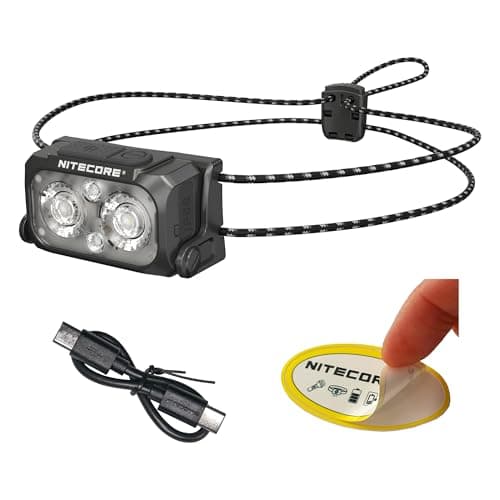 NITECORE NU25 MCT UL Lightest headlamp with a real published runtime | 400 | Sealed | Needs a live price | Check price on Amazon We show a price only when we have pulled a live one. #ad How we earn |
| 4 | No listing image Fenix HM65R V2.0 Most output with a removable 21700 | 2,200 | Replaceable | Needs a live price | Check price on Amazon We show a price only when we have pulled a live one. #ad How we earn |
Lumens per dollar is the manufacturer's published maximum output divided by the price the light is selling for. Where we have not pulled a live price, the column says so instead of showing you a number we cannot stand behind. See how we work this out.
Criterion four: weight, under a cap, for hours
A headlamp sits on the same patch of forehead for the whole sit, frequently over a cap or under a hood, and the spread here is nearly threefold. NITECORE's NU25 MCT UL weighs 47 grams including bracket and headband. Black Diamond's Spot 400-R is 86 grams. Petzl's ACTIK CORE is 88 grams. The Fenix, with a 21700 on board, is heavier again.
Weight is the reason the NU25 finishes as high as it does despite its sealed cell. For a long, still sit where you are not moving fast and the lamp is mostly off, 47 grams you forget about is worth real money.
1. Best hybrid: rechargeable or AAA cells
Petzl ACTIK CORE
Lumens per dollar
Computed the moment we have a live price for it
Six hundred and twenty-five lumens stated to ANSI/PLATO FL1, 88 grams, and — the part that matters — it runs on the CORE rechargeable pack or on three AAA cells when the pack is flat. That is the answer to the sealed-battery problem, from the only brand here that bothered.
- Max output
- 625 lm
- Runtime
- Published per mode by Petzl
- Battery
- Replaceable cell
- Water rating
- IPX4
What it gets right
- Explicitly states ANSI/PLATO FL1 conformity, which most brands here do not
- Hybrid power: the pack for daily use, AAA cells as the fallback that never fails
- Petzl publishes the CORE pack's cycle rating, so its service life is a stated number
What it gets wrong
- IPX4 — weather resistant, not submersible
- Eighty-eight grams is not ultralight
- The CORE pack is a Petzl part rather than a standard cell
Published specification
- Maximum output: 625 lumens (ANSI/PLATO FL1) — Petzl published specification
- Weight: 88 g — Petzl published specification
- Battery: CORE rechargeable 1,250 mAh / 3.6 V / 4.5 Wh, or 3 x AAA — Petzl published specification
- Battery compatibility: Alkaline, lithium or Ni-MH — Petzl published specification
- Water rating: IPX4, weather resistant — Petzl published specification
- Warranty: Lamp 5 years; CORE battery 2 years or 300 cycles — Petzl published specification
- Lighting levels: MAX BURN TIME, STANDARD, MAX POWER, plus red — Petzl published specification
Skip this one if
you want a submersible headlamp. IPX4 covers rain and nothing beyond it.
Buy it if: anyone whose headlamp has to work at the end of a long trip, when charging is not an option.
- Output 7.5
- Battery 9.0
- Weight 7.0
- Usability 8.5
- Overall 8.3
We show a price only when we have pulled a live one. #ad How we earn
2. Most complete published runtime table
Black Diamond Spot 400-R
Lumens per dollar
Computed the moment we have a live price for it
Four hundred lumens for four hours, 200 for eight, 6 for two hundred and twenty-five. Black Diamond publishes lumens, runtime and beam distance for all three modes, and IP67 on top. There is nothing to guess at here.
- Max output
- 400 lm
- Runtime
- 4 h
- Battery
- Sealed
- Water rating
- IP67
What it gets right
- Lumens, runtime and distance published for every mode
- Two hundred and twenty-five hours on low is a genuine emergency reserve
- IP67 and a battery meter that shows an actual percentage
What it gets wrong
- Micro-USB in a year when everything else is USB-C
- Integrated battery — no spare, no re-cell
- Eighty-six grams is heavy next to the ultralight class
Published specification
- High: 400 lumens, 4 hours, 100 m — Black Diamond published specification
- Medium: 200 lumens, 8 hours, 60 m — Black Diamond published specification
- Low: 6 lumens, 225 hours, 12 m — Black Diamond published specification
- Battery: Integrated 1,500 mAh Li-ion, micro-USB — Black Diamond published specification
- Water rating: IP67, tested to 1.0 m for 30 minutes — Black Diamond published specification
- Weight: 86 g — Black Diamond published specification
Skip this one if
you have standardized on USB-C. Carrying a second cable for one device is a small annoyance that compounds on a long trip.
Buy it if: camp, dog walks and anyone who wants a headlamp whose numbers are all on the box.
- Output 6.5
- Battery 5.5
- Weight 7.0
- Usability 9.0
- Overall 7.7
We show a price only when we have pulled a live one. #ad How we earn
3. Lightest headlamp with a real published runtime
NITECORE NU25 MCT UL
Lumens per dollar
Computed the moment we have a live price for it
Forty-seven grams including the headband, 400 lumens, and 45 hours at its 6-lumen setting. On a headlamp the weight figure matters more than the lumen figure, because the lamp you stop wearing produces no light at all.
- Max output
- 400 lm
- Runtime
- 45 h at 6 lm
- Battery
- Sealed
- Water rating
- IP66
What it gets right
- Forty-seven grams with the band on — you forget it is there
- Three color temperatures plus red, which is unusual at any price
- IP66 and a published 45-hour low-mode runtime
What it gets wrong
- Sealed 700 mAh cell; no way to carry a spare
- Four hundred lumens is modest for trail running at speed
- Flat band with no over-the-top strap on the ultralight version
Published specification
- Maximum output: 400 lumens — NITECORE published specification
- Beam distance: 132 m — NITECORE published specification
- Runtime: Up to 45 hours at 6 lumens — NITECORE published specification
- Battery: Built-in 700 mAh Li-ion, USB-C — NITECORE published specification
- Weight: 47 g (1.66 oz) including bracket and headband — NITECORE published specification
- Water rating: IP66 — NITECORE published specification
- Color temperatures: 3,000K / 4,500K / 6,500K plus auxiliary red — NITECORE published specification
Skip this one if
you need to swap a battery mid-shift. A sealed 700 mAh cell means your night ends when it does.
Buy it if: hikers, campers and anyone whose complaint about headlamps is that they bounce.
- Output 6.5
- Battery 4.5
- Weight 9.5
- Usability 8.5
- Overall 7.8
We show a price only when we have pulled a live one. #ad How we earn
listing
image
4. Most output with a removable 21700
Fenix HM65R V2.0
Lumens per dollar
Computed the moment we have a live price for it
Twenty-two hundred lumens, 226 meters, IP68, a 2-meter impact rating and a removable 3,400 mAh 21700. It costs several times what a budget headlamp costs and it is the only one here you can carry a spare cell for.
- Max output
- 2,200 lm
- Runtime
- Not published per mode on the retail page
- Battery
- Replaceable cell
- Water rating
- IP68
What it gets right
- Removable 21700, so a spare cell turns a four-hour night into an eight-hour one
- IP68 — the strongest water rating in this roundup
- Independent spot and flood control, which is what work actually needs
What it gets wrong
- Its lumens-per-dollar figure will be poor against any budget lamp
- Heavy on the head compared with the ultralight class
- No per-mode runtime on the page we read
Published specification
- Maximum output: 2,200 lumens, spot and flood combined — Fenix published specification
- Beam distance: 741 ft (226 m) — Fenix published specification
- Battery: 3,400 mAh 21700, removable, USB-C — Fenix published specification
- Water rating: IP68 — Fenix published specification
- Impact: 2 m — Fenix published specification
- Body: Magnesium alloy — Fenix published specification
- Per-mode runtime: Not published on the retail page we read
Skip this one if
you are buying on value. This is a work tool priced as one.
Buy it if: night shifts, cave work and anyone who has run a headlamp flat halfway through a job.
- Output 9.5
- Battery 9.0
- Weight 5.5
- Usability 8.5
- Overall 8.4
We show a price only when we have pulled a live one. #ad How we earn
Water ratings, and why the spread is so wide
Fenix publishes IP68 on the HM65R V2.0, Black Diamond IP67 on the Spot 400-R tested to one meter for thirty minutes, NITECORE IP66 on the NU25, and Petzl IPX4 on the ACTIK CORE — weather resistant, rain only. For most hunting, IPX4 is genuinely adequate, because your head stays above the weather and the lamp is under a hood half the time. It stops being adequate the moment you are wading, working in heavy sustained rain or setting decoys in the dark. Our guide to IP ratings explains what each figure does and does not promise.
How we ranked these
Four scored attributes as published on our methodology page — output against live price, battery architecture, weight, and usability — with battery architecture weighted hardest. On this page usability is read specifically as how quickly you reach red in the dark with gloves on, and one further adjustment is stated openly: a lamp whose low-mode runtime is published scores above one whose is not. That is why a 625-lumen lamp finishes above a 2,200-lumen one here.
Units we claim to have tested: 0
Every publisher in this category says they tested twenty flashlights. We have not tested any, and we say so. What we do instead: compile the manufacturer's own published ANSI FL1 figures, pull the price the light is selling for right now, and divide one by the other. Every number on this page is one you can check yourself in about two minutes.
Beam shape, which the box never discusses
A hunting morning has two lighting jobs and they want opposite beams. The walk in wants some reach — enough to pick out a trail marker, a fence line or a stand at thirty meters — which means a beam with a defined hotspot. Everything after that wants flood: sorting gear at your feet, checking a pack, moving quietly in a small radius. A tight hotspot at arm's length is actively unhelpful, because it blows out your pupil response and makes everything outside the circle black.
The lamps here handle this differently and only one publishes the split. Fenix gives the HM65R V2.0 independent spot and flood control, which is exactly right for this pattern and is a large part of what its price buys. The others give you a single beam and a set of output levels, which means you manage the trade by turning the lamp down rather than by changing its shape. Our guide to lumens versus candela explains why those two are separate specifications.
Managing a lithium cell in the cold
Cold does two things to a lithium cell, and they are easy to confuse. It temporarily reduces the capacity you can draw, which recovers when the cell warms up, and — over enough cycles at low temperature — it accelerates permanent degradation. The first is what ruins a morning; the second is what shortens the lamp's life.
Neither is a reason to avoid rechargeable lamps, and both have the same cheap mitigation: keep the spare cell, or the whole lamp until you need it, in an inside pocket where your body heat keeps it warm. A 21700 in a chest pocket behaves like a cell at room temperature. The same one in an outside pocket at minus five does not, and the published runtime figures were not measured there either.
Why two lamps beats one bright lamp
The cheapest reliability upgrade available here is not a better lamp, it is a second cheap one. A 47-gram lamp in a pack pocket weighs nothing, costs a fraction of the main lamp, and covers the failure the published specifications cannot: a flat cell, a lost lamp, a switch that fills with grit. That is the same logic our emergency pages apply to a house, and it works the same way in a pack.
The mistake that costs people a morning
Buying on maximum output and then discovering the lamp has one battery, sealed in, with no published figure for the mode you will spend ninety-five percent of your time in. It is the same error as buying a flashlight on its turbo number, and it costs more here, because the failure happens in the dark, in the cold, a long way from a charger.
The cheap insurance is a lamp that eats ordinary cells as a fallback, or a spare cell you can carry. Everything else on this page is a preference; that is the part that decides whether you have light at the end of the morning.
The second mistake is subtler and it is about the strap rather than the lamp. A headlamp bought to wear over bare hair frequently does not fit over a cap, a beanie and a hood together, and the adjustment you make in a warm room at the start of the season is not the adjustment you need in November. Set it up wearing what you will actually be wearing, and if the lamp has an over-the-top strap, use it — a lamp that slides down your forehead every time you look up is a lamp you will end up carrying in your hand.
What we cannot tell you
We have not worn any of these lamps in the field. We cannot tell you how the red mode's tint reads against foliage, how balanced each lamp feels over a cap, whether the straps hold in the cold, how the switches work through gloves, or how any of them behave at temperatures well below freezing — which is exactly where the published runtimes stop being reliable. Nor can we advise you on what is legal where you hunt. What we can do is read the published specifications and rank them against criteria that suit this job rather than a showroom.
Common questions
What color light is best for hunting?
Red light preserves your dark adaptation, which is why almost every lamp here includes it, and it is what most people use for moving around, checking gear and reading in the dark. Green is also common and some hunters prefer it for contrast. What matters more than the choice is the interface: a lamp where red is one press from off is usable, and a lamp where red is buried behind white has already cost you the night vision you were trying to keep. Check your own state's regulations on artificial light before relying on any of it.
How many lumens do you need for a hunting headlamp?
Far fewer than the box is selling you for most of the time. Six to fifty lumens covers moving quietly on a known trail, sorting gear and reading. Three hundred to four hundred is comfortable for walking unfamiliar ground. Output above a thousand lumens is a recovery and tracking tool rather than a walking mode, and no headlamp in this class holds it for long. Our guide to how many lumens you actually need has a table by task.
Should a hunting headlamp have a replaceable battery?
It is the most useful feature on the list, because lithium cells lose capacity in the cold and a sealed lamp cannot be revived in the field. The Petzl ACTIK CORE runs on its rechargeable pack or on three AAA cells, and the Fenix HM65R V2.0 takes a removable 21700 you can carry a warm spare of. Lamps with integrated cells — the NITECORE NU25 and the Black Diamond Spot 400-R — are good lamps that end your morning when they run flat.
Can you replace the battery in a rechargeable flashlight?
It depends entirely on the model, and it is the single most consequential thing to check before buying. Lights built around a standard cell — an 18650, a 21700, a 14500, a 16340 — take a screw-off tailcap and a five-dollar replacement. Lights with a built-in cell, which manufacturers describe as 'integrated' or 'non-removable', cannot be re-celled by an ordinary owner: when the battery reaches the end of its cycle life the whole light is refuse. Energizer, for example, states plainly that the Vision HD Rechargeable uses non-removable lithium-ion batteries.
Sources
- Petzl published product specifications — ANSI/PLATO FL 1 conformity stated by the manufacturer. ACTIK CORE read 2026-09-01 and re-read per mode 2026-09-21; TIKKA CORE read 2026-09-21
- Black Diamond published product specifications — Spot 400-R read 2026-09-01; Storm 500-R read 2026-09-14
- NITECORE published product specifications — NU25 MCT UL read 2026-09-01; MT2A Pro read 2026-09-13; EDC31 read 2026-10-03; MH25 Pro and Tiki LE read 2026-10-10
- Fenix published product specifications — read 2026-09-01; PD36R Pro product page read 2026-10-18
- Lumen & Ledger method — how every figure on this page is derived
Who writes this
Scooter M. — I am an enthusiast who is genuinely into this. I read the manuals, compile the published specs, and do the math. No lab coat, no test bench, no drawer of free samples. What I can tell you is exactly what a light claims on paper, exactly what it costs right now, and what those two numbers mean when you divide one by the other.
Read next
Best headlamps with a red light
What red mode is actually for, and which lamps implement it properly.
Best rechargeable headlamps
Ranked on weight and published runtime, because a lamp you stop wearing lights nothing.
Petzl ACTIK CORE review
625 lumens on the pack, 450 on AAA cells, and the mode table that explains the trade.
Best rechargeable headlamps for hiking and backpacking
Days between chargers changes the answer: runtime per gram, and a cell you can feed.
Best flashlights for tracking deer
Why red light is the wrong color for a blood trail, from the hemoglobin absorption data itself.
The Ledger
Every light we cover in one ranked table, sorted by lumens per dollar.