Headlamps
Petzl ACTIK CORE Review: 625 Lumens, or 450 on Batteries You Can Buy Anywhere
Petzl publishes its entire performance table twice, once on the pack and once on AAA cells. Almost nobody reads the second one.
By Scooter M. · Published September 21, 2026
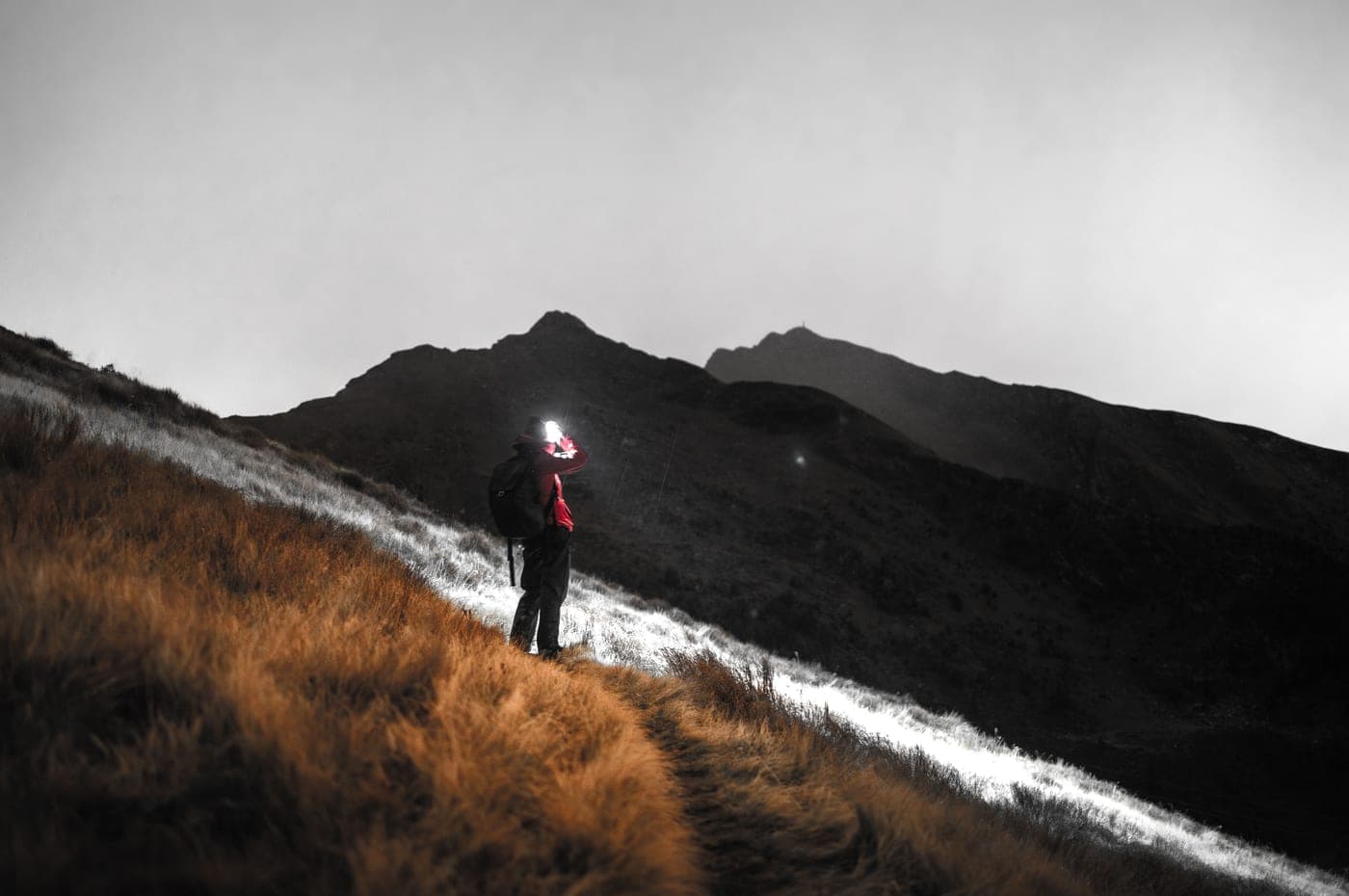
Short answer
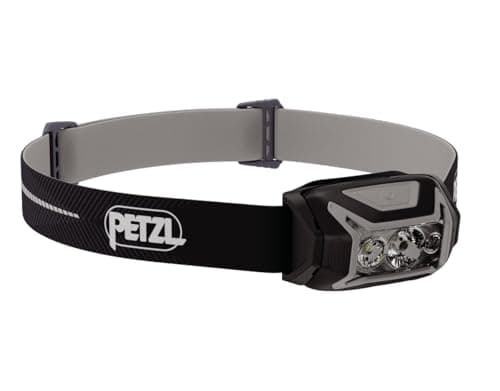
Petzl ACTIK CORE
Six hundred and twenty-five lumens stated to ANSI/PLATO FL1, 88 grams, and — the part that matters — it runs on the CORE rechargeable pack or on three AAA cells when the pack is flat. That is the answer to the sealed-battery problem, from the only brand here that bothered.
Price as of September 21, 2026 — 8 lumens per dollar. #ad How we earn
Disclosure — we earn a commission on qualifying purchases made through the Amazon links on this page, at no extra cost to you. It does not change which lights we pick or what we say about them. The full version.
How we rank. Published ANSI FL1 output divided by the live retail price, with sealed-battery lights marked down because a light you cannot re-cell is a light with an expiry date. Units we claim to have tested: 0 — we compile manufacturers' published figures and show the arithmetic instead. How we work this out.
The verdict
The ACTIK CORE is the headlamp to buy if yours has to work at the end of a long trip rather than at the start of one. It publishes 625 lumens to ANSI/PLATO FL 1, weighs 88 grams, and its rechargeable CORE pack lifts out so three AAA cells can go in instead — which is the answer to the one failure that ends every other rechargeable lamp's night. The catch is IPX4: this is a weather-resistant lamp, not a waterproof one, and if it might go underwater you want something else.
We have not worn this lamp. What follows is a reading of what Petzl publishes, which in this case is unusually worth reading, because Petzl publishes more than almost anyone else in the category and part of what it publishes is routinely missed by the people buying it.
The full published table, on both power sources
| Mode | On the CORE pack | On 3 x AAA |
|---|---|---|
| MAX POWER | 625 lm, 115 m, 2 h | 450 lm, 100 m, 2 h |
| STANDARD | 100 lm, 60 m, 7 h (+2 h reserve) | 100 lm, 60 m, 10 h (+20 h reserve) |
| MAX BURN TIME | 7 lm, 10 m, 100 h | 7 lm, 10 m, 100 h |
| Red, continuous | 2 lm, 5 m, 60 h | 2 lm, 5 m, 60 h |
| Red, strobe | Visible at 700 m for 400 h | Visible at 700 m for 400 h |
Read the second column again, because it contains something counter-intuitive. On the rechargeable pack, the 100-lumen STANDARD mode runs for seven hours with two hours of reserve. On three AAA cells it runs for ten hours with twenty hours of reserve.
The disposable batteries give you less peak output and dramatically more endurance at the setting you will actually use. That is the opposite of what most buyers assume about the AAA option, which they treat as a limp-home mode. On this lamp it is arguably the better configuration for a long, slow night, and Petzl prints the numbers that say so.
What ANSI/PLATO FL 1 conformity is worth here
Petzl states that its 625-lumen figure is measured to ANSI/PLATO FL 1. That matters because the great majority of brands we cover publish a lumen number to their own house rules and say nothing about a standard, which makes cross-brand comparison an act of faith.
It is worth being precise about what the standard does and does not fix. FL 1 defines how output, beam distance, runtime, impact and water resistance are measured, and it defines runtime as the time taken to fall to ten percent of initial output. It does not prevent a lamp from stepping down hard in the first minute and spending most of its runtime far below the headline. Stating conformity is a real mark of good faith; it is not a guarantee that 625 lumens is what you get for two hours.
Where it is weak
IPX4 is the real limitation, and it is not a small one. Petzl describes the lamp as weather resistant, which is accurate: splashing water from any direction, so rain and sweat. It rules out dropping it in a stream, caving, and anything involving dust ingress, because IPX4 makes no dust claim at all. Black Diamond's Spot 400-R publishes IP67 at a similar weight and a similar price, and for wet use that is simply the better lamp.
Eighty-eight grams is respectable rather than light. NITECORE's NU25 MCT UL is 47 grams, and anyone counting weight will notice the difference on a long night.
And the CORE pack is a Petzl part, not a standard cell. Petzl rates it at two years or 300 charging cycles, which is more disclosure than most brands offer and is also a plain statement that the pack is a consumable with an expiry. The AAA fallback is what stops that from making the lamp disposable, and it is the reason the lamp scores as well as it does here.
| # | Light | Max output | Battery | Lumens / $ | Price |
|---|---|---|---|---|---|
| 1 | Petzl ACTIK CORE Best hybrid: rechargeable or AAA cells | 625 | Replaceable | 8 | $80.00 on Amazon Price as of September 21, 2026 — 8 lumens per dollar. #ad How we earn |
| 2 | 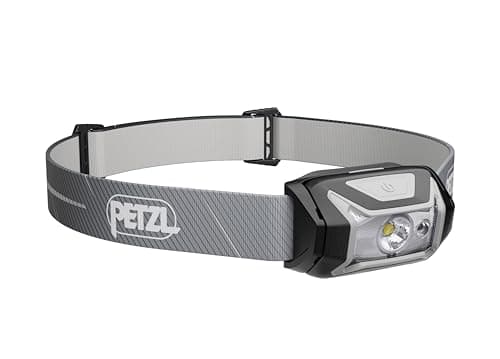 Petzl TIKKA CORE Best hybrid headlamp at the lower price | 450 | Replaceable | 8 | $59.14 on Amazon Price as of September 21, 2026 — 8 lumens per dollar. #ad How we earn |
| 3 | 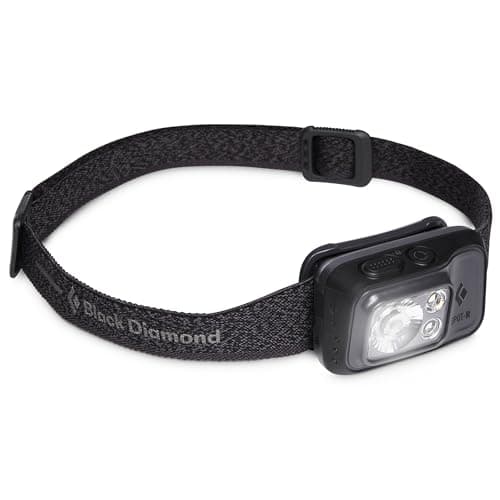 Black Diamond Spot 400-R Most complete published runtime table | 400 | Sealed | 7 | $59.88 on Amazon Price as of September 21, 2026 — 7 lumens per dollar. #ad How we earn |
Prices pulled September 21, 2026. Lumens per dollar is the manufacturer's published maximum output divided by that price, recomputed every time the price moves.
1. Best hybrid: rechargeable or AAA cells
Petzl ACTIK CORE
Lumens per dollar
8
Six hundred and twenty-five lumens stated to ANSI/PLATO FL1, 88 grams, and — the part that matters — it runs on the CORE rechargeable pack or on three AAA cells when the pack is flat. That is the answer to the sealed-battery problem, from the only brand here that bothered.
- Max output
- 625 lm
- Runtime
- Published per mode by Petzl
- Battery
- Replaceable cell
- Water rating
- IPX4
What it gets right
- Explicitly states ANSI/PLATO FL1 conformity, which most brands here do not
- Hybrid power: the pack for daily use, AAA cells as the fallback that never fails
- Petzl publishes the CORE pack's cycle rating, so its service life is a stated number
What it gets wrong
- IPX4 — weather resistant, not submersible
- Eighty-eight grams is not ultralight
- The CORE pack is a Petzl part rather than a standard cell
Published specification
- Maximum output: 625 lumens (ANSI/PLATO FL1) — Petzl published specification
- Weight: 88 g — Petzl published specification
- Battery: CORE rechargeable 1,250 mAh / 3.6 V / 4.5 Wh, or 3 x AAA — Petzl published specification
- Battery compatibility: Alkaline, lithium or Ni-MH — Petzl published specification
- Water rating: IPX4, weather resistant — Petzl published specification
- Warranty: Lamp 5 years; CORE battery 2 years or 300 cycles — Petzl published specification
- Lighting levels: MAX BURN TIME, STANDARD, MAX POWER, plus red — Petzl published specification
Skip this one if
you want a submersible headlamp. IPX4 covers rain and nothing beyond it.
Buy it if: anyone whose headlamp has to work at the end of a long trip, when charging is not an option.
- Output 7.5
- Battery 9.0
- Weight 7.0
- Usability 8.5
- Overall 8.3
Price as of September 21, 2026 — 8 lumens per dollar. #ad How we earn
2. Best hybrid headlamp at the lower price
Petzl TIKKA CORE
Lumens per dollar
8
The ACTIK CORE's argument in a cheaper, lighter package: 450 lumens stated to ANSI/PLATO FL1, 84 grams, and the same CORE pack or three AAA cells when the pack is flat. Petzl publishes a lumen figure, a beam distance and a burn time for every mode on both power sources, which almost nobody else does even once.
- Max output
- 450 lm
- Runtime
- 2 h 30 min at 450 lm; 110 h at 7 lm
- Battery
- Replaceable cell
- Water rating
- IPX4
What it gets right
- Lumens, beam distance and burn time published for every mode on BOTH power sources
- States ANSI/PLATO FL 1 conformity, which most brands at this price do not
- Runs on three AAA cells when the CORE pack is flat, with no adapter to lose
- One hundred and ten hours at 7 lumens is a genuine emergency reserve
What it gets wrong
- IPX4 — weather resistant, not submersible
- Four hundred and fifty lumens is modest against lamps at similar money
- Output drops to 350 lumens on AAA cells, which Petzl states but buyers miss
- The CORE pack is a Petzl part rather than a standard cell
Published specification
- Maximum output: 450 lumens (ANSI/PLATO FL 1) — Petzl published specification
- MAX POWER on CORE: 450 lumens, 75 m, 2 h 30 min — Petzl published specification
- MAX POWER on AAA: 350 lumens, 70 m, 2 hours — Petzl published specification
- STANDARD on CORE: 100 lumens, 45 m, 7 hours — Petzl published specification
- STANDARD on AAA: 100 lumens, 45 m, 12 hours — Petzl published specification
- MAX BURN TIME: 7 lumens, 10 m, 110 hours on either source — Petzl published specification
- Red lighting: 2 lumens, 5 m, 60 hours continuous — Petzl published specification
- Battery: CORE 1,250 mAh / 3.6 V / 4.5 Wh, or 3 x AAA — Petzl published specification
- Weight: 84 g — Petzl published specification
- Water rating: IPX4, weather resistant — Petzl published specification
- Warranty: Lamp 5 years; CORE battery 2 years or 300 cycles — Petzl published specification
Skip this one if
you want maximum output for the money. This lamp spends its budget on documentation, hybrid power and a five-year warranty, and a budget rechargeable will out-lumen it for less.
Buy it if: anyone who wants Petzl's hybrid-power argument without paying for the ACTIK CORE's extra output.
- Output 6.5
- Battery 9.0
- Weight 7.5
- Usability 8.5
- Overall 8.0
Price as of September 21, 2026 — 8 lumens per dollar. #ad How we earn
3. Most complete published runtime table
Black Diamond Spot 400-R
Lumens per dollar
7
Four hundred lumens for four hours, 200 for eight, 6 for two hundred and twenty-five. Black Diamond publishes lumens, runtime and beam distance for all three modes, and IP67 on top. There is nothing to guess at here.
- Max output
- 400 lm
- Runtime
- 4 h
- Battery
- Sealed
- Water rating
- IP67
What it gets right
- Lumens, runtime and distance published for every mode
- Two hundred and twenty-five hours on low is a genuine emergency reserve
- IP67 and a battery meter that shows an actual percentage
What it gets wrong
- Micro-USB in a year when everything else is USB-C
- Integrated battery — no spare, no re-cell
- Eighty-six grams is heavy next to the ultralight class
Published specification
- High: 400 lumens, 4 hours, 100 m — Black Diamond published specification
- Medium: 200 lumens, 8 hours, 60 m — Black Diamond published specification
- Low: 6 lumens, 225 hours, 12 m — Black Diamond published specification
- Battery: Integrated 1,500 mAh Li-ion, micro-USB — Black Diamond published specification
- Water rating: IP67, tested to 1.0 m for 30 minutes — Black Diamond published specification
- Weight: 86 g — Black Diamond published specification
Skip this one if
you have standardized on USB-C. Carrying a second cable for one device is a small annoyance that compounds on a long trip.
Buy it if: camp, dog walks and anyone who wants a headlamp whose numbers are all on the box.
- Output 6.5
- Battery 5.5
- Weight 7.0
- Usability 9.0
- Overall 7.7
Price as of September 21, 2026 — 7 lumens per dollar. #ad How we earn
How it compares to the obvious alternatives
Against Black Diamond's Spot 400-R the trade is clean: Petzl gives you 225 more lumens and AAA fallback, Black Diamond gives you IP67 sealing and a much longer low mode at 6 lumens for 225 hours. Against Petzl's own TIKKA CORE the ACTIK gives you 625 lumens instead of 450 and costs more; the TIKKA is four grams lighter and runs its 100-lumen mode for the same seven hours.
If the extra output is not doing anything for you, the TIKKA CORE is the same argument for less money, and most people reading by it or walking a dog with it will not miss the difference.
What Petzl means by reserve, and why it is on the spec sheet
Two of the numbers in the table carry a second figure labeled reserve: STANDARD is 7 hours plus 2 hours on the CORE pack, and 10 hours plus 20 hours on AAA cells. That is not a rounding note. It is a deliberate design behavior, and it is unusual enough to be worth explaining.
A regulated headlamp holds its output flat until the cell is nearly empty and then stops, which is excellent right up to the moment it happens to you. The reserve figure is the period after the lamp drops out of its regulated mode, when it is running at a much lower output that Petzl does not call STANDARD any more. It is dim, and it is the difference between walking back and sitting down.
The asymmetry between the two power sources is the interesting part. Two hours of reserve on the rechargeable pack against twenty on AAA cells is a very large gap, and it is consistent with how the two chemistries behave as they empty: a lithium pack under regulation falls off a cliff, while alkaline cells sag gradually and keep producing usable current for a long time at low draw. For a lamp you might need at 3am, that is an argument for the disposable cells that has nothing to do with convenience.
Two years or 300 cycles, read properly
Petzl warrants the CORE pack for two years or 300 charging cycles and the lamp itself for five years. Publishing that at all is unusual and creditable; most brands with an integrated cell say nothing about its service life, which means the light has an expiry date nobody will tell you.
But read what it means. Three hundred cycles is a charge a week for six years, or a charge every night for ten months. If this is a lamp you use on weekends it will likely outlast your interest in it; if it is a lamp you use nightly for work, the pack is a consumable you will buy again, and you should price it that way.
The reason this does not sink the lamp is the AAA fallback. On a sealed rechargeable headlamp a worn-out cell means a worn-out lamp. Here it means a lamp that still works on batteries from a corner shop while you order a new pack, and that is the difference between a tool with a service life and a tool with an expiry date.
Who should buy it
- Anyone on multi-day trips away from power, where three AAA cells in a pocket are the difference between light and no light.
- Anyone who wants lumen figures measured to a stated standard rather than to a marketing department.
- Campers and hikers in weather, but not in water.
- Anyone who wants a published burn time for every mode before they buy, rather than after.
Who should not
- Anyone whose lamp might be submerged, used in a cave, or worn in blowing dust. IPX4 does not cover it and Petzl does not claim it does.
- Weight counters, who should look at the 47-gram NU25 instead.
- Anyone buying on lumens per dollar, where a budget rechargeable will beat it comfortably.
Units we claim to have tested: 0
Every publisher in this category says they tested twenty flashlights. We have not tested any, and we say so. What we do instead: compile the manufacturer's own published ANSI FL1 figures, pull the price the light is selling for right now, and divide one by the other. Every number on this page is one you can check yourself in about two minutes.
What we cannot tell you
We have not worn this lamp, run its battery down, or been rained on in it. We cannot tell you how quickly it steps down from 625 lumens, how the beam looks against a trail, whether the headband holds after a season, or how the CORE pack ages against its stated 300 cycles. Every figure above is Petzl's own, and the fact that Petzl publishes more of them than its rivals is a reason to take the brand seriously — not a substitute for testing we have not done.
Common questions
Can the Petzl ACTIK CORE run on normal batteries?
Yes. The CORE rechargeable pack lifts out and three AAA/LR03 cells go in its place with no adapter, and Petzl states that alkaline, lithium or Ni-MH all work. Output falls from 625 lumens to 450 on AAA, but the 100-lumen STANDARD mode actually runs longer on cells than on the pack — ten hours with twenty hours of reserve, against seven hours with two.
Is the Petzl ACTIK CORE waterproof?
No. Petzl publishes IPX4, which it describes as weather resistant: tested against splashing water from any direction, so rain and sweat are fine. It is not rated for immersion and makes no dust-ingress claim at all. If the lamp might go underwater or into a cave, Black Diamond's Spot 400-R publishes IP67 at a comparable weight and is the better choice.
How long does the CORE battery last?
Petzl publishes both numbers, which is unusual. Per charge, the pack gives 2 hours at 625 lumens, 7 hours at 100 lumens or 100 hours at 7 lumens. Over its life, Petzl rates the CORE pack at 2 years or 300 charging cycles and warrants it accordingly, against 5 years on the lamp itself. That is a stated service life rather than a guess, and the AAA fallback means the lamp outlives the pack.
Can you replace the battery in a rechargeable flashlight?
It depends entirely on the model, and it is the single most consequential thing to check before buying. Lights built around a standard cell — an 18650, a 21700, a 14500, a 16340 — take a screw-off tailcap and a five-dollar replacement. Lights with a built-in cell, which manufacturers describe as 'integrated' or 'non-removable', cannot be re-celled by an ordinary owner: when the battery reaches the end of its cycle life the whole light is refuse. Energizer, for example, states plainly that the Vision HD Rechargeable uses non-removable lithium-ion batteries.
Sources
- Petzl published product specifications — ANSI/PLATO FL 1 conformity stated by the manufacturer. ACTIK CORE read 2026-09-01 and re-read per mode 2026-09-21; TIKKA CORE read 2026-09-21
- Black Diamond published product specifications — Spot 400-R read 2026-09-01; Storm 500-R read 2026-09-14
- NitecoreLights, ANSI / NEMA FL-1 Guide — FL1 definitions plus a published account of the standard's runtime limitation, read 2026-09-01
- Lumen & Ledger method — how every figure on this page is derived
Who writes this
Scooter M. — I am an enthusiast who is genuinely into this. I read the manuals, compile the published specs, and do the math. No lab coat, no test bench, no drawer of free samples. What I can tell you is exactly what a light claims on paper, exactly what it costs right now, and what those two numbers mean when you divide one by the other.
Read next
Black Diamond vs Petzl
IP67 sealing against a lamp that still works on three AAA cells.
Best rechargeable headlamps
Ranked on weight and published runtime, because a lamp you stop wearing lights nothing.
Best rechargeable headlamps for hiking and backpacking
Days between chargers changes the answer: runtime per gram, and a cell you can feed.
Best headlamps for reading
Judged on the smallest number on the box, which is the only one that matters here.
ANSI FL1 explained
The standard behind the numbers, and what a brand is telling you by not citing it.
The Ledger
Every light we cover in one ranked table, sorted by lumens per dollar.