Headlamps
Best Headlamps for Reading
Every headlamp is sold on its brightest mode. For a book at arm's length, the brightest mode is the one you will never use.
By Scooter M. · Published September 21, 2026

Short answer
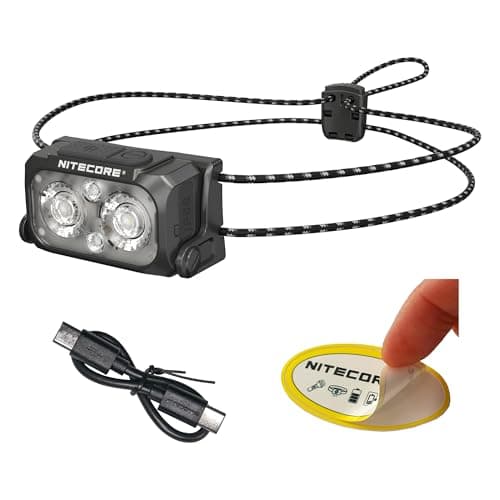
NITECORE NU25 MCT UL
Forty-seven grams including the headband, 400 lumens, and 45 hours at its 6-lumen setting. On a headlamp the weight figure matters more than the lumen figure, because the lamp you stop wearing produces no light at all.
Price as of September 21, 2026 — 11 lumens per dollar. #ad How we earn
Disclosure — we earn a commission on qualifying purchases made through the Amazon links on this page, at no extra cost to you. It does not change which lights we pick or what we say about them. The full version.
How we rank. Published ANSI FL1 output divided by the live retail price, with sealed-battery lights marked down because a light you cannot re-cell is a light with an expiry date. Units we claim to have tested: 0 — we compile manufacturers' published figures and show the arithmetic instead. How we work this out.
The short answer
For reading you want a headlamp whose lowest published mode is under about 10 lumens, with a warm tint and ideally a red mode, and the brand must publish a burn time for that low setting. The NITECORE NU25 MCT UL is the strongest pick because it offers a 3,000K warm output as well as 4,500K and 6,500K, weighs 47 grams, and publishes 45 hours at 6 lumens. Black Diamond's Spot 400-R publishes 6 lumens for 225 hours, which is the longest low mode here.
This is the one page on this site where a bigger number is straightforwardly worse. A page of print at forty centimeters needs somewhere between two and ten lumens. Four hundred lumens aimed at white paper at that distance is genuinely unpleasant — it bleaches the page, contracts your pupils, and leaves the rest of the room a black wall so that looking up from the book means seeing nothing at all.
So read the spec sheet from the bottom. The figure that decides this purchase is the smallest one printed, and a great many manufacturers do not print it.
The criteria, before any pick
- 1.A published low mode under about 10 lumens, with a burn time beside it. If the lowest figure a brand publishes is 100 lumens, the lamp was not designed for this.
- 2.A warm or neutral tint. Cool white at 6,500K is the standard emitter and the worst choice near sleep; 3,000K to 4,500K is easier on the eye.
- 3.A red mode, which preserves dark adaptation and is far less likely to wake the person beside you.
- 4.Weight, because a lamp worn lying down presses against whatever you are lying on. Below about 90 grams this stops being a problem.
- 5.A lockout, so the lamp does not switch itself on in a bag and arrive flat.
- 6.A tilt that holds, so the beam sits on the page rather than creeping up the wall.
The lowest published modes, compared
| Lamp | Lowest published mode | Burn time at that mode | Red mode | Tint options | Weight |
|---|---|---|---|---|---|
| NITECORE NU25 MCT UL | 6 lumens | 45 hours | Auxiliary red | 3,000K / 4,500K / 6,500K | 47 g |
| BD Spot 400-R | 6 lumens | 225 hours | Not published | Not published | 86 g |
| Petzl TIKKA CORE | 7 lumens | 110 hours | 2 lm for 60 h | Not published | 84 g |
| Petzl ACTIK CORE | 7 lumens | 100 hours | 2 lm for 60 h | Not published | 88 g |
Two things stand out. The NU25 is the only lamp of the four whose maker publishes a color temperature at all, let alone three of them, and that is the single most relevant specification on this page. And the Spot 400-R's 225 hours at 6 lumens means a lamp used for half an hour of reading a night would run for well over a year on one charge, which reframes what battery capacity is for.
| # | Light | Max output | Battery | Lumens / $ | Price |
|---|---|---|---|---|---|
| 1 | NITECORE NU25 MCT UL Lightest headlamp with a real published runtime | 400 | Sealed | 11 | $36.95 on Amazon Price as of September 21, 2026 — 11 lumens per dollar. #ad How we earn |
| 2 | 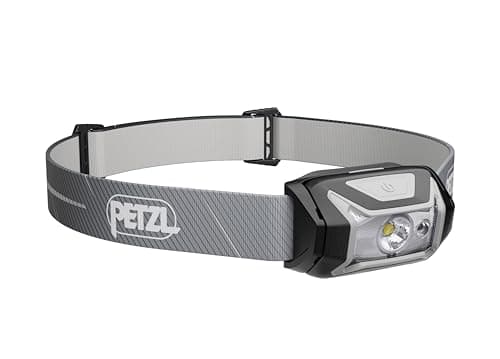 Petzl TIKKA CORE Best hybrid headlamp at the lower price | 450 | Replaceable | 8 | $59.14 on Amazon Price as of September 21, 2026 — 8 lumens per dollar. #ad How we earn |
| 3 | 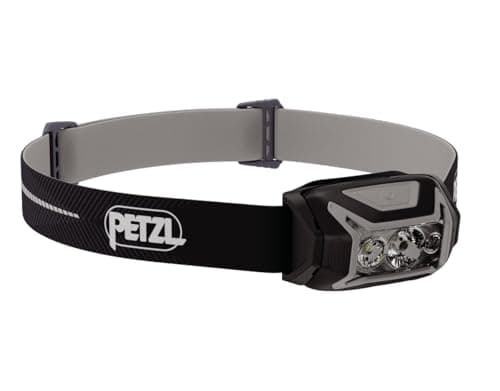 Petzl ACTIK CORE Best hybrid: rechargeable or AAA cells | 625 | Replaceable | 8 | $80.00 on Amazon Price as of September 21, 2026 — 8 lumens per dollar. #ad How we earn |
| 4 | 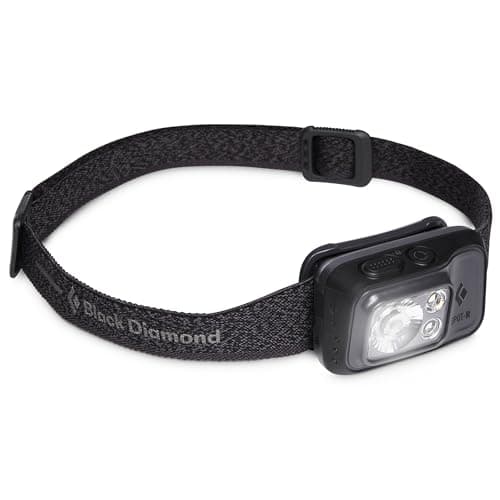 Black Diamond Spot 400-R Most complete published runtime table | 400 | Sealed | 7 | $59.88 on Amazon Price as of September 21, 2026 — 7 lumens per dollar. #ad How we earn |
Prices pulled September 21, 2026. Lumens per dollar is the manufacturer's published maximum output divided by that price, recomputed every time the price moves.
1. Lightest headlamp with a real published runtime
NITECORE NU25 MCT UL
Lumens per dollar
11
Forty-seven grams including the headband, 400 lumens, and 45 hours at its 6-lumen setting. On a headlamp the weight figure matters more than the lumen figure, because the lamp you stop wearing produces no light at all.
- Max output
- 400 lm
- Runtime
- 45 h at 6 lm
- Battery
- Sealed
- Water rating
- IP66
What it gets right
- Forty-seven grams with the band on — you forget it is there
- Three color temperatures plus red, which is unusual at any price
- IP66 and a published 45-hour low-mode runtime
What it gets wrong
- Sealed 700 mAh cell; no way to carry a spare
- Four hundred lumens is modest for trail running at speed
- Flat band with no over-the-top strap on the ultralight version
Published specification
- Maximum output: 400 lumens — NITECORE published specification
- Beam distance: 132 m — NITECORE published specification
- Runtime: Up to 45 hours at 6 lumens — NITECORE published specification
- Battery: Built-in 700 mAh Li-ion, USB-C — NITECORE published specification
- Weight: 47 g (1.66 oz) including bracket and headband — NITECORE published specification
- Water rating: IP66 — NITECORE published specification
- Color temperatures: 3,000K / 4,500K / 6,500K plus auxiliary red — NITECORE published specification
Skip this one if
you need to swap a battery mid-shift. A sealed 700 mAh cell means your night ends when it does.
Buy it if: hikers, campers and anyone whose complaint about headlamps is that they bounce.
- Output 6.5
- Battery 4.5
- Weight 9.5
- Usability 8.5
- Overall 7.8
Price as of September 21, 2026 — 11 lumens per dollar. #ad How we earn
2. Best hybrid headlamp at the lower price
Petzl TIKKA CORE
Lumens per dollar
8
The ACTIK CORE's argument in a cheaper, lighter package: 450 lumens stated to ANSI/PLATO FL1, 84 grams, and the same CORE pack or three AAA cells when the pack is flat. Petzl publishes a lumen figure, a beam distance and a burn time for every mode on both power sources, which almost nobody else does even once.
- Max output
- 450 lm
- Runtime
- 2 h 30 min at 450 lm; 110 h at 7 lm
- Battery
- Replaceable cell
- Water rating
- IPX4
What it gets right
- Lumens, beam distance and burn time published for every mode on BOTH power sources
- States ANSI/PLATO FL 1 conformity, which most brands at this price do not
- Runs on three AAA cells when the CORE pack is flat, with no adapter to lose
- One hundred and ten hours at 7 lumens is a genuine emergency reserve
What it gets wrong
- IPX4 — weather resistant, not submersible
- Four hundred and fifty lumens is modest against lamps at similar money
- Output drops to 350 lumens on AAA cells, which Petzl states but buyers miss
- The CORE pack is a Petzl part rather than a standard cell
Published specification
- Maximum output: 450 lumens (ANSI/PLATO FL 1) — Petzl published specification
- MAX POWER on CORE: 450 lumens, 75 m, 2 h 30 min — Petzl published specification
- MAX POWER on AAA: 350 lumens, 70 m, 2 hours — Petzl published specification
- STANDARD on CORE: 100 lumens, 45 m, 7 hours — Petzl published specification
- STANDARD on AAA: 100 lumens, 45 m, 12 hours — Petzl published specification
- MAX BURN TIME: 7 lumens, 10 m, 110 hours on either source — Petzl published specification
- Red lighting: 2 lumens, 5 m, 60 hours continuous — Petzl published specification
- Battery: CORE 1,250 mAh / 3.6 V / 4.5 Wh, or 3 x AAA — Petzl published specification
- Weight: 84 g — Petzl published specification
- Water rating: IPX4, weather resistant — Petzl published specification
- Warranty: Lamp 5 years; CORE battery 2 years or 300 cycles — Petzl published specification
Skip this one if
you want maximum output for the money. This lamp spends its budget on documentation, hybrid power and a five-year warranty, and a budget rechargeable will out-lumen it for less.
Buy it if: anyone who wants Petzl's hybrid-power argument without paying for the ACTIK CORE's extra output.
- Output 6.5
- Battery 9.0
- Weight 7.5
- Usability 8.5
- Overall 8.0
Price as of September 21, 2026 — 8 lumens per dollar. #ad How we earn
3. Best hybrid: rechargeable or AAA cells
Petzl ACTIK CORE
Lumens per dollar
8
Six hundred and twenty-five lumens stated to ANSI/PLATO FL1, 88 grams, and — the part that matters — it runs on the CORE rechargeable pack or on three AAA cells when the pack is flat. That is the answer to the sealed-battery problem, from the only brand here that bothered.
- Max output
- 625 lm
- Runtime
- Published per mode by Petzl
- Battery
- Replaceable cell
- Water rating
- IPX4
What it gets right
- Explicitly states ANSI/PLATO FL1 conformity, which most brands here do not
- Hybrid power: the pack for daily use, AAA cells as the fallback that never fails
- Petzl publishes the CORE pack's cycle rating, so its service life is a stated number
What it gets wrong
- IPX4 — weather resistant, not submersible
- Eighty-eight grams is not ultralight
- The CORE pack is a Petzl part rather than a standard cell
Published specification
- Maximum output: 625 lumens (ANSI/PLATO FL1) — Petzl published specification
- Weight: 88 g — Petzl published specification
- Battery: CORE rechargeable 1,250 mAh / 3.6 V / 4.5 Wh, or 3 x AAA — Petzl published specification
- Battery compatibility: Alkaline, lithium or Ni-MH — Petzl published specification
- Water rating: IPX4, weather resistant — Petzl published specification
- Warranty: Lamp 5 years; CORE battery 2 years or 300 cycles — Petzl published specification
- Lighting levels: MAX BURN TIME, STANDARD, MAX POWER, plus red — Petzl published specification
Skip this one if
you want a submersible headlamp. IPX4 covers rain and nothing beyond it.
Buy it if: anyone whose headlamp has to work at the end of a long trip, when charging is not an option.
- Output 7.5
- Battery 9.0
- Weight 7.0
- Usability 8.5
- Overall 8.3
Price as of September 21, 2026 — 8 lumens per dollar. #ad How we earn
4. Most complete published runtime table
Black Diamond Spot 400-R
Lumens per dollar
7
Four hundred lumens for four hours, 200 for eight, 6 for two hundred and twenty-five. Black Diamond publishes lumens, runtime and beam distance for all three modes, and IP67 on top. There is nothing to guess at here.
- Max output
- 400 lm
- Runtime
- 4 h
- Battery
- Sealed
- Water rating
- IP67
What it gets right
- Lumens, runtime and distance published for every mode
- Two hundred and twenty-five hours on low is a genuine emergency reserve
- IP67 and a battery meter that shows an actual percentage
What it gets wrong
- Micro-USB in a year when everything else is USB-C
- Integrated battery — no spare, no re-cell
- Eighty-six grams is heavy next to the ultralight class
Published specification
- High: 400 lumens, 4 hours, 100 m — Black Diamond published specification
- Medium: 200 lumens, 8 hours, 60 m — Black Diamond published specification
- Low: 6 lumens, 225 hours, 12 m — Black Diamond published specification
- Battery: Integrated 1,500 mAh Li-ion, micro-USB — Black Diamond published specification
- Water rating: IP67, tested to 1.0 m for 30 minutes — Black Diamond published specification
- Weight: 86 g — Black Diamond published specification
Skip this one if
you have standardized on USB-C. Carrying a second cable for one device is a small annoyance that compounds on a long trip.
Buy it if: camp, dog walks and anyone who wants a headlamp whose numbers are all on the box.
- Output 6.5
- Battery 5.5
- Weight 7.0
- Usability 9.0
- Overall 7.7
Price as of September 21, 2026 — 7 lumens per dollar. #ad How we earn
Why red light is worth having
Red light at a couple of lumens does two useful things. It barely disturbs dark adaptation, so you can put the book down and still see the tent or the room. And it is much less likely to wake someone sleeping next to you, which is the actual reason most people buy a reading headlamp instead of turning on a lamp.
Both Petzl lamps publish a red mode at 2 lumens for 60 hours. The NU25 has an auxiliary red. Black Diamond's Spot 400-R does not publish one, which is the main thing holding it back here despite having the longest low mode of the four. Its larger sibling, the Storm 500-R, publishes red, green and blue, and if red matters more to you than weight that is worth knowing.
The one thing we cannot check, and it matters here
Cheap LED drivers dim by switching the emitter on and off very rapidly rather than by reducing current, and at low settings some of them do it slowly enough to be perceptible as flicker. Reading under a flickering light is tiring in a way that is hard to place until you stop.
No manufacturer on this page publishes a flicker or PWM frequency figure, and we have no instrument to measure one. We are telling you the risk exists and that we cannot resolve it for you, rather than quietly leaving it out. If you are sensitive to it, buy somewhere with a returns policy and test the low mode on a white page before committing.
Reading in bed and reading in a tent are different problems
In bed the constraints are social and physical. Somebody else is probably trying to sleep, which makes a red mode and a genuinely low white mode worth more than any other feature, and you are lying down, which means the headband is pressed against a pillow and the lamp body may be pressed against your temple. Weight and bulk matter more lying down than standing up.
In a tent the constraints are different. Nobody minds the light, but the lamp is the only light source you have, so the same lamp has to read a book, find a sock, and get you to the toilet block and back. There the useful specification is a wide spread of modes with published burn times — something like the Petzl lamps' 7-lumen, 100-hour setting for reading and a 100-lumen mode for everything else, from one lamp on one charge.
If the lamp is for a tent, bear in mind it will also spend the night in a cold porch. Lithium cells lose capacity in the cold, and Petzl's AAA compatibility means you can at least fall back to lithium primaries, which handle low temperatures better than alkaline does.
At forty centimeters, the beam matters more than the output
A book is close, flat and pale, which is the hardest target for a headlamp because headlamps are designed to light things that are far away, rounded and dark. Two problems follow.
The first is the hotspot. Most reflectors produce a bright center and a dimmer surround, and at reading distance that lands as a bright disc in the middle of the page with dim margins, so your eye keeps readapting as you track across a line. A diffused or floody beam lands far more evenly and is noticeably more restful, which is why a lamp with a flood or a diffuser panel usually beats a brighter lamp with a tighter beam for this one job.
The second is glare off the paper itself. White paper at close range reflects a great deal of what you put on it straight back, which is the real reason a 400-lumen mode is unpleasant on a page while the same 400 lumens is unremarkable pointed down a trail. Tilt helps: angling the beam so it strikes the page obliquely rather than square on cuts the reflection substantially, which is why a bracket that actually holds its angle is on the criteria list above.
The mode that runs for a year, and the lockout that protects it
Read the low-mode figures in the table again as a yearly total rather than a single night. Black Diamond publishes 225 hours at 6 lumens for the Spot 400-R. Half an hour of reading a night is about 182 hours a year, which means this lamp would run for well over a year of normal bedtime reading on a single charge.
Which turns the real failure mode into something else entirely: not a flat battery from use, but a flat battery from the lamp switching itself on in a drawer or a pack. That is what the lockout is for, and on a lamp used this gently it is arguably the single most valuable feature on the list. A lamp with no lockout and a proud button will eventually cost you a night's reading.
What to skip
- Any lamp whose lowest published output is three figures. It was designed for a trail and it will hurt at a page.
- Lamps with no lockout, if the lamp lives in a bag. Arriving with a flat battery is the most common way a reading light fails.
- Motion-sensor modes near a bed. Turning a page should not change the lighting.
- Buying on maximum output, which on this page is the specification least connected to whether you will enjoy using it.
Shared rooms, bunks and children
A large share of reading headlamps are bought for a shared space — a bunk room, a child's top bunk, a partner who goes to sleep earlier. Two features matter there and neither is output.
The first is a red mode, for the reasons above. The second is where the light spills: a lamp with a wide flood throws light around the room as well as onto the page, which is precisely what you are trying to avoid. A tighter, well-aimed low beam is better in company and worse alone, which is the reverse of the advice for reading by yourself.
For a child, weight and a lockout matter more than anything on the spec sheet, and a lamp with a simple two-button interface will be used correctly where an eight-mode lamp with a hidden menu will not.
How we ranked these
Published output over the live price as always, but the scoring here is weighted deliberately toward the low end: the lowest published mode and its burn time, published color temperature, a published red mode and weight. A lamp with a huge maximum and no published low setting scores badly on this page and should, because the mode it is sold on is the mode you will never select.
Units we claim to have tested: 0
Every publisher in this category says they tested twenty flashlights. We have not tested any, and we say so. What we do instead: compile the manufacturer's own published ANSI FL1 figures, pull the price the light is selling for right now, and divide one by the other. Every number on this page is one you can check yourself in about two minutes.
What we cannot tell you
We have not read a book under any of these lamps. We cannot tell you which beam is most even across a page, whether any of them flickers at its lowest setting, how each headband feels against a pillow, or whether the tilt holds when you are lying on your side. Those are the four things that would actually decide this purchase and all four require wearing the lamp, which we have not done.
Common questions
How many lumens do you need for reading?
Between about two and ten lumens at normal reading distance. That is far less than any headlamp is advertised on: a 400-lumen maximum aimed at a white page bleaches the print and destroys your dark adaptation. The specification to check is the lowest published mode and its burn time — 6 lumens for 45 hours on the NITECORE NU25, or 6 lumens for 225 hours on Black Diamond's Spot 400-R.
Is a red headlamp better for reading in bed?
For not disturbing anyone else and for keeping your night vision, yes. Red at a couple of lumens lets you look up from the page and still see the room, and it is far less likely to wake a person sleeping beside you. It is worse for reading itself, because red light renders a printed page at lower contrast than white does, so most people use a very low white mode for the text and red for moving around.
What color temperature is best for reading?
Warmer is easier near sleep. Most headlamps use a cool 6,500K emitter because it produces the most lumens per watt, and that is the least comfortable choice for reading in the dark. Of the lamps here only NITECORE publishes color temperatures at all, offering 3,000K, 4,500K and 6,500K on the NU25 MCT UL, which is why it leads this criterion.
How many lumens do I actually need?
For walking a dog, finding a fuse box or reading a map, 100 to 300 lumens is plenty and will run far longer. For a garage, a yard or a campsite, 500 to 1,000 lumens is comfortable. Above about 2,000 lumens you are buying a burst rather than a mode, because almost no handheld light can shed that much heat continuously.
Sources
- NITECORE published product specifications — NU25 MCT UL read 2026-09-01; MT2A Pro read 2026-09-13
- Black Diamond published product specifications — Spot 400-R read 2026-09-01; Storm 500-R read 2026-09-14
- Petzl published product specifications — ANSI/PLATO FL 1 conformity stated by the manufacturer. ACTIK CORE read 2026-09-01 and re-read per mode 2026-09-21; TIKKA CORE read 2026-09-21
- Lumen & Ledger method — how every figure on this page is derived
Who writes this
Scooter M. — I am an enthusiast who is genuinely into this. I read the manuals, compile the published specs, and do the math. No lab coat, no test bench, no drawer of free samples. What I can tell you is exactly what a light claims on paper, exactly what it costs right now, and what those two numbers mean when you divide one by the other.
Read next
Best headlamps with a red light
What red mode is actually for, and which lamps implement it properly.
Best rechargeable headlamps
Ranked on weight and published runtime, because a lamp you stop wearing lights nothing.
Best rechargeable headlamps for camping
Low-mode runtime is the camping specification. Turbo is almost irrelevant.
Petzl ACTIK CORE review
625 lumens on the pack, 450 on AAA cells, and the mode table that explains the trade.
Black Diamond vs Petzl
IP67 sealing against a lamp that still works on three AAA cells.
The Ledger
Every light we cover in one ranked table, sorted by lumens per dollar.