Headlamps
Black Diamond vs Petzl
The only two headlamp brands that publish a burn time for every mode. They disagree about one thing, and it decides which you should buy.
By Scooter M. · Published September 21, 2026
Short answer
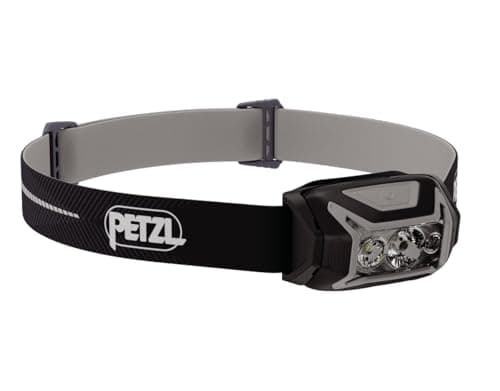
Petzl ACTIK CORE
Six hundred and twenty-five lumens stated to ANSI/PLATO FL1, 88 grams, and — the part that matters — it runs on the CORE rechargeable pack or on three AAA cells when the pack is flat. That is the answer to the sealed-battery problem, from the only brand here that bothered.
Price as of September 21, 2026 — 8 lumens per dollar. #ad How we earn
Disclosure — we earn a commission on qualifying purchases made through the Amazon links on this page, at no extra cost to you. It does not change which lights we pick or what we say about them. The full version.
How we rank. Published ANSI FL1 output divided by the live retail price, with sealed-battery lights marked down because a light you cannot re-cell is a light with an expiry date. Units we claim to have tested: 0 — we compile manufacturers' published figures and show the arithmetic instead. How we work this out.
The short answer
Buy Black Diamond if the lamp will get wet or dirty: both models we cover publish IP67, which means sealed against dust and tested to a meter of water. Buy Petzl if the lamp has to keep working when the battery is dead: every Petzl here runs on its CORE rechargeable pack or on three AAA cells you can buy anywhere, and Petzl states ANSI/PLATO FL 1 conformity, which Black Diamond does not. Petzl's lamps are IPX4, which is rain and nothing more.
These are the two brands worth comparing in the first place, and for a reason that has nothing to do with lumens: they both publish a burn time for their modes. Most headlamp makers print a maximum output and leave you to find out the rest. Comparing Black Diamond with Petzl is therefore a rare thing on this site — an argument between two companies that both did their homework.
Published specifications, side by side
| Petzl ACTIK CORE | Petzl TIKKA CORE | BD Spot 400-R | BD Storm 500-R | |
|---|---|---|---|---|
| Maximum output | 625 lm (ANSI/PLATO FL 1) | 450 lm (ANSI/PLATO FL 1) | 400 lumens | 500 lumens |
| Runtime at maximum | 2 hours | 2 h 30 min | 4 hours | 7 hours |
| Longest published mode | 7 lm for 100 h | 7 lm for 110 h | 6 lm for 225 h | 350 h on low |
| Water rating | IPX4 | IPX4 | IP67 | IP67 |
| Weight | 88 g | 84 g | 86 g | 120 g |
| Power | CORE pack or 3 x AAA | CORE pack or 3 x AAA | Integrated 1,500 mAh | Integrated 2,400 mAh |
| Spare battery possible? | Yes, AAA cells | Yes, AAA cells | No | No |
| ANSI FL 1 stated? | Yes | Yes | Not stated | Not stated |
| Charge port | USB-C on the CORE pack | USB-C on the CORE pack | Micro-USB | Micro-USB |
Black Diamond wins on sealing, and it is not close
IP67 against IPX4 is the largest single gap in the table. IPX4 means splashing water from any direction — rain, essentially. IP67 means dust-tight and tested at one meter of immersion for thirty minutes, which is a lamp you can drop in a stream and pick up again.
For anything involving weather, mud, a boat or a cave, that is decisive on its own. Petzl makes lamps with better sealing higher up its range, but the two CORE models here are explicitly weather resistant rather than waterproof, and Petzl says so in those words.
Black Diamond also wins the endurance numbers outright. Four hundred lumens for four hours beats 625 for two, and 225 hours at 6 lumens on the Spot 400-R is the longest published low mode of the four. A bigger battery that never has to accommodate an AAA carrier can simply hold more.
Petzl wins on the thing that matters when it goes wrong
Every Petzl lamp here takes three AAA cells when the CORE pack is flat. No adapter, no accessory to order first — the pack comes out and ordinary batteries go in. That is the answer to the single most common headlamp failure, which is not water ingress but a dead battery two hours from the car.
Black Diamond's integrated cells cannot do this. When a Spot 400-R is empty your night is over, and you cannot carry a spare because there is nothing to spare. For a headlamp used on a long trip that is a meaningful constraint, and it is the mirror image of Black Diamond's sealing advantage.
Petzl publishes two other things worth having. It states ANSI/PLATO FL 1 conformity, which means its lumen figures are measured to a published standard rather than to the house rules — the great majority of brands on this site do not claim this. And it publishes the CORE pack's service life as two years or 300 charging cycles, which turns the pack from an unknown into a stated consumable.
| # | Light | Max output | Battery | Lumens / $ | Price |
|---|---|---|---|---|---|
| 1 | Petzl ACTIK CORE Best hybrid: rechargeable or AAA cells | 625 | Replaceable | 8 | $80.00 on Amazon Price as of September 21, 2026 — 8 lumens per dollar. #ad How we earn |
| 2 | 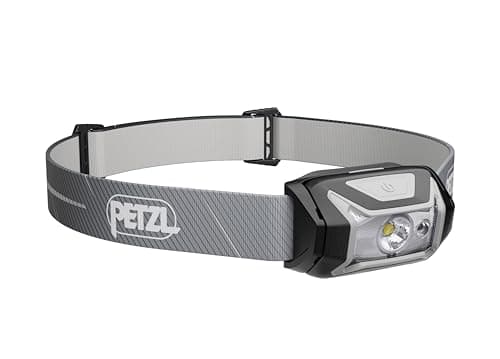 Petzl TIKKA CORE Best hybrid headlamp at the lower price | 450 | Replaceable | 8 | $59.14 on Amazon Price as of September 21, 2026 — 8 lumens per dollar. #ad How we earn |
| 3 | 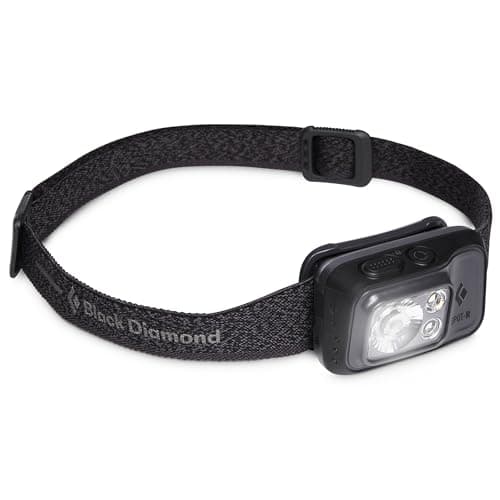 Black Diamond Spot 400-R Most complete published runtime table | 400 | Sealed | 7 | $59.88 on Amazon Price as of September 21, 2026 — 7 lumens per dollar. #ad How we earn |
| 4 | No listing image Black Diamond Storm 500-R Best lamp to put on a helmet | 500 | Sealed | Needs a live price | Check price on Amazon We show a price only when we have pulled a live one. #ad How we earn |
Prices pulled September 21, 2026. Lumens per dollar is the manufacturer's published maximum output divided by that price, recomputed every time the price moves.
1. Best hybrid: rechargeable or AAA cells
Petzl ACTIK CORE
Lumens per dollar
8
Six hundred and twenty-five lumens stated to ANSI/PLATO FL1, 88 grams, and — the part that matters — it runs on the CORE rechargeable pack or on three AAA cells when the pack is flat. That is the answer to the sealed-battery problem, from the only brand here that bothered.
- Max output
- 625 lm
- Runtime
- Published per mode by Petzl
- Battery
- Replaceable cell
- Water rating
- IPX4
What it gets right
- Explicitly states ANSI/PLATO FL1 conformity, which most brands here do not
- Hybrid power: the pack for daily use, AAA cells as the fallback that never fails
- Petzl publishes the CORE pack's cycle rating, so its service life is a stated number
What it gets wrong
- IPX4 — weather resistant, not submersible
- Eighty-eight grams is not ultralight
- The CORE pack is a Petzl part rather than a standard cell
Published specification
- Maximum output: 625 lumens (ANSI/PLATO FL1) — Petzl published specification
- Weight: 88 g — Petzl published specification
- Battery: CORE rechargeable 1,250 mAh / 3.6 V / 4.5 Wh, or 3 x AAA — Petzl published specification
- Battery compatibility: Alkaline, lithium or Ni-MH — Petzl published specification
- Water rating: IPX4, weather resistant — Petzl published specification
- Warranty: Lamp 5 years; CORE battery 2 years or 300 cycles — Petzl published specification
- Lighting levels: MAX BURN TIME, STANDARD, MAX POWER, plus red — Petzl published specification
Skip this one if
you want a submersible headlamp. IPX4 covers rain and nothing beyond it.
Buy it if: anyone whose headlamp has to work at the end of a long trip, when charging is not an option.
- Output 7.5
- Battery 9.0
- Weight 7.0
- Usability 8.5
- Overall 8.3
Price as of September 21, 2026 — 8 lumens per dollar. #ad How we earn
2. Best hybrid headlamp at the lower price
Petzl TIKKA CORE
Lumens per dollar
8
The ACTIK CORE's argument in a cheaper, lighter package: 450 lumens stated to ANSI/PLATO FL1, 84 grams, and the same CORE pack or three AAA cells when the pack is flat. Petzl publishes a lumen figure, a beam distance and a burn time for every mode on both power sources, which almost nobody else does even once.
- Max output
- 450 lm
- Runtime
- 2 h 30 min at 450 lm; 110 h at 7 lm
- Battery
- Replaceable cell
- Water rating
- IPX4
What it gets right
- Lumens, beam distance and burn time published for every mode on BOTH power sources
- States ANSI/PLATO FL 1 conformity, which most brands at this price do not
- Runs on three AAA cells when the CORE pack is flat, with no adapter to lose
- One hundred and ten hours at 7 lumens is a genuine emergency reserve
What it gets wrong
- IPX4 — weather resistant, not submersible
- Four hundred and fifty lumens is modest against lamps at similar money
- Output drops to 350 lumens on AAA cells, which Petzl states but buyers miss
- The CORE pack is a Petzl part rather than a standard cell
Published specification
- Maximum output: 450 lumens (ANSI/PLATO FL 1) — Petzl published specification
- MAX POWER on CORE: 450 lumens, 75 m, 2 h 30 min — Petzl published specification
- MAX POWER on AAA: 350 lumens, 70 m, 2 hours — Petzl published specification
- STANDARD on CORE: 100 lumens, 45 m, 7 hours — Petzl published specification
- STANDARD on AAA: 100 lumens, 45 m, 12 hours — Petzl published specification
- MAX BURN TIME: 7 lumens, 10 m, 110 hours on either source — Petzl published specification
- Red lighting: 2 lumens, 5 m, 60 hours continuous — Petzl published specification
- Battery: CORE 1,250 mAh / 3.6 V / 4.5 Wh, or 3 x AAA — Petzl published specification
- Weight: 84 g — Petzl published specification
- Water rating: IPX4, weather resistant — Petzl published specification
- Warranty: Lamp 5 years; CORE battery 2 years or 300 cycles — Petzl published specification
Skip this one if
you want maximum output for the money. This lamp spends its budget on documentation, hybrid power and a five-year warranty, and a budget rechargeable will out-lumen it for less.
Buy it if: anyone who wants Petzl's hybrid-power argument without paying for the ACTIK CORE's extra output.
- Output 6.5
- Battery 9.0
- Weight 7.5
- Usability 8.5
- Overall 8.0
Price as of September 21, 2026 — 8 lumens per dollar. #ad How we earn
3. Most complete published runtime table
Black Diamond Spot 400-R
Lumens per dollar
7
Four hundred lumens for four hours, 200 for eight, 6 for two hundred and twenty-five. Black Diamond publishes lumens, runtime and beam distance for all three modes, and IP67 on top. There is nothing to guess at here.
- Max output
- 400 lm
- Runtime
- 4 h
- Battery
- Sealed
- Water rating
- IP67
What it gets right
- Lumens, runtime and distance published for every mode
- Two hundred and twenty-five hours on low is a genuine emergency reserve
- IP67 and a battery meter that shows an actual percentage
What it gets wrong
- Micro-USB in a year when everything else is USB-C
- Integrated battery — no spare, no re-cell
- Eighty-six grams is heavy next to the ultralight class
Published specification
- High: 400 lumens, 4 hours, 100 m — Black Diamond published specification
- Medium: 200 lumens, 8 hours, 60 m — Black Diamond published specification
- Low: 6 lumens, 225 hours, 12 m — Black Diamond published specification
- Battery: Integrated 1,500 mAh Li-ion, micro-USB — Black Diamond published specification
- Water rating: IP67, tested to 1.0 m for 30 minutes — Black Diamond published specification
- Weight: 86 g — Black Diamond published specification
Skip this one if
you have standardized on USB-C. Carrying a second cable for one device is a small annoyance that compounds on a long trip.
Buy it if: camp, dog walks and anyone who wants a headlamp whose numbers are all on the box.
- Output 6.5
- Battery 5.5
- Weight 7.0
- Usability 9.0
- Overall 7.7
Price as of September 21, 2026 — 7 lumens per dollar. #ad How we earn
listing
image
4. Best lamp to put on a helmet
Black Diamond Storm 500-R
Lumens per dollar
Computed the moment we have a live price for it
Five hundred lumens for seven hours, three hundred and fifty hours on low, IP67, a digital lockout and four light colors — and Black Diamond publishes a runtime and a beam distance for every one of its modes. On a lamp bought for weather and for long nights, that completeness is the product.
- Max output
- 500 lm
- Runtime
- 7 h
- Battery
- Sealed
- Water rating
- IP67
What it gets right
- Runtime and beam distance published for all three white modes
- Three hundred and fifty hours on low is a genuine unplanned-bivvy reserve
- IP67 and a digital lockout, which is the pair that matters in a pack
- Four light colors, so red is available without cycling through white
What it gets wrong
- Micro-USB in a year when everything else is USB-C
- Integrated 2,400 mAh cell — no spare, no re-cell
- One hundred and twenty grams is heavy against the ultralight class
- Black Diamond publishes lumen figures for high only, not for medium or low
Published specification
- High: 500 lumens, 7 hours, 120 m — Black Diamond published specification
- Medium: 19 hours, 60 m — Black Diamond published specification
- Low: 350 hours, 12 m — Black Diamond published specification
- Battery: Integrated 2,400 mAh Li-ion, micro-USB — Black Diamond published specification
- Water rating: IP67 — Black Diamond published specification
- Weight: 120 g — Black Diamond published specification
- Light colors: White, plus red, green and blue night-vision modes — Black Diamond published specification
- Lock mode: Digital lockout — Black Diamond published specification
- Per-mode output: Lumen figures published for high only
Skip this one if
you are counting grams. At 120 g this is nearly three times the mass of the lightest lamp we cover, and on a long approach you will notice it.
Buy it if: anyone whose lamp has to survive weather, live in a pack without switching itself on, and still be running at the end of a long day.
- Output 7.5
- Battery 5.5
- Weight 6.0
- Usability 9.5
- Overall 7.9
We show a price only when we have pulled a live one. #ad How we earn
The detail almost nobody notices
Petzl publishes its whole performance table twice: once on the CORE pack and once on AAA cells. The figures are not the same. The ACTIK CORE makes 625 lumens on the pack and 450 on AAA; the TIKKA CORE makes 450 on the pack and 350 on AAA.
It runs the other way at the setting people actually use. The ACTIK CORE's STANDARD mode is 100 lumens for seven hours on the pack, and 100 lumens for ten hours on AAA cells. On the TIKKA CORE it is seven hours against twelve. The disposable cells give you less peak output and more endurance, which is a genuinely useful thing to know before a long night and which we have seen stated almost nowhere else.
Weight, and the lamp you stop wearing
Three of these four lamps sit within four grams of each other — 84, 86 and 88 — and the Storm 500-R is 120. That 34-gram gap sounds trivial written down and is the most likely reason one of these lamps ends up in a drawer.
Weight on a headlamp is not carried, it is worn, and it is worn on the front of your skull where it acts on a lever arm. A heavier lamp needs a tighter band to stop it sliding, a tighter band is what gives you the headache, and the lamp that gives you a headache is the one you leave behind. On a site that judges lights by dividing published figures, this is the attribute that most resists that treatment and most decides whether a lamp gets used.
The Storm 500-R earns its extra mass with a 2,400 mAh cell and seven hours at 500 lumens, and for a long night in weather that is a fair trade. For a lamp that lives in a coat pocket for dog walks it is not, and the four-gram spread among the other three means weight simply is not the deciding factor between them.
The micro-USB problem
Both Black Diamond lamps here charge over micro-USB. Petzl's CORE pack takes USB-C. In a year when every phone, laptop and power bank in the house has settled on one connector, carrying a second cable for one device is a genuine irritation, and on a multi-day trip it is a second cable to forget.
It is a small thing next to IP67 sealing and we are not going to inflate it into a verdict. It is worth knowing before you buy, because it is the kind of detail that does not appear in any comparison built purely from lumens and hours.
Which one to buy
- Rain, mud, water or dust: Black Diamond, for the IP67. Nothing Petzl offers in this class matches it.
- Long trips away from power: Petzl, because three AAA cells in a pocket are a spare battery and an integrated lamp has none.
- Longest running time on one charge: Black Diamond Storm 500-R, at 500 lumens for seven hours.
- Lightest of the four: Petzl TIKKA CORE at 84 g, with the Spot 400-R one gram behind it.
- If you want lumen figures measured to a published standard: Petzl, which states ANSI/PLATO FL 1 conformity where Black Diamond does not.
Red light, and which brand gives you more of it
Both brands take colored light seriously, which is not universal. Petzl publishes a red mode on both lamps here at 2 lumens for 60 hours continuous, plus a red strobe it states is visible at 700 meters for 400 hours — a figure aimed squarely at being found rather than at seeing.
Black Diamond's Storm 500-R publishes red, green and blue night-vision modes, which is the widest set of any lamp on this page, and the Spot 400-R publishes no colored mode at all on the pages we read. So the answer depends on which Black Diamond you mean, and if colored light matters to you it is a reason to choose within the brand as much as between brands.
The practical value of red is the same in both cases: it preserves dark adaptation, it is far less disturbing to other people in a tent or a hut, and it draws very little current. Sixty hours at 2 lumens is not a mode you will run out of.
What neither brand publishes
For all the disclosure these two manage, two figures are missing from both. Neither publishes a CRI or color rendering figure for any lamp here, so how well any of them shows color is unknown to us. And Black Diamond publishes lumen outputs for the Storm 500-R's high mode only, leaving its medium and low modes with a runtime and a beam distance but no output figure to divide.
We are pointing at those gaps rather than filling them. Both brands still disclose far more than the category average, and that is exactly why the remaining gaps are worth naming.
How we ranked these
Published output over the live price, adjusted for battery architecture and published ratings, with weight treated as a first-class attribute because a headlamp you stop wearing produces no light at all. Hybrid power counts in Petzl's favor and IP67 counts in Black Diamond's, and neither cancels the other — they are answers to different failures.
Both are worth more than the brands that publish nothing
It is worth stepping back from the argument between these two. On a site that spends most of its time noting missing runtime figures, a page where the hardest question is which of two complete specification tables to prefer is an unusual luxury.
Whichever of these you buy, you are buying from a company that told you what the lamp does before you paid. That is the first filter, and most of the category fails it.
Units we claim to have tested: 0
Every publisher in this category says they tested twenty flashlights. We have not tested any, and we say so. What we do instead: compile the manufacturer's own published ANSI FL1 figures, pull the price the light is selling for right now, and divide one by the other. Every number on this page is one you can check yourself in about two minutes.
What we cannot tell you
We have not worn any of these lamps. We cannot tell you which headband stays put on a run, which bracket cracks first in cold, whose beam pattern you will prefer, or how either company handles a warranty claim. We also cannot verify Petzl's ANSI/PLATO FL 1 conformity ourselves; we can only report that Petzl states it and Black Diamond does not, which is a difference in disclosure rather than a measurement of ours.
Common questions
Is Black Diamond or Petzl better for headlamps?
They fail differently, so pick the failure you can live with. Black Diamond publishes IP67 on both lamps we cover, so they survive dust and a meter of water, and they run longer on a charge. Petzl publishes IPX4, which is rain only, but every Petzl here runs on three AAA cells when its rechargeable pack dies, and Petzl states ANSI/PLATO FL 1 conformity for its lumen figures. Weather favors Black Diamond; long trips away from a charger favor Petzl.
Can you use regular batteries in a Petzl CORE headlamp?
Yes, and it is the main reason to buy one. The CORE rechargeable pack lifts out and three AAA/LR03 cells go in its place, with no adapter required. Petzl states that alkaline, lithium or Ni-MH cells all work. Output drops on AAA — the ACTIK CORE makes 450 lumens instead of 625 — but the lamp's 100-lumen STANDARD mode actually runs longer on AAA cells than on the pack, ten hours against seven.
Is IPX4 good enough for a headlamp?
For rain and sweat, yes. IPX4 means tested against splashing water from any direction, which covers being out in weather. It does not cover immersion or dust, so if the lamp might be dropped in water, used in a cave or worn in blowing grit, the IP67 rating on Black Diamond's lamps is a real advantage. Petzl describes its IPX4 lamps as weather resistant rather than waterproof, which is the correct way to read it.
How long does a rechargeable flashlight battery last?
Lithium-ion cells are generally rated in charge cycles rather than years, and a cell that has lost enough capacity to be annoying is usually still working — just for half as long. Some manufacturers publish the figure: Petzl rates the CORE pack at 2 years or 300 charging cycles, and Maglite quotes up to 2,000 cycles for the LiFePO4 pack in the ML150LRS. Most brands publish nothing at all, which is why a replaceable cell matters more than any published cycle rating.
Sources
- Petzl published product specifications — ANSI/PLATO FL 1 conformity stated by the manufacturer. ACTIK CORE read 2026-09-01 and re-read per mode 2026-09-21; TIKKA CORE read 2026-09-21
- Black Diamond published product specifications — Spot 400-R read 2026-09-01; Storm 500-R read 2026-09-14
- Streamlight, ANSI Information — definitions of light output, beam distance, run time, impact and water resistance under the FL1 standard, read 2026-09-01
- Lumen & Ledger method — how every figure on this page is derived
Who writes this
Scooter M. — I am an enthusiast who is genuinely into this. I read the manuals, compile the published specs, and do the math. No lab coat, no test bench, no drawer of free samples. What I can tell you is exactly what a light claims on paper, exactly what it costs right now, and what those two numbers mean when you divide one by the other.
Read next
Best rechargeable headlamps
Ranked on weight and published runtime, because a lamp you stop wearing lights nothing.
Petzl ACTIK CORE review
625 lumens on the pack, 450 on AAA cells, and the mode table that explains the trade.
Best rechargeable headlamps for hiking and backpacking
Days between chargers changes the answer: runtime per gram, and a cell you can feed.
Best rechargeable headlamps for climbing
Lockout first, helmet fit second, and the low-mode reserve that covers an unplanned bivvy.
Best headlamps for reading
Judged on the smallest number on the box, which is the only one that matters here.
The Ledger
Every light we cover in one ranked table, sorted by lumens per dollar.