Headlamps
Best Rechargeable Headlamps for Climbing
The lamp that fails on a climb is almost never the dim one. It is the one that switched itself on in your pack during the approach.
By Scooter M. · Published September 14, 2026
Short answer
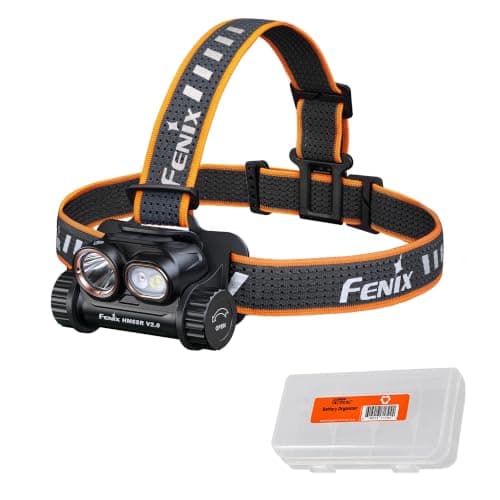
Fenix HM65R V2.0
Twenty-two hundred lumens, 226 meters, IP68, a 2-meter impact rating and a removable 3,400 mAh 21700. It costs several times what a budget headlamp costs and it is the only one here you can carry a spare cell for.
Price as of September 14, 2026 — 22 lumens per dollar. #ad How we earn
Disclosure — we earn a commission on qualifying purchases made through the Amazon links on this page, at no extra cost to you. It does not change which lights we pick or what we say about them. The full version.
How we rank. Published ANSI FL1 output divided by the live retail price, with sealed-battery lights marked down because a light you cannot re-cell is a light with an expiry date. Units we claim to have tested: 0 — we compile manufacturers' published figures and show the arithmetic instead. How we work this out.
What actually decides a climbing headlamp
Rank a climbing lamp on four things in this order: whether it has a lockout that stops it switching on in a pack, whether it fits over a helmet, the published runtime on its lowest mode, and how quickly you reach red without cycling through white. Black Diamond publishes 500 lumens for seven hours and 350 hours on low for the Storm 500-R, with IP67 and a digital lockout. Maximum output is the fourth question, not the first.
Climbing is unusual among the use cases on this site because the lamp spends most of the day switched off inside a pack and then has to work for an unknown number of hours at the end of it. That inverts the specification you shop on: the reserve and the lockout are the product, and the headline lumen figure describes a mode you may use for ten minutes on a descent.
One thing this page will not do is give you climbing advice. We cover lighting hardware, not movement, protection or judgment about when to turn back — and a flashlight publication has no business implying otherwise. Everything below is about which lamp to carry.
Criterion one: the lockout, and the failure it prevents
The characteristic way a climbing lamp fails is silent. It sits in the lid of a pack for a four-hour approach with something pressed against its switch, runs its battery flat without anybody noticing, and is discovered at exactly the moment it is needed. No amount of output protects against that; a lockout does.
Black Diamond publishes a digital lockout on the Storm 500-R, and lock modes of one sort or another are standard on the serious lamps. The two things to establish about whichever you buy are how you engage it and whether you will remember to — a lockout you have to look up is one you will not use, and the lamp will be found switched on in a pack at least once.
The zero-cost fallback works on any lamp, including one without a lock. Reverse a removable cell, or on a sealed lamp stow it bezel-out with nothing pressing on the switch. On the Petzl, carrying the AAA cells separately during the approach does the same job and keeps them warm as a bonus.
Criterion two: a helmet is not a head
Manufacturers publish weights measured for a lamp on a bare head, and a helmet changes the problem in two ways they do not describe. The band has to stretch around a much larger circumference, which reduces its grip, and the lamp sits further out from your skull, which gives every gram more leverage to rock the lamp when you move.
The practical consequences are simple to check and impossible to look up. Does the band reach around your actual helmet with tension left in it; will the lamp sit flat on the curve of the shell rather than levering off it; and if your helmet has clip slots, does this lamp's housing work with them. No manufacturer on this page publishes helmet-clip compatibility as a specification, so this is a thing to test in a shop or at home before the route rather than something we can rank.
| Lamp | Published weight | Lock mode | Water rating | Longest published mode |
|---|---|---|---|---|
| Black Diamond Storm 500-R | 120 g | Digital lockout | IP67 | 350 h on low |
| Petzl ACTIK CORE | 88 g | Published by Petzl | IPX4 | Published per level (ANSI/PLATO FL 1) |
| NITECORE NU25 MCT UL | 47 g with band | Published by NITECORE | IP66 | 45 h at 6 lm |
| Fenix HM65R V2.0 | Heaviest here | Published by Fenix | IP68 | Not published per mode |
| Black Diamond Spot 400-R | 86 g | Digital lockout | IP67 | 225 h at 6 lm |
Criterion three: the low mode is the bivvy number
The figure worth shopping on is the one at the bottom of the mode table, because it describes what happens when a day runs long. Black Diamond publishes 350 hours on the Storm 500-R's low mode and 225 hours on the Spot 400-R's 6-lumen setting. NITECORE publishes up to 45 hours at 6 lumens on the NU25.
Three hundred and fifty hours is not a novelty number. It means that once you are down to the low mode, the lamp effectively stops being a constraint on the night — you can leave it running rather than switching it on and off, which is worth a great deal when you are cold and doing something with your hands. The gap between 350 hours and 45 is the difference between a lamp you can leave on and one you have to ration.
Read those against the high-mode figures and the trade is clear. Seven hours at 500 lumens is a long descent; 350 hours on low is a different category of number entirely, and the brands that publish both are telling you exactly how the lamp behaves across its range. Our runtime guide covers why an up-to figure so rarely describes the mode you are actually using.
| # | Light | Max output | Battery | Lumens / $ | Price |
|---|---|---|---|---|---|
| 1 | Fenix HM65R V2.0 Most output with a removable 21700 | 2,200 | Replaceable | 22 | $100.45 on Amazon Price as of September 14, 2026 — 22 lumens per dollar. #ad How we earn |
| 2 | 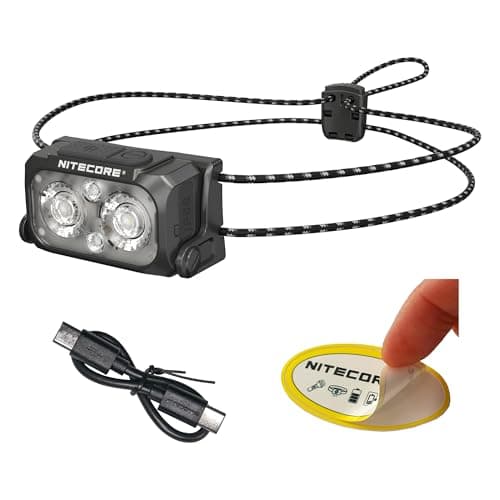 NITECORE NU25 MCT UL Lightest headlamp with a real published runtime | 400 | Sealed | 11 | $36.95 on Amazon Price as of September 14, 2026 — 11 lumens per dollar. #ad How we earn |
| 3 | 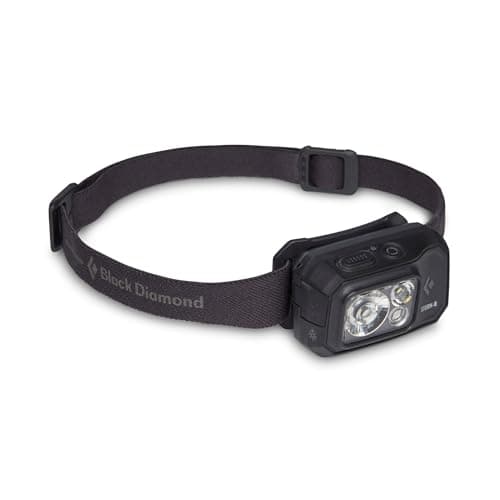 Black Diamond Storm 500-R Best lamp to put on a helmet | 500 | Sealed | 8 | $66.14 on Amazon Price as of September 14, 2026 — 8 lumens per dollar. #ad How we earn |
| 4 | 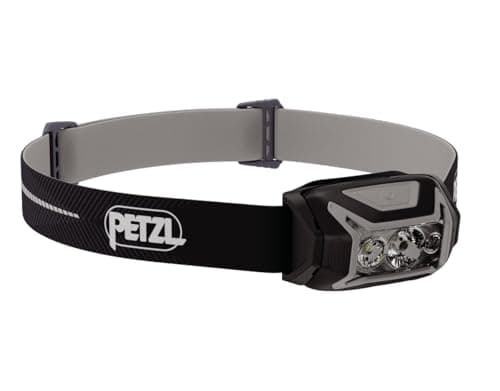 Petzl ACTIK CORE Best hybrid: rechargeable or AAA cells | 625 | Replaceable | 7 | $84.96 on Amazon Price as of September 14, 2026 — 7 lumens per dollar. #ad How we earn |
| 5 | 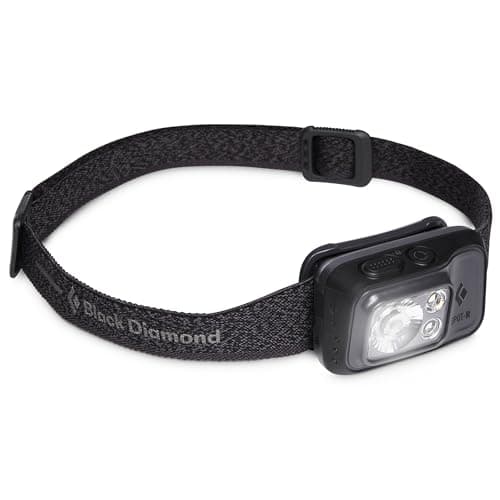 Black Diamond Spot 400-R Most complete published runtime table | 400 | Sealed | 7 | $59.88 on Amazon Price as of September 14, 2026 — 7 lumens per dollar. #ad How we earn |
Prices pulled September 14, 2026. Lumens per dollar is the manufacturer's published maximum output divided by that price, recomputed every time the price moves.
Criterion four: red, without cycling through white
On a belay ledge or in a bivvy the person you are most likely to blind is the one you are tied to. Red preserves dark adaptation and is far less unpleasant to be near, so what matters is not whether a lamp has red but how many presses away it is from off.
Black Diamond publishes four light colors on the Storm 500-R — white plus red, green and blue night-vision modes — which is more than anything else we cover. Petzl publishes red continuous and strobe on the ACTIK CORE, and NITECORE offers an auxiliary red plus three white color temperatures on the NU25. A lamp where red is reachable from off is worth choosing over one where it sits behind white, and that is an interface property you can check in thirty seconds in a shop.
1. Most output with a removable 21700
Fenix HM65R V2.0
Lumens per dollar
22
Twenty-two hundred lumens, 226 meters, IP68, a 2-meter impact rating and a removable 3,400 mAh 21700. It costs several times what a budget headlamp costs and it is the only one here you can carry a spare cell for.
- Max output
- 2,200 lm
- Runtime
- Not published per mode on the retail page
- Battery
- Replaceable cell
- Water rating
- IP68
What it gets right
- Removable 21700, so a spare cell turns a four-hour night into an eight-hour one
- IP68 — the strongest water rating in this roundup
- Independent spot and flood control, which is what work actually needs
What it gets wrong
- Its lumens-per-dollar figure will be poor against any budget lamp
- Heavy on the head compared with the ultralight class
- No per-mode runtime on the page we read
Published specification
- Maximum output: 2,200 lumens, spot and flood combined — Fenix published specification
- Beam distance: 741 ft (226 m) — Fenix published specification
- Battery: 3,400 mAh 21700, removable, USB-C — Fenix published specification
- Water rating: IP68 — Fenix published specification
- Impact: 2 m — Fenix published specification
- Body: Magnesium alloy — Fenix published specification
- Per-mode runtime: Not published on the retail page we read
Skip this one if
you are buying on value. This is a work tool priced as one.
Buy it if: night shifts, cave work and anyone who has run a headlamp flat halfway through a job.
- Output 9.5
- Battery 9.0
- Weight 5.5
- Usability 8.5
- Overall 8.4
Price as of September 14, 2026 — 22 lumens per dollar. #ad How we earn
2. Lightest headlamp with a real published runtime
NITECORE NU25 MCT UL
Lumens per dollar
11
Forty-seven grams including the headband, 400 lumens, and 45 hours at its 6-lumen setting. On a headlamp the weight figure matters more than the lumen figure, because the lamp you stop wearing produces no light at all.
- Max output
- 400 lm
- Runtime
- 45 h at 6 lm
- Battery
- Sealed
- Water rating
- IP66
What it gets right
- Forty-seven grams with the band on — you forget it is there
- Three color temperatures plus red, which is unusual at any price
- IP66 and a published 45-hour low-mode runtime
What it gets wrong
- Sealed 700 mAh cell; no way to carry a spare
- Four hundred lumens is modest for trail running at speed
- Flat band with no over-the-top strap on the ultralight version
Published specification
- Maximum output: 400 lumens — NITECORE published specification
- Beam distance: 132 m — NITECORE published specification
- Runtime: Up to 45 hours at 6 lumens — NITECORE published specification
- Battery: Built-in 700 mAh Li-ion, USB-C — NITECORE published specification
- Weight: 47 g (1.66 oz) including bracket and headband — NITECORE published specification
- Water rating: IP66 — NITECORE published specification
- Color temperatures: 3,000K / 4,500K / 6,500K plus auxiliary red — NITECORE published specification
Skip this one if
you need to swap a battery mid-shift. A sealed 700 mAh cell means your night ends when it does.
Buy it if: hikers, campers and anyone whose complaint about headlamps is that they bounce.
- Output 6.5
- Battery 4.5
- Weight 9.5
- Usability 8.5
- Overall 7.8
Price as of September 14, 2026 — 11 lumens per dollar. #ad How we earn
3. Best lamp to put on a helmet
Black Diamond Storm 500-R
Lumens per dollar
8
Five hundred lumens for seven hours, three hundred and fifty hours on low, IP67, a digital lockout and four light colors — and Black Diamond publishes a runtime and a beam distance for every one of its modes. On a lamp bought for weather and for long nights, that completeness is the product.
- Max output
- 500 lm
- Runtime
- 7 h
- Battery
- Sealed
- Water rating
- IP67
What it gets right
- Runtime and beam distance published for all three white modes
- Three hundred and fifty hours on low is a genuine unplanned-bivvy reserve
- IP67 and a digital lockout, which is the pair that matters in a pack
- Four light colors, so red is available without cycling through white
What it gets wrong
- Micro-USB in a year when everything else is USB-C
- Integrated 2,400 mAh cell — no spare, no re-cell
- One hundred and twenty grams is heavy against the ultralight class
- Black Diamond publishes lumen figures for high only, not for medium or low
Published specification
- High: 500 lumens, 7 hours, 120 m — Black Diamond published specification
- Medium: 19 hours, 60 m — Black Diamond published specification
- Low: 350 hours, 12 m — Black Diamond published specification
- Battery: Integrated 2,400 mAh Li-ion, micro-USB — Black Diamond published specification
- Water rating: IP67 — Black Diamond published specification
- Weight: 120 g — Black Diamond published specification
- Light colors: White, plus red, green and blue night-vision modes — Black Diamond published specification
- Lock mode: Digital lockout — Black Diamond published specification
- Per-mode output: Lumen figures published for high only
Skip this one if
you are counting grams. At 120 g this is nearly three times the mass of the lightest lamp we cover, and on a long approach you will notice it.
Buy it if: anyone whose lamp has to survive weather, live in a pack without switching itself on, and still be running at the end of a long day.
- Output 7.5
- Battery 5.5
- Weight 6.0
- Usability 9.5
- Overall 7.9
Price as of September 14, 2026 — 8 lumens per dollar. #ad How we earn
4. Best hybrid: rechargeable or AAA cells
Petzl ACTIK CORE
Lumens per dollar
7
Six hundred and twenty-five lumens stated to ANSI/PLATO FL1, 88 grams, and — the part that matters — it runs on the CORE rechargeable pack or on three AAA cells when the pack is flat. That is the answer to the sealed-battery problem, from the only brand here that bothered.
- Max output
- 625 lm
- Runtime
- Published per mode by Petzl
- Battery
- Replaceable cell
- Water rating
- IPX4
What it gets right
- Explicitly states ANSI/PLATO FL1 conformity, which most brands here do not
- Hybrid power: the pack for daily use, AAA cells as the fallback that never fails
- Petzl publishes the CORE pack's cycle rating, so its service life is a stated number
What it gets wrong
- IPX4 — weather resistant, not submersible
- Eighty-eight grams is not ultralight
- The CORE pack is a Petzl part rather than a standard cell
Published specification
- Maximum output: 625 lumens (ANSI/PLATO FL1) — Petzl published specification
- Weight: 88 g — Petzl published specification
- Battery: CORE rechargeable 1,250 mAh / 3.6 V / 4.5 Wh, or 3 x AAA — Petzl published specification
- Battery compatibility: Alkaline, lithium or Ni-MH — Petzl published specification
- Water rating: IPX4, weather resistant — Petzl published specification
- Warranty: Lamp 5 years; CORE battery 2 years or 300 cycles — Petzl published specification
- Lighting levels: MAX BURN TIME, STANDARD, MAX POWER, plus red — Petzl published specification
Skip this one if
you want a submersible headlamp. IPX4 covers rain and nothing beyond it.
Buy it if: anyone whose headlamp has to work at the end of a long trip, when charging is not an option.
- Output 7.5
- Battery 9.0
- Weight 7.0
- Usability 8.5
- Overall 8.3
Price as of September 14, 2026 — 7 lumens per dollar. #ad How we earn
5. Most complete published runtime table
Black Diamond Spot 400-R
Lumens per dollar
7
Four hundred lumens for four hours, 200 for eight, 6 for two hundred and twenty-five. Black Diamond publishes lumens, runtime and beam distance for all three modes, and IP67 on top. There is nothing to guess at here.
- Max output
- 400 lm
- Runtime
- 4 h
- Battery
- Sealed
- Water rating
- IP67
What it gets right
- Lumens, runtime and distance published for every mode
- Two hundred and twenty-five hours on low is a genuine emergency reserve
- IP67 and a battery meter that shows an actual percentage
What it gets wrong
- Micro-USB in a year when everything else is USB-C
- Integrated battery — no spare, no re-cell
- Eighty-six grams is heavy next to the ultralight class
Published specification
- High: 400 lumens, 4 hours, 100 m — Black Diamond published specification
- Medium: 200 lumens, 8 hours, 60 m — Black Diamond published specification
- Low: 6 lumens, 225 hours, 12 m — Black Diamond published specification
- Battery: Integrated 1,500 mAh Li-ion, micro-USB — Black Diamond published specification
- Water rating: IP67, tested to 1.0 m for 30 minutes — Black Diamond published specification
- Weight: 86 g — Black Diamond published specification
Skip this one if
you have standardized on USB-C. Carrying a second cable for one device is a small annoyance that compounds on a long trip.
Buy it if: camp, dog walks and anyone who wants a headlamp whose numbers are all on the box.
- Output 6.5
- Battery 5.5
- Weight 7.0
- Usability 9.0
- Overall 7.7
Price as of September 14, 2026 — 7 lumens per dollar. #ad How we earn
Weather, and what the ratings actually cover
Fenix publishes IP68 on the HM65R V2.0, Black Diamond IP67 on both the Storm 500-R and the Spot 400-R, NITECORE IP66 on the NU25, and Petzl IPX4 on the ACTIK CORE. For climbing the meaningful line is between IPX4 and the rest: IPX4 is a rain rating, and it is genuinely adequate for a lot of rock climbing in settled weather.
It stops being adequate in sustained mountain weather, on anything involving snow that melts on the lamp, or if the lamp lives clipped to the outside of a pack. That is a real limitation on a lamp we otherwise rate very highly, and it is the same caveat our fishing ranking applies for the same published reason. Our guide to IP ratings explains what each figure does and does not promise.
Impact is the other half and almost nobody publishes it. Fenix publishes a two-meter impact rating on the HM65R V2.0; the others publish nothing we could find. A dropped lamp is a normal event at a belay, so the absence of a figure is worth noticing even though it is not proof of fragility.
The weight question, answered honestly
The lamp we would choose for this job is also the heaviest of the three we would actually recommend, and that deserves defending rather than glossing. Black Diamond publishes 120 g for the Storm 500-R, nearly three times the NU25's 47, and on a long approach with a lamp on a helmet you will feel the difference.
The argument for carrying it anyway is that the failure modes it removes are the ones that end days: a lamp that switches on in a pack, a lamp that stops being usable in weather, a lamp with no reserve when the descent takes three hours longer than planned. Weight is a cost you pay continuously and notice; those failures are rare and expensive. If your climbing is short, roadside and in good weather, invert that reasoning and take the lightest lamp — our running ranking makes the case for the ultralight end properly.
Charging across a multi-day route
Three of the five lamps here seal their cells in, which on a single day is irrelevant and on a three-day route is the whole question. Black Diamond's 2,400 mAh cell in the Storm 500-R is large for a headlamp and a small power bank refills it several times over, so a bank plus a cable covers most trips.
Two lamps avoid the dependency entirely and they do it differently. Petzl's ACTIK CORE runs on three ordinary AAA cells when the CORE pack is done, and Fenix's HM65R V2.0 takes a removable 21700 you can carry a charged spare of. If the route is long enough that a dead power bank would matter, one of those two is the safer purchase regardless of how the rest of the ranking reads. Our hiking and backpacking ranking works the resupply argument through in full.
One irritation worth pricing in: Black Diamond still ships both its lamps here with micro-USB. On a trip where everything else charges over USB-C that is a second cable to carry and lose, and it is the most legitimate complaint about an otherwise unusually well-documented lamp.
How we ranked these
The four scored attributes published on our methodology page — output against live price, battery architecture, weight, and usability — with usability weighted hardest on this page and read specifically as lockout, helmet fit and how quickly red is reachable. One further adjustment is stated openly: a lamp that publishes a runtime for every mode scores above one that publishes a single maximum, because on a route the mode table is the thing you plan against.
Units we claim to have tested: 0
Every publisher in this category says they tested twenty flashlights. We have not tested any, and we say so. What we do instead: compile the manufacturer's own published ANSI FL1 figures, pull the price the light is selling for right now, and divide one by the other. Every number on this page is one you can check yourself in about two minutes.
What we cannot tell you
We have not climbed with any of these lamps, and several of the attributes that decide this category are ones no manufacturer publishes and no specification can settle. Whether a given band reaches around your helmet with tension left. Whether the housing sits flat on your shell or levers off it. Whether the lockout is quick enough that you will actually use it at the base of a route in the cold with gloves on. How any of them behave well below freezing, which is exactly where the published runtimes stop being reliable. Those are checks to do in your own hands, and the argument above is from published figures and geometry rather than from a season of use.
Common questions
What is the best headlamp for climbing?
On published figures, one with a lockout, a real water rating and a long low-mode reserve. Black Diamond publishes a digital lockout, IP67, 500 lumens for seven hours and 350 hours on low for the Storm 500-R, plus red, green and blue night-vision modes. If your routes are long enough that charging becomes a question, the Petzl ACTIK CORE runs on three ordinary AAA cells as a fallback and the Fenix HM65R V2.0 takes a removable 21700.
How many lumens do you need for climbing at night?
Far fewer than the box is selling you for most of the time. Belaying, racking gear and moving around a ledge sit somewhere between 6 and 50 lumens, and that is where the hours need to be. A few hundred lumens is useful for route-finding and for a descent. The figure worth comparing is the low-mode runtime — Black Diamond publishes 350 hours on the Storm 500-R's low setting, which means you can leave it running rather than ration it.
Does a climbing headlamp need a lock mode?
It is the single most useful feature on the list. The characteristic failure is a lamp switching itself on inside a pack during an approach and running flat unnoticed, and no amount of output protects against that. Every serious lamp has some form of lockout; what varies is how quickly you can engage it with cold hands. If your lamp has none, reverse a removable cell or stow it so nothing presses the switch.
Can you replace the battery in a rechargeable flashlight?
It depends entirely on the model, and it is the single most consequential thing to check before buying. Lights built around a standard cell — an 18650, a 21700, a 14500, a 16340 — take a screw-off tailcap and a five-dollar replacement. Lights with a built-in cell, which manufacturers describe as 'integrated' or 'non-removable', cannot be re-celled by an ordinary owner: when the battery reaches the end of its cycle life the whole light is refuse. Energizer, for example, states plainly that the Vision HD Rechargeable uses non-removable lithium-ion batteries.
Sources
- Black Diamond published product specifications — Spot 400-R read 2026-09-01; Storm 500-R read 2026-09-14
- Petzl published product specifications — ANSI/PLATO FL 1 conformity stated by the manufacturer, read 2026-09-01
- NITECORE published product specifications — NU25 MCT UL read 2026-09-01; MT2A Pro read 2026-09-13
- Fenix published product specifications — read 2026-09-01
- Lumen & Ledger method — how every figure on this page is derived
Who writes this
Scooter M. — I am an enthusiast who is genuinely into this. I read the manuals, compile the published specs, and do the math. No lab coat, no test bench, no drawer of free samples. What I can tell you is exactly what a light claims on paper, exactly what it costs right now, and what those two numbers mean when you divide one by the other.
Read next
Best rechargeable headlamps for hiking and backpacking
Days between chargers changes the answer: runtime per gram, and a cell you can feed.
Best rechargeable headlamps
Ranked on weight and published runtime, because a lamp you stop wearing lights nothing.
Best rechargeable headlamps for running
Bounce, not brightness, is what ruins a run. Ranked on grams and strap before lumens.
Best flashlights for camping
Three nights off-grid is a runtime problem with a weight constraint.
IP and IPX ratings explained
What IPX4, IPX7 and IP68 mean, and why a missing rating is information too.
The Ledger
Every light we cover in one ranked table, sorted by lumens per dollar.