Headlamps
Best Headlamps With a Red Light
Red mode is one of the few headlamp features with real physiology behind it, and one of the most commonly implemented badly.
By Scooter M. · Published September 2, 2026
Short answer
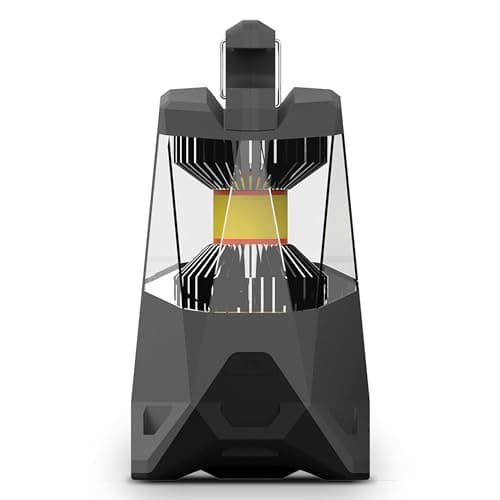
NEBO GALILEO 1000
A thousand lumens for ninety minutes, or a hundred lumens for ten and a half hours, and it takes D cells when the pack is flat. In an outage the second number and the D cells are the ones that matter.
Price as of October 18, 2026 — 19 lumens per dollar. #ad How we earn
Disclosure — we earn a commission on qualifying purchases made through the Amazon links on this page, at no extra cost to you. It does not change which lights we pick or what we say about them. The full version.
How we rank. Published ANSI FL1 output divided by the live retail price, with sealed-battery lights marked down because a light you cannot re-cell is a light with an expiry date. Units we claim to have tested: 0 — we compile manufacturers' published figures and show the arithmetic instead. How we work this out.
What red light actually does
Full dark adaptation takes 20 to 30 minutes and a moment of bright white light undoes most of it. Red light at low intensity disturbs it far less, so a red mode lets you read a map, check a chart or find something in a pack and still see the ground when you look up. It also stops you blinding whoever is sitting opposite you.
The mechanism is that human rod cells — the ones that do the work in near-darkness — are much less sensitive at the long-wavelength end of the spectrum. Red light of the same apparent brightness therefore bleaches far less of the photopigment your night vision depends on. Astronomers, aviators, hunters and anyone sharing a tent have used this for a century.
The practical rule: keep it dim. A very bright red light disrupts dark adaptation as well; the benefit comes from red at low intensity, not red at any intensity.
The implementation detail that decides it
A red mode you have to cycle through white light to reach defeats the entire purpose. You blind yourself getting to it every single time. The lamps worth buying either put red on a separate press — Fenix uses a double-tap on the HM65R V2.0 — or offer a direct-to-red function, which several NEBO lights publish as a named feature.
The second detail is whether red is a true separate emitter or a filtered white one. A dedicated red LED is far more efficient, which is why the runtimes are so long: Streamlight publishes 192 hours at 0.7 lumens on the Siege AA's red mode and 288 hours for its red SOS flash, and NEBO publishes 30 hours on the GALILEO 1000's low red mode.
| # | Light | Max output | Battery | Lumens / $ | Price |
|---|---|---|---|---|---|
| 1 | NEBO GALILEO 1000 Best dual-power lantern for an outage | 1,000 | Replaceable | 19 | $51.99 on Amazon Price as of October 18, 2026 — 19 lumens per dollar. #ad How we earn |
| 2 | 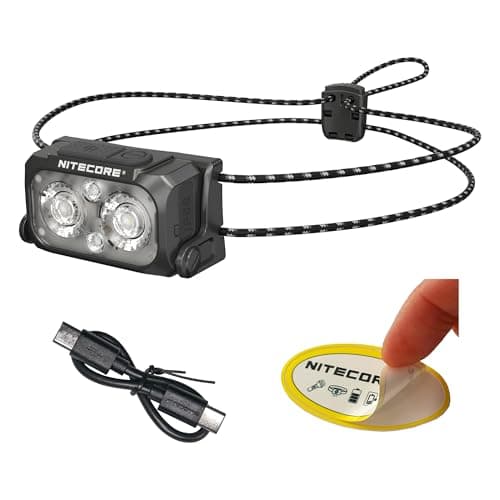 NITECORE NU25 MCT UL Lightest headlamp with a real published runtime | 400 | Sealed | 11 | $36.95 on Amazon Price as of October 18, 2026 — 11 lumens per dollar. #ad How we earn |
| 3 | 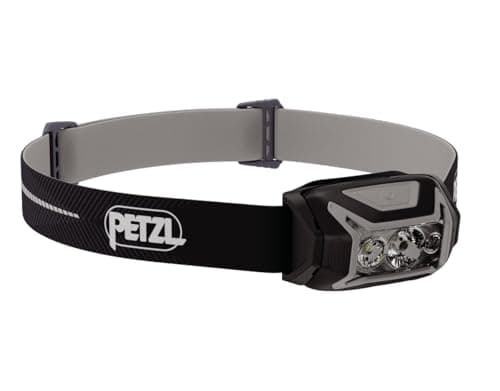 Petzl ACTIK CORE Best hybrid: rechargeable or AAA cells | 625 | Replaceable | 8 | $79.98 on Amazon Price as of October 18, 2026 — 8 lumens per dollar. #ad How we earn |
| 4 | 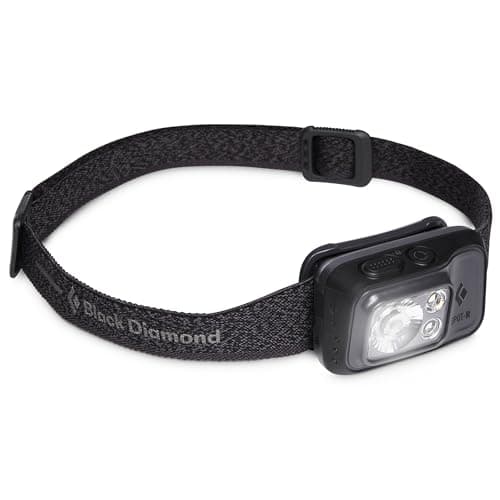 Black Diamond Spot 400-R Most complete published runtime table | 400 | Sealed | 7 | $57.88 on Amazon Price as of October 18, 2026 — 7 lumens per dollar. #ad How we earn |
| 5 | 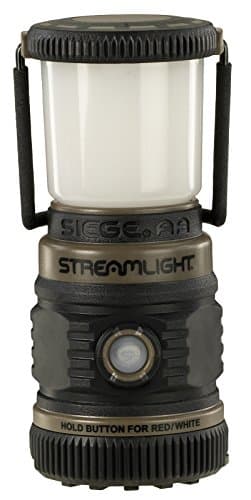 Streamlight Siege AA Best outage lantern that floats | 200 | AA / AAA | 6 | $32.49 on Amazon Price as of October 18, 2026 — 6 lumens per dollar. #ad How we earn |
Prices pulled October 18, 2026. Lumens per dollar is the manufacturer's published maximum output divided by that price, recomputed every time the price moves.
1. Best dual-power lantern for an outage
NEBO GALILEO 1000
Lumens per dollar
19
A thousand lumens for ninety minutes, or a hundred lumens for ten and a half hours, and it takes D cells when the pack is flat. In an outage the second number and the D cells are the ones that matter.
- Max output
- 1,000 lm
- Runtime
- 1.5 h
- Battery
- Replaceable cell
- Water rating
- None published
What it gets right
- Runs on D cells when the rechargeable pack is dead, which is the whole point in an outage
- Runtime published for all five modes
- USB output doubles it as a phone power bank
What it gets wrong
- NEBO states water resistance without publishing an IP figure
- Ninety minutes at full output is short for a lantern
- Half a pound before you add D cells
Published specification
- High 360 degrees: 1,000 lumens, 1.5 hours, 21 m — NEBO published specification
- High 120 degrees: 300 lumens, 6 hours, 17 m — NEBO published specification
- Low, fully dimmed: 100 lumens, 10.5 hours, 7 m — NEBO published specification
- Red high: 15 lumens, 12 hours — NEBO published specification
- Red low: 2 lumens, 30 hours — NEBO published specification
- Battery: Flex-Power: included rechargeable pack or D cells — NEBO published specification
- Weight: 0.5 lb — NEBO published specification
- Water rating: Water and impact resistant; no IP figure published — NEBO published specification
Skip this one if
you want a lantern for camping in the rain. Without a published IP rating, plan on keeping it under cover.
Buy it if: a kitchen table during a storm, and the shelf it lives on the rest of the year.
- Output 7.5
- Battery 7.5
- Build 7.0
- Usability 8.0
- Overall 7.5
Price as of October 18, 2026 — 19 lumens per dollar. #ad How we earn
2. Lightest headlamp with a real published runtime
NITECORE NU25 MCT UL
Lumens per dollar
11
Forty-seven grams including the headband, 400 lumens, and 45 hours at its 6-lumen setting. On a headlamp the weight figure matters more than the lumen figure, because the lamp you stop wearing produces no light at all.
- Max output
- 400 lm
- Runtime
- 45 h at 6 lm
- Battery
- Sealed
- Water rating
- IP66
What it gets right
- Forty-seven grams with the band on — you forget it is there
- Three color temperatures plus red, which is unusual at any price
- IP66 and a published 45-hour low-mode runtime
What it gets wrong
- Sealed 700 mAh cell; no way to carry a spare
- Four hundred lumens is modest for trail running at speed
- Flat band with no over-the-top strap on the ultralight version
Published specification
- Maximum output: 400 lumens — NITECORE published specification
- Beam distance: 132 m — NITECORE published specification
- Runtime: Up to 45 hours at 6 lumens — NITECORE published specification
- Battery: Built-in 700 mAh Li-ion, USB-C — NITECORE published specification
- Weight: 47 g (1.66 oz) including bracket and headband — NITECORE published specification
- Water rating: IP66 — NITECORE published specification
- Color temperatures: 3,000K / 4,500K / 6,500K plus auxiliary red — NITECORE published specification
Skip this one if
you need to swap a battery mid-shift. A sealed 700 mAh cell means your night ends when it does.
Buy it if: hikers, campers and anyone whose complaint about headlamps is that they bounce.
- Output 6.5
- Battery 4.5
- Weight 9.5
- Usability 8.5
- Overall 7.8
Price as of October 18, 2026 — 11 lumens per dollar. #ad How we earn
3. Best hybrid: rechargeable or AAA cells
Petzl ACTIK CORE
Lumens per dollar
8
Six hundred and twenty-five lumens stated to ANSI/PLATO FL1, 88 grams, and — the part that matters — it runs on the CORE rechargeable pack or on three AAA cells when the pack is flat. That is the answer to the sealed-battery problem, from the only brand here that bothered.
- Max output
- 625 lm
- Runtime
- Published per mode by Petzl
- Battery
- Replaceable cell
- Water rating
- IPX4
What it gets right
- Explicitly states ANSI/PLATO FL1 conformity, which most brands here do not
- Hybrid power: the pack for daily use, AAA cells as the fallback that never fails
- Petzl publishes the CORE pack's cycle rating, so its service life is a stated number
What it gets wrong
- IPX4 — weather resistant, not submersible
- Eighty-eight grams is not ultralight
- The CORE pack is a Petzl part rather than a standard cell
Published specification
- Maximum output: 625 lumens (ANSI/PLATO FL1) — Petzl published specification
- Weight: 88 g — Petzl published specification
- Battery: CORE rechargeable 1,250 mAh / 3.6 V / 4.5 Wh, or 3 x AAA — Petzl published specification
- Battery compatibility: Alkaline, lithium or Ni-MH — Petzl published specification
- Water rating: IPX4, weather resistant — Petzl published specification
- Warranty: Lamp 5 years; CORE battery 2 years or 300 cycles — Petzl published specification
- Lighting levels: MAX BURN TIME, STANDARD, MAX POWER, plus red — Petzl published specification
Skip this one if
you want a submersible headlamp. IPX4 covers rain and nothing beyond it.
Buy it if: anyone whose headlamp has to work at the end of a long trip, when charging is not an option.
- Output 7.5
- Battery 9.0
- Weight 7.0
- Usability 8.5
- Overall 8.3
Price as of October 18, 2026 — 8 lumens per dollar. #ad How we earn
4. Most complete published runtime table
Black Diamond Spot 400-R
Lumens per dollar
7
Four hundred lumens for four hours, 200 for eight, 6 for two hundred and twenty-five. Black Diamond publishes lumens, runtime and beam distance for all three modes, and IP67 on top. There is nothing to guess at here.
- Max output
- 400 lm
- Runtime
- 4 h
- Battery
- Sealed
- Water rating
- IP67
What it gets right
- Lumens, runtime and distance published for every mode
- Two hundred and twenty-five hours on low is a genuine emergency reserve
- IP67 and a battery meter that shows an actual percentage
What it gets wrong
- Micro-USB in a year when everything else is USB-C
- Integrated battery — no spare, no re-cell
- Eighty-six grams is heavy next to the ultralight class
Published specification
- High: 400 lumens, 4 hours, 100 m — Black Diamond published specification
- Medium: 200 lumens, 8 hours, 60 m — Black Diamond published specification
- Low: 6 lumens, 225 hours, 12 m — Black Diamond published specification
- Battery: Integrated 1,500 mAh Li-ion, micro-USB — Black Diamond published specification
- Water rating: IP67, tested to 1.0 m for 30 minutes — Black Diamond published specification
- Weight: 86 g — Black Diamond published specification
Skip this one if
you have standardized on USB-C. Carrying a second cable for one device is a small annoyance that compounds on a long trip.
Buy it if: camp, dog walks and anyone who wants a headlamp whose numbers are all on the box.
- Output 6.5
- Battery 5.5
- Weight 7.0
- Usability 9.0
- Overall 7.7
Price as of October 18, 2026 — 7 lumens per dollar. #ad How we earn
5. Best outage lantern that floats
Streamlight Siege AA
Lumens per dollar
6
Two hundred lumens for seven hours, fifty for thirty-seven, and a red night-vision mode Streamlight rates at 192 hours. It runs on AA cells, it is IPX7, and it floats. For a storm shelf that is the correct specification.
- Max output
- 200 lm
- Runtime
- 7 h
- Battery
- AA / AAA
- Water rating
- IPX7
What it gets right
- AA cells store for a decade and are available anywhere, including mid-outage
- IPX7 and it floats, which is the correct answer for a flooded basement
- Runtime published for all five modes, including the 8-day red mode
What it gets wrong
- Two hundred lumens is dim next to a rechargeable lantern
- No rechargeable option in this version
- Removable cover changes the beam pattern and is easy to lose
Published specification
- White high: 200 lumens, 7 hours — Streamlight published specification
- White medium: 100 lumens, 15.5 hours — Streamlight published specification
- White low: 50 lumens, 37 hours — Streamlight published specification
- Red high: 0.7 lumens, 192 hours (8 days) — Streamlight published specification
- SOS flash: 0.7 lumens, 288 hours (12 days) — Streamlight published specification
- Battery: AA alkaline — Streamlight published specification
- Water rating: IPX7, 1 m — and it floats — Streamlight published specification
- Impact: 2 m tested — Streamlight published specification
Skip this one if
you want a bright camp lantern. This is an endurance light, not an area light.
Buy it if: the storm shelf, the boat and the basement that occasionally has water in it.
- Output 4.5
- Battery 9.5
- Build 9.0
- Usability 8.5
- Overall 7.9
Price as of October 18, 2026 — 6 lumens per dollar. #ad How we earn
How we ranked these
Published output over live price, weight, battery architecture and usability — with the red implementation treated as part of usability. A lamp with a direct-to-red press outranks one with a longer published red runtime buried three presses deep, because the feature you cannot reach quickly is a feature you will stop using.
Units we claim to have tested: 0
Every publisher in this category says they tested twenty flashlights. We have not tested any, and we say so. What we do instead: compile the manufacturer's own published ANSI FL1 figures, pull the price the light is selling for right now, and divide one by the other. Every number on this page is one you can check yourself in about two minutes.
Who this actually matters for
- Astronomers and anyone reading charts outdoors, where twenty minutes of dark adaptation is the entire evening's work.
- Hunters and wildlife watchers, since many species are far less responsive to long-wavelength light than to white.
- Anyone sharing a tent, a hide, a boat or a dorm, where the social cost of white light is immediate.
- Night shift workers moving between lit and unlit areas repeatedly.
- Parents checking on a sleeping child, which is the use case nobody puts on the packaging and everybody has.
What we cannot tell you
We have not worn these lamps, so we cannot tell you which red is a pleasant deep red and which is an unpleasant orange, how even the beams are, or how quickly each interface becomes second nature. Manufacturers rarely publish a wavelength. What we can tell you is which lamps publish a red runtime, how long it is, and how many presses away the mode sits according to the published interface description.
Common questions
Why do headlamps have a red light?
Because red light at low intensity disturbs dark adaptation far less than white does. Human rod cells are much less sensitive at long wavelengths, so you can read a map or find something in a pack under red and still see the ground when you look up — where the same task under white light would cost you most of the twenty to thirty minutes your eyes spent adapting.
Does red light really preserve night vision?
Yes, with a caveat: it is red at LOW intensity that helps. A very bright red light bleaches photopigment too. The effect is real and well established in aviation and astronomy, which is why lamps with dedicated red emitters publish such long runtimes at those settings — Streamlight quotes 192 hours at 0.7 lumens on the Siege AA.
How long does a headlamp red mode last?
Much longer than white, because the output is far lower and dedicated red emitters are efficient. Published figures include 192 hours at 0.7 lumens for Streamlight's Siege AA red mode, 288 hours for its red SOS flash, and 30 hours on NEBO's GALILEO 1000 low red setting. In practice a red mode outlasts anything else the light does.
Sources
- Black Diamond published product specifications — Spot 400-R read 2026-09-01; Storm 500-R read 2026-09-14
- NITECORE published product specifications — NU25 MCT UL read 2026-09-01; MT2A Pro read 2026-09-13; EDC31 read 2026-10-03; MH25 Pro and Tiki LE read 2026-10-10
- Petzl published product specifications — ANSI/PLATO FL 1 conformity stated by the manufacturer. ACTIK CORE read 2026-09-01 and re-read per mode 2026-09-21; TIKKA CORE read 2026-09-21
- Streamlight published product specifications — per-mode lumens, runtime, beam distance, impact and IP ratings, read 2026-09-01; Waypoint 400 and Waypoint C-cell read 2026-09-22; FlipMate read 2026-10-18
- NEBO published product specifications — mode-by-mode lumen, runtime and beam figures, read 2026-09-01; LUXTREME SL75 and SL50 read 2026-09-22; OMNI 2K and SLYDE KING 4K read 2026-10-18
- Fenix published product specifications — read 2026-09-01; PD36R Pro product page read 2026-10-18
- Lumen & Ledger method — how every figure on this page is derived
Who writes this
Scooter M. — I am an enthusiast who is genuinely into this. I read the manuals, compile the published specs, and do the math. No lab coat, no test bench, no drawer of free samples. What I can tell you is exactly what a light claims on paper, exactly what it costs right now, and what those two numbers mean when you divide one by the other.
Read next
Best rechargeable headlamps for camping
Low-mode runtime is the camping specification. Turbo is almost irrelevant.
Best rechargeable headlamps for climbing
Lockout first, helmet fit second, and the low-mode reserve that covers an unplanned bivvy.
Best flashlights for tracking deer
Why red light is the wrong color for a blood trail, from the hemoglobin absorption data itself.
Best flashlights for walking at night
The one job where less output is better, and why a headlamp may be the right answer.
Best headlamps for reading
Judged on the smallest number on the box, which is the only one that matters here.
The Ledger
Every light we cover in one ranked table, sorted by lumens per dollar.