Flashlights
Best Flashlights for Walking at Night
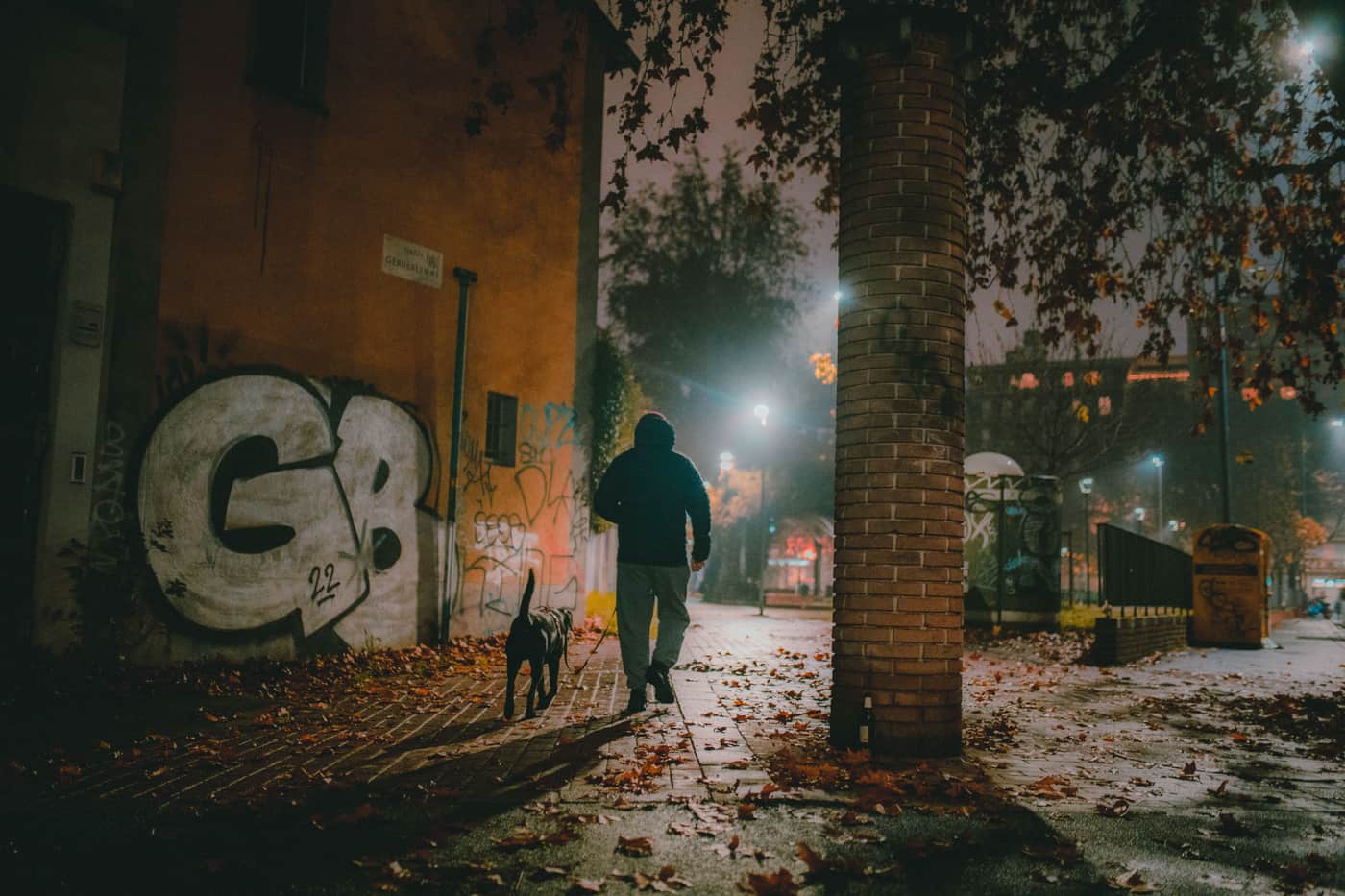
Almost every other page on this site rewards output. This one punishes it, because a 2,000-lumen light on a suburban street is working against your own eyes.
By Scooter M. · Published September 13, 2026
Short answer
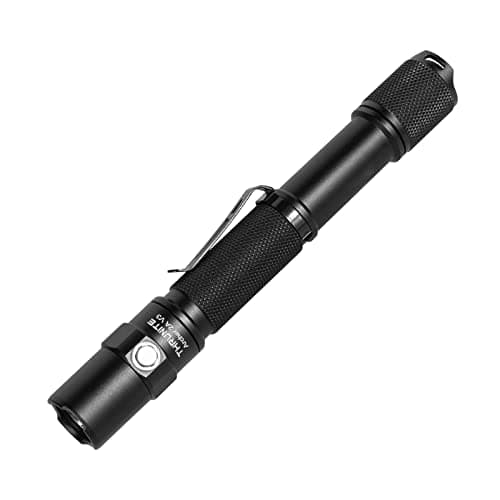
ThruNite Archer 2A V3
Five hundred lumens on two AA cells. It will never win a lumens-per-dollar contest against an 18650 light, and it does not need to: it is the light that still works when you are three days into an outage and the only thing left in the store is alkalines.
Price as of September 14, 2026 — 22 lumens per dollar. #ad How we earn
Disclosure — we earn a commission on qualifying purchases made through the Amazon links on this page, at no extra cost to you. It does not change which lights we pick or what we say about them. The full version.
How we rank. Published ANSI FL1 output divided by the live retail price, with sealed-battery lights marked down because a light you cannot re-cell is a light with an expiry date. Units we claim to have tested: 0 — we compile manufacturers' published figures and show the arithmetic instead. How we work this out.
Why less light is the right answer here
For walking at night, buy a light you will use at 50 to 200 lumens with a long runtime there, not one with a big maximum. Anything much brighter on a paved street scatters back off the pavement, contracts your pupils, and makes everything outside the beam darker than it was before you switched on. Streamlight publishes 50 lumens for three and a half hours on the MicroStream; that is a far more useful specification for this job than four figures of turbo.
This is the page where the metric that names this site works against the reader, and it is worth saying plainly. Lumens per dollar is the right way to shop for a light you want to be bright. It is the wrong way to shop for a light whose whole purpose is to show you the next ten feet of sidewalk without wrecking your night vision or dazzling the person coming the other way.
Criterion one: the mode you will actually walk on
Your eyes adapt to the brightest thing in view. On a dark street that becomes the pool of light at your feet, and everything beyond it — the curb, the step, the dog, the cyclist — drops into what feels like total blackness. Turn the light down and the adapted range widens, and you see more of the world, not less.
So the figure to compare is the runtime at a low or medium setting. Streamlight publishes 250 lumens for an hour and a half and 50 lumens for three and a half hours on the MicroStream. Wurkkos publishes six hours forty-three minutes at one lumen on the TS10 V2. Black Diamond publishes 6 lumens for two hundred and twenty-five hours on the Spot 400-R. All three of those describe a light that will do a thirty-minute walk every night for months between charges.
Criterion two: a free hand, and the honest answer for dog walkers
If you are walking a dog you already have a lead in one hand, and frequently a bag in the other. A handheld light means you are one hand short of the job, and the usual solution is to tuck it under an arm or in your teeth, which is how lights get dropped and how dogs get away.
The honest recommendation, on a page about flashlights, is that a headlamp is the better tool for dog walking specifically. It is hands-free, the beam goes where you look, and the low modes are exactly what this job wants. Black Diamond's Spot 400-R is on this page for that reason and it is the pick we would actually make for a nightly dog walk. Our comparison of headlamps and flashlights sets out where each form factor wins.
| # | Light | Max output | Battery | Lumens / $ | Price |
|---|---|---|---|---|---|
| 1 | ThruNite Archer 2A V3 Best light that runs on batteries from any gas station | 500 | AA / AAA | 22 | $22.95 on Amazon Price as of September 14, 2026 — 22 lumens per dollar. #ad How we earn |
| 2 | 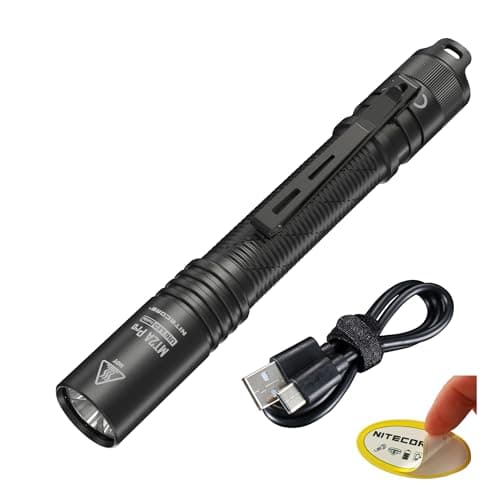 NITECORE MT2A Pro Best dual-power pocket light | 1,000 | Replaceable | 22 | $44.95 on Amazon Price as of September 14, 2026 — 22 lumens per dollar. #ad How we earn |
| 3 | 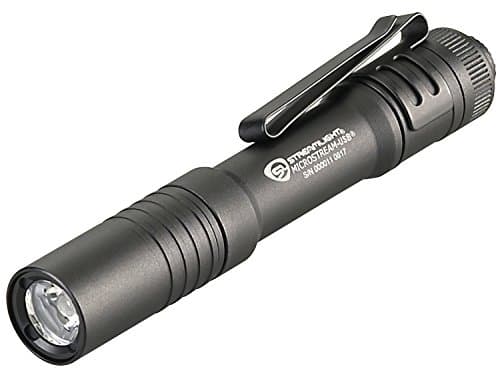 Streamlight MicroStream USB Best pen-clip light with published runtimes | 250 | Sealed | 7 | $37.81 on Amazon Price as of September 14, 2026 — 7 lumens per dollar. #ad How we earn |
| 4 | 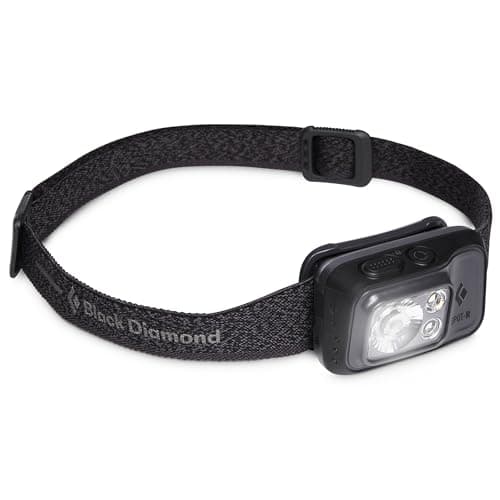 Black Diamond Spot 400-R Most complete published runtime table | 400 | Sealed | 7 | $59.88 on Amazon Price as of September 14, 2026 — 7 lumens per dollar. #ad How we earn |
| 5 | No listing image Wurkkos TS10 V2 Best pocket light under two ounces | 1,400 | Replaceable | Needs a live price | Check price on Amazon We show a price only when we have pulled a live one. #ad How we earn |
Prices pulled September 14, 2026. Lumens per dollar is the manufacturer's published maximum output divided by that price, recomputed every time the price moves.
One more argument for turning the light down that has nothing to do with your own eyes: on a shared path, a bright beam swung at head height is genuinely unpleasant for everyone you meet, and a lot of walkers stop carrying a light rather than keep being the person doing it. Aim at the ground two or three meters ahead and the problem disappears at any output.
Criterion three: being seen matters as much as seeing
On any route with roads, the light is doing two jobs, and most buyers only shop for the first. A forward-facing white beam tells a driver nothing about a pedestrian approaching from behind them, and a dark-clothed walker on an unlit verge is genuinely hard to see until close.
Several lamps here carry a red mode, and a rear red light is worth more for this than any amount of forward output. Where a light has only a forward red, a separate clip-on rear marker costs a fraction of any light on this page and does the job properly. That is a cheaper and more effective purchase than upgrading the flashlight, and we would rather say so than sell you more lumens.
Carry it where you will actually reach for it
A night-walk light fails most often by being indoors. It lives in a coat pocket, then the weather changes and the coat changes, and the light is in the old coat on the hook by the back door. The households that never have this problem keep the light with the lead, the keys or the bags rather than with the clothing, because those are the objects that always come on the walk.
This is also the argument for a light cheap enough to duplicate. At the prices on this page, two lights in two places costs less than one premium handheld and removes the failure entirely. Our pocket flashlight ranking covers the sizes that disappear into a coat without being noticed.
Criterion four: it has to be there every night
A night-walk light is used daily and briefly, which is a different duty cycle from anything else on this site. That rewards two things: a body small enough to live in a coat pocket permanently, and a power source you will never be caught out by.
Streamlight publishes 98.3 millimeters and 34 grams for the MicroStream, which lives in a jacket without complaint. ThruNite's Archer 2A V3 runs on two AA cells, which means it is never flat for long and never needs a cable. NITECORE's MT2A Pro takes either its removable 14500 or two AA cells, which is the same insurance with far more output behind it. A light that is flat on the one evening you needed it has failed at the only job it had.
1. Best light that runs on batteries from any gas station
ThruNite Archer 2A V3
Lumens per dollar
22
Five hundred lumens on two AA cells. It will never win a lumens-per-dollar contest against an 18650 light, and it does not need to: it is the light that still works when you are three days into an outage and the only thing left in the store is alkalines.
- Max output
- 500 lm
- Runtime
- Not published per mode
- Battery
- AA / AAA
- Water rating
- None published
What it gets right
- Runs on the most widely stocked battery on earth
- No lithium cell to self-discharge in a glovebox for two years
- Forward clicky switch, so you can signal without cycling modes
What it gets wrong
- AA alkalines sag hard under load; 500 lumens is a brief 500 lumens on them
- No published runtime or water rating on the product page
- Rechargeable it is not — the running cost is on you
Published specification
- Maximum output: 500 lumens, turbo — ThruNite published specification
- Battery: 2 x AA alkaline or 2 x AA NiMH (not included) — ThruNite published specification
- Modes: Five — ThruNite published specification
- Switch: Forward clicky with momentary-on — ThruNite published specification
- Protection: Reversed-polarity protection — ThruNite published specification
- Clip: Reversible, removable, titanium coated — ThruNite published specification
- Per-mode runtime: Not published on the product page
- Water rating: Not published on the product page
Skip this one if
this is your only light and you will use it daily. Feeding a daily-use light on disposable AAs is the single most expensive way to own a flashlight, which is the entire reason this site exists.
Buy it if: the glovebox, the storm kit, and the drawer you open twice a year.
- Output 6.0
- Battery 7.0
- Build 8.0
- Usability 8.5
- Overall 7.4
Price as of September 14, 2026 — 22 lumens per dollar. #ad How we earn
2. Best dual-power pocket light
NITECORE MT2A Pro
Lumens per dollar
22
A thousand lumens and 255 meters out of a penlight body that runs on its own removable 14500 or on two AA cells from any shop on earth. IP68 on top. It is the rare light that answers the shelf-life problem and the output problem in the same package.
- Max output
- 1,000 lm
- Runtime
- 20 h
- Battery
- Replaceable cell
- Water rating
- IP68
What it gets right
- Dual power: a removable 14500 for output, or two AA cells when there is no charger
- IP68 to two meters, which almost nothing at this size publishes
- Two hundred and fifty-five meters of throw from a penlight-shaped body
- The charging port is in the cell, so a spare cell charges while the light is in use
What it gets wrong
- NITECORE publishes only the maximum runtime, not a figure per mode
- On alkaline AA cells the output is far below the 1,000-lumen headline
- A penlight body is long for its diameter and rolls off a sloped surface
Published specification
- Maximum output: 1,000 lumens — NITECORE published specification
- Peak beam intensity: 16,500 cd — NITECORE published specification
- Beam distance: 255 m — NITECORE published specification
- Battery: 2 x AA, or 1 x NL1416R 14500 Li-ion with USB-C charging in the cell — NITECORE published specification
- Water rating: IP68, submersible to 2 m — NITECORE published specification
- Impact: 1 m — NITECORE published specification
- Weight: 40 g (1.41 oz) without battery — NITECORE published specification
- Length: 142.8 mm — NITECORE published specification
- Modes: Three brightness levels, single tail switch — NITECORE published specification
- Maximum runtime: 20 hours at 50 lumens — NITECORE published specification
- Per-mode runtime: Not published on the product page
Skip this one if
you want the smallest possible pocket light. At 142.8 mm this is a long, thin light rather than a short one, and that shape suits a shirt pocket better than a jeans pocket.
Buy it if: anyone who wants one light for both daily use and the drawer, and refuses to be stopped by a flat cell.
- Output 8.0
- Battery 9.5
- Build 9.0
- Usability 8.0
- Overall 8.6
Price as of September 14, 2026 — 22 lumens per dollar. #ad How we earn
3. Best pen-clip light with published runtimes
Streamlight MicroStream USB
Lumens per dollar
7
Two hundred and fifty lumens for an hour and a half, fifty for three and a half, at 1.2 ounces. The battery is sealed, which caps its lifespan, but every other number on the sheet is published and checkable.
- Max output
- 250 lm
- Runtime
- 1 h 30 min
- Battery
- Sealed
- Water rating
- IPX4
What it gets right
- Every mode's runtime is published, which is why it scores well here despite modest output
- Deep pocket clip that actually holds in a shirt pocket
- 1.2 ounces — it is easy to forget you have it
What it gets wrong
- The cell is sealed in; when it fails the light is finished
- IPX4 splash rating only
- 250 lumens is not enough to light a yard
Published specification
- High: 250 lumens, 68 m, 1.5 hours — Streamlight published specification
- Low: 50 lumens, 31 m, 3.5 hours — Streamlight published specification
- Battery: Lithium-ion, charges in-product in 4 hours — Streamlight published specification
- Water rating: IPX4 — Streamlight published specification
- Impact: 1 m tested — Streamlight published specification
- Weight: 1.2 oz (34.1 g) — Streamlight published specification
- Length: 3.87 in (9.83 cm) — Streamlight published specification
Skip this one if
you want a light you can re-cell. For a keychain-sized light with a replaceable battery, look at the Sofirn SC21 Pro instead.
Buy it if: a shirt pocket, a scrubs pocket, or anyone who wants a light without a bulge.
- Output 5.5
- Battery 4.5
- Build 8.5
- Usability 9.0
- Overall 7.2
Price as of September 14, 2026 — 7 lumens per dollar. #ad How we earn
4. Most complete published runtime table
Black Diamond Spot 400-R
Lumens per dollar
7
Four hundred lumens for four hours, 200 for eight, 6 for two hundred and twenty-five. Black Diamond publishes lumens, runtime and beam distance for all three modes, and IP67 on top. There is nothing to guess at here.
- Max output
- 400 lm
- Runtime
- 4 h
- Battery
- Sealed
- Water rating
- IP67
What it gets right
- Lumens, runtime and distance published for every mode
- Two hundred and twenty-five hours on low is a genuine emergency reserve
- IP67 and a battery meter that shows an actual percentage
What it gets wrong
- Micro-USB in a year when everything else is USB-C
- Integrated battery — no spare, no re-cell
- Eighty-six grams is heavy next to the ultralight class
Published specification
- High: 400 lumens, 4 hours, 100 m — Black Diamond published specification
- Medium: 200 lumens, 8 hours, 60 m — Black Diamond published specification
- Low: 6 lumens, 225 hours, 12 m — Black Diamond published specification
- Battery: Integrated 1,500 mAh Li-ion, micro-USB — Black Diamond published specification
- Water rating: IP67, tested to 1.0 m for 30 minutes — Black Diamond published specification
- Weight: 86 g — Black Diamond published specification
Skip this one if
you have standardized on USB-C. Carrying a second cable for one device is a small annoyance that compounds on a long trip.
Buy it if: camp, dog walks and anyone who wants a headlamp whose numbers are all on the box.
- Output 6.5
- Battery 5.5
- Weight 7.0
- Usability 9.0
- Overall 7.7
Price as of September 14, 2026 — 7 lumens per dollar. #ad How we earn
listing
image
5. Best pocket light under two ounces
Wurkkos TS10 V2
Lumens per dollar
Computed the moment we have a live price for it
Thirty-two grams, three 90-CRI emitters, and one of the very few budget lights whose maker publishes the runtime at maximum output: one hour fourteen at 1,400 lumens. Publishing that number at all puts Wurkkos ahead of several brands ten times its size.
- Max output
- 1,400 lm
- Runtime
- 1 h 14 min
- Battery
- Replaceable cell
- Water rating
- IPX8
What it gets right
- Wurkkos publishes runtime at maximum output, which most brands quietly do not
- Thirty-two grams — light enough that you stop noticing it in a pocket
- Standard 14500 cell, replaceable
- Documented automatic step-down instead of an undocumented one
What it gets wrong
- A 14500 is a small cell; sustained output is not this light's job
- RGB auxiliary LEDs are a toy, and they draw from the same cell
- Anduril again, with the same learning curve
Published specification
- Maximum output: 1,400 lumens — Wurkkos published specification
- Runtime at maximum: 1 h 14 min — Wurkkos published specification
- Runtime at 1 lumen: 6 h 43 min — Wurkkos published specification
- Battery: 1 x 14500 Li-ion, user replaceable — Wurkkos published specification
- Water rating: IPX8, 2 m — Wurkkos published specification
- Weight: 32 g +/- 1 g without battery — Wurkkos published specification
- Length: 71.5 mm — Wurkkos published specification
- Thermal behavior: Automatic step-down from turbo to high — Wurkkos published specification
Skip this one if
you need something to run for an hour on high without getting hot. A light this small has nowhere to put the heat, and the step-down is not optional.
Buy it if: the person who wants a real light on them at all times and will not carry anything heavier than a pen.
- Output 8.0
- Battery 8.0
- Build 7.5
- Usability 7.5
- Overall 8.2
We show a price only when we have pulled a live one. #ad How we earn
Three routes, three different answers
Night walks are not one use case, and the right output changes more between these than between most products.
- A lit street or a town path. You need almost nothing — 20 to 50 lumens to read a house number, check a gate latch or see what the dog has found. The streetlights are doing the work and a bright beam only fights your adaptation to them.
- An unlit lane or a park with a made surface. This is the 50-to-150-lumen case. Enough to see the edge of the path and a change in surface, with a wide enough beam that you are not swinging a spotlight around.
- A rural road with no verge, or open ground. Here you need to be seen more than you need to see: 100 to 200 lumens forward, and something red or reflective behind you. This is the case where a dedicated rear marker matters more than anything the flashlight does.
The common thread is that none of them is a four-figure job. If you have been reaching for a very bright light on a night walk and finding it tiring, this is why — and the fix costs nothing, because every light on this page has a lower mode you are not using.
The winter problem, and why AA keeps appearing here
Night-walk season is winter, which is exactly when lithium cells behave worst. Cold temporarily reduces the capacity a cell can deliver, so a light that ran a week of walks in October can surprise you in January, and a light stored in an unheated porch or a coat left in a car fares worse still.
That is part of why two of the picks on this page run on AA cells. ThruNite's Archer 2A V3 takes two AA, and NITECORE's MT2A Pro takes either two AA or its own removable 14500 with USB-C charging in the cell. Neither is the brightest option and both are close to immune to the failure that actually happens: reaching for a light on a cold evening and finding nothing. Our page on how long rechargeable flashlights last covers calendar ageing and cold in more detail.
The switch matters more than you would think
You will operate this light in the dark, in gloves, with a lead in the other hand, several hundred times a year. A forward clicky switch — press lightly for momentary light, press through for constant — lets you check something for two seconds and move on. ThruNite fits one to the Archer 2A V3 and it is a genuine advantage for this use.
The opposite of that is a light that cycles through modes, or worse through a strobe, on the way to the setting you want. For a nightly walk that is a small irritation multiplied by three hundred, and it is the most common reason a light gets replaced by a phone. If a light on this page ships with Anduril firmware, put it into a simple mode group once and leave it there.
How we ranked these
The four scored attributes published on our methodology page — output against live price, battery architecture, build as evidenced by published ratings, and usability — with one override stated openly: output above roughly 500 lumens earns no additional credit on this page, and a published low-mode runtime is weighted in its place. That is the reverse of our high-output ranking and it is the correct order for this job.
Units we claim to have tested: 0
Every publisher in this category says they tested twenty flashlights. We have not tested any, and we say so. What we do instead: compile the manufacturer's own published ANSI FL1 figures, pull the price the light is selling for right now, and divide one by the other. Every number on this page is one you can check yourself in about two minutes.
What we cannot tell you
We have not walked with any of these. We cannot tell you how each beam reads on wet asphalt against dry, how much any of them scatters in fog, how the tints compare on a dark road, or how a particular switch feels through winter gloves. The argument above is about eye adaptation and published runtime figures rather than about any individual product, and you can test the central claim yourself tonight with a light you already own by turning it down and seeing how much more of the street appears.
Common questions
How many lumens do you need for walking at night?
Between 50 and 200 lumens for a paved route, and often less. Your eyes adapt to the brightest thing in view, so a very bright pool of light at your feet makes everything beyond it look black. Streamlight publishes 50 lumens for three and a half hours on the MicroStream, which is a better specification for this job than any four-figure turbo mode.
What is the best flashlight for walking a dog at night?
Honestly, a headlamp rather than a flashlight — you already have a lead in one hand and frequently a bag in the other, and a hands-free lamp puts the beam where you look. Black Diamond publishes a full runtime table for the Spot 400-R including 6 lumens for 225 hours, which is a dog walk every night for months. If you prefer a handheld, pick a small one with a long low-mode runtime and a forward clicky switch.
Is a brighter flashlight better for walking at night?
No, and this is one of the few places on this site where that is true. Above roughly 500 lumens on a street you are fighting backscatter off the pavement, contracting your own pupils and dazzling people coming the other way. Buy for a long, comfortable low mode instead, and spend the difference on a rear red marker if any of your route is on a road.
How many lumens do I actually need?
For walking a dog, finding a fuse box or reading a map, 100 to 300 lumens is plenty and will run far longer. For a garage, a yard or a campsite, 500 to 1,000 lumens is comfortable. Above about 2,000 lumens you are buying a burst rather than a mode, because almost no handheld light can shed that much heat continuously.
Sources
- Streamlight published product specifications — per-mode lumens, runtime, beam distance, impact and IP ratings, read 2026-09-01
- ThruNite published product specifications — read 2026-09-01
- Black Diamond published product specifications — Spot 400-R read 2026-09-01; Storm 500-R read 2026-09-14
- Wurkkos published product specifications and user manuals — read 2026-09-01
- NITECORE published product specifications — NU25 MCT UL read 2026-09-01; MT2A Pro read 2026-09-13
- Lumen & Ledger method — how every figure on this page is derived
Who writes this
Scooter M. — I am an enthusiast who is genuinely into this. I read the manuals, compile the published specs, and do the math. No lab coat, no test bench, no drawer of free samples. What I can tell you is exactly what a light claims on paper, exactly what it costs right now, and what those two numbers mean when you divide one by the other.
Read next
Headlamp vs flashlight
Hands beat lumens more often than people expect. The four jobs that decide which you buy.
Best pocket flashlights
Ranked on published millimeters and grams, because length is what decides if it gets carried.
How many lumens do you actually need?
A table by use case. Most people need far fewer than the box is selling them.
Best rechargeable flashlights for home use
The drawer light that has to work for whoever grabs it, which rules out most of our top picks.
Best rechargeable headlamps
Ranked on weight and published runtime, because a lamp you stop wearing lights nothing.
The Ledger
Every light we cover in one ranked table, sorted by lumens per dollar.