Headlamps
Headlamp vs Flashlight
Most people buy the flashlight first and use the headlamp more. There is also one job a headlamp is genuinely bad at, and it is not the one you would guess.
By Scooter M. · Published September 6, 2026
Short answer
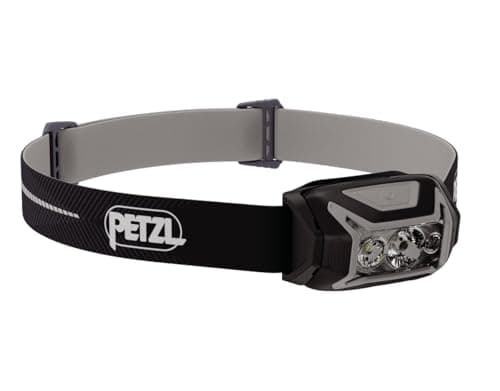
Petzl ACTIK CORE
Six hundred and twenty-five lumens stated to ANSI/PLATO FL1, 88 grams, and — the part that matters — it runs on the CORE rechargeable pack or on three AAA cells when the pack is flat. That is the answer to the sealed-battery problem, from the only brand here that bothered.
We show a price only when we have pulled a live one. #ad How we earn
Disclosure — we earn a commission on qualifying purchases made through the Amazon links on this page, at no extra cost to you. It does not change which lights we pick or what we say about them. The full version.
How we rank. Published ANSI FL1 output divided by the live retail price, with sealed-battery lights marked down because a light you cannot re-cell is a light with an expiry date. Units we claim to have tested: 0 — we compile manufacturers' published figures and show the arithmetic instead. How we work this out.
The short answer
Buy a headlamp first if the light is for doing things — walking, camping, working on something, checking a fuse box. Buy a flashlight first if the light is for seeing things at a distance, or for handing to someone else, or for keeping in a drawer for emergencies. A headlamp wins on hands free and loses on reach and on showing you the shape of a surface, because light coming from beside your eyes casts almost no visible shadow.
The usual framing of this question is about brightness, and brightness is close to irrelevant to it. Both form factors are available at every output level. What differs is where the light comes from, and that changes what you can see and what you can do at the same time.
The four jobs that settle it
| The job | Better tool | Why |
|---|---|---|
| Walking, hiking, dog at night | Headlamp | Light goes where you look and both hands stay free |
| Working on something with two hands | Headlamp | Any handheld light means one hand is now a light stand |
| Seeing something a long way off | Flashlight | Bigger head, tighter beam, far more candela per dollar |
| Judging texture, depth or a fault line | Flashlight | An off-axis beam casts shadow; a headlamp flattens it |
| Handing light to someone else | Flashlight | Nobody wants to put on your headband |
| A drawer for emergencies | Flashlight | Anyone can pick it up and use it without adjusting anything |
The thing nobody warns you about: headlamps flatten the world
This is the strongest argument for owning a handheld light and it is almost never made. A headlamp puts the light source within a few centimeters of your eyes, so the beam and your line of sight are nearly coaxial. Every shadow the light casts falls directly behind the object making it, out of your view.
The practical result is that surfaces look flat. A crack in concrete, a raised edge, a dent in a panel, a low branch, a change in ground level — all of these are read by your eyes through shadow, and a headlamp deletes the shadow. Hold a flashlight out to the side and slightly low and the same surface reads instantly. Anyone who has looked for a leak, a scratch or a trip hazard with a headlamp and then found it in two seconds with a handheld has met this effect without knowing it has a name.
| # | Light | Max output | Battery | Lumens / $ | Price |
|---|---|---|---|---|---|
| 1 | Petzl ACTIK CORE Best hybrid: rechargeable or AAA cells | 625 | Replaceable | Needs a live price | Check price on Amazon We show a price only when we have pulled a live one. #ad How we earn |
| 2 | 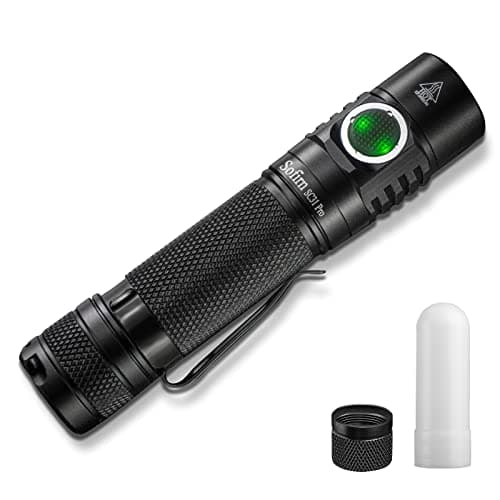 Sofirn SC31 Pro Best lumens per dollar overall | 2,000 | Replaceable | Needs a live price | Check price on Amazon We show a price only when we have pulled a live one. #ad How we earn |
| 3 | 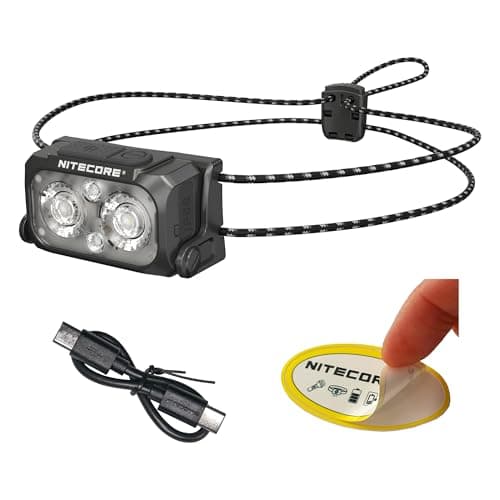 NITECORE NU25 MCT UL Lightest headlamp with a real published runtime | 400 | Sealed | Needs a live price | Check price on Amazon We show a price only when we have pulled a live one. #ad How we earn |
| 4 | No listing image Wurkkos FC11 Best color quality per dollar | 1,300 | Replaceable | Needs a live price | Check price on Amazon We show a price only when we have pulled a live one. #ad How we earn |
Lumens per dollar is the manufacturer's published maximum output divided by the price the light is selling for. Where we have not pulled a live price, the column says so instead of showing you a number we cannot stand behind. See how we work this out.
Where the headlamp wins, and it wins bigger than people expect
Two free hands is not a convenience, it is a capability. Every task that involves holding something — a rope, a tool, a fish, a steering wheel, a child's hand — is a task where a handheld light means you have one hand fewer than the job needs, and the usual solution is to put the light in your mouth, which is how lights get dropped.
Weight is the constraint that decides whether the headlamp gets used at all. NITECORE's NU25 MCT UL weighs 47 grams including bracket and headband; Black Diamond's Spot 400-R is 86 grams; Petzl's ACTIK CORE is 88 grams. Those are near enough to double, and you feel it within an hour. A lamp you take off after an hour is producing no light, which is why our headlamp rankings put weight above output.
Where the flashlight wins on physics rather than preference
Reach is a function of how tightly the optic focuses the light, which is a function of how big the reflector or lens can be. A handheld light has room for a bigger head than anything you would strap to your face, so it converts output into distance far more efficiently. The COAST HP7R publishes a 352-meter beam from only 300 lumens — a figure no headlamp on this site approaches — and Fenix publishes 226 meters from the 2,200-lumen HM65R V2.0 headlamp. Seven times the output, two thirds of the distance. That is the optic, not the emitter.
Our guide to lumens versus candela covers why those two numbers move independently, and it is the single most useful thing to understand before buying either kind of light.
1. Best hybrid: rechargeable or AAA cells
Petzl ACTIK CORE
Lumens per dollar
Computed the moment we have a live price for it
Six hundred and twenty-five lumens stated to ANSI/PLATO FL1, 88 grams, and — the part that matters — it runs on the CORE rechargeable pack or on three AAA cells when the pack is flat. That is the answer to the sealed-battery problem, from the only brand here that bothered.
- Max output
- 625 lm
- Runtime
- Published per mode by Petzl
- Battery
- Replaceable cell
- Water rating
- IPX4
What it gets right
- Explicitly states ANSI/PLATO FL1 conformity, which most brands here do not
- Hybrid power: the pack for daily use, AAA cells as the fallback that never fails
- Petzl publishes the CORE pack's cycle rating, so its service life is a stated number
What it gets wrong
- IPX4 — weather resistant, not submersible
- Eighty-eight grams is not ultralight
- The CORE pack is a Petzl part rather than a standard cell
Published specification
- Maximum output: 625 lumens (ANSI/PLATO FL1) — Petzl published specification
- Weight: 88 g — Petzl published specification
- Battery: CORE rechargeable 1,250 mAh / 3.6 V / 4.5 Wh, or 3 x AAA — Petzl published specification
- Battery compatibility: Alkaline, lithium or Ni-MH — Petzl published specification
- Water rating: IPX4, weather resistant — Petzl published specification
- Warranty: Lamp 5 years; CORE battery 2 years or 300 cycles — Petzl published specification
- Lighting levels: MAX BURN TIME, STANDARD, MAX POWER, plus red — Petzl published specification
Skip this one if
you want a submersible headlamp. IPX4 covers rain and nothing beyond it.
Buy it if: anyone whose headlamp has to work at the end of a long trip, when charging is not an option.
- Output 7.5
- Battery 9.0
- Weight 7.0
- Usability 8.5
- Overall 8.3
We show a price only when we have pulled a live one. #ad How we earn
2. Best lumens per dollar overall
Sofirn SC31 Pro
Lumens per dollar
Computed the moment we have a live price for it
Two thousand published lumens out of a standard 18650 you can buy anywhere for a few dollars, in a light that costs less than most brands charge for a keychain. The cell is the whole argument: when it dies in three years you replace a battery, not a flashlight.
- Max output
- 2,000 lm
- Runtime
- Not published per mode
- Battery
- Replaceable cell
- Water rating
- IPX8
What it gets right
- Standard 18650 cell — replacements cost a few dollars and are sold everywhere
- IPX8, the strongest water rating in this price class
- USB-C charging built into the light, so no separate charger to lose
- Anduril firmware gives real ramping control rather than four fixed steps
What it gets wrong
- Sofirn publishes no per-mode runtime figures on the product page
- Anduril is genuinely confusing for the first week
- Tint varies between batches, which is the price of this price
Published specification
- Maximum output: 2,000 lumens — Sofirn published specification
- Beam distance: 226 m — Sofirn published specification
- Battery: 1 x 18650 Li-ion, user replaceable — Sofirn published specification
- Charging: USB-C, 2.5 hours with a 2A adapter — Sofirn published specification
- Water rating: IPX8 — Sofirn published specification
- Weight: 59 g without battery — Sofirn published specification
- Length: 117.5 mm — Sofirn published specification
- Emitter: SST40, 5000K or 6500K — Sofirn published specification
- Per-mode runtime: Not published on the product page
Skip this one if
you want to press one button and get one brightness. Anduril has a shortcut for everything and a menu for everything else, and if that sounds tiring you will be happier with a three-mode light.
Buy it if: anyone who intends to keep the light for longer than the battery lasts, and does not mind reading a manual once.
- Output 9.0
- Battery 9.5
- Build 8.0
- Usability 7.0
- Overall 8.6
We show a price only when we have pulled a live one. #ad How we earn
3. Lightest headlamp with a real published runtime
NITECORE NU25 MCT UL
Lumens per dollar
Computed the moment we have a live price for it
Forty-seven grams including the headband, 400 lumens, and 45 hours at its 6-lumen setting. On a headlamp the weight figure matters more than the lumen figure, because the lamp you stop wearing produces no light at all.
- Max output
- 400 lm
- Runtime
- 45 h at 6 lm
- Battery
- Sealed
- Water rating
- IP66
What it gets right
- Forty-seven grams with the band on — you forget it is there
- Three color temperatures plus red, which is unusual at any price
- IP66 and a published 45-hour low-mode runtime
What it gets wrong
- Sealed 700 mAh cell; no way to carry a spare
- Four hundred lumens is modest for trail running at speed
- Flat band with no over-the-top strap on the ultralight version
Published specification
- Maximum output: 400 lumens — NITECORE published specification
- Beam distance: 132 m — NITECORE published specification
- Runtime: Up to 45 hours at 6 lumens — NITECORE published specification
- Battery: Built-in 700 mAh Li-ion, USB-C — NITECORE published specification
- Weight: 47 g (1.66 oz) including bracket and headband — NITECORE published specification
- Water rating: IP66 — NITECORE published specification
- Color temperatures: 3,000K / 4,500K / 6,500K plus auxiliary red — NITECORE published specification
Skip this one if
you need to swap a battery mid-shift. A sealed 700 mAh cell means your night ends when it does.
Buy it if: hikers, campers and anyone whose complaint about headlamps is that they bounce.
- Output 6.5
- Battery 4.5
- Weight 9.5
- Usability 8.5
- Overall 7.8
We show a price only when we have pulled a live one. #ad How we earn
listing
image
4. Best color quality per dollar
Wurkkos FC11
Lumens per dollar
Computed the moment we have a live price for it
A 90-CRI emitter at a price where nobody else bothers, which means colors look like colors rather than like a parking lot. Same replaceable 18650 story as the Sofirn, plus a magnetic tail that turns it into a work light.
- Max output
- 1,300 lm
- Runtime
- Not published per mode
- Battery
- Replaceable cell
- Water rating
- IPX7
What it gets right
- 90 CRI at a price where 70 CRI is normal — skin, wiring and paint read correctly
- Magnetic tailcap sticks it to anything ferrous and frees both hands
- Standard 18650, USB-C charging in the light
- Two mode groups, so you can pick a simple ramp or a stepped set
What it gets wrong
- IPX7 rather than IPX8 — fine for rain, not for a river
- High CRI costs raw lumens; the Sofirn is visibly brighter on turbo
- No per-mode runtime published on the product page
Published specification
- Maximum output: 1,300 lumens — Wurkkos published specification
- Beam distance: 144 m (157 yd) — Wurkkos published specification
- Battery: 1 x 18650 Li-ion, user replaceable — Wurkkos published specification
- Water rating: IPX7 — Wurkkos published specification
- Weight: 65 g +/- 1 g without battery — Wurkkos published specification
- Length: 116.23 mm — Wurkkos published specification
- Emitter: Nichia 519A / LH351D, 90 CRI — Wurkkos published specification
- Body: 6061 aluminum, type III hard anodized — Wurkkos published specification
Skip this one if
the only number you care about is peak output. You are paying part of this light's budget for color accuracy, and if you will never notice that, the money is better spent elsewhere.
Buy it if: anyone who uses a flashlight to look at things closely — wiring, paint, engine bays, a face — rather than to light up a field.
- Output 7.5
- Battery 9.5
- Build 8.0
- Usability 8.0
- Overall 8.4
We show a price only when we have pulled a live one. #ad How we earn
If you can only buy one
- Camping, hiking, dog walks, anything on foot after dark: headlamp, and buy on weight and low-mode runtime rather than on output.
- Home, car, emergency drawer: flashlight, because anyone in the house can pick it up and use it without adjusting a headband, and a stored light should work for whoever finds it.
- Working on cars, appliances, wiring or anything at arm's length: honestly, both — but if it is one, a handheld with good color rendering, because you need the shadow to see the fault.
- Seeing across a field, a yard or a lake: flashlight, and buy on beam distance rather than lumens.
The battery split runs along the same line
There is a pattern in the specifications that is easy to miss until you line the two categories up. Headlamps overwhelmingly seal their cells in — NITECORE's NU25 uses a built-in 700 mAh cell, Black Diamond's Spot 400-R an integrated 1,500 mAh one — because the cell is part of the weight budget that sits on your forehead, and a threaded tube that opens is heavier than a sealed body.
Handheld lights at the same price mostly do the opposite. The Sofirn and the Wurkkos here are built around standard replaceable cells, because a handheld light has no weight constraint worth the name. So the form factor you choose is quietly also a choice about whether the light is a purchase or a consumable, and the exceptions are worth knowing: Petzl's ACTIK CORE takes ordinary AAA cells as a fallback, and Fenix's HM65R V2.0 takes a removable 21700. Our page on whether rechargeable flashlights are worth it works the ownership arithmetic through properly.
What each form factor costs per lumen
Headlamps are more expensive per lumen than handhelds and it is not a markup. A headlamp has to package the emitter, driver, cell, switch and thermal path into something light enough to wear, and every one of those constraints costs money. A handheld tube of the same money can carry a far bigger cell and shed far more heat, so it buys more output and more runtime.
That is why the Ledger's ranking looks unkind to headlamps, and why our headlamp rankings score weight as an attribute in its own right rather than letting lumens per dollar decide. Comparing the two categories on a single ratio would tell you to buy a flashlight every time, which is exactly the wrong answer for anyone who needs their hands.
The setup that actually works
Own one of each and stop thinking about it. A light headlamp for hands-free work and movement, a handheld for reach and for reading surfaces, both charged, ideally both on the same cable. Between them that is less money than a single premium light in either category, and it covers every job on this page instead of half of them.
How we ranked these
The picks below are drawn from both categories deliberately, and each is scored on the rubric published on our methodology page — output against live price, battery architecture, weight or build, and usability. There is no single winner on this page because the two form factors are not competing for the same job, and a comparison that pretended otherwise would be a worse page.
Units we claim to have tested: 0
Every publisher in this category says they tested twenty flashlights. We have not tested any, and we say so. What we do instead: compile the manufacturer's own published ANSI FL1 figures, pull the price the light is selling for right now, and divide one by the other. Every number on this page is one you can check yourself in about two minutes.
What we cannot tell you
We have not worn or carried any of these lights. We cannot tell you how a particular headband sits under a hat, how quickly a given switch is found with gloves on, or how any beam looks on a dark trail. The shadow argument above is about optics and geometry rather than about a specific product, and you can verify it yourself in two minutes with lights you already own — which is a better basis than taking our word for it.
Common questions
Is a headlamp better than a flashlight?
For anything you do with your hands, yes — walking, camping, working on something, cooking, setting up in the dark. For seeing at a distance and for judging texture and depth, no. A headlamp sits beside your eyes, so the beam casts almost no visible shadow and surfaces look flat, and a smaller head means far less reach per lumen. Most people underbuy the headlamp and overbuy the flashlight.
Can you use a headlamp as a flashlight?
Yes, and many are designed for it — several models detach from the band or have a magnetic body so they can be set down or clipped to a pocket. It works acceptably for close tasks. It works poorly for distance, because the small optic that keeps a headlamp light on your head is the same optic that limits how far it throws.
Which should I buy first, a headlamp or a flashlight?
If the light is for going outside and doing things, buy the headlamp. If it is going in a drawer, a car or a kitchen cupboard for whoever needs it, buy the flashlight — a stored light has to be usable by someone who did not choose it, and nobody puts on a stranger's headband in an emergency. If you can stretch to both, that combination costs less than one premium light in either category.
How many lumens do I actually need?
For walking a dog, finding a fuse box or reading a map, 100 to 300 lumens is plenty and will run far longer. For a garage, a yard or a campsite, 500 to 1,000 lumens is comfortable. Above about 2,000 lumens you are buying a burst rather than a mode, because almost no handheld light can shed that much heat continuously.
Sources
- Petzl published product specifications — ANSI/PLATO FL 1 conformity stated by the manufacturer. ACTIK CORE read 2026-09-01 and re-read per mode 2026-09-21; TIKKA CORE read 2026-09-21
- NITECORE published product specifications — NU25 MCT UL read 2026-09-01; MT2A Pro read 2026-09-13; EDC31 read 2026-10-03; MH25 Pro and Tiki LE read 2026-10-10
- Black Diamond published product specifications — Spot 400-R read 2026-09-01; Storm 500-R read 2026-09-14
- Sofirn published product specifications — read 2026-09-01
- COAST published product specifications — read 2026-09-01
- Fenix published product specifications — read 2026-09-01; PD36R Pro product page read 2026-10-18
- Lumen & Ledger method — how every figure on this page is derived
Who writes this
Scooter M. — I am an enthusiast who is genuinely into this. I read the manuals, compile the published specs, and do the math. No lab coat, no test bench, no drawer of free samples. What I can tell you is exactly what a light claims on paper, exactly what it costs right now, and what those two numbers mean when you divide one by the other.
Read next
Best rechargeable headlamps
Ranked on weight and published runtime, because a lamp you stop wearing lights nothing.
Best headlamps for mechanics
Flood beam, low weight and a cell you can swap without ending the job.
Best rechargeable headlamps for running
Bounce, not brightness, is what ruins a run. Ranked on grams and strap before lumens.
How to choose a headlamp
Six decisions in order, from battery architecture down, each ending in a lamp that fits the answer.
How many lumens do you actually need?
A table by use case. Most people need far fewer than the box is selling them.
The Ledger
Every light we cover in one ranked table, sorted by lumens per dollar.