Headlamps
Best Headlamps for Mechanics
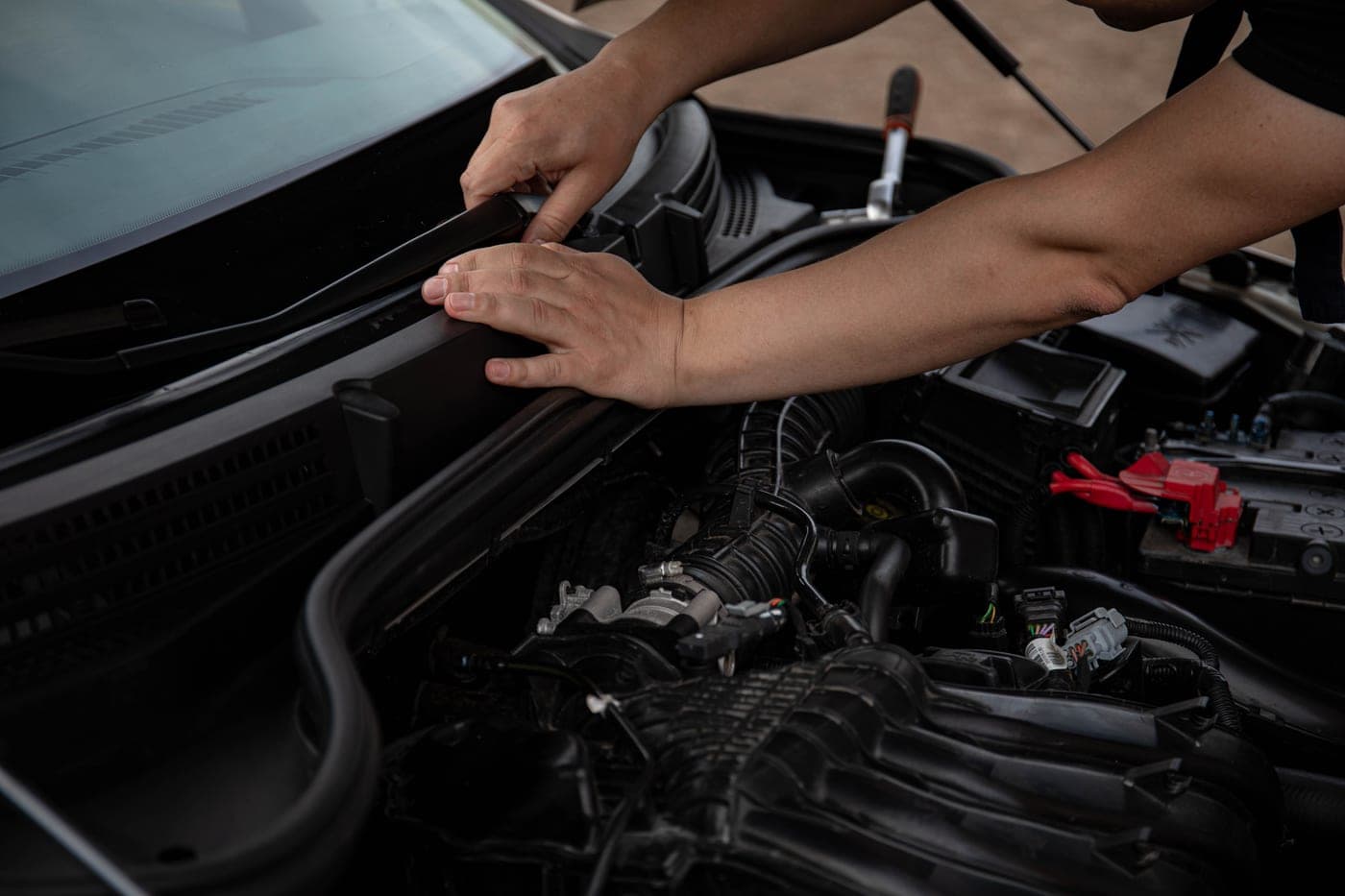
The one place a headlamp beats every work light: it points exactly where you are looking, and your hands stay on the wrench.
By Scooter M. · Published September 21, 2026
Short answer
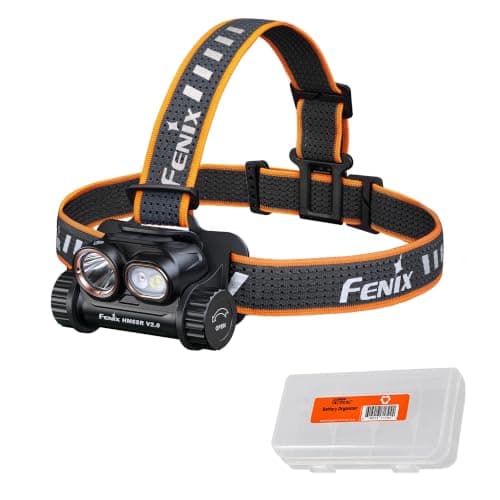
Fenix HM65R V2.0
Twenty-two hundred lumens, 226 meters, IP68, a 2-meter impact rating and a removable 3,400 mAh 21700. It costs several times what a budget headlamp costs and it is the only one here you can carry a spare cell for.
Price as of September 21, 2026 — 22 lumens per dollar. #ad How we earn
Disclosure — we earn a commission on qualifying purchases made through the Amazon links on this page, at no extra cost to you. It does not change which lights we pick or what we say about them. The full version.
How we rank. Published ANSI FL1 output divided by the live retail price, with sealed-battery lights marked down because a light you cannot re-cell is a light with an expiry date. Units we claim to have tested: 0 — we compile manufacturers' published figures and show the arithmetic instead. How we work this out.
The short answer
For working on vehicles, buy a headlamp with a genuine flood beam, a published runtime long enough to cover a job, and a way to keep going when the battery dies. The Fenix HM65R V2.0 is the strongest answer because it takes a removable 21700 cell, so a spare in your pocket doubles the shift; the Petzl ACTIK CORE answers it differently by running on three AAA cells when its pack is flat. Ignore maximum lumens almost entirely — at arm's length inside an engine bay, 2,200 lumens is glare, not help.
Almost every headlamp is sold on throw: how far down a trail the beam reaches. That specification is worthless here. Your work is eighteen inches from your face, inside a dark metal box, and a tight hotspot lights a coin-sized circle and blacks out everything around it. What you want is the widest, flattest, most even flood the lamp can make.
The criteria, before any pick
- 1.A flood mode, ideally controlled separately from the spot. The Fenix HM65R V2.0 runs its spot and flood independently, which is what the job actually needs.
- 2.Weight, because you will spend hours with your head tilted back. Eighty-six grams and 120 grams feel very different at the top of an upward-facing hour.
- 3.A published runtime at the setting you will use — not at maximum. A job is two to four hours; a turbo figure tells you nothing about that.
- 4.Battery independence. Either a removable cell so you can carry a spare, or AAA fallback. A sealed lamp ends your evening when it empties.
- 5.A tilt bracket that holds its angle. A bracket that creeps is worse than no tilt, and this is the most common complaint about cheap headlamps.
- 6.Sealing, because engine bays involve solvent, oil and the occasional coolant shower. IP67 and IP68 mean something; an unpublished rating means nothing.
The lamps compared on published figures
| Lamp | Maximum output | Published runtime | Weight | Water rating | Spare cell? |
|---|---|---|---|---|---|
| Fenix HM65R V2.0 | 2,200 lumens | Not published per mode | Not stated | IP68 | Yes, removable 21700 |
| BD Storm 500-R | 500 lumens | 7 h at 500 lm; 350 h low | 120 g | IP67 | No |
| Petzl ACTIK CORE | 625 lumens | 2 h max; 7 h at 100 lm | 88 g | IPX4 | Yes, 3 x AAA |
| NITECORE NU25 MCT UL | 400 lumens | 45 h at 6 lm | 47 g | IP66 | No |
| BD Spot 400-R | 400 lumens | 4 h at 400 lm; 225 h low | 86 g | IP67 | No |
That table contains the trade in one line. The lamp with the most output publishes the least about how long it lasts; the lamps that publish complete runtime tables cannot take a spare cell. Nothing here does both, and we are not going to pretend one of them does.
| # | Light | Max output | Battery | Lumens / $ | Price |
|---|---|---|---|---|---|
| 1 | Fenix HM65R V2.0 Most output with a removable 21700 | 2,200 | Replaceable | 22 | $100.45 on Amazon Price as of September 21, 2026 — 22 lumens per dollar. #ad How we earn |
| 2 | 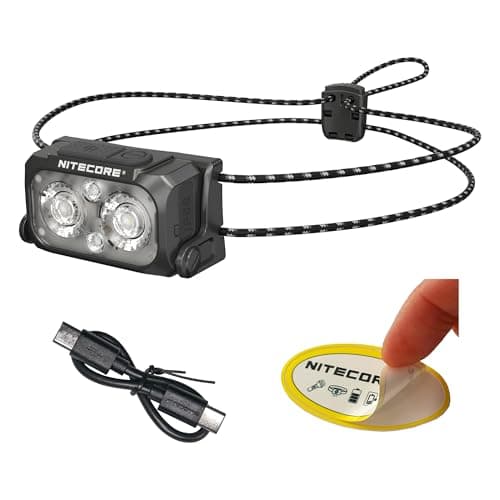 NITECORE NU25 MCT UL Lightest headlamp with a real published runtime | 400 | Sealed | 11 | $36.95 on Amazon Price as of September 21, 2026 — 11 lumens per dollar. #ad How we earn |
| 3 | 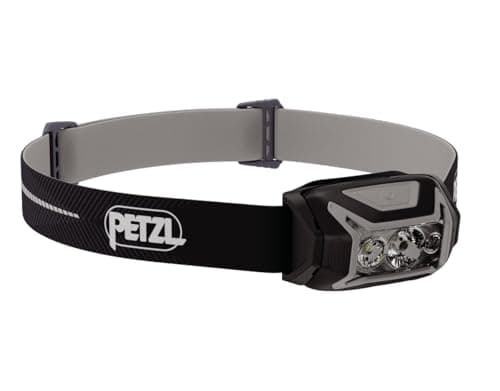 Petzl ACTIK CORE Best hybrid: rechargeable or AAA cells | 625 | Replaceable | 8 | $80.00 on Amazon Price as of September 21, 2026 — 8 lumens per dollar. #ad How we earn |
| 4 | 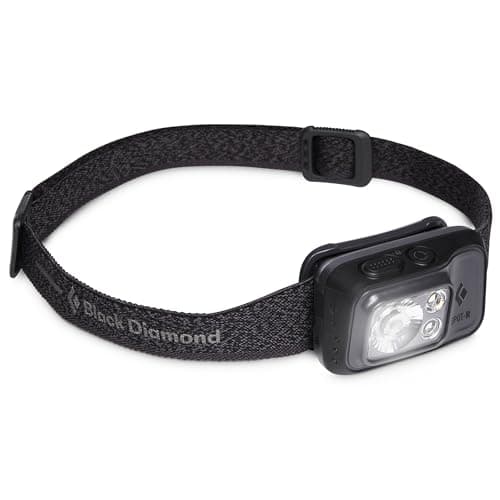 Black Diamond Spot 400-R Most complete published runtime table | 400 | Sealed | 7 | $59.88 on Amazon Price as of September 21, 2026 — 7 lumens per dollar. #ad How we earn |
| 5 | No listing image Black Diamond Storm 500-R Best lamp to put on a helmet | 500 | Sealed | Needs a live price | Check price on Amazon We show a price only when we have pulled a live one. #ad How we earn |
Prices pulled September 21, 2026. Lumens per dollar is the manufacturer's published maximum output divided by that price, recomputed every time the price moves.
1. Most output with a removable 21700
Fenix HM65R V2.0
Lumens per dollar
22
Twenty-two hundred lumens, 226 meters, IP68, a 2-meter impact rating and a removable 3,400 mAh 21700. It costs several times what a budget headlamp costs and it is the only one here you can carry a spare cell for.
- Max output
- 2,200 lm
- Runtime
- Not published per mode on the retail page
- Battery
- Replaceable cell
- Water rating
- IP68
What it gets right
- Removable 21700, so a spare cell turns a four-hour night into an eight-hour one
- IP68 — the strongest water rating in this roundup
- Independent spot and flood control, which is what work actually needs
What it gets wrong
- Its lumens-per-dollar figure will be poor against any budget lamp
- Heavy on the head compared with the ultralight class
- No per-mode runtime on the page we read
Published specification
- Maximum output: 2,200 lumens, spot and flood combined — Fenix published specification
- Beam distance: 741 ft (226 m) — Fenix published specification
- Battery: 3,400 mAh 21700, removable, USB-C — Fenix published specification
- Water rating: IP68 — Fenix published specification
- Impact: 2 m — Fenix published specification
- Body: Magnesium alloy — Fenix published specification
- Per-mode runtime: Not published on the retail page we read
Skip this one if
you are buying on value. This is a work tool priced as one.
Buy it if: night shifts, cave work and anyone who has run a headlamp flat halfway through a job.
- Output 9.5
- Battery 9.0
- Weight 5.5
- Usability 8.5
- Overall 8.4
Price as of September 21, 2026 — 22 lumens per dollar. #ad How we earn
2. Lightest headlamp with a real published runtime
NITECORE NU25 MCT UL
Lumens per dollar
11
Forty-seven grams including the headband, 400 lumens, and 45 hours at its 6-lumen setting. On a headlamp the weight figure matters more than the lumen figure, because the lamp you stop wearing produces no light at all.
- Max output
- 400 lm
- Runtime
- 45 h at 6 lm
- Battery
- Sealed
- Water rating
- IP66
What it gets right
- Forty-seven grams with the band on — you forget it is there
- Three color temperatures plus red, which is unusual at any price
- IP66 and a published 45-hour low-mode runtime
What it gets wrong
- Sealed 700 mAh cell; no way to carry a spare
- Four hundred lumens is modest for trail running at speed
- Flat band with no over-the-top strap on the ultralight version
Published specification
- Maximum output: 400 lumens — NITECORE published specification
- Beam distance: 132 m — NITECORE published specification
- Runtime: Up to 45 hours at 6 lumens — NITECORE published specification
- Battery: Built-in 700 mAh Li-ion, USB-C — NITECORE published specification
- Weight: 47 g (1.66 oz) including bracket and headband — NITECORE published specification
- Water rating: IP66 — NITECORE published specification
- Color temperatures: 3,000K / 4,500K / 6,500K plus auxiliary red — NITECORE published specification
Skip this one if
you need to swap a battery mid-shift. A sealed 700 mAh cell means your night ends when it does.
Buy it if: hikers, campers and anyone whose complaint about headlamps is that they bounce.
- Output 6.5
- Battery 4.5
- Weight 9.5
- Usability 8.5
- Overall 7.8
Price as of September 21, 2026 — 11 lumens per dollar. #ad How we earn
3. Best hybrid: rechargeable or AAA cells
Petzl ACTIK CORE
Lumens per dollar
8
Six hundred and twenty-five lumens stated to ANSI/PLATO FL1, 88 grams, and — the part that matters — it runs on the CORE rechargeable pack or on three AAA cells when the pack is flat. That is the answer to the sealed-battery problem, from the only brand here that bothered.
- Max output
- 625 lm
- Runtime
- Published per mode by Petzl
- Battery
- Replaceable cell
- Water rating
- IPX4
What it gets right
- Explicitly states ANSI/PLATO FL1 conformity, which most brands here do not
- Hybrid power: the pack for daily use, AAA cells as the fallback that never fails
- Petzl publishes the CORE pack's cycle rating, so its service life is a stated number
What it gets wrong
- IPX4 — weather resistant, not submersible
- Eighty-eight grams is not ultralight
- The CORE pack is a Petzl part rather than a standard cell
Published specification
- Maximum output: 625 lumens (ANSI/PLATO FL1) — Petzl published specification
- Weight: 88 g — Petzl published specification
- Battery: CORE rechargeable 1,250 mAh / 3.6 V / 4.5 Wh, or 3 x AAA — Petzl published specification
- Battery compatibility: Alkaline, lithium or Ni-MH — Petzl published specification
- Water rating: IPX4, weather resistant — Petzl published specification
- Warranty: Lamp 5 years; CORE battery 2 years or 300 cycles — Petzl published specification
- Lighting levels: MAX BURN TIME, STANDARD, MAX POWER, plus red — Petzl published specification
Skip this one if
you want a submersible headlamp. IPX4 covers rain and nothing beyond it.
Buy it if: anyone whose headlamp has to work at the end of a long trip, when charging is not an option.
- Output 7.5
- Battery 9.0
- Weight 7.0
- Usability 8.5
- Overall 8.3
Price as of September 21, 2026 — 8 lumens per dollar. #ad How we earn
4. Most complete published runtime table
Black Diamond Spot 400-R
Lumens per dollar
7
Four hundred lumens for four hours, 200 for eight, 6 for two hundred and twenty-five. Black Diamond publishes lumens, runtime and beam distance for all three modes, and IP67 on top. There is nothing to guess at here.
- Max output
- 400 lm
- Runtime
- 4 h
- Battery
- Sealed
- Water rating
- IP67
What it gets right
- Lumens, runtime and distance published for every mode
- Two hundred and twenty-five hours on low is a genuine emergency reserve
- IP67 and a battery meter that shows an actual percentage
What it gets wrong
- Micro-USB in a year when everything else is USB-C
- Integrated battery — no spare, no re-cell
- Eighty-six grams is heavy next to the ultralight class
Published specification
- High: 400 lumens, 4 hours, 100 m — Black Diamond published specification
- Medium: 200 lumens, 8 hours, 60 m — Black Diamond published specification
- Low: 6 lumens, 225 hours, 12 m — Black Diamond published specification
- Battery: Integrated 1,500 mAh Li-ion, micro-USB — Black Diamond published specification
- Water rating: IP67, tested to 1.0 m for 30 minutes — Black Diamond published specification
- Weight: 86 g — Black Diamond published specification
Skip this one if
you have standardized on USB-C. Carrying a second cable for one device is a small annoyance that compounds on a long trip.
Buy it if: camp, dog walks and anyone who wants a headlamp whose numbers are all on the box.
- Output 6.5
- Battery 5.5
- Weight 7.0
- Usability 9.0
- Overall 7.7
Price as of September 21, 2026 — 7 lumens per dollar. #ad How we earn
listing
image
5. Best lamp to put on a helmet
Black Diamond Storm 500-R
Lumens per dollar
Computed the moment we have a live price for it
Five hundred lumens for seven hours, three hundred and fifty hours on low, IP67, a digital lockout and four light colors — and Black Diamond publishes a runtime and a beam distance for every one of its modes. On a lamp bought for weather and for long nights, that completeness is the product.
- Max output
- 500 lm
- Runtime
- 7 h
- Battery
- Sealed
- Water rating
- IP67
What it gets right
- Runtime and beam distance published for all three white modes
- Three hundred and fifty hours on low is a genuine unplanned-bivvy reserve
- IP67 and a digital lockout, which is the pair that matters in a pack
- Four light colors, so red is available without cycling through white
What it gets wrong
- Micro-USB in a year when everything else is USB-C
- Integrated 2,400 mAh cell — no spare, no re-cell
- One hundred and twenty grams is heavy against the ultralight class
- Black Diamond publishes lumen figures for high only, not for medium or low
Published specification
- High: 500 lumens, 7 hours, 120 m — Black Diamond published specification
- Medium: 19 hours, 60 m — Black Diamond published specification
- Low: 350 hours, 12 m — Black Diamond published specification
- Battery: Integrated 2,400 mAh Li-ion, micro-USB — Black Diamond published specification
- Water rating: IP67 — Black Diamond published specification
- Weight: 120 g — Black Diamond published specification
- Light colors: White, plus red, green and blue night-vision modes — Black Diamond published specification
- Lock mode: Digital lockout — Black Diamond published specification
- Per-mode output: Lumen figures published for high only
Skip this one if
you are counting grams. At 120 g this is nearly three times the mass of the lightest lamp we cover, and on a long approach you will notice it.
Buy it if: anyone whose lamp has to survive weather, live in a pack without switching itself on, and still be running at the end of a long day.
- Output 7.5
- Battery 5.5
- Weight 6.0
- Usability 9.5
- Overall 7.9
We show a price only when we have pulled a live one. #ad How we earn
The gap none of these fills: color
Not one lamp on this page publishes a CRI figure, and for automotive work that is a real omission. Tracing a wiring loom means telling brown from red from orange under a light that may be rendering all three badly, and a typical 70-CRI emitter does render them badly.
We are flagging it rather than working around it, because the honest answer is that the high-CRI lights we can verify are handhelds and work lights rather than headlamps. If color accuracy is the point of the job, keep a 90-CRI light on the bench for the moment you need to be sure, and use the headlamp for everything else.
When a headlamp is the wrong tool
A headlamp lights what you look at, which is its whole advantage and also its limitation: it cannot light what you are looking at from the angle you need. Reaching behind an engine block, your head cannot follow your hand, and the beam lights your forearm instead of the bolt.
For that, a magnetic work light stuck to the underside of the hood is simply better, and the two are complements rather than alternatives. Most people who work on cars regularly end up with both, and the work light does more of the hours.
Beam shape, and why an engine bay punishes a spot
An engine bay is a dark box full of curved, oily, semi-reflective metal at a distance of roughly one to two feet. A spot beam in that environment produces a small intense circle with a hard edge and a wall of darkness around it, and because your eye adapts to the bright part, everything outside the circle becomes less visible than it was before you turned the light on.
A flood does the opposite: lower peak intensity spread over the whole working area, so contrast stays usable across the space and your eye is not fighting a hotspot. That is why the Fenix HM65R V2.0's independent flood channel matters more here than its 2,200-lumen combined figure, and why lamps sold on beam distance are being sold to a different buyer.
There is a second-order effect worth knowing. Because a headlamp sits at eye level, its beam travels almost exactly along your line of sight, which minimizes visible shadow — good for seeing a surface, bad for seeing texture. When you need to find a hairline crack or feel out a stripped thread visually, a light held off to one side at an angle will show it better than any headlamp can. That is not a flaw to fix; it is a reason to own a second light.
Battery strategy for a working day
A job is not a runtime figure. It is a morning, interrupted, with the lamp switched on and off twenty times and left burning on a bench for an hour while you look for a part. Plan for considerably more lamp-hours than the work takes.
That leaves three workable strategies. Carry a spare cell, which only the Fenix here permits. Carry spare AAA cells, which both Petzl lamps permit. Or own two lamps and charge one while you wear the other, which is what most people with sealed lamps end up doing whether they planned it or not. What does not work is a single sealed lamp and optimism, and that is the most commonly sold configuration.
One practical note on charging: both Black Diamond lamps here use micro-USB rather than USB-C. In a workshop where every other cable is USB-C, that is a small daily annoyance and an easy thing to be caught out by.
Headband, hard hat, or neither
A standard elastic headband is fine for a few hours and becomes uncomfortable over a full shift, particularly with a lamp at the heavier end. If you already wear a hard hat or a bump cap, a lamp that clips to the brim moves the weight off your forehead entirely and is worth seeking out.
The alternative worth knowing about is a neck light or a magnetic light clipped to a pocket, which trades the perfect aim of a headlamp for no weight on the head at all. We do not currently cover a neck light we can verify specifications for, so we are naming the category rather than recommending a product in it.
What to skip
- Any lamp sold on maximum lumens with no runtime beside the figure. Under a hood the turbo mode is glare you will switch off in seconds.
- Motion-sensor switching. Waving a greasy hand at a lamp that turns off while you are looking into a bay is worse than a button.
- Sealed-battery lamps, if your jobs run long. When it empties there is nothing you can do about it.
- Zoom optics. A zoom head trades beam quality for a party trick, and beam quality is what close work is made of.
Solvent, oil and the things that kill a headlamp
Vehicle work is chemically hostile in a way that outdoor use is not, and it is worth knowing which part fails first. It is rarely the electronics. It is the lens, the strap and the bracket.
Polycarbonate lenses craze when they meet brake cleaner and some degreasers, and a crazed lens scatters light into a soft haze that is far worse than a dirty one. Elastic headbands absorb oil, stop gripping and start to smell. Tilt brackets fill with grit and either seize or go slack.
None of that appears on a spec sheet, and an IP rating does not cover it — IP67 is a dust and water test, not a solvent test. The mitigation is unglamorous: wipe the lens with water rather than whatever is on the bench, buy a lamp whose strap can be removed and washed, and treat a workshop headlamp as a consumable on a longer timescale than the battery. It is also a reason to keep the expensive lamp for the outdoors and buy a second one for the garage.
How we ranked these
Published output over the live price, adjusted for battery architecture and published ratings, weighted toward the things vehicle work actually needs: flood coverage, the ability to carry a spare cell, weight on the head, and a stated ingress rating. A missing per-mode runtime costs points, which is why the brightest lamp here does not simply win.
Units we claim to have tested: 0
Every publisher in this category says they tested twenty flashlights. We have not tested any, and we say so. What we do instead: compile the manufacturer's own published ANSI FL1 figures, pull the price the light is selling for right now, and divide one by the other. Every number on this page is one you can check yourself in about two minutes.
What we cannot tell you
We have not worn these lamps under a hood. We cannot tell you whose tilt bracket holds its angle after a year, whose headband survives being taken on and off with oily hands, or how any of them behaves after a solvent splash. We also cannot tell you how the Fenix behaves at minute twenty of a job, because Fenix publishes no per-mode runtime on the page we read and we have not run one down ourselves.
Common questions
What headlamp do mechanics use?
The useful answer is a lamp with a wide flood beam rather than a bright spot, low enough weight to wear with your head tilted back for hours, and either a removable cell or AAA fallback so a dead battery does not end the job. The Fenix HM65R V2.0 is the strongest on that last point with a removable 3,400 mAh 21700, and the Petzl ACTIK CORE takes three AAA cells when its pack is flat. Maximum lumens matter far less than any of it.
How many lumens do I need for working on a car?
Far fewer than the marketing suggests. At arm's length inside an engine bay, 100 to 300 lumens of flood is comfortable and will run for hours; anything above about 500 lumens reflects off metal straight back at you and makes shadows harder to read, not easier. The figure worth checking is the runtime at 100 to 200 lumens, not the maximum on the box.
Is a headlamp or a work light better for a mechanic?
Both, and for different moments. A headlamp points exactly where you are looking and keeps both hands free, which is unbeatable while you are looking at what you are doing. It fails the moment your hand goes somewhere your head cannot follow, and for that a magnetic work light stuck under the hood is better because it lights the space rather than your eyeline. Most people who do this regularly own one of each.
How many lumens do I actually need?
For walking a dog, finding a fuse box or reading a map, 100 to 300 lumens is plenty and will run far longer. For a garage, a yard or a campsite, 500 to 1,000 lumens is comfortable. Above about 2,000 lumens you are buying a burst rather than a mode, because almost no handheld light can shed that much heat continuously.
Sources
- Fenix published product specifications — read 2026-09-01
- Black Diamond published product specifications — Spot 400-R read 2026-09-01; Storm 500-R read 2026-09-14
- Petzl published product specifications — ANSI/PLATO FL 1 conformity stated by the manufacturer. ACTIK CORE read 2026-09-01 and re-read per mode 2026-09-21; TIKKA CORE read 2026-09-21
- NITECORE published product specifications — NU25 MCT UL read 2026-09-01; MT2A Pro read 2026-09-13
- Lumen & Ledger method — how every figure on this page is derived
Who writes this
Scooter M. — I am an enthusiast who is genuinely into this. I read the manuals, compile the published specs, and do the math. No lab coat, no test bench, no drawer of free samples. What I can tell you is exactly what a light claims on paper, exactly what it costs right now, and what those two numbers mean when you divide one by the other.
Read next
Best rechargeable work lights for mechanics
Color accuracy, magnets and the ability to survive being dropped in a bay.
Best rechargeable headlamps for work
Shift-length runtime, spare cells, and the ratings that matter on a site.
Best high-CRI flashlights
The four lights we cover that publish a color rendering figure, and what it costs in lumens.
Best rechargeable inspection lights
Color rendering first, beam shape second, lumens last.
Headlamp vs flashlight
Hands beat lumens more often than people expect. The four jobs that decide which you buy.
The Ledger
Every light we cover in one ranked table, sorted by lumens per dollar.