Work Lights & Lanterns
Best Rechargeable Inspection Lights
An inspection light has one job: to let you tell two similar things apart. Almost every specification that sells flashlights is irrelevant to it.
By Scooter M. · Published September 21, 2026
Short answer
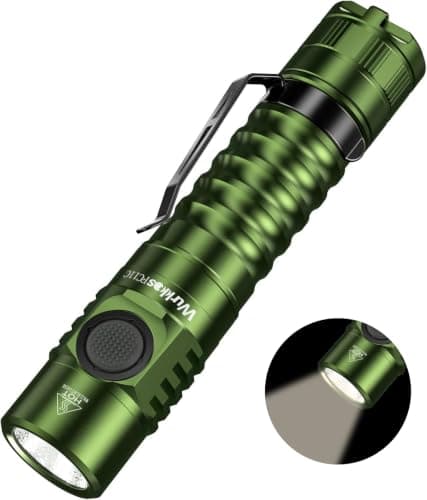
Wurkkos FC11C
Ninety-five CRI from a Nichia 519A, in the same 18650 body as the FC11 and at the same sort of money. It gives up a hundred lumens against its own predecessor to do it, which is the trade high-CRI emitters always make and the reason it is worth understanding before you buy.
Price as of September 21, 2026 — 42 lumens per dollar. #ad How we earn
Disclosure — we earn a commission on qualifying purchases made through the Amazon links on this page, at no extra cost to you. It does not change which lights we pick or what we say about them. The full version.
How we rank. Published ANSI FL1 output divided by the live retail price, with sealed-battery lights marked down because a light you cannot re-cell is a light with an expiry date. Units we claim to have tested: 0 — we compile manufacturers' published figures and show the arithmetic instead. How we work this out.
The short answer
Buy an inspection light on published CRI first, beam shape second and output last. The Streamlight Syclone is the strongest all-round answer because its flood mode is rated 90 CRI and it magnets, clips and stands so your hands stay free; the Wurkkos FC11C publishes 95 CRI, the highest figure any manufacturer states for a light we cover, in a handheld with a magnetic tail. A high lumen count is actively unhelpful here — at arm's length it reflects off metal straight back at you.
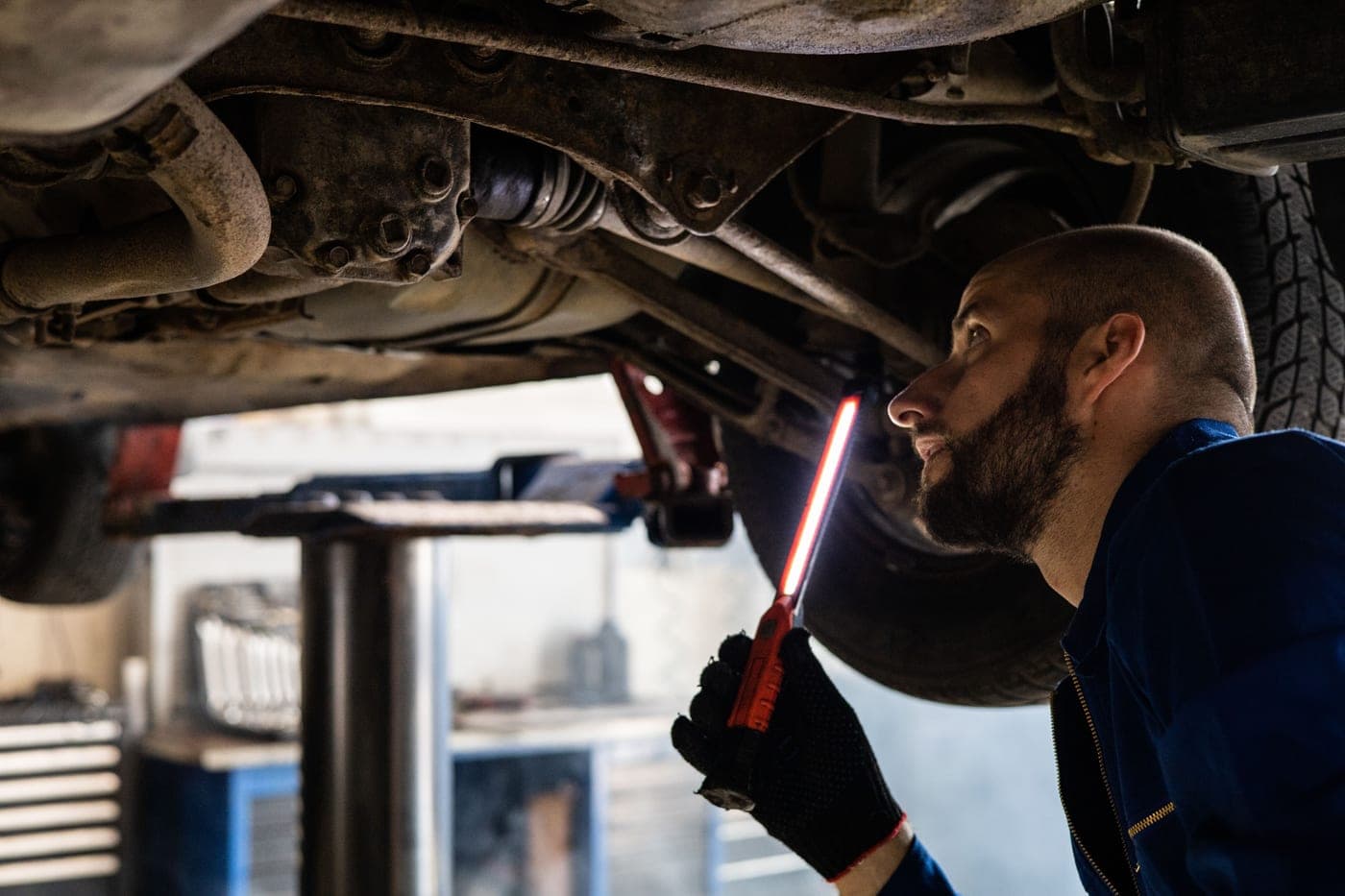
Inspection is a different job from lighting. You are not trying to see into the dark, you are trying to make a judgment about something eighteen inches away: which wire is brown and which is red, whether that stain is oil or coolant, whether that mark in the paint is a scratch or a shadow.
That makes color rendering the whole specification, and it is the one number most work lights do not publish.
The criteria, before any pick
- 1.A published CRI figure of 90 or above. Not the words true color — a number. Most manufacturers publish nothing, and the reason is that the answer is around 70.
- 2.A flood beam, not a spot. A hotspot at arm's length lights a bright circle and blinds you to everything around it, which is the opposite of what inspection needs.
- 3.A way to put it down and keep it pointed: a magnet, a hook, a clip or a stand. Inspection is a two-handed job.
- 4.A published runtime at the mode you will use, which is the middle one. A turbo figure describes a burst you will not select.
- 5.A shape that fits the gap. The best-rendering light in the world is useless if it will not go behind the engine block.
What each one publishes
| Light | Published CRI | Beam | Working mode and runtime | Mounting |
|---|---|---|---|---|
| Streamlight Syclone | 90, flood mode | Spot and flood | 300 lm flood, 2 hours | Magnet, clip, stand |
| Wurkkos FC11C | 95 | Handheld flood-ish | Not published per mode | Magnetic tail |
| NEBO SLIM Mini 500 | Not published | Flat pocket flood | 250 lm, 2 hours | Magnetic base |
| NEBO FRANKLIN TaskBar | Not published | COB flood plus spot | 500 lm, 2 h 30 min | Magnetic base, clip, hook |
| NEBO BIG LARRY 3 | Not published | COB flood plus spot | Not published | Magnetic base, belt clip |
Three of the five publish no CRI figure at all, and all three of those are COB or panel lights. That is not a coincidence, and it is the most useful thing on this page.
The COB problem, stated plainly
COB panels are the standard technology in cheap work lights, and they are genuinely good at one thing: throwing a broad, even, shadow-free flood across a surface for very little money. That is why the magnetic bar light in your toolbox is a COB panel.
As a class they are also poor at color rendering, which is why everything under one looks slightly gray. For general work — finding a dropped socket, lighting a workspace — that does not matter at all. For deciding whether a wire is brown or red, it matters completely, and no amount of extra lumens fixes it.
So the honest recommendation is to own both, and we would rather say that than pretend one light does everything. A cheap COB bar lights the space; a high-CRI light answers the question. The FRANKLIN TaskBar and BIG LARRY 3 are on this page because they are good at the first job and priced accordingly, and both are marked down here for the second.
| # | Light | Max output | Battery | Lumens / $ | Price |
|---|---|---|---|---|---|
| 1 | Wurkkos FC11C Highest published CRI figure here | 1,200 | Replaceable | 42 | $28.79 on Amazon Price as of September 21, 2026 — 42 lumens per dollar. #ad How we earn |
| 2 | 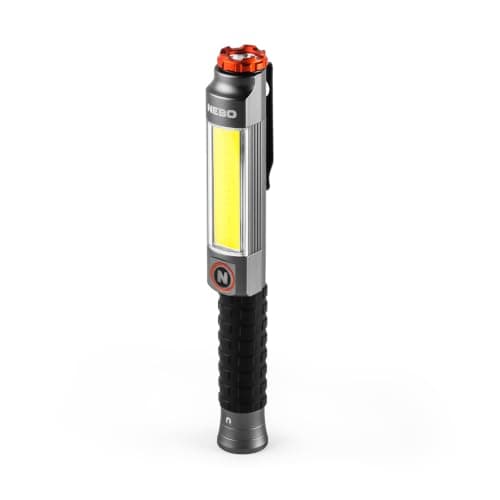 NEBO BIG LARRY 3 Best cheap magnetic work light | 600 | AA / AAA | 36 | $16.64 on Amazon Price as of September 21, 2026 — 36 lumens per dollar. #ad How we earn |
| 3 | 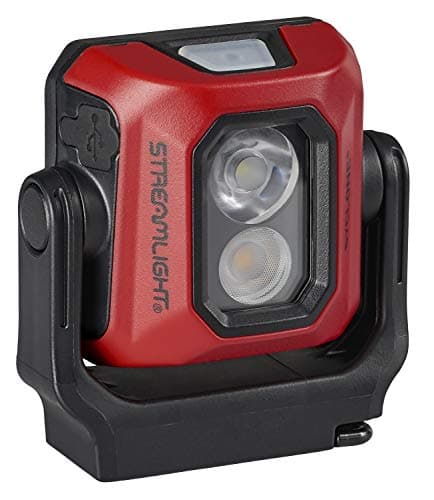 Streamlight Syclone Best work light with a 90 CRI flood | 400 | Sealed | 7 | $60.99 on Amazon Price as of September 21, 2026 — 7 lumens per dollar. #ad How we earn |
| 4 | No listing image NEBO SLIM Mini 500 Best pocket task light for a toolbag | 500 | Sealed | Needs a live price | Check price on Amazon We show a price only when we have pulled a live one. #ad How we earn |
| 5 | No listing image NEBO FRANKLIN TaskBar Best published runtime on a budget work light | 500 | AA / AAA | Needs a live price | Check price on Amazon We show a price only when we have pulled a live one. #ad How we earn |
Prices pulled September 21, 2026. Lumens per dollar is the manufacturer's published maximum output divided by that price, recomputed every time the price moves.
1. Highest published CRI figure here
Wurkkos FC11C
Lumens per dollar
42
Ninety-five CRI from a Nichia 519A, in the same 18650 body as the FC11 and at the same sort of money. It gives up a hundred lumens against its own predecessor to do it, which is the trade high-CRI emitters always make and the reason it is worth understanding before you buy.
- Max output
- 1,200 lm
- Runtime
- Not published per mode
- Battery
- Replaceable cell
- Water rating
- IPX8
What it gets right
- Ninety-five CRI is the highest figure any manufacturer publishes for a light we cover
- IPX8 rather than the FC11's IPX7, in the same size body
- Standard 18650 with USB-C charging in the light
- A buck driver, which Wurkkos names on the product page rather than leaving you to guess
What it gets wrong
- Twelve hundred lumens against the FC11's thirteen hundred — high CRI costs output
- Wurkkos publishes no per-mode runtime for this model, unlike the TS10
- Anduril firmware again, with the learning curve that implies
Published specification
- Maximum output: 1,200 lumens — Wurkkos published specification
- Emitter: 1 x Nichia 519A, 95 CRI, 5000K or 4000K — Wurkkos published specification
- Beam distance: 155 m — Wurkkos published specification
- Battery: 1 x 18650 Li-ion, user replaceable — Wurkkos published specification
- Charging: USB-C, without removing the cell — Wurkkos published specification
- Water rating: IPX8 — Wurkkos published specification
- Weight: 65 g without battery — Wurkkos published specification
- Length: 116.23 mm — Wurkkos published specification
- Per-mode runtime: Not published on the product page
Skip this one if
you want maximum output per dollar. A 95-CRI emitter spends part of its budget making color correct rather than making light, and that is a poor trade if you only ever point a light down a driveway.
Buy it if: anyone whose light is used to inspect things at close range — wiring, paint, skin, a leak — where telling two similar colors apart is the actual job.
- Output 7.0
- Battery 9.5
- Build 8.0
- Usability 8.0
- Overall 8.3
Price as of September 21, 2026 — 42 lumens per dollar. #ad How we earn
2. Best cheap magnetic work light
NEBO BIG LARRY 3
Lumens per dollar
36
A 600-lumen COB panel, a 220-lumen spot and a red task mode, on three AA cells, with a magnet strong enough to hold it under a hood. It is the least glamorous light here and it is the one that gets used most.
- Max output
- 600 lm
- Runtime
- Not published per mode
- Battery
- AA / AAA
- Water rating
- None published
What it gets right
- A flood panel is the right shape of light for working on something close up
- AA cells, so it survives a year in a toolbox and still lights
- The magnet is strong enough to matter
What it gets wrong
- NEBO publishes no runtime and no water rating for this model
- COB panels have poor color rendering as a class
- Not rechargeable, so the running cost is AA cells
Published specification
- COB work light: 600 lumens high / 150 lumens low — NEBO published specification
- Spot flashlight: 220 lumens high / 60 lumens low — NEBO published specification
- Red task light: 40 lumens high / 12 lumens low — NEBO published specification
- Battery: 3 x AA (included) — NEBO published specification
- Weight: 0.42 lb — NEBO published specification
- Fittings: Magnetic base, steel belt clip, wall-mount hole — NEBO published specification
- Per-mode runtime: Not published on the product page
- Water rating: Not published on the product page
Skip this one if
you need to see color accurately. For paint matching or diagnosing a wiring loom, a high-CRI light is worth the extra money.
Buy it if: the toolbox, the trunk and the shelf above the workbench.
- Output 6.5
- Battery 7.0
- Build 7.5
- Usability 8.5
- Overall 7.3
Price as of September 21, 2026 — 36 lumens per dollar. #ad How we earn
3. Best work light with a 90 CRI flood
Streamlight Syclone
Lumens per dollar
7
Four hundred lumens of spot for two hours or 300 lumens of 90-CRI flood for the same, in a 5.3-ounce body that clips, magnets and stands. Every mode's runtime is published, including the flood modes most brands ignore.
- Max output
- 400 lm
- Runtime
- 2 h
- Battery
- Sealed
- Water rating
- IPX4
What it gets right
- A 90 CRI flood, which matters more than lumens when you are diagnosing anything
- Spot and flood in one body with runtimes published for both
- Magnet, clip and a stand that lets it point where you need it
What it gets wrong
- Sealed lithium-polymer cell
- IPX4 — it handles a splash and not a puddle
- Four hundred lumens is modest if you want to light a whole garage
Published specification
- Spot high: 400 lumens, 141 m, 2 hours — Streamlight published specification
- Spot medium: 200 lumens, 95 m, 4.5 hours — Streamlight published specification
- Spot low: 100 lumens, 72 m, 9.5 hours — Streamlight published specification
- Flood high: 300 lumens, 48 m, 2 hours, 90 CRI — Streamlight published specification
- Flood low: 75 lumens, 24 m, 8 hours — Streamlight published specification
- Battery: Lithium-polymer, USB rechargeable, 4.5 h charge — Streamlight published specification
- Water rating: IPX4 — Streamlight published specification
- Impact: 2 m tested — Streamlight published specification
- Weight: 5.3 oz (150 g) — Streamlight published specification
Skip this one if
you need to flood a large space. This is an arm's-reach light; a lantern or a panel does big areas better.
Buy it if: mechanics and electricians who need to see true color at close range.
- Output 6.5
- Battery 5.0
- Build 8.5
- Usability 9.0
- Overall 7.6
Price as of September 21, 2026 — 7 lumens per dollar. #ad How we earn
listing
image
4. Best pocket task light for a toolbag
NEBO SLIM Mini 500
Lumens per dollar
Computed the moment we have a live price for it
The most honest spec sheet in this whole roundup, and not in the way NEBO intended: turbo is 500 lumens for thirty seconds. High is 250 lumens for two hours. That thirty-second figure is printed by the manufacturer, and it is the clearest illustration of the whole turbo problem you will find.
- Max output
- 500 lm
- Runtime
- 30 seconds at turbo; 2 h at 250 lm high
- Battery
- Sealed
- Water rating
- IPX4
What it gets right
- Genuinely flat — it disappears into a work-pants pocket
- Magnetic base plus green and red modes for inspection work
- NEBO states the turbo duration outright, which is rare and creditable
What it gets wrong
- Turbo lasts half a minute; treat 250 lumens as the real specification
- 450 mAh sealed cell, so this is a light with a service life rather than a lifespan
- IPX4 is splash resistance and nothing more
Published specification
- Turbo: 500 lumens for 30 seconds, 100 m — NEBO published specification
- High: 250 lumens, 2 hours, 250 m — NEBO published specification
- Low: 50 lumens, 5 hours, 50 m — NEBO published specification
- Battery: 450 mAh 3.7V (1.66 Wh) Li-ion, built in — NEBO published specification
- Recharge time: 2 hours, USB-C — NEBO published specification
- Water rating: IPX4 — NEBO published specification
- Weight: 0.07 lb — NEBO published specification
Skip this one if
you want a light for walking outdoors. This is a task light for arm's-length work and it does not throw usefully far in practice.
Buy it if: electricians, mechanics and anyone whose light spends its life eighteen inches from the thing it is lighting.
- Output 6.0
- Battery 4.5
- Build 7.5
- Usability 8.5
- Overall 6.8
We show a price only when we have pulled a live one. #ad How we earn
listing
image
5. Best published runtime on a budget work light
NEBO FRANKLIN TaskBar
Lumens per dollar
Computed the moment we have a live price for it
Five hundred lumens of flood for two and a half hours, 200 lumens of spot for eight, and a red mode for twenty — every one of those numbers printed by NEBO rather than inferred by us. For a light at this price that is unusually complete.
- Max output
- 500 lm
- Runtime
- 2 h 30 min
- Battery
- AA / AAA
- Water rating
- None published
What it gets right
- Runtime published for all seven modes — the exception rather than the rule at this price
- Flood, spot and red in one body with a magnetic base
- AA cells, wall-mount hole, steel belt clip
What it gets wrong
- No water rating published anywhere on the product page
- 500 lumens of COB flood is modest next to a rechargeable panel
- Disposable AAs again
Published specification
- Work light high: 500 lumens, 2 h 30 min, 31 m — NEBO published specification
- Work light low: 150 lumens, 14 h 30 min, 18 m — NEBO published specification
- Flashlight high: 200 lumens, 8 hours, 75 m — NEBO published specification
- Flashlight low: 60 lumens, 24 hours, 50 m — NEBO published specification
- Red task light: 40 lumens, 20 hours — NEBO published specification
- Battery: 3 x AA (included) — NEBO published specification
- Weight: 0.45 lb — NEBO published specification
- Water rating: Not published on the product page
Skip this one if
the light will live outdoors. Without a published IP rating we cannot tell you what it survives, and neither can NEBO.
Buy it if: the person who wants one bar-shaped light that does flood, spot and red without a menu.
- Output 6.0
- Battery 7.0
- Build 7.5
- Usability 8.5
- Overall 7.2
We show a price only when we have pulled a live one. #ad How we earn
Why the brightest light on the bench is usually the wrong one
Point a 1,000-lumen light at a painted panel or a chromed part from a foot away and most of it comes back at you. Your pupils close down, the highlights blow out, and the fine variation you were trying to see disappears into glare. The same light at 150 lumens shows it.
This is why the working mode matters more than the maximum on every light here, and why NEBO's SLIM Mini 500 is more useful than its headline suggests: NEBO states outright that its 500-lumen turbo lasts thirty seconds and that 250 lumens for two hours is the real specification. That is an unusually honest piece of publishing, and 250 lumens of flat pocket flood is a genuinely good inspection light.
Red and green modes are not a gimmick here
Several of these lights publish colored modes, and for inspection they have real uses rather than tactical ones. A red mode preserves dark adaptation when you are moving between a lit bay and a dark corner. A green mode raises the contrast of some fluid stains against a dark substrate.
NEBO publishes green and red on the SLIM Mini 500, and a red task mode at 40 lumens for 20 hours on the FRANKLIN TaskBar. We are reporting what the manufacturers publish rather than claiming a result we have verified: we have not tested any colored mode against any specific fluid, and anyone telling you a green light definitively finds coolant is going further than the evidence does.
What each trade is actually looking at
Inspection is not one job, and the light that suits one trade is wrong for the next. The differences are worth naming because they change which of the criteria above you should weight.
- Automotive electrical. The hardest color task in this list: loom colors are deliberately similar and often dirty. High CRI is not a refinement here, it is the requirement, and a magnet that holds the light inside a wheel arch or under a hood is the second one.
- Bodywork and paint. You are judging an even surface for defects, which means beam evenness matters more than anything: a hotspot reads as a defect and hides real ones. A wide flood held at an oblique angle to the panel shows far more than a bright light held square to it.
- Plumbing and leak finding. Mostly about getting light into a confined space at an awkward angle, which favors a flat body and a hook or magnet over raw output. A slim pocket light beats a large panel in a cupboard under a sink.
- General maintenance and facilities. Here the COB panel wins outright — cheap, broad, even, tough, and color fidelity genuinely does not matter for finding a valve or reading a label.
Only two of those four are really color-critical, which is the honest reason this page ranks a 90-CRI flood at the top and still includes two COB lights that publish no CRI figure at all.
Hold it at an angle, not at the thing
The single most useful habit in inspection lighting costs nothing and is not a product feature. Most people point a light directly at what they are examining, which floods the surface evenly and erases exactly the shadows that reveal texture.
Light raked across a surface at a shallow angle does the opposite: every ridge, dent, hairline crack and raised edge casts a small shadow and becomes visible. This is why a scratch you cannot find under a bright overhead light appears instantly when you crouch and light the panel from the side.
It has a practical consequence for what to buy. A light you can stick, hook or stand somewhere off to one side is more useful than a brighter light you have to hold, because it lets you put the light where the shadows are and your eyes where they need to be. That is why mounting sits so high in the criteria above, and it is the main reason the flat and magnetic lights here earn their places.
What to skip
- Anything sold on maximum lumens for close work. Above roughly 300 lumens at arm's length you are adding glare rather than information.
- A light advertised as high CRI with no figure printed. If the number were good it would be there.
- Zoom heads. The doughnut-shaped beam a zoom optic produces is the worst possible beam for judging an even surface.
- A light with no way to stand, clip or stick. If you have to hold it, you have one hand left for the job.
- Sealed-cell lights for heavy daily use, unless the price reflects that you are buying a consumable.
Two lights beat one, and it is cheaper than it sounds
The recurring conclusion of this page is that no single light does both halves of the job well, and the practical answer is not to keep shopping for one that does. A cheap COB bar to light the space and a high-CRI handheld to answer the question together cost less than most single premium work lights and cover more ground than any of them.
It also spreads the failure risk sensibly. The cheap panel is the one that gets dropped, left on, covered in grease and eventually replaced; the accurate light stays cleaner because it comes out for a minute at a time. Buying one expensive light to do both means the expensive one takes all the abuse.
How we ranked these
Published output over the live price, adjusted for battery architecture and published ratings, with the scoring weighted for this job: a published CRI figure counts heavily, flood coverage counts more than throw, and mounting options count as usability rather than as extras. A COB light with no published CRI can still rank well on value and will not win the criterion the page is built around.
Units we claim to have tested: 0
Every publisher in this category says they tested twenty flashlights. We have not tested any, and we say so. What we do instead: compile the manufacturer's own published ANSI FL1 figures, pull the price the light is selling for right now, and divide one by the other. Every number on this page is one you can check yourself in about two minutes.
What we cannot tell you
We have not used any of these lights and we cannot measure CRI, so the color figures above are the manufacturers' own claims repeated with their source named. We also cannot tell you how the three lights that publish no CRI figure actually render color — they may be better than the COB average or worse, and the absence of a number is the finding rather than a verdict. Nor have we tested any colored mode against any real fluid or surface.
Common questions
What makes a good inspection light?
Color rendering first, beam shape second, output last. A published CRI of 90 or above means two similar colors look different under it, which is the actual job; a wide flood beam avoids the hotspot that blinds you at arm's length; and a magnet, hook or stand keeps both hands free. Maximum lumens are close to irrelevant, and above about 300 lumens at close range they make things harder to see rather than easier.
How many lumens do I need for an inspection light?
Between about 150 and 300 lumens at arm's length. More than that reflects off metal and paint straight back at you, closes your pupils down and washes out the fine differences you are looking for. The figure to check is the runtime at the mode you will use rather than the maximum — NEBO, for example, states that the SLIM Mini 500's 500-lumen turbo lasts thirty seconds and that 250 lumens for two hours is its real specification.
Are COB work lights good for inspection?
They are excellent at lighting a space and poor at judging color. COB panels flood broadly and evenly for very little money, which is why they dominate cheap work lights, but as a class they render color badly and none of the COB lights we cover publishes a CRI figure. For finding a dropped socket they are ideal; for telling a brown wire from a red one, use something that publishes 90 CRI or above.
Are cheap rechargeable flashlights any good?
Many are, and for a specific reason: the LED emitters, drivers and 18650 cells that budget brands buy are the same commodity parts the expensive brands buy. What you give up at the low end is documentation, quality control between batches, and a warranty worth using. The way to shop it is to look for a brand that publishes runtime figures — a manufacturer willing to print how long the turbo mode lasts is telling you something about the rest of the specification.
Sources
- Streamlight published product specifications — per-mode lumens, runtime, beam distance, impact and IP ratings, read 2026-09-01
- Wurkkos published product specifications and user manuals — FC11 and TS10 read 2026-09-01; FC11C read 2026-09-21
- NEBO published product specifications — mode-by-mode lumen, runtime and beam figures, read 2026-09-01
- Lumen & Ledger method — how every figure on this page is derived
Who writes this
Scooter M. — I am an enthusiast who is genuinely into this. I read the manuals, compile the published specs, and do the math. No lab coat, no test bench, no drawer of free samples. What I can tell you is exactly what a light claims on paper, exactly what it costs right now, and what those two numbers mean when you divide one by the other.
Read next
Best rechargeable work lights for mechanics
Color accuracy, magnets and the ability to survive being dropped in a bay.
Best high-CRI flashlights
The four lights we cover that publish a color rendering figure, and what it costs in lumens.
Best magnetic rechargeable work lights
The magnet is the feature. Here is how to tell a good one from a decoration.
Best headlamps for mechanics
Flood beam, low weight and a cell you can swap without ending the job.
Best rechargeable work lights
Flood beats throw at arm's length, and color rendering beats both.
The Ledger
Every light we cover in one ranked table, sorted by lumens per dollar.