Flashlights
Best High-CRI Flashlights
A high-CRI light does not make more light. It makes the light you already had tell the truth about what it is pointed at.
By Scooter M. · Published September 21, 2026
Short answer
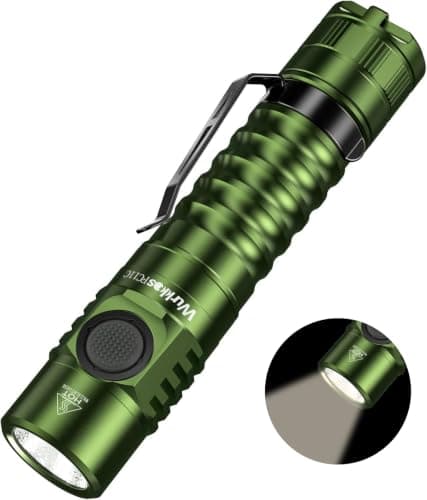
Wurkkos FC11C
Ninety-five CRI from a Nichia 519A, in the same 18650 body as the FC11 and at the same sort of money. It gives up a hundred lumens against its own predecessor to do it, which is the trade high-CRI emitters always make and the reason it is worth understanding before you buy.
Price as of September 21, 2026 — 42 lumens per dollar. #ad How we earn
Disclosure — we earn a commission on qualifying purchases made through the Amazon links on this page, at no extra cost to you. It does not change which lights we pick or what we say about them. The full version.
How we rank. Published ANSI FL1 output divided by the live retail price, with sealed-battery lights marked down because a light you cannot re-cell is a light with an expiry date. Units we claim to have tested: 0 — we compile manufacturers' published figures and show the arithmetic instead. How we work this out.
The short answer
Buy a light whose manufacturer publishes a CRI figure of 90 or above. Four of the thirty-three lights we track do: the Wurkkos FC11C at a published 95 CRI, the Wurkkos FC11 and TS10 V2 at 90, and the Streamlight Syclone, whose flood mode is rated 90 CRI. Everything else we cover publishes no figure at all. Expect to give up roughly ten percent of the output you would get from an ordinary emitter, because that is the trade high-CRI LEDs make.
CRI stands for Color Rendering Index. It is a zero-to-100 score for how closely a light source lets you judge color against a reference, and the practical range for flashlights runs from about 65 at the cheap end to about 95 at the top. Most flashlights land around 70 and say nothing about it.
Seventy CRI is why a cheap light makes everything look like a parking lot at night. Reds go muddy and brown, skin looks unwell, and two wires that are obviously different colors in daylight become the same wire. That is not an aesthetic complaint. If you are tracing a loom, matching paint, looking for a coolant leak or checking a wound, it is the difference between the light working and the light wasting your time.
The criterion that decides this page, before any pick
A manufacturer must publish a CRI number. Not the words high CRI, not a marketing paragraph about true color — a figure. This single rule removed twenty-nine of the thirty-three lights in our registry, which is the most striking thing we found writing this page and worth saying plainly: the overwhelming majority of flashlight makers do not tell you how their light renders color, because the answer is about 70 and there is nothing to gain by saying so.
That includes brands we rate highly on every other axis. Sofirn publishes output, beam distance, weight, dimensions and charge time for the SC31 Pro and no CRI figure. Fenix publishes IP68 ratings and 575 meters of throw and no CRI figure. NEBO publishes complete mode-by-mode runtime tables and no CRI figure. Not publishing is the industry norm, and the four lights below are the exception.
What the published figures actually are
| Light | Published CRI | Emitter | Maximum output | Water rating |
|---|---|---|---|---|
| Wurkkos FC11C | 95 | 1 x Nichia 519A, 5000K or 4000K | 1,200 lumens | IPX8 |
| Wurkkos FC11 | 90 | Nichia 519A / LH351D | 1,300 lumens | IPX7 |
| Wurkkos TS10 V2 | 90 | Triple 90 CRI CSP | 1,400 lumens | IPX8 |
| Streamlight Syclone | 90, flood mode | Not named | 400 lumens spot / 300 flood | IPX4 |
The price of accuracy is lumens, and it is visible
Wurkkos makes the cleanest illustration of the trade anywhere, because it sells two versions of essentially the same light. The FC11 publishes 1,300 lumens at 90 CRI. The FC11C publishes 1,200 lumens at 95 CRI, in the same 116-millimeter body, on the same 18650, at the same sort of money. Five more points of color accuracy cost a hundred lumens.
That is the general shape of it. A high-CRI emitter gets its accuracy by filling in parts of the spectrum a cheap emitter leaves out, particularly at the red end, and producing that light is less efficient than producing the blue-green spike the eye is most sensitive to. You are not being overcharged. You are buying a different thing.
Which means the honest way to shop this is to decide first whether you need it. If your light is used to walk a dog, find a fuse box or see to the end of a yard, CRI is close to irrelevant and the hundred lumens is worth more. If your light is used to look closely at something and make a judgment about it, the hundred lumens is worth nothing and the accuracy is the whole point.
| # | Light | Max output | Battery | Lumens / $ | Price |
|---|---|---|---|---|---|
| 1 | Wurkkos FC11C Highest published CRI figure here | 1,200 | Replaceable | 42 | $28.79 on Amazon Price as of September 21, 2026 — 42 lumens per dollar. #ad How we earn |
| 2 | 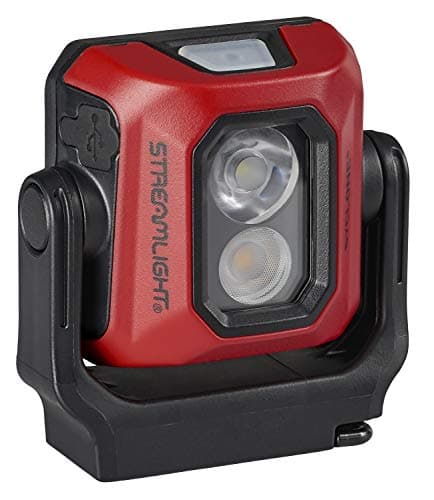 Streamlight Syclone Best work light with a 90 CRI flood | 400 | Sealed | 7 | $60.99 on Amazon Price as of September 21, 2026 — 7 lumens per dollar. #ad How we earn |
| 3 | No listing image Wurkkos FC11 Best color quality per dollar | 1,300 | Replaceable | Needs a live price | Check price on Amazon We show a price only when we have pulled a live one. #ad How we earn |
| 4 | No listing image Wurkkos TS10 V2 Best pocket light under two ounces | 1,400 | Replaceable | Needs a live price | Check price on Amazon We show a price only when we have pulled a live one. #ad How we earn |
Prices pulled September 21, 2026. Lumens per dollar is the manufacturer's published maximum output divided by that price, recomputed every time the price moves.
1. Highest published CRI figure here
Wurkkos FC11C
Lumens per dollar
42
Ninety-five CRI from a Nichia 519A, in the same 18650 body as the FC11 and at the same sort of money. It gives up a hundred lumens against its own predecessor to do it, which is the trade high-CRI emitters always make and the reason it is worth understanding before you buy.
- Max output
- 1,200 lm
- Runtime
- Not published per mode
- Battery
- Replaceable cell
- Water rating
- IPX8
What it gets right
- Ninety-five CRI is the highest figure any manufacturer publishes for a light we cover
- IPX8 rather than the FC11's IPX7, in the same size body
- Standard 18650 with USB-C charging in the light
- A buck driver, which Wurkkos names on the product page rather than leaving you to guess
What it gets wrong
- Twelve hundred lumens against the FC11's thirteen hundred — high CRI costs output
- Wurkkos publishes no per-mode runtime for this model, unlike the TS10
- Anduril firmware again, with the learning curve that implies
Published specification
- Maximum output: 1,200 lumens — Wurkkos published specification
- Emitter: 1 x Nichia 519A, 95 CRI, 5000K or 4000K — Wurkkos published specification
- Beam distance: 155 m — Wurkkos published specification
- Battery: 1 x 18650 Li-ion, user replaceable — Wurkkos published specification
- Charging: USB-C, without removing the cell — Wurkkos published specification
- Water rating: IPX8 — Wurkkos published specification
- Weight: 65 g without battery — Wurkkos published specification
- Length: 116.23 mm — Wurkkos published specification
- Per-mode runtime: Not published on the product page
Skip this one if
you want maximum output per dollar. A 95-CRI emitter spends part of its budget making color correct rather than making light, and that is a poor trade if you only ever point a light down a driveway.
Buy it if: anyone whose light is used to inspect things at close range — wiring, paint, skin, a leak — where telling two similar colors apart is the actual job.
- Output 7.0
- Battery 9.5
- Build 8.0
- Usability 8.0
- Overall 8.3
Price as of September 21, 2026 — 42 lumens per dollar. #ad How we earn
2. Best work light with a 90 CRI flood
Streamlight Syclone
Lumens per dollar
7
Four hundred lumens of spot for two hours or 300 lumens of 90-CRI flood for the same, in a 5.3-ounce body that clips, magnets and stands. Every mode's runtime is published, including the flood modes most brands ignore.
- Max output
- 400 lm
- Runtime
- 2 h
- Battery
- Sealed
- Water rating
- IPX4
What it gets right
- A 90 CRI flood, which matters more than lumens when you are diagnosing anything
- Spot and flood in one body with runtimes published for both
- Magnet, clip and a stand that lets it point where you need it
What it gets wrong
- Sealed lithium-polymer cell
- IPX4 — it handles a splash and not a puddle
- Four hundred lumens is modest if you want to light a whole garage
Published specification
- Spot high: 400 lumens, 141 m, 2 hours — Streamlight published specification
- Spot medium: 200 lumens, 95 m, 4.5 hours — Streamlight published specification
- Spot low: 100 lumens, 72 m, 9.5 hours — Streamlight published specification
- Flood high: 300 lumens, 48 m, 2 hours, 90 CRI — Streamlight published specification
- Flood low: 75 lumens, 24 m, 8 hours — Streamlight published specification
- Battery: Lithium-polymer, USB rechargeable, 4.5 h charge — Streamlight published specification
- Water rating: IPX4 — Streamlight published specification
- Impact: 2 m tested — Streamlight published specification
- Weight: 5.3 oz (150 g) — Streamlight published specification
Skip this one if
you need to flood a large space. This is an arm's-reach light; a lantern or a panel does big areas better.
Buy it if: mechanics and electricians who need to see true color at close range.
- Output 6.5
- Battery 5.0
- Build 8.5
- Usability 9.0
- Overall 7.6
Price as of September 21, 2026 — 7 lumens per dollar. #ad How we earn
listing
image
3. Best color quality per dollar
Wurkkos FC11
Lumens per dollar
Computed the moment we have a live price for it
A 90-CRI emitter at a price where nobody else bothers, which means colors look like colors rather than like a parking lot. Same replaceable 18650 story as the Sofirn, plus a magnetic tail that turns it into a work light.
- Max output
- 1,300 lm
- Runtime
- Not published per mode
- Battery
- Replaceable cell
- Water rating
- IPX7
What it gets right
- 90 CRI at a price where 70 CRI is normal — skin, wiring and paint read correctly
- Magnetic tailcap sticks it to anything ferrous and frees both hands
- Standard 18650, USB-C charging in the light
- Two mode groups, so you can pick a simple ramp or a stepped set
What it gets wrong
- IPX7 rather than IPX8 — fine for rain, not for a river
- High CRI costs raw lumens; the Sofirn is visibly brighter on turbo
- No per-mode runtime published on the product page
Published specification
- Maximum output: 1,300 lumens — Wurkkos published specification
- Beam distance: 144 m (157 yd) — Wurkkos published specification
- Battery: 1 x 18650 Li-ion, user replaceable — Wurkkos published specification
- Water rating: IPX7 — Wurkkos published specification
- Weight: 65 g +/- 1 g without battery — Wurkkos published specification
- Length: 116.23 mm — Wurkkos published specification
- Emitter: Nichia 519A / LH351D, 90 CRI — Wurkkos published specification
- Body: 6061 aluminum, type III hard anodized — Wurkkos published specification
Skip this one if
the only number you care about is peak output. You are paying part of this light's budget for color accuracy, and if you will never notice that, the money is better spent elsewhere.
Buy it if: anyone who uses a flashlight to look at things closely — wiring, paint, engine bays, a face — rather than to light up a field.
- Output 7.5
- Battery 9.5
- Build 8.0
- Usability 8.0
- Overall 8.4
We show a price only when we have pulled a live one. #ad How we earn
listing
image
4. Best pocket light under two ounces
Wurkkos TS10 V2
Lumens per dollar
Computed the moment we have a live price for it
Thirty-two grams, three 90-CRI emitters, and one of the very few budget lights whose maker publishes the runtime at maximum output: one hour fourteen at 1,400 lumens. Publishing that number at all puts Wurkkos ahead of several brands ten times its size.
- Max output
- 1,400 lm
- Runtime
- 1 h 14 min
- Battery
- Replaceable cell
- Water rating
- IPX8
What it gets right
- Wurkkos publishes runtime at maximum output, which most brands quietly do not
- Thirty-two grams — light enough that you stop noticing it in a pocket
- Standard 14500 cell, replaceable
- Documented automatic step-down instead of an undocumented one
What it gets wrong
- A 14500 is a small cell; sustained output is not this light's job
- RGB auxiliary LEDs are a toy, and they draw from the same cell
- Anduril again, with the same learning curve
Published specification
- Maximum output: 1,400 lumens — Wurkkos published specification
- Runtime at maximum: 1 h 14 min — Wurkkos published specification
- Runtime at 1 lumen: 6 h 43 min — Wurkkos published specification
- Battery: 1 x 14500 Li-ion, user replaceable — Wurkkos published specification
- Water rating: IPX8, 2 m — Wurkkos published specification
- Weight: 32 g +/- 1 g without battery — Wurkkos published specification
- Length: 71.5 mm — Wurkkos published specification
- Thermal behavior: Automatic step-down from turbo to high — Wurkkos published specification
Skip this one if
you need something to run for an hour on high without getting hot. A light this small has nowhere to put the heat, and the step-down is not optional.
Buy it if: the person who wants a real light on them at all times and will not carry anything heavier than a pen.
- Output 8.0
- Battery 8.0
- Build 7.5
- Usability 7.5
- Overall 8.2
We show a price only when we have pulled a live one. #ad How we earn
The caveat nobody prints: CRI is an average, and it hides red
The number almost every manufacturer quotes is Ra, which averages a light's performance across eight relatively pale test colors. It deliberately excludes R9, the saturated red sample, and R9 is the one that governs whether blood, brake wiring, red paint and skin tone look right.
A light can therefore publish a respectable Ra and still render deep reds poorly, and none of the four manufacturers above publishes an R9 figure on the pages we read. We are flagging that rather than working around it. If deep red specifically is what you need to judge, a published Ra of 90 is a good sign and not a guarantee, and we have no measurement of our own to offer you instead.
CRI is not tint, and the two get confused constantly
Color temperature — 4000K, 5000K, 6500K — describes whether the light looks warm or cool. CRI describes whether colors under it are correct. They are independent: a 6500K light can be 95 CRI and a 3000K light can be 65. The FC11C is offered in 5000K and 4000K, and both are the same 95 CRI.
For close work most people prefer something in the 4000K to 5000K range, because very cool light exaggerates blue and very warm light flattens the difference between reds and oranges. That is a preference rather than a specification, and we are labeling it as one.
The jobs where this actually pays for itself
It is easy to talk about color rendering in the abstract and hard to know whether it applies to you, so here are the cases where the difference between 70 and 90 CRI changes the outcome rather than the aesthetics.
- Automotive wiring. Loom colors are deliberately close — brown, red, orange, and the same colors again with a stripe. Under a cheap emitter several of those converge, and the consequence of guessing is not cosmetic.
- Paint and bodywork. Judging whether a panel matches, or whether a mark is a scratch or a reflection, is a color-discrimination task and a 70-CRI light is the wrong instrument for it.
- Finding leaks. Coolant, brake fluid and oil are partly identified by color, and on a dark substrate under a poor light they all read as a dark wet patch.
- Anything medical or first aid. Skin tone under a low-CRI light looks wrong in a way that makes assessment harder, which is why the cheap blue-white emitter in a keychain light is a poor choice for it.
- Sorting, collecting and inspection of anything graded by color — stone, timber, print, fabric. If a buyer will judge it by color, judge it by color yourself first.
If none of those describe what you do with a flashlight, this page is not for you, and we would rather say so than sell you an upgrade you will not notice.
How to judge a light when the box says nothing
Most lights you can pick up in a shop publish no CRI figure, so here is the practical substitute. Point the light at something deeply red — a fire extinguisher, a stop sign, a red cable — and then at the back of your own hand.
Under a low-CRI emitter the red goes brown or dull orange and skin looks gray or faintly green. Under a 90-CRI emitter the red stays red and the hand looks like a hand. It is a crude test and it is not a measurement, but it separates the two classes reliably, and it uses the only instrument you definitely have with you.
One more shelf heuristic: a brand that publishes a CRI figure has usually published everything else too. Of the four lights on this page, three also publish a water rating and one publishes a runtime at maximum output. Disclosure travels in groups.
What to skip
- Any light advertised as high CRI without a number. If the figure were good it would be printed.
- COB panel work lights, as a class. They flood beautifully and they are typically poor at color, which is why the cheap magnetic bar light in your toolbox makes everything look gray.
- High-CRI claims on a light whose maximum output is the only other figure published. A brand that will not commit to a runtime is not a brand to take on trust about an emitter.
- Paying a large premium for 95 over 90. It is a real improvement and it is a small one, and the jump from 70 to 90 is where almost all of the benefit lives.
One more reason to want the number
A published CRI figure is also the cheapest available signal that a manufacturer chose its emitter deliberately rather than buying whatever was cheapest that quarter. Emitters are the single largest variable in how a budget light performs, and they are the component brands are least likely to name.
Three of the four lights here name theirs outright — a Nichia 519A or an LH351D. That is a brand telling you exactly what is inside, which makes the CRI claim checkable against the emitter manufacturer's own data rather than resting on the flashlight brand's word alone. It is a small thing and it is the sort of small thing that correlates with everything else being straight.
How we ranked these
Published output over the live price, adjusted for cell architecture and published water ratings, with the published CRI figure treated as an entry requirement rather than a scoring bonus — a light without one could not appear on this page at all. Where two lights publish similar figures, the one with the more complete specification elsewhere ranks higher, which is why the TS10 V2's published runtime at maximum output counts in its favor.
Units we claim to have tested: 0
Every publisher in this category says they tested twenty flashlights. We have not tested any, and we say so. What we do instead: compile the manufacturer's own published ANSI FL1 figures, pull the price the light is selling for right now, and divide one by the other. Every number on this page is one you can check yourself in about two minutes.
What we cannot tell you
We have not measured the CRI of any light on this page, and we have no spectrometer. Every figure above is the manufacturer's own claim, repeated with its source named, and a manufacturer's CRI claim is exactly as verifiable as its lumen claim, which is to say not very. We also cannot tell you how these four compare for tint consistency between units, which is the most common complaint about budget high-CRI emitters and the thing a single measured sample would not settle anyway.
Common questions
What CRI is good for a flashlight?
Ninety or above is the threshold worth paying for, and almost everything below about 80 will make reds look brown and skin look unwell. Most flashlights are around 70 and do not publish the figure at all. Of the thirty-three lights we track, four publish a CRI number: the Wurkkos FC11C at 95, the Wurkkos FC11 and TS10 V2 at 90, and the Streamlight Syclone at 90 in its flood mode.
Does high CRI mean fewer lumens?
Yes, and the cost is visible in one manufacturer's own catalog. The Wurkkos FC11 publishes 1,300 lumens at 90 CRI; the FC11C publishes 1,200 lumens at 95 CRI in the same body on the same cell. A high-CRI emitter fills in the parts of the spectrum a cheap emitter skips, particularly at the red end, and producing that light is less efficient. Expect to trade roughly ten percent of the output for the accuracy.
Is high CRI worth it?
It depends entirely on what you point the light at. If you use it to see where you are going, no — spend the money on runtime or output instead. If you use it to inspect something and then make a decision, it is one of the few upgrades that changes what the light can do rather than how much of it there is: tracing wiring, matching paint, finding a leak, checking skin. Those jobs are the whole case for it.
Are cheap rechargeable flashlights any good?
Many are, and for a specific reason: the LED emitters, drivers and 18650 cells that budget brands buy are the same commodity parts the expensive brands buy. What you give up at the low end is documentation, quality control between batches, and a warranty worth using. The way to shop it is to look for a brand that publishes runtime figures — a manufacturer willing to print how long the turbo mode lasts is telling you something about the rest of the specification.
Sources
- Wurkkos published product specifications and user manuals — FC11 and TS10 read 2026-09-01; FC11C read 2026-09-21
- Streamlight published product specifications — per-mode lumens, runtime, beam distance, impact and IP ratings, read 2026-09-01
- Sofirn published product specifications — read 2026-09-01
- Lumen & Ledger method — how every figure on this page is derived
Who writes this
Scooter M. — I am an enthusiast who is genuinely into this. I read the manuals, compile the published specs, and do the math. No lab coat, no test bench, no drawer of free samples. What I can tell you is exactly what a light claims on paper, exactly what it costs right now, and what those two numbers mean when you divide one by the other.
Read next
Wurkkos FC11 review
Ninety CRI at a price where seventy is normal, and what those seven hundred missing lumens buy you.
Sofirn vs Wurkkos
The two brands that own the value tier, compared on the specs each one publishes.
Best rechargeable work lights for mechanics
Color accuracy, magnets and the ability to survive being dropped in a bay.
Best rechargeable inspection lights
Color rendering first, beam shape second, lumens last.
Best rechargeable flashlights under $50
Where the value curve is steepest, and the three things $50 should buy you.
The Ledger
Every light we cover in one ranked table, sorted by lumens per dollar.