Flashlights
Wurkkos FC11 Review: The Light That Spends Its Budget on Color
Almost every light in this price class buys lumens with its last few dollars. This one buys accurate color instead, and that is a bigger difference than the spec sheet makes it look.
By Scooter M. · Published September 6, 2026
Short answer
Wurkkos FC11
A 90-CRI emitter at a price where nobody else bothers, which means colors look like colors rather than like a parking lot. Same replaceable 18650 story as the Sofirn, plus a magnetic tail that turns it into a work light.
listing
image
We show a price only when we have pulled a live one. #ad How we earn
Disclosure — we earn a commission on qualifying purchases made through the Amazon links on this page, at no extra cost to you. It does not change which lights we pick or what we say about them. The full version.
How we rank. Published ANSI FL1 output divided by the live retail price, with sealed-battery lights marked down because a light you cannot re-cell is a light with an expiry date. Units we claim to have tested: 0 — we compile manufacturers' published figures and show the arithmetic instead. How we work this out.
The verdict in sixty words
The FC11 is the light to buy if you use a flashlight to look at things closely rather than to light up a field. Wurkkos publishes 1,300 lumens, IPX7, a standard replaceable 18650 and USB-C charging, and spends the rest of the budget on a 90-CRI emitter. You are trading roughly seven hundred lumens against the Sofirn for color you can trust. For inspection work that is a good trade; for a yard it is not.
Wurkkos and Sofirn make nearly the same light for nearly the same money, and this site has a separate page comparing the two brands. This page is about the one decision the FC11 makes differently, because it is the decision most buyers do not know they are making.
What Wurkkos publishes
The published sheet reads: 1,300 lumens maximum, 144 meters of beam distance, IPX7 water resistance, 65 grams plus or minus one gram without the cell, 116.23 millimeters long, a 6061 aluminum body with type III hard anodizing, one replaceable 18650, USB-C charging in the light, and a Nichia 519A or Samsung LH351D emitter rated at 90 CRI.
| Published figure | Wurkkos FC11 |
|---|---|
| Maximum output | 1,300 lumens |
| Beam distance | 144 m (157 yd) |
| Emitter | Nichia 519A / LH351D, 90 CRI |
| Cell | 1 x 18650 Li-ion, user replaceable |
| Water rating | IPX7 |
| Weight | 65 g +/- 1 g without battery |
| Length | 116.23 mm |
| Body | 6061 aluminum, type III hard anodized |
| Runtime, any mode | Not published on the product page |
What 90 CRI actually changes
The color rendering index scores how faithfully a light source reproduces color against a reference. Most flashlights in this price class use emitters around 70 CRI, tuned for maximum lumens per watt. That tuning is not free: it thins out the red end of the spectrum, and red is where a great deal of practical information lives.
In practice, under a 70-CRI light: red wire and brown wire look like the same wire. Dark paint has no shade to it. Rust and wet dirt look identical. Skin looks gray, which matters if you are checking a cut. Under a 90-CRI light those distinctions come back, and they come back immediately and obviously — this is not a subtle upgrade you have to be told about.
The catch is that it costs output, and here it costs roughly seven hundred lumens against the Sofirn SC31 Pro at a comparable price. That is the whole review in one sentence. If you spend your flashlight time looking at surfaces within arm's reach, take the color. If you spend it trying to see the far end of a paddock, take the lumens.
| # | Light | Max output | Battery | Lumens / $ | Price |
|---|---|---|---|---|---|
| 1 | No listing image Wurkkos FC11 Best color quality per dollar | 1,300 | Replaceable | Needs a live price | Check price on Amazon We show a price only when we have pulled a live one. #ad How we earn |
| 2 | 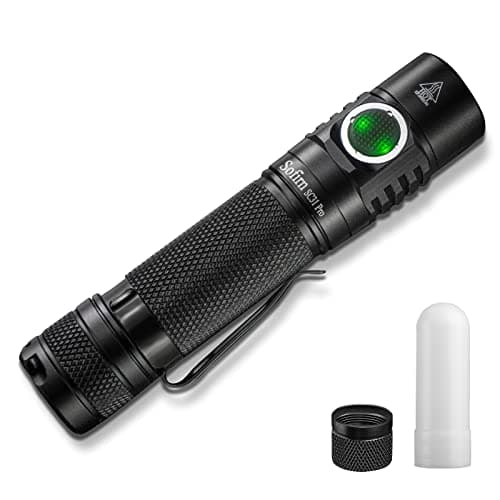 Sofirn SC31 Pro Best lumens per dollar overall | 2,000 | Replaceable | Needs a live price | Check price on Amazon We show a price only when we have pulled a live one. #ad How we earn |
| 3 | 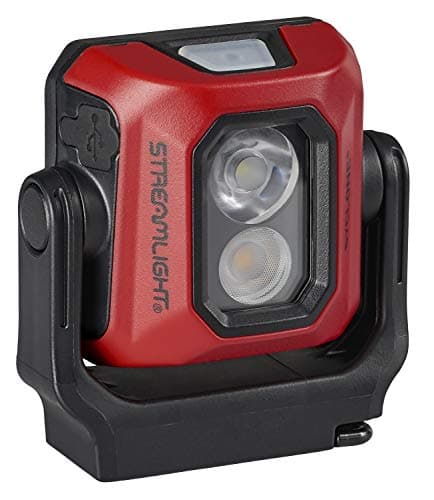 Streamlight Syclone Best work light with a 90 CRI flood | 400 | Sealed | Needs a live price | Check price on Amazon We show a price only when we have pulled a live one. #ad How we earn |
Lumens per dollar is the manufacturer's published maximum output divided by the price the light is selling for. Where we have not pulled a live price, the column says so instead of showing you a number we cannot stand behind. See how we work this out.
The magnetic tail is not a gimmick
The FC11 has a magnetic tailcap, which sticks it to anything ferrous and frees both of your hands. On a light aimed at close inspection work that is close to a required feature rather than a bonus, because the jobs where color accuracy matters — wiring, an engine bay, a panel, a repair on a bench — are almost all two-handed jobs.
It has one real cost. A magnetic tail will pick up steel swarf, screws and washers off a bench and carry them into your pocket, and it will stick to things you did not intend. That is a minor irritation rather than a flaw, but it is the reason some people remove the magnet, and you should know it exists.
IPX7, and what the missing digit means
Wurkkos publishes IPX7 on the FC11 against Sofirn's IPX8 on the SC31 Pro. IPX7 means the manufacturer states the light survives immersion to one meter for thirty minutes; IPX8 means immersion beyond one meter at a depth and duration the manufacturer defines. For rain, a wash bay, a dropped light in a puddle, IPX7 is entirely adequate. For a light that will spend time in a boat or a stream, the extra digit is worth having. Our guide to IP ratings sets out the difference properly.
The row Wurkkos does not print here
There is an irony worth recording. This site praises Wurkkos, repeatedly and by name, for publishing a runtime at maximum output — one hour fourteen minutes at 1,400 lumens on the TS10, which almost no budget brand does. On the FC11's own product page, that row is not there.
So the same caution applies here as anywhere: 1,300 lumens is a burst, not a mode, because an aluminum tube of this size cannot shed that much heat continuously. Plan around the sustained level below it. We are not going to soften that because we like the brand — the point of publishing a runtime is that it can be checked, and on this model there is nothing to check.
listing
image
1. Best color quality per dollar
Wurkkos FC11
Lumens per dollar
Computed the moment we have a live price for it
A 90-CRI emitter at a price where nobody else bothers, which means colors look like colors rather than like a parking lot. Same replaceable 18650 story as the Sofirn, plus a magnetic tail that turns it into a work light.
- Max output
- 1,300 lm
- Runtime
- Not published per mode
- Battery
- Replaceable cell
- Water rating
- IPX7
What it gets right
- 90 CRI at a price where 70 CRI is normal — skin, wiring and paint read correctly
- Magnetic tailcap sticks it to anything ferrous and frees both hands
- Standard 18650, USB-C charging in the light
- Two mode groups, so you can pick a simple ramp or a stepped set
What it gets wrong
- IPX7 rather than IPX8 — fine for rain, not for a river
- High CRI costs raw lumens; the Sofirn is visibly brighter on turbo
- No per-mode runtime published on the product page
Published specification
- Maximum output: 1,300 lumens — Wurkkos published specification
- Beam distance: 144 m (157 yd) — Wurkkos published specification
- Battery: 1 x 18650 Li-ion, user replaceable — Wurkkos published specification
- Water rating: IPX7 — Wurkkos published specification
- Weight: 65 g +/- 1 g without battery — Wurkkos published specification
- Length: 116.23 mm — Wurkkos published specification
- Emitter: Nichia 519A / LH351D, 90 CRI — Wurkkos published specification
- Body: 6061 aluminum, type III hard anodized — Wurkkos published specification
Skip this one if
the only number you care about is peak output. You are paying part of this light's budget for color accuracy, and if you will never notice that, the money is better spent elsewhere.
Buy it if: anyone who uses a flashlight to look at things closely — wiring, paint, engine bays, a face — rather than to light up a field.
- Output 7.5
- Battery 9.5
- Build 8.0
- Usability 8.0
- Overall 8.4
We show a price only when we have pulled a live one. #ad How we earn
2. Best lumens per dollar overall
Sofirn SC31 Pro
Lumens per dollar
Computed the moment we have a live price for it
Two thousand published lumens out of a standard 18650 you can buy anywhere for a few dollars, in a light that costs less than most brands charge for a keychain. The cell is the whole argument: when it dies in three years you replace a battery, not a flashlight.
- Max output
- 2,000 lm
- Runtime
- Not published per mode
- Battery
- Replaceable cell
- Water rating
- IPX8
What it gets right
- Standard 18650 cell — replacements cost a few dollars and are sold everywhere
- IPX8, the strongest water rating in this price class
- USB-C charging built into the light, so no separate charger to lose
- Anduril firmware gives real ramping control rather than four fixed steps
What it gets wrong
- Sofirn publishes no per-mode runtime figures on the product page
- Anduril is genuinely confusing for the first week
- Tint varies between batches, which is the price of this price
Published specification
- Maximum output: 2,000 lumens — Sofirn published specification
- Beam distance: 226 m — Sofirn published specification
- Battery: 1 x 18650 Li-ion, user replaceable — Sofirn published specification
- Charging: USB-C, 2.5 hours with a 2A adapter — Sofirn published specification
- Water rating: IPX8 — Sofirn published specification
- Weight: 59 g without battery — Sofirn published specification
- Length: 117.5 mm — Sofirn published specification
- Emitter: SST40, 5000K or 6500K — Sofirn published specification
- Per-mode runtime: Not published on the product page
Skip this one if
you want to press one button and get one brightness. Anduril has a shortcut for everything and a menu for everything else, and if that sounds tiring you will be happier with a three-mode light.
Buy it if: anyone who intends to keep the light for longer than the battery lasts, and does not mind reading a manual once.
- Output 9.0
- Battery 9.5
- Build 8.0
- Usability 7.0
- Overall 8.6
We show a price only when we have pulled a live one. #ad How we earn
3. Best work light with a 90 CRI flood
Streamlight Syclone
Lumens per dollar
Computed the moment we have a live price for it
Four hundred lumens of spot for two hours or 300 lumens of 90-CRI flood for the same, in a 5.3-ounce body that clips, magnets and stands. Every mode's runtime is published, including the flood modes most brands ignore.
- Max output
- 400 lm
- Runtime
- 2 h
- Battery
- Sealed
- Water rating
- IPX4
What it gets right
- A 90 CRI flood, which matters more than lumens when you are diagnosing anything
- Spot and flood in one body with runtimes published for both
- Magnet, clip and a stand that lets it point where you need it
What it gets wrong
- Sealed lithium-polymer cell
- IPX4 — it handles a splash and not a puddle
- Four hundred lumens is modest if you want to light a whole garage
Published specification
- Spot high: 400 lumens, 141 m, 2 hours — Streamlight published specification
- Spot medium: 200 lumens, 95 m, 4.5 hours — Streamlight published specification
- Spot low: 100 lumens, 72 m, 9.5 hours — Streamlight published specification
- Flood high: 300 lumens, 48 m, 2 hours, 90 CRI — Streamlight published specification
- Flood low: 75 lumens, 24 m, 8 hours — Streamlight published specification
- Battery: Lithium-polymer, USB rechargeable, 4.5 h charge — Streamlight published specification
- Water rating: IPX4 — Streamlight published specification
- Impact: 2 m tested — Streamlight published specification
- Weight: 5.3 oz (150 g) — Streamlight published specification
Skip this one if
you need to flood a large space. This is an arm's-reach light; a lantern or a panel does big areas better.
Buy it if: mechanics and electricians who need to see true color at close range.
- Output 6.5
- Battery 5.0
- Build 8.5
- Usability 9.0
- Overall 7.6
We show a price only when we have pulled a live one. #ad How we earn
Anduril, and the mode groups that make it survivable
The FC11 ships with Anduril, the same open-source firmware as the Sofirn, with the same first week of frustration for anyone who just wants a button. Wurkkos does one thing about it that helps: the light offers two mode groups, so you can run a simple stepped set instead of the full ramping interface. That does not make Anduril simple, but it does mean you can put the light into a state where it behaves like a normal flashlight and leave it there.
When to buy something else
Three cases, and none of them is a criticism of the light.
- You want the most light for the money. The Sofirn SC31 Pro publishes 2,000 lumens and IPX8 at a similar price. On raw output per dollar it wins and it is not close.
- Your close work is genuinely a work-light job — under a car, inside a panel, on a bench for hours. The Streamlight Syclone is a 90-CRI flood built for exactly that shape of job, and a flood beats a beam at arm's length.
- You want a light that goes in a front pocket. At 116 millimeters this is a jacket, bag or toolbag light. Our EDC rankings cover the small end.
How we scored it
Four attributes out of ten, weighted as published on our methodology page: output against price, battery architecture, build as evidenced by the published ratings, and usability. The FC11 scores below the Sofirn on output and level with it on battery architecture, and it is the color rendering — which the rubric does not have a column for — that decides whether it is the right light for you. We have said that in the write-up rather than quietly inflating a score to make the arithmetic agree with the recommendation.
Units we claim to have tested: 0
Every publisher in this category says they tested twenty flashlights. We have not tested any, and we say so. What we do instead: compile the manufacturer's own published ANSI FL1 figures, pull the price the light is selling for right now, and divide one by the other. Every number on this page is one you can check yourself in about two minutes.
What we cannot tell you
We have not had this light in our hands. We cannot tell you which of the two emitters your unit will ship with, how the tint of a Nichia 519A compares with an LH351D in the same body, how consistent the anodizing is between batches, how strong the tail magnet feels, or how Wurkkos handles a warranty claim. Emitter and tint variation between batches is the most common complaint about budget brands generally, and it is exactly the thing a published specification cannot settle.
The bottom line
If a flashlight is a thing you point at objects you are working on, this is the one to buy in the budget tier, and the 90-CRI emitter will be obvious to you within a day. If a flashlight is a thing you point down a driveway, buy the brighter light and spend the difference on nothing.
Common questions
Is the Wurkkos FC11 worth it?
For close inspection work, yes, and more than the specification suggests: a 90-CRI emitter at this price is genuinely unusual and the difference is visible immediately. For general outdoor use it is a harder sell, because a similarly priced Sofirn SC31 Pro publishes 2,000 lumens against the FC11's 1,300. Decide by what you point a flashlight at, not by the numbers.
What does 90 CRI mean on a flashlight?
The color rendering index scores how accurately a light source reproduces color against a reference. Most budget flashlights use emitters near 70 CRI, which are tuned for output and render reds poorly. A 90-CRI emitter gives back the red end of the spectrum, so wiring, paint, rust and skin look like themselves. It costs output, which is why so few lights at this price offer it.
How long does the Wurkkos FC11 run on a charge?
Wurkkos does not publish a per-mode runtime on the FC11 product page, so we will not print a figure. Treat the 1,300-lumen maximum as a burst and plan around the sustained level below it. Wurkkos does publish runtimes on some other models — one hour fourteen minutes at 1,400 lumens on the TS10 — which shows the brand is willing to, and makes the blank row on this model more noticeable rather than less.
Is the Wurkkos FC11 better than the Sofirn SC31 Pro?
They are different tools at the same price. The Sofirn publishes 2,000 lumens and IPX8; the Wurkkos publishes 1,300 lumens, IPX7 and a 90-CRI emitter with a magnetic tailcap. If you want reach and raw output, the Sofirn. If you want to see color correctly at arm's length with both hands free, the Wurkkos. Both take a standard replaceable 18650, which is the specification that matters most on either.
Are cheap rechargeable flashlights any good?
Many are, and for a specific reason: the LED emitters, drivers and 18650 cells that budget brands buy are the same commodity parts the expensive brands buy. What you give up at the low end is documentation, quality control between batches, and a warranty worth using. The way to shop it is to look for a brand that publishes runtime figures — a manufacturer willing to print how long the turbo mode lasts is telling you something about the rest of the specification.
Sources
- Wurkkos published product specifications and user manuals — FC11 and TS10 read 2026-09-01; FC11C read 2026-09-21
- Sofirn published product specifications — read 2026-09-01
- Streamlight published product specifications — per-mode lumens, runtime, beam distance, impact and IP ratings, read 2026-09-01; Waypoint 400 and Waypoint C-cell read 2026-09-22; FlipMate read 2026-10-18
- Lumen & Ledger method — how every figure on this page is derived
Who writes this
Scooter M. — I am an enthusiast who is genuinely into this. I read the manuals, compile the published specs, and do the math. No lab coat, no test bench, no drawer of free samples. What I can tell you is exactly what a light claims on paper, exactly what it costs right now, and what those two numbers mean when you divide one by the other.
Read next
Sofirn vs Wurkkos
The two brands that own the value tier, compared on the specs each one publishes.
Sofirn SC31 Pro review
The light at the top of most of our rankings, read against the one row its spec sheet leaves blank.
Best rechargeable work lights for mechanics
Color accuracy, magnets and the ability to survive being dropped in a bay.
Best high-CRI flashlights
The four lights we cover that publish a color rendering figure, and what it costs in lumens.
Best flashlights for tracking deer
Why red light is the wrong color for a blood trail, from the hemoglobin absorption data itself.
The Ledger
Every light we cover in one ranked table, sorted by lumens per dollar.