Flashlights
Best Flashlights for Tracking Deer
Most advice about blood-tracking lights comes from companies that sell them. There is a primary scientific source for the one question that matters, and it rules out the color most hunters already carry.
By Scooter M. · Published September 16, 2026
Short answer
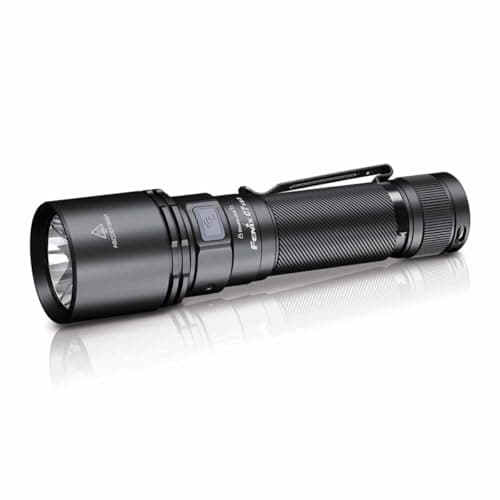
Fenix C7 V2.0
Thirty-three hundred lumens and 575 meters of throw with an IP68 rating. It appears here as a reference point: this is what a well-built high-output light costs, and it is the number every budget 10,000-lumen claim should be measured against.
Price as of September 17, 2026 — 41 lumens per dollar. #ad How we earn
Disclosure — we earn a commission on qualifying purchases made through the Amazon links on this page, at no extra cost to you. It does not change which lights we pick or what we say about them. The full version.
How we rank. Published ANSI FL1 output divided by the live retail price, with sealed-battery lights marked down because a light you cannot re-cell is a light with an expiry date. Units we claim to have tested: 0 — we compile manufacturers' published figures and show the arithmetic instead. How we work this out.
What actually makes blood visible at night
Blood is visible when it looks different from what it is lying on, so blood tracking is a contrast problem. Published hemoglobin absorption data shows blood absorbs green light roughly 145 times more strongly than red light at 650 nm. That means red light is the wrong color for a blood trail, green gives the strongest contrast on paper, and a high color-rendering white light shows blood as red against brown. No independent field test we could find ranks the three.
This page does something most tracking-light advice does not: it separates the physics you can check from the claims you cannot. Nearly every confident guide to blood-tracking colors we found was published by a company that sells a colored hunting light. That does not make those guides wrong, but it does mean their conclusions are an interested party's reading of the evidence, and they are labeled as such below.
One thing this page will not do is tell you what is legal. Whether and how you may use an artificial light while recovering game is set by your state, and some states regulate it specifically. Check your own state's current rules before relying on any light at night. Everything below is about which light shows you blood, not about when you may use one.
The physics, from a primary source
Blood looks red because hemoglobin absorbs most other colors and reflects red. How strongly it absorbs each wavelength is not a matter of opinion — it is measured, and Scott Prahl at the Oregon Medical Laser Center publishes a compiled table of hemoglobin's molar extinction coefficients by wavelength. A higher number means the light is absorbed more strongly, so blood looks darker under that color.
| Wavelength | Roughly what color | Oxygenated hemoglobin | Deoxygenated hemoglobin |
|---|---|---|---|
| 416 nm | Violet-blue | 521,880 | 363,848 |
| 540 nm | Green | 53,236 | 46,592 |
| 576 nm | Yellow-green | 55,540 | 40,092 |
| 620 nm | Orange-red | 942 | 6,509.6 |
| 650 nm | Red | 368 | 3,750.12 |
| 700 nm | Deep red | 290 | 1,794.28 |
Read down either column and the pattern is the same. Absorption is enormous in violet-blue, large in green and yellow-green, and falls away steeply once you reach red. For oxygenated hemoglobin the green figure at 540 nm is about 145 times the red figure at 650 nm; for deoxygenated hemoglobin it is about 12 times. Whichever form the blood on the ground is in, green is absorbed far more than red, and that single fact drives everything else on this page.
Why red light is the wrong tool for this job
Under red light, blood absorbs very little and reflects most of what hits it — which is exactly what the surrounding ground is also doing. Blood and background end up at similar brightness, and the thing you are searching for loses its contrast. That follows directly from the table rather than from anyone's field experience, which is why it is the most confident statement on this page.
This is worth stating clearly because red is the right color for the other half of a hunting evening. On a stand, red preserves your dark adaptation and is the mode our hunting headlamp ranking recommends reaching first. Once you are on a blood trail the job has changed from not ruining your night vision to finding a small red mark on the ground, and the red mode that served you on the sit is now working against you.
| # | Light | Max output | Battery | Lumens / $ | Price |
|---|---|---|---|---|---|
| 1 | Fenix C7 V2.0 The throw comparison, not a value pick | 3,300 | Replaceable | 41 | $79.95 on Amazon Price as of September 17, 2026 — 41 lumens per dollar. #ad How we earn |
| 2 | 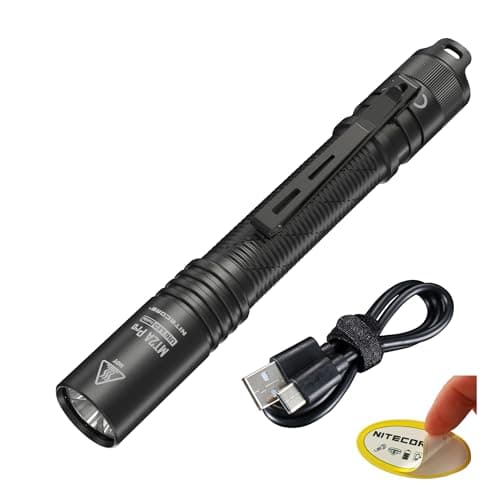 NITECORE MT2A Pro Best dual-power pocket light | 1,000 | Replaceable | 22 | $44.95 on Amazon Price as of September 17, 2026 — 22 lumens per dollar. #ad How we earn |
| 3 | 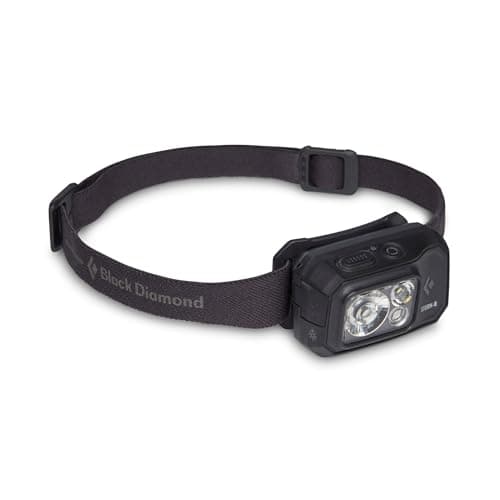 Black Diamond Storm 500-R Best lamp to put on a helmet | 500 | Sealed | 8 | $65.64 on Amazon Price as of September 17, 2026 — 8 lumens per dollar. #ad How we earn |
| 4 | 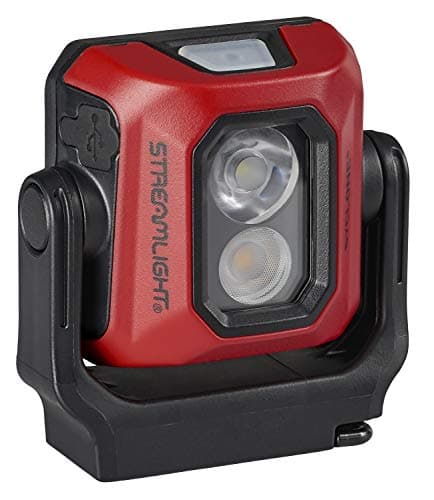 Streamlight Syclone Best work light with a 90 CRI flood | 400 | Sealed | 7 | $60.99 on Amazon Price as of September 17, 2026 — 7 lumens per dollar. #ad How we earn |
| 5 | No listing image Wurkkos FC11 Best color quality per dollar | 1,300 | Replaceable | Needs a live price | Check price on Amazon We show a price only when we have pulled a live one. #ad How we earn |
Prices pulled September 17, 2026. Lumens per dollar is the manufacturer's published maximum output divided by that price, recomputed every time the price moves.
Green light: the strongest case on paper, with honest limits
The same table makes the case for green. Blood absorbs green strongly, so under green light it should appear dark, while anything that reflects green appears bright. Several manufacturers of hunting lights argue exactly this, and on the absorption data alone the reasoning is sound.
What the data does not tell you is how that theory performs in real woods, and there are specific reasons to be cautious rather than certain.
- The contrast depends on the background as much as on the blood. Living green foliage reflects green, which is the best case. Brown fall leaf litter and bare soil are a different surface, and we found no measurement of how much contrast green light gives on them.
- Absorption is not the same as visibility to your eye. Human color sensitivity at night is its own question, and the table says nothing about it.
- The confident field claims come from sellers. We found no independent comparative field test of green against high-CRI white on real blood trails, and we are not going to imply one exists.
So green is a reasonable choice with a real physical argument behind it, not a proven one. The only light we cover with a green mode is Black Diamond's Storm 500-R, and it is worth being precise: Black Diamond describes its green as a night-vision mode, not a tracking mode, and publishes no output figure for it.
High-CRI white: the option that cannot be wrong
A white light with high color rendering shows blood the way you would see it in daylight — red against brown and green — and your brain is very good at spotting that difference. It gives up the theoretical contrast boost of green, but it has no failure case: whatever surface the blood is on, a faithful white light renders it faithfully.
The catch is the same one this site raises about wiring and engine bays. Many inexpensive white LEDs are tuned for output and are relatively weak in red, which is precisely the color you need rendered well here. A 90-CRI emitter restores that red end. Wurkkos publishes a 90-CRI emitter for the FC11 and Streamlight publishes 90 CRI for the Syclone flood. Our review of the FC11 explains what 90 CRI changes in practice.
Candlepower and beam shape on a trail
One of the few trailing guides we found from an outdoors publication rather than a light manufacturer makes a simple recommendation. Grand View Outdoors, in its guide to bloodtrailing after dark, says: "Maximum candlepower is the key to following a blood trail in the dark." It does not discuss color at all, and we are quoting it only for that point.
Candlepower is intensity in a direction, which on a flashlight comes from a tight, bright hotspot. That is useful for picking out a distant mark on a trunk or finding where a trail resumes across a clearing. But searching the ground at your feet is a flood job, and a very tight hotspot at close range blows out your pupil response and darkens everything outside the circle. The practical answer is a light that can do both, or two lights: a focused beam to look ahead and a wide one to search close. Our guide to lumens versus candela explains why those two figures move independently.
1. The throw comparison, not a value pick
Fenix C7 V2.0
Lumens per dollar
41
Thirty-three hundred lumens and 575 meters of throw with an IP68 rating. It appears here as a reference point: this is what a well-built high-output light costs, and it is the number every budget 10,000-lumen claim should be measured against.
- Max output
- 3,300 lm
- Runtime
- Not published per mode on the retail page
- Battery
- Replaceable cell
- Water rating
- IP68
What it gets right
- Five hundred and seventy-five meters is real throw, not a marketing figure
- IP68 and a magnetic tail
- Removable cell
What it gets wrong
- Expensive by this site's standards
- No per-mode runtime on the retail page
- A dedicated thrower is the wrong shape of light for most jobs
Published specification
- Maximum output: 3,300 lumens — Fenix published specification
- Beam distance: 1,886 ft (575 m) — Fenix published specification
- Water rating: IP68 — Fenix published specification
- Body: Ultra-thick A6061-T6 aluminum — Fenix published specification
- Charging: Inner-waterproofed USB-C — Fenix published specification
- Fittings: Magnetic tail, lockout mode — Fenix published specification
- Per-mode runtime: Not published on the retail page we read
Skip this one if
you want one light for the house. A thrower puts its light in a small circle a long way away, which is not what you want indoors.
Buy it if: search work, large properties and anyone who genuinely needs to see a third of a mile.
- Output 9.5
- Battery 9.0
- Build 9.5
- Usability 8.0
- Overall 8.5
Price as of September 17, 2026 — 41 lumens per dollar. #ad How we earn
2. Best dual-power pocket light
NITECORE MT2A Pro
Lumens per dollar
22
A thousand lumens and 255 meters out of a penlight body that runs on its own removable 14500 or on two AA cells from any shop on earth. IP68 on top. It is the rare light that answers the shelf-life problem and the output problem in the same package.
- Max output
- 1,000 lm
- Runtime
- 20 h
- Battery
- Replaceable cell
- Water rating
- IP68
What it gets right
- Dual power: a removable 14500 for output, or two AA cells when there is no charger
- IP68 to two meters, which almost nothing at this size publishes
- Two hundred and fifty-five meters of throw from a penlight-shaped body
- The charging port is in the cell, so a spare cell charges while the light is in use
What it gets wrong
- NITECORE publishes only the maximum runtime, not a figure per mode
- On alkaline AA cells the output is far below the 1,000-lumen headline
- A penlight body is long for its diameter and rolls off a sloped surface
Published specification
- Maximum output: 1,000 lumens — NITECORE published specification
- Peak beam intensity: 16,500 cd — NITECORE published specification
- Beam distance: 255 m — NITECORE published specification
- Battery: 2 x AA, or 1 x NL1416R 14500 Li-ion with USB-C charging in the cell — NITECORE published specification
- Water rating: IP68, submersible to 2 m — NITECORE published specification
- Impact: 1 m — NITECORE published specification
- Weight: 40 g (1.41 oz) without battery — NITECORE published specification
- Length: 142.8 mm — NITECORE published specification
- Modes: Three brightness levels, single tail switch — NITECORE published specification
- Maximum runtime: 20 hours at 50 lumens — NITECORE published specification
- Per-mode runtime: Not published on the product page
Skip this one if
you want the smallest possible pocket light. At 142.8 mm this is a long, thin light rather than a short one, and that shape suits a shirt pocket better than a jeans pocket.
Buy it if: anyone who wants one light for both daily use and the drawer, and refuses to be stopped by a flat cell.
- Output 8.0
- Battery 9.5
- Build 9.0
- Usability 8.0
- Overall 8.6
Price as of September 17, 2026 — 22 lumens per dollar. #ad How we earn
3. Best lamp to put on a helmet
Black Diamond Storm 500-R
Lumens per dollar
8
Five hundred lumens for seven hours, three hundred and fifty hours on low, IP67, a digital lockout and four light colors — and Black Diamond publishes a runtime and a beam distance for every one of its modes. On a lamp bought for weather and for long nights, that completeness is the product.
- Max output
- 500 lm
- Runtime
- 7 h
- Battery
- Sealed
- Water rating
- IP67
What it gets right
- Runtime and beam distance published for all three white modes
- Three hundred and fifty hours on low is a genuine unplanned-bivvy reserve
- IP67 and a digital lockout, which is the pair that matters in a pack
- Four light colors, so red is available without cycling through white
What it gets wrong
- Micro-USB in a year when everything else is USB-C
- Integrated 2,400 mAh cell — no spare, no re-cell
- One hundred and twenty grams is heavy against the ultralight class
- Black Diamond publishes lumen figures for high only, not for medium or low
Published specification
- High: 500 lumens, 7 hours, 120 m — Black Diamond published specification
- Medium: 19 hours, 60 m — Black Diamond published specification
- Low: 350 hours, 12 m — Black Diamond published specification
- Battery: Integrated 2,400 mAh Li-ion, micro-USB — Black Diamond published specification
- Water rating: IP67 — Black Diamond published specification
- Weight: 120 g — Black Diamond published specification
- Light colors: White, plus red, green and blue night-vision modes — Black Diamond published specification
- Lock mode: Digital lockout — Black Diamond published specification
- Per-mode output: Lumen figures published for high only
Skip this one if
you are counting grams. At 120 g this is nearly three times the mass of the lightest lamp we cover, and on a long approach you will notice it.
Buy it if: anyone whose lamp has to survive weather, live in a pack without switching itself on, and still be running at the end of a long day.
- Output 7.5
- Battery 5.5
- Weight 6.0
- Usability 9.5
- Overall 7.9
Price as of September 17, 2026 — 8 lumens per dollar. #ad How we earn
4. Best work light with a 90 CRI flood
Streamlight Syclone
Lumens per dollar
7
Four hundred lumens of spot for two hours or 300 lumens of 90-CRI flood for the same, in a 5.3-ounce body that clips, magnets and stands. Every mode's runtime is published, including the flood modes most brands ignore.
- Max output
- 400 lm
- Runtime
- 2 h
- Battery
- Sealed
- Water rating
- IPX4
What it gets right
- A 90 CRI flood, which matters more than lumens when you are diagnosing anything
- Spot and flood in one body with runtimes published for both
- Magnet, clip and a stand that lets it point where you need it
What it gets wrong
- Sealed lithium-polymer cell
- IPX4 — it handles a splash and not a puddle
- Four hundred lumens is modest if you want to light a whole garage
Published specification
- Spot high: 400 lumens, 141 m, 2 hours — Streamlight published specification
- Spot medium: 200 lumens, 95 m, 4.5 hours — Streamlight published specification
- Spot low: 100 lumens, 72 m, 9.5 hours — Streamlight published specification
- Flood high: 300 lumens, 48 m, 2 hours, 90 CRI — Streamlight published specification
- Flood low: 75 lumens, 24 m, 8 hours — Streamlight published specification
- Battery: Lithium-polymer, USB rechargeable, 4.5 h charge — Streamlight published specification
- Water rating: IPX4 — Streamlight published specification
- Impact: 2 m tested — Streamlight published specification
- Weight: 5.3 oz (150 g) — Streamlight published specification
Skip this one if
you need to flood a large space. This is an arm's-reach light; a lantern or a panel does big areas better.
Buy it if: mechanics and electricians who need to see true color at close range.
- Output 6.5
- Battery 5.0
- Build 8.5
- Usability 9.0
- Overall 7.6
Price as of September 17, 2026 — 7 lumens per dollar. #ad How we earn
listing
image
5. Best color quality per dollar
Wurkkos FC11
Lumens per dollar
Computed the moment we have a live price for it
A 90-CRI emitter at a price where nobody else bothers, which means colors look like colors rather than like a parking lot. Same replaceable 18650 story as the Sofirn, plus a magnetic tail that turns it into a work light.
- Max output
- 1,300 lm
- Runtime
- Not published per mode
- Battery
- Replaceable cell
- Water rating
- IPX7
What it gets right
- 90 CRI at a price where 70 CRI is normal — skin, wiring and paint read correctly
- Magnetic tailcap sticks it to anything ferrous and frees both hands
- Standard 18650, USB-C charging in the light
- Two mode groups, so you can pick a simple ramp or a stepped set
What it gets wrong
- IPX7 rather than IPX8 — fine for rain, not for a river
- High CRI costs raw lumens; the Sofirn is visibly brighter on turbo
- No per-mode runtime published on the product page
Published specification
- Maximum output: 1,300 lumens — Wurkkos published specification
- Beam distance: 144 m (157 yd) — Wurkkos published specification
- Battery: 1 x 18650 Li-ion, user replaceable — Wurkkos published specification
- Water rating: IPX7 — Wurkkos published specification
- Weight: 65 g +/- 1 g without battery — Wurkkos published specification
- Length: 116.23 mm — Wurkkos published specification
- Emitter: Nichia 519A / LH351D, 90 CRI — Wurkkos published specification
- Body: 6061 aluminum, type III hard anodized — Wurkkos published specification
Skip this one if
the only number you care about is peak output. You are paying part of this light's budget for color accuracy, and if you will never notice that, the money is better spent elsewhere.
Buy it if: anyone who uses a flashlight to look at things closely — wiring, paint, engine bays, a face — rather than to light up a field.
- Output 7.5
- Battery 9.5
- Build 8.0
- Usability 8.0
- Overall 8.4
We show a price only when we have pulled a live one. #ad How we earn
Claims we could not verify, stated plainly
- Ultraviolet for blood. Blood-tracking UV lights are marketed widely. We could not find an independent source supporting UV for finding blood on a trail, and the UV claims we traced came from sellers. We are not recommending UV for this job.
- Strobe modes that make blood stand out. One manufacturer argues a strobe improves detection, citing older laboratory research on flicker sensitivity. Applying that to a blood trail in the woods is the seller's extrapolation, and we found no field test of it.
- Special tracking filters and colored lenses. These rest on the same absorption physics as green light, with the same limits, and their specific performance claims come from the companies selling them.
A long night on one light
A difficult track can take hours, and a light that dies partway through is the worst outcome on this page. That makes runtime and power source a real criterion, not a footnote. NITECORE's MT2A Pro runs on its own removable 14500 or on two ordinary AA cells, so a spare pair in a pocket means it does not run out. Black Diamond publishes 350 hours on the Storm 500-R's low mode and 7 hours at 500 lumens.
The honest limit on several of these lights is published runtime at the setting you would actually track on. Wurkkos publishes no per-mode runtime on the FC11 product page, NITECORE publishes only a maximum, and Fenix publishes none on the retail page we read for the C7 V2.0. Cold also shortens every published figure, because lithium cells deliver less of their capacity as temperature drops. Carry a backup, and keep the spare cells warm in an inside pocket.
How we ranked these
The four scored attributes published on our methodology page — output against live price, battery architecture, build as evidenced by published ratings, and usability — with color rendering treated as part of output quality, because on a blood trail the question is whether you can see red, not how much light you have. The criteria above are about color, candlepower and runtime rather than raw lumens, and each pick is described against them in its own write-up.
Units we claim to have tested: 0
Every publisher in this category says they tested twenty flashlights. We have not tested any, and we say so. What we do instead: compile the manufacturer's own published ANSI FL1 figures, pull the price the light is selling for right now, and divide one by the other. Every number on this page is one you can check yourself in about two minutes.
What we cannot tell you
We have not tracked game with any of these lights, and the central question on this page — which light color finds more blood in real woods — is one we could find no independent field test for. What we can offer is the one part that is measured rather than argued: the hemoglobin absorption table, which settles why red light is the wrong choice and why green and faithful white both have a sound basis. We cannot tell you how any of these beams look on wet leaves, how green compares with 90-CRI white on a fall trail, or how the tints differ in person. Nor can we advise on your state's rules for using a light while recovering game.
Common questions
What color light is best for tracking blood at night?
Not red. Published hemoglobin absorption data shows blood absorbs green far more strongly than red, so under red light blood reflects most of it and loses contrast against the ground. Green gives the strongest contrast in theory, and a high color-rendering white light shows blood as red against brown. We found no independent field test ranking green against high-CRI white, and most confident claims come from companies selling colored lights.
Does red light make blood hard to see?
Yes, and the reason is measurable. Hemoglobin absorbs very little red light — its molar extinction coefficient at 650 nm is a tiny fraction of its value in green — so under red light blood reflects most of what hits it, much as the surrounding ground does. The two end up at similar brightness. Red is the right color for preserving night vision on a stand, and the wrong color once you are searching a trail.
Does a UV light help you find blood?
We could not find an independent source supporting ultraviolet for finding blood on a trail, and we are not recommending it for this job. UV blood-tracking lights are widely marketed, but every claim for them we traced came from a company selling one. Treat UV tracking claims with caution until someone without a light to sell tests them.
How bright should a blood tracking flashlight be?
Brightness matters less than color and beam shape. A focused beam helps pick out a distant mark or find where a trail resumes, which is why one trailing guide stresses candlepower. Searching the ground at your feet is better done with a wide flood at moderate output, because a tight hotspot up close contracts your pupils and darkens everything around it. A light with both options, or two lights, covers the whole job.
Sources
- Scott Prahl, Oregon Medical Laser Center — hemoglobin molar extinction coefficients — tabulated HbO2 and Hb values at 416, 540, 576, 620, 650 and 700 nm, read 2026-09-16
- Grand View Outdoors, 8 Steps To Bloodtrailing After Dark — quoted for its lighting recommendation only, read 2026-09-16
- Wurkkos published product specifications and user manuals — read 2026-09-01
- Black Diamond published product specifications — Spot 400-R read 2026-09-01; Storm 500-R read 2026-09-14
- Streamlight published product specifications — per-mode lumens, runtime, beam distance, impact and IP ratings, read 2026-09-01
- NITECORE published product specifications — NU25 MCT UL read 2026-09-01; MT2A Pro read 2026-09-13
- Fenix published product specifications — read 2026-09-01
- Lumen & Ledger method — how every figure on this page is derived
Who writes this
Scooter M. — I am an enthusiast who is genuinely into this. I read the manuals, compile the published specs, and do the math. No lab coat, no test bench, no drawer of free samples. What I can tell you is exactly what a light claims on paper, exactly what it costs right now, and what those two numbers mean when you divide one by the other.
Read next
Best rechargeable headlamps for hunting
Red on one press, a cell you can swap in the cold, and a low mode that lasts the sit.
Wurkkos FC11 review
Ninety CRI at a price where seventy is normal, and what those seven hundred missing lumens buy you.
Lumens vs candela
One measures how much light there is. The other measures how far it goes.
Best headlamps with a red light
What red mode is actually for, and which lamps implement it properly.
Best rechargeable work lights for mechanics
Color accuracy, magnets and the ability to survive being dropped in a bay.
The Ledger
Every light we cover in one ranked table, sorted by lumens per dollar.