Flashlights
Best Flashlights for Hiking and Backpacking
Every gram goes up the hill with you and every hour has to come from something you can carry. That pair of constraints produces a different list from any other page here.
By Scooter M. · Published September 13, 2026

Short answer
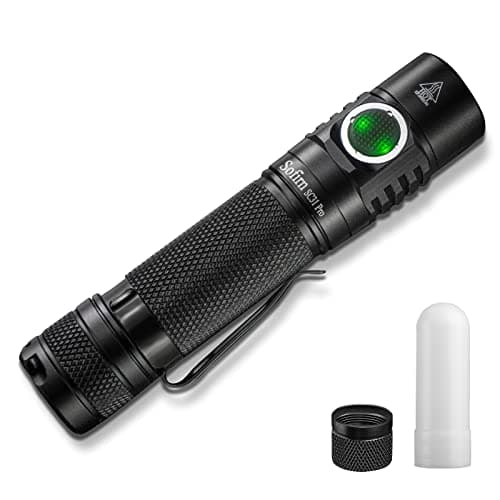
Sofirn SC31 Pro
Two thousand published lumens out of a standard 18650 you can buy anywhere for a few dollars, in a light that costs less than most brands charge for a keychain. The cell is the whole argument: when it dies in three years you replace a battery, not a flashlight.
Price as of September 14, 2026 — 47 lumens per dollar. #ad How we earn
Disclosure — we earn a commission on qualifying purchases made through the Amazon links on this page, at no extra cost to you. It does not change which lights we pick or what we say about them. The full version.
How we rank. Published ANSI FL1 output divided by the live retail price, with sealed-battery lights marked down because a light you cannot re-cell is a light with an expiry date. Units we claim to have tested: 0 — we compile manufacturers' published figures and show the arithmetic instead. How we work this out.
What a trail light is actually judged on
Rank a hiking light on three things: what it weighs, how many hours it delivers at a usable setting, and whether you can put fresh power into it without a wall socket. NITECORE publishes 40 grams and IP68 for the MT2A Pro and builds it to run on either a removable 14500 or two ordinary AA cells, which answers all three at once. Maximum output is the fourth question, not the first.
Before the picks, the honest caveat: for most hiking, a headlamp is the better primary light, because the jobs are pitching a tent, cooking and walking, and all three want both hands. Our headlamp ranking for hiking and backpacking covers that properly. A handheld earns its place as the second light — for route-finding, for seeing something a long way off, and as the backup that means a failed headlamp is an inconvenience rather than an emergency.
Criterion one: grams, honestly accounted
Published weights on flashlights are frequently quoted without the cell, which is standard practice and easy to misread when you are counting pack weight. Wurkkos publishes 32 grams for the TS10 V2 without its battery; a 14500 adds roughly 20 grams. Sofirn publishes 59 grams for the SC31 Pro without its cell; an 18650 adds about 45. NITECORE publishes 40 grams for the MT2A Pro without a battery, and two AA cells add about 46.
Add the cell back before you compare anything, and the spread narrows considerably. It also means the lightest light on paper is not always the lightest in your pack, which is the sort of thing a specification table hides unless you read the footnote.
Criterion two: the cell you can buy in a trail town
This is the criterion that reorders the page. Three days out, a flat light with a proprietary or sealed cell is dead weight. A light that takes AA cells can be revived at any gas station, outfitter or general store in the country, and that is a genuinely different level of reliability from anything a lumen figure describes.
| Light | Published weight | Power options | Water rating |
|---|---|---|---|
| NITECORE MT2A Pro | 40 g without cell | 2 x AA, or removable 14500 with USB-C in the cell | IP68, 2 m |
| ThruNite Archer 2A V3 | Not published | 2 x AA alkaline or Ni-MH | Not published |
| Wurkkos TS10 V2 | 32 g without cell | 14500, replaceable | IPX8, 2 m |
| Sofirn SC31 Pro | 59 g without cell | 18650, replaceable | IPX8 |
| Streamlight Siege AA | Not published | AA alkaline | IPX7 — and it floats |
The MT2A Pro leads this page because it refuses the choice. Its own cell charges over USB-C for daily use and gives the full 1,000 lumens; drop in two AA cells when that runs out and the light keeps working at lower output. For a multi-day trip that combination is worth more than several hundred lumens, and it is the same argument our hybrid headlamp pick wins on.
| # | Light | Max output | Battery | Lumens / $ | Price |
|---|---|---|---|---|---|
| 1 | Sofirn SC31 Pro Best lumens per dollar overall | 2,000 | Replaceable | 47 | $42.99 on Amazon Price as of September 14, 2026 — 47 lumens per dollar. #ad How we earn |
| 2 | 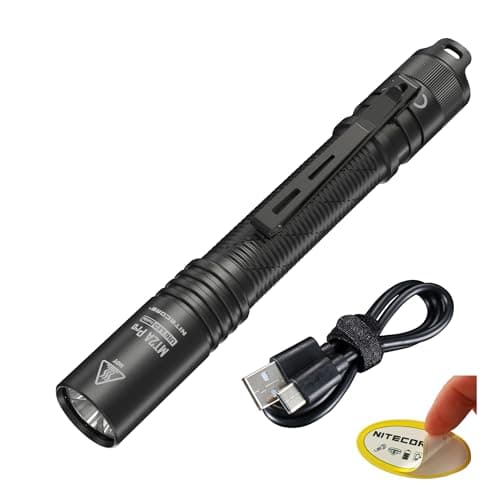 NITECORE MT2A Pro Best dual-power pocket light | 1,000 | Replaceable | 22 | $44.95 on Amazon Price as of September 14, 2026 — 22 lumens per dollar. #ad How we earn |
| 3 | 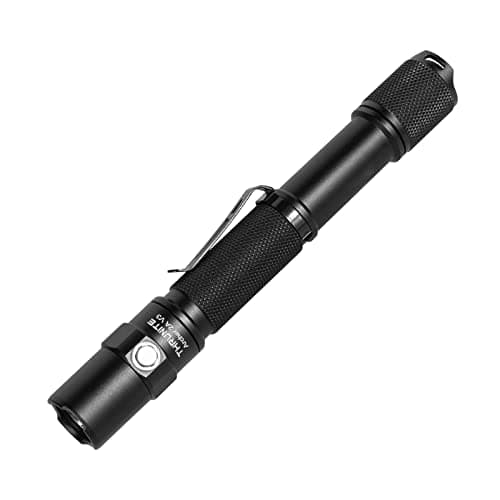 ThruNite Archer 2A V3 Best light that runs on batteries from any gas station | 500 | AA / AAA | 22 | $22.95 on Amazon Price as of September 14, 2026 — 22 lumens per dollar. #ad How we earn |
| 4 | 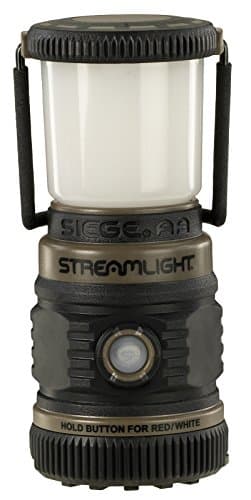 Streamlight Siege AA Best outage lantern that floats | 200 | AA / AAA | 6 | $32.49 on Amazon Price as of September 14, 2026 — 6 lumens per dollar. #ad How we earn |
| 5 | No listing image Wurkkos TS10 V2 Best pocket light under two ounces | 1,400 | Replaceable | Needs a live price | Check price on Amazon We show a price only when we have pulled a live one. #ad How we earn |
Prices pulled September 14, 2026. Lumens per dollar is the manufacturer's published maximum output divided by that price, recomputed every time the price moves.
Criterion three: hours at a usable setting
Very little of a hiking trip is spent at maximum output. Camp chores, cooking, finding things in a pack and moving around after dark all sit between 5 and 100 lumens, and that is where the hours need to be. NITECORE publishes 20 hours at 50 lumens on the MT2A Pro; Wurkkos publishes six hours forty-three minutes at one lumen on the TS10 V2; Streamlight publishes 50 lumens for 37 hours on the Siege AA.
Where a manufacturer publishes only a maximum runtime with no per-mode breakdown, as NITECORE and ThruNite both do here, treat that figure as describing the lowest setting the light has. That is the convention across the category and it is why our runtime guide spends so much time on which mode a number belongs to.
1. Best lumens per dollar overall
Sofirn SC31 Pro
Lumens per dollar
47
Two thousand published lumens out of a standard 18650 you can buy anywhere for a few dollars, in a light that costs less than most brands charge for a keychain. The cell is the whole argument: when it dies in three years you replace a battery, not a flashlight.
- Max output
- 2,000 lm
- Runtime
- Not published per mode
- Battery
- Replaceable cell
- Water rating
- IPX8
What it gets right
- Standard 18650 cell — replacements cost a few dollars and are sold everywhere
- IPX8, the strongest water rating in this price class
- USB-C charging built into the light, so no separate charger to lose
- Anduril firmware gives real ramping control rather than four fixed steps
What it gets wrong
- Sofirn publishes no per-mode runtime figures on the product page
- Anduril is genuinely confusing for the first week
- Tint varies between batches, which is the price of this price
Published specification
- Maximum output: 2,000 lumens — Sofirn published specification
- Beam distance: 226 m — Sofirn published specification
- Battery: 1 x 18650 Li-ion, user replaceable — Sofirn published specification
- Charging: USB-C, 2.5 hours with a 2A adapter — Sofirn published specification
- Water rating: IPX8 — Sofirn published specification
- Weight: 59 g without battery — Sofirn published specification
- Length: 117.5 mm — Sofirn published specification
- Emitter: SST40, 5000K or 6500K — Sofirn published specification
- Per-mode runtime: Not published on the product page
Skip this one if
you want to press one button and get one brightness. Anduril has a shortcut for everything and a menu for everything else, and if that sounds tiring you will be happier with a three-mode light.
Buy it if: anyone who intends to keep the light for longer than the battery lasts, and does not mind reading a manual once.
- Output 9.0
- Battery 9.5
- Build 8.0
- Usability 7.0
- Overall 8.6
Price as of September 14, 2026 — 47 lumens per dollar. #ad How we earn
2. Best dual-power pocket light
NITECORE MT2A Pro
Lumens per dollar
22
A thousand lumens and 255 meters out of a penlight body that runs on its own removable 14500 or on two AA cells from any shop on earth. IP68 on top. It is the rare light that answers the shelf-life problem and the output problem in the same package.
- Max output
- 1,000 lm
- Runtime
- 20 h
- Battery
- Replaceable cell
- Water rating
- IP68
What it gets right
- Dual power: a removable 14500 for output, or two AA cells when there is no charger
- IP68 to two meters, which almost nothing at this size publishes
- Two hundred and fifty-five meters of throw from a penlight-shaped body
- The charging port is in the cell, so a spare cell charges while the light is in use
What it gets wrong
- NITECORE publishes only the maximum runtime, not a figure per mode
- On alkaline AA cells the output is far below the 1,000-lumen headline
- A penlight body is long for its diameter and rolls off a sloped surface
Published specification
- Maximum output: 1,000 lumens — NITECORE published specification
- Peak beam intensity: 16,500 cd — NITECORE published specification
- Beam distance: 255 m — NITECORE published specification
- Battery: 2 x AA, or 1 x NL1416R 14500 Li-ion with USB-C charging in the cell — NITECORE published specification
- Water rating: IP68, submersible to 2 m — NITECORE published specification
- Impact: 1 m — NITECORE published specification
- Weight: 40 g (1.41 oz) without battery — NITECORE published specification
- Length: 142.8 mm — NITECORE published specification
- Modes: Three brightness levels, single tail switch — NITECORE published specification
- Maximum runtime: 20 hours at 50 lumens — NITECORE published specification
- Per-mode runtime: Not published on the product page
Skip this one if
you want the smallest possible pocket light. At 142.8 mm this is a long, thin light rather than a short one, and that shape suits a shirt pocket better than a jeans pocket.
Buy it if: anyone who wants one light for both daily use and the drawer, and refuses to be stopped by a flat cell.
- Output 8.0
- Battery 9.5
- Build 9.0
- Usability 8.0
- Overall 8.6
Price as of September 14, 2026 — 22 lumens per dollar. #ad How we earn
3. Best light that runs on batteries from any gas station
ThruNite Archer 2A V3
Lumens per dollar
22
Five hundred lumens on two AA cells. It will never win a lumens-per-dollar contest against an 18650 light, and it does not need to: it is the light that still works when you are three days into an outage and the only thing left in the store is alkalines.
- Max output
- 500 lm
- Runtime
- Not published per mode
- Battery
- AA / AAA
- Water rating
- None published
What it gets right
- Runs on the most widely stocked battery on earth
- No lithium cell to self-discharge in a glovebox for two years
- Forward clicky switch, so you can signal without cycling modes
What it gets wrong
- AA alkalines sag hard under load; 500 lumens is a brief 500 lumens on them
- No published runtime or water rating on the product page
- Rechargeable it is not — the running cost is on you
Published specification
- Maximum output: 500 lumens, turbo — ThruNite published specification
- Battery: 2 x AA alkaline or 2 x AA NiMH (not included) — ThruNite published specification
- Modes: Five — ThruNite published specification
- Switch: Forward clicky with momentary-on — ThruNite published specification
- Protection: Reversed-polarity protection — ThruNite published specification
- Clip: Reversible, removable, titanium coated — ThruNite published specification
- Per-mode runtime: Not published on the product page
- Water rating: Not published on the product page
Skip this one if
this is your only light and you will use it daily. Feeding a daily-use light on disposable AAs is the single most expensive way to own a flashlight, which is the entire reason this site exists.
Buy it if: the glovebox, the storm kit, and the drawer you open twice a year.
- Output 6.0
- Battery 7.0
- Build 8.0
- Usability 8.5
- Overall 7.4
Price as of September 14, 2026 — 22 lumens per dollar. #ad How we earn
4. Best outage lantern that floats
Streamlight Siege AA
Lumens per dollar
6
Two hundred lumens for seven hours, fifty for thirty-seven, and a red night-vision mode Streamlight rates at 192 hours. It runs on AA cells, it is IPX7, and it floats. For a storm shelf that is the correct specification.
- Max output
- 200 lm
- Runtime
- 7 h
- Battery
- AA / AAA
- Water rating
- IPX7
What it gets right
- AA cells store for a decade and are available anywhere, including mid-outage
- IPX7 and it floats, which is the correct answer for a flooded basement
- Runtime published for all five modes, including the 8-day red mode
What it gets wrong
- Two hundred lumens is dim next to a rechargeable lantern
- No rechargeable option in this version
- Removable cover changes the beam pattern and is easy to lose
Published specification
- White high: 200 lumens, 7 hours — Streamlight published specification
- White medium: 100 lumens, 15.5 hours — Streamlight published specification
- White low: 50 lumens, 37 hours — Streamlight published specification
- Red high: 0.7 lumens, 192 hours (8 days) — Streamlight published specification
- SOS flash: 0.7 lumens, 288 hours (12 days) — Streamlight published specification
- Battery: AA alkaline — Streamlight published specification
- Water rating: IPX7, 1 m — and it floats — Streamlight published specification
- Impact: 2 m tested — Streamlight published specification
Skip this one if
you want a bright camp lantern. This is an endurance light, not an area light.
Buy it if: the storm shelf, the boat and the basement that occasionally has water in it.
- Output 4.5
- Battery 9.5
- Build 9.0
- Usability 8.5
- Overall 7.9
Price as of September 14, 2026 — 6 lumens per dollar. #ad How we earn
listing
image
5. Best pocket light under two ounces
Wurkkos TS10 V2
Lumens per dollar
Computed the moment we have a live price for it
Thirty-two grams, three 90-CRI emitters, and one of the very few budget lights whose maker publishes the runtime at maximum output: one hour fourteen at 1,400 lumens. Publishing that number at all puts Wurkkos ahead of several brands ten times its size.
- Max output
- 1,400 lm
- Runtime
- 1 h 14 min
- Battery
- Replaceable cell
- Water rating
- IPX8
What it gets right
- Wurkkos publishes runtime at maximum output, which most brands quietly do not
- Thirty-two grams — light enough that you stop noticing it in a pocket
- Standard 14500 cell, replaceable
- Documented automatic step-down instead of an undocumented one
What it gets wrong
- A 14500 is a small cell; sustained output is not this light's job
- RGB auxiliary LEDs are a toy, and they draw from the same cell
- Anduril again, with the same learning curve
Published specification
- Maximum output: 1,400 lumens — Wurkkos published specification
- Runtime at maximum: 1 h 14 min — Wurkkos published specification
- Runtime at 1 lumen: 6 h 43 min — Wurkkos published specification
- Battery: 1 x 14500 Li-ion, user replaceable — Wurkkos published specification
- Water rating: IPX8, 2 m — Wurkkos published specification
- Weight: 32 g +/- 1 g without battery — Wurkkos published specification
- Length: 71.5 mm — Wurkkos published specification
- Thermal behavior: Automatic step-down from turbo to high — Wurkkos published specification
Skip this one if
you need something to run for an hour on high without getting hot. A light this small has nowhere to put the heat, and the step-down is not optional.
Buy it if: the person who wants a real light on them at all times and will not carry anything heavier than a pen.
- Output 8.0
- Battery 8.0
- Build 7.5
- Usability 7.5
- Overall 8.2
We show a price only when we have pulled a live one. #ad How we earn
Cold, and what it does to your published figures
Every runtime figure on this page was measured at room temperature. Lithium cells deliver less of their capacity as temperature falls and recover when they warm up, so shoulder-season and winter trips should treat published numbers as optimistic rather than as a plan.
Alkaline AA cells are worse than lithium in cold, which is the one place the dual-power argument weakens — so if you expect genuinely low temperatures, carry lithium primary AA cells rather than alkaline for the fallback. They cost more, they last far longer on a shelf, and they hold up at temperatures where alkalines sag badly. Keeping the spare in an inside pocket rather than a pack lid does more than any of this, and costs nothing.
The same physics is why a light that has been in a pack all day sometimes seems dim for the first minute and then brightens. That is the cell warming under load rather than the light failing, and our page on how long rechargeable flashlights last covers the difference between temporary and permanent capacity loss.
Weather, which is not optional on a trail
NITECORE publishes IP68 to two meters on the MT2A Pro and Wurkkos IPX8 to two meters on the TS10 V2 — both strong ratings and both unusual at their size. Sofirn publishes IPX8 on the SC31 Pro. Streamlight publishes IPX7 on the Siege AA and adds that it floats, which matters near water in a way no other rating does.
ThruNite publishes no water rating at all for the Archer 2A V3, and on a light being recommended for the outdoors that is a real gap rather than a footnote. It is included here for its AA power and its forward clicky switch, and the missing rating is the reason it does not finish higher. Our guide to IP ratings explains what each figure promises and why a blank is itself information.
Why the handheld earns its place: beam shape
The specific job a handheld does better than a headlamp on a trail is looking at something far away — a cairn, a blaze on a tree, the far side of a creek crossing, a col you are trying to identify against the skyline. That is a throw problem, and throw comes from the size of the reflector rather than from raw output.
A handheld has room for a bigger head than anything you would strap to your forehead, so it converts lumens into distance far more efficiently. NITECORE publishes 16,500 candela and 255 meters for the MT2A Pro from 1,000 lumens; the NU25 headlamp publishes 132 meters from 400. Roughly double the reach, and that gap is optics rather than power. Our guide to lumens versus candela explains why the two figures move independently.
The second job is shadow. A headlamp sits beside your eyes, so its beam casts almost no visible shadow and surfaces look flat — which is exactly wrong when you are trying to read the texture of ground, judge how deep a puddle is, or find a foot placement. Hold a light out to the side and the relief comes back immediately.
The backup argument, stated plainly
The strongest reason to carry a handheld as well as a headlamp has nothing to do with beam quality. Two independent light sources on different power systems means that no single failure leaves you in the dark, and on a trail at night that is a safety margin rather than a convenience.
The cheapest version of this is genuinely cheap: a small AA-powered handheld weighs very little, costs a fraction of a good headlamp, and has a completely different failure mode from a rechargeable lamp. If your headlamp is sealed and rechargeable, deliberately making the backup something that eats ordinary cells is the sensible pairing, because then a dead power bank cannot take out both.
The lantern nobody packs and probably should
The Streamlight Siege AA is on this list deliberately and it is not a flashlight. In camp, a small area light means nobody is holding anything or pointing a beam into anyone's face while you cook and eat, and it turns a tent into a room. It publishes 200 lumens for seven hours, 50 for thirty-seven, and a red mode Streamlight rates at 192 hours.
It is a weight decision and not everyone will make it. If you camp with other people it is close to transformative; if you are moving fast and solo it is a luxury. Standardizing it on the same AA cells as your handheld makes the spares situation much simpler either way, and our camping lantern ranking covers the alternatives.
What to leave at home
Two things people pack and should not. A spare set of alkaline AA cells for a light that will be run on lithium anyway, which is dead weight you will carry for a week and bring home — carry one chemistry and commit to it. And a second bright handheld, which duplicates a capability you already have instead of covering a gap: if you want redundancy, the second light should be tiny and run on something different, not a copy of the first.
The corollary is that the weight saved is better spent on a small area light for camp than on a brighter beam. A 200-lumen lantern changes evenings; a second 1,000-lumen handheld changes nothing you do.
How we ranked these
The four scored attributes published on our methodology page — output against live price, battery architecture, build as evidenced by published ratings, and usability — with battery architecture read as resupply rather than as long-term ownership cost. A light you can feed from a shop in a trail town scores above one that is cheaper per lumen, which is why the dual-power lights lead a field containing brighter ones.
Units we claim to have tested: 0
Every publisher in this category says they tested twenty flashlights. We have not tested any, and we say so. What we do instead: compile the manufacturer's own published ANSI FL1 figures, pull the price the light is selling for right now, and divide one by the other. Every number on this page is one you can check yourself in about two minutes.
What we cannot tell you
We have not carried any of these on a trail. We cannot tell you how the beams read on a rooty path at 5 a.m., how each switch behaves with cold hands, how any of them survive a season in a hip-belt pocket, or how the published runtimes hold up well below freezing — which is exactly where lithium cells stop matching their datasheets. What we can do is read five published specifications and rank them against the two constraints that define this use case, which are pack weight and distance from a socket. Where a figure is missing from a manufacturer's sheet we have said so rather than estimating around it, which is why several cells in the table above are blank.
Common questions
Do I need a flashlight if I have a headlamp for hiking?
As a backup, yes — a failed or flat headlamp on a trail is a genuine problem, and a small handheld turns it into an inconvenience. A handheld is also better for route-finding and for seeing something a long way off, because a larger head throws further per lumen than anything you would strap to your face. For the actual jobs of camp and walking, the headlamp is the primary light.
What batteries are best for a hiking flashlight?
Something you can replace on the trail. Lights that take AA cells can be revived anywhere, which is why NITECORE's MT2A Pro and ThruNite's Archer 2A V3 rank well here despite neither being the brightest option. A removable lithium cell plus a charged spare is the next best answer. A sealed light is the one to avoid for multi-day use, because when it is flat your trip continues without it.
How many lumens do you need for hiking at night?
Between 100 and 300 lumens for walking on a trail, and far less in camp — 5 to 50 lumens covers cooking, finding things in a pack and moving around a tent. Buy on the runtime at those lower settings rather than on the maximum. NITECORE publishes 20 hours at 50 lumens for the MT2A Pro, which is several nights of realistic camp use.
How long does a rechargeable flashlight battery last?
Lithium-ion cells are generally rated in charge cycles rather than years, and a cell that has lost enough capacity to be annoying is usually still working — just for half as long. Some manufacturers publish the figure: Petzl rates the CORE pack at 2 years or 300 charging cycles, and Maglite quotes up to 2,000 cycles for the LiFePO4 pack in the ML150LRS. Most brands publish nothing at all, which is why a replaceable cell matters more than any published cycle rating.
Sources
- NITECORE published product specifications — NU25 MCT UL read 2026-09-01; MT2A Pro read 2026-09-13
- ThruNite published product specifications — read 2026-09-01
- Wurkkos published product specifications and user manuals — read 2026-09-01
- Sofirn published product specifications — read 2026-09-01
- Streamlight published product specifications — per-mode lumens, runtime, beam distance, impact and IP ratings, read 2026-09-01
- Lumen & Ledger method — how every figure on this page is derived
Who writes this
Scooter M. — I am an enthusiast who is genuinely into this. I read the manuals, compile the published specs, and do the math. No lab coat, no test bench, no drawer of free samples. What I can tell you is exactly what a light claims on paper, exactly what it costs right now, and what those two numbers mean when you divide one by the other.
Read next
Best rechargeable headlamps for hiking and backpacking
Days between chargers changes the answer: runtime per gram, and a cell you can feed.
Best flashlights for camping
Three nights off-grid is a runtime problem with a weight constraint.
Rechargeable vs battery flashlights
Five dimensions, one table, and a verdict that depends on where the light lives.
IP and IPX ratings explained
What IPX4, IPX7 and IP68 mean, and why a missing rating is information too.
Best rechargeable lanterns for camping
Weight, warm light and the low-mode figure that gets you through a night.
The Ledger
Every light we cover in one ranked table, sorted by lumens per dollar.