Flashlights
Best Flashlights for Travel
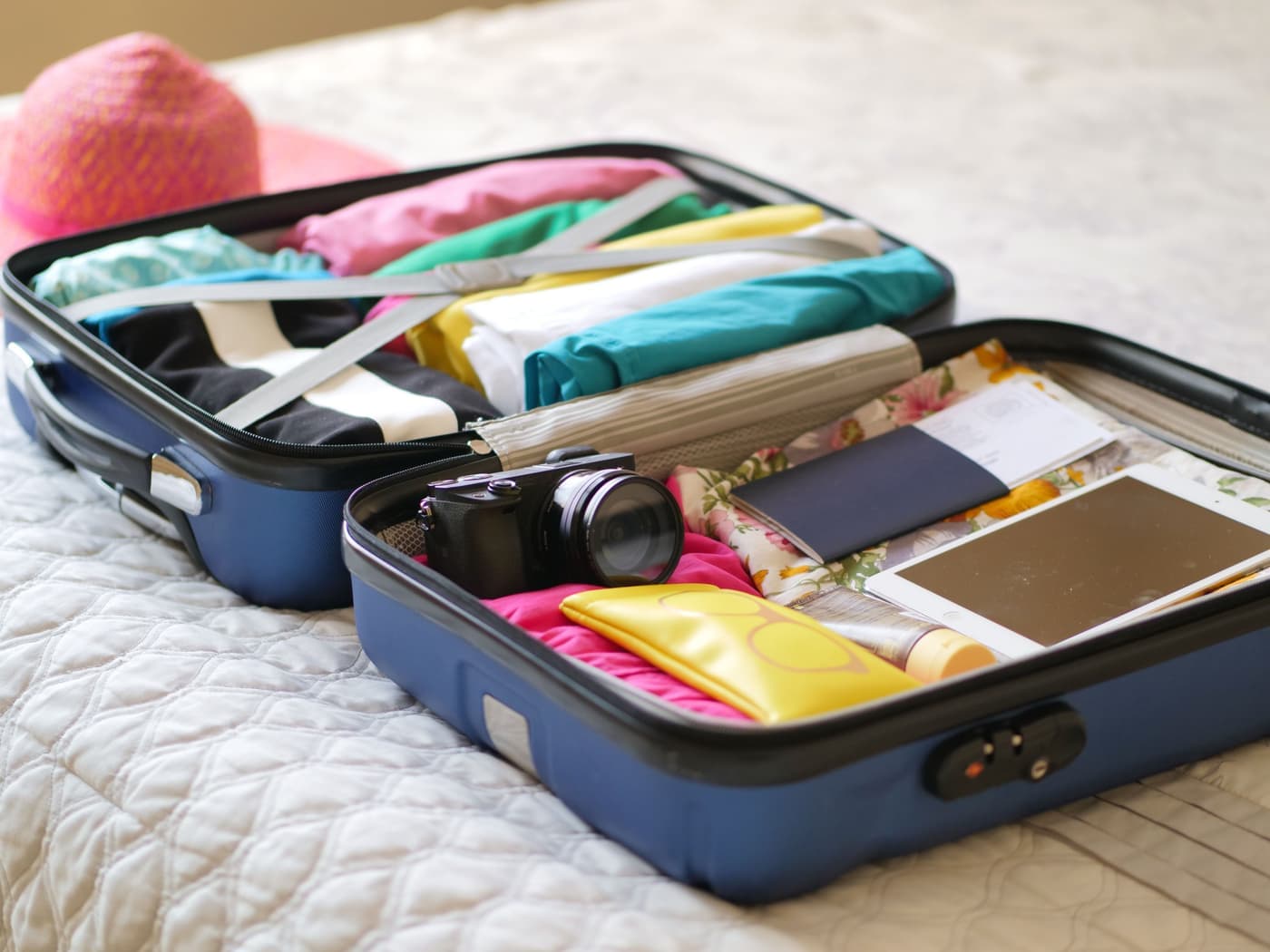
A travel light is judged in a bag, at a security belt, and in a hotel room at 2 a.m. None of those is a lumen contest, and one of them has rules.
By Scooter M. · Published September 18, 2026
Short answer
NITECORE MT2A Pro
A thousand lumens and 255 meters out of a penlight body that runs on its own removable 14500 or on two AA cells from any shop on earth. IP68 on top. It is the rare light that answers the shelf-life problem and the output problem in the same package.
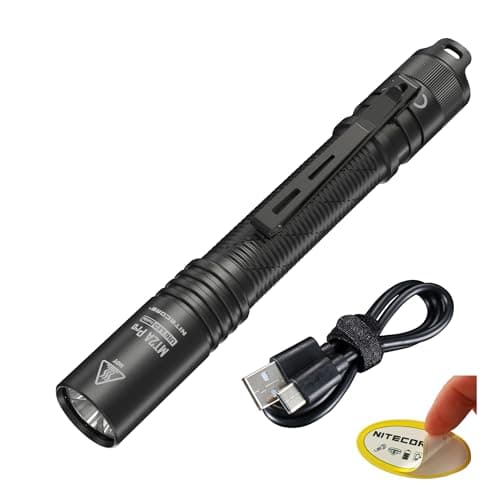
Price as of September 18, 2026 — 22 lumens per dollar. #ad How we earn
Disclosure — we earn a commission on qualifying purchases made through the Amazon links on this page, at no extra cost to you. It does not change which lights we pick or what we say about them. The full version.
How we rank. Published ANSI FL1 output divided by the live retail price, with sealed-battery lights marked down because a light you cannot re-cell is a light with an expiry date. Units we claim to have tested: 0 — we compile manufacturers' published figures and show the arithmetic instead. How we work this out.
What a travel light is actually judged on
Buy a travel flashlight on five things in this order: whether it fits the bag you actually carry, whether it charges from the cable you already pack, whether it has a lockout so it cannot switch on in luggage, whether you can buy its batteries in any country, and only then output. NITECORE publishes 40 grams, IP68 and dual power — its own USB-C cell or two ordinary AA — for the MT2A Pro, which answers all four of the first questions at once.
Almost nothing about a good travel light appears on the front of the box. The question people actually type before a trip is whether the thing is allowed on the plane at all, so that is answered first, from the source, before the picks.
Can you bring a flashlight on a plane?
Yes. The Transportation Security Administration's own list of what you can bring gives flashlights a plain answer for both bags: carry-on, "Yes"; checked, "Yes". The page adds nothing about a size limit and refers battery questions to the FAA.
The battery is where the real rule lives, and TSA states it directly: "Spare (uninstalled) lithium ion and lithium metal batteries, including power banks and cell phone battery charging cases, must be carried in carry-on baggage only." So the light itself can go in either bag, but a loose spare 18650, 21700 or 14500 cannot go in the hold. Keep spares in your carry-on.
TSA also describes an upper band that needs permission: "With airline approval, passengers may also carry up to two spare larger lithium ion batteries (101–160 Wh) or lithium metal batteries (2-8 grams)." A flashlight cell is nowhere near that band. Petzl publishes its CORE pack as 1,250 mAh at 3.6 V, which it states as 4.5 Wh; a 3,400 mAh 21700 like the one Fenix specifies for the HM65R V2.0 works out to roughly 12 Wh at the same nominal voltage. The approval rule is written for laptop-class batteries and does not touch a handheld light.
Criterion one: the bag you actually carry
Travel lights get left behind in exactly one way — they are too big for the pocket or pouch they were supposed to live in, so they migrate to the bottom of a suitcase, and a light at the bottom of a suitcase produces no light in a dark stairwell.
| Light | Published length | Published weight | Charging | Power |
|---|---|---|---|---|
| Olight i1R 2 PRO | About 51 mm (2.02 in) | Not published | USB-C | Sealed 130 mAh |
| Wurkkos TS10 V2 | 71.5 mm | 32 g without cell | USB-C | 14500, replaceable |
| Streamlight MicroStream | 98.3 mm (3.87 in) | 34.1 g (1.2 oz) | USB, in-product | Sealed Li-ion |
| NITECORE MT2A Pro | 142.8 mm | 40 g without cell | USB-C, in the cell | 2 x AA or 14500 |
| NITECORE NU25 MCT UL | Headlamp | 47 g with band | USB-C | Sealed 700 mAh |
The spread runs from a keyring light to a penlight, and the honest reading is that the long, thin MT2A Pro rides in a bag's pen loop or a jacket pocket while the TS10 V2 disappears into a front trouser pocket. Which is right depends on where you will keep it, and our pocket flashlight ranking sets out the size bands by pocket.
Criterion two: one cable for everything
You already pack a USB-C cable for a phone. A light that charges from the same cable costs you nothing to carry; a light that needs micro-USB, a proprietary magnetic puck or a cradle costs you a second cable and, eventually, a light that is flat because that cable stayed at home.
Four of the five lights here charge over USB-C. The MicroStream uses Streamlight's in-product USB charging, which is a small compromise stated rather than hidden. And the MT2A Pro does something worth understanding: its charging port is in the removable cell rather than in the light body, so the light has no port flap to fail, and a spare cell can charge on a nightstand while the light is in a pocket. Our page on charging a rechargeable flashlight covers the habits that keep a cell healthy on a trip.
Criterion three: lockout, because luggage presses switches
A light in a packed bag has things pressed against it for hours. Without a lockout it can switch itself on, run flat in silence and get hot against whatever it is packed with. Every serious light has some way to lock the switch, and the two things to check are how you engage it and whether you will remember to before the bag closes.
The zero-cost fallback works on any light with a removable cell, and is the one to use for a flight regardless: take the cell out, and carry it — in your carry-on, per the TSA rule above — in a case or a bag that keeps the terminals from touching metal. A light with no cell in it cannot switch on, and a bare spare cell should never rattle around a pocket with keys anyway.
| # | Light | Max output | Battery | Lumens / $ | Price |
|---|---|---|---|---|---|
| 1 | NITECORE MT2A Pro Best dual-power pocket light | 1,000 | Replaceable | 22 | $44.95 on Amazon Price as of September 18, 2026 — 22 lumens per dollar. #ad How we earn |
| 2 | 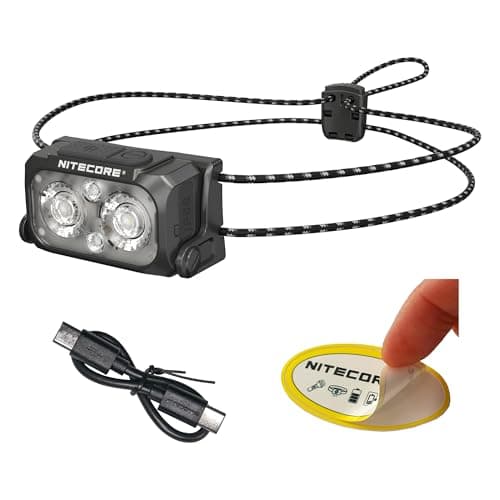 NITECORE NU25 MCT UL Lightest headlamp with a real published runtime | 400 | Sealed | 11 | $36.95 on Amazon Price as of September 18, 2026 — 11 lumens per dollar. #ad How we earn |
| 3 | 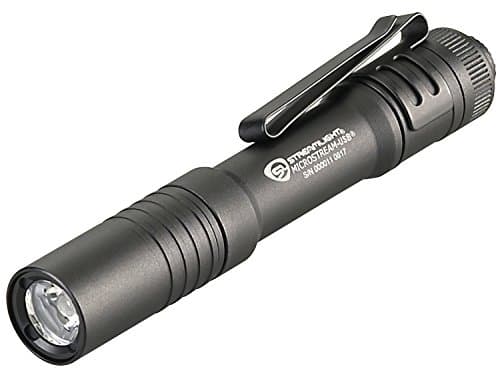 Streamlight MicroStream USB Best pen-clip light with published runtimes | 250 | Sealed | 6 | $40.89 on Amazon Price as of September 18, 2026 — 6 lumens per dollar. #ad How we earn |
| 4 | No listing image Wurkkos TS10 V2 Best pocket light under two ounces | 1,400 | Replaceable | Needs a live price | Check price on Amazon We show a price only when we have pulled a live one. #ad How we earn |
| 5 | No listing image Olight i1R 2 PRO Smallest light worth putting on a keyring | 180 | Sealed | Needs a live price | Check price on Amazon We show a price only when we have pulled a live one. #ad How we earn |
Prices pulled September 18, 2026. Lumens per dollar is the manufacturer's published maximum output divided by that price, recomputed every time the price moves.
Criterion four: power you can buy in any country
The travel failure that no charging habit fixes is a dead light in a place with no charger, no adapter and no time. Lithium cells and USB-C ports need a working socket somewhere. Two AA cells are on sale at every airport kiosk, corner shop and hotel desk on earth, in every plug standard, without an adapter.
That is why the MT2A Pro leads our criteria here even though it is not the smallest light on the page. It runs on its own rechargeable 14500 for the full 1,000 lumens, and on two AA cells when that is dead — the same dual-power argument our hiking ranking makes for trail resupply, applied to a country where you do not speak the language. Our comparison of rechargeable and disposable lights works the trade through in full.
Criterion five: enough light for a hotel, not a field
Travel light jobs are small and close: a hotel room with the wrong switch, a hostel dorm at 2 a.m., a power cut in an unfamiliar building, a rental car footwell, a stairwell, a path back from dinner. Ten to a hundred lumens covers nearly all of it, and a very bright light indoors reflects off pale walls straight back at you and wakes everyone else in the room.
So the low mode is the specification. Wurkkos publishes six hours forty-three minutes at one lumen on the TS10 V2; Olight publishes up to 12 hours on the i1R 2 PRO's 5-lumen setting; NITECORE publishes 20 hours at 50 lumens on the MT2A Pro. The NU25 headlamp is on this page for the dorm-room case specifically — reading or packing quietly with both hands free, on a 47-gram lamp with a red mode that does not wake a bunkmate. Our guide to how many lumens you actually need has the table by task.
1. Best dual-power pocket light
NITECORE MT2A Pro
Lumens per dollar
22
A thousand lumens and 255 meters out of a penlight body that runs on its own removable 14500 or on two AA cells from any shop on earth. IP68 on top. It is the rare light that answers the shelf-life problem and the output problem in the same package.
- Max output
- 1,000 lm
- Runtime
- 20 h
- Battery
- Replaceable cell
- Water rating
- IP68
What it gets right
- Dual power: a removable 14500 for output, or two AA cells when there is no charger
- IP68 to two meters, which almost nothing at this size publishes
- Two hundred and fifty-five meters of throw from a penlight-shaped body
- The charging port is in the cell, so a spare cell charges while the light is in use
What it gets wrong
- NITECORE publishes only the maximum runtime, not a figure per mode
- On alkaline AA cells the output is far below the 1,000-lumen headline
- A penlight body is long for its diameter and rolls off a sloped surface
Published specification
- Maximum output: 1,000 lumens — NITECORE published specification
- Peak beam intensity: 16,500 cd — NITECORE published specification
- Beam distance: 255 m — NITECORE published specification
- Battery: 2 x AA, or 1 x NL1416R 14500 Li-ion with USB-C charging in the cell — NITECORE published specification
- Water rating: IP68, submersible to 2 m — NITECORE published specification
- Impact: 1 m — NITECORE published specification
- Weight: 40 g (1.41 oz) without battery — NITECORE published specification
- Length: 142.8 mm — NITECORE published specification
- Modes: Three brightness levels, single tail switch — NITECORE published specification
- Maximum runtime: 20 hours at 50 lumens — NITECORE published specification
- Per-mode runtime: Not published on the product page
Skip this one if
you want the smallest possible pocket light. At 142.8 mm this is a long, thin light rather than a short one, and that shape suits a shirt pocket better than a jeans pocket.
Buy it if: anyone who wants one light for both daily use and the drawer, and refuses to be stopped by a flat cell.
- Output 8.0
- Battery 9.5
- Build 9.0
- Usability 8.0
- Overall 8.6
Price as of September 18, 2026 — 22 lumens per dollar. #ad How we earn
2. Lightest headlamp with a real published runtime
NITECORE NU25 MCT UL
Lumens per dollar
11
Forty-seven grams including the headband, 400 lumens, and 45 hours at its 6-lumen setting. On a headlamp the weight figure matters more than the lumen figure, because the lamp you stop wearing produces no light at all.
- Max output
- 400 lm
- Runtime
- 45 h at 6 lm
- Battery
- Sealed
- Water rating
- IP66
What it gets right
- Forty-seven grams with the band on — you forget it is there
- Three color temperatures plus red, which is unusual at any price
- IP66 and a published 45-hour low-mode runtime
What it gets wrong
- Sealed 700 mAh cell; no way to carry a spare
- Four hundred lumens is modest for trail running at speed
- Flat band with no over-the-top strap on the ultralight version
Published specification
- Maximum output: 400 lumens — NITECORE published specification
- Beam distance: 132 m — NITECORE published specification
- Runtime: Up to 45 hours at 6 lumens — NITECORE published specification
- Battery: Built-in 700 mAh Li-ion, USB-C — NITECORE published specification
- Weight: 47 g (1.66 oz) including bracket and headband — NITECORE published specification
- Water rating: IP66 — NITECORE published specification
- Color temperatures: 3,000K / 4,500K / 6,500K plus auxiliary red — NITECORE published specification
Skip this one if
you need to swap a battery mid-shift. A sealed 700 mAh cell means your night ends when it does.
Buy it if: hikers, campers and anyone whose complaint about headlamps is that they bounce.
- Output 6.5
- Battery 4.5
- Weight 9.5
- Usability 8.5
- Overall 7.8
Price as of September 18, 2026 — 11 lumens per dollar. #ad How we earn
3. Best pen-clip light with published runtimes
Streamlight MicroStream USB
Lumens per dollar
6
Two hundred and fifty lumens for an hour and a half, fifty for three and a half, at 1.2 ounces. The battery is sealed, which caps its lifespan, but every other number on the sheet is published and checkable.
- Max output
- 250 lm
- Runtime
- 1 h 30 min
- Battery
- Sealed
- Water rating
- IPX4
What it gets right
- Every mode's runtime is published, which is why it scores well here despite modest output
- Deep pocket clip that actually holds in a shirt pocket
- 1.2 ounces — it is easy to forget you have it
What it gets wrong
- The cell is sealed in; when it fails the light is finished
- IPX4 splash rating only
- 250 lumens is not enough to light a yard
Published specification
- High: 250 lumens, 68 m, 1.5 hours — Streamlight published specification
- Low: 50 lumens, 31 m, 3.5 hours — Streamlight published specification
- Battery: Lithium-ion, charges in-product in 4 hours — Streamlight published specification
- Water rating: IPX4 — Streamlight published specification
- Impact: 1 m tested — Streamlight published specification
- Weight: 1.2 oz (34.1 g) — Streamlight published specification
- Length: 3.87 in (9.83 cm) — Streamlight published specification
Skip this one if
you want a light you can re-cell. For a keychain-sized light with a replaceable battery, look at the Sofirn SC21 Pro instead.
Buy it if: a shirt pocket, a scrubs pocket, or anyone who wants a light without a bulge.
- Output 5.5
- Battery 4.5
- Build 8.5
- Usability 9.0
- Overall 7.2
Price as of September 18, 2026 — 6 lumens per dollar. #ad How we earn
listing
image
4. Best pocket light under two ounces
Wurkkos TS10 V2
Lumens per dollar
Computed the moment we have a live price for it
Thirty-two grams, three 90-CRI emitters, and one of the very few budget lights whose maker publishes the runtime at maximum output: one hour fourteen at 1,400 lumens. Publishing that number at all puts Wurkkos ahead of several brands ten times its size.
- Max output
- 1,400 lm
- Runtime
- 1 h 14 min
- Battery
- Replaceable cell
- Water rating
- IPX8
What it gets right
- Wurkkos publishes runtime at maximum output, which most brands quietly do not
- Thirty-two grams — light enough that you stop noticing it in a pocket
- Standard 14500 cell, replaceable
- Documented automatic step-down instead of an undocumented one
What it gets wrong
- A 14500 is a small cell; sustained output is not this light's job
- RGB auxiliary LEDs are a toy, and they draw from the same cell
- Anduril again, with the same learning curve
Published specification
- Maximum output: 1,400 lumens — Wurkkos published specification
- Runtime at maximum: 1 h 14 min — Wurkkos published specification
- Runtime at 1 lumen: 6 h 43 min — Wurkkos published specification
- Battery: 1 x 14500 Li-ion, user replaceable — Wurkkos published specification
- Water rating: IPX8, 2 m — Wurkkos published specification
- Weight: 32 g +/- 1 g without battery — Wurkkos published specification
- Length: 71.5 mm — Wurkkos published specification
- Thermal behavior: Automatic step-down from turbo to high — Wurkkos published specification
Skip this one if
you need something to run for an hour on high without getting hot. A light this small has nowhere to put the heat, and the step-down is not optional.
Buy it if: the person who wants a real light on them at all times and will not carry anything heavier than a pen.
- Output 8.0
- Battery 8.0
- Build 7.5
- Usability 7.5
- Overall 8.2
We show a price only when we have pulled a live one. #ad How we earn
listing
image
5. Smallest light worth putting on a keyring
Olight i1R 2 PRO
Lumens per dollar
Computed the moment we have a live price for it
One hundred and eighty lumens and 48 meters from something the size of a AAA cell, with 12 hours of published runtime on low. The 130 mAh battery is sealed in, so treat it as a two-year item bought at a two-year price.
- Max output
- 180 lm
- Runtime
- Up to 12 h
- Battery
- Sealed
- Water rating
- None published
What it gets right
- Small enough that it genuinely stays on the keyring
- Twist-head operation with no switch to press in a pocket
- USB-C without disassembling the light
What it gets wrong
- One hundred and thirty milliamp-hours sealed in — this is a consumable
- Twist interface means you cannot operate it one-handed while holding something
- No published water rating
Published specification
- Maximum output: 180 lumens — Olight published specification
- Beam distance: 48 m — Olight published specification
- Low mode: 5 lumens — Olight published specification
- Runtime: Up to 12 hours — Olight published specification
- Battery: Built-in 130 mAh lithium-ion — Olight published specification
- Charging: USB-C, full charge in 100 minutes — Olight published specification
- Length: 2.02 in — Olight published specification
- Water rating: Not stated on the pages we read
Skip this one if
you expect a keyring light to last a decade. It will not, and at 130 mAh nothing this size will.
Buy it if: the keyring, where the alternative is having no light at all.
- Output 4.0
- Battery 3.5
- Build 8.0
- Usability 8.5
- Overall 6.4
We show a price only when we have pulled a live one. #ad How we earn
Water, because travel means weather
NITECORE publishes IP68 to two meters on the MT2A Pro and Wurkkos IPX8 to two meters on the TS10 V2, both unusually strong for their size. NITECORE publishes IP66 on the NU25 and Streamlight IPX4 on the MicroStream. Olight publishes no water rating we could find for the i1R 2 PRO on the pages we read.
For a light that lives in a bag, IPX4 is genuinely fine — it meets rain and spills and nothing else. The higher ratings matter if the trip involves a boat, a beach or a monsoon, and our guide to IP ratings explains what each digit promises.
What to leave at home
- The big thrower. A 2,000-lumen light with a 200-meter beam is a wonderful object and the wrong one for a suitcase. It is heavy, it is the light most likely to draw a question at a security belt, and nothing on a trip needs it.
- Loose spare cells with bare terminals. Beyond the carry-on rule, a bare lithium cell in a pocket with keys is a short circuit waiting to happen. If you carry a spare, carry it in a case.
- Anything with a menu. A light you have to think about in a dark hotel corridor is a light you will use your phone instead of. Simple modes, obvious order, no strobe on the way to low.
- A second bright handheld. If you want redundancy, make the backup a keyring light on something you never put down — a key fob, a bag zipper — rather than a copy of the first light.
How we ranked these
The four scored attributes published on our methodology page — output against live price, battery architecture, build as evidenced by published ratings, and usability — with battery architecture read here as availability rather than running cost, and usability read as one-cable charging plus a lockout. A light that eats batteries you can buy anywhere scores above one that is cheaper per lumen, which is why a penlight leads the criteria on a page containing brighter and smaller lights. Output above a few hundred lumens earns no extra credit here.
Units we claim to have tested: 0
Every publisher in this category says they tested twenty flashlights. We have not tested any, and we say so. What we do instead: compile the manufacturer's own published ANSI FL1 figures, pull the price the light is selling for right now, and divide one by the other. Every number on this page is one you can check yourself in about two minutes.
What we cannot tell you
We have not traveled with any of these lights, and we have no way to know how a particular screener on a particular day will treat any object in a bag. The TSA quotations on this page are exactly that — quotations, dated, from pages that can change — and they say nothing about airlines outside the United States or about individual carriers' stricter policies. We also cannot tell you how a given lockout feels in the dark, how a clip holds up on a bag strap for a month, or how any of these behave after a season of being dropped in hotel drawers. Check the current rules, carry spares in the cabin, and treat the rest of this page as published specifications read against the questions a trip actually asks.
Common questions
Can you bring a flashlight on a plane?
Yes. TSA's What Can I Bring list answers flashlights with "Yes" for carry-on bags and "Yes" for checked bags, with no size limit stated. The rule that matters is about batteries: TSA says spare, uninstalled lithium ion and lithium metal batteries "must be carried in carry-on baggage only," so a loose spare cell cannot go in the hold. A flashlight cell is far below the 101-160 Wh band TSA says needs airline approval. Rules change and airlines can be stricter, so check the current pages before you fly.
Can you put a rechargeable flashlight in checked luggage?
TSA lists flashlights as allowed in checked bags. The restriction is on spare batteries: TSA states that spare, uninstalled lithium batteries must travel in carry-on baggage only. If the cell is inside the light, the light is a device with an installed battery; if you carry a second cell, it goes in the cabin. Locking the switch or removing the cell before the bag closes stops the light switching on in transit.
How many lumens do you need for a travel flashlight?
Far fewer than the box is selling you. Hotel rooms, stairwells, dorms and rental cars are close-range indoor jobs that ten to a hundred lumens covers, and a very bright light indoors reflects off pale walls and wakes everyone else. Shop on the low-mode runtime instead — Wurkkos publishes six hours forty-three minutes at one lumen for the TS10 V2 and NITECORE publishes 20 hours at 50 lumens for the MT2A Pro.
What is the best flashlight for international travel?
One whose batteries you can buy anywhere. The NITECORE MT2A Pro runs on its own USB-C rechargeable 14500 or on two ordinary AA cells, which are sold at every airport and corner shop on earth without a plug adapter. It also publishes IP68 and 40 grams without the cell. A USB-C light works everywhere you have a socket and an adapter; the dual-power light works when you have neither.
Sources
- TSA, What Can I Bring? — Flashlights — carry-on and checked status for flashlights, read 2026-09-18
- TSA, What Can I Bring? — Lithium batteries — spare-battery carry-on rule and the 101-160 Wh airline-approval band, read 2026-09-18
- NITECORE published product specifications — NU25 MCT UL read 2026-09-01; MT2A Pro read 2026-09-13
- Wurkkos published product specifications and user manuals — read 2026-09-01
- Streamlight published product specifications — per-mode lumens, runtime, beam distance, impact and IP ratings, read 2026-09-01
- Olight published product specifications — read 2026-09-01
- Petzl published product specifications — ANSI/PLATO FL 1 conformity stated by the manufacturer, read 2026-09-01
- Fenix published product specifications — read 2026-09-01
- Lumen & Ledger method — how every figure on this page is derived
Who writes this
Scooter M. — I am an enthusiast who is genuinely into this. I read the manuals, compile the published specs, and do the math. No lab coat, no test bench, no drawer of free samples. What I can tell you is exactly what a light claims on paper, exactly what it costs right now, and what those two numbers mean when you divide one by the other.
Read next
Best pocket flashlights
Ranked on published millimeters and grams, because length is what decides if it gets carried.
Best flashlights for hiking and backpacking
Grams carried against hours delivered, and the cell you can buy in a trail town.
How to charge a rechargeable flashlight
Six steps, the two mistakes that shorten a cell's life, and what the indicator is telling you.
Rechargeable vs battery flashlights
Five dimensions, one table, and a verdict that depends on where the light lives.
How many lumens do you actually need?
A table by use case. Most people need far fewer than the box is selling them.
The Ledger
Every light we cover in one ranked table, sorted by lumens per dollar.