Guides
How to Charge a Rechargeable Flashlight
The procedure takes thirty seconds to learn. The two habits that decide whether the cell lasts three years or seven are the part worth reading.
By Scooter M. · Published September 6, 2026
Short answer
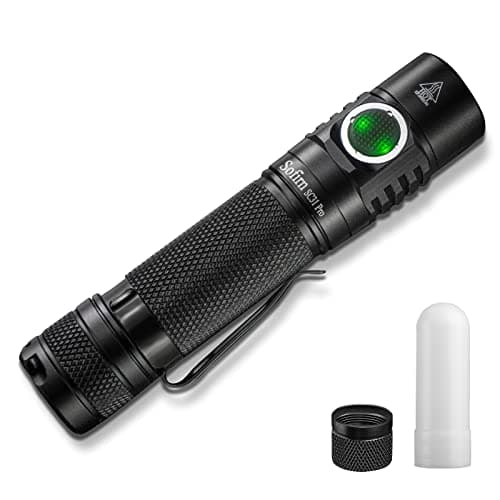
Sofirn SC31 Pro
Two thousand published lumens out of a standard 18650 you can buy anywhere for a few dollars, in a light that costs less than most brands charge for a keychain. The cell is the whole argument: when it dies in three years you replace a battery, not a flashlight.
We show a price only when we have pulled a live one. #ad How we earn
Disclosure — we earn a commission on qualifying purchases made through the Amazon links on this page, at no extra cost to you. It does not change which lights we pick or what we say about them. The full version.
How we rank. Published ANSI FL1 output divided by the live retail price, with sealed-battery lights marked down because a light you cannot re-cell is a light with an expiry date. Units we claim to have tested: 0 — we compile manufacturers' published figures and show the arithmetic instead. How we work this out.
The short version
Wipe the port dry, plug the light into a wall adapter rather than a computer USB port, confirm the indicator has changed state, and unplug when it says complete. If the light has been somewhere cold, let it warm to room temperature first — most charging circuits refuse to charge a cold cell, and that refusal looks exactly like a failure.
That is the whole procedure and most people already do it. The reason this page exists is the part underneath: a lithium cell's service life is set far more by how it is stored and how hot it gets than by how carefully you plug it in, and almost nobody is told that when they buy the light.
The steps in full
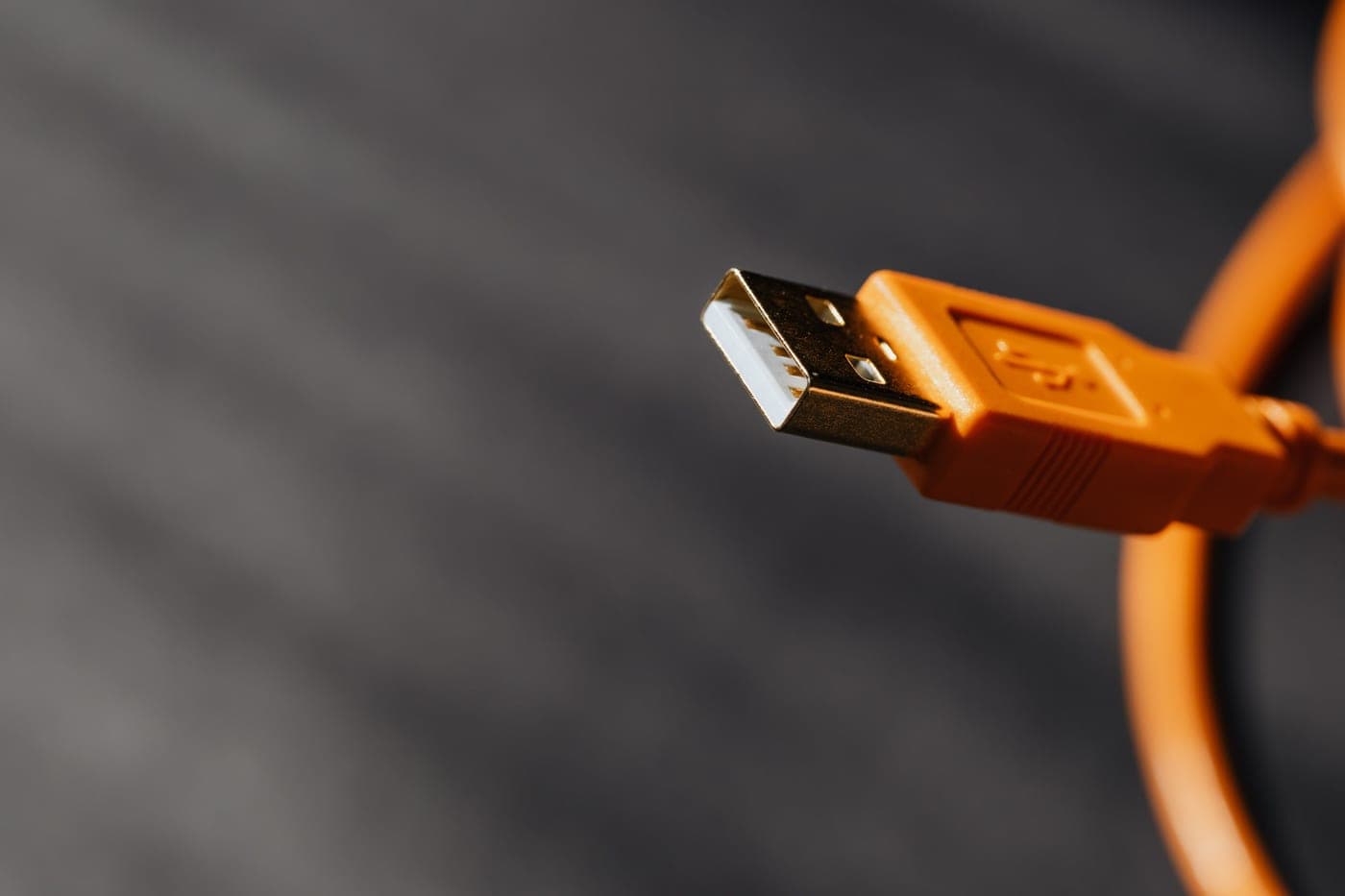
- 1.Find the charge port and uncover it. Most modern lights use USB-C under a rubber flap. Some older ones use micro-USB — Black Diamond still ships the Spot 400-R with it — and a few use a cradle or magnetic contacts instead.
- 2.Wipe the port and contacts dry and clear. Pocket lint and grit in a port is the most common reason a charge never starts. A dry brush or a wooden toothpick, never anything metal, and never with the cable connected.
- 3.Use a wall adapter, not a computer port. Sofirn publishes 2.5 hours for the SC31 Pro with a 2A adapter; NEBO publishes 2 hours for the TORCHY 3K. Plug either into an old laptop port and those figures roughly triple.
- 4.Plug in and confirm the indicator changed. A cable that has not seated properly and a light that is charging look identical until you check.
- 5.Warm the light first if it is cold. Charging circuits commonly refuse below freezing to protect the cell.
- 6.Unplug at complete and close the cover. The cover is part of the water rating; a light charged in a workshop and left open is a light with an unrated port.
Your charger is probably the slow part
The single most common complaint about rechargeable flashlights is that they charge slowly, and the light is usually not the culprit. Charge time is capacity divided by current, and the current is set by whichever of the adapter, the cable and the light's own circuit is the weakest link. An old USB-A port that supplies half an amp will take four times as long as a 2A adapter on the same light, and nothing about the light has changed.
Our page on how long a rechargeable flashlight takes to charge works the arithmetic through with the published figures. The short version: if your light seems slow, change the adapter before you blame the light, and change the cable before you blame the adapter.
| # | Light | Max output | Battery | Lumens / $ | Price |
|---|---|---|---|---|---|
| 1 | Sofirn SC31 Pro Best lumens per dollar overall | 2,000 | Replaceable | Needs a live price | Check price on Amazon We show a price only when we have pulled a live one. #ad How we earn |
| 2 | No listing image Wurkkos FC11 Best color quality per dollar | 1,300 | Replaceable | Needs a live price | Check price on Amazon We show a price only when we have pulled a live one. #ad How we earn |
| 3 | 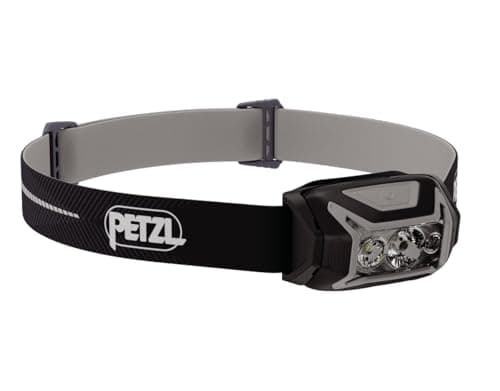 Petzl ACTIK CORE Best hybrid: rechargeable or AAA cells | 625 | Replaceable | Needs a live price | Check price on Amazon We show a price only when we have pulled a live one. #ad How we earn |
| 4 | 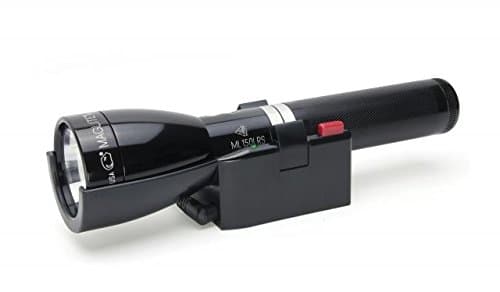 Maglite ML150LR Mag Charger The one built to be repaired instead of replaced | 1,082 | Replaceable | Needs a live price | Check price on Amazon We show a price only when we have pulled a live one. #ad How we earn |
| 5 | 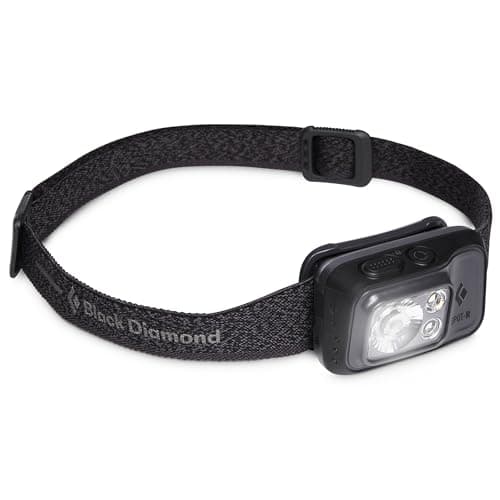 Black Diamond Spot 400-R Most complete published runtime table | 400 | Sealed | Needs a live price | Check price on Amazon We show a price only when we have pulled a live one. #ad How we earn |
Lumens per dollar is the manufacturer's published maximum output divided by the price the light is selling for. Where we have not pulled a live price, the column says so instead of showing you a number we cannot stand behind. See how we work this out.
The two storage habits that quietly cost you years
Lithium-ion cells age on the calendar as well as on the cycle count, and two conditions accelerate that aging more than anything you do while charging.
- 1.Storing at a full charge. A cell held at 100 percent for months degrades faster than one held part-full. For a light you use weekly this does not matter. For a light that lives in a drawer, topping it to full and leaving it there for a year is the worse of the two options.
- 2.Storing flat. The opposite error and the more damaging one. A cell left fully discharged can fall below the voltage at which its protection circuit will allow a recharge, at which point an ordinary owner cannot revive it. This is how stored lights die.
The practical rule that follows: for a light in storage, charge it part-way rather than fully, and put a calendar reminder twice a year to top it up. That single habit does more for the cell's service life than any charging technique. Our page on how long rechargeable flashlights last covers cycle counts and calendar aging in more detail.
Heat is the other thing shortening the cell
A cell warms while charging and warms considerably more while running at maximum output, and heat is the main driver of capacity loss. That is one more reason turbo modes are a burst rather than a setting: the thermal step-down that dims your light after a few minutes is also protecting the battery you will still want in three years. Our page on why LED flashlights get hot explains where the energy actually goes.
In practice: do not charge a light that is still hot from use, do not leave one charging on a sunny dashboard, and do not store lithium cells in a car through a summer if you can avoid it.
1. Best lumens per dollar overall
Sofirn SC31 Pro
Lumens per dollar
Computed the moment we have a live price for it
Two thousand published lumens out of a standard 18650 you can buy anywhere for a few dollars, in a light that costs less than most brands charge for a keychain. The cell is the whole argument: when it dies in three years you replace a battery, not a flashlight.
- Max output
- 2,000 lm
- Runtime
- Not published per mode
- Battery
- Replaceable cell
- Water rating
- IPX8
What it gets right
- Standard 18650 cell — replacements cost a few dollars and are sold everywhere
- IPX8, the strongest water rating in this price class
- USB-C charging built into the light, so no separate charger to lose
- Anduril firmware gives real ramping control rather than four fixed steps
What it gets wrong
- Sofirn publishes no per-mode runtime figures on the product page
- Anduril is genuinely confusing for the first week
- Tint varies between batches, which is the price of this price
Published specification
- Maximum output: 2,000 lumens — Sofirn published specification
- Beam distance: 226 m — Sofirn published specification
- Battery: 1 x 18650 Li-ion, user replaceable — Sofirn published specification
- Charging: USB-C, 2.5 hours with a 2A adapter — Sofirn published specification
- Water rating: IPX8 — Sofirn published specification
- Weight: 59 g without battery — Sofirn published specification
- Length: 117.5 mm — Sofirn published specification
- Emitter: SST40, 5000K or 6500K — Sofirn published specification
- Per-mode runtime: Not published on the product page
Skip this one if
you want to press one button and get one brightness. Anduril has a shortcut for everything and a menu for everything else, and if that sounds tiring you will be happier with a three-mode light.
Buy it if: anyone who intends to keep the light for longer than the battery lasts, and does not mind reading a manual once.
- Output 9.0
- Battery 9.5
- Build 8.0
- Usability 7.0
- Overall 8.6
We show a price only when we have pulled a live one. #ad How we earn
listing
image
2. Best color quality per dollar
Wurkkos FC11
Lumens per dollar
Computed the moment we have a live price for it
A 90-CRI emitter at a price where nobody else bothers, which means colors look like colors rather than like a parking lot. Same replaceable 18650 story as the Sofirn, plus a magnetic tail that turns it into a work light.
- Max output
- 1,300 lm
- Runtime
- Not published per mode
- Battery
- Replaceable cell
- Water rating
- IPX7
What it gets right
- 90 CRI at a price where 70 CRI is normal — skin, wiring and paint read correctly
- Magnetic tailcap sticks it to anything ferrous and frees both hands
- Standard 18650, USB-C charging in the light
- Two mode groups, so you can pick a simple ramp or a stepped set
What it gets wrong
- IPX7 rather than IPX8 — fine for rain, not for a river
- High CRI costs raw lumens; the Sofirn is visibly brighter on turbo
- No per-mode runtime published on the product page
Published specification
- Maximum output: 1,300 lumens — Wurkkos published specification
- Beam distance: 144 m (157 yd) — Wurkkos published specification
- Battery: 1 x 18650 Li-ion, user replaceable — Wurkkos published specification
- Water rating: IPX7 — Wurkkos published specification
- Weight: 65 g +/- 1 g without battery — Wurkkos published specification
- Length: 116.23 mm — Wurkkos published specification
- Emitter: Nichia 519A / LH351D, 90 CRI — Wurkkos published specification
- Body: 6061 aluminum, type III hard anodized — Wurkkos published specification
Skip this one if
the only number you care about is peak output. You are paying part of this light's budget for color accuracy, and if you will never notice that, the money is better spent elsewhere.
Buy it if: anyone who uses a flashlight to look at things closely — wiring, paint, engine bays, a face — rather than to light up a field.
- Output 7.5
- Battery 9.5
- Build 8.0
- Usability 8.0
- Overall 8.4
We show a price only when we have pulled a live one. #ad How we earn
3. Best hybrid: rechargeable or AAA cells
Petzl ACTIK CORE
Lumens per dollar
Computed the moment we have a live price for it
Six hundred and twenty-five lumens stated to ANSI/PLATO FL1, 88 grams, and — the part that matters — it runs on the CORE rechargeable pack or on three AAA cells when the pack is flat. That is the answer to the sealed-battery problem, from the only brand here that bothered.
- Max output
- 625 lm
- Runtime
- Published per mode by Petzl
- Battery
- Replaceable cell
- Water rating
- IPX4
What it gets right
- Explicitly states ANSI/PLATO FL1 conformity, which most brands here do not
- Hybrid power: the pack for daily use, AAA cells as the fallback that never fails
- Petzl publishes the CORE pack's cycle rating, so its service life is a stated number
What it gets wrong
- IPX4 — weather resistant, not submersible
- Eighty-eight grams is not ultralight
- The CORE pack is a Petzl part rather than a standard cell
Published specification
- Maximum output: 625 lumens (ANSI/PLATO FL1) — Petzl published specification
- Weight: 88 g — Petzl published specification
- Battery: CORE rechargeable 1,250 mAh / 3.6 V / 4.5 Wh, or 3 x AAA — Petzl published specification
- Battery compatibility: Alkaline, lithium or Ni-MH — Petzl published specification
- Water rating: IPX4, weather resistant — Petzl published specification
- Warranty: Lamp 5 years; CORE battery 2 years or 300 cycles — Petzl published specification
- Lighting levels: MAX BURN TIME, STANDARD, MAX POWER, plus red — Petzl published specification
Skip this one if
you want a submersible headlamp. IPX4 covers rain and nothing beyond it.
Buy it if: anyone whose headlamp has to work at the end of a long trip, when charging is not an option.
- Output 7.5
- Battery 9.0
- Weight 7.0
- Usability 8.5
- Overall 8.3
We show a price only when we have pulled a live one. #ad How we earn
4. The one built to be repaired instead of replaced
Maglite ML150LR Mag Charger
Lumens per dollar
Computed the moment we have a live price for it
A thousand and eighty-two lumens for over three hours, 79 hours in eco, a 458-meter beam, and a LiFePO4 pack rated for cycle counts nothing else here quotes. It costs several times what the value picks cost and it is the only light here likely to outlive its owner's interest in flashlights.
- Max output
- 1,082 lm
- Runtime
- Over 3 h
- Battery
- Replaceable cell
- Water rating
- None published
What it gets right
- Runtime published at full output, not just at the mode that flatters it
- Replaceable pack, spare parts, and a ten-year warranty
- Charging cradle that lives in a vehicle or on a wall
What it gets wrong
- Its lumens-per-dollar figure is poor and always will be
- No published IP rating on the product page
- The cradle system is convenient in a truck and awkward anywhere else
Published specification
- Maximum output: 1,082 lumens — Maglite published specification
- Runtime at full output: Over 3 hours — Maglite published specification
- Eco mode runtime: Up to 79 hours — Maglite published specification
- Beam distance: 500 yards (458 m) — Maglite published specification
- Battery: Rechargeable Mag Charger pack, replaceable — Maglite published specification
- Fast charge: To 80% in about 30 minutes — Maglite published specification
- Weight: Under 1 lb — Maglite published specification
- Warranty: Ten-year limited — Maglite published specification
- Water rating: Not published on the product page
Skip this one if
you are shopping on value. This light is bought for its service life and its parts availability, and if those do not matter to you it is simply expensive.
Buy it if: someone buying a tool for a decade rather than a purchase for this year.
- Output 8.0
- Battery 9.0
- Build 9.5
- Usability 7.5
- Overall 8.0
We show a price only when we have pulled a live one. #ad How we earn
5. Most complete published runtime table
Black Diamond Spot 400-R
Lumens per dollar
Computed the moment we have a live price for it
Four hundred lumens for four hours, 200 for eight, 6 for two hundred and twenty-five. Black Diamond publishes lumens, runtime and beam distance for all three modes, and IP67 on top. There is nothing to guess at here.
- Max output
- 400 lm
- Runtime
- 4 h
- Battery
- Sealed
- Water rating
- IP67
What it gets right
- Lumens, runtime and distance published for every mode
- Two hundred and twenty-five hours on low is a genuine emergency reserve
- IP67 and a battery meter that shows an actual percentage
What it gets wrong
- Micro-USB in a year when everything else is USB-C
- Integrated battery — no spare, no re-cell
- Eighty-six grams is heavy next to the ultralight class
Published specification
- High: 400 lumens, 4 hours, 100 m — Black Diamond published specification
- Medium: 200 lumens, 8 hours, 60 m — Black Diamond published specification
- Low: 6 lumens, 225 hours, 12 m — Black Diamond published specification
- Battery: Integrated 1,500 mAh Li-ion, micro-USB — Black Diamond published specification
- Water rating: IP67, tested to 1.0 m for 30 minutes — Black Diamond published specification
- Weight: 86 g — Black Diamond published specification
Skip this one if
you have standardized on USB-C. Carrying a second cable for one device is a small annoyance that compounds on a long trip.
Buy it if: camp, dog walks and anyone who wants a headlamp whose numbers are all on the box.
- Output 6.5
- Battery 5.5
- Weight 7.0
- Usability 9.0
- Overall 7.7
We show a price only when we have pulled a live one. #ad How we earn
When to charge the cell outside the light
If the light takes a removable cell — an 18650, a 21700, a 14500 or a 16340 — you have a second option, and it is worth knowing even if you never use it routinely. An external charger lets you charge a spare while the light is in use, which turns a four-hour night into an eight-hour one, and it separates two failures that otherwise look identical: a cell that will not take charge, and a charging circuit in the light that has stopped working.
Lights with sealed cells offer none of this. When the charging circuit fails on a sealed light, the light has failed. That is one more entry on the long list of reasons this site weights a replaceable cell so heavily, and our comparison of 18650 and 21700 cells covers which format to standardize on.
Hybrid and dual-power lights, which change the rules
A few lights sidestep the charging question altogether. Petzl's ACTIK CORE runs on its CORE rechargeable pack or on three ordinary AAA cells and detects which it has. NEBO's Flex-Power models take the rechargeable pack or ordinary AAA or D cells. For a lamp or lantern that has to work at the end of a long trip or on the third day of an outage, that is worth more than any charging feature, because the fallback needs no power at all.
Units we claim to have tested: 0
Every publisher in this category says they tested twenty flashlights. We have not tested any, and we say so. What we do instead: compile the manufacturer's own published ANSI FL1 figures, pull the price the light is selling for right now, and divide one by the other. Every number on this page is one you can check yourself in about two minutes.
Things you do not need to do
- You do not need to fully discharge the light before recharging. That was advice for nickel-cadmium cells decades ago and it actively harms lithium-ion.
- You do not need a special first charge. The idea that a new cell must be charged for twelve hours before first use is a leftover from a different chemistry.
- You do not need to buy the manufacturer's own cable for a standard USB port. You do need a cable that actually carries current, which is not the same thing — a cheap charge-only cable is a common and invisible cause of slow charging.
- You do not need to run a light flat to calibrate the battery meter. There is nothing to calibrate on most of these.
If it will not charge at all
Work through the cheap causes first: a different cable, a different power source, a clean port, and letting the light warm to room temperature. Between them those four account for most of the failures people report. We have a separate step-by-step page for a light that will not charge, in cheapest-first order, and it is the right place to go before you decide the light is finished.
What we cannot tell you
We do not test lights and we do not run cells to failure, so every published figure here is a manufacturer's own claim, cited with the date it was read. We cannot tell you how many cycles your particular cell will last, whether a specific charger is well made, or how any of these lights behave after five years, because those are measurements and this page is a reading of published specifications and battery chemistry that is not in dispute.
Common questions
How do you charge a rechargeable flashlight?
Uncover the charge port, wipe it dry and clear of lint, plug the light into a USB wall adapter rather than a computer port, and confirm the indicator has changed to its charging state. Unplug when it shows complete and close the port cover, which is part of the light's water rating. If the light has been somewhere cold, let it warm up first — most charging circuits refuse to charge a near-freezing cell.
Can you overcharge a rechargeable flashlight?
Not in the dramatic sense on a modern light: the charging circuit stops when the cell is full. What does happen is slower and easier to miss, because a cell held at 100 percent for months ages faster than one stored part-full. For a light you use regularly it makes no practical difference. For a light in a drawer, store it part-charged and top it up twice a year.
Should you let a rechargeable flashlight fully discharge before charging?
No, and it is one of the more persistent pieces of bad advice around. Deep discharge cycles were relevant to nickel-cadmium batteries decades ago; lithium-ion cells prefer partial cycles, and a cell left fully flat for a long period can drop below the voltage its protection circuit will recharge from, which is how stored lights die permanently.
Why is my flashlight charging so slowly?
Almost always the power source rather than the light. Charge time is the cell's capacity divided by the current actually delivered, and an old USB-A port supplying half an amp will take roughly four times as long as a 2A wall adapter. A charge-only or worn-out cable does the same thing invisibly. Change the adapter, then the cable, before concluding anything about the light.
How long does a rechargeable flashlight battery last?
Lithium-ion cells are generally rated in charge cycles rather than years, and a cell that has lost enough capacity to be annoying is usually still working — just for half as long. Some manufacturers publish the figure: Petzl rates the CORE pack at 2 years or 300 charging cycles, and Maglite quotes up to 2,000 cycles for the LiFePO4 pack in the ML150LRS. Most brands publish nothing at all, which is why a replaceable cell matters more than any published cycle rating.
Sources
- Sofirn published product specifications — read 2026-09-01
- NEBO published product specifications — mode-by-mode lumen, runtime and beam figures, read 2026-09-01; LUXTREME SL75 and SL50 read 2026-09-22; OMNI 2K and SLYDE KING 4K read 2026-10-18
- Petzl published product specifications — ANSI/PLATO FL 1 conformity stated by the manufacturer. ACTIK CORE read 2026-09-01 and re-read per mode 2026-09-21; TIKKA CORE read 2026-09-21
- Black Diamond published product specifications — Spot 400-R read 2026-09-01; Storm 500-R read 2026-09-14
- Maglite published product specifications — ML150LR read 2026-09-01; MAG-TAC Rechargeable (plain bezel) and Mini Maglite Pro LED read 2026-10-10; ML300LX 3-Cell D and ML50LX 2-Cell C read 2026-10-13
- Lumen & Ledger method — how every figure on this page is derived
Who writes this
Scooter M. — I am an enthusiast who is genuinely into this. I read the manuals, compile the published specs, and do the math. No lab coat, no test bench, no drawer of free samples. What I can tell you is exactly what a light claims on paper, exactly what it costs right now, and what those two numbers mean when you divide one by the other.
Read next
How long to charge a rechargeable flashlight
The arithmetic, the variables, and why your charger is probably the slow part.
Rechargeable flashlight not charging
Six diagnostic steps, cheapest first. Most of the time it is step one or two.
How long do rechargeable flashlights last?
Cycle counts, calendar aging, and the question that decides it: can you re-cell it?
Are expensive flashlights worth it?
What the money above eighty dollars actually buys, and the three buyers it is genuinely worth it for.
Best USB-C rechargeable flashlights
Why the port matters more than it should, and which lights got it right.
The Ledger
Every light we cover in one ranked table, sorted by lumens per dollar.