Guides
Are Expensive Flashlights Worth It?
A thirty-dollar light and a hundred-and-fifty-dollar light frequently publish the same output. The difference is real, and it is almost never brightness.
By Scooter M. · Published September 13, 2026
Short answer
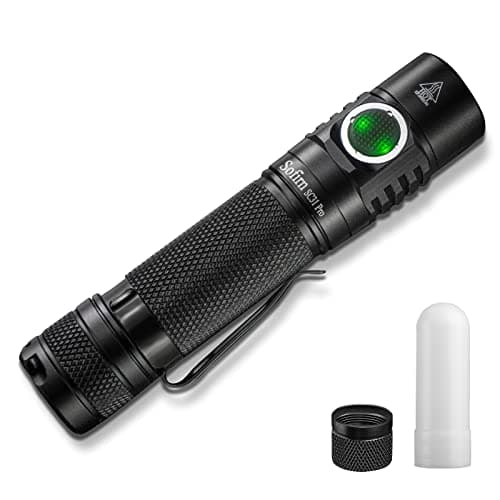
Sofirn SC31 Pro
Two thousand published lumens out of a standard 18650 you can buy anywhere for a few dollars, in a light that costs less than most brands charge for a keychain. The cell is the whole argument: when it dies in three years you replace a battery, not a flashlight.
Price as of September 14, 2026 — 47 lumens per dollar. #ad How we earn
Disclosure — we earn a commission on qualifying purchases made through the Amazon links on this page, at no extra cost to you. It does not change which lights we pick or what we say about them. The full version.
How we rank. Published ANSI FL1 output divided by the live retail price, with sealed-battery lights marked down because a light you cannot re-cell is a light with an expiry date. Units we claim to have tested: 0 — we compile manufacturers' published figures and show the arithmetic instead. How we work this out.
The direct answer
For most people, no. Sofirn publishes 2,000 lumens and IPX8 for the SC31 Pro at a fraction of what Streamlight charges for the Stinger 2020's 2,000 lumens. The premium does not buy brightness. It buys a published runtime beside that brightness, spare parts, a warranty backed by an operation, tolerances that hold between units, and a service life measured in decades. Those are worth paying for if the light is a tool you depend on, and hard to justify for a light in a kitchen drawer.
This site exists to argue that budget lights are usually the better buy, so treat what follows as a page arguing against our own default. The honest position is not that expensive lights are a scam — it is that what they are good at is invisible on the front of the box, and most buyers are comparing the one number that does not change with price.
The number that does not change with price
Put the published figures next to each other and the case makes itself. Streamlight publishes 2,000 lumens for the Stinger 2020. Sofirn publishes 2,000 lumens for the SC31 Pro. On the headline specification, several times the money buys exactly nothing, because the emitters, drivers and lithium cells that budget brands buy are largely the same commodity parts the expensive brands buy.
This is why lumens-per-dollar rankings look so brutal to premium brands, and the Ledger table on this page will show you the current gap rather than asking you to take our word for it. If output per dollar is genuinely your criterion, the answer to this page's question is no and you can stop reading.
| # | Light | Max output | Battery | Lumens / $ | Price |
|---|---|---|---|---|---|
| 1 | Sofirn SC31 Pro Best lumens per dollar overall | 2,000 | Replaceable | 47 | $42.99 on Amazon Price as of September 14, 2026 — 47 lumens per dollar. #ad How we earn |
| 2 | 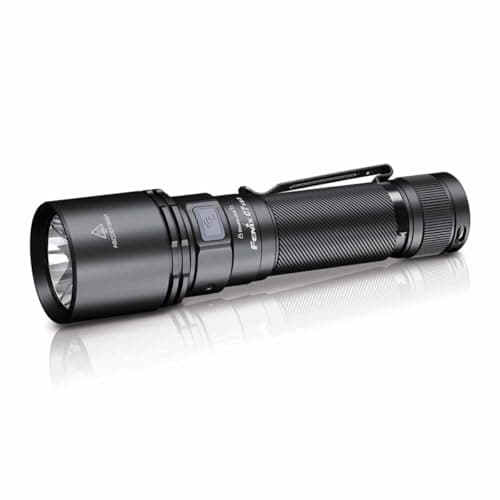 Fenix C7 V2.0 The throw comparison, not a value pick | 3,300 | Replaceable | 41 | $79.95 on Amazon Price as of September 14, 2026 — 41 lumens per dollar. #ad How we earn |
| 3 | 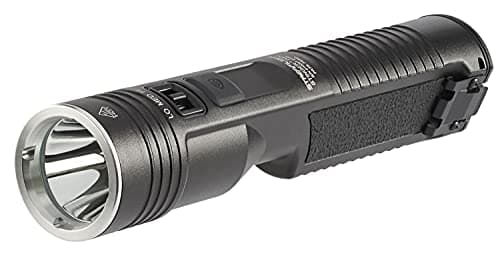 Streamlight Stinger 2020 Highest output with a published runtime to match | 2,000 | Replaceable | 16 | $127.93 on Amazon Price as of September 14, 2026 — 16 lumens per dollar. #ad How we earn |
| 4 | 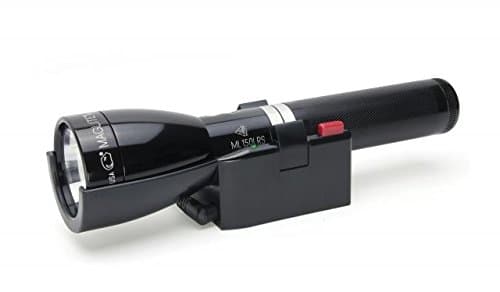 Maglite ML150LR Mag Charger The one built to be repaired instead of replaced | 1,082 | Replaceable | 11 | $99.99 on Amazon Price as of September 14, 2026 — 11 lumens per dollar. #ad How we earn |
| 5 | 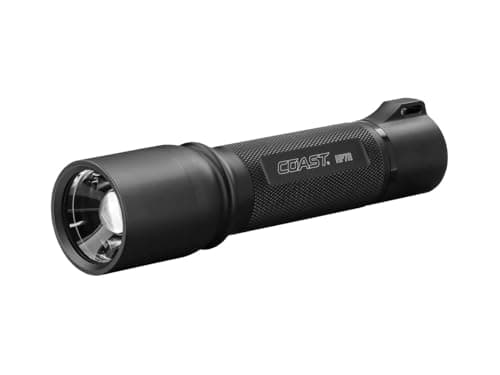 COAST HP7R Longest published runtime in this roundup | 300 | Replaceable | 3 | $90.49 on Amazon Price as of September 14, 2026 — 3 lumens per dollar. #ad How we earn |
Prices pulled September 14, 2026. Lumens per dollar is the manufacturer's published maximum output divided by that price, recomputed every time the price moves.
What the money actually buys, in order of how much it matters
- 1.A runtime published beside the headline output. Streamlight publishes 2,000 lumens with two hours against it; Maglite publishes over three hours at the ML150LR's full 1,082 lumens. Most budget brands publish a lumen figure with nothing beside it. Printing the uncomfortable number is what a brand does when it is confident the number will not embarrass it.
- 2.Spare parts and a service life. Maglite publishes a ten-year limited warranty and sells the Mag Charger pack as a part. A light you can re-cell and re-switch indefinitely is a different category of object from one you replace.
- 3.Consistency between units. Budget brands vary batch to batch in tint, anodizing and threads. Premium brands vary far less. You cannot see this in a specification and you notice it when your second unit is not like your first.
- 4.A warranty worth invoking. Not the length of it — the existence of somebody to invoke it with, and a parts operation behind them.
- 5.Documented impact and ingress ratings. Streamlight publishes impact testing; Fenix publishes IP68 and a 1.5 m shock rating on the C7 V2.0. Budget brands often publish neither.
- 6.Optics. This is the one place premium money sometimes does buy performance: COAST publishes 352 meters of beam from only 300 lumens, which is more reach than lights with ten times the output. Good optics move light further than raw power does.
The three buyers it is genuinely worth it for
Being clear about who should spend the money is more useful than a verdict that applies to nobody.
- Anyone who is issued a light, or depends on one professionally. If a light failing means a bad shift rather than an inconvenience, buy documentation and parts availability. The premium is cheap against one failure.
- Anyone buying for a decade rather than a year. Maglite's ML150LR is poor value on the day you buy it and excellent value over fifteen, because it is built to be repaired instead of replaced. Our review of it works exactly that arithmetic.
- Anyone whose real requirement is reach. Beam distance comes from optics and a big reflector, and that is the one attribute the budget tier genuinely cannot match at any price. Fenix publishes 575 meters for the C7 V2.0.
Notice what is not on that list: wanting a brighter light, wanting a nicer light, or buying a first flashlight. For all three the budget tier is the better purchase and the money is better left unspent.
1. Best lumens per dollar overall
Sofirn SC31 Pro
Lumens per dollar
47
Two thousand published lumens out of a standard 18650 you can buy anywhere for a few dollars, in a light that costs less than most brands charge for a keychain. The cell is the whole argument: when it dies in three years you replace a battery, not a flashlight.
- Max output
- 2,000 lm
- Runtime
- Not published per mode
- Battery
- Replaceable cell
- Water rating
- IPX8
What it gets right
- Standard 18650 cell — replacements cost a few dollars and are sold everywhere
- IPX8, the strongest water rating in this price class
- USB-C charging built into the light, so no separate charger to lose
- Anduril firmware gives real ramping control rather than four fixed steps
What it gets wrong
- Sofirn publishes no per-mode runtime figures on the product page
- Anduril is genuinely confusing for the first week
- Tint varies between batches, which is the price of this price
Published specification
- Maximum output: 2,000 lumens — Sofirn published specification
- Beam distance: 226 m — Sofirn published specification
- Battery: 1 x 18650 Li-ion, user replaceable — Sofirn published specification
- Charging: USB-C, 2.5 hours with a 2A adapter — Sofirn published specification
- Water rating: IPX8 — Sofirn published specification
- Weight: 59 g without battery — Sofirn published specification
- Length: 117.5 mm — Sofirn published specification
- Emitter: SST40, 5000K or 6500K — Sofirn published specification
- Per-mode runtime: Not published on the product page
Skip this one if
you want to press one button and get one brightness. Anduril has a shortcut for everything and a menu for everything else, and if that sounds tiring you will be happier with a three-mode light.
Buy it if: anyone who intends to keep the light for longer than the battery lasts, and does not mind reading a manual once.
- Output 9.0
- Battery 9.5
- Build 8.0
- Usability 7.0
- Overall 8.6
Price as of September 14, 2026 — 47 lumens per dollar. #ad How we earn
2. The throw comparison, not a value pick
Fenix C7 V2.0
Lumens per dollar
41
Thirty-three hundred lumens and 575 meters of throw with an IP68 rating. It appears here as a reference point: this is what a well-built high-output light costs, and it is the number every budget 10,000-lumen claim should be measured against.
- Max output
- 3,300 lm
- Runtime
- Not published per mode on the retail page
- Battery
- Replaceable cell
- Water rating
- IP68
What it gets right
- Five hundred and seventy-five meters is real throw, not a marketing figure
- IP68 and a magnetic tail
- Removable cell
What it gets wrong
- Expensive by this site's standards
- No per-mode runtime on the retail page
- A dedicated thrower is the wrong shape of light for most jobs
Published specification
- Maximum output: 3,300 lumens — Fenix published specification
- Beam distance: 1,886 ft (575 m) — Fenix published specification
- Water rating: IP68 — Fenix published specification
- Body: Ultra-thick A6061-T6 aluminum — Fenix published specification
- Charging: Inner-waterproofed USB-C — Fenix published specification
- Fittings: Magnetic tail, lockout mode — Fenix published specification
- Per-mode runtime: Not published on the retail page we read
Skip this one if
you want one light for the house. A thrower puts its light in a small circle a long way away, which is not what you want indoors.
Buy it if: search work, large properties and anyone who genuinely needs to see a third of a mile.
- Output 9.5
- Battery 9.0
- Build 9.5
- Usability 8.0
- Overall 8.5
Price as of September 14, 2026 — 41 lumens per dollar. #ad How we earn
3. Highest output with a published runtime to match
Streamlight Stinger 2020
Lumens per dollar
16
Two thousand lumens for two hours, 850 for four, 100 for twenty-four, 315 meters of throw, IPX7. This is what a 2,000-lumen claim looks like when the manufacturer stands behind it with a duration.
- Max output
- 2,000 lm
- Runtime
- 2 h
- Battery
- Replaceable cell
- Water rating
- IPX7
What it gets right
- Two thousand lumens with two hours beside it, published together
- Twenty-four hours on low makes it viable as an outage light
- Duty-grade build with the warranty and spares to match
What it gets wrong
- Twelve and a half ounces — this is a belt light, not a pocket light
- Priced well above everything else in the value tier
- Charging is via a cradle, which is another thing to own
Published specification
- High: 2,000 lumens, 315 m, 2 hours — Streamlight published specification
- Medium: 850 lumens, 200 m, 4 hours — Streamlight published specification
- Low: 100 lumens, 70 m, 24 hours — Streamlight published specification
- Strobe: 3.25 hours — Streamlight published specification
- Water rating: IPX7 — Streamlight published specification
- Impact: 2 m tested — Streamlight published specification
- Weight: 12.3 oz (350 g) — Streamlight published specification
- Length: 7.67 in (19.48 cm) — Streamlight published specification
Skip this one if
you want value. On lumens per dollar it will lose to a Sofirn every time; what it buys is the certainty that the number is real.
Buy it if: professional use, and anyone comparing a budget light's 2,000-lumen claim against a documented one.
- Output 9.5
- Battery 8.5
- Build 9.5
- Usability 7.5
- Overall 8.4
Price as of September 14, 2026 — 16 lumens per dollar. #ad How we earn
4. The one built to be repaired instead of replaced
Maglite ML150LR Mag Charger
Lumens per dollar
11
A thousand and eighty-two lumens for over three hours, 79 hours in eco, a 458-meter beam, and a LiFePO4 pack rated for cycle counts nothing else here quotes. It costs several times what the value picks cost and it is the only light here likely to outlive its owner's interest in flashlights.
- Max output
- 1,082 lm
- Runtime
- Over 3 h
- Battery
- Replaceable cell
- Water rating
- None published
What it gets right
- Runtime published at full output, not just at the mode that flatters it
- Replaceable pack, spare parts, and a ten-year warranty
- Charging cradle that lives in a vehicle or on a wall
What it gets wrong
- Its lumens-per-dollar figure is poor and always will be
- No published IP rating on the product page
- The cradle system is convenient in a truck and awkward anywhere else
Published specification
- Maximum output: 1,082 lumens — Maglite published specification
- Runtime at full output: Over 3 hours — Maglite published specification
- Eco mode runtime: Up to 79 hours — Maglite published specification
- Beam distance: 500 yards (458 m) — Maglite published specification
- Battery: Rechargeable Mag Charger pack, replaceable — Maglite published specification
- Fast charge: To 80% in about 30 minutes — Maglite published specification
- Weight: Under 1 lb — Maglite published specification
- Warranty: Ten-year limited — Maglite published specification
- Water rating: Not published on the product page
Skip this one if
you are shopping on value. This light is bought for its service life and its parts availability, and if those do not matter to you it is simply expensive.
Buy it if: someone buying a tool for a decade rather than a purchase for this year.
- Output 8.0
- Battery 9.0
- Build 9.5
- Usability 7.5
- Overall 8.0
Price as of September 14, 2026 — 11 lumens per dollar. #ad How we earn
5. Longest published runtime in this roundup
COAST HP7R
Lumens per dollar
3
Three hundred lumens, a 352-meter beam and up to 33 hours of runtime on a removable ZITHION-X pack. It is the opposite of a turbo-number light: modest output, enormous endurance, and a cell you can replace.
- Max output
- 300 lm
- Runtime
- Up to 33 h
- Battery
- Replaceable cell
- Water rating
- None published
What it gets right
- Thirty-three hours of published runtime, which almost nothing else here approaches
- Removable battery pack sold as a separate part
- 352 m of throw from only 300 lumens — good optics beat brute force
What it gets wrong
- Three hundred lumens will disappoint anyone shopping by the big number
- COAST does not publish a water rating on this product page
- Its lumens-per-dollar figure will always look poor next to an 18650 light
Published specification
- Maximum output: 300 lumens — COAST published specification
- Beam distance: 352 m — COAST published specification
- Runtime: Up to 33 hours — COAST published specification
- Battery: ZX800 ZITHION-X, 2,400 mAh 3.7V, removable — COAST published specification
- Focus: Pure Beam focusing optic — COAST published specification
- Water rating: Not published on the product page
Skip this one if
you are ranking purely on lumens per dollar. This light loses that contest and wins the runtime one, and which of those matters is a question about you, not the light.
Buy it if: long shifts, night walks and anyone who would rather have light for a day than light for an hour.
- Output 5.5
- Battery 8.5
- Build 8.0
- Usability 8.0
- Overall 7.5
Price as of September 14, 2026 — 3 lumens per dollar. #ad How we earn
The case against, stated fairly
The strongest argument against spending more is that the failure the premium protects against is often the wrong failure. Premium build protects against a light breaking. The way flashlights actually die is that the battery reaches the end of its cycle life, or the owner loses the light, or it sits flat in a drawer for two years — and a replaceable cell in a thirty-dollar light answers the first of those far more cheaply than a warranty does.
The second argument is opportunity cost inside the same budget. A hundred and fifty dollars buys one premium light, or it buys a good handheld, a good headlamp, a lantern for the house and spare cells for all three. For almost every household the second basket produces more usable light in more situations, and our page on how many lumens you actually need explains why the coverage matters more than the peak.
Where the premium is clearly not worth it
Three specific cases, since this is the half people get wrong in the other direction.
- A drawer light for the house. It needs to be simple and charged, not tough. Our household ranking picks entirely differently for that reason.
- A light for a child, a car, or anywhere it will be lost or stolen. Buy the cheap one and buy two.
- A first flashlight. Buy a thirty-dollar light with a standard cell, use it for a year, and you will know what you actually want — which is information the premium light cannot give you in advance.
The one test that settles it for you
Ask what a failure costs. If your light dying means you go and get another one from a drawer, buy on value and stop thinking about it. If it means a shift goes badly, a job takes twice as long, or you are somewhere you cannot simply go and get another one, then documentation, spare parts and consistency are the product and the premium is rational.
That test also explains why the same person should own lights from both tiers, which is the answer most buying guides avoid because it does not resolve into a single recommendation. A budget light in the kitchen and a premium one in a work bag is not a contradiction; it is the correct application of both arguments to two different problems.
The middle, which is where most people should land
The interesting finding from putting thirty products in one table is that the curve is steepest early and flattens fast. Going from a ten-dollar light to a thirty-dollar one buys a replaceable cell, a published water rating and USB-C charging — an enormous upgrade. Going from thirty to eighty buys documentation and consistency. Going from eighty to two hundred buys parts, warranty and optics, and for most buyers very little else.
So the answer for most readers is not the cheapest light and not the expensive one. It is the top of the budget tier, where the specification is complete and the cell is standard, and then spending what is left on a second light for somewhere you do not currently have one.
Units we claim to have tested: 0
Every publisher in this category says they tested twenty flashlights. We have not tested any, and we say so. What we do instead: compile the manufacturer's own published ANSI FL1 figures, pull the price the light is selling for right now, and divide one by the other. Every number on this page is one you can check yourself in about two minutes.
What we cannot tell you
We have not used any of these lights, and the premium brands' central claim is precisely about the things a specification cannot show: how a switch feels after five years, whether the anodizing survives a decade in a toolbox, whether the second unit matches the first, and whether a warranty claim is answered by a person. We cannot verify any of that, and anyone who tells you they have measured it across a decade is telling you about a handful of units rather than a population. What we can do is show you what each brand publishes, and be clear that the premium is not buying brightness.
Common questions
Are expensive flashlights worth it?
For most people, no. The premium does not buy output — Sofirn publishes 2,000 lumens for the SC31 Pro and Streamlight publishes 2,000 lumens for the Stinger 2020 at several times the price. What it buys is a runtime published beside that output, spare parts, consistency between units, a usable warranty and sometimes much better optics. Those matter if you depend on the light professionally or are buying for a decade; they matter little for a light in a drawer.
What is the difference between a $30 and a $150 flashlight?
Rarely brightness. Usually: whether the manufacturer publishes a runtime beside the headline lumens, whether spare parts and a real warranty exist, how consistent one unit is against another, whether impact and ingress ratings are documented, and the quality of the optics. Beam distance is the one performance attribute the budget tier genuinely cannot match — COAST publishes 352 meters from 300 lumens, which good optics achieve and raw power does not.
How much should I spend on a flashlight?
The value curve is steepest early. Around thirty dollars buys a standard replaceable cell, a published water rating and USB-C charging, which is an enormous upgrade over a ten-dollar light. Above roughly eighty dollars you are buying documentation, parts and warranty rather than performance. For most households the best use of a larger budget is two or three good lights in different places rather than one premium one.
Are cheap rechargeable flashlights any good?
Many are, and for a specific reason: the LED emitters, drivers and 18650 cells that budget brands buy are the same commodity parts the expensive brands buy. What you give up at the low end is documentation, quality control between batches, and a warranty worth using. The way to shop it is to look for a brand that publishes runtime figures — a manufacturer willing to print how long the turbo mode lasts is telling you something about the rest of the specification.
Sources
- Sofirn published product specifications — read 2026-09-01
- Maglite published product specifications — read 2026-09-01
- Streamlight published product specifications — per-mode lumens, runtime, beam distance, impact and IP ratings, read 2026-09-01
- Fenix published product specifications — read 2026-09-01
- COAST published product specifications — read 2026-09-01
- Lumen & Ledger method — how every figure on this page is derived
Who writes this
Scooter M. — I am an enthusiast who is genuinely into this. I read the manuals, compile the published specs, and do the math. No lab coat, no test bench, no drawer of free samples. What I can tell you is exactly what a light claims on paper, exactly what it costs right now, and what those two numbers mean when you divide one by the other.
Read next
Are cheap flashlights any good?
Increasingly yes, for a specific reason, with three failure modes to watch.
The best budget flashlight brands
Who publishes real numbers, who does not, and what each brand is good at.
The best rechargeable flashlights for the money
The flagship ranking: every pick scored on output over price, with the arithmetic shown.
Maglite ML150LR review
Poor value on paper, excellent value over a decade. Both statements are true.
NITECORE vs Fenix
Two enthusiast brands that both publish properly. The split is dual power against raw output.
The Ledger
Every light we cover in one ranked table, sorted by lumens per dollar.