Flashlights
Best Flashlights Under $100
The bracket where the lumens-per-dollar curve flattens out, and you have to decide what else you are buying instead.
By Scooter M. · Published September 21, 2026
Short answer
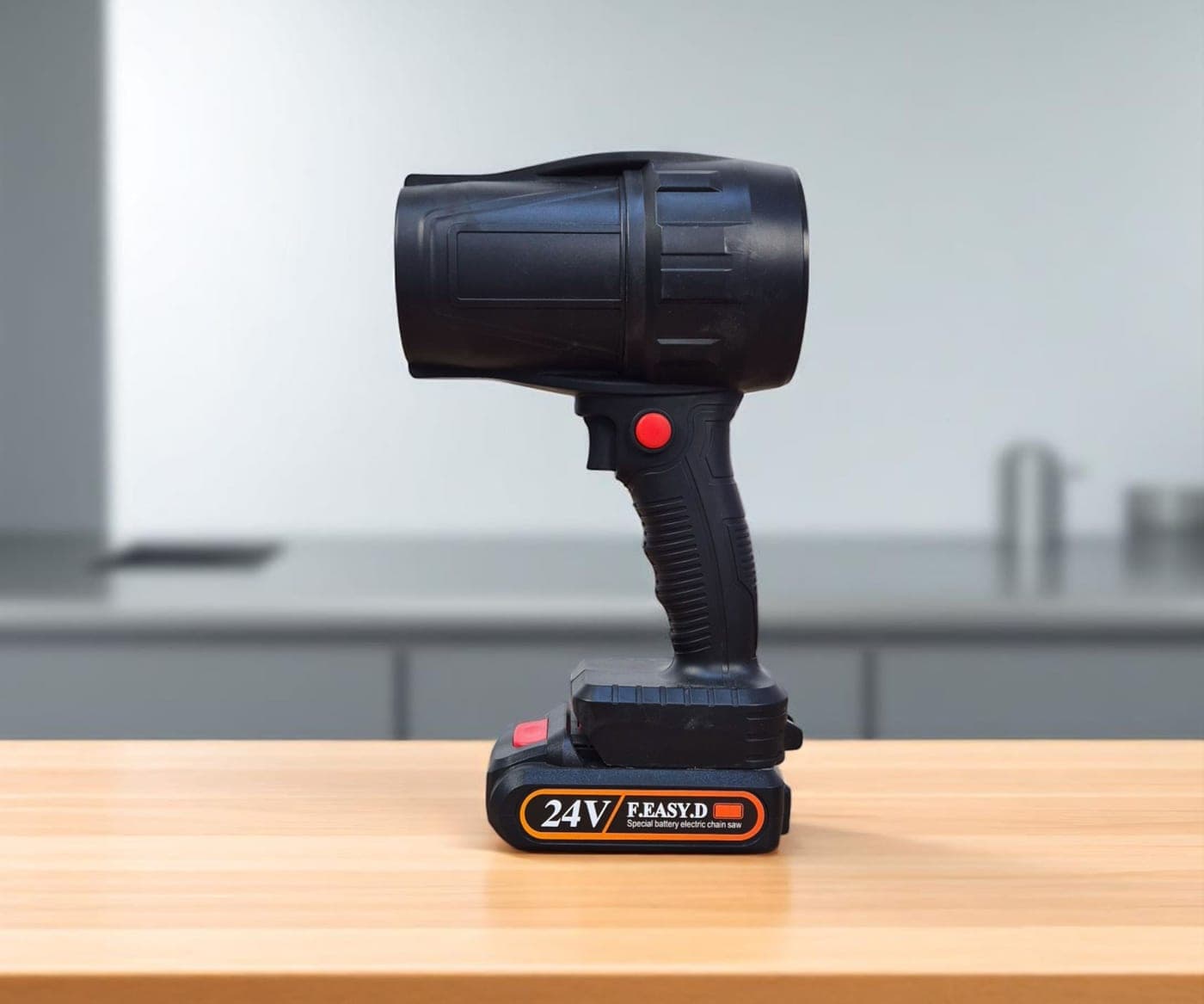
NEBO TORCHY 3K
Three thousand lumens on the box, and NEBO publishes a runtime for every mode except that one. High is 800 lumens for two hours, which is the number to plan around. Read the spec table and the light tells you what it really is.
Price as of September 21, 2026 — 43 lumens per dollar. #ad How we earn
Disclosure — we earn a commission on qualifying purchases made through the Amazon links on this page, at no extra cost to you. It does not change which lights we pick or what we say about them. The full version.
How we rank. Published ANSI FL1 output divided by the live retail price, with sealed-battery lights marked down because a light you cannot re-cell is a light with an expiry date. Units we claim to have tested: 0 — we compile manufacturers' published figures and show the arithmetic instead. How we work this out.
The short answer
Under $100 you are no longer buying output — a $43 Sofirn SC31 Pro publishes 2,000 lumens and will beat almost everything in this bracket on lumens per dollar. What the extra fifty dollars buys is a published runtime for every mode, a stated water and impact rating, a cell you can replace or a pack you can buy a spare of, and a warranty with a company behind it. Buy in this bracket when the light has to work rather than merely be bright.
We should be blunt about this, because it is the uncomfortable finding on a site built around dividing lumens by dollars: this is the worst-value bracket we cover. Every light below is beaten on raw arithmetic by something costing a third as much. If value is your only criterion, stop reading and buy from the under-$50 page.
The reason the bracket exists anyway is that lumens per dollar is a measure of one thing, and there are several other things a flashlight can be asked to do.
What the extra money actually buys
- 1.A runtime figure for every mode. Streamlight publishes 2,000 lumens for two hours, 850 for four and 100 for twenty-four on one page. Most budget lights publish a maximum output and nothing else.
- 2.A stated impact rating. A 2-meter tested figure is a claim with a standard behind it, rather than a paragraph about rugged construction.
- 3.A water rating you can rely on. IP68 on the Fenix C7 V2.0 covers dust as well as immersion; several budget lights we cover publish no water rating at all.
- 4.Replaceable power. Either a standard cell, a manufacturer pack you can buy a spare of, or primaries you can find in a hardware store at midnight.
- 5.Distribution and warranty. Being able to get a replacement part in three years is worth something, and it is worth nothing on a spec sheet.
Notice that only one of those five is about how much light comes out. That is the honest shape of this bracket, and any page that sells it to you on brightness is selling you the wrong thing.
The bracket compared on published figures
| Light | Maximum output | Runtime published at maximum | Water rating | Cell |
|---|---|---|---|---|
| Streamlight ProTac 2L-X | 500 lumens | 2 h 45 min on CR123A | IPX7 | CR123A or SL-B26 pack |
| Fenix C7 V2.0 | 3,300 lumens | Not published | IP68 | Removable, USB-C |
| COAST HP7R | 300 lumens | Up to 33 hours | Not published | Removable ZITHION-X pack |
| Streamlight Wedge | 1,000 lumens burst | 35 seconds, then 3 h at 300 lm | IPX7 | Built-in, USB-C |
| Maglite ML150LR | 1,082 lumens | Over 3 hours | Not published | Replaceable Mag Charger pack |
| NEBO TORCHY 3K | 3,000 lumens | Not published at turbo; 2 h at 800 lm | IPX6 | Built-in 2,200 mAh |
Two rows in that table are the argument for the bracket and two are the argument against it. The ProTac 2L-X publishes the least output and the most information. The C7 V2.0 and the TORCHY 3K publish the most output and no runtime for the mode on the label. Paying more does not automatically buy documentation; you still have to check.
| # | Light | Max output | Battery | Lumens / $ | Price |
|---|---|---|---|---|---|
| 1 | NEBO TORCHY 3K Best big-box light if you want the headline number | 3,000 | Sealed | 43 | $69.99 on Amazon Price as of September 21, 2026 — 43 lumens per dollar. #ad How we earn |
| 2 | 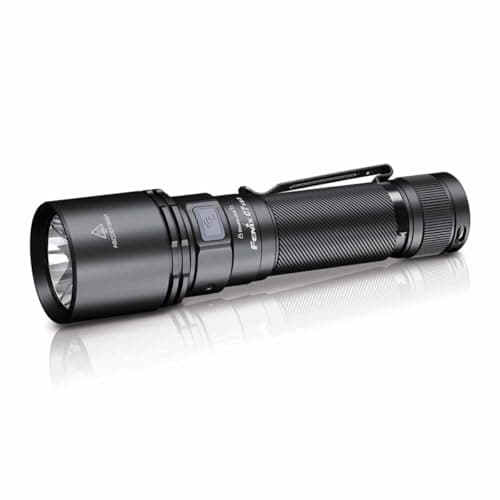 Fenix C7 V2.0 The throw comparison, not a value pick | 3,300 | Replaceable | 41 | $79.95 on Amazon Price as of September 21, 2026 — 41 lumens per dollar. #ad How we earn |
| 3 | 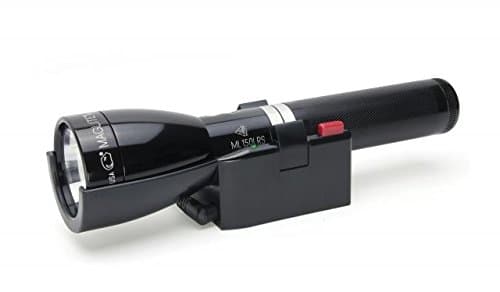 Maglite ML150LR Mag Charger The one built to be repaired instead of replaced | 1,082 | Replaceable | 11 | $99.99 on Amazon Price as of September 21, 2026 — 11 lumens per dollar. #ad How we earn |
| 4 | 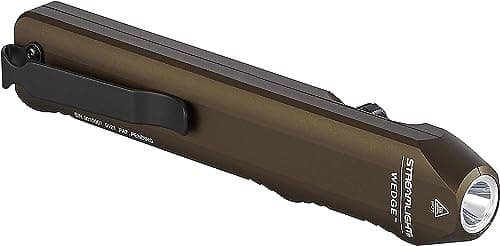 Streamlight Wedge The clearest published turbo duration anywhere | 1,000 | Sealed | 10 | $96.30 on Amazon Price as of September 21, 2026 — 10 lumens per dollar. #ad How we earn |
| 5 | 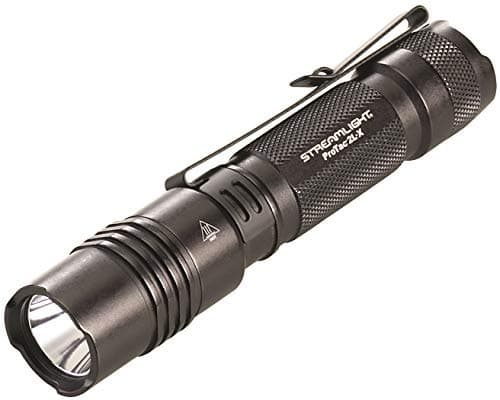 Streamlight ProTac 2L-X Best documented tactical light | 500 | Replaceable | 7 | $66.99 on Amazon Price as of September 21, 2026 — 7 lumens per dollar. #ad How we earn |
| 6 | 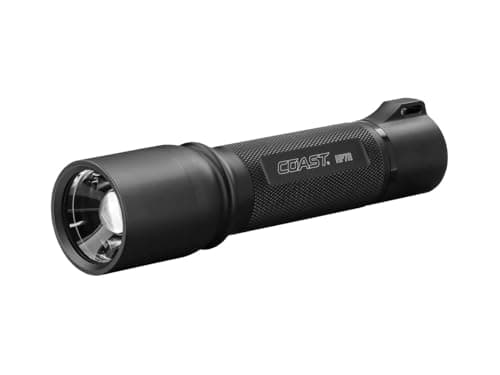 COAST HP7R Longest published runtime in this roundup | 300 | Replaceable | 3 | $90.49 on Amazon Price as of September 21, 2026 — 3 lumens per dollar. #ad How we earn |
Prices pulled September 21, 2026. Lumens per dollar is the manufacturer's published maximum output divided by that price, recomputed every time the price moves.
1. Best big-box light if you want the headline number
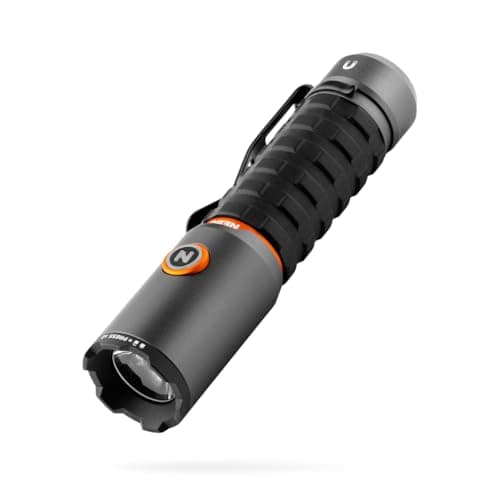
NEBO TORCHY 3K
Lumens per dollar
43
Three thousand lumens on the box, and NEBO publishes a runtime for every mode except that one. High is 800 lumens for two hours, which is the number to plan around. Read the spec table and the light tells you what it really is.
- Max output
- 3,000 lm
- Runtime
- Not published at turbo; 2 h at 800 lm high
- Battery
- Sealed
- Water rating
- IPX6
What it gets right
- NEBO publishes a full mode-by-mode table, which is more than several rivals manage
- USB-C, magnetic base, detachable clip
- Sold in stores you can drive to, and returnable to the same counter
What it gets wrong
- The battery is built in — when it dies the whole light is refuse
- No runtime published for the 3,000-lumen mode the box is named after
- IPX6 is splash and rain, not submersion
Published specification
- Turbo: 3,000 lumens, 150 m — no runtime published — NEBO published specification
- High: 800 lumens, 2 hours, 80 m — NEBO published specification
- Medium: 250 lumens, 3.5 hours, 40 m — NEBO published specification
- Low: 50 lumens, 20 hours, 20 m — NEBO published specification
- Battery: 2,200 mAh 3.7V Li-ion, built in — NEBO published specification
- Recharge time: 2 hours, USB-C — NEBO published specification
- Water rating: IPX6 — NEBO published specification
Skip this one if
you expect the 3K on the label to be a mode you can use. The mode you will actually use is the 800-lumen one, and there are cheaper lights that do 800 lumens for two hours.
Buy it if: somebody who wants a decent light today, from a shop, with a receipt.
- Output 8.5
- Battery 4.0
- Build 7.5
- Usability 8.0
- Overall 7.0
Price as of September 21, 2026 — 43 lumens per dollar. #ad How we earn
2. The throw comparison, not a value pick
Fenix C7 V2.0
Lumens per dollar
41
Thirty-three hundred lumens and 575 meters of throw with an IP68 rating. It appears here as a reference point: this is what a well-built high-output light costs, and it is the number every budget 10,000-lumen claim should be measured against.
- Max output
- 3,300 lm
- Runtime
- Not published per mode on the retail page
- Battery
- Replaceable cell
- Water rating
- IP68
What it gets right
- Five hundred and seventy-five meters is real throw, not a marketing figure
- IP68 and a magnetic tail
- Removable cell
What it gets wrong
- Expensive by this site's standards
- No per-mode runtime on the retail page
- A dedicated thrower is the wrong shape of light for most jobs
Published specification
- Maximum output: 3,300 lumens — Fenix published specification
- Beam distance: 1,886 ft (575 m) — Fenix published specification
- Water rating: IP68 — Fenix published specification
- Body: Ultra-thick A6061-T6 aluminum — Fenix published specification
- Charging: Inner-waterproofed USB-C — Fenix published specification
- Fittings: Magnetic tail, lockout mode — Fenix published specification
- Per-mode runtime: Not published on the retail page we read
Skip this one if
you want one light for the house. A thrower puts its light in a small circle a long way away, which is not what you want indoors.
Buy it if: search work, large properties and anyone who genuinely needs to see a third of a mile.
- Output 9.5
- Battery 9.0
- Build 9.5
- Usability 8.0
- Overall 8.5
Price as of September 21, 2026 — 41 lumens per dollar. #ad How we earn
3. The one built to be repaired instead of replaced
Maglite ML150LR Mag Charger
Lumens per dollar
11
A thousand and eighty-two lumens for over three hours, 79 hours in eco, a 458-meter beam, and a LiFePO4 pack rated for cycle counts nothing else here quotes. It costs several times what the value picks cost and it is the only light here likely to outlive its owner's interest in flashlights.
- Max output
- 1,082 lm
- Runtime
- Over 3 h
- Battery
- Replaceable cell
- Water rating
- None published
What it gets right
- Runtime published at full output, not just at the mode that flatters it
- Replaceable pack, spare parts, and a ten-year warranty
- Charging cradle that lives in a vehicle or on a wall
What it gets wrong
- Its lumens-per-dollar figure is poor and always will be
- No published IP rating on the product page
- The cradle system is convenient in a truck and awkward anywhere else
Published specification
- Maximum output: 1,082 lumens — Maglite published specification
- Runtime at full output: Over 3 hours — Maglite published specification
- Eco mode runtime: Up to 79 hours — Maglite published specification
- Beam distance: 500 yards (458 m) — Maglite published specification
- Battery: Rechargeable Mag Charger pack, replaceable — Maglite published specification
- Fast charge: To 80% in about 30 minutes — Maglite published specification
- Weight: Under 1 lb — Maglite published specification
- Warranty: Ten-year limited — Maglite published specification
- Water rating: Not published on the product page
Skip this one if
you are shopping on value. This light is bought for its service life and its parts availability, and if those do not matter to you it is simply expensive.
Buy it if: someone buying a tool for a decade rather than a purchase for this year.
- Output 8.0
- Battery 9.0
- Build 9.5
- Usability 7.5
- Overall 8.0
Price as of September 21, 2026 — 11 lumens per dollar. #ad How we earn
4. The clearest published turbo duration anywhere
Streamlight Wedge
Lumens per dollar
10
Three hundred lumens for three hours in normal use, and a boost mode Streamlight publishes as a 1,000-lumen, 35-second burst. Not a footnote, not buried in a manual — printed as the specification. Every brand knows their turbo behaves like this; this one says so.
- Max output
- 1,000 lm
- Runtime
- 35 seconds at 1,000 lm; 3 h at 300 lm
- Battery
- Sealed
- Water rating
- IPX7
What it gets right
- The 35-second burst duration is published outright — an unusual piece of honesty
- Flat, wedge-shaped body sits in a pocket without rolling
- IPX7 in a light this thin
What it gets wrong
- Sealed cell, so the light has a service life
- Three hundred lumens constant is its real specification
- Thumb-wheel switch is divisive and cannot be locked out mechanically
Published specification
- Constant: 300 lumens, 69 m, 3 hours — Streamlight published specification
- THRO boost: 1,000 lumens, 110 m, 35-second burst — Streamlight published specification
- Battery: Built-in lithium-ion, USB-C — Streamlight published specification
- Water rating: IPX7, 1 m — Streamlight published specification
- Impact: 1 m tested — Streamlight published specification
- Weight: 3.3 oz (93.6 g) — Streamlight published specification
Skip this one if
you plan to use the 1,000-lumen mode as a mode. It is a burst by design and Streamlight tells you the duration in seconds.
Buy it if: someone who wants a flat pocket light and appreciates a manufacturer that publishes the uncomfortable number.
- Output 6.5
- Battery 4.5
- Build 8.5
- Usability 8.0
- Overall 7.3
Price as of September 21, 2026 — 10 lumens per dollar. #ad How we earn
5. Best documented tactical light
Streamlight ProTac 2L-X
Lumens per dollar
7
Five hundred lumens with the runtime published for both battery types, 165 meters of throw, IPX7 and a 2-meter impact rating. Streamlight publishes what most brands leave out, and the numbers hold up when you divide them.
- Max output
- 500 lm
- Runtime
- 2 h 45 min (CR123A) / 3 h 15 min (SL-B26)
- Battery
- Replaceable cell
- Water rating
- IPX7
What it gets right
- Runtime published for every mode and both battery chemistries
- IPX7 plus a stated 2 m impact test, not a vague claim of toughness
- Runs on CR123A primaries when the rechargeable pack is flat
What it gets wrong
- Five hundred lumens is modest for the money in raw terms
- CR123A cells are expensive if you run it on primaries
- No high-CRI option
Published specification
- High: 500 lumens, 165 m, 2.75 h on CR123A / 3.25 h on SL-B26 — Streamlight published specification
- Low: 40 lumens, 49 m, 30 hours on either battery — Streamlight published specification
- Strobe: Up to 3.25 h (CR123A) / 4.5 h (SL-B26) — Streamlight published specification
- Battery: 2 x CR123A or the SL-B26 rechargeable pack — Streamlight published specification
- Water rating: IPX7, 1 m for 30 minutes — Streamlight published specification
- Impact: 2 m tested — Streamlight published specification
- Weight: 3.9 oz with CR123A / 4.4 oz with SL-B26 — Streamlight published specification
Skip this one if
you want the biggest number per dollar. Streamlight charges for documentation, warranty and consistency, and none of those show up in a lumens-per-dollar column.
Buy it if: someone whose light has to work every time and who would rather have a small honest number than a large unverifiable one.
- Output 6.5
- Battery 8.5
- Build 9.0
- Usability 8.5
- Overall 8.1
Price as of September 21, 2026 — 7 lumens per dollar. #ad How we earn
6. Longest published runtime in this roundup
COAST HP7R
Lumens per dollar
3
Three hundred lumens, a 352-meter beam and up to 33 hours of runtime on a removable ZITHION-X pack. It is the opposite of a turbo-number light: modest output, enormous endurance, and a cell you can replace.
- Max output
- 300 lm
- Runtime
- Up to 33 h
- Battery
- Replaceable cell
- Water rating
- None published
What it gets right
- Thirty-three hours of published runtime, which almost nothing else here approaches
- Removable battery pack sold as a separate part
- 352 m of throw from only 300 lumens — good optics beat brute force
What it gets wrong
- Three hundred lumens will disappoint anyone shopping by the big number
- COAST does not publish a water rating on this product page
- Its lumens-per-dollar figure will always look poor next to an 18650 light
Published specification
- Maximum output: 300 lumens — COAST published specification
- Beam distance: 352 m — COAST published specification
- Runtime: Up to 33 hours — COAST published specification
- Battery: ZX800 ZITHION-X, 2,400 mAh 3.7V, removable — COAST published specification
- Focus: Pure Beam focusing optic — COAST published specification
- Water rating: Not published on the product page
Skip this one if
you are ranking purely on lumens per dollar. This light loses that contest and wins the runtime one, and which of those matters is a question about you, not the light.
Buy it if: long shifts, night walks and anyone who would rather have light for a day than light for an hour.
- Output 5.5
- Battery 8.5
- Build 8.0
- Usability 8.0
- Overall 7.5
Price as of September 21, 2026 — 3 lumens per dollar. #ad How we earn
The Wedge deserves a separate mention
Streamlight states that the Wedge's 1,000-lumen mode is a 35-second burst, and that its real constant output is 300 lumens for three hours. Not in a manual, not in a footnote — in the specification. Almost every light in this bracket and above behaves the same way, and this is one of the very few that says so before you have paid.
It is worth buying partly for that. A manufacturer that prints the number which makes its own headline figure look smaller is telling you something useful about every other figure on the page.
The three ways a brand spends a hundred dollars
Every light in this bracket costs roughly the same and they are not the same product, because the manufacturers spent the budget in three different places. Knowing which one you are buying is the whole skill here.
- 1.On optics. The Fenix C7 V2.0 puts its money into a reflector and emitter that throw 575 meters. That is a genuine engineering result and it is useless indoors, where a tight hotspot is a liability.
- 2.On the cell and the sealing. IP68 ratings, removable 21700 cells and replaceable packs cost money that never appears as a lumen. The COAST HP7R's 33 hours of published runtime and the Maglite's replaceable pack are both this kind of spending.
- 3.On documentation, distribution and warranty. Streamlight's money goes here, which is why its lumen figures are the smallest in the bracket and its specification is the most complete. Maglite publishes a ten-year limited warranty, which is a promise about year eight rather than about tonight.
A budget light spends almost nothing on the second and third categories, which is exactly why it wins the arithmetic. It is not a worse light. It is a light with fewer promises attached to it, sold at a price that reflects that.
What a hundred dollars cannot buy at all
It cannot buy sustained high output. A handheld flashlight is a small aluminum tube with nowhere to put heat, and above roughly a thousand lumens every light in existence steps down within minutes to protect its emitter and its cell. Paying more raises the ceiling of the burst; it does not remove the physics.
This is why the 3,300-lumen and 3,000-lumen figures in the table above should be read as bursts, and why the Streamlight Wedge's published 35-second boost is so useful — it is the same behavior, stated. If you want light that lasts, buy a light whose published runtime at a usable mode is long, not one whose published maximum is high. Those are different purchases and the box will not distinguish them for you.
It also cannot buy a light that is good at everything. A thrower is bad indoors, a flood is useless across a field, and a pocket light is neither. In this bracket you are buying specialization, and the single most common way to waste a hundred dollars here is to buy the most impressive-sounding light rather than the one shaped like your problem.
The bracket above and the bracket below
Below this, at thirty to fifty dollars, the value curve is at its steepest: a replaceable 18650, a published output over a thousand lumens and USB-C charging are all available, and what you give up is documentation and warranty rather than capability.
Above it, past a hundred dollars, you are mostly buying duty-grade build and service life. The Streamlight Stinger 2020 sits just over the line at 2,000 lumens with two hours published beside it, and it is the clearest illustration of what the next bracket is for: not a bigger number, but a number you can rely on, in a body built to be issued to somebody.
When to skip this bracket entirely
- You want the most light for the money. Go to the under-$50 or under-$30 rankings — the arithmetic there is simply better and we are not going to pretend otherwise.
- You want one light for the house and will use it twice a month. A $30 light with a replaceable 18650 does that job for a decade.
- You are buying on the headline lumen number. Two of the six lights here publish a bigger maximum than anything in our value tier and no runtime beside it, which means you are paying more for a less checkable claim.
- You need a light for a drawer or a car. Shelf life and battery chemistry matter more than anything this bracket offers, and a light that takes AA cells will serve you better.
The one figure to compare across all six
If you take one habit from this page, take this: find the highest output each light publishes that has a runtime printed beside it, and compare those. Not the maximum. The highest documented sustained figure.
Do that across this bracket and the ranking rearranges itself. The Stinger 2020's 2,000 lumens for two hours stands up. The Wedge becomes a 300-lumen light with a burst, because Streamlight says so. The TORCHY 3K becomes an 800-lumen light for two hours rather than a 3,000-lumen light. And the C7 V2.0 and HM65R V2.0 drop out of the comparison entirely, not because they are bad but because there is nothing to compare — no runtime is published for any mode.
That is an uncomfortable result for two well-engineered lights, and we are publishing it rather than softening it, because the alternative is ranking a light on a number nobody has committed to.
Price volatility in this bracket, and what to do about it
The prices on this page are pulled live rather than typed, and in this bracket they move more than anywhere else we cover. Brands at this level run seasonal promotions, retailers discount superseded models hard when a V3 replaces a V2, and the same light can swing by thirty dollars inside a month.
Two practical consequences. First, a light that looks poor value today may be the best value on the page next month, so the ordering here is a snapshot and the arithmetic is what matters. Second, this is the one bracket where waiting is rational: nothing in it is urgent, and the difference between buying at full price and buying on promotion is a meaningful fraction of what a budget light costs outright.
How we ranked these
Published output over the live price, adjusted for cell architecture and published ratings, with completeness of the specification weighted more heavily than usual. In a bracket whose entire justification is that you are buying certainty rather than lumens, a light that publishes no runtime for its headline mode has not earned the premium, and it is scored accordingly.
Units we claim to have tested: 0
Every publisher in this category says they tested twenty flashlights. We have not tested any, and we say so. What we do instead: compile the manufacturer's own published ANSI FL1 figures, pull the price the light is selling for right now, and divide one by the other. Every number on this page is one you can check yourself in about two minutes.
What we cannot tell you
Prices in this bracket move more than in any other we cover, because these brands run promotions and because retailers discount older models hard. A light that is $96 today may be $70 next month or out of stock, and the live figures on this page are pulled at build time rather than typed by us. We also have not handled any of these lights, so we cannot tell you which switch you will still like in a year, and we have not tested a single warranty claim between them.
Common questions
Is a $100 flashlight worth it?
Only if you want something other than brightness. A $43 Sofirn SC31 Pro publishes 2,000 lumens and will beat most of this bracket on lumens per dollar. What $100 buys is a published runtime for every mode, stated water and impact ratings, a replaceable cell or a pack you can buy a spare of, and a warranty worth using. If your light has to work on a schedule those are worth the money, and if it does not, they are not.
What is the brightest flashlight under $100?
Of the lights we cover in this bracket, the Fenix C7 V2.0 publishes the highest maximum output at 3,300 lumens along with 575 meters of beam distance, and the NEBO TORCHY 3K publishes 3,000 lumens. Neither publishes a runtime for that mode, so treat both figures as a burst rather than a setting you can use. If you want the brightest number with a duration printed beside it, that is the Streamlight Stinger 2020 at 2,000 lumens for two hours, and it sits just above this bracket.
Can you replace the battery in a rechargeable flashlight?
It depends entirely on the model, and it is the single most consequential thing to check before buying. Lights built around a standard cell — an 18650, a 21700, a 14500, a 16340 — take a screw-off tailcap and a five-dollar replacement. Lights with a built-in cell, which manufacturers describe as 'integrated' or 'non-removable', cannot be re-celled by an ordinary owner: when the battery reaches the end of its cycle life the whole light is refuse. Energizer, for example, states plainly that the Vision HD Rechargeable uses non-removable lithium-ion batteries.
Sources
- Streamlight published product specifications — per-mode lumens, runtime, beam distance, impact and IP ratings, read 2026-09-01
- Fenix published product specifications — read 2026-09-01
- COAST published product specifications — read 2026-09-01
- Maglite published product specifications — read 2026-09-01
- NEBO published product specifications — mode-by-mode lumen, runtime and beam figures, read 2026-09-01
- Lumen & Ledger method — how every figure on this page is derived
Who writes this
Scooter M. — I am an enthusiast who is genuinely into this. I read the manuals, compile the published specs, and do the math. No lab coat, no test bench, no drawer of free samples. What I can tell you is exactly what a light claims on paper, exactly what it costs right now, and what those two numbers mean when you divide one by the other.
Read next
Best rechargeable flashlights under $50
Where the value curve is steepest, and the three things $50 should buy you.
Best high-lumen rechargeable flashlights
High output judged on sustained performance rather than a thirty-second peak.
Streamlight vs Fenix
Fenix publishes the bigger numbers. Streamlight publishes how long they last.
Are expensive flashlights worth it?
What the money above eighty dollars actually buys, and the three buyers it is genuinely worth it for.
The 10,000-lumen problem
Why the biggest number on the box is the one you can use for the shortest time.
The Ledger
Every light we cover in one ranked table, sorted by lumens per dollar.