Flashlights
Streamlight vs Fenix
One brand builds for output and sealing, the other for accountability. Both are good, at opposite ends of the spec sheet.
By Scooter M. · Published September 21, 2026
Short answer
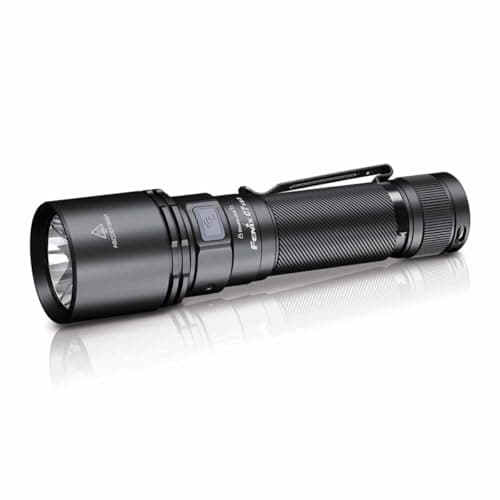
Fenix C7 V2.0
Thirty-three hundred lumens and 575 meters of throw with an IP68 rating. It appears here as a reference point: this is what a well-built high-output light costs, and it is the number every budget 10,000-lumen claim should be measured against.
Price as of September 21, 2026 — 41 lumens per dollar. #ad How we earn
Disclosure — we earn a commission on qualifying purchases made through the Amazon links on this page, at no extra cost to you. It does not change which lights we pick or what we say about them. The full version.
How we rank. Published ANSI FL1 output divided by the live retail price, with sealed-battery lights marked down because a light you cannot re-cell is a light with an expiry date. Units we claim to have tested: 0 — we compile manufacturers' published figures and show the arithmetic instead. How we work this out.
The short answer
Buy Fenix for output, throw and sealing: the C7 V2.0 publishes 3,300 lumens and 575 meters with an IP68 rating, and the HM65R V2.0 takes a removable 21700 so you can carry a spare. Buy Streamlight for accountability: it publishes a runtime for every mode of every light we cover, and on the Fenix retail pages we read there was no per-mode runtime for any of the three Fenix models here. If you need to know how long the big number lasts, only one of these brands will tell you.
This is a closer comparison than Olight against Streamlight, because Fenix is not trading documentation for convenience. It is trading it for engineering. Fenix publishes water ratings most brands will not attempt, uses removable high-capacity cells where Streamlight often seals or uses primaries, and makes genuine throwers. The gap is narrow and it is specific.
Published specifications, side by side
| Fenix C7 V2.0 | Fenix HM65R V2.0 | Streamlight Stinger 2020 | Streamlight ProTac 2L-X | |
|---|---|---|---|---|
| Maximum output | 3,300 lumens | 2,200 lumens | 2,000 lumens | 500 lumens |
| Beam distance | 575 m | 226 m | 315 m | 165 m |
| Runtime at maximum | Not published | Not published | 2 hours | 2.75 h on CR123A |
| Runtime for every mode? | No | No | Yes | Yes, and for both cell types |
| Cell | Removable, USB-C | Removable 3,400 mAh 21700 | Replaceable pack | 2 x CR123A or SL-B26 |
| Water rating | IP68 | IP68 | IPX7 | IPX7 |
| Impact rating | Not stated | 2 m | 2 m tested | 2 m tested |
Where Fenix is plainly ahead
Five hundred and seventy-five meters of published beam distance is not a marketing flourish, it is a different class of optic, and nothing Streamlight makes in this comparison approaches it. IP68 on both the C7 V2.0 and the HM65R V2.0 is a stronger sealing claim than the IPX7 Streamlight publishes, because it covers dust ingress as well as immersion. And the HM65R V2.0's removable 3,400 mAh 21700 is the most practical feature on this page: a spare cell in a pocket turns a four-hour night into an eight-hour one, which no sealed light and no charging cradle can do.
Fenix also puts a magnetic tail on the C7 V2.0 and a lockout on both, small things that turn out to matter daily. On the hardware, Fenix is the more ambitious company.
Where Streamlight is plainly ahead
The runtime row, again, and this time the pattern is stark. We read the retail pages for the E06R, the C7 V2.0 and the HM65R V2.0 and found no per-mode runtime on any of them. Fenix will tell you a light makes 3,300 lumens and will not tell you for how long. Streamlight prints 2,000 lumens for two hours, 850 for four and 100 for twenty-four on a single product page, for the Stinger 2020.
That is the whole argument, and it has a practical edge. A 3,300-lumen handheld cannot sustain 3,300 lumens; nothing that size can shed the heat. The number is a burst, every brand knows it is a burst, and the honest ones print the duration. Streamlight's Wedge is the clearest example anywhere: it states outright that its 1,000-lumen mode is a 35-second burst and that the light's real specification is 300 lumens for three hours. Fenix's numbers may well behave identically. We cannot tell you, because Fenix did not say.
| # | Light | Max output | Battery | Lumens / $ | Price |
|---|---|---|---|---|---|
| 1 | Fenix C7 V2.0 The throw comparison, not a value pick | 3,300 | Replaceable | 41 | $79.95 on Amazon Price as of September 21, 2026 — 41 lumens per dollar. #ad How we earn |
| 2 | 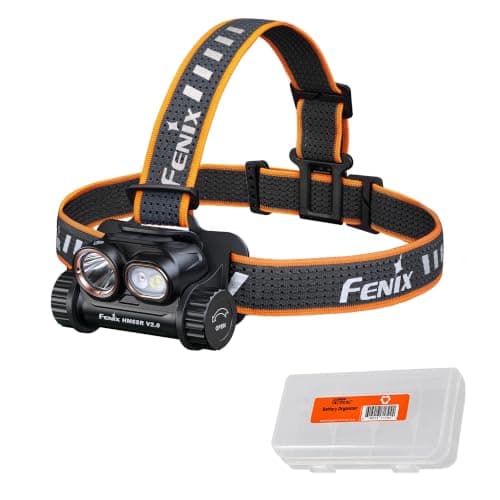 Fenix HM65R V2.0 Most output with a removable 21700 | 2,200 | Replaceable | 22 | $100.45 on Amazon Price as of September 21, 2026 — 22 lumens per dollar. #ad How we earn |
| 3 | 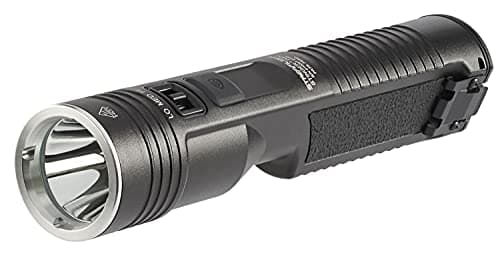 Streamlight Stinger 2020 Highest output with a published runtime to match | 2,000 | Replaceable | 16 | $127.93 on Amazon Price as of September 21, 2026 — 16 lumens per dollar. #ad How we earn |
| 4 | 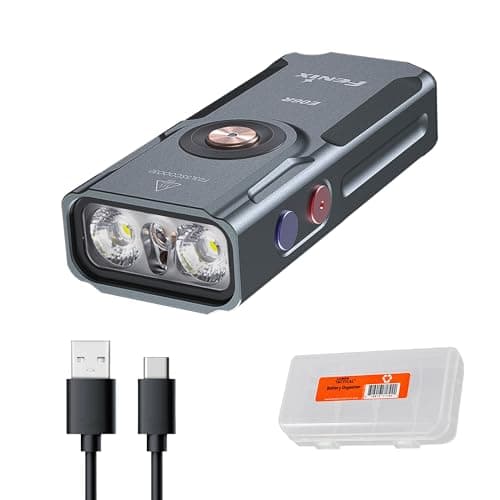 Fenix E06R Most output from a keychain body | 700 | Sealed | 13 | $55.95 on Amazon Price as of September 21, 2026 — 13 lumens per dollar. #ad How we earn |
| 5 | 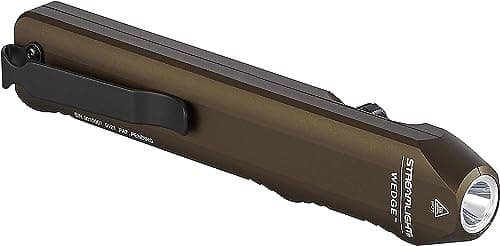 Streamlight Wedge The clearest published turbo duration anywhere | 1,000 | Sealed | 10 | $96.30 on Amazon Price as of September 21, 2026 — 10 lumens per dollar. #ad How we earn |
| 6 | 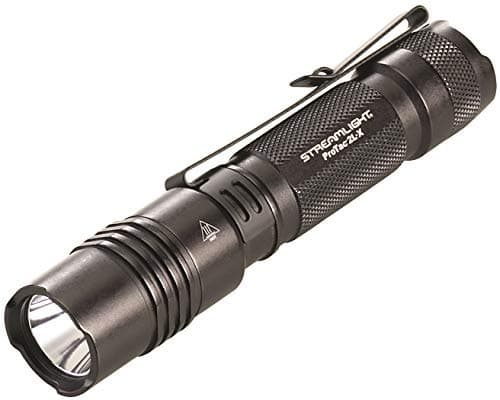 Streamlight ProTac 2L-X Best documented tactical light | 500 | Replaceable | 7 | $66.99 on Amazon Price as of September 21, 2026 — 7 lumens per dollar. #ad How we earn |
Prices pulled September 21, 2026. Lumens per dollar is the manufacturer's published maximum output divided by that price, recomputed every time the price moves.
1. The throw comparison, not a value pick
Fenix C7 V2.0
Lumens per dollar
41
Thirty-three hundred lumens and 575 meters of throw with an IP68 rating. It appears here as a reference point: this is what a well-built high-output light costs, and it is the number every budget 10,000-lumen claim should be measured against.
- Max output
- 3,300 lm
- Runtime
- Not published per mode on the retail page
- Battery
- Replaceable cell
- Water rating
- IP68
What it gets right
- Five hundred and seventy-five meters is real throw, not a marketing figure
- IP68 and a magnetic tail
- Removable cell
What it gets wrong
- Expensive by this site's standards
- No per-mode runtime on the retail page
- A dedicated thrower is the wrong shape of light for most jobs
Published specification
- Maximum output: 3,300 lumens — Fenix published specification
- Beam distance: 1,886 ft (575 m) — Fenix published specification
- Water rating: IP68 — Fenix published specification
- Body: Ultra-thick A6061-T6 aluminum — Fenix published specification
- Charging: Inner-waterproofed USB-C — Fenix published specification
- Fittings: Magnetic tail, lockout mode — Fenix published specification
- Per-mode runtime: Not published on the retail page we read
Skip this one if
you want one light for the house. A thrower puts its light in a small circle a long way away, which is not what you want indoors.
Buy it if: search work, large properties and anyone who genuinely needs to see a third of a mile.
- Output 9.5
- Battery 9.0
- Build 9.5
- Usability 8.0
- Overall 8.5
Price as of September 21, 2026 — 41 lumens per dollar. #ad How we earn
2. Most output with a removable 21700
Fenix HM65R V2.0
Lumens per dollar
22
Twenty-two hundred lumens, 226 meters, IP68, a 2-meter impact rating and a removable 3,400 mAh 21700. It costs several times what a budget headlamp costs and it is the only one here you can carry a spare cell for.
- Max output
- 2,200 lm
- Runtime
- Not published per mode on the retail page
- Battery
- Replaceable cell
- Water rating
- IP68
What it gets right
- Removable 21700, so a spare cell turns a four-hour night into an eight-hour one
- IP68 — the strongest water rating in this roundup
- Independent spot and flood control, which is what work actually needs
What it gets wrong
- Its lumens-per-dollar figure will be poor against any budget lamp
- Heavy on the head compared with the ultralight class
- No per-mode runtime on the page we read
Published specification
- Maximum output: 2,200 lumens, spot and flood combined — Fenix published specification
- Beam distance: 741 ft (226 m) — Fenix published specification
- Battery: 3,400 mAh 21700, removable, USB-C — Fenix published specification
- Water rating: IP68 — Fenix published specification
- Impact: 2 m — Fenix published specification
- Body: Magnesium alloy — Fenix published specification
- Per-mode runtime: Not published on the retail page we read
Skip this one if
you are buying on value. This is a work tool priced as one.
Buy it if: night shifts, cave work and anyone who has run a headlamp flat halfway through a job.
- Output 9.5
- Battery 9.0
- Weight 5.5
- Usability 8.5
- Overall 8.4
Price as of September 21, 2026 — 22 lumens per dollar. #ad How we earn
3. Highest output with a published runtime to match
Streamlight Stinger 2020
Lumens per dollar
16
Two thousand lumens for two hours, 850 for four, 100 for twenty-four, 315 meters of throw, IPX7. This is what a 2,000-lumen claim looks like when the manufacturer stands behind it with a duration.
- Max output
- 2,000 lm
- Runtime
- 2 h
- Battery
- Replaceable cell
- Water rating
- IPX7
What it gets right
- Two thousand lumens with two hours beside it, published together
- Twenty-four hours on low makes it viable as an outage light
- Duty-grade build with the warranty and spares to match
What it gets wrong
- Twelve and a half ounces — this is a belt light, not a pocket light
- Priced well above everything else in the value tier
- Charging is via a cradle, which is another thing to own
Published specification
- High: 2,000 lumens, 315 m, 2 hours — Streamlight published specification
- Medium: 850 lumens, 200 m, 4 hours — Streamlight published specification
- Low: 100 lumens, 70 m, 24 hours — Streamlight published specification
- Strobe: 3.25 hours — Streamlight published specification
- Water rating: IPX7 — Streamlight published specification
- Impact: 2 m tested — Streamlight published specification
- Weight: 12.3 oz (350 g) — Streamlight published specification
- Length: 7.67 in (19.48 cm) — Streamlight published specification
Skip this one if
you want value. On lumens per dollar it will lose to a Sofirn every time; what it buys is the certainty that the number is real.
Buy it if: professional use, and anyone comparing a budget light's 2,000-lumen claim against a documented one.
- Output 9.5
- Battery 8.5
- Build 9.5
- Usability 7.5
- Overall 8.4
Price as of September 21, 2026 — 16 lumens per dollar. #ad How we earn
4. Most output from a keychain body
Fenix E06R
Lumens per dollar
13
Seven hundred lumens and 110 meters from a light that hangs off a keyring, with a 750 mAh built-in cell and a magnetic tail. It costs more than the budget keychain options and it puts out several times their light.
- Max output
- 700 lm
- Runtime
- Not published per mode on the retail page
- Battery
- Sealed
- Water rating
- None published
What it gets right
- Seven hundred lumens from a keyring light is a genuine step up
- Magnetic tail turns it into a hands-free task light
- Lockout function, so it does not cook in a pocket
What it gets wrong
- Sealed 750 mAh cell
- The UV mode and laser pointer are features looking for a use
- No per-mode runtime on the retail page
Published specification
- Maximum output: 700 lumens — Fenix published specification
- Beam distance: 361 ft (110 m) — Fenix published specification
- Battery: Built-in 750 mAh — Fenix published specification
- Modes: Ten, including UV and a red laser pointer — Fenix published specification
- Fittings: Magnetic tail, key ring loop, lockout — Fenix published specification
- Per-mode runtime: Not published on the retail page we read
Skip this one if
you want a keychain light with a replaceable cell — that is the Sofirn SC21 Pro's job here.
Buy it if: someone who wants their smallest light to still be a real light.
- Output 7.0
- Battery 4.0
- Build 8.5
- Usability 8.0
- Overall 7.1
Price as of September 21, 2026 — 13 lumens per dollar. #ad How we earn
5. The clearest published turbo duration anywhere
Streamlight Wedge
Lumens per dollar
10
Three hundred lumens for three hours in normal use, and a boost mode Streamlight publishes as a 1,000-lumen, 35-second burst. Not a footnote, not buried in a manual — printed as the specification. Every brand knows their turbo behaves like this; this one says so.
- Max output
- 1,000 lm
- Runtime
- 35 seconds at 1,000 lm; 3 h at 300 lm
- Battery
- Sealed
- Water rating
- IPX7
What it gets right
- The 35-second burst duration is published outright — an unusual piece of honesty
- Flat, wedge-shaped body sits in a pocket without rolling
- IPX7 in a light this thin
What it gets wrong
- Sealed cell, so the light has a service life
- Three hundred lumens constant is its real specification
- Thumb-wheel switch is divisive and cannot be locked out mechanically
Published specification
- Constant: 300 lumens, 69 m, 3 hours — Streamlight published specification
- THRO boost: 1,000 lumens, 110 m, 35-second burst — Streamlight published specification
- Battery: Built-in lithium-ion, USB-C — Streamlight published specification
- Water rating: IPX7, 1 m — Streamlight published specification
- Impact: 1 m tested — Streamlight published specification
- Weight: 3.3 oz (93.6 g) — Streamlight published specification
Skip this one if
you plan to use the 1,000-lumen mode as a mode. It is a burst by design and Streamlight tells you the duration in seconds.
Buy it if: someone who wants a flat pocket light and appreciates a manufacturer that publishes the uncomfortable number.
- Output 6.5
- Battery 4.5
- Build 8.5
- Usability 8.0
- Overall 7.3
Price as of September 21, 2026 — 10 lumens per dollar. #ad How we earn
6. Best documented tactical light
Streamlight ProTac 2L-X
Lumens per dollar
7
Five hundred lumens with the runtime published for both battery types, 165 meters of throw, IPX7 and a 2-meter impact rating. Streamlight publishes what most brands leave out, and the numbers hold up when you divide them.
- Max output
- 500 lm
- Runtime
- 2 h 45 min (CR123A) / 3 h 15 min (SL-B26)
- Battery
- Replaceable cell
- Water rating
- IPX7
What it gets right
- Runtime published for every mode and both battery chemistries
- IPX7 plus a stated 2 m impact test, not a vague claim of toughness
- Runs on CR123A primaries when the rechargeable pack is flat
What it gets wrong
- Five hundred lumens is modest for the money in raw terms
- CR123A cells are expensive if you run it on primaries
- No high-CRI option
Published specification
- High: 500 lumens, 165 m, 2.75 h on CR123A / 3.25 h on SL-B26 — Streamlight published specification
- Low: 40 lumens, 49 m, 30 hours on either battery — Streamlight published specification
- Strobe: Up to 3.25 h (CR123A) / 4.5 h (SL-B26) — Streamlight published specification
- Battery: 2 x CR123A or the SL-B26 rechargeable pack — Streamlight published specification
- Water rating: IPX7, 1 m for 30 minutes — Streamlight published specification
- Impact: 2 m tested — Streamlight published specification
- Weight: 3.9 oz with CR123A / 4.4 oz with SL-B26 — Streamlight published specification
Skip this one if
you want the biggest number per dollar. Streamlight charges for documentation, warranty and consistency, and none of those show up in a lumens-per-dollar column.
Buy it if: someone whose light has to work every time and who would rather have a small honest number than a large unverifiable one.
- Output 6.5
- Battery 8.5
- Build 9.0
- Usability 8.5
- Overall 8.1
Price as of September 21, 2026 — 7 lumens per dollar. #ad How we earn
The price gap is real and it is not about lumens
Both brands sit well above the value tier, and neither will win a lumens-per-dollar table against a Sofirn. What the money buys is different in each case. With Fenix you are buying optics, sealing and cell capacity. With Streamlight you are buying a documented product with a distribution network, a warranty and spare parts behind it, which is why it dominates duty and trade use rather than enthusiast use.
If you are weighing either against Olight as well, the axis there is different again, and we have compared those two separately.
The heat argument, which neither brand can escape
It is worth being fair to Fenix here. A missing runtime figure is a disclosure failure, not necessarily a performance one, and the underlying physics applies to both companies equally: a handheld light has nowhere to put heat, so every high-output mode steps down. Streamlight's lights do this too. The difference is that Streamlight tells you where they land.
That distinction matters because it changes what you can plan. If a brand publishes 2,000 lumens for two hours you can decide whether two hours is enough. If a brand publishes 3,300 lumens and nothing else, the only honest thing you can conclude is that the light is bright at the moment you switch it on.
If you are choosing a headlamp rather than a flashlight
The comparison inverts. Streamlight's strength is handheld and duty lighting, and the Fenix HM65R V2.0 is the stronger head-worn product of the two by a wide margin: IP68, a 2-meter impact rating, a magnesium body and independent spot and flood control, on a removable 3,400 mAh 21700.
For head-worn light the brands worth weighing against Fenix are Black Diamond and Petzl rather than Streamlight, because those two publish burn times per mode in a way Fenix does not — the same argument as this page, with different names in it.
Which one to buy
- If you need to see a long way: Fenix, without argument. The C7 V2.0's 575 meters is the reason this brand exists.
- If the light will be submerged or used in dust: Fenix, for the IP68.
- If you need a spare cell for a long night: the Fenix HM65R V2.0, the only light here with a removable 21700.
- If you need to plan around runtime: Streamlight, because it is the only one of the two that publishes it.
- If the light lives in a drawer between emergencies: the Streamlight ProTac 2L-X, which runs on CR123A primaries that keep for years.
Cell strategy, compared properly
The two brands answer the power question in opposite directions, and it is the most consequential practical difference between them after the runtime disclosure.
Fenix builds around large modern rechargeable cells: a removable 3,400 mAh 21700 in the HM65R V2.0, removable cells with USB-C charging in the C7 V2.0. That gives high capacity, low running cost and, crucially, the ability to carry a charged spare and swap it in seconds. For a long job or a long night that is the strongest configuration on this page.
Streamlight hedges. The ProTac 2L-X takes CR123A lithium primaries or its own rechargeable pack, and publishes a runtime for both. CR123A cells are expensive per hour and they have two properties nothing rechargeable matches: they sit in a drawer for years without self-discharging, and they perform well in cold. That is why this configuration dominates lights that must work after long storage.
So the honest split is by duty cycle. A light used most days should be on rechargeable cells, and Fenix's approach is better. A light that waits in a vehicle, a pack or a drawer for months should be on primaries, and Streamlight's approach is better. Buying the wrong one is how people end up with an expensive flashlight that is flat every time they reach for it.
What IP68 and IPX7 actually promise
The ratings get quoted as though they were a single scale, and they are not. The first digit covers solids and the second covers water. IPX7 has an X in the solids position, which does not mean it fails a dust test — it means no dust test was performed or published. The 7 means immersion to one meter for thirty minutes.
IP68 means a stated dust-tight rating plus continuous immersion beyond a meter, to a depth the manufacturer specifies. So Fenix's IP68 is a genuinely stronger and broader claim than Streamlight's IPX7, and in dusty work it is the difference that matters more than the depth figure.
What neither rating covers is the one that breaks lights: pressure changes and repeated wetting around a charging port. A rating is a test of a sealed unit at a moment in time, not a promise about a rubber flap after two years of use.
How we ranked these
Published output over the live price, adjusted for cell architecture and published ratings, with completeness of the specification weighted heavily — on a page asking which brand to trust, a missing runtime is the finding rather than a footnote. Fenix's IP68 ratings earn back some of what the missing runtimes cost it.
Beam distance is a square-root measure, and it flatters throwers
The C7 V2.0's 575 meters against the Stinger 2020's 315 looks like a light that is nearly twice as capable. It is worth understanding what that figure is before you weigh it that heavily.
Beam distance under ANSI FL 1 is the distance at which the beam has fallen to 0.25 lux, roughly the illumination of a full moon. Because light falls off with the square of distance, the underlying intensity figure scales as the square of the beam distance — so nearly doubling the stated meters requires about four times the peak intensity, not twice.
Two consequences follow. Doubling beam distance is a much larger engineering achievement than the number suggests, which is real credit to Fenix. And 0.25 lux at 575 meters is enough to detect that something is there, not to identify it — so the practical recognition distance of any thrower is a fraction of its rated figure, whoever made it.
This is also why a high beam distance and a high lumen count are not the same claim and can trade against each other. A tight reflector concentrates the same lumens into a narrower cone, which buys meters and costs you the peripheral light you actually use indoors.
Units we claim to have tested: 0
Every publisher in this category says they tested twenty flashlights. We have not tested any, and we say so. What we do instead: compile the manufacturer's own published ANSI FL1 figures, pull the price the light is selling for right now, and divide one by the other. Every number on this page is one you can check yourself in about two minutes.
What we cannot tell you
We have not measured either brand's output, verified either brand's beam distance, or run either brand's cells to empty. We cannot tell you how the C7 V2.0 behaves at minute three of turbo, because Fenix does not publish it and we have not tested it. We also cannot compare the two companies' warranty service, which at this price is a real part of the value and one we have no evidence about.
Common questions
Is Fenix better than Streamlight?
Fenix is better on the hardware: more output, far more throw, IP68 sealing rather than IPX7, and a removable 21700 in its headlamp. Streamlight is better on disclosure: it publishes a runtime for every mode of every model we cover, and on the Fenix retail pages we read there was no per-mode runtime at all. Buy Fenix if you need what the hardware does. Buy Streamlight if you need to know what it does and for how long.
Why does Fenix not publish runtimes?
We do not know, and we are not going to guess at a motive. What we can state is the fact: on the Fenix retail pages we read for the E06R, C7 V2.0 and HM65R V2.0 on 2026-09-01, no per-mode runtime figure was published, and we have recorded that gap in each product's specification table rather than filling it with an estimate. Fenix publishes fuller data in some product manuals; the retail page is what most buyers actually see.
How many lumens do I actually need?
For walking a dog, finding a fuse box or reading a map, 100 to 300 lumens is plenty and will run far longer. For a garage, a yard or a campsite, 500 to 1,000 lumens is comfortable. Above about 2,000 lumens you are buying a burst rather than a mode, because almost no handheld light can shed that much heat continuously.
Sources
- Fenix published product specifications — read 2026-09-01
- Streamlight published product specifications — per-mode lumens, runtime, beam distance, impact and IP ratings, read 2026-09-01
- Streamlight, ANSI Information — definitions of light output, beam distance, run time, impact and water resistance under the FL1 standard, read 2026-09-01
- Lumen & Ledger method — how every figure on this page is derived
Who writes this
Scooter M. — I am an enthusiast who is genuinely into this. I read the manuals, compile the published specs, and do the math. No lab coat, no test bench, no drawer of free samples. What I can tell you is exactly what a light claims on paper, exactly what it costs right now, and what those two numbers mean when you divide one by the other.
Read next
Olight vs Streamlight
Convenience against documentation, and the one spec column that settles it.
NITECORE vs Fenix
Two enthusiast brands that both publish properly. The split is dual power against raw output.
Best high-lumen rechargeable flashlights
High output judged on sustained performance rather than a thirty-second peak.
Best flashlights under $100
Where you stop buying lumens and start buying documentation, sealing and spare parts.
Flashlight runtime explained
Why a published runtime can be honest and still describe a light that dimmed an hour ago.
The Ledger
Every light we cover in one ranked table, sorted by lumens per dollar.