Guides
Flashlight Runtime Explained
Runtime is the most useful number on a spec sheet and the easiest one to misread. The trick is knowing which mode it belongs to and what it counts as still being on.
By Scooter M. · Published September 6, 2026
Short answer
Wurkkos TS10 V2
Thirty-two grams, three 90-CRI emitters, and one of the very few budget lights whose maker publishes the runtime at maximum output: one hour fourteen at 1,400 lumens. Publishing that number at all puts Wurkkos ahead of several brands ten times its size.
listing
image
We show a price only when we have pulled a live one. #ad How we earn
Disclosure — we earn a commission on qualifying purchases made through the Amazon links on this page, at no extra cost to you. It does not change which lights we pick or what we say about them. The full version.
How we rank. Published ANSI FL1 output divided by the live retail price, with sealed-battery lights marked down because a light you cannot re-cell is a light with an expiry date. Units we claim to have tested: 0 — we compile manufacturers' published figures and show the arithmetic instead. How we work this out.
What a runtime figure actually means
A flashlight's runtime is how long it keeps producing light on one specific mode, measured under the ANSI FL 1 convention from the output at 30 seconds until it falls to 10 percent of that value. Two consequences follow, and they are the whole subject: the figure belongs to one mode and not to the light, and a light can spend most of its quoted runtime far below the brightness you bought it for and still be described accurately.
That is why this site treats a published runtime as the single most informative thing a manufacturer can print, and treats its absence as informative too. Our page on ANSI FL 1 covers the standard itself. This page is about using the number.
Rule one: the hours belong to a mode, and it is almost never the one on the box
When a listing says up to 20 hours, the phrase up to is doing all the work. That figure is nearly always attached to the lowest mode the light has, and often to a mode you would describe as a nightlight. It is not a lie and it is not useless — it just answers a different question from the one most buyers think they are asking.
| Light | Runtime at its brightest published mode | Longest published runtime | The mode that belongs to |
|---|---|---|---|
| Wurkkos TS10 V2 | 1 h 14 min at 1,400 lm | 6 h 43 min | 1 lumen |
| Maglite ML150LR | Over 3 h at 1,082 lm | Up to 79 h | Eco mode |
| Black Diamond Spot 400-R | 4 h at 400 lm | 225 h | 6 lumens |
| Streamlight Siege AA | 7 h at 200 lm | 192 h | 0.7 lumens, red |
| COAST HP7R | Not published per mode | Up to 33 h | Not specified by COAST |
| NEBO TORCHY 3K | Not published at 3,000 lm | 20 h | 50 lumens |
Read the right-hand column and the point makes itself. Black Diamond's 225 hours is real, published and genuinely useful — 6 lumens is enough to move around a tent or find something in a pack — but it is not 225 hours of the 400-lumen light you saw on the box. The brands worth trusting are the ones that publish both figures so you can see the gap, and Black Diamond, Streamlight, Wurkkos and NEBO all do.
Rule two: still on is not the same as still bright
The standard stops the clock when output falls to 10 percent of the 30-second reading. Ten percent. A light quoted at 1,000 lumens for four hours may have crossed below 500 lumens in the first hour and spent the rest of the time sliding toward 100, and the four-hour figure is still correct.
This is why two lights with the same quoted runtime can behave completely differently. One holds close to its initial output for most of the period and then falls off a cliff; the other declines continuously from the first minute. NitecoreLights names this as the standard's biggest limitation in its own published guide: showing how a light really behaves needs a runtime graph, and FL 1 does not require one.
Rule three: there are two different reasons output falls
People collapse these into one complaint — my light gets dim — and they have different causes, different timings and different fixes.
- 1.Thermal step-down, which happens in the first minutes. The emitter produces far more heat than light, the body cannot shed it fast enough, and the driver reduces output to protect the light. This is the design working. It is why turbo modes so rarely have a runtime beside them, and why the mode below turbo is the one to plan around.
- 2.Battery depletion, which happens over hours. As the cell empties, its voltage falls. On an unregulated light the output falls with it, continuously, from the start. On a regulated light the driver holds output steady and then drops sharply near the end, which is why a well-regulated light feels like it dies suddenly.
The practical difference: thermal step-down is recoverable — let the light cool and turbo is available again. Depletion is not. Our page on why LED flashlights get hot goes through the first mechanism properly.
| # | Light | Max output | Battery | Lumens / $ | Price |
|---|---|---|---|---|---|
| 1 | No listing image Wurkkos TS10 V2 Best pocket light under two ounces | 1,400 | Replaceable | Needs a live price | Check price on Amazon We show a price only when we have pulled a live one. #ad How we earn |
| 2 | 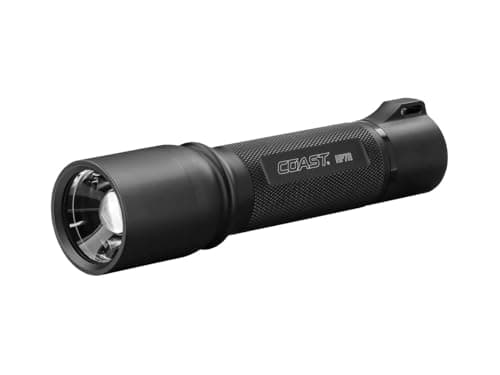 COAST HP7R Longest published runtime in this roundup | 300 | Replaceable | Needs a live price | Check price on Amazon We show a price only when we have pulled a live one. #ad How we earn |
| 3 | 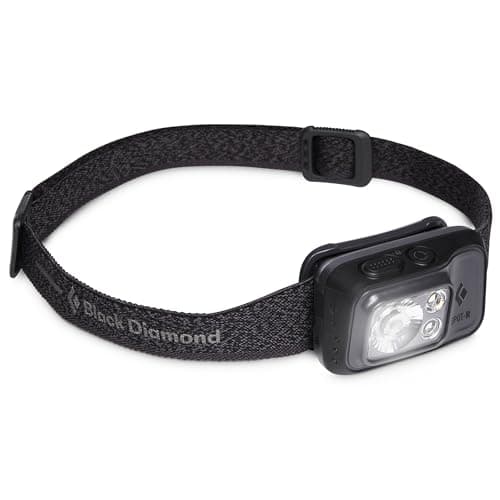 Black Diamond Spot 400-R Most complete published runtime table | 400 | Sealed | Needs a live price | Check price on Amazon We show a price only when we have pulled a live one. #ad How we earn |
| 4 | 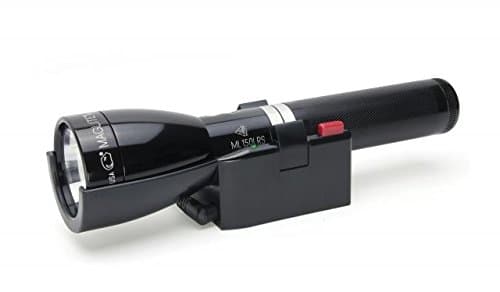 Maglite ML150LR Mag Charger The one built to be repaired instead of replaced | 1,082 | Replaceable | Needs a live price | Check price on Amazon We show a price only when we have pulled a live one. #ad How we earn |
| 5 | 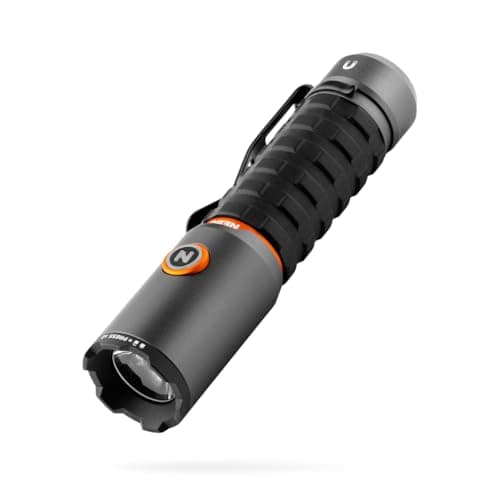 NEBO TORCHY 3K Best big-box light if you want the headline number | 3,000 | Sealed | Needs a live price | Check price on Amazon We show a price only when we have pulled a live one. #ad How we earn |
Lumens per dollar is the manufacturer's published maximum output divided by the price the light is selling for. Where we have not pulled a live price, the column says so instead of showing you a number we cannot stand behind. See how we work this out.
Rule four: runtime scales with the cell, not with the brand
Long runtime at a given output comes from carrying more energy, and carrying more energy means a bigger cell and a bigger light. A 14500 pocket light and an 18650 tube light using the same emitter at the same output will differ in runtime by roughly the ratio of their cell capacities, whatever is written on either one.
This is why the endurance champions on this site are physically large — the Maglite's 79-hour eco mode, the COAST's 33 hours, lanterns running for days on D or AA cells — and why every pocket light is measured in hours. If you want more hours from a small light there is exactly one honest route, and it is to use a lower mode. Our guide to 18650 versus 21700 cells covers what the step up in size actually buys.
listing
image
1. Best pocket light under two ounces
Wurkkos TS10 V2
Lumens per dollar
Computed the moment we have a live price for it
Thirty-two grams, three 90-CRI emitters, and one of the very few budget lights whose maker publishes the runtime at maximum output: one hour fourteen at 1,400 lumens. Publishing that number at all puts Wurkkos ahead of several brands ten times its size.
- Max output
- 1,400 lm
- Runtime
- 1 h 14 min
- Battery
- Replaceable cell
- Water rating
- IPX8
What it gets right
- Wurkkos publishes runtime at maximum output, which most brands quietly do not
- Thirty-two grams — light enough that you stop noticing it in a pocket
- Standard 14500 cell, replaceable
- Documented automatic step-down instead of an undocumented one
What it gets wrong
- A 14500 is a small cell; sustained output is not this light's job
- RGB auxiliary LEDs are a toy, and they draw from the same cell
- Anduril again, with the same learning curve
Published specification
- Maximum output: 1,400 lumens — Wurkkos published specification
- Runtime at maximum: 1 h 14 min — Wurkkos published specification
- Runtime at 1 lumen: 6 h 43 min — Wurkkos published specification
- Battery: 1 x 14500 Li-ion, user replaceable — Wurkkos published specification
- Water rating: IPX8, 2 m — Wurkkos published specification
- Weight: 32 g +/- 1 g without battery — Wurkkos published specification
- Length: 71.5 mm — Wurkkos published specification
- Thermal behavior: Automatic step-down from turbo to high — Wurkkos published specification
Skip this one if
you need something to run for an hour on high without getting hot. A light this small has nowhere to put the heat, and the step-down is not optional.
Buy it if: the person who wants a real light on them at all times and will not carry anything heavier than a pen.
- Output 8.0
- Battery 8.0
- Build 7.5
- Usability 7.5
- Overall 8.2
We show a price only when we have pulled a live one. #ad How we earn
2. Longest published runtime in this roundup
COAST HP7R
Lumens per dollar
Computed the moment we have a live price for it
Three hundred lumens, a 352-meter beam and up to 33 hours of runtime on a removable ZITHION-X pack. It is the opposite of a turbo-number light: modest output, enormous endurance, and a cell you can replace.
- Max output
- 300 lm
- Runtime
- Up to 33 h
- Battery
- Replaceable cell
- Water rating
- None published
What it gets right
- Thirty-three hours of published runtime, which almost nothing else here approaches
- Removable battery pack sold as a separate part
- 352 m of throw from only 300 lumens — good optics beat brute force
What it gets wrong
- Three hundred lumens will disappoint anyone shopping by the big number
- COAST does not publish a water rating on this product page
- Its lumens-per-dollar figure will always look poor next to an 18650 light
Published specification
- Maximum output: 300 lumens — COAST published specification
- Beam distance: 352 m — COAST published specification
- Runtime: Up to 33 hours — COAST published specification
- Battery: ZX800 ZITHION-X, 2,400 mAh 3.7V, removable — COAST published specification
- Focus: Pure Beam focusing optic — COAST published specification
- Water rating: Not published on the product page
Skip this one if
you are ranking purely on lumens per dollar. This light loses that contest and wins the runtime one, and which of those matters is a question about you, not the light.
Buy it if: long shifts, night walks and anyone who would rather have light for a day than light for an hour.
- Output 5.5
- Battery 8.5
- Build 8.0
- Usability 8.0
- Overall 7.5
We show a price only when we have pulled a live one. #ad How we earn
3. Most complete published runtime table
Black Diamond Spot 400-R
Lumens per dollar
Computed the moment we have a live price for it
Four hundred lumens for four hours, 200 for eight, 6 for two hundred and twenty-five. Black Diamond publishes lumens, runtime and beam distance for all three modes, and IP67 on top. There is nothing to guess at here.
- Max output
- 400 lm
- Runtime
- 4 h
- Battery
- Sealed
- Water rating
- IP67
What it gets right
- Lumens, runtime and distance published for every mode
- Two hundred and twenty-five hours on low is a genuine emergency reserve
- IP67 and a battery meter that shows an actual percentage
What it gets wrong
- Micro-USB in a year when everything else is USB-C
- Integrated battery — no spare, no re-cell
- Eighty-six grams is heavy next to the ultralight class
Published specification
- High: 400 lumens, 4 hours, 100 m — Black Diamond published specification
- Medium: 200 lumens, 8 hours, 60 m — Black Diamond published specification
- Low: 6 lumens, 225 hours, 12 m — Black Diamond published specification
- Battery: Integrated 1,500 mAh Li-ion, micro-USB — Black Diamond published specification
- Water rating: IP67, tested to 1.0 m for 30 minutes — Black Diamond published specification
- Weight: 86 g — Black Diamond published specification
Skip this one if
you have standardized on USB-C. Carrying a second cable for one device is a small annoyance that compounds on a long trip.
Buy it if: camp, dog walks and anyone who wants a headlamp whose numbers are all on the box.
- Output 6.5
- Battery 5.5
- Weight 7.0
- Usability 9.0
- Overall 7.7
We show a price only when we have pulled a live one. #ad How we earn
4. The one built to be repaired instead of replaced
Maglite ML150LR Mag Charger
Lumens per dollar
Computed the moment we have a live price for it
A thousand and eighty-two lumens for over three hours, 79 hours in eco, a 458-meter beam, and a LiFePO4 pack rated for cycle counts nothing else here quotes. It costs several times what the value picks cost and it is the only light here likely to outlive its owner's interest in flashlights.
- Max output
- 1,082 lm
- Runtime
- Over 3 h
- Battery
- Replaceable cell
- Water rating
- None published
What it gets right
- Runtime published at full output, not just at the mode that flatters it
- Replaceable pack, spare parts, and a ten-year warranty
- Charging cradle that lives in a vehicle or on a wall
What it gets wrong
- Its lumens-per-dollar figure is poor and always will be
- No published IP rating on the product page
- The cradle system is convenient in a truck and awkward anywhere else
Published specification
- Maximum output: 1,082 lumens — Maglite published specification
- Runtime at full output: Over 3 hours — Maglite published specification
- Eco mode runtime: Up to 79 hours — Maglite published specification
- Beam distance: 500 yards (458 m) — Maglite published specification
- Battery: Rechargeable Mag Charger pack, replaceable — Maglite published specification
- Fast charge: To 80% in about 30 minutes — Maglite published specification
- Weight: Under 1 lb — Maglite published specification
- Warranty: Ten-year limited — Maglite published specification
- Water rating: Not published on the product page
Skip this one if
you are shopping on value. This light is bought for its service life and its parts availability, and if those do not matter to you it is simply expensive.
Buy it if: someone buying a tool for a decade rather than a purchase for this year.
- Output 8.0
- Battery 9.0
- Build 9.5
- Usability 7.5
- Overall 8.0
We show a price only when we have pulled a live one. #ad How we earn
5. Best big-box light if you want the headline number
NEBO TORCHY 3K
Lumens per dollar
Computed the moment we have a live price for it
Three thousand lumens on the box, and NEBO publishes a runtime for every mode except that one. High is 800 lumens for two hours, which is the number to plan around. Read the spec table and the light tells you what it really is.
- Max output
- 3,000 lm
- Runtime
- Not published at turbo; 2 h at 800 lm high
- Battery
- Sealed
- Water rating
- IPX6
What it gets right
- NEBO publishes a full mode-by-mode table, which is more than several rivals manage
- USB-C, magnetic base, detachable clip
- Sold in stores you can drive to, and returnable to the same counter
What it gets wrong
- The battery is built in — when it dies the whole light is refuse
- No runtime published for the 3,000-lumen mode the box is named after
- IPX6 is splash and rain, not submersion
Published specification
- Turbo: 3,000 lumens, 150 m — no runtime published — NEBO published specification
- High: 800 lumens, 2 hours, 80 m — NEBO published specification
- Medium: 250 lumens, 3.5 hours, 40 m — NEBO published specification
- Low: 50 lumens, 20 hours, 20 m — NEBO published specification
- Battery: 2,200 mAh 3.7V Li-ion, built in — NEBO published specification
- Recharge time: 2 hours, USB-C — NEBO published specification
- Water rating: IPX6 — NEBO published specification
Skip this one if
you expect the 3K on the label to be a mode you can use. The mode you will actually use is the 800-lumen one, and there are cheaper lights that do 800 lumens for two hours.
Buy it if: somebody who wants a decent light today, from a shop, with a receipt.
- Output 8.5
- Battery 4.0
- Build 7.5
- Usability 8.0
- Overall 7.0
We show a price only when we have pulled a live one. #ad How we earn
How to work out what you will actually get
- 1.Decide the output you need for the job rather than the output on the box. Most household and walking tasks sit between 50 and 300 lumens.
- 2.Find the published runtime attached to the mode nearest that output. If the manufacturer publishes only a maximum and a minimum, you are interpolating, and you should say so to yourself.
- 3.Assume the first few minutes of any turbo mode are not part of your working time. They are a burst for looking at something far away.
- 4.If the light is unregulated, expect the last third of the quoted period to be noticeably dimmer than the first third.
- 5.If no runtime is published for any mode, treat the light as an unknown. That is not a reason never to buy it; it is a reason not to plan around it.
Why a missing runtime is the most useful blank on a spec sheet
Publishing a runtime is an act of exposure. It invites anyone with an integrating sphere to check, and it puts an uncomfortable number next to a flattering one. Brands that do it anyway are telling you something about how the rest of the sheet was produced.
Two manufacturers publish the uncomfortable figure outright and deserve naming for it: NEBO states the SLIM Mini 500's turbo as 500 lumens for 30 seconds, and Streamlight publishes the Wedge's boost mode as a 35-second burst. Almost every light in those classes behaves the same way. Almost none says so. That contrast is the reason this site weights published runtime as heavily as it does, and our page on inflated lumen claims follows the same thread from the other end.
Units we claim to have tested: 0
Every publisher in this category says they tested twenty flashlights. We have not tested any, and we say so. What we do instead: compile the manufacturer's own published ANSI FL1 figures, pull the price the light is selling for right now, and divide one by the other. Every number on this page is one you can check yourself in about two minutes.
What we cannot tell you
We do not measure runtime. There is no integrating sphere here and no sample library, so every figure on this page is a manufacturer's own published claim, cited, with the date it was read. We cannot tell you whether any particular light holds its output or slides, because that requires a runtime graph and almost nobody publishes one. Where independent reviewers run the instruments and publish the curves, read them alongside this page — that is a different kind of work from ours and it is the kind this question really wants.
Common questions
What does runtime mean on a flashlight?
It is how long the light keeps producing usable light on one specific mode. Under the ANSI FL 1 convention the clock starts at the output measured 30 seconds after switch-on and stops when output falls to 10 percent of that value. Both details matter: the figure belongs to a single mode rather than to the light, and a light can be far dimmer than its headline figure for most of the quoted period and still meet the claim.
Why does my flashlight get dimmer after a few minutes?
That is thermal step-down, and it is the light protecting itself. An LED at maximum produces far more heat than a handheld body can shed, so the driver reduces output within the first minutes. It is normal, it is recoverable once the light cools, and it is the reason turbo modes so often have no published runtime beside them. A gradual dimming over hours is a different thing entirely: that is the battery emptying.
How do I know which mode a runtime figure applies to?
Look for a mode table rather than a single number. Brands like Black Diamond, Streamlight, NEBO and Wurkkos publish lumens and runtime per mode, so the pairing is explicit. Where a listing gives only up to X hours with no mode named, assume it is the lowest setting the light has — that is the convention, and it is why the phrase up to is doing so much work.
Which flashlight has the longest runtime?
Of the lights we cover, the endurance figures come from large bodies and low modes: Black Diamond publishes 225 hours at 6 lumens on the Spot 400-R, Streamlight publishes 192 hours on the Siege AA's red mode, and Maglite publishes up to 79 hours in the ML150LR's eco mode. At full output the picture changes completely, and Maglite's over three hours at 1,082 lumens is the rarest kind of figure here because it is quoted at the headline brightness rather than beneath it.
Sources
- NitecoreLights, ANSI / NEMA FL-1 Guide — FL1 definitions plus a published account of the standard's runtime limitation, read 2026-09-01
- Wurkkos published product specifications and user manuals — FC11 and TS10 read 2026-09-01; FC11C read 2026-09-21
- COAST published product specifications — read 2026-09-01
- Black Diamond published product specifications — Spot 400-R read 2026-09-01; Storm 500-R read 2026-09-14
- Maglite published product specifications — ML150LR read 2026-09-01; MAG-TAC Rechargeable (plain bezel) and Mini Maglite Pro LED read 2026-10-10; ML300LX 3-Cell D and ML50LX 2-Cell C read 2026-10-13
- NEBO published product specifications — mode-by-mode lumen, runtime and beam figures, read 2026-09-01; LUXTREME SL75 and SL50 read 2026-09-22; OMNI 2K and SLYDE KING 4K read 2026-10-18
- Streamlight published product specifications — per-mode lumens, runtime, beam distance, impact and IP ratings, read 2026-09-01; Waypoint 400 and Waypoint C-cell read 2026-09-22; FlipMate read 2026-10-18
- Lumen & Ledger method — how every figure on this page is derived
Who writes this
Scooter M. — I am an enthusiast who is genuinely into this. I read the manuals, compile the published specs, and do the math. No lab coat, no test bench, no drawer of free samples. What I can tell you is exactly what a light claims on paper, exactly what it costs right now, and what those two numbers mean when you divide one by the other.
Read next
ANSI FL1 explained
The standard behind the numbers, and what a brand is telling you by not citing it.
The 10,000-lumen problem
Why the biggest number on the box is the one you can use for the shortest time.
Do you need a moonlight mode?
The sub-10-lumen setting that outlasts every other mode, and the three brands that publish it.
Best high-lumen rechargeable flashlights
High output judged on sustained performance rather than a thirty-second peak.
18650 vs 21700
Two cell sizes, two philosophies, and which one your next light should take.
The Ledger
Every light we cover in one ranked table, sorted by lumens per dollar.