Guides
Do You Need a Moonlight Mode?
It is the only mode on a flashlight measured in days rather than hours, and the only one most buyers have never deliberately selected.
By Scooter M. · Published October 18, 2026
Short answer
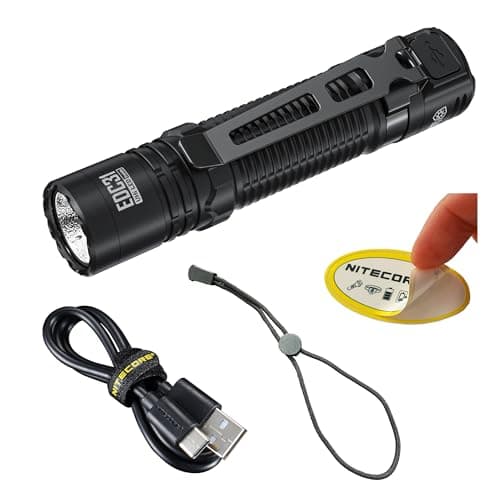
NITECORE EDC31
Thirty-five hundred lumens and 35,630 candela out of a 113-millimeter flat body, with IP68 to two meters and a 2-meter impact rating. NITECORE publishes the figures that describe the beam and then publishes a runtime for exactly one of its four modes, which is the pattern that keeps this brand off the top of our tables.
Price as of October 18, 2026 — 64 lumens per dollar. #ad How we earn
Disclosure — we earn a commission on qualifying purchases made through the Amazon links on this page, at no extra cost to you. It does not change which lights we pick or what we say about them. The full version.
How we rank. Published ANSI FL1 output divided by the live retail price, with sealed-battery lights marked down because a light you cannot re-cell is a light with an expiry date. Units we claim to have tested: 0 — we compile manufacturers' published figures and show the arithmetic instead. How we work this out.
The short answer
A moonlight mode is a deliberate sub-10-lumen setting — often under one lumen — that runs for days rather than hours and does not destroy your dark adaptation. Buy a light that has one if you use a flashlight indoors at night around sleeping people, camp, read in a tent, or want a light that cannot be flat in an emergency. The NITECORE EDC31 publishes 5 lumens for 57 hours; Black Diamond publishes 6 lumens for 225 hours on the Spot 400-R. If your flashlight lives in a car or a toolbox and comes out to light up a yard, you will never once select it.
This page exists because the mode is almost never explained and frequently not published. It is a real feature with a measurable benefit for some people and complete irrelevance for others, and the specification that tells you which you are is not the lumen figure.
What counts as a moonlight mode
There is no standard and no ANSI definition, so the term is used loosely. In practice the enthusiast meaning is a mode at or below about 10 lumens, with the genuinely low ones under 1 lumen. The test that matters is not the number itself but what the number does: at 5 lumens a light reads as a warm glow that lets you move around a dark room without waking anyone and without contracting your own pupils, and it draws so little current that the runtime becomes absurd.
Which is why a 50-lumen "low" is not a moonlight mode, and it is worth saying plainly because manufacturers use the words interchangeably. Streamlight publishes 50 lumens for 3.5 hours as the MicroStream's low. That is a perfectly good low mode for walking. It is roughly ten times too bright to be a moonlight mode and it runs for about one sixtieth as long as one.
The numbers, from the manufacturers that publish them
| Light | Lowest published mode | Published runtime there | Maximum output |
|---|---|---|---|
| Black Diamond Spot 400-R | 6 lumens | 225 hours | 400 lm for 4 h |
| Petzl TIKKA CORE | 7 lumens | 110 hours | 450 lm for 2 h 30 min |
| NITECORE EDC31 | 5 lumens | 57 hours | 3,500 lm |
| NITECORE Tiki LE | Lowest mode, not named | 40 hours | 300 lm |
| Streamlight MicroStream | 50 lumens | 3.5 hours | 250 lm for 1.5 h |
Two hundred and twenty-five hours is nine and a half days of continuous light from a lamp that weighs 86 grams. That figure, and not the 400 lumens on the front of the box, is the reason to own the thing.
Who this is actually for
- Anyone moving around a house at night with other people asleep. Five lumens shows you a hallway and a stair edge without waking anyone and without blinding you back into the dark when you switch off.
- Campers and anyone in a shared tent, hut or hide, where a 400-lumen burst is an antisocial act.
- Parents checking on a sleeping child, which is the use case nobody puts on the packaging and nearly everybody has.
- Anyone who keeps a light for emergencies. A mode that runs for days turns a flashlight into something you can leave on through a night-long outage rather than ration.
- Astronomers and anyone whose dark adaptation is the point, although for that job a red mode is better still.
And who it is not for: if your flashlight is a tool you carry to a job, point at something, and put away, the moonlight mode is a setting you will cycle past with mild irritation. There is nothing wrong with that — it is just not a feature worth paying for or compromising the interface for.
| # | Light | Max output | Battery | Lumens / $ | Price |
|---|---|---|---|---|---|
| 1 | NITECORE EDC31 Most output from a flat pocket body | 3,500 | Sealed | 64 | $54.95 on Amazon Price as of October 18, 2026 — 64 lumens per dollar. #ad How we earn |
| 2 | 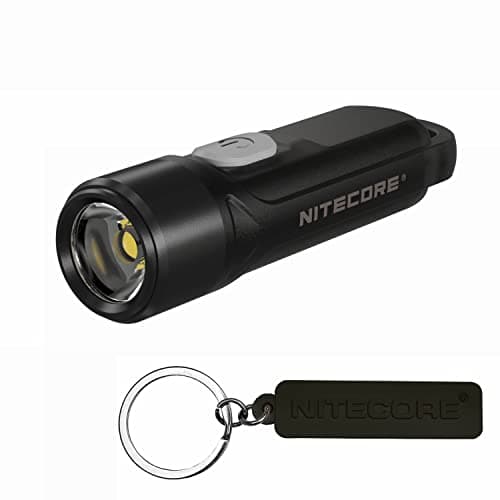 NITECORE Tiki LE Smallest light in the range | 300 | Sealed | 15 | $19.95 on Amazon Price as of October 18, 2026 — 15 lumens per dollar. #ad How we earn |
| 3 | 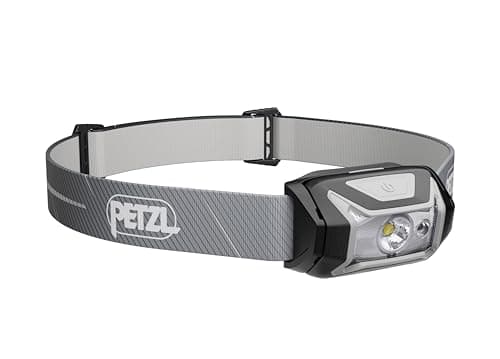 Petzl TIKKA CORE Best hybrid headlamp at the lower price | 450 | Replaceable | 8 | $54.95 on Amazon Price as of October 18, 2026 — 8 lumens per dollar. #ad How we earn |
| 4 | 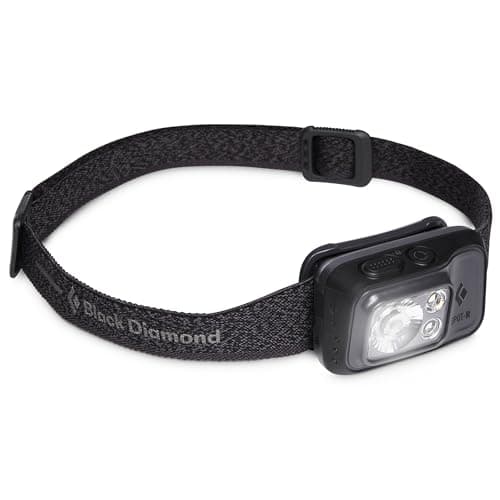 Black Diamond Spot 400-R Most complete published runtime table | 400 | Sealed | 7 | $57.88 on Amazon Price as of October 18, 2026 — 7 lumens per dollar. #ad How we earn |
| 5 | 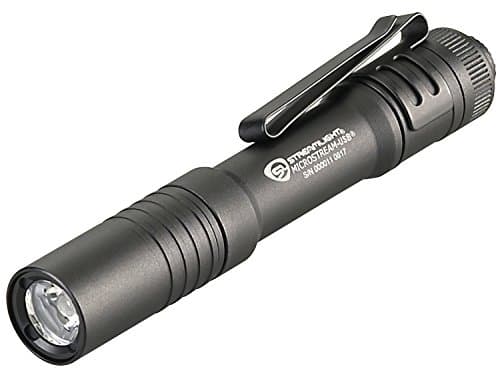 Streamlight MicroStream USB Best pen-clip light with published runtimes | 250 | Sealed | 7 | $37.81 on Amazon Price as of October 18, 2026 — 7 lumens per dollar. #ad How we earn |
Prices pulled October 18, 2026. Lumens per dollar is the manufacturer's published maximum output divided by that price, recomputed every time the price moves.
The catch: reaching it
A moonlight mode has one implementation detail that decides whether it is usable, and it is the same detail that decides red modes. If you have to cycle up through 400 lumens to get down to 5, you have blinded yourself and everyone near you on the way, which defeats the purpose every single time.
What to look for is a direct route: a long press from off that goes straight to the lowest mode, which is how most ramping firmware behaves, or a dedicated ultralow position. Lights running Anduril firmware — Sofirn and Wurkkos models, among others — reach moonlight with a press-and-hold from off, and can ramp below the lowest fixed step. That flexibility is the single best argument for Anduril, and our guide to choosing a flashlight covers the cost of it, which is a week of confusion.
1. Most output from a flat pocket body
NITECORE EDC31
Lumens per dollar
64
Thirty-five hundred lumens and 35,630 candela out of a 113-millimeter flat body, with IP68 to two meters and a 2-meter impact rating. NITECORE publishes the figures that describe the beam and then publishes a runtime for exactly one of its four modes, which is the pattern that keeps this brand off the top of our tables.
- Max output
- 3,500 lm
- Runtime
- 57 h at 5 lm
- Battery
- Sealed
- Water rating
- IP68
What it gets right
- Thirty-five hundred lumens and 380 meters from a body that still fits a pocket
- IP68 to two meters plus a 2-meter impact rating — the strongest pair NITECORE publishes here
- Publishes peak beam intensity in candela, which is the figure that actually governs throw
- Fifty-seven hours at 5 lumens makes it usable as a long-reserve light as well as a bright one
What it gets wrong
- The 3,800 mAh 18650 is built in and NITECORE states it is non-removable, so the light has a service life
- A runtime is published for the ultralow mode only — nothing for the three modes you will actually use
- Three and a half thousand lumens in a 100-gram body is a burst, and NITECORE does not say how long it lasts
- Two separate momentary modes on top of four levels is a lot of interface for a pocket light
Published specification
- Maximum output: 3,500 lumens — NITECORE published specification
- Peak beam intensity: 35,630 cd — NITECORE published specification
- Beam distance: 380 m — NITECORE published specification
- Maximum runtime: 57 hours at 5 lumens — NITECORE published specification
- Battery: Built-in 3,800 mAh 18650 Li-ion, non-removable — NITECORE published specification
- Charge time: About 1 h 45 min with a 5V/2A adapter — NITECORE published specification
- Water rating: IP68, submersible to 2 m — NITECORE published specification
- Impact: 2 m — NITECORE published specification
- Weight: 100 g (3.53 oz) — NITECORE published specification
- Length: 113.2 mm (4.46 in) — NITECORE published specification
- Emitter: NiteLab UHi 20 MAX — NITECORE published specification
- Per-mode runtime: Not published except the 5-lumen ultralow
Skip this one if
you want to re-cell the light rather than replace it. NITECORE states the 18650 is non-removable, which on an otherwise excellent specification is the one thing you cannot work around.
Buy it if: somebody who wants the most output and throw available in a flat pocket body and is willing to treat the light as a consumable to get it.
- Output 9.5
- Battery 4.5
- Build 9.0
- Usability 7.5
- Overall 8.0
Price as of October 18, 2026 — 64 lumens per dollar. #ad How we earn
2. Smallest light in the range
NITECORE Tiki LE
Lumens per dollar
15
Ten and a half grams and 55 millimeters, for 300 lumens, 71 meters and auxiliary red and blue LEDs. It is genuinely the size of a keyring fob. The cell is a built-in 130 mAh, which at that capacity makes the light a consumable rather than a tool — the same objection we raise against every sealed keychain light, including Olight's.
- Max output
- 300 lm
- Runtime
- 40 h at its lowest mode
- Battery
- Sealed
- Water rating
- IP66
What it gets right
- Ten and a half grams and 55 millimeters — small enough that it genuinely is not noticed on a keyring
- Three hundred lumens and 71 meters is a real beam, not a token one, at this size
- Auxiliary red and blue LEDs on a light this small, with the candela figure published
- USB-C charging straight into the body, so it needs nothing you do not already carry
What it gets wrong
- The 130 mAh cell is built in, so the light is a consumable with a service life, not a tool you keep
- IP66 is the weakest water rating of any NITECORE here — rain yes, submersion no
- No runtime is published beside 300 lumens; only the 40-hour maximum is given
- At 130 mAh the high mode cannot last long, and NITECORE does not say how long
Published specification
- Maximum output: 300 lumens — NITECORE published specification
- Peak beam intensity: 1,260 cd — NITECORE published specification
- Beam distance: 71 m — NITECORE published specification
- Maximum runtime: 40 hours — NITECORE published specification
- Battery: Built-in 130 mAh Li-ion, USB-C charging — NITECORE published specification
- Water rating: IP66 — NITECORE published specification
- Impact: 1 m — NITECORE published specification
- Weight: 10.5 g (0.37 oz) — NITECORE published specification
- Length: 55 mm (2.17 in) — NITECORE published specification
- Head diameter: 14.7 mm (0.58 in) — NITECORE published specification
- Emitter: OSRAM P8, plus an auxiliary red LED and an auxiliary blue LED — NITECORE published specification
- Per-mode runtime: Not published on the product page — only the 40-hour maximum is given
Skip this one if
you want to keep the light. A built-in 130 mAh cell is the smallest battery on this site, and when it reaches the end of its cycles the whole light is refuse. For a keychain light with a cell you can swap, the Sofirn SC21 Pro takes a standard 16340.
Buy it if: a keyring, a coin pocket or a bag liner — somewhere a light has to be present and completely unnoticed.
- Output 3.5
- Battery 3.0
- Build 7.0
- Usability 8.5
- Overall 6.0
Price as of October 18, 2026 — 15 lumens per dollar. #ad How we earn
3. Best hybrid headlamp at the lower price
Petzl TIKKA CORE
Lumens per dollar
8
The ACTIK CORE's argument in a cheaper, lighter package: 450 lumens stated to ANSI/PLATO FL1, 84 grams, and the same CORE pack or three AAA cells when the pack is flat. Petzl publishes a lumen figure, a beam distance and a burn time for every mode on both power sources, which almost nobody else does even once.
- Max output
- 450 lm
- Runtime
- 2 h 30 min at 450 lm; 110 h at 7 lm
- Battery
- Replaceable cell
- Water rating
- IPX4
What it gets right
- Lumens, beam distance and burn time published for every mode on BOTH power sources
- States ANSI/PLATO FL 1 conformity, which most brands at this price do not
- Runs on three AAA cells when the CORE pack is flat, with no adapter to lose
- One hundred and ten hours at 7 lumens is a genuine emergency reserve
What it gets wrong
- IPX4 — weather resistant, not submersible
- Four hundred and fifty lumens is modest against lamps at similar money
- Output drops to 350 lumens on AAA cells, which Petzl states but buyers miss
- The CORE pack is a Petzl part rather than a standard cell
Published specification
- Maximum output: 450 lumens (ANSI/PLATO FL 1) — Petzl published specification
- MAX POWER on CORE: 450 lumens, 75 m, 2 h 30 min — Petzl published specification
- MAX POWER on AAA: 350 lumens, 70 m, 2 hours — Petzl published specification
- STANDARD on CORE: 100 lumens, 45 m, 7 hours — Petzl published specification
- STANDARD on AAA: 100 lumens, 45 m, 12 hours — Petzl published specification
- MAX BURN TIME: 7 lumens, 10 m, 110 hours on either source — Petzl published specification
- Red lighting: 2 lumens, 5 m, 60 hours continuous — Petzl published specification
- Battery: CORE 1,250 mAh / 3.6 V / 4.5 Wh, or 3 x AAA — Petzl published specification
- Weight: 84 g — Petzl published specification
- Water rating: IPX4, weather resistant — Petzl published specification
- Warranty: Lamp 5 years; CORE battery 2 years or 300 cycles — Petzl published specification
Skip this one if
you want maximum output for the money. This lamp spends its budget on documentation, hybrid power and a five-year warranty, and a budget rechargeable will out-lumen it for less.
Buy it if: anyone who wants Petzl's hybrid-power argument without paying for the ACTIK CORE's extra output.
- Output 6.5
- Battery 9.0
- Weight 7.5
- Usability 8.5
- Overall 8.0
Price as of October 18, 2026 — 8 lumens per dollar. #ad How we earn
4. Most complete published runtime table
Black Diamond Spot 400-R
Lumens per dollar
7
Four hundred lumens for four hours, 200 for eight, 6 for two hundred and twenty-five. Black Diamond publishes lumens, runtime and beam distance for all three modes, and IP67 on top. There is nothing to guess at here.
- Max output
- 400 lm
- Runtime
- 4 h
- Battery
- Sealed
- Water rating
- IP67
What it gets right
- Lumens, runtime and distance published for every mode
- Two hundred and twenty-five hours on low is a genuine emergency reserve
- IP67 and a battery meter that shows an actual percentage
What it gets wrong
- Micro-USB in a year when everything else is USB-C
- Integrated battery — no spare, no re-cell
- Eighty-six grams is heavy next to the ultralight class
Published specification
- High: 400 lumens, 4 hours, 100 m — Black Diamond published specification
- Medium: 200 lumens, 8 hours, 60 m — Black Diamond published specification
- Low: 6 lumens, 225 hours, 12 m — Black Diamond published specification
- Battery: Integrated 1,500 mAh Li-ion, micro-USB — Black Diamond published specification
- Water rating: IP67, tested to 1.0 m for 30 minutes — Black Diamond published specification
- Weight: 86 g — Black Diamond published specification
Skip this one if
you have standardized on USB-C. Carrying a second cable for one device is a small annoyance that compounds on a long trip.
Buy it if: camp, dog walks and anyone who wants a headlamp whose numbers are all on the box.
- Output 6.5
- Battery 5.5
- Weight 7.0
- Usability 9.0
- Overall 7.7
Price as of October 18, 2026 — 7 lumens per dollar. #ad How we earn
5. Best pen-clip light with published runtimes
Streamlight MicroStream USB
Lumens per dollar
7
Two hundred and fifty lumens for an hour and a half, fifty for three and a half, at 1.2 ounces. The battery is sealed, which caps its lifespan, but every other number on the sheet is published and checkable.
- Max output
- 250 lm
- Runtime
- 1 h 30 min
- Battery
- Sealed
- Water rating
- IPX4
What it gets right
- Every mode's runtime is published, which is why it scores well here despite modest output
- Deep pocket clip that actually holds in a shirt pocket
- 1.2 ounces — it is easy to forget you have it
What it gets wrong
- The cell is sealed in; when it fails the light is finished
- IPX4 splash rating only
- 250 lumens is not enough to light a yard
Published specification
- High: 250 lumens, 68 m, 1.5 hours — Streamlight published specification
- Low: 50 lumens, 31 m, 3.5 hours — Streamlight published specification
- Battery: Lithium-ion, charges in-product in 4 hours — Streamlight published specification
- Water rating: IPX4 — Streamlight published specification
- Impact: 1 m tested — Streamlight published specification
- Weight: 1.2 oz (34.1 g) — Streamlight published specification
- Length: 3.87 in (9.83 cm) — Streamlight published specification
Skip this one if
you want a light you can re-cell. For a keychain-sized light with a replaceable battery, look at the Sofirn SC21 Pro instead.
Buy it if: a shirt pocket, a scrubs pocket, or anyone who wants a light without a bulge.
- Output 5.5
- Battery 4.5
- Build 8.5
- Usability 9.0
- Overall 7.2
Price as of October 18, 2026 — 7 lumens per dollar. #ad How we earn
How we ranked these
Published output over live price, as everywhere on this site, with one adjustment stated here: a light that publishes both an output AND a runtime for its lowest mode is scored above one that publishes only a maximum runtime at a mode it does not name. On this page that is the whole subject, so a figure you cannot attribute to a mode earns no credit for it.
Units we claim to have tested: 0
Every publisher in this category says they tested twenty flashlights. We have not tested any, and we say so. What we do instead: compile the manufacturer's own published ANSI FL1 figures, pull the price the light is selling for right now, and divide one by the other. Every number on this page is one you can check yourself in about two minutes.
What one lumen actually looks like
The reason a sub-lumen mode works at all is that your eyes are not a camera with a fixed sensitivity. In the dark the rods take over from the cones, and after twenty to thirty minutes of adaptation they are extraordinarily sensitive — several orders of magnitude more so than in daylight. A mode that looks like nothing when you switch it on in a lit kitchen is perfectly serviceable once your eyes have caught up.
Which produces the one genuine limitation of the feature, and it is worth knowing before you buy for it. A moonlight mode is useless the moment you come in from somewhere bright. It is a mode for people who are already in the dark and intend to stay there, not a mode for arriving. If your use case is walking out of a lit house into a dark garden, you want 50 to 150 lumens and the moonlight setting will frustrate you.
| Output | What it is enough for | What it is not |
|---|---|---|
| Under 1 lumen | Finding a door, a zip or a water bottle in a tent, once adapted | Anything involving your feet outdoors |
| 1 - 5 lumens | Crossing a dark room, reading a label at arm's length | Reading a page comfortably for long |
| 5 - 10 lumens | Reading in a tent, checking a sleeping child, a stair edge | Any outdoor ground you do not know |
| 10 - 50 lumens | A familiar path, camp chores, a fuse box | Preserving adaptation — this band costs it |
Moonlight or red?
They solve the same problem differently and the choice is not obvious. A red mode preserves dark adaptation better at the same perceived brightness, because rod cells are far less sensitive to long wavelengths. A very low white mode preserves it slightly less well but shows you color and contrast, which red flattens into a monochrome wash — under red light a red wire and a black wire look identical, and so does a blood spot on a brown carpet.
The rule that falls out of that: red for staying adapted while you do something simple, moonlight for seeing something properly without waking the room. The lamps that offer both — Petzl publishes 7 lumens for 110 hours in white and 2 lumens for 60 hours in red on the TIKKA CORE — let you take the decision per task rather than per purchase, and that is the better arrangement if the lamp is going camping.
Why so few brands publish the figure
Of the forty-nine lights in our registry, four publish both an output and a runtime for a WHITE mode at or below 10 lumens — the NITECORE EDC31 and NU25, Black Diamond's Spot 400-R and Petzl's TIKKA CORE. Three more publish one for a RED mode, which goes lower still: Streamlight gives 0.7 lumens for 192 hours on the Siege AA. Several publish a long maximum runtime with no mode attached: NITECORE gives 650 hours for the MH25 Pro and 40 hours for the Tiki LE without naming the mode either figure belongs to, and a runtime you cannot attach to an output is not a specification you can shop on.
The commercial reason is straightforward. A headline runtime looks impressive on a listing and costs nothing to print; a full mode table invites comparison and takes work to produce. It is the same pattern as the missing turbo runtime, running in the opposite direction, and it is the reason this site reads the whole table rather than the front of the box.
What we cannot tell you
We have not measured any of these modes. We cannot tell you how 5 lumens from a NITECORE compares with 6 from a Black Diamond in a dark room, whether either figure is accurate, how the tint reads at very low drive currents, or how the runtime behaves once a cell has aged. Every figure here is published by the manufacturer named beside it, and the judgment that 10 lumens is the sensible dividing line is ours rather than a standard.
Common questions
What is a moonlight mode on a flashlight?
A deliberate very low output setting, usually under 10 lumens and sometimes under 1, intended for moving around in the dark without destroying your night vision or waking anyone. Because the current draw is tiny the runtime is enormous: Black Diamond publishes 6 lumens for 225 hours on the Spot 400-R, against 4 hours at its 400-lumen maximum.
Do I need a flashlight with a moonlight mode?
You need one if you use a light indoors at night around sleeping people, camp or read in a tent, or want a light you can leave running through a power cut. You do not need one if your flashlight lives in a car or a toolbox and exists to light up a yard — you will cycle past the mode and never select it deliberately.
Is 1 lumen enough to see by?
Indoors in the dark, yes, once your eyes have adapted — it is enough to cross a room, find a door or read a label at arm's length. It is not enough to see anything at distance, to walk unfamiliar ground, or to use the moment you have come in from a lit room. The usefulness of a very low mode depends entirely on your eyes already being adapted.
What is the difference between a low mode and a moonlight mode?
Roughly a factor of ten in output and a factor of fifty in runtime. Streamlight's MicroStream publishes a 50-lumen low for 3.5 hours, which is a walking mode. A moonlight mode sits at 1 to 10 lumens and runs for days — NITECORE publishes 5 lumens for 57 hours on the EDC31. Manufacturers use the two terms interchangeably, so read the figures rather than the label.
How many lumens do I actually need?
For walking a dog, finding a fuse box or reading a map, 100 to 300 lumens is plenty and will run far longer. For a garage, a yard or a campsite, 500 to 1,000 lumens is comfortable. Above about 2,000 lumens you are buying a burst rather than a mode, because almost no handheld light can shed that much heat continuously.
Sources
- NITECORE published product specifications — NU25 MCT UL read 2026-09-01; MT2A Pro read 2026-09-13; EDC31 read 2026-10-03; MH25 Pro and Tiki LE read 2026-10-10
- Black Diamond published product specifications — Spot 400-R read 2026-09-01; Storm 500-R read 2026-09-14
- Petzl published product specifications — ANSI/PLATO FL 1 conformity stated by the manufacturer. ACTIK CORE read 2026-09-01 and re-read per mode 2026-09-21; TIKKA CORE read 2026-09-21
- Streamlight published product specifications — per-mode lumens, runtime, beam distance, impact and IP ratings, read 2026-09-01; Waypoint 400 and Waypoint C-cell read 2026-09-22; FlipMate read 2026-10-18
- Wurkkos published product specifications and user manuals — FC11 and TS10 read 2026-09-01; FC11C read 2026-09-21
- Lumen & Ledger method — how every figure on this page is derived
Who writes this
Scooter M. — I am an enthusiast who is genuinely into this. I read the manuals, compile the published specs, and do the math. No lab coat, no test bench, no drawer of free samples. What I can tell you is exactly what a light claims on paper, exactly what it costs right now, and what those two numbers mean when you divide one by the other.
Read next
How many lumens do you actually need?
A table by use case. Most people need far fewer than the box is selling them.
Is 1,000 lumens bright for a flashlight?
Yes, and here is what that looks like in the four places you will use it.
Best headlamps with a red light
What red mode is actually for, and which lamps implement it properly.
How to choose a flashlight
The five questions that decide it, answered in order, with a pick at the end of each.
Flashlight runtime explained
Why a published runtime can be honest and still describe a light that dimmed an hour ago.
The Ledger
Every light we cover in one ranked table, sorted by lumens per dollar.