Guides
How Long Do Rechargeable Flashlights Last?
Two different questions hide inside one. Hours per charge is published; years of service almost never is, and it matters more.
By Scooter M. · Published September 2, 2026

Short answer
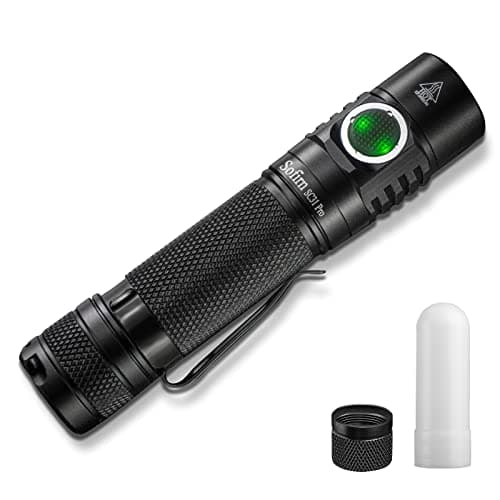
Sofirn SC31 Pro
Two thousand published lumens out of a standard 18650 you can buy anywhere for a few dollars, in a light that costs less than most brands charge for a keychain. The cell is the whole argument: when it dies in three years you replace a battery, not a flashlight.
Price as of October 18, 2026 — 47 lumens per dollar. #ad How we earn
Disclosure — we earn a commission on qualifying purchases made through the Amazon links on this page, at no extra cost to you. It does not change which lights we pick or what we say about them. The full version.
How we rank. Published ANSI FL1 output divided by the live retail price, with sealed-battery lights marked down because a light you cannot re-cell is a light with an expiry date. Units we claim to have tested: 0 — we compile manufacturers' published figures and show the arithmetic instead. How we work this out.
Two questions, two answers
Per charge, published figures range from around an hour at maximum output to tens of hours on low — Wurkkos publishes 1 h 14 min at 1,400 lumens and 6 h 43 min at 1 lumen for the same light. Across years, a lithium cell is rated in charge cycles rather than time, and whether the light survives its cell depends entirely on whether you can replace it.
Cycle life, and the few brands that publish it
| Manufacturer | Published service life | What it applies to |
|---|---|---|
| Petzl | 2 years or 300 charging cycles | The CORE rechargeable battery |
| Maglite | Up to 2,000 charge/discharge cycles | The LiFePO4 pack in the ML150LRS |
| Most other brands | Not published | n/a |
Those two numbers are worth sitting with. Petzl's 300 cycles and Maglite's 2,000 are not a contradiction — they are different chemistries doing different jobs, and LiFePO4 is known for high cycle life at the cost of energy density. What is striking is that almost nobody else publishes anything at all.
The absence is why we score battery architecture so heavily. If nobody will tell you how long the cell lasts, the only defense is a cell you can replace.
What 'end of life' actually means
A cell at the end of its rated cycle life usually still works — it just holds less. The common convention is to treat a cell as spent when it has lost a meaningful fraction of its original capacity, at which point your light runs for perhaps half as long as it did. It does not stop; it disappoints.
That is why the failure is easy to miss. People conclude the light has 'got worse' and buy a new one, when a five-dollar cell would have restored it entirely — provided the light was built to accept one.
Calendar aging is separate from cycles
A lithium cell ages whether you use it or not, and two things accelerate it: heat, and being stored at a full or empty state of charge. A light stored fully charged in a hot car ages far faster than the same light stored at a partial charge in a cupboard.
- Store at a partial charge rather than full or flat, where practical.
- Keep it cool. A glovebox in summer is the worst environment a lithium cell will meet.
- Top up twice a year and actually switch the light on to confirm it works.
- For anything stored long term, prefer a light that takes alkaline cells and remove them between checks.
1. Best lumens per dollar overall
Sofirn SC31 Pro
Lumens per dollar
47
Two thousand published lumens out of a standard 18650 you can buy anywhere for a few dollars, in a light that costs less than most brands charge for a keychain. The cell is the whole argument: when it dies in three years you replace a battery, not a flashlight.
- Max output
- 2,000 lm
- Runtime
- Not published per mode
- Battery
- Replaceable cell
- Water rating
- IPX8
What it gets right
- Standard 18650 cell — replacements cost a few dollars and are sold everywhere
- IPX8, the strongest water rating in this price class
- USB-C charging built into the light, so no separate charger to lose
- Anduril firmware gives real ramping control rather than four fixed steps
What it gets wrong
- Sofirn publishes no per-mode runtime figures on the product page
- Anduril is genuinely confusing for the first week
- Tint varies between batches, which is the price of this price
Published specification
- Maximum output: 2,000 lumens — Sofirn published specification
- Beam distance: 226 m — Sofirn published specification
- Battery: 1 x 18650 Li-ion, user replaceable — Sofirn published specification
- Charging: USB-C, 2.5 hours with a 2A adapter — Sofirn published specification
- Water rating: IPX8 — Sofirn published specification
- Weight: 59 g without battery — Sofirn published specification
- Length: 117.5 mm — Sofirn published specification
- Emitter: SST40, 5000K or 6500K — Sofirn published specification
- Per-mode runtime: Not published on the product page
Skip this one if
you want to press one button and get one brightness. Anduril has a shortcut for everything and a menu for everything else, and if that sounds tiring you will be happier with a three-mode light.
Buy it if: anyone who intends to keep the light for longer than the battery lasts, and does not mind reading a manual once.
- Output 9.0
- Battery 9.5
- Build 8.0
- Usability 7.0
- Overall 8.6
Price as of October 18, 2026 — 47 lumens per dollar. #ad How we earn
2. The one built to be repaired instead of replaced
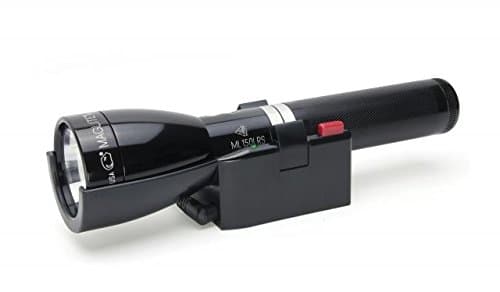
Maglite ML150LR Mag Charger
Lumens per dollar
11
A thousand and eighty-two lumens for over three hours, 79 hours in eco, a 458-meter beam, and a LiFePO4 pack rated for cycle counts nothing else here quotes. It costs several times what the value picks cost and it is the only light here likely to outlive its owner's interest in flashlights.
- Max output
- 1,082 lm
- Runtime
- Over 3 h
- Battery
- Replaceable cell
- Water rating
- None published
What it gets right
- Runtime published at full output, not just at the mode that flatters it
- Replaceable pack, spare parts, and a ten-year warranty
- Charging cradle that lives in a vehicle or on a wall
What it gets wrong
- Its lumens-per-dollar figure is poor and always will be
- No published IP rating on the product page
- The cradle system is convenient in a truck and awkward anywhere else
Published specification
- Maximum output: 1,082 lumens — Maglite published specification
- Runtime at full output: Over 3 hours — Maglite published specification
- Eco mode runtime: Up to 79 hours — Maglite published specification
- Beam distance: 500 yards (458 m) — Maglite published specification
- Battery: Rechargeable Mag Charger pack, replaceable — Maglite published specification
- Fast charge: To 80% in about 30 minutes — Maglite published specification
- Weight: Under 1 lb — Maglite published specification
- Warranty: Ten-year limited — Maglite published specification
- Water rating: Not published on the product page
Skip this one if
you are shopping on value. This light is bought for its service life and its parts availability, and if those do not matter to you it is simply expensive.
Buy it if: someone buying a tool for a decade rather than a purchase for this year.
- Output 8.0
- Battery 9.0
- Build 9.5
- Usability 7.5
- Overall 8.0
Price as of October 18, 2026 — 11 lumens per dollar. #ad How we earn
3. Best hybrid: rechargeable or AAA cells
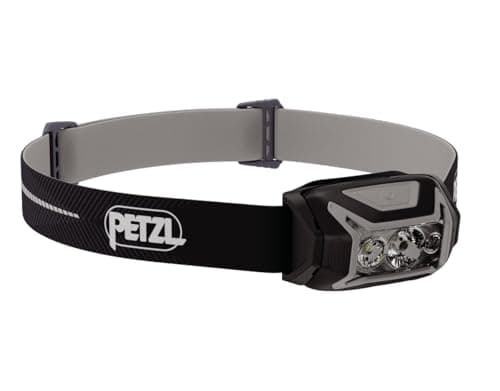
Petzl ACTIK CORE
Lumens per dollar
8
Six hundred and twenty-five lumens stated to ANSI/PLATO FL1, 88 grams, and — the part that matters — it runs on the CORE rechargeable pack or on three AAA cells when the pack is flat. That is the answer to the sealed-battery problem, from the only brand here that bothered.
- Max output
- 625 lm
- Runtime
- Published per mode by Petzl
- Battery
- Replaceable cell
- Water rating
- IPX4
What it gets right
- Explicitly states ANSI/PLATO FL1 conformity, which most brands here do not
- Hybrid power: the pack for daily use, AAA cells as the fallback that never fails
- Petzl publishes the CORE pack's cycle rating, so its service life is a stated number
What it gets wrong
- IPX4 — weather resistant, not submersible
- Eighty-eight grams is not ultralight
- The CORE pack is a Petzl part rather than a standard cell
Published specification
- Maximum output: 625 lumens (ANSI/PLATO FL1) — Petzl published specification
- Weight: 88 g — Petzl published specification
- Battery: CORE rechargeable 1,250 mAh / 3.6 V / 4.5 Wh, or 3 x AAA — Petzl published specification
- Battery compatibility: Alkaline, lithium or Ni-MH — Petzl published specification
- Water rating: IPX4, weather resistant — Petzl published specification
- Warranty: Lamp 5 years; CORE battery 2 years or 300 cycles — Petzl published specification
- Lighting levels: MAX BURN TIME, STANDARD, MAX POWER, plus red — Petzl published specification
Skip this one if
you want a submersible headlamp. IPX4 covers rain and nothing beyond it.
Buy it if: anyone whose headlamp has to work at the end of a long trip, when charging is not an option.
- Output 7.5
- Battery 9.0
- Weight 7.0
- Usability 8.5
- Overall 8.3
Price as of October 18, 2026 — 8 lumens per dollar. #ad How we earn
4. Longest published runtime in this roundup
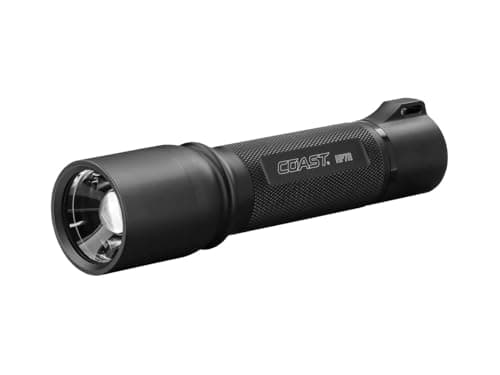
COAST HP7R
Lumens per dollar
3
Three hundred lumens, a 352-meter beam and up to 33 hours of runtime on a removable ZITHION-X pack. It is the opposite of a turbo-number light: modest output, enormous endurance, and a cell you can replace.
- Max output
- 300 lm
- Runtime
- Up to 33 h
- Battery
- Replaceable cell
- Water rating
- None published
What it gets right
- Thirty-three hours of published runtime, which almost nothing else here approaches
- Removable battery pack sold as a separate part
- 352 m of throw from only 300 lumens — good optics beat brute force
What it gets wrong
- Three hundred lumens will disappoint anyone shopping by the big number
- COAST does not publish a water rating on this product page
- Its lumens-per-dollar figure will always look poor next to an 18650 light
Published specification
- Maximum output: 300 lumens — COAST published specification
- Beam distance: 352 m — COAST published specification
- Runtime: Up to 33 hours — COAST published specification
- Battery: ZX800 ZITHION-X, 2,400 mAh 3.7V, removable — COAST published specification
- Focus: Pure Beam focusing optic — COAST published specification
- Water rating: Not published on the product page
Skip this one if
you are ranking purely on lumens per dollar. This light loses that contest and wins the runtime one, and which of those matters is a question about you, not the light.
Buy it if: long shifts, night walks and anyone who would rather have light for a day than light for an hour.
- Output 5.5
- Battery 8.5
- Build 8.0
- Usability 8.0
- Overall 7.5
Price as of October 18, 2026 — 3 lumens per dollar. #ad How we earn
listing
image
5. The sealed-battery cautionary tale
Energizer Vision HD Rechargeable Metal
Lumens per dollar
Computed the moment we have a live price for it
Twelve hundred lumens, four hours of runtime, and a battery Energizer itself describes as non-removable — in a light made by a battery company. It works well and it has an expiry date, and the spec sheet says so out loud.
- Max output
- 1,200 lm
- Runtime
- Up to 4 h
- Battery
- Sealed
- Water rating
- IPX4
What it gets right
- Four hours at 1,200 lumens is a genuinely useful published pairing
- Doubles as a phone charger, which matters in an outage
- Available in essentially every supermarket in the country
What it gets wrong
- The cell is not removable — Energizer states this plainly
- IPX4 only, so rain but not submersion
- A lithium cell in a drawer self-discharges, and you cannot swap in a fresh one
Published specification
- Maximum output: 1,200 lumens, high — Energizer published specification
- Runtime: Up to 4 hours on a full charge — Energizer published specification
- Battery: Non-removable lithium-ion — Energizer published specification
- Water rating: IPX4, water resistant against splashing — Energizer published specification
- Impact: Drops up to 1 m — Energizer published specification
- Modes: Seven, including spot and wide — Energizer published specification
- Extra: Second USB port for use as a power bank — Energizer published specification
Skip this one if
this is going into an emergency kit. A sealed lithium cell left for two years is the classic outage failure, and there is nothing you can do about it in this light.
Buy it if: regular use where it gets charged often, and someone who accepts the light is a consumable.
- Output 8.0
- Battery 3.5
- Build 7.5
- Usability 8.0
- Overall 6.8
We show a price only when we have pulled a live one. #ad How we earn
The question that decides everything
Can you replace the cell? If yes, the light's life is limited by its body, its switch and your interest in it, and a few dollars every few years keeps it going indefinitely. If no, the light's life is the cell's life, and no manufacturer here except Petzl and Maglite will tell you what that is.
Units we claim to have tested: 0
Every publisher in this category says they tested twenty flashlights. We have not tested any, and we say so. What we do instead: compile the manufacturer's own published ANSI FL1 figures, pull the price the light is selling for right now, and divide one by the other. Every number on this page is one you can check yourself in about two minutes.
Common questions
How long does a rechargeable flashlight battery last?
Lithium-ion cells are generally rated in charge cycles rather than years, and a cell that has lost enough capacity to be annoying is usually still working — just for half as long. Some manufacturers publish the figure: Petzl rates the CORE pack at 2 years or 300 charging cycles, and Maglite quotes up to 2,000 cycles for the LiFePO4 pack in the ML150LRS. Most brands publish nothing at all, which is why a replaceable cell matters more than any published cycle rating.
Can you replace the battery in a rechargeable flashlight?
It depends entirely on the model, and it is the single most consequential thing to check before buying. Lights built around a standard cell — an 18650, a 21700, a 14500, a 16340 — take a screw-off tailcap and a five-dollar replacement. Lights with a built-in cell, which manufacturers describe as 'integrated' or 'non-removable', cannot be re-celled by an ordinary owner: when the battery reaches the end of its cycle life the whole light is refuse. Energizer, for example, states plainly that the Vision HD Rechargeable uses non-removable lithium-ion batteries.
How long do AA batteries last in a flashlight?
It depends entirely on the light's draw. NEBO publishes 2.5 hours at 2,000 lumens and 20 hours at 100 lumens on nine AA cells for the Newton 2000; Streamlight publishes 37 hours at 50 lumens on AA cells for the Siege AA lantern. The pattern is consistent: output and runtime trade against each other roughly proportionally.
Why does my rechargeable flashlight not last as long as it used to?
Almost certainly capacity loss in the cell, which is normal — a lithium battery gradually holds less as it accumulates charge cycles and as it ages on the calendar, faster in heat. If the light takes a standard replaceable cell, a few dollars restores it completely. If the cell is sealed in, the light has reached the end of its service life.
Sources
- Petzl published product specifications — ANSI/PLATO FL 1 conformity stated by the manufacturer. ACTIK CORE read 2026-09-01 and re-read per mode 2026-09-21; TIKKA CORE read 2026-09-21
- Maglite published product specifications — ML150LR read 2026-09-01; MAG-TAC Rechargeable (plain bezel) and Mini Maglite Pro LED read 2026-10-10; ML300LX 3-Cell D and ML50LX 2-Cell C read 2026-10-13
- Wurkkos published product specifications and user manuals — FC11 and TS10 read 2026-09-01; FC11C read 2026-09-21
- NEBO published product specifications — mode-by-mode lumen, runtime and beam figures, read 2026-09-01; LUXTREME SL75 and SL50 read 2026-09-22; OMNI 2K and SLYDE KING 4K read 2026-10-18
- Streamlight published product specifications — per-mode lumens, runtime, beam distance, impact and IP ratings, read 2026-09-01; Waypoint 400 and Waypoint C-cell read 2026-09-22; FlipMate read 2026-10-18
- Energizer published product specifications — read 2026-09-01
- Lumen & Ledger method — how every figure on this page is derived
Who writes this
Scooter M. — I am an enthusiast who is genuinely into this. I read the manuals, compile the published specs, and do the math. No lab coat, no test bench, no drawer of free samples. What I can tell you is exactly what a light claims on paper, exactly what it costs right now, and what those two numbers mean when you divide one by the other.
Read next
Are rechargeable flashlights worth it?
Worked over three years, with the one case where the answer is still no.
18650 vs 21700
Two cell sizes, two philosophies, and which one your next light should take.
How long to charge a rechargeable flashlight
The arithmetic, the variables, and why your charger is probably the slow part.
Rechargeable vs battery flashlights
Five dimensions, one table, and a verdict that depends on where the light lives.
Maglite ML150LR review
Poor value on paper, excellent value over a decade. Both statements are true.
The Ledger
Every light we cover in one ranked table, sorted by lumens per dollar.