Flashlights
Best USB-C Rechargeable Flashlights
The port is a smaller feature than the marketing suggests and a bigger one than you would think, for a reason nobody mentions: it is the part that fails.
By Scooter M. · Published September 2, 2026
Short answer
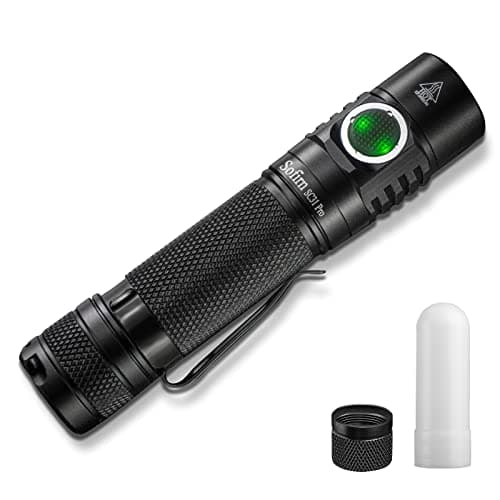
Sofirn SC31 Pro
Two thousand published lumens out of a standard 18650 you can buy anywhere for a few dollars, in a light that costs less than most brands charge for a keychain. The cell is the whole argument: when it dies in three years you replace a battery, not a flashlight.
Price as of October 18, 2026 — 47 lumens per dollar. #ad How we earn
Disclosure — we earn a commission on qualifying purchases made through the Amazon links on this page, at no extra cost to you. It does not change which lights we pick or what we say about them. The full version.
How we rank. Published ANSI FL1 output divided by the live retail price, with sealed-battery lights marked down because a light you cannot re-cell is a light with an expiry date. Units we claim to have tested: 0 — we compile manufacturers' published figures and show the arithmetic instead. How we work this out.
Why the port matters more than it should
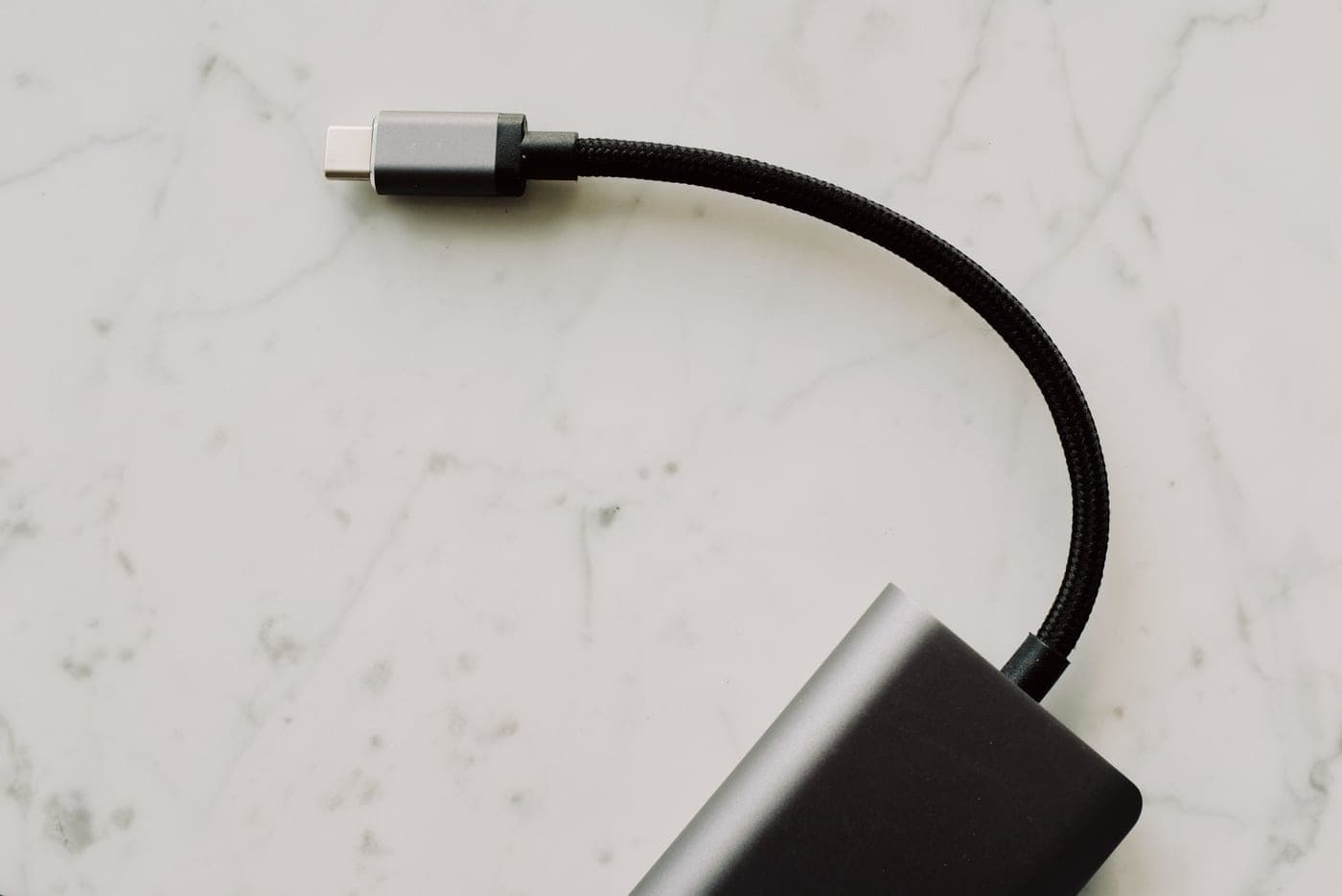
USB-C matters for three reasons: it is the cable you already own, it is reversible so you can plug it in without light, and it charges faster than micro-USB. It also matters for a fourth reason nobody markets: the charging port is the most common mechanical failure point on a rechargeable flashlight, and how a manufacturer protects it tells you how the light was designed.
A flashlight lives in a pocket, a toolbag or a glovebox, and all three are full of lint, grit and moisture. A rubber flap over a port is a wear item; it will eventually tear or stop sealing. Some brands respond by waterproofing the port itself behind the flap, so the light survives even when the flap is left open. Fenix describes this as an inner-waterproofed USB-C port on the C7 V2.0, and it is a meaningfully better design than a flap alone.
The other answer is to move the port off the light entirely. Olight puts the charging contact in the cell on the i5R EOS, so there is no port in the body to fail. That comes at the cost of a proprietary battery, which is the trade you are making.
| # | Light | Max output | Battery | Lumens / $ | Price |
|---|---|---|---|---|---|
| 1 | Sofirn SC31 Pro Best lumens per dollar overall | 2,000 | Replaceable | 47 | $42.99 on Amazon Price as of October 18, 2026 — 47 lumens per dollar. #ad How we earn |
| 2 | 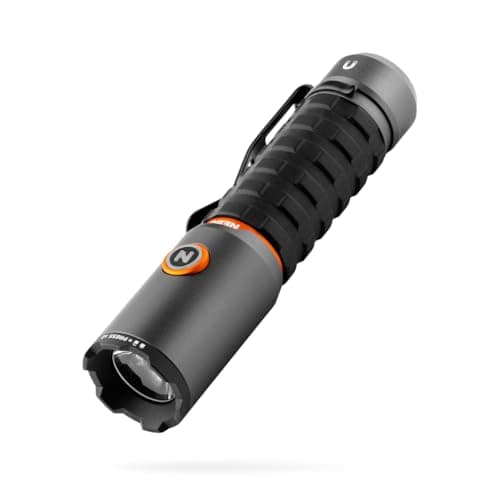 NEBO TORCHY 3K Best big-box light if you want the headline number | 3,000 | Sealed | 43 | $69.40 on Amazon Price as of October 18, 2026 — 43 lumens per dollar. #ad How we earn |
| 3 | 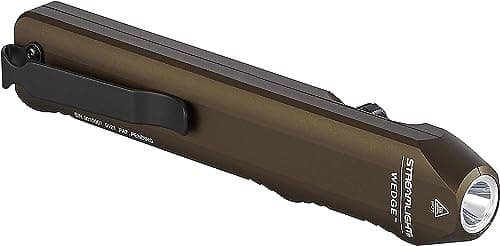 Streamlight Wedge The clearest published turbo duration anywhere | 1,000 | Sealed | 10 | $99.33 on Amazon Price as of October 18, 2026 — 10 lumens per dollar. #ad How we earn |
| 4 | No listing image Wurkkos FC11 Best color quality per dollar | 1,300 | Replaceable | Needs a live price | Check price on Amazon We show a price only when we have pulled a live one. #ad How we earn |
| 5 | No listing image Wurkkos TS10 V2 Best pocket light under two ounces | 1,400 | Replaceable | Needs a live price | Check price on Amazon We show a price only when we have pulled a live one. #ad How we earn |
| 6 | No listing image Olight i5R EOS Best simple twist-free EDC | 350 | Replaceable | Needs a live price | Check price on Amazon We show a price only when we have pulled a live one. #ad How we earn |
Prices pulled October 18, 2026. Lumens per dollar is the manufacturer's published maximum output divided by that price, recomputed every time the price moves.
Charge time, and what actually determines it
Manufacturers do publish charge times, and they are worth reading with one detail in mind: the figure assumes a charger capable of supplying the current the light will draw. Sofirn quotes two and a half hours for the SC31 Pro with a 2A adapter. NEBO quotes two hours for the TORCHY 3K's 2,200 mAh cell, and two hours again for the SLIM Mini 500's 450 mAh cell — the same duration for a cell five times smaller, which tells you the smaller light charges at a much lower current.
Plug either into an old 0.5A computer USB port and the figures roughly triple. If your light seems to charge slowly, the charger is the usual culprit rather than the light. Our guide on charging times works the arithmetic through properly.
1. Best lumens per dollar overall
Sofirn SC31 Pro
Lumens per dollar
47
Two thousand published lumens out of a standard 18650 you can buy anywhere for a few dollars, in a light that costs less than most brands charge for a keychain. The cell is the whole argument: when it dies in three years you replace a battery, not a flashlight.
- Max output
- 2,000 lm
- Runtime
- Not published per mode
- Battery
- Replaceable cell
- Water rating
- IPX8
What it gets right
- Standard 18650 cell — replacements cost a few dollars and are sold everywhere
- IPX8, the strongest water rating in this price class
- USB-C charging built into the light, so no separate charger to lose
- Anduril firmware gives real ramping control rather than four fixed steps
What it gets wrong
- Sofirn publishes no per-mode runtime figures on the product page
- Anduril is genuinely confusing for the first week
- Tint varies between batches, which is the price of this price
Published specification
- Maximum output: 2,000 lumens — Sofirn published specification
- Beam distance: 226 m — Sofirn published specification
- Battery: 1 x 18650 Li-ion, user replaceable — Sofirn published specification
- Charging: USB-C, 2.5 hours with a 2A adapter — Sofirn published specification
- Water rating: IPX8 — Sofirn published specification
- Weight: 59 g without battery — Sofirn published specification
- Length: 117.5 mm — Sofirn published specification
- Emitter: SST40, 5000K or 6500K — Sofirn published specification
- Per-mode runtime: Not published on the product page
Skip this one if
you want to press one button and get one brightness. Anduril has a shortcut for everything and a menu for everything else, and if that sounds tiring you will be happier with a three-mode light.
Buy it if: anyone who intends to keep the light for longer than the battery lasts, and does not mind reading a manual once.
- Output 9.0
- Battery 9.5
- Build 8.0
- Usability 7.0
- Overall 8.6
Price as of October 18, 2026 — 47 lumens per dollar. #ad How we earn
2. Best big-box light if you want the headline number
NEBO TORCHY 3K
Lumens per dollar
43
Three thousand lumens on the box, and NEBO publishes a runtime for every mode except that one. High is 800 lumens for two hours, which is the number to plan around. Read the spec table and the light tells you what it really is.
- Max output
- 3,000 lm
- Runtime
- Not published at turbo; 2 h at 800 lm high
- Battery
- Sealed
- Water rating
- IPX6
What it gets right
- NEBO publishes a full mode-by-mode table, which is more than several rivals manage
- USB-C, magnetic base, detachable clip
- Sold in stores you can drive to, and returnable to the same counter
What it gets wrong
- The battery is built in — when it dies the whole light is refuse
- No runtime published for the 3,000-lumen mode the box is named after
- IPX6 is splash and rain, not submersion
Published specification
- Turbo: 3,000 lumens, 150 m — no runtime published — NEBO published specification
- High: 800 lumens, 2 hours, 80 m — NEBO published specification
- Medium: 250 lumens, 3.5 hours, 40 m — NEBO published specification
- Low: 50 lumens, 20 hours, 20 m — NEBO published specification
- Battery: 2,200 mAh 3.7V Li-ion, built in — NEBO published specification
- Recharge time: 2 hours, USB-C — NEBO published specification
- Water rating: IPX6 — NEBO published specification
Skip this one if
you expect the 3K on the label to be a mode you can use. The mode you will actually use is the 800-lumen one, and there are cheaper lights that do 800 lumens for two hours.
Buy it if: somebody who wants a decent light today, from a shop, with a receipt.
- Output 8.5
- Battery 4.0
- Build 7.5
- Usability 8.0
- Overall 7.0
Price as of October 18, 2026 — 43 lumens per dollar. #ad How we earn
3. The clearest published turbo duration anywhere
Streamlight Wedge
Lumens per dollar
10
Three hundred lumens for three hours in normal use, and a boost mode Streamlight publishes as a 1,000-lumen, 35-second burst. Not a footnote, not buried in a manual — printed as the specification. Every brand knows their turbo behaves like this; this one says so.
- Max output
- 1,000 lm
- Runtime
- 35 seconds at 1,000 lm; 3 h at 300 lm
- Battery
- Sealed
- Water rating
- IPX7
What it gets right
- The 35-second burst duration is published outright — an unusual piece of honesty
- Flat, wedge-shaped body sits in a pocket without rolling
- IPX7 in a light this thin
What it gets wrong
- Sealed cell, so the light has a service life
- Three hundred lumens constant is its real specification
- Thumb-wheel switch is divisive and cannot be locked out mechanically
Published specification
- Constant: 300 lumens, 69 m, 3 hours — Streamlight published specification
- THRO boost: 1,000 lumens, 110 m, 35-second burst — Streamlight published specification
- Battery: Built-in lithium-ion, USB-C — Streamlight published specification
- Water rating: IPX7, 1 m — Streamlight published specification
- Impact: 1 m tested — Streamlight published specification
- Weight: 3.3 oz (93.6 g) — Streamlight published specification
Skip this one if
you plan to use the 1,000-lumen mode as a mode. It is a burst by design and Streamlight tells you the duration in seconds.
Buy it if: someone who wants a flat pocket light and appreciates a manufacturer that publishes the uncomfortable number.
- Output 6.5
- Battery 4.5
- Build 8.5
- Usability 8.0
- Overall 7.3
Price as of October 18, 2026 — 10 lumens per dollar. #ad How we earn
listing
image
4. Best color quality per dollar
Wurkkos FC11
Lumens per dollar
Computed the moment we have a live price for it
A 90-CRI emitter at a price where nobody else bothers, which means colors look like colors rather than like a parking lot. Same replaceable 18650 story as the Sofirn, plus a magnetic tail that turns it into a work light.
- Max output
- 1,300 lm
- Runtime
- Not published per mode
- Battery
- Replaceable cell
- Water rating
- IPX7
What it gets right
- 90 CRI at a price where 70 CRI is normal — skin, wiring and paint read correctly
- Magnetic tailcap sticks it to anything ferrous and frees both hands
- Standard 18650, USB-C charging in the light
- Two mode groups, so you can pick a simple ramp or a stepped set
What it gets wrong
- IPX7 rather than IPX8 — fine for rain, not for a river
- High CRI costs raw lumens; the Sofirn is visibly brighter on turbo
- No per-mode runtime published on the product page
Published specification
- Maximum output: 1,300 lumens — Wurkkos published specification
- Beam distance: 144 m (157 yd) — Wurkkos published specification
- Battery: 1 x 18650 Li-ion, user replaceable — Wurkkos published specification
- Water rating: IPX7 — Wurkkos published specification
- Weight: 65 g +/- 1 g without battery — Wurkkos published specification
- Length: 116.23 mm — Wurkkos published specification
- Emitter: Nichia 519A / LH351D, 90 CRI — Wurkkos published specification
- Body: 6061 aluminum, type III hard anodized — Wurkkos published specification
Skip this one if
the only number you care about is peak output. You are paying part of this light's budget for color accuracy, and if you will never notice that, the money is better spent elsewhere.
Buy it if: anyone who uses a flashlight to look at things closely — wiring, paint, engine bays, a face — rather than to light up a field.
- Output 7.5
- Battery 9.5
- Build 8.0
- Usability 8.0
- Overall 8.4
We show a price only when we have pulled a live one. #ad How we earn
listing
image
5. Best pocket light under two ounces
Wurkkos TS10 V2
Lumens per dollar
Computed the moment we have a live price for it
Thirty-two grams, three 90-CRI emitters, and one of the very few budget lights whose maker publishes the runtime at maximum output: one hour fourteen at 1,400 lumens. Publishing that number at all puts Wurkkos ahead of several brands ten times its size.
- Max output
- 1,400 lm
- Runtime
- 1 h 14 min
- Battery
- Replaceable cell
- Water rating
- IPX8
What it gets right
- Wurkkos publishes runtime at maximum output, which most brands quietly do not
- Thirty-two grams — light enough that you stop noticing it in a pocket
- Standard 14500 cell, replaceable
- Documented automatic step-down instead of an undocumented one
What it gets wrong
- A 14500 is a small cell; sustained output is not this light's job
- RGB auxiliary LEDs are a toy, and they draw from the same cell
- Anduril again, with the same learning curve
Published specification
- Maximum output: 1,400 lumens — Wurkkos published specification
- Runtime at maximum: 1 h 14 min — Wurkkos published specification
- Runtime at 1 lumen: 6 h 43 min — Wurkkos published specification
- Battery: 1 x 14500 Li-ion, user replaceable — Wurkkos published specification
- Water rating: IPX8, 2 m — Wurkkos published specification
- Weight: 32 g +/- 1 g without battery — Wurkkos published specification
- Length: 71.5 mm — Wurkkos published specification
- Thermal behavior: Automatic step-down from turbo to high — Wurkkos published specification
Skip this one if
you need something to run for an hour on high without getting hot. A light this small has nowhere to put the heat, and the step-down is not optional.
Buy it if: the person who wants a real light on them at all times and will not carry anything heavier than a pen.
- Output 8.0
- Battery 8.0
- Build 7.5
- Usability 7.5
- Overall 8.2
We show a price only when we have pulled a live one. #ad How we earn
listing
image
6. Best simple twist-free EDC
Olight i5R EOS
Lumens per dollar
Computed the moment we have a live price for it
Three hundred and fifty lumens, 64 meters, and 37 hours at 15 lumens from a 1,420 mAh cell — the low-mode runtime is the number that makes this light useful. The cell is proprietary, which is the trade for how neatly the charging works.
- Max output
- 350 lm
- Runtime
- 37 h at 15 lm
- Battery
- Replaceable cell
- Water rating
- None published
What it gets right
- Charging port is in the cell, so there is no port flap to fail
- Thirty-seven hours at 15 lumens is a genuinely useful published figure
- Tail switch with momentary-on
What it gets wrong
- The 14500 is an Olight part, not a standard cell you can buy anywhere
- No water rating on the product pages we could read
- Three hundred and fifty lumens is modest for the price
Published specification
- Maximum output: 350 lumens — Olight published specification
- Beam distance: 64 m — Olight published specification
- Output range: 15 to 350 lumens — Olight published specification
- Runtime: 37 hours at 15 lumens — Olight published specification
- Battery: Olight 1,420 mAh 14500 with integrated USB-C — Olight published specification
- Weight: 2.2 oz — Olight published specification
- Length: 95.4 mm — Olight published specification
- Water rating: Not stated on the pages we read
Skip this one if
you want to standardize on one battery type across your lights. Olight's ecosystem is convenient right up to the point where you want a spare from a different shop.
Buy it if: someone who wants an EDC light that never needs thinking about, and does not mind buying replacement cells from one company.
- Output 5.5
- Battery 6.5
- Build 8.5
- Usability 9.0
- Overall 7.4
We show a price only when we have pulled a live one. #ad How we earn
How we ranked these
Published output over live price, then adjusted for battery architecture and for how the charging system is built — a port protected only by a flap scores below one that is waterproofed behind the flap, and below a design that has no body port at all. Charge time is reported where the manufacturer publishes it and left blank where they do not.
Units we claim to have tested: 0
Every publisher in this category says they tested twenty flashlights. We have not tested any, and we say so. What we do instead: compile the manufacturer's own published ANSI FL1 figures, pull the price the light is selling for right now, and divide one by the other. Every number on this page is one you can check yourself in about two minutes.
Micro-USB in 2026
A new light with a micro-USB port is telling you its design is several years old. That is not automatically disqualifying — Black Diamond's Spot 400-R is a genuinely good headlamp with a full published runtime table and a micro-USB port — but it does mean carrying a second cable, and micro-USB connectors wear out faster because the retention is in the plug rather than the socket.
If you are standardizing a household or a toolbag on one cable, that is a real cost. If it is one item among many, it is an annoyance rather than a reason to pass.
The pass-through question
Several lights on this page double as power banks: Energizer publishes a second USB port on the Vision HD, and NEBO's GALILEO 1000 lantern has a USB output. In an outage that is genuinely useful — a phone charged from a lantern is a phone that still works on day two. Be clear about the arithmetic, though: a 2,200 mAh flashlight cell will put perhaps half a phone charge into a modern handset, and it will do so instead of producing light.
Common questions
Can I charge a USB-C flashlight with a phone charger?
Yes, and you generally should — a modern phone charger supplies more current than a computer's USB port, and the manufacturer's published charge time assumes something like it. Sofirn quotes two and a half hours for the SC31 Pro specifically with a 2A adapter. A laptop port at 0.5A will take roughly four times as long.
Is it bad to leave a flashlight plugged in overnight?
Most modern lights have charge-termination circuitry and several manufacturers state they can be left connected — NEBO describes smart battery protection for exactly this. As a habit it is still worth avoiding: charge on a hard surface, not on a bed or a sofa, and unplug once the indicator shows complete. Lithium cells spend their life happiest between roughly 20 and 80 percent, and a cell held at full charge continuously ages faster.
Can you replace the battery in a rechargeable flashlight?
It depends entirely on the model, and it is the single most consequential thing to check before buying. Lights built around a standard cell — an 18650, a 21700, a 14500, a 16340 — take a screw-off tailcap and a five-dollar replacement. Lights with a built-in cell, which manufacturers describe as 'integrated' or 'non-removable', cannot be re-celled by an ordinary owner: when the battery reaches the end of its cycle life the whole light is refuse. Energizer, for example, states plainly that the Vision HD Rechargeable uses non-removable lithium-ion batteries.
Sources
- Sofirn published product specifications — read 2026-09-01
- Wurkkos published product specifications and user manuals — FC11 and TS10 read 2026-09-01; FC11C read 2026-09-21
- NEBO published product specifications — mode-by-mode lumen, runtime and beam figures, read 2026-09-01; LUXTREME SL75 and SL50 read 2026-09-22; OMNI 2K and SLYDE KING 4K read 2026-10-18
- Olight published product specifications — read 2026-09-01
- Streamlight published product specifications — per-mode lumens, runtime, beam distance, impact and IP ratings, read 2026-09-01; Waypoint 400 and Waypoint C-cell read 2026-09-22; FlipMate read 2026-10-18
- Fenix published product specifications — read 2026-09-01; PD36R Pro product page read 2026-10-18
- Lumen & Ledger method — how every figure on this page is derived
Who writes this
Scooter M. — I am an enthusiast who is genuinely into this. I read the manuals, compile the published specs, and do the math. No lab coat, no test bench, no drawer of free samples. What I can tell you is exactly what a light claims on paper, exactly what it costs right now, and what those two numbers mean when you divide one by the other.
Read next
How to charge a rechargeable flashlight
Six steps, the two mistakes that shorten a cell's life, and what the indicator is telling you.
Best flashlights for travel
What TSA actually says about flashlights and spare cells, and the light that runs on any country's batteries.
Best rechargeable flashlights under $50
Where the value curve is steepest, and the three things $50 should buy you.
Best USB-C keychain lights
One cable for everything, on the light most likely to be flat when you need it.
The best rechargeable flashlights for the money
The flagship ranking: every pick scored on output over price, with the arithmetic shown.
The Ledger
Every light we cover in one ranked table, sorted by lumens per dollar.