Flashlights
Best Flashlights for Seniors
The light that wins this page is not the brightest one. It is the one that works on the first press, two years after anybody last thought about it.
By Scooter M. · Published October 18, 2026

Short answer
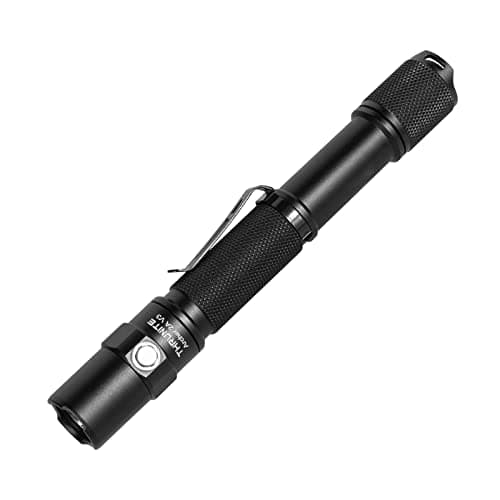
ThruNite Archer 2A V3
Five hundred lumens on two AA cells. It will never win a lumens-per-dollar contest against an 18650 light, and it does not need to: it is the light that still works when you are three days into an outage and the only thing left in the store is alkalines.
Price as of October 18, 2026 — 22 lumens per dollar. #ad How we earn
Disclosure — we earn a commission on qualifying purchases made through the Amazon links on this page, at no extra cost to you. It does not change which lights we pick or what we say about them. The full version.
How we rank. Published ANSI FL1 output divided by the live retail price, with sealed-battery lights marked down because a light you cannot re-cell is a light with an expiry date. Units we claim to have tested: 0 — we compile manufacturers' published figures and show the arithmetic instead. How we work this out.
The short answer
For an older person, buy a light that runs on AA, C or D cells, or one that lives in a charging cradle — not a sealed rechargeable left in a drawer. Best overall is the ThruNite Archer 2A V3: 500 lumens from two AA cells, a single forward-clicky tail switch you can work without looking, and the best output per dollar here. Best for a bedside is the Streamlight Siege AA — 200 lumens for 7 hours, one rubber button, IPX7, and it stands up on its own and floats. The failure that matters to this buyer is not dim light. It is a dead light.
Every other page on this site ranks on lumens per dollar. This one deliberately does not lead with it, because the thing that goes wrong with a flashlight in an older person's house has almost nothing to do with how bright it was when it was new.
Criterion one: it has to be charged, and nobody is going to charge it
A sealed rechargeable light is an excellent tool for someone who uses it weekly and charges it on a routine. As an emergency light in a bedside drawer it is close to the worst option available, because a lithium cell self-discharges, and a light that has sat unused for eighteen months is very often flat at the moment of the power cut it was bought for.
There are two reliable answers to that. The first is a light that takes ordinary alkaline cells, which hold charge for years and can be replaced in the dark by someone who has never heard the word lithium. The second is a rechargeable that refills fast enough for topping it up to be a two-minute habit rather than an evening's planning, and whose pack can be replaced when it tires. Maglite publishes both for the ML150LR: a replaceable Mag Charger pack, and an 80 percent charge in about thirty minutes. Its published eco mode runs up to 79 hours, so even a partial charge covers a long outage.
Criterion two: one switch, and no mode cycling to reach it
A light with five modes behind one button is a light that will be left on strobe. The interface to look for is a single switch where one press means on and the next press means off, or a tail switch you can find by feel in the dark without looking at the light.
This rules out a great deal of the enthusiast tier on purpose. The Sofirn and Wurkkos lights that top most of our rankings run Anduril firmware, which has a shortcut for everything and a menu for everything else. It is excellent and it is exactly wrong here. Of the lights on this page, the ThruNite Archer 2A V3 has a forward-clicky tail switch with momentary-on — press lightly for light, click to latch — which is the easiest interface in this entire registry to use without thinking.
Criterion three: a body you can actually hold
Grip strength declines with age and arthritis makes a thin tube genuinely painful to hold. The usual advice to buy the smallest light possible is backwards for this buyer. A 2-cell C Maglite is 360 grams and about as thick as a marker pen handle, and for a hand that cannot close fully that is far easier to control than a 60-gram pocket light. The trade is weight, and it is the right trade here.
The one shape that beats a handheld outright is a lantern, because it does not have to be held at all. It stands on a nightstand, lights the whole room rather than a circle, and cannot be dropped out of a hand that is holding a banister.
| # | Light | Max output | Battery | Lumens / $ | Price |
|---|---|---|---|---|---|
| 1 | ThruNite Archer 2A V3 Best light that runs on batteries from any gas station | 500 | AA / AAA | 22 | $22.95 on Amazon Price as of October 18, 2026 — 22 lumens per dollar. #ad How we earn |
| 2 | 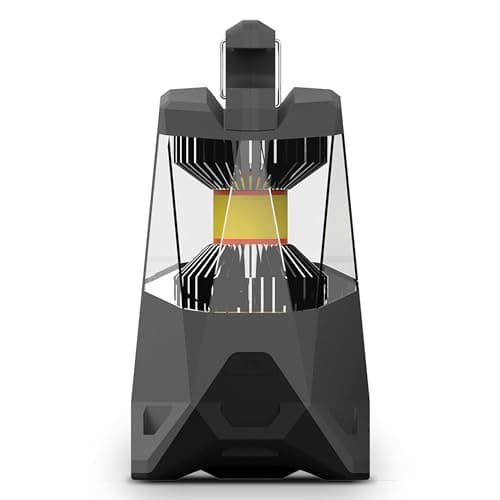 NEBO GALILEO 1000 Best dual-power lantern for an outage | 1,000 | Replaceable | 19 | $51.99 on Amazon Price as of October 18, 2026 — 19 lumens per dollar. #ad How we earn |
| 3 | 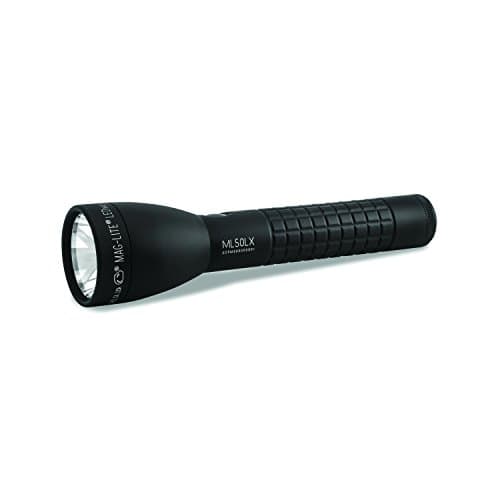 Maglite ML50LX 2-Cell C Best all-round Maglite | 466 | Replaceable | 12 | $39.99 on Amazon Price as of October 18, 2026 — 12 lumens per dollar. #ad How we earn |
| 4 | 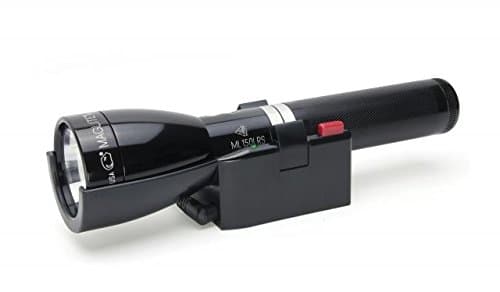 Maglite ML150LR Mag Charger The one built to be repaired instead of replaced | 1,082 | Replaceable | 11 | $99.99 on Amazon Price as of October 18, 2026 — 11 lumens per dollar. #ad How we earn |
| 5 | 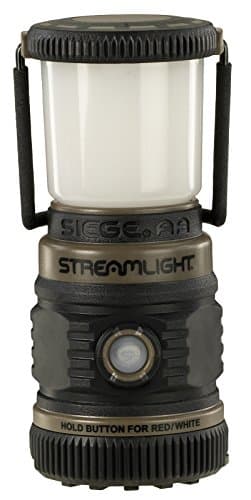 Streamlight Siege AA Best outage lantern that floats | 200 | AA / AAA | 6 | $32.49 on Amazon Price as of October 18, 2026 — 6 lumens per dollar. #ad How we earn |
Prices pulled October 18, 2026. Lumens per dollar is the manufacturer's published maximum output divided by that price, recomputed every time the price moves.
How we ranked these
Published output over live price still produces the table above, because that is the arithmetic this site runs. The ranking on the page, though, weights three things the Ledger does not score: whether the light can be fed from a supermarket battery or a permanent cradle, whether it has one switch rather than a mode sequence, and whether the body can be held by a hand that is not strong. A light that fails all three is not on this page regardless of its lumens per dollar.
1. Best light that runs on batteries from any gas station
ThruNite Archer 2A V3
Lumens per dollar
22
Five hundred lumens on two AA cells. It will never win a lumens-per-dollar contest against an 18650 light, and it does not need to: it is the light that still works when you are three days into an outage and the only thing left in the store is alkalines.
- Max output
- 500 lm
- Runtime
- Not published per mode
- Battery
- AA / AAA
- Water rating
- None published
What it gets right
- Runs on the most widely stocked battery on earth
- No lithium cell to self-discharge in a glovebox for two years
- Forward clicky switch, so you can signal without cycling modes
What it gets wrong
- AA alkalines sag hard under load; 500 lumens is a brief 500 lumens on them
- No published runtime or water rating on the product page
- Rechargeable it is not — the running cost is on you
Published specification
- Maximum output: 500 lumens, turbo — ThruNite published specification
- Battery: 2 x AA alkaline or 2 x AA NiMH (not included) — ThruNite published specification
- Modes: Five — ThruNite published specification
- Switch: Forward clicky with momentary-on — ThruNite published specification
- Protection: Reversed-polarity protection — ThruNite published specification
- Clip: Reversible, removable, titanium coated — ThruNite published specification
- Per-mode runtime: Not published on the product page
- Water rating: Not published on the product page
Skip this one if
this is your only light and you will use it daily. Feeding a daily-use light on disposable AAs is the single most expensive way to own a flashlight, which is the entire reason this site exists.
Buy it if: the glovebox, the storm kit, and the drawer you open twice a year.
- Output 6.0
- Battery 7.0
- Build 8.0
- Usability 8.5
- Overall 7.4
Price as of October 18, 2026 — 22 lumens per dollar. #ad How we earn
2. Best dual-power lantern for an outage
NEBO GALILEO 1000
Lumens per dollar
19
A thousand lumens for ninety minutes, or a hundred lumens for ten and a half hours, and it takes D cells when the pack is flat. In an outage the second number and the D cells are the ones that matter.
- Max output
- 1,000 lm
- Runtime
- 1.5 h
- Battery
- Replaceable cell
- Water rating
- None published
What it gets right
- Runs on D cells when the rechargeable pack is dead, which is the whole point in an outage
- Runtime published for all five modes
- USB output doubles it as a phone power bank
What it gets wrong
- NEBO states water resistance without publishing an IP figure
- Ninety minutes at full output is short for a lantern
- Half a pound before you add D cells
Published specification
- High 360 degrees: 1,000 lumens, 1.5 hours, 21 m — NEBO published specification
- High 120 degrees: 300 lumens, 6 hours, 17 m — NEBO published specification
- Low, fully dimmed: 100 lumens, 10.5 hours, 7 m — NEBO published specification
- Red high: 15 lumens, 12 hours — NEBO published specification
- Red low: 2 lumens, 30 hours — NEBO published specification
- Battery: Flex-Power: included rechargeable pack or D cells — NEBO published specification
- Weight: 0.5 lb — NEBO published specification
- Water rating: Water and impact resistant; no IP figure published — NEBO published specification
Skip this one if
you want a lantern for camping in the rain. Without a published IP rating, plan on keeping it under cover.
Buy it if: a kitchen table during a storm, and the shelf it lives on the rest of the year.
- Output 7.5
- Battery 7.5
- Build 7.0
- Usability 8.0
- Overall 7.5
Price as of October 18, 2026 — 19 lumens per dollar. #ad How we earn
3. Best all-round Maglite
Maglite ML50LX 2-Cell C
Lumens per dollar
12
Four hundred and sixty-six lumens, 21,197 candela and 291 meters on two C cells, for eight and a quarter hours on high and 109 in eco. At 361 grams it is the one size in this range that is genuinely useful in a hand and still runs all evening at full output.
- Max output
- 466 lm
- Runtime
- 8 h 15 min
- Battery
- Replaceable cell
- Water rating
- IPX4
What it gets right
- Eight and a quarter hours at full output, which almost nothing rechargeable here approaches
- Twenty-one thousand candela and 291 meters published, from a light you can hold comfortably
- C cells store for years and are sold everywhere, so nothing degrades on a shelf
- The best size-to-runtime balance in the whole Maglite range
What it gets wrong
- IPX4 only — rain is fine, submersion is not
- Four hundred and sixty-six lumens is modest against a rechargeable of the same price
- C cells are less common and more expensive than AA
- No USB-C, no rechargeable variant of this model
Published specification
- Maximum output: 466 lumens — Maglite published specification
- Peak beam intensity: 21,197 cd — Maglite published specification
- Beam distance: 291 m — Maglite published specification
- Runtime, high: 8 hours 15 minutes — Maglite published specification
- Runtime, low: 13 hours — Maglite published specification
- Runtime, eco: 109 hours — Maglite published specification
- Battery: 2 x C cell alkaline, not included — Maglite published specification
- Water rating: IPX4 — Maglite published specification
- Drop resistance: 1 m — Maglite published specification
- Weight: 12.72 oz (360.61 g) with batteries — Maglite published specification
- Length: 8.184 in (207.87 mm) — Maglite published specification
- Barrel diameter: 1.2 in (30.48 mm) — Maglite published specification
- Head diameter: 1.977 in (50.22 mm) — Maglite published specification
- Per-mode output: The specification table publishes a runtime for low and eco but not their lumen figures
Skip this one if
you want the brightest light for the money. A direct-selling rechargeable will produce several times this output for the same price; what you give up is the eight-hour runtime and the shelf life.
Buy it if: the person who wants one Maglite and does not want a club — a kitchen drawer, a glovebox, or a hand on a long walk.
- Output 6.0
- Battery 9.0
- Build 8.5
- Usability 7.5
- Overall 7.8
Price as of October 18, 2026 — 12 lumens per dollar. #ad How we earn
4. The one built to be repaired instead of replaced
Maglite ML150LR Mag Charger
Lumens per dollar
11
A thousand and eighty-two lumens for over three hours, 79 hours in eco, a 458-meter beam, and a LiFePO4 pack rated for cycle counts nothing else here quotes. It costs several times what the value picks cost and it is the only light here likely to outlive its owner's interest in flashlights.
- Max output
- 1,082 lm
- Runtime
- Over 3 h
- Battery
- Replaceable cell
- Water rating
- None published
What it gets right
- Runtime published at full output, not just at the mode that flatters it
- Replaceable pack, spare parts, and a ten-year warranty
- Charging cradle that lives in a vehicle or on a wall
What it gets wrong
- Its lumens-per-dollar figure is poor and always will be
- No published IP rating on the product page
- The cradle system is convenient in a truck and awkward anywhere else
Published specification
- Maximum output: 1,082 lumens — Maglite published specification
- Runtime at full output: Over 3 hours — Maglite published specification
- Eco mode runtime: Up to 79 hours — Maglite published specification
- Beam distance: 500 yards (458 m) — Maglite published specification
- Battery: Rechargeable Mag Charger pack, replaceable — Maglite published specification
- Fast charge: To 80% in about 30 minutes — Maglite published specification
- Weight: Under 1 lb — Maglite published specification
- Warranty: Ten-year limited — Maglite published specification
- Water rating: Not published on the product page
Skip this one if
you are shopping on value. This light is bought for its service life and its parts availability, and if those do not matter to you it is simply expensive.
Buy it if: someone buying a tool for a decade rather than a purchase for this year.
- Output 8.0
- Battery 9.0
- Build 9.5
- Usability 7.5
- Overall 8.0
Price as of October 18, 2026 — 11 lumens per dollar. #ad How we earn
5. Best outage lantern that floats
Streamlight Siege AA
Lumens per dollar
6
Two hundred lumens for seven hours, fifty for thirty-seven, and a red night-vision mode Streamlight rates at 192 hours. It runs on AA cells, it is IPX7, and it floats. For a storm shelf that is the correct specification.
- Max output
- 200 lm
- Runtime
- 7 h
- Battery
- AA / AAA
- Water rating
- IPX7
What it gets right
- AA cells store for a decade and are available anywhere, including mid-outage
- IPX7 and it floats, which is the correct answer for a flooded basement
- Runtime published for all five modes, including the 8-day red mode
What it gets wrong
- Two hundred lumens is dim next to a rechargeable lantern
- No rechargeable option in this version
- Removable cover changes the beam pattern and is easy to lose
Published specification
- White high: 200 lumens, 7 hours — Streamlight published specification
- White medium: 100 lumens, 15.5 hours — Streamlight published specification
- White low: 50 lumens, 37 hours — Streamlight published specification
- Red high: 0.7 lumens, 192 hours (8 days) — Streamlight published specification
- SOS flash: 0.7 lumens, 288 hours (12 days) — Streamlight published specification
- Battery: AA alkaline — Streamlight published specification
- Water rating: IPX7, 1 m — and it floats — Streamlight published specification
- Impact: 2 m tested — Streamlight published specification
Skip this one if
you want a bright camp lantern. This is an endurance light, not an area light.
Buy it if: the storm shelf, the boat and the basement that occasionally has water in it.
- Output 4.5
- Battery 9.5
- Build 9.0
- Usability 8.5
- Overall 7.9
Price as of October 18, 2026 — 6 lumens per dollar. #ad How we earn
What to put where in a house
| Where | What to put there | Why |
|---|---|---|
| Bedside | Streamlight Siege AA | Stands on its own, 200 lm for 7 h, one button, cannot roll off the table |
| Coat pocket or walker bag | ThruNite Archer 2A V3 | Two AA cells, forward-clicky switch, 500 lm when needed |
| Kitchen drawer | Maglite ML50LX | 466 lm for 8 h 15 min on two C cells, thick body, nothing to learn |
| Hallway or garage, on charge | Maglite ML150LR | 80% charge in about 30 minutes, a replaceable pack, and 79 h published on eco |
| Outage kit | NEBO GALILEO 1000 | Rechargeable pack day to day, D cells when the pack is flat, and a USB output for a phone |
Units we claim to have tested: 0
Every publisher in this category says they tested twenty flashlights. We have not tested any, and we say so. What we do instead: compile the manufacturer's own published ANSI FL1 figures, pull the price the light is selling for right now, and divide one by the other. Every number on this page is one you can check yourself in about two minutes.
How bright is bright enough, and why more is worse
Older eyes need more light to resolve detail and are markedly more sensitive to glare, and those two facts pull in opposite directions. A 2,000-lumen beam in a dark hallway produces a pool of glare that contracts the pupil and makes everything outside the beam harder to see, which is the opposite of what the light was for.
Two to three hundred lumens of wide, soft light does the job far better than a four-figure beam, and it does it for ten times as long. Every pick here is chosen so that its useful mode sits in that band with hours of runtime behind it. Our guide to how many lumens you need sets out the bands in full.
The three mistakes people make buying a light for a parent
These come up so consistently that they are worth naming before the specifications.
1. Buying on the lumen number
A 2,000-lumen light is an easy gift to feel good about and a poor one to receive. It runs for a fraction of the time, it is usually sealed because that much output needs a lithium cell, it produces glare in exactly the indoor spaces it will be used in, and its brightness is almost always buried behind a mode sequence. The light that gets used is the dull one that works.
2. Buying a sealed rechargeable because charging sounds easier
Charging is easier, right up until it is not done. A rechargeable light is a light with a recurring task attached to it, and the task is invisible — nothing about a flashlight in a drawer announces that it is at twenty percent. Alkaline cells make the task visible in a different way: the light dims, you replace them, and the light has never once been completely dead when you picked it up. If you do buy rechargeable, buy one with a cradle and plug the cradle in somewhere it will stay plugged in.
3. Buying one light instead of three
The single best thing you can do is not a specification at all. One light in a house is a light that is always in the other room, and a search for it in the dark is the exact event you were trying to prevent. Three inexpensive lights — bedside, kitchen, hallway — beat one good light every time, and the total cost is still under a hundred dollars at the prices in the table above.
What we are not going to claim
We have not tested these lights, and we have not tested them with anybody. We cannot tell you how a particular switch feels to a particular arthritic hand, whether a given body diameter suits a given grip, or how any of this interacts with a medical condition. What we can tell you is which switch types and battery architectures each manufacturer publishes, and which of them remove a step from the job. Anything beyond that is for the person who will use the light to decide, preferably by holding one.
Common questions
What is the best flashlight for an elderly person?
A light that takes ordinary AA, C or D cells, or one that lives in a charging cradle, with a single switch and a body thick enough to hold comfortably. The Streamlight Siege AA is the best all-round choice: 200 lumens for 7 hours on three AA cells, one rubber button, IPX7, and it stands on a nightstand and floats. For a handheld, a ThruNite Archer 2A V3 on two AA cells with a forward-clicky tail switch is the simplest interface we cover.
Are rechargeable flashlights a bad idea for seniors?
Not if the light is used often or lives in a powered cradle. They are a poor idea as an emergency light left in a drawer, because a lithium cell self-discharges and the light is very likely to be flat at the moment it is needed. If you want rechargeable convenience without that risk, choose a cradle-charged light like Maglite's ML150LR or a dual-power model such as the NEBO GALILEO 1000, which takes D cells when its pack is empty.
How many lumens does an older person need in a flashlight?
Two to three hundred lumens of soft, wide light is plenty for a house, a hallway or a garden path, and it runs for hours rather than minutes. Older eyes need more light to see detail but are also much more sensitive to glare, so a very bright narrow beam is actively counterproductive indoors: it contracts the pupil and makes everything outside the beam darker.
What kind of flashlight switch is easiest to use with arthritis?
A large rubber side button that needs one press for on and one for off, or a forward-clicky tail switch you can find by feel. Avoid anything that cycles five modes from one button, anything with a twist-to-focus head that must be gripped and turned, and anything whose low mode is reached by holding the button down for a measured time.
How long does a rechargeable flashlight battery last?
Lithium-ion cells are generally rated in charge cycles rather than years, and a cell that has lost enough capacity to be annoying is usually still working — just for half as long. Some manufacturers publish the figure: Petzl rates the CORE pack at 2 years or 300 charging cycles, and Maglite quotes up to 2,000 cycles for the LiFePO4 pack in the ML150LRS. Most brands publish nothing at all, which is why a replaceable cell matters more than any published cycle rating.
Sources
- Streamlight published product specifications — per-mode lumens, runtime, beam distance, impact and IP ratings, read 2026-09-01; Waypoint 400 and Waypoint C-cell read 2026-09-22; FlipMate read 2026-10-18
- ThruNite published product specifications — read 2026-09-01
- Maglite published product specifications — ML150LR read 2026-09-01; MAG-TAC Rechargeable (plain bezel) and Mini Maglite Pro LED read 2026-10-10; ML300LX 3-Cell D and ML50LX 2-Cell C read 2026-10-13
- NEBO published product specifications — mode-by-mode lumen, runtime and beam figures, read 2026-09-01; LUXTREME SL75 and SL50 read 2026-09-22; OMNI 2K and SLYDE KING 4K read 2026-10-18
- Lumen & Ledger method — how every figure on this page is derived
Who writes this
Scooter M. — I am an enthusiast who is genuinely into this. I read the manuals, compile the published specs, and do the math. No lab coat, no test bench, no drawer of free samples. What I can tell you is exactly what a light claims on paper, exactly what it costs right now, and what those two numbers mean when you divide one by the other.
Read next
Best rechargeable flashlights for home use
The drawer light that has to work for whoever grabs it, which rules out most of our top picks.
Best flashlights for power outages
The outage specification is shelf life, not brightness. That changes the answer.
Best AA flashlights
The cell that is never flat when you need it, and the six lights worth putting it in.
How long do rechargeable flashlights last?
Cycle counts, calendar aging, and the question that decides it: can you re-cell it?
Best rechargeable lanterns for power outages
Shelf life outranks brightness here, which puts the alkaline lanterns on top.
The Ledger
Every light we cover in one ranked table, sorted by lumens per dollar.