Work Lights & Lanterns
Best Rechargeable Lanterns for Power Outages
The lantern that wins here is not the brightest one. It is the one that still works after two years in a closet, and the one you can feed when the pack is flat on day three.
By Scooter M. · Published September 6, 2026
Short answer
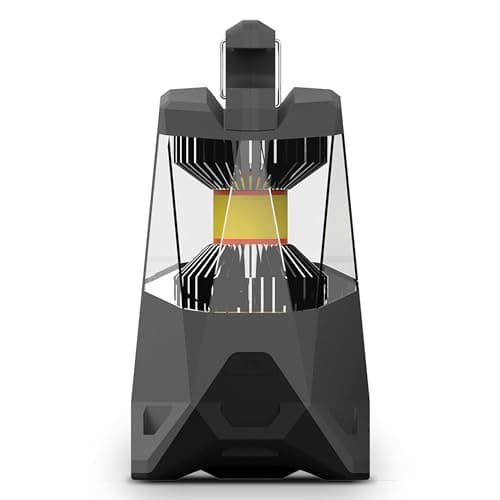
NEBO GALILEO 1000
A thousand lumens for ninety minutes, or a hundred lumens for ten and a half hours, and it takes D cells when the pack is flat. In an outage the second number and the D cells are the ones that matter.
We show a price only when we have pulled a live one. #ad How we earn
Disclosure — we earn a commission on qualifying purchases made through the Amazon links on this page, at no extra cost to you. It does not change which lights we pick or what we say about them. The full version.
How we rank. Published ANSI FL1 output divided by the live retail price, with sealed-battery lights marked down because a light you cannot re-cell is a light with an expiry date. Units we claim to have tested: 0 — we compile manufacturers' published figures and show the arithmetic instead. How we work this out.
What an outage lantern is actually judged on
Buy an outage lantern on four things in this order: whether it still works after two years unused, whether you can feed it ordinary cells when the pack is flat, the published runtime on its lowest usable mode, and whether it lights a room rather than a direction. Peak output is the last question. An outage is measured in days, and a lantern that does 1,000 lumens for ninety minutes has solved ninety minutes of it.
This is the page where the metric that names this site inverts. Everywhere else we divide published lumens by a live price and rank on the result. For a light bought specifically to sit unused until an emergency, brightness per dollar is close to the wrong question, and the right one is whether the thing turns on.
Criterion one: the shelf-life problem nobody warns you about
A lithium-ion cell ages whether you use it or not. It self-discharges slowly and it degrades on the calendar as well as on the cycle count. So the single most common outage-lighting failure is not a lantern that is too dim — it is a fully charged lantern, bought for exactly this moment, that has been sitting in a cupboard for two years and is flat when the power goes.
Alkaline cells behave the opposite way: they hold usable charge for years on a shelf, and you can buy more at any gas station, including during the event. That is why the top of this ranking is occupied by lights that either run on ordinary cells or accept them as a fallback, and why a sealed rechargeable lantern — however good — is not the right buy for a closet.
Criterion two: dual power, which is the actual answer
The best of both cases is a lantern that runs on a rechargeable pack day to day and takes ordinary cells when the pack is done. NEBO calls this Flex-Power and the GALILEO 1000 implements it properly: the included rechargeable pack, or D cells when the pack is flat. D cells in particular are a good choice for this, because they hold a great deal of energy and a lantern's low modes barely sip.
That is why the GALILEO leads this page rather than the Streamlight below it. It is the light that answers the question the page title asks — a rechargeable lantern you can actually rely on in an outage — because it does not stop being a lantern when the rechargeable part gives up. It also has a USB output, which turns it into a modest phone power bank, and on the third evening of an outage that is not a gimmick.
Criterion three: read the low-mode runtime, in days
The mode you will live on is not the bright one. Nobody runs a lantern at maximum for an evening; you turn it down until the room is usable and leave it there. So the specification is the low-mode figure, and the brands worth buying publish it.
| Light | Brightest published mode | Lowest published white mode | Longest published mode |
|---|---|---|---|
| NEBO GALILEO 1000 | 1,000 lm for 1.5 h | 100 lm for 10.5 h | 2 lm red for 30 h |
| Streamlight Siege AA | 200 lm for 7 h | 50 lm for 37 h | 0.7 lm red for 192 h (8 days) |
| NEBO FRANKLIN TaskBar | 500 lm for 2 h 30 m | 150 lm for 14 h 30 m | 60 lm spot for 24 h |
| NEBO BIG LARRY 3 | 600 lm, no runtime published | 150 lm, no runtime published | Not published |
Look at the right-hand column, because that is the outage column. Streamlight publishes 192 hours — eight days — on the Siege AA's red mode, and 288 hours on its SOS flash. Those are not novelty numbers. Eight days of dim red light is a functioning bathroom at 3 a.m. for the entire length of almost any outage, on cells you already have in a drawer.
| # | Light | Max output | Battery | Lumens / $ | Price |
|---|---|---|---|---|---|
| 1 | NEBO GALILEO 1000 Best dual-power lantern for an outage | 1,000 | Replaceable | Needs a live price | Check price on Amazon We show a price only when we have pulled a live one. #ad How we earn |
| 2 | 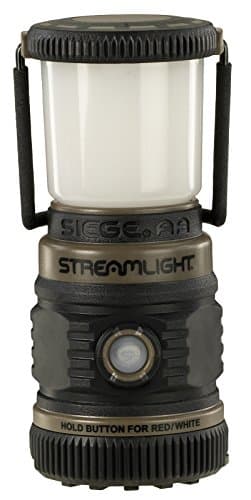 Streamlight Siege AA Best outage lantern that floats | 200 | AA / AAA | Needs a live price | Check price on Amazon We show a price only when we have pulled a live one. #ad How we earn |
| 3 | No listing image NEBO FRANKLIN TaskBar Best published runtime on a budget work light | 500 | AA / AAA | Needs a live price | Check price on Amazon We show a price only when we have pulled a live one. #ad How we earn |
| 4 | 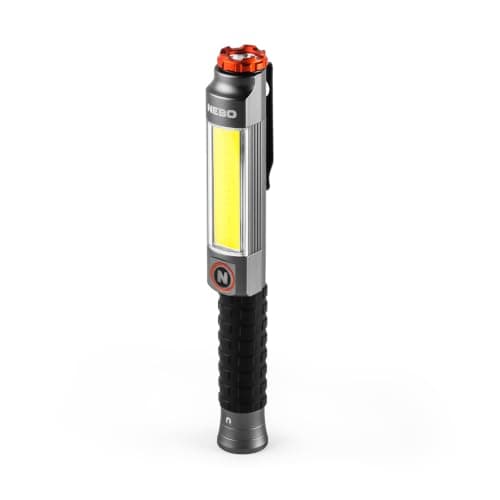 NEBO BIG LARRY 3 Best cheap magnetic work light | 600 | AA / AAA | Needs a live price | Check price on Amazon We show a price only when we have pulled a live one. #ad How we earn |
Lumens per dollar is the manufacturer's published maximum output divided by the price the light is selling for. Where we have not pulled a live price, the column says so instead of showing you a number we cannot stand behind. See how we work this out.
Criterion four: a lantern lights a room, a flashlight lights a direction
This is why a lantern belongs in an outage kit at all and why a second flashlight does not replace it. A 360-degree area light sits on a table and lets four people eat, play cards, read or find things without anybody holding anything. A beam does the opposite: it puts a bright circle somewhere and makes everything around it darker by comparison, which is genuinely unpleasant over hours.
The practical setup is one lantern per room you will actually use — kitchen, bathroom, wherever people gather — plus a handheld each for moving around. Our guide to lights for the home works through how many that means in practice.
1. Best dual-power lantern for an outage
NEBO GALILEO 1000
Lumens per dollar
Computed the moment we have a live price for it
A thousand lumens for ninety minutes, or a hundred lumens for ten and a half hours, and it takes D cells when the pack is flat. In an outage the second number and the D cells are the ones that matter.
- Max output
- 1,000 lm
- Runtime
- 1.5 h
- Battery
- Replaceable cell
- Water rating
- None published
What it gets right
- Runs on D cells when the rechargeable pack is dead, which is the whole point in an outage
- Runtime published for all five modes
- USB output doubles it as a phone power bank
What it gets wrong
- NEBO states water resistance without publishing an IP figure
- Ninety minutes at full output is short for a lantern
- Half a pound before you add D cells
Published specification
- High 360 degrees: 1,000 lumens, 1.5 hours, 21 m — NEBO published specification
- High 120 degrees: 300 lumens, 6 hours, 17 m — NEBO published specification
- Low, fully dimmed: 100 lumens, 10.5 hours, 7 m — NEBO published specification
- Red high: 15 lumens, 12 hours — NEBO published specification
- Red low: 2 lumens, 30 hours — NEBO published specification
- Battery: Flex-Power: included rechargeable pack or D cells — NEBO published specification
- Weight: 0.5 lb — NEBO published specification
- Water rating: Water and impact resistant; no IP figure published — NEBO published specification
Skip this one if
you want a lantern for camping in the rain. Without a published IP rating, plan on keeping it under cover.
Buy it if: a kitchen table during a storm, and the shelf it lives on the rest of the year.
- Output 7.5
- Battery 7.5
- Build 7.0
- Usability 8.0
- Overall 7.5
We show a price only when we have pulled a live one. #ad How we earn
2. Best outage lantern that floats
Streamlight Siege AA
Lumens per dollar
Computed the moment we have a live price for it
Two hundred lumens for seven hours, fifty for thirty-seven, and a red night-vision mode Streamlight rates at 192 hours. It runs on AA cells, it is IPX7, and it floats. For a storm shelf that is the correct specification.
- Max output
- 200 lm
- Runtime
- 7 h
- Battery
- AA / AAA
- Water rating
- IPX7
What it gets right
- AA cells store for a decade and are available anywhere, including mid-outage
- IPX7 and it floats, which is the correct answer for a flooded basement
- Runtime published for all five modes, including the 8-day red mode
What it gets wrong
- Two hundred lumens is dim next to a rechargeable lantern
- No rechargeable option in this version
- Removable cover changes the beam pattern and is easy to lose
Published specification
- White high: 200 lumens, 7 hours — Streamlight published specification
- White medium: 100 lumens, 15.5 hours — Streamlight published specification
- White low: 50 lumens, 37 hours — Streamlight published specification
- Red high: 0.7 lumens, 192 hours (8 days) — Streamlight published specification
- SOS flash: 0.7 lumens, 288 hours (12 days) — Streamlight published specification
- Battery: AA alkaline — Streamlight published specification
- Water rating: IPX7, 1 m — and it floats — Streamlight published specification
- Impact: 2 m tested — Streamlight published specification
Skip this one if
you want a bright camp lantern. This is an endurance light, not an area light.
Buy it if: the storm shelf, the boat and the basement that occasionally has water in it.
- Output 4.5
- Battery 9.5
- Build 9.0
- Usability 8.5
- Overall 7.9
We show a price only when we have pulled a live one. #ad How we earn
listing
image
3. Best published runtime on a budget work light
NEBO FRANKLIN TaskBar
Lumens per dollar
Computed the moment we have a live price for it
Five hundred lumens of flood for two and a half hours, 200 lumens of spot for eight, and a red mode for twenty — every one of those numbers printed by NEBO rather than inferred by us. For a light at this price that is unusually complete.
- Max output
- 500 lm
- Runtime
- 2 h 30 min
- Battery
- AA / AAA
- Water rating
- None published
What it gets right
- Runtime published for all seven modes — the exception rather than the rule at this price
- Flood, spot and red in one body with a magnetic base
- AA cells, wall-mount hole, steel belt clip
What it gets wrong
- No water rating published anywhere on the product page
- 500 lumens of COB flood is modest next to a rechargeable panel
- Disposable AAs again
Published specification
- Work light high: 500 lumens, 2 h 30 min, 31 m — NEBO published specification
- Work light low: 150 lumens, 14 h 30 min, 18 m — NEBO published specification
- Flashlight high: 200 lumens, 8 hours, 75 m — NEBO published specification
- Flashlight low: 60 lumens, 24 hours, 50 m — NEBO published specification
- Red task light: 40 lumens, 20 hours — NEBO published specification
- Battery: 3 x AA (included) — NEBO published specification
- Weight: 0.45 lb — NEBO published specification
- Water rating: Not published on the product page
Skip this one if
the light will live outdoors. Without a published IP rating we cannot tell you what it survives, and neither can NEBO.
Buy it if: the person who wants one bar-shaped light that does flood, spot and red without a menu.
- Output 6.0
- Battery 7.0
- Build 7.5
- Usability 8.5
- Overall 7.2
We show a price only when we have pulled a live one. #ad How we earn
4. Best cheap magnetic work light
NEBO BIG LARRY 3
Lumens per dollar
Computed the moment we have a live price for it
A 600-lumen COB panel, a 220-lumen spot and a red task mode, on three AA cells, with a magnet strong enough to hold it under a hood. It is the least glamorous light here and it is the one that gets used most.
- Max output
- 600 lm
- Runtime
- Not published per mode
- Battery
- AA / AAA
- Water rating
- None published
What it gets right
- A flood panel is the right shape of light for working on something close up
- AA cells, so it survives a year in a toolbox and still lights
- The magnet is strong enough to matter
What it gets wrong
- NEBO publishes no runtime and no water rating for this model
- COB panels have poor color rendering as a class
- Not rechargeable, so the running cost is AA cells
Published specification
- COB work light: 600 lumens high / 150 lumens low — NEBO published specification
- Spot flashlight: 220 lumens high / 60 lumens low — NEBO published specification
- Red task light: 40 lumens high / 12 lumens low — NEBO published specification
- Battery: 3 x AA (included) — NEBO published specification
- Weight: 0.42 lb — NEBO published specification
- Fittings: Magnetic base, steel belt clip, wall-mount hole — NEBO published specification
- Per-mode runtime: Not published on the product page
- Water rating: Not published on the product page
Skip this one if
you need to see color accurately. For paint matching or diagnosing a wiring loom, a high-CRI light is worth the extra money.
Buy it if: the toolbox, the trunk and the shelf above the workbench.
- Output 6.5
- Battery 7.0
- Build 7.5
- Usability 8.5
- Overall 7.3
We show a price only when we have pulled a live one. #ad How we earn
The water rating question, and where these lights are weakest
Outages and water arrive together more often than anyone plans for. Storms flood basements; that is where the fuse box is; that is where you are going with a light. Streamlight publishes IPX7 on the Siege AA, tested to a meter, and the lantern floats — which is exactly the right specification for a basement with water in it, because a lantern that goes in and comes back is a lantern you still own.
NEBO is weaker here and we are not going to smooth it over. The GALILEO 1000 is described as water and impact resistant with no IP figure published at all, and neither the FRANKLIN TaskBar nor the BIG LARRY 3 has a published water rating on its product page. That is not the same as saying they fail; it means nobody has told you what they survive, and a claim with no number behind it is not a specification. Our guide to IP ratings explains why the missing figure is itself information.
Where each of these should live
A lantern in a box in the loft is a lantern you will not find. The point of buying one is that somebody can reach it in the dark without a plan, which means placement is part of the purchase rather than an afterthought.
- Kitchen, or wherever people gather. The main area light, on a shelf people already open. This is the one that gets used every time.
- Bathroom or hallway. A dim, long-running light left on all night, so nobody navigates a dark house or switches things on and off. This is what the Siege's eight-day red mode is for.
- Beside the fuse box or the basement stairs. The one you reach for first, and the one most likely to meet water. A floating, IPX7-rated light belongs here rather than in the kitchen.
- A bedroom, if anyone in the house would be frightened waking in the dark. A low mode running all night costs almost nothing on a lantern that publishes ten hours at a hundred lumens.
Candles, and the honest comparison
Candles come out during outages because they are already in the house, and they are worth mentioning here precisely because this page is not going to pretend nobody uses them. On the light itself the comparison is not close: a candle produces on the order of ten to fifteen lumens of unsteady, warm light, which is less than the lowest useful mode on every lantern on this page and vastly less than any of their working modes.
The other differences are the obvious ones. A candle is an open flame in a house where the power has failed, frequently in a storm, often near children or pets, and it needs supervision that nobody wants to provide at three in the morning. A lantern that publishes ten and a half hours at a hundred lumens replaces a whole evening of them for the price of one dinner out, and it does it again next year.
The phone-charging question
Two of these lights have a USB output, and it is worth being realistic about what that buys. The GALILEO 1000 can act as a modest power bank, which on the third evening of an outage is genuinely useful for keeping one phone alive for messages and a weather radar. It is not a substitute for a dedicated power bank and it will not run a household of devices.
The trade is also real: energy spent charging a phone is energy not spent producing light, and a lantern that has been used as a charger all afternoon is a lantern with a short evening ahead of it. If phone power is a genuine priority, buy a power bank for that job and let the lantern be a lantern. The dual-power models sidestep this too, because a fresh pack of D cells restores the lighting side regardless of what the rechargeable pack has been doing.
How we ranked these
The four scored attributes published on our methodology page — output against live price, battery architecture, build as evidenced by published ratings, and usability — with two stated overrides for this use case. Battery architecture is read as availability rather than running cost, so a light that eats cells you can buy during the event scores above one that is cheaper per hour. And a light with no published runtime is scored below one with published runtimes, which is why the BIG LARRY 3 finishes last despite being the brightest of the three NEBO lights here.
Units we claim to have tested: 0
Every publisher in this category says they tested twenty flashlights. We have not tested any, and we say so. What we do instead: compile the manufacturer's own published ANSI FL1 figures, pull the price the light is selling for right now, and divide one by the other. Every number on this page is one you can check yourself in about two minutes.
The kit, rather than the light
- 1.One area light per room you will actually occupy. A lantern on a table beats two flashlights held by tired people.
- 2.One handheld per person, for moving around and for the basement.
- 3.One cell size across as much of the kit as possible. Standardizing on AA is worth more than any individual light in it, because it turns four half-empty packs into one usable stockpile.
- 4.A dim red or low mode you are willing to leave running all night, so nobody is switching lights on and off in a dark house.
- 5.Charge the rechargeable parts on a calendar reminder, not on a hunch. Twice a year is enough.
What we cannot tell you
We have not used any of these lanterns through an outage. We cannot tell you how the GALILEO's published 10.5 hours holds up on D cells rather than the pack, how bright any of these actually feel in a real room, whether the Siege's removable cover survives being handled in the dark, or how the NEBO lights behave in damp — which is exactly the gap their missing water ratings leave. What we can do is read five published mode tables and rank them against the criteria an outage actually imposes.
Common questions
What is the best lantern for a power outage?
The one that still works after two years in a cupboard. That points to lanterns that either run on ordinary cells or accept them when the rechargeable pack is flat: the NEBO GALILEO 1000 takes D cells as a fallback and publishes runtimes for all five of its modes, and the Streamlight Siege AA runs on AA cells, publishes 37 hours at 50 lumens and 192 hours on red, is rated IPX7 and floats. Peak brightness is close to irrelevant here.
How many lumens do you need for a power outage?
Far fewer than you would guess. A hundred lumens from a lantern lights a kitchen table comfortably and will run for ten hours or more; fifty lumens is enough to move around and find things. Lanterns that run 1,000 lumens do it for about ninety minutes, which solves ninety minutes of an outage that may last three days. Buy for the low mode, not the high one.
Should an emergency lantern be rechargeable or battery powered?
Ideally both. A rechargeable-only lantern is the most likely thing in your house to be flat when the power goes, because lithium cells self-discharge and age on the shelf. A dual-power lantern that runs on its pack normally and takes D or AA cells when the pack is dead removes that failure entirely, and it is the reason the dual-power models lead this ranking.
How long does a rechargeable flashlight battery last?
Lithium-ion cells are generally rated in charge cycles rather than years, and a cell that has lost enough capacity to be annoying is usually still working — just for half as long. Some manufacturers publish the figure: Petzl rates the CORE pack at 2 years or 300 charging cycles, and Maglite quotes up to 2,000 cycles for the LiFePO4 pack in the ML150LRS. Most brands publish nothing at all, which is why a replaceable cell matters more than any published cycle rating.
Sources
- NEBO published product specifications — mode-by-mode lumen, runtime and beam figures, read 2026-09-01; LUXTREME SL75 and SL50 read 2026-09-22; OMNI 2K and SLYDE KING 4K read 2026-10-18
- Streamlight published product specifications — per-mode lumens, runtime, beam distance, impact and IP ratings, read 2026-09-01; Waypoint 400 and Waypoint C-cell read 2026-09-22; FlipMate read 2026-10-18
- Lumen & Ledger method — how every figure on this page is derived
Who writes this
Scooter M. — I am an enthusiast who is genuinely into this. I read the manuals, compile the published specs, and do the math. No lab coat, no test bench, no drawer of free samples. What I can tell you is exactly what a light claims on paper, exactly what it costs right now, and what those two numbers mean when you divide one by the other.
Read next
Best rechargeable lanterns
Lanterns are runtime instruments. Ranked on hours, not on peak output.
Best flashlights for power outages
The outage specification is shelf life, not brightness. That changes the answer.
Best rechargeable work lights for a garage
A garage is a fixed room, so the magnet and the color rendering matter more than the output.
Rechargeable vs battery flashlights
Five dimensions, one table, and a verdict that depends on where the light lives.
IP and IPX ratings explained
What IPX4, IPX7 and IP68 mean, and why a missing rating is information too.
The Ledger
Every light we cover in one ranked table, sorted by lumens per dollar.