Flashlights
Sofirn vs Fenix
The cheap brand prints more of its specification than the premium one. The premium one prints the thing that makes a specification mean anything. Both of those sentences are true and they point in opposite directions.
By Scooter M. · Published October 30, 2026
Short answer
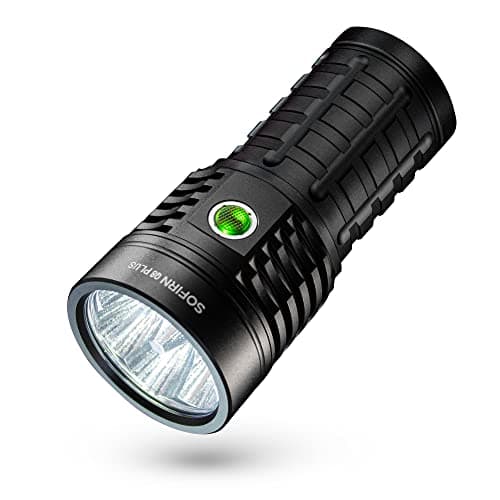
Sofirn Q8 Plus
Sixteen thousand lumens, 76,666 candela and 554 meters from six emitters and three 21700 cells — and Sofirn publishes two hours thirty-six minutes beside that 16,000-lumen figure. This site exists partly to expose four-figure lumen claims with no runtime. This is a five-figure claim with one.
Price as of October 30, 2026 — 128 lumens per dollar. #ad How we earn
Disclosure — we earn a commission on qualifying purchases made through the Amazon links on this page, at no extra cost to you. It does not change which lights we pick or what we say about them. The full version.
How we rank. Published ANSI FL1 output divided by the live retail price, with sealed-battery lights marked down because a light you cannot re-cell is a light with an expiry date. Units we claim to have tested: 0 — we compile manufacturers' published figures and show the arithmetic instead. How we work this out.
The short answer
Buy Sofirn if you want the most checkable specification per dollar: it publishes lumens, runtime, beam distance and candela for every mode of all three lights here, and its nearest equivalents cost twenty to thirty dollars less than Fenix's. Buy Fenix if you want throw or provenance. The PD36R Pro reaches 380 meters at 36,600 candela on 2,800 lumens, where Sofirn's 3,800-lumen SP35T manages 280 meters at 19,625 — and Fenix is the only one of the two that states which test standard produced its numbers.
These two brands sit at opposite ends of how flashlights get sold. Fenix runs a dealer network and prices accordingly; Sofirn sells direct and undercuts almost everyone. We have pages on each brand's own range, and this is what happens when you put the two spec sheets side by side.
Sofirn publishes more rows. That is not the obvious result.
For the SP35T, a fifty-dollar light, Sofirn publishes an output, a runtime, a beam distance and a peak beam intensity in candela for every one of its five modes: turbo at 3,800 lumens for 1 h 45 min reaching 280 meters at 19,625 candela, through 1,500 lumens for 2 h 28 min, down to 5 lumens for 220 hours. The Q8 Plus gets the same treatment across six modes, including 2 h 36 min published beside its 16,000-lumen turbo. The ST10 gets it for every level of all three of its emitters.
Fenix publishes that kind of table for exactly one of the three lights here. The PD36R Pro is fully documented — every mode with lumens, runtime, distance and candela. The E35R publishes three figures: 3,100 lumens, 260 meters, 69 hours. The E18R V2.0 publishes three: 1,200 lumens, 146 meters, 200 hours. Neither states which mode its runtime belongs to, and neither publishes a candela figure at all.
Fenix publishes the one thing Sofirn never does
On the PD36R Pro, Fenix states that the runtime data were produced according to ANSI/PLATO FL1 at 21 degrees Celsius plus or minus three. That single line is the difference between a number and a measurement. It says what was tested, under what conditions, to whose definition of runtime.
No Sofirn page we have read states a test standard anywhere. Its tables are richer in form and unverifiable in provenance: you are told 1 h 45 min at 3,800 lumens without being told whether that figure is to FL1, whether it includes the output after thermal step-down, or what ambient temperature produced it. Sofirn's SP35T turbo figure almost certainly is a blended total including step-down, because every light of that output behaves that way — but Sofirn does not say so, and Fenix, on its flagship, does.
Which matters more depends on what you are doing with the number. For choosing between two lights in the same range, more rows wins. For planning around a light that has to last a stated time, a figure with a standard behind it wins, and only one of these brands offers one.
Fenix throws further, and by a lot
Set the flagships against each other on the figure that governs reach. The PD36R Pro publishes 36,600 candela and 380 meters from 2,800 lumens. The SP35T publishes 19,625 candela and 280 meters from 3,800 lumens. The dimmer light reaches a hundred meters further and nearly doubles the beam intensity, which is what a better reflector and a tighter emitter buy you.
That is the clearest engineering win on this page and it runs against the value argument. If your problem is identifying something at distance, the extra thousand lumens on the Sofirn is worth less than the extra 17,000 candela on the Fenix. Sofirn's answer to distance is the Q8 Plus, which publishes 76,666 candela and 554 meters — but that is a 492-gram six-emitter searchlight, not a light you carry.
| # | Light | Max output | Battery | Lumens / $ | Price |
|---|---|---|---|---|---|
| 1 | Sofirn Q8 Plus The 16,000-lumen claim with a duration attached | 16,000 | Replaceable | 128 | $124.99 on Amazon Price as of October 30, 2026 — 128 lumens per dollar. #ad How we earn |
| 2 | 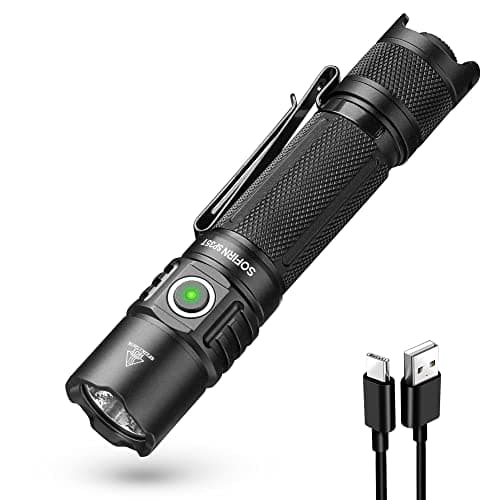 Sofirn SP35T Best documented light per dollar on this site | 3,800 | Replaceable | 76 | $49.99 on Amazon Price as of October 30, 2026 — 76 lumens per dollar. #ad How we earn |
| 3 | 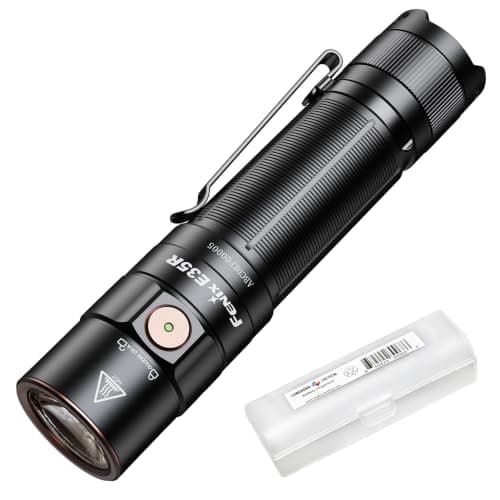 Fenix E35R Most output per dollar in the Fenix range | 3,100 | Replaceable | 39 | $79.95 on Amazon Price as of October 30, 2026 — 39 lumens per dollar. #ad How we earn |
| 4 | 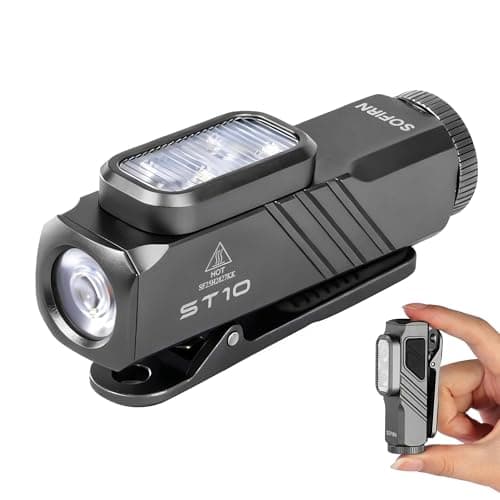 Sofirn ST10 Best Sofirn for a glovebox | 1,000 | AA / AAA | 25 | $39.99 on Amazon Price as of October 30, 2026 — 25 lumens per dollar. #ad How we earn |
| 5 | 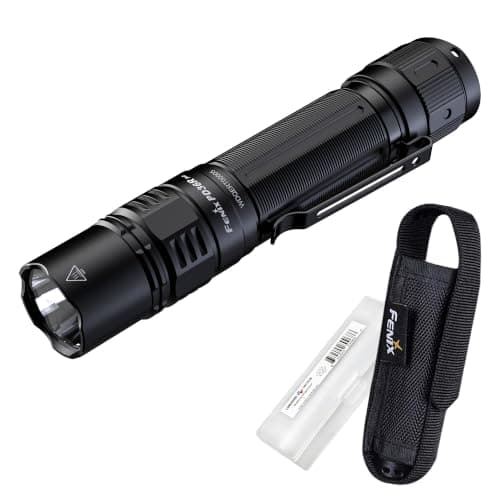 Fenix PD36R Pro The most completely documented light on this site | 2,800 | Replaceable | 23 | $120.45 on Amazon Price as of October 30, 2026 — 23 lumens per dollar. #ad How we earn |
| 6 | 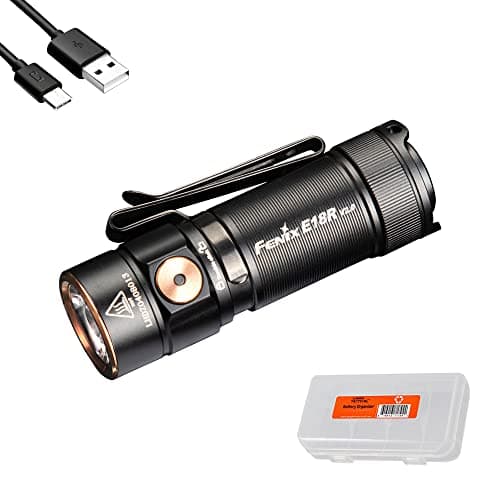 Fenix E18R V2.0 Best all-round Fenix pocket light | 1,200 | Replaceable | 20 | $59.95 on Amazon Price as of October 30, 2026 — 20 lumens per dollar. #ad How we earn |
Prices pulled October 30, 2026. Lumens per dollar is the manufacturer's published maximum output divided by that price, recomputed every time the price moves.
The three pairs, matched on price
| Tier | Light | Max output | Runtime at max | Candela | Standard stated |
|---|---|---|---|---|---|
| Compact | Sofirn ST10 | 1,000 lumens | 1 h 20 min | 5,175 cd | No |
| Compact | Fenix E18R V2.0 | 1,200 lumens | Not published | Not published | No |
| High output | Sofirn SP35T | 3,800 lumens | 1 h 45 min | 19,625 cd | No |
| High output | Fenix E35R | 3,100 lumens | Not published | Not published | No |
| Flagship | Sofirn Q8 Plus | 16,000 lumens | 2 h 36 min | 76,666 cd | No |
| Flagship | Fenix PD36R Pro | 2,800 lumens | 3 h 30 min | 36,600 cd | Yes — ANSI/PLATO FL1 |
Read the runtime and candela columns down the page: Sofirn fills six cells, Fenix fills two. Then read the last column, where Fenix fills the only cell either brand fills at all. That is the whole argument in one table.
1. The 16,000-lumen claim with a duration attached
Sofirn Q8 Plus
Lumens per dollar
128
Sixteen thousand lumens, 76,666 candela and 554 meters from six emitters and three 21700 cells — and Sofirn publishes two hours thirty-six minutes beside that 16,000-lumen figure. This site exists partly to expose four-figure lumen claims with no runtime. This is a five-figure claim with one.
- Max output
- 16,000 lm
- Runtime
- 2 h 36 min
- Battery
- Replaceable cell
- Water rating
- None published
What it gets right
- A published runtime beside a 16,000-lumen claim — the thing almost no high-output light provides
- Candela and beam distance published for every mode, up to 76,666 cd and 554 meters
- Three standard 21700 cells, so the power source is ordinary parts rather than a pack
- Reverse charging turns it into a power bank during an outage
What it gets wrong
- The page gives two different water ratings — IP68 in one section, IPX8 in another
- Four hundred and ninety-two grams before you add three cells; this is a two-handed object
- Buying three 21700s if they are not included is a real cost on top of the light
- Anduril 2.0 is a deep interface that rewards reading the manual and punishes not reading it
Published specification
- Turbo: 16,000 lumens, 2 h 36 min, 554 m, 76,666 cd — Sofirn published specification
- High: 7,000 lumens, 4 h 32 min, 355 m, 31,591 cd — Sofirn published specification
- Medium: 1,800 lumens, 10 h 16 min, 155 m, 5,975 cd — Sofirn published specification
- Low: 200 lumens, 27 h 45 min, 52 m, 683 cd — Sofirn published specification
- Moonlight: 5 lumens, 40 days, 8 m, 16 cd — Sofirn published specification
- Battery: 3 x detachable 21700, 5,000 mAh each — Sofirn published specification
- Charging: USB-C fast charging, plus USB-C reverse charging as a power bank — Sofirn published specification
- Impact resistance: 1 m — Sofirn published specification
- Weight: 492 g without batteries — Sofirn published specification
- Dimensions: 133 x 63 mm; the page does not label which figure is the length
- Emitter: 6 x CREE XHP50B — Sofirn published specification
- Water rating: The page contradicts itself — one section says IP68, another heading says IPX8. We record neither as confirmed.
- Ramping mode: 5 to 16,000 lumens; runtime stated only as depending on the level selected
- Battery replaceability: The page says detachable; it does not use the words user-replaceable
Skip this one if
you want a light you carry. A 492-gram six-emitter searchlight is bought for a property, a boat or a search, and it is a ridiculous thing to put in a bag for general use.
Buy it if: large properties, search volunteers and anyone whose actual problem is lighting a field rather than a path.
- Output 9.5
- Battery 8.0
- Build 7.5
- Usability 6.5
- Overall 8.2
Price as of October 30, 2026 — 128 lumens per dollar. #ad How we earn
2. Best documented light per dollar on this site
Sofirn SP35T
Lumens per dollar
76
Thirty-eight hundred lumens, 19,625 candela and 280 meters on a detachable 21700, with lumens, runtime, beam distance AND candela published for all five modes. Fenix charges three times as much for a spec sheet this complete, and most of this site's premium picks never publish one at all.
- Max output
- 3,800 lm
- Runtime
- 1 h 45 min
- Battery
- Replaceable cell
- Water rating
- IPX8
What it gets right
- Lumens, runtime, beam distance and candela published for all five modes — the rarest thing in this category
- A runtime printed beside the 3,800-lumen headline, not only beside the dim modes
- Detachable 21700 at 5,000 mAh, so the cell is an ordinary part
- IPX8 with a stated depth and a 1-meter impact figure, both as numbers
What it gets wrong
- One hour 45 minutes at turbo is a figure that will include thermal step-down, which the page does not break out
- No runtime published for strobe, SOS or beacon
- The page says the cell is detachable without saying the owner may replace it
- An 87-gram, 139.5 mm body is a duty-size light, not a pocket one
Published specification
- Turbo: 3,800 lumens, 1 h 45 min, 280 m, 19,625 cd — Sofirn published specification
- High: 1,500 lumens, 2 h 28 min, 182 m, 8,258 cd — Sofirn published specification
- Medium: 500 lumens, 6 h 58 min, 107 m, 2,858 cd — Sofirn published specification
- Low: 100 lumens, 26 hours, 47 m, 550 cd — Sofirn published specification
- Eco: 5 lumens, 220 hours, 10 m, 26 cd — Sofirn published specification
- Battery: Detachable 21700 Li-ion, 5,000 mAh — Sofirn published specification
- Charging: USB-C, approximately 3 hours for the 5,000 mAh cell — Sofirn published specification
- Water rating: IPX8, 2 m, stated as not for diving — Sofirn published specification
- Impact resistance: 1 m — Sofirn published specification
- Weight: 87 g without battery — Sofirn published specification
- Length: 139.5 mm, 28 mm head diameter — Sofirn published specification
- Emitter: XHP50B, 6000-6500K — Sofirn published specification
- Strobe, SOS and beacon: Output published, no runtime published for any of the three
- Battery replaceability: The page says detachable; it does not use the words user-replaceable
Skip this one if
you want a small light. This is a full-size 21700 tube, and Sofirn sells several smaller models if the specification matters less than the shape.
Buy it if: anyone who wants the most checkable specification available at this price, and does not care that the badge on it is a direct-selling brand.
- Output 9.0
- Battery 8.5
- Build 8.0
- Usability 8.0
- Overall 8.7
Price as of October 30, 2026 — 76 lumens per dollar. #ad How we earn
3. Most output per dollar in the Fenix range
Fenix E35R
Lumens per dollar
39
Thirty-one hundred lumens and 260 meters on a standard 21700, IP68, for well under half what the flagship costs. It is the best-value light Fenix makes here, and its specification is three numbers long — no candela, no mode table, no impact figure.
- Max output
- 3,100 lm
- Runtime
- 69 h maximum; Fenix states no mode for this figure
- Battery
- Replaceable cell
- Water rating
- IP68
What it gets right
- Thirty-one hundred lumens and 260 meters for well under half the flagship's price
- Runs on a standard 21700, the cell format with the best capacity-to-size ratio in the category
- IP68 published as a code rather than described in words
- A 50,000-hour emitter life and USB-C charging in about three hours
What it gets wrong
- One runtime figure for the whole light, with no mode attached to it
- No candela published, so the 260-meter claim cannot be checked against brands that print beam intensity
- No impact rating published on either Fenix page we read
- At 148 grams and 120 millimeters it is a jacket-pocket light rather than a trouser-pocket one
Published specification
- Maximum output: 3,100 lumens — Fenix published specification
- Maximum beam distance: 853 ft (260 m) — Fenix published specification
- Maximum runtime: 69 hours — the page does not say which mode produces it — Fenix published specification
- Battery: ARB-L21-5000 V2.0 21700 Li-ion, 5,000 mAh, inserted by unscrewing the head — Fenix published specification
- Charging: USB-C, approximately 3 hours from empty with a 5V/2A adapter — Fenix published specification
- Water rating: IP68 — Fenix published specification
- Weight: 5.22 oz (148 g) including battery — Fenix published specification
- Length: 4.72 in (120 mm) — Fenix published specification
- Emitter: Luminus SST70, around 6400K, 50,000-hour rated life — Fenix published specification
- Per-mode figures: Not published as text — the runtime chart is an image, so no per-mode lumens, candela or runtime can be cited
- Peak beam intensity: Not published on either Fenix page we read
- Impact resistance: Not published on either Fenix page we read
Skip this one if
you want the documentation Fenix is capable of. The PD36R Pro publishes lumens, runtime, distance and candela for all five of its modes; this light, from the same company, publishes three numbers.
Buy it if: anyone who wants Fenix build quality and a standard 21700 at the lowest price the brand offers it, and who will not miss the spec table.
- Output 9.0
- Battery 8.5
- Build 8.5
- Usability 7.5
- Overall 8.4
Price as of October 30, 2026 — 39 lumens per dollar. #ad How we earn
4. Best Sofirn for a glovebox
Sofirn ST10
Lumens per dollar
25
A thousand lumens and 5,175 candela from a 49-gram body that runs on its own 14500 or on an ordinary AA cell, with a separate 660 nm red side light. Sofirn publishes a runtime, a beam distance and a candela figure for every level of all three emitters, which is more than most premium brands manage for one.
- Max output
- 1,000 lm
- Runtime
- 1 h 20 min
- Battery
- AA / AAA
- Water rating
- None published
What it gets right
- Runs on an ordinary AA cell when the 14500 is flat, which almost nothing at this output does
- A runtime, a beam distance and a candela figure published for every level of all three emitters
- A real 660 nm red side light with its own four levels, not a red filter
- Forty-nine grams, and the USB-C port is in the cell so a spare charges while the light is in use
What it gets wrong
- The page gives two different water ratings — IPX6 in the spec table, IP66 in the description
- No charge time published, and no runtime figures for AA operation
- One thousand lumens for 1 h 20 min is a modest headline next to a 21700 light
- Three emitters and thirteen levels is a lot of interface for a glovebox light
Published specification
- Maximum output: 1,000 lumens — Sofirn published specification
- Peak beam intensity: 5,175 cd — Sofirn published specification
- Maximum beam distance: 144 m — Sofirn published specification
- Turbo: 1,000 lumens, 1 h 20 min, 144 m, 5,175 cd — Sofirn published specification
- Moonlight: 1 lumen, 150 hours — the published maximum runtime — Sofirn published specification
- Mode table: Five main-beam levels, four side-white levels and four red levels, each with its own runtime — Sofirn published specification
- Red side light: 3 / 45 / 100 lumens plus flash, 660 nm — Sofirn published specification
- Battery: Detachable 14500, 900 mAh, included; also runs on AA alkaline or AA Ni-MH — Sofirn published specification
- Charging: USB-C port built into the cell itself — Sofirn published specification
- Impact resistance: 1 m — Sofirn published specification
- Weight: 49 g without battery — Sofirn published specification
- Dimensions: 69.3 x 33.8 x 20.4 mm — Sofirn published specification
- Emitter: TN-3535 x 2 plus a 660 nm red — Sofirn published specification
- Water rating: The page contradicts itself — the spec table says IPX6 and the description says IP66. We record neither as confirmed.
- Charge time: Not published on the page we read
- Runtime on AA cells: Not published — the figures above are for the included 14500
Skip this one if
you want a sealed, submersible light. Neither of the two water ratings on the page is a submersion rating, and the two do not agree with each other.
Buy it if: a glovebox, a camera bag or a coat pocket — somewhere the light must work after a long wait and can be fed an AA from a drawer.
- Output 6.5
- Battery 9.0
- Build 7.0
- Usability 7.5
- Overall 7.6
Price as of October 30, 2026 — 25 lumens per dollar. #ad How we earn
5. The most completely documented light on this site
Fenix PD36R Pro
Lumens per dollar
23
Fenix publishes lumens, runtime, beam distance AND candela for all five modes of this light — a table only four handheld spotlights on this site can match, and no other pocket light. It is not the cheapest 2,800 lumens you can buy. It is the only 2,800 lumens where you can check every claim before you spend the money.
- Max output
- 2,800 lm
- Runtime
- 3 h 30 min
- Battery
- Replaceable cell
- Water rating
- IP68
What it gets right
- Candela published for every mode — the figure that decides throw, and almost nobody prints it
- A runtime beside every lumen figure, including the 42-hour Eco mode
- Removable 21700 cell, so the light outlives its battery
- IP68 and a stated 1-meter impact rating, both numbered rather than described
What it gets wrong
- Three to four times the price of the budget 2,000-lumen lights this site usually ranks first
- The 3 h 30 min turbo figure is a total that includes the reduced output after thermal step-down, which Fenix says plainly and most buyers will still misread
- No runtime published for the 2,500-lumen strobe
- The ARB-L21-5000 is a protected button-top cell; flat-top 21700s may not make contact
Published specification
- Turbo: 2,800 lumens, 3 h 30 min, 380 m, 36,600 cd — Fenix published specification
- High: 1,000 lumens, 3 h 55 min, 225 m, 12,800 cd — Fenix published specification
- Medium: 350 lumens, 8 h 15 min, 130 m, 4,300 cd — Fenix published specification
- Low: 150 lumens, 19 hours, 90 m, 1,900 cd — Fenix published specification
- Eco: 30 lumens, 42 hours, 40 m, 400 cd — Fenix published specification
- Strobe: 2,500 lumens; no runtime published — Fenix published specification
- Emitter: Luminus SFT70, around 6500K — Fenix published specification
- Battery: 1 x ARB-L21-5000 21700 Li-ion, 5,000 mAh, removable — Fenix published specification
- Charging: USB-C, approximately 3 hours from empty with a 2A adapter — Fenix published specification
- Water rating: IP68, submersible — Fenix published specification
- Impact resistance: 1 meter — Fenix published specification
- Weight: 169 g (5.96 oz) including battery — Fenix published specification
- Length: 145.8 mm (5.74 in) — Fenix published specification
- Switches: Two tail switches: round tactical, oval functional — Fenix published specification
- Standard: Fenix states the runtime data were produced according to ANSI/PLATO FL1 at 21 +/- 3 C — Fenix published specification
Skip this one if
your budget is the point. A Sofirn SC31 Pro publishes 2,000 lumens for roughly a third of the money, and if you are never going to check a candela figure you are paying for documentation you will not read.
Buy it if: anyone who wants to know exactly what they are buying before they buy it, and who keeps a light long enough for a replaceable cell to matter.
- Output 9.5
- Battery 9.0
- Build 9.5
- Usability 9.0
- Overall 9.0
Price as of October 30, 2026 — 23 lumens per dollar. #ad How we earn
6. Best all-round Fenix pocket light
Fenix E18R V2.0
Lumens per dollar
20
Twelve hundred lumens and 146 meters from a 56-gram body 67 millimeters long, on a 16340 you can replace — and it takes a CR123A primary when the rechargeable is flat. The specification Fenix publishes for it is one line long, which on a light this good is the only disappointing thing about it.
- Max output
- 1,200 lm
- Runtime
- 200 h maximum; Fenix states no mode for this figure
- Battery
- Replaceable cell
- Water rating
- None published
What it gets right
- Twelve hundred lumens from 56 grams and 67 millimeters — the best output-to-size ratio in the Fenix range here
- The 16340 cell is user-replaceable, so the light outlives its battery
- Takes a CR123A primary as a fallback, which keeps for years and works when nothing is charged
- USB-C to full in about an hour and twenty minutes
What it gets wrong
- Fenix publishes one runtime figure for the whole light and does not say which mode it belongs to
- No candela figure, so its throw cannot be compared numerically against brands that publish one
- No IP code and no impact rating published — only the words waterproof to two meters
- A 16340 is a small cell; 1,200 lumens will not be a long mode whatever the unstated runtime says
Published specification
- Maximum output: 1,200 lumens — Fenix published specification
- Maximum beam distance: 479 ft (146 m) — Fenix published specification
- Maximum runtime: 200 hours — the page does not say which mode produces it — Fenix published specification
- Battery: Fenix ARB-L16-800P 16340 Li-ion, 3.6 V, user-replaceable — Fenix published specification
- Primary fallback: Accepts one CR123A lithium primary (not included, not rechargeable) — Fenix published specification
- Charging: USB-C, approximately 1 h 20 min from empty — Fenix published specification
- Weight: 1.98 oz (56 g) including battery — Fenix published specification
- Length: 2.64 in (67 mm); diameter 0.87 in (22 mm) — Fenix published specification
- Emitter: Luminus SST40 cool white, around 6000K — Fenix published specification
- Water resistance: Described as waterproof underwater to 6.6 ft (2 m); no IP code published on the page we read
- Per-mode figures: Not published as text — the mode table is an image, so no per-mode lumens, candela or runtime can be cited
- Impact resistance: Not published on the page we read
- Battery capacity: Not published in mAh on the page we read
Skip this one if
you need to plan around a runtime. A single 200-hour maximum with no mode attached tells you almost nothing about how long the light runs at an output you would actually use.
Buy it if: somebody who wants the smallest serious pocket light Fenix makes and values a replaceable cell plus a primary fallback over a published spec table.
- Output 8.0
- Battery 8.5
- Build 8.0
- Usability 8.0
- Overall 8.1
Price as of October 30, 2026 — 20 lumens per dollar. #ad How we earn
Neither brand is clean on water ratings
This is where both of them lose marks, and we apply the same standard to each. Sofirn's ST10 page states IPX6 in its specification table and IP66 in its own description. Its Q8 Plus page says IP68 in one section and IPX8 in a heading. Those are different claims, and we record neither light as having a confirmed rating, because a specification that disagrees with itself is not a specification.
Fenix is not better here, only differently bad. The E18R V2.0 publishes no IP code at all — its page says the light is waterproof underwater to two meters, in words, which is a description rather than a rating. The E35R and the PD36R Pro both publish IP68 cleanly, which is the best water story on this page, and it belongs to Fenix.
What else separates them
- Cells. Fenix's E18R V2.0 accepts a CR123A lithium primary as a fallback, which keeps for years and works when nothing is charged. Sofirn's ST10 answers that better still: it runs on an ordinary AA cell from any shop. Both brands' larger lights take standard 21700s.
- Support. Fenix sells through dealers, which means a shop to argue with and parts availability through a chain. Sofirn is direct-sell and your recourse is a support email. Neither has been tested by us; it is a structural difference, not a verdict.
- Color rendering. Neither picks here is a high-CRI light, but both brands sell them, and Sofirn's cost noticeably less. If color accuracy is the job, start there rather than with either of these pages.
- Interface. Sofirn's Q8 Plus runs Anduril 2.0, which is an enthusiast firmware with a menu tree. Fenix keeps its lights on simple stepped interfaces. If you want to press a button and get light, that difference matters more than any published figure.
Which should you buy
- 1.You want the best specification per dollar — Sofirn, and specifically the SP35T. Five fully documented modes on a detachable 21700 for around fifty dollars is the most checkable light at that price we have found.
- 2.You need to see a long way with something you can carry — Fenix PD36R Pro. Three hundred and eighty meters and 36,600 candela, with a stated test standard behind the numbers, and the only light here whose every claim you can both read and trace.
- 3.The light must work after two years in a drawer — Sofirn ST10 for the AA fallback, or the Fenix E18R V2.0 for the CR123A. Both solve the problem; the Sofirn solves it with a battery you already own.
- 4.You need to light a field rather than a path — Sofirn Q8 Plus, with the caveat that at 492 grams before cells it is a two-handed object and runs Anduril.
- 5.You are buying on brand reassurance and want a dealer behind it — Fenix, and pay the difference knowingly. That is a real thing to buy and it is not on any spec sheet.
How we ranked these
Published output over the live price, adjusted for battery architecture and published ratings, as on every page here. Three adjustments shape this table. A maximum runtime with no mode attached earns no credit as a runtime, which costs the two mid-range Fenix lights. A water claim the manufacturer's own page contradicts counts as no rating, which costs two of the three Sofirns. And a complete mode table is credited, because a figure you can hold a maker to is worth more than one you cannot — which is why the SP35T finishes high despite being neither the brightest nor the furthest-throwing light on the page.
Units we claim to have tested: 0
Every publisher in this category says they tested twenty flashlights. We have not tested any, and we say so. What we do instead: compile the manufacturer's own published ANSI FL1 figures, pull the price the light is selling for right now, and divide one by the other. Every number on this page is one you can check yourself in about two minutes.
What we cannot tell you
We have not used any of these six lights. We cannot tell you whether a Sofirn survives three years of pocket carry as well as a Fenix, how either brand's support behaves when something fails, or whether the units you receive match the specifications above — and on a direct-selling budget brand the last of those is the question that most deserves an answer. We also cannot tell you how Sofirn measured anything, because none of its pages states a standard. That gap is the finding of this page rather than something we can fill in.
Common questions
Is Sofirn or Fenix better?
They win on different things. Sofirn publishes lumens, runtime, beam distance and candela for every mode of all three lights we compared, and costs twenty to thirty dollars less at matching tiers. Fenix publishes that kind of table for only one of its three, but that one — the PD36R Pro — also states that its runtimes were measured to ANSI/PLATO FL1, which no Sofirn page does, and it throws 380 meters at 36,600 candela against the brighter Sofirn's 280 meters at 19,625. Buy Sofirn for specification per dollar; buy Fenix for throw and provenance.
Is Sofirn as good as Fenix?
On what each company publishes, Sofirn is ahead on completeness and behind on provenance. It prints fuller mode tables than Fenix does on most models, and it never says how the figures were produced, while Fenix states ANSI/PLATO FL1 conformity on its flagship. On hardware, Fenix wins throw per lumen clearly — a 2,800-lumen Fenix out-reaches a 3,800-lumen Sofirn by a hundred meters. What you give up with Sofirn is a dealer network, parts availability through a chain and a returns counter.
Why is Fenix so much more expensive than Sofirn?
Mostly distribution. Fenix sells through dealers who take a margin; Sofirn sells direct and skips it. Some of the difference is real engineering — the PD36R Pro's reflector gets 36,600 candela out of 2,800 lumens, which is better optical work than anything Sofirn shows here — and some is the warranty, parts and support infrastructure that a dealer network implies. What the money does not buy is more published specification: on two of three Fenix lights here you get three figures where the Sofirn equivalent gives you a full table.
Which Sofirn and Fenix flashlights are worth buying?
From Sofirn, the SP35T at around fifty dollars: 3,800 lumens with runtime, distance and candela published for all five modes on a detachable 21700. From Fenix, the PD36R Pro: 2,800 lumens, 380 meters, 36,600 candela, a 1-meter impact rating, IP68 and a stated test standard — the most completely documented light on this site. If the light will sit unused, the Sofirn ST10 runs on an ordinary AA cell and the Fenix E18R V2.0 accepts a CR123A primary.
Are cheap rechargeable flashlights any good?
Many are, and for a specific reason: the LED emitters, drivers and 18650 cells that budget brands buy are the same commodity parts the expensive brands buy. What you give up at the low end is documentation, quality control between batches, and a warranty worth using. The way to shop it is to look for a brand that publishes runtime figures — a manufacturer willing to print how long the turbo mode lasts is telling you something about the rest of the specification.
Sources
- Sofirn published product specifications — SC31 Pro and SC21 Pro read 2026-09-01; ST10, SP35T and Q8 Plus read 2026-10-24 on the US Sofirn store
- Fenix published product specifications — read 2026-09-01; PD36R Pro product page read 2026-10-18; E18R V2.0 and E35R read 2026-10-23 on fenixlighting.com, E35R IP68 confirmed on fenixlight.com the same day
- Fenix PD36R Pro reference manual and specifications — the manufacturer's own reference manual, which is where the per-mode lumen, runtime, beam-distance and candela table lives — the retail product page publishes only the maximums. Read 2026-10-18
- Streamlight, ANSI Information — definitions of light output, beam distance, run time, impact and water resistance under the FL1 standard, read 2026-09-01
- Lumen & Ledger method — how every figure on this page is derived
Who writes this
Scooter M. — I am an enthusiast who is genuinely into this. I read the manuals, compile the published specs, and do the math. No lab coat, no test bench, no drawer of free samples. What I can tell you is exactly what a light claims on paper, exactly what it costs right now, and what those two numbers mean when you divide one by the other.
Read next
Best Sofirn flashlights
The cheap brand publishes fuller mode tables than most of the premium ones.
Best Fenix flashlights
One range, two completely different spec sheets. Check the model, not the brand.
Sofirn vs Wurkkos
The two brands that own the value tier, compared on the specs each one publishes.
Are expensive flashlights worth it?
What the money above eighty dollars actually buys, and the three buyers it is genuinely worth it for.
The 10,000-lumen problem
Why the biggest number on the box is the one you can use for the shortest time.
The Ledger
Every light we cover in one ranked table, sorted by lumens per dollar.