Flashlights
Fenix vs Maglite
One of these brands sells a quarter of the lumens for forty percent of the price, and publishes a longer throw and nine times the runtime. The other one is almost certainly still the light you should carry.
By Scooter M. · Published October 31, 2026
Short answer
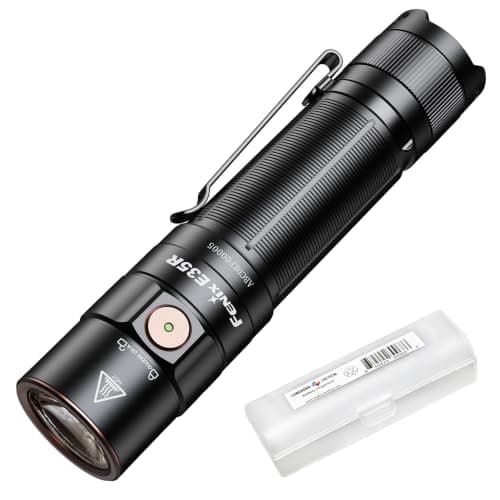
Fenix E35R
Thirty-one hundred lumens and 260 meters on a standard 21700, IP68, for well under half what the flagship costs. It is the best-value light Fenix makes here, and its specification is three numbers long — no candela, no mode table, no impact figure.
Price as of October 31, 2026 — 39 lumens per dollar. #ad How we earn
Disclosure — we earn a commission on qualifying purchases made through the Amazon links on this page, at no extra cost to you. It does not change which lights we pick or what we say about them. The full version.
How we rank. Published ANSI FL1 output divided by the live retail price, with sealed-battery lights marked down because a light you cannot re-cell is a light with an expiry date. Units we claim to have tested: 0 — we compile manufacturers' published figures and show the arithmetic instead. How we work this out.
The short answer
Buy Fenix if the light gets carried: the PD36R Pro does 2,800 lumens at 169 grams with IP68, a replaceable 21700 and USB-C, and it is the only light here whose maker states the standard its figures were measured to. Buy Maglite if the light sits still: the ML300LX 3-Cell D publishes 403 meters and 40,596 candela against the Fenix flagship's 380 meters and 36,600, and it holds its full 746 lumens for 32 hours against the Fenix's three and a half — on three D cells, for forty percent of the price.
That is not the result anyone expects, so the rest of this page is mostly about why it happens and what it costs. Both sets of figures are the manufacturers' own, and one important caveat about comparing them is set out below rather than buried at the bottom.
Throw is not lumens, and this is the clearest proof on the site
Beam distance is governed by beam intensity, measured in candela, which is a function of how tightly the optics concentrate the light rather than how much of it there is. A big reflector concentrates better than a small one. That is all the ML300LX is doing: its head is 57 millimeters across against the PD36R Pro's much smaller aperture, and it converts 746 lumens into 40,596 candela where the Fenix converts 2,800 into 36,600.
So the Maglite reaches 403 published meters and the Fenix 380, on roughly a quarter of the light output. If you have ever wondered why this site keeps saying lumens are the wrong number to shop on, this pair is the answer in two rows of a table.
Runtime is where it stops being close
The ML300LX publishes 32 hours at its full 746 lumens. Not 32 hours on a dimmed setting — 32 hours at the output on the box, plus 112 hours on low and 298 in eco. The PD36R Pro publishes 3 hours 30 minutes at 2,800 lumens, and Fenix says plainly that this figure is a blended total including the reduced output after thermal step-down.
Three D cells simply hold more energy than one 21700, and a 298-millimeter aluminum tube sheds heat well enough to keep the emitter at full output instead of stepping it down. None of that is clever. It is volume, and you carry the volume: 748 grams against 169.
The cost of winning at throw
A reflector that concentrates 746 lumens into 40,596 candela is doing so by putting most of the light into a narrow hotspot, and that is actively unhelpful close up. Point the ML300LX at something an arm's length away and the hotspot blows out your pupil response while everything around it goes black. The same geometry that reaches 403 meters makes the light worse at the thing most people use a flashlight for, which is finding something in a cupboard.
The Fenix is the more usable object at arm's length for exactly the inverse reason: more total light, spread wider, from a smaller aperture. If you only own one light and it has to do both jobs, that is a real argument for the Fenix that has nothing to do with the headline figures — and it is why this site keeps a separate page for spotlights rather than ranking them against handhelds.
What each one costs to keep
The Fenix charges over USB-C from a cable you already own, so after the purchase the running cost is effectively nothing until the cell wears out, at which point a standard 21700 replaces it. The three Maglites here have no charging at all: the ML300LX eats three D cells, the ML50LX two C cells and the Mini Pro two AA, and those are a recurring cost for as long as you own the light.
Which is cheaper depends entirely on how often the light runs, and that is the honest answer rather than a dodge. A light used for five minutes a week will go years on one set of alkalines and the Maglite wins on every measure including cost. A light used for an hour a night is a different calculation, and the rechargeable wins it quickly. Maglite does sell rechargeable models — we cover the MAG-TAC Rechargeable on the Maglite range page — but none of them matches the 32-hour figure that makes the D-cell light interesting in the first place.
| # | Light | Max output | Battery | Lumens / $ | Price |
|---|---|---|---|---|---|
| 1 | Fenix E35R Most output per dollar in the Fenix range | 3,100 | Replaceable | 39 | $79.95 on Amazon Price as of October 31, 2026 — 39 lumens per dollar. #ad How we earn |
| 2 | 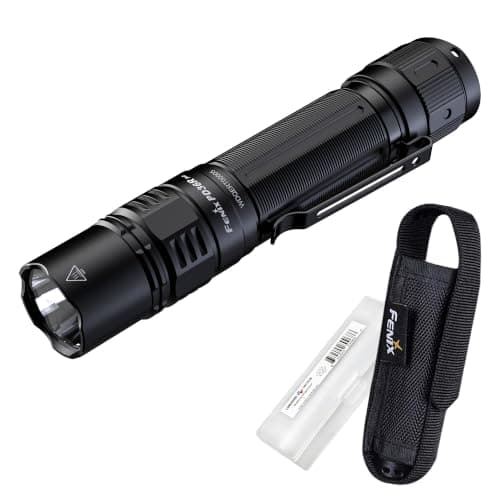 Fenix PD36R Pro The most completely documented light on this site | 2,800 | Replaceable | 23 | $120.45 on Amazon Price as of October 31, 2026 — 23 lumens per dollar. #ad How we earn |
| 3 | 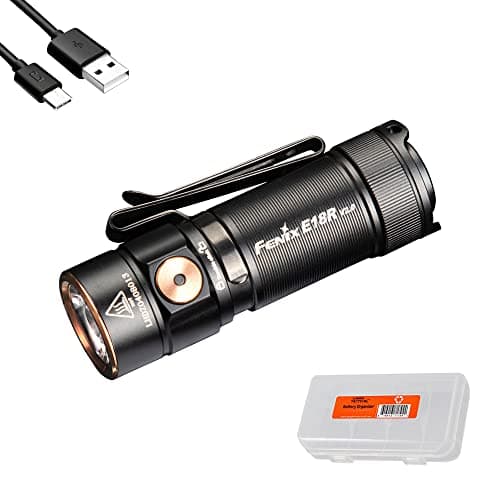 Fenix E18R V2.0 Best all-round Fenix pocket light | 1,200 | Replaceable | 20 | $59.95 on Amazon Price as of October 31, 2026 — 20 lumens per dollar. #ad How we earn |
| 4 | 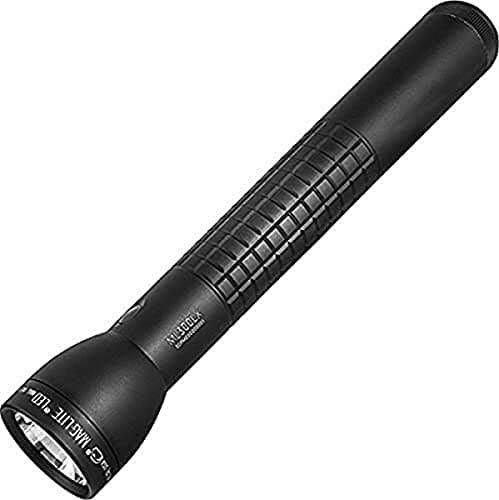 Maglite ML300LX 3-Cell D The longest published runtime on this site | 746 | Replaceable | 15 | $49.99 on Amazon Price as of October 31, 2026 — 15 lumens per dollar. #ad How we earn |
| 5 | 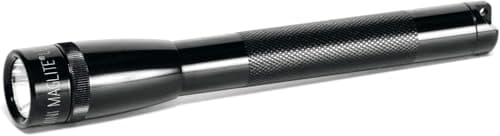 Maglite Mini Maglite Pro LED Best AA pocket light in either range | 332 | AA / AAA | 13 | $24.99 on Amazon Price as of October 31, 2026 — 13 lumens per dollar. #ad How we earn |
| 6 | 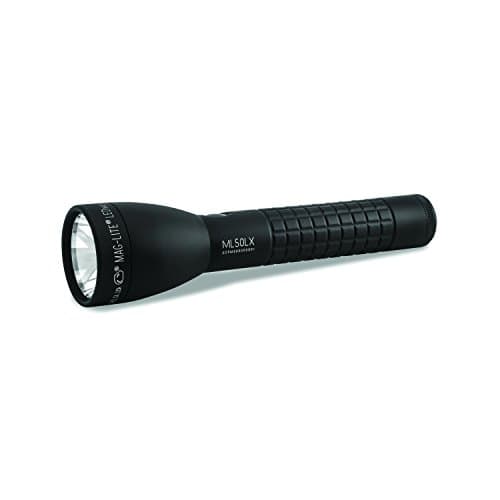 Maglite ML50LX 2-Cell C Best all-round Maglite | 466 | Replaceable | 11 | $43.61 on Amazon Price as of October 31, 2026 — 11 lumens per dollar. #ad How we earn |
Prices pulled October 31, 2026. Lumens per dollar is the manufacturer's published maximum output divided by that price, recomputed every time the price moves.
What the Fenix money actually buys
Four things, and they are not lumens.
- 1.Water resistance. Fenix publishes IP68 on the PD36R Pro and the E35R — submersible, as a code you can look up. Every Maglite on this page is IPX4, which covers rain and not a puddle. If the light might go in water this is the whole decision and the Maglite is not in it.
- 2.Weight and size. One hundred and sixty-nine grams against 748. The PD36R Pro goes in a jacket pocket; the ML300LX goes in a truck. A light that does not get carried produces no light.
- 3.Provenance. Fenix states ANSI/PLATO FL1 conformity on its flagship. Maglite publishes complete tables — lumens, candela, beam distance and runtime for high, low and eco — and never says how any of it was measured. More rows, less traceability.
- 4.A rechargeable standard cell. The PD36R Pro and E35R take a 21700 you can buy anywhere and charge over USB-C in the body. The D, C and AA Maglites here have no charging at all, so the running cost is alkaline cells forever.
And what the Maglite money buys
Endurance and indifference to time. There is no cell to degrade in any of these three Maglites, so a light bought today and ignored for three years works when you pick it up, which is not true of anything with a lithium pack in it. D and C alkalines store for years and are sold in every shop on earth.
Then the economics. The ML300LX costs around forty percent of the PD36R Pro, and Maglite publishes a ten-year limited warranty and still sells spare parts for lights it made decades ago. Our lumens-per-dollar column cannot see cost per decade, which is why we write it out in prose on every Maglite page.
The three pairs
| Job | Light | Max output | Runtime at max | Throw | Water | Weight |
|---|---|---|---|---|---|---|
| Reach | Fenix PD36R Pro | 2,800 lumens | 3 h 30 min | 380 m, 36,600 cd | IP68 | 169 g |
| Reach | Maglite ML300LX 3-Cell D | 746 lumens | 32 hours | 403 m, 40,596 cd | IPX4 | 748 g |
| General | Fenix E35R | 3,100 lumens | Not published | 260 m, no candela | IP68 | 148 g |
| General | Maglite ML50LX 2-Cell C | 466 lumens | 8 h 15 min | 291 m, 21,197 cd | IPX4 | 361 g |
| Fenix E18R V2.0 | 1,200 lumens | Not published | 146 m, no candela | No IP code | 56 g | |
| Maglite Mini Pro LED | 332 lumens | 2 h 30 min | 172 m, 7,399 cd | IPX4 | 118 g |
Read the throw column and the surprise repeats itself down the page. The Maglite publishes a candela figure in all three pairs and out-throws the Fenix in two of them — including the pocket pair, where a 332-lumen AA Maglite publishes 172 meters against a 1,200-lumen Fenix's 146. The exception is the general pair, where the Fenix E35R publishes 260 meters against the ML50LX's 291 but gives no candela figure at all, so there is nothing to check it against.
1. Most output per dollar in the Fenix range
Fenix E35R
Lumens per dollar
39
Thirty-one hundred lumens and 260 meters on a standard 21700, IP68, for well under half what the flagship costs. It is the best-value light Fenix makes here, and its specification is three numbers long — no candela, no mode table, no impact figure.
- Max output
- 3,100 lm
- Runtime
- 69 h maximum; Fenix states no mode for this figure
- Battery
- Replaceable cell
- Water rating
- IP68
What it gets right
- Thirty-one hundred lumens and 260 meters for well under half the flagship's price
- Runs on a standard 21700, the cell format with the best capacity-to-size ratio in the category
- IP68 published as a code rather than described in words
- A 50,000-hour emitter life and USB-C charging in about three hours
What it gets wrong
- One runtime figure for the whole light, with no mode attached to it
- No candela published, so the 260-meter claim cannot be checked against brands that print beam intensity
- No impact rating published on either Fenix page we read
- At 148 grams and 120 millimeters it is a jacket-pocket light rather than a trouser-pocket one
Published specification
- Maximum output: 3,100 lumens — Fenix published specification
- Maximum beam distance: 853 ft (260 m) — Fenix published specification
- Maximum runtime: 69 hours — the page does not say which mode produces it — Fenix published specification
- Battery: ARB-L21-5000 V2.0 21700 Li-ion, 5,000 mAh, inserted by unscrewing the head — Fenix published specification
- Charging: USB-C, approximately 3 hours from empty with a 5V/2A adapter — Fenix published specification
- Water rating: IP68 — Fenix published specification
- Weight: 5.22 oz (148 g) including battery — Fenix published specification
- Length: 4.72 in (120 mm) — Fenix published specification
- Emitter: Luminus SST70, around 6400K, 50,000-hour rated life — Fenix published specification
- Per-mode figures: Not published as text — the runtime chart is an image, so no per-mode lumens, candela or runtime can be cited
- Peak beam intensity: Not published on either Fenix page we read
- Impact resistance: Not published on either Fenix page we read
Skip this one if
you want the documentation Fenix is capable of. The PD36R Pro publishes lumens, runtime, distance and candela for all five of its modes; this light, from the same company, publishes three numbers.
Buy it if: anyone who wants Fenix build quality and a standard 21700 at the lowest price the brand offers it, and who will not miss the spec table.
- Output 9.0
- Battery 8.5
- Build 8.5
- Usability 7.5
- Overall 8.4
Price as of October 31, 2026 — 39 lumens per dollar. #ad How we earn
2. The most completely documented light on this site
Fenix PD36R Pro
Lumens per dollar
23
Fenix publishes lumens, runtime, beam distance AND candela for all five modes of this light — a table only four handheld spotlights on this site can match, and no other pocket light. It is not the cheapest 2,800 lumens you can buy. It is the only 2,800 lumens where you can check every claim before you spend the money.
- Max output
- 2,800 lm
- Runtime
- 3 h 30 min
- Battery
- Replaceable cell
- Water rating
- IP68
What it gets right
- Candela published for every mode — the figure that decides throw, and almost nobody prints it
- A runtime beside every lumen figure, including the 42-hour Eco mode
- Removable 21700 cell, so the light outlives its battery
- IP68 and a stated 1-meter impact rating, both numbered rather than described
What it gets wrong
- Three to four times the price of the budget 2,000-lumen lights this site usually ranks first
- The 3 h 30 min turbo figure is a total that includes the reduced output after thermal step-down, which Fenix says plainly and most buyers will still misread
- No runtime published for the 2,500-lumen strobe
- The ARB-L21-5000 is a protected button-top cell; flat-top 21700s may not make contact
Published specification
- Turbo: 2,800 lumens, 3 h 30 min, 380 m, 36,600 cd — Fenix published specification
- High: 1,000 lumens, 3 h 55 min, 225 m, 12,800 cd — Fenix published specification
- Medium: 350 lumens, 8 h 15 min, 130 m, 4,300 cd — Fenix published specification
- Low: 150 lumens, 19 hours, 90 m, 1,900 cd — Fenix published specification
- Eco: 30 lumens, 42 hours, 40 m, 400 cd — Fenix published specification
- Strobe: 2,500 lumens; no runtime published — Fenix published specification
- Emitter: Luminus SFT70, around 6500K — Fenix published specification
- Battery: 1 x ARB-L21-5000 21700 Li-ion, 5,000 mAh, removable — Fenix published specification
- Charging: USB-C, approximately 3 hours from empty with a 2A adapter — Fenix published specification
- Water rating: IP68, submersible — Fenix published specification
- Impact resistance: 1 meter — Fenix published specification
- Weight: 169 g (5.96 oz) including battery — Fenix published specification
- Length: 145.8 mm (5.74 in) — Fenix published specification
- Switches: Two tail switches: round tactical, oval functional — Fenix published specification
- Standard: Fenix states the runtime data were produced according to ANSI/PLATO FL1 at 21 +/- 3 C — Fenix published specification
Skip this one if
your budget is the point. A Sofirn SC31 Pro publishes 2,000 lumens for roughly a third of the money, and if you are never going to check a candela figure you are paying for documentation you will not read.
Buy it if: anyone who wants to know exactly what they are buying before they buy it, and who keeps a light long enough for a replaceable cell to matter.
- Output 9.5
- Battery 9.0
- Build 9.5
- Usability 9.0
- Overall 9.0
Price as of October 31, 2026 — 23 lumens per dollar. #ad How we earn
3. Best all-round Fenix pocket light
Fenix E18R V2.0
Lumens per dollar
20
Twelve hundred lumens and 146 meters from a 56-gram body 67 millimeters long, on a 16340 you can replace — and it takes a CR123A primary when the rechargeable is flat. The specification Fenix publishes for it is one line long, which on a light this good is the only disappointing thing about it.
- Max output
- 1,200 lm
- Runtime
- 200 h maximum; Fenix states no mode for this figure
- Battery
- Replaceable cell
- Water rating
- None published
What it gets right
- Twelve hundred lumens from 56 grams and 67 millimeters — the best output-to-size ratio in the Fenix range here
- The 16340 cell is user-replaceable, so the light outlives its battery
- Takes a CR123A primary as a fallback, which keeps for years and works when nothing is charged
- USB-C to full in about an hour and twenty minutes
What it gets wrong
- Fenix publishes one runtime figure for the whole light and does not say which mode it belongs to
- No candela figure, so its throw cannot be compared numerically against brands that publish one
- No IP code and no impact rating published — only the words waterproof to two meters
- A 16340 is a small cell; 1,200 lumens will not be a long mode whatever the unstated runtime says
Published specification
- Maximum output: 1,200 lumens — Fenix published specification
- Maximum beam distance: 479 ft (146 m) — Fenix published specification
- Maximum runtime: 200 hours — the page does not say which mode produces it — Fenix published specification
- Battery: Fenix ARB-L16-800P 16340 Li-ion, 3.6 V, user-replaceable — Fenix published specification
- Primary fallback: Accepts one CR123A lithium primary (not included, not rechargeable) — Fenix published specification
- Charging: USB-C, approximately 1 h 20 min from empty — Fenix published specification
- Weight: 1.98 oz (56 g) including battery — Fenix published specification
- Length: 2.64 in (67 mm); diameter 0.87 in (22 mm) — Fenix published specification
- Emitter: Luminus SST40 cool white, around 6000K — Fenix published specification
- Water resistance: Described as waterproof underwater to 6.6 ft (2 m); no IP code published on the page we read
- Per-mode figures: Not published as text — the mode table is an image, so no per-mode lumens, candela or runtime can be cited
- Impact resistance: Not published on the page we read
- Battery capacity: Not published in mAh on the page we read
Skip this one if
you need to plan around a runtime. A single 200-hour maximum with no mode attached tells you almost nothing about how long the light runs at an output you would actually use.
Buy it if: somebody who wants the smallest serious pocket light Fenix makes and values a replaceable cell plus a primary fallback over a published spec table.
- Output 8.0
- Battery 8.5
- Build 8.0
- Usability 8.0
- Overall 8.1
Price as of October 31, 2026 — 20 lumens per dollar. #ad How we earn
4. The longest published runtime on this site
Maglite ML300LX 3-Cell D
Lumens per dollar
15
Seven hundred and forty-six lumens, 40,596 candela and 403 meters from three D cells — and 32 hours of it on high. Not 32 hours on a dim setting: 32 hours at the output on the box, published by Maglite. No rechargeable light on this site comes within a factor of ten of that figure.
- Max output
- 746 lm
- Runtime
- 32 h
- Battery
- Replaceable cell
- Water rating
- IPX4
What it gets right
- Thirty-two hours at full output — the longest published high-mode runtime anywhere on this site
- Forty thousand candela and 403 meters, with the candela figure published rather than implied
- Runs on D cells from any shop, so there is no pack to degrade and nothing to charge
- Two hundred and ninety-eight hours in eco mode turns it into a twelve-day outage light
What it gets wrong
- Seven hundred and forty-eight grams with cells in — this is a club, not a carry light
- IPX4 is a splash rating; it is not a light you can drop in water
- Three D cells are not cheap, and the running cost is real if you use it regularly
- No USB-C and no rechargeable option in this model
Published specification
- Maximum output: 746 lumens — Maglite published specification
- Peak beam intensity: 40,596 cd — Maglite published specification
- Beam distance: 403 m — Maglite published specification
- Runtime, high: 32 hours — Maglite published specification
- Runtime, low: 112 hours — Maglite published specification
- Runtime, eco: 298 hours — Maglite published specification
- Battery: 3 x D cell alkaline, not included — Maglite published specification
- Water rating: IPX4 — Maglite published specification
- Drop resistance: 1 m — Maglite published specification
- Weight: 26.4 oz (748.42 g) with batteries — Maglite published specification
- Length: 11.75 in (298.45 mm) — Maglite published specification
- Barrel diameter: 1.5 in (38.1 mm) — Maglite published specification
- Head diameter: 2.25 in (57 mm) — Maglite published specification
- Per-mode output: The specification table publishes a runtime for low and eco but not their lumen figures
Skip this one if
the light has to be carried. At 298 millimeters and three quarters of a kilogram this lives in a truck, a cupboard or a hand, and anybody expecting to put it in a bag will leave it at home instead.
Buy it if: a vehicle, a workshop or a storm cupboard — anywhere the light sits still, has to work after two years untouched, and may need to stay on all night.
- Output 7.0
- Battery 9.5
- Build 8.5
- Usability 5.5
- Overall 7.6
Price as of October 31, 2026 — 15 lumens per dollar. #ad How we earn
5. Best AA pocket light in either range
Maglite Mini Maglite Pro LED
Lumens per dollar
13
Three hundred and thirty-two lumens, 7,399 candela and 172 meters on two AA cells, for less than twenty dollars. It is the cheapest light either of these brands sells here, the only pocket light of the six that takes a battery from a corner shop, and it publishes a runtime for both its modes.
- Max output
- 332 lm
- Runtime
- 2 h 30 min
- Battery
- AA / AAA
- Water rating
- IPX4
What it gets right
- Runs on two AA cells, which store for a decade and can be bought absolutely anywhere
- Three hundred and thirty-two lumens and 7,399 candela published, at the lowest price of any light here
- Runtime published for both modes: 2 hours 30 minutes high, 13 hours low
- Nothing to charge, so it works after two years in a drawer
What it gets wrong
- IPX4 only, so rain is fine and submersion is not
- A 167.8 mm barrel is long for a pocket, and it rolls
- No USB-C charging and no rechargeable option in this model
- Three hundred and thirty-two lumens is modest next to a sealed-cell pocket light of the same size
Published specification
- Maximum output: 332 lumens — Maglite published specification
- Peak beam intensity: 7,399 cd — Maglite published specification
- Beam distance: 172 m — Maglite published specification
- Runtime, high: 2 hours 30 minutes — Maglite published specification
- Runtime, low: 13 hours — Maglite published specification
- Battery: 2 x AA, included — Maglite published specification
- Water rating: IPX4 — Maglite published specification
- Drop resistance: 1 m — Maglite published specification
- Weight: 4.15 oz (117.75 g) with batteries — Maglite published specification
- Length: 6.607 in (167.8 mm) — Maglite published specification
- Head diameter: 1 in (25.4 mm) — Maglite published specification
- Barrel diameter: 0.709 in (18 mm) — Maglite published specification
Skip this one if
you want the smallest possible pocket light or the brightest one. This is a long, thin AA body, and a sealed-cell light of the same length will produce several times the output.
Buy it if: a glovebox, a toolbag or a drawer — anywhere a light has to work the first time without having been charged, and where losing it should not be expensive.
- Output 5.0
- Battery 9.0
- Build 7.5
- Usability 7.5
- Overall 7.4
Price as of October 31, 2026 — 13 lumens per dollar. #ad How we earn
6. Best all-round Maglite
Maglite ML50LX 2-Cell C
Lumens per dollar
11
Four hundred and sixty-six lumens, 21,197 candela and 291 meters on two C cells, for eight and a quarter hours on high and 109 in eco. At 361 grams it is the one size in this range that is genuinely useful in a hand and still runs all evening at full output.
- Max output
- 466 lm
- Runtime
- 8 h 15 min
- Battery
- Replaceable cell
- Water rating
- IPX4
What it gets right
- Eight and a quarter hours at full output, which almost nothing rechargeable here approaches
- Twenty-one thousand candela and 291 meters published, from a light you can hold comfortably
- C cells store for years and are sold everywhere, so nothing degrades on a shelf
- The best size-to-runtime balance in the whole Maglite range
What it gets wrong
- IPX4 only — rain is fine, submersion is not
- Four hundred and sixty-six lumens is modest against a rechargeable of the same price
- C cells are less common and more expensive than AA
- No USB-C, no rechargeable variant of this model
Published specification
- Maximum output: 466 lumens — Maglite published specification
- Peak beam intensity: 21,197 cd — Maglite published specification
- Beam distance: 291 m — Maglite published specification
- Runtime, high: 8 hours 15 minutes — Maglite published specification
- Runtime, low: 13 hours — Maglite published specification
- Runtime, eco: 109 hours — Maglite published specification
- Battery: 2 x C cell alkaline, not included — Maglite published specification
- Water rating: IPX4 — Maglite published specification
- Drop resistance: 1 m — Maglite published specification
- Weight: 12.72 oz (360.61 g) with batteries — Maglite published specification
- Length: 8.184 in (207.87 mm) — Maglite published specification
- Barrel diameter: 1.2 in (30.48 mm) — Maglite published specification
- Head diameter: 1.977 in (50.22 mm) — Maglite published specification
- Per-mode output: The specification table publishes a runtime for low and eco but not their lumen figures
Skip this one if
you want the brightest light for the money. A direct-selling rechargeable will produce several times this output for the same price; what you give up is the eight-hour runtime and the shelf life.
Buy it if: the person who wants one Maglite and does not want a club — a kitchen drawer, a glovebox, or a hand on a long walk.
- Output 6.0
- Battery 9.0
- Build 8.5
- Usability 7.5
- Overall 7.8
Price as of October 31, 2026 — 11 lumens per dollar. #ad How we earn
Where each one is the wrong answer
- The light will get wet — Fenix, and not Maglite. IPX4 across the Maglite range against IP68 on two of the three Fenix lights is the one gap on this page with no argument on the other side.
- The light has to be carried every day — Fenix. Even the smallest Maglite here is a 167-millimeter AA tube at 118 grams, and the E18R V2.0 is 56 grams and 67 millimeters.
- The light sits in a truck, a cupboard or a storm shelf — Maglite. Nothing with a lithium cell competes with an alkaline light that has been ignored for two years, and 32 hours at full output is a different category of figure.
- You are buying on lumens per dollar — neither. Sofirn publishes 3,800 lumens with a full five-mode table for around fifty dollars, and we compare it against Fenix directly. Both brands here charge for something other than output.
- You need a documented runtime from Fenix on anything but the flagship — look elsewhere in the range or at another brand. The E35R and E18R V2.0 publish one bare maximum each with no mode attached to it.
How we ranked these
Published output over the live price, adjusted for battery architecture and published ratings, as on every page here. Three adjustments shape this table. A maximum runtime with no mode attached earns no credit as a runtime, which costs the two mid-range Fenix lights. An alkaline light with no cell to degrade is credited for that, which lifts all three Maglites. And IPX4 against IP68 is scored as the real gap it is, which pulls the Maglites back down — so the ordering ends up closer than either the price list or the throw column alone would suggest.
Units we claim to have tested: 0
Every publisher in this category says they tested twenty flashlights. We have not tested any, and we say so. What we do instead: compile the manufacturer's own published ANSI FL1 figures, pull the price the light is selling for right now, and divide one by the other. Every number on this page is one you can check yourself in about two minutes.
What we cannot tell you
We have not used any of these six lights. The central comparison on this page rests on two manufacturers' own beam figures, only one of which comes with a stated test method, so we have flagged the 403-versus-380 result as directional rather than measured and we are not going to present it as more than that. We also cannot tell you how either brand's warranty service behaves, whether a Maglite really outlives a Fenix by the margin its ten-year warranty implies, or how the units you receive compare with the specifications. This page compares what each maker publishes against what each light costs today.
Common questions
Is Fenix or Maglite better?
For a light you carry, Fenix: 2,800 lumens at 169 grams with IP68, a replaceable 21700, USB-C charging and a stated test standard behind its figures. For a light that sits still, Maglite has the stronger case than most people expect — the ML300LX 3-Cell D publishes 403 meters and 40,596 candela against the Fenix flagship's 380 and 36,600, holds its full output for 32 hours against three and a half, and costs about forty percent as much. The gap Maglite cannot close is water resistance: IPX4 against IP68.
Does a Maglite really throw further than a Fenix?
On published figures, yes, in two of our three pairs — and it is a genuine optical result, not a fluke. Beam distance is governed by candela, which depends on how tightly the reflector concentrates light rather than on total lumens, and the ML300LX has a 57-millimeter head. One caveat matters: Fenix states its figures were produced to ANSI/PLATO FL1 and Maglite states no standard at all, so a 23-meter margin is inside what two different test methods could produce. Treat it as directional.
Why does a 746-lumen Maglite last 32 hours and a 2,800-lumen Fenix only three?
Energy and heat. Three D cells hold far more energy than a single 21700, and a 298-millimeter aluminum tube sheds heat well enough to run the emitter at full output continuously instead of stepping it down. Fenix says plainly that its 3 h 30 min turbo figure is a blended total including the reduced output after thermal step-down. The trade is that you carry the difference: 748 grams against 169.
Are Maglite flashlights waterproof?
Not on the evidence Maglite publishes. Every model on this page is rated IPX4, which covers rain and splashing but not submersion, and on its ML150LR flagship Maglite publishes no IP rating at all. Fenix publishes IP68 on both the PD36R Pro and the E35R, which means submersible, although its E18R V2.0 publishes no IP code either and describes its water resistance in words instead.
How many lumens do I actually need?
For walking a dog, finding a fuse box or reading a map, 100 to 300 lumens is plenty and will run far longer. For a garage, a yard or a campsite, 500 to 1,000 lumens is comfortable. Above about 2,000 lumens you are buying a burst rather than a mode, because almost no handheld light can shed that much heat continuously.
Sources
- Fenix published product specifications — read 2026-09-01; PD36R Pro product page read 2026-10-18; E18R V2.0 and E35R read 2026-10-23 on fenixlighting.com, E35R IP68 confirmed on fenixlight.com the same day
- Fenix PD36R Pro reference manual and specifications — the manufacturer's own reference manual, which is where the per-mode lumen, runtime, beam-distance and candela table lives — the retail product page publishes only the maximums. Read 2026-10-18
- Maglite published product specifications — ML150LR read 2026-09-01; MAG-TAC Rechargeable (plain bezel) and Mini Maglite Pro LED read 2026-10-10; ML300LX 3-Cell D and ML50LX 2-Cell C read 2026-10-13
- Sofirn published product specifications — SC31 Pro and SC21 Pro read 2026-09-01; ST10, SP35T and Q8 Plus read 2026-10-24 on the US Sofirn store
- Lumen & Ledger method — how every figure on this page is derived
Who writes this
Scooter M. — I am an enthusiast who is genuinely into this. I read the manuals, compile the published specs, and do the math. No lab coat, no test bench, no drawer of free samples. What I can tell you is exactly what a light claims on paper, exactly what it costs right now, and what those two numbers mean when you divide one by the other.
Read next
Best Fenix flashlights
One range, two completely different spec sheets. Check the model, not the brand.
Best Maglite flashlights
The range is battery size, not brightness — and the cheap ones run longest.
Maglite vs Streamlight
Maglite throws farther and publishes candela. Streamlight publishes IPX7.
Sofirn vs Fenix
One publishes more rows. The other publishes how it measured them.
Lumens vs candela
One measures how much light there is. The other measures how far it goes.
The Ledger
Every light we cover in one ranked table, sorted by lumens per dollar.