Where to Buy
Rechargeable Flashlights at Lowe's: What's Actually Worth Buying
The flashlights are in two places in this store, and which aisle you are standing in should change what you buy.
By Scooter M. · Published September 21, 2026
Short answer
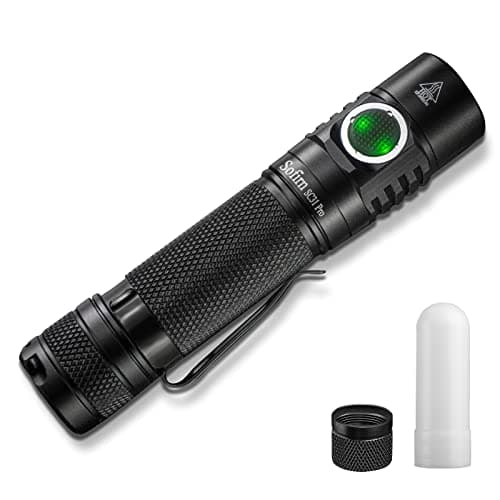
Sofirn SC31 Pro
Two thousand published lumens out of a standard 18650 you can buy anywhere for a few dollars, in a light that costs less than most brands charge for a keychain. The cell is the whole argument: when it dies in three years you replace a battery, not a flashlight.
Price as of September 21, 2026 — 47 lumens per dollar. #ad How we earn
Disclosure — we earn a commission on qualifying purchases made through the Amazon links on this page, at no extra cost to you. It does not change which lights we pick or what we say about them. The full version.
How we rank. Published ANSI FL1 output divided by the live retail price, with sealed-battery lights marked down because a light you cannot re-cell is a light with an expiry date. Units we claim to have tested: 0 — we compile manufacturers' published figures and show the arithmetic instead. How we work this out.
Two aisles, and they are not the same shop
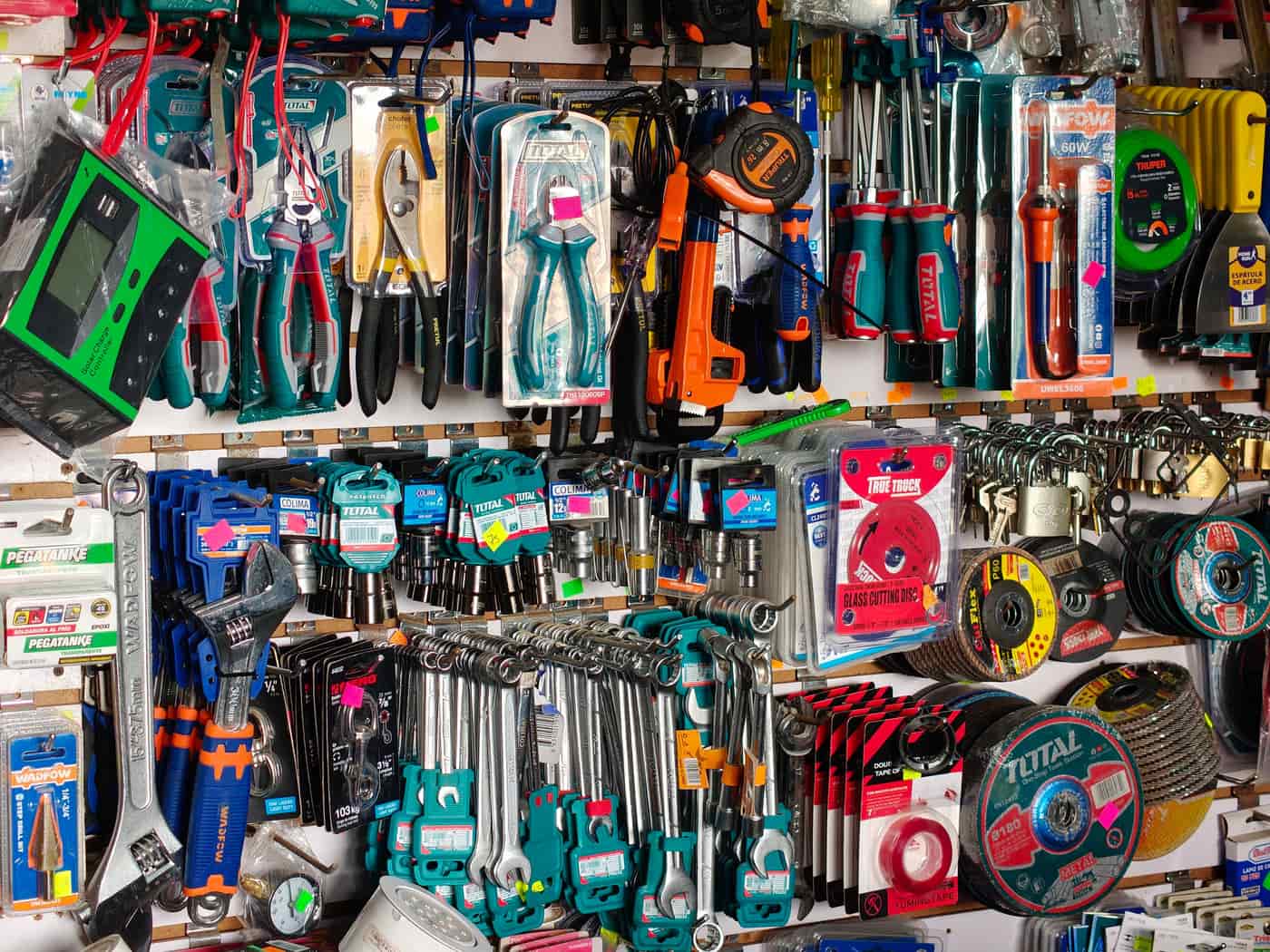
A home-improvement retailer sells portable light in two separate places, and they follow different rules. In the tool aisle you will find work lights built around a cordless battery platform — at Lowe's that is largely Kobalt, its own exclusive tool brand — and those are worth buying only if you already own the platform. In the lighting and electrical aisle you will find general household flashlights, including the Utilitech house brand, sold on price and headline lumens with far less published data behind them. Know which aisle you are in before you compare anything.
This is the practical difference between a home-improvement store and a general retailer, and it is why the same shop can be an excellent place and a poor place to buy a flashlight on the same trip.
| # | Light | Max output | Battery | Lumens / $ | Price |
|---|---|---|---|---|---|
| 1 | Sofirn SC31 Pro Best lumens per dollar overall | 2,000 | Replaceable | 47 | $42.99 on Amazon Price as of September 21, 2026 — 47 lumens per dollar. #ad How we earn |
| 2 | 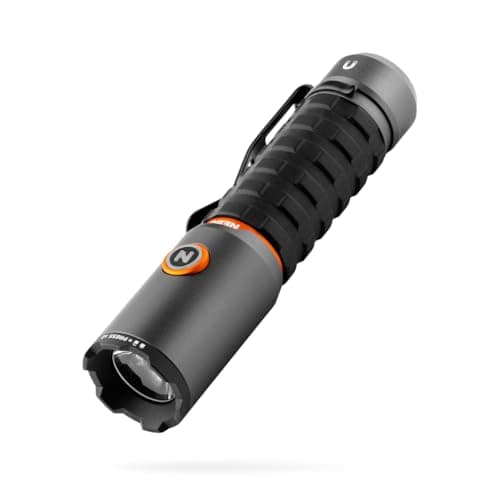 NEBO TORCHY 3K Best big-box light if you want the headline number | 3,000 | Sealed | 43 | $69.99 on Amazon Price as of September 21, 2026 — 43 lumens per dollar. #ad How we earn |
| 3 | 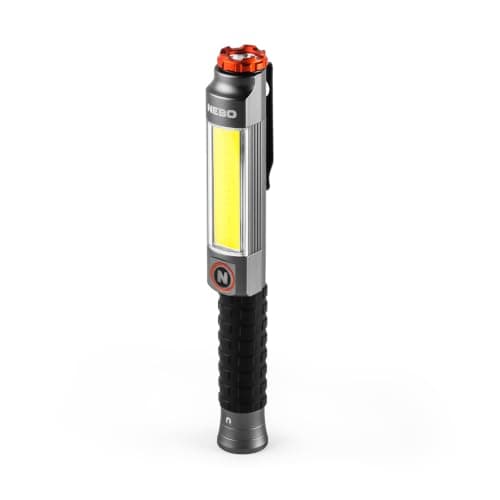 NEBO BIG LARRY 3 Best cheap magnetic work light | 600 | AA / AAA | 36 | $16.64 on Amazon Price as of September 21, 2026 — 36 lumens per dollar. #ad How we earn |
| 4 | 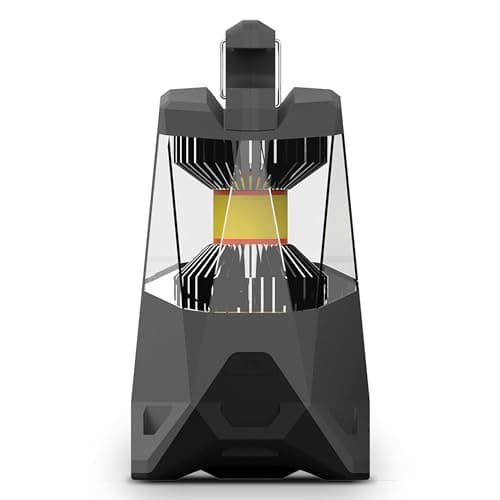 NEBO GALILEO 1000 Best dual-power lantern for an outage | 1,000 | Replaceable | 17 | $58.85 on Amazon Price as of September 21, 2026 — 17 lumens per dollar. #ad How we earn |
| 5 | 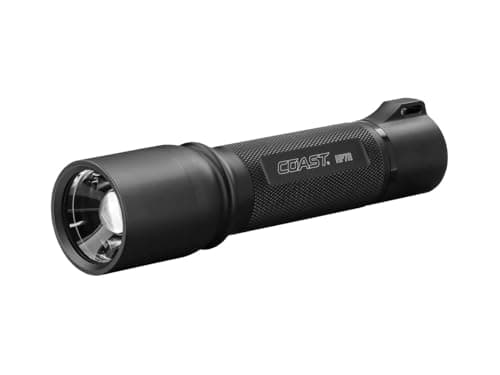 COAST HP7R Longest published runtime in this roundup | 300 | Replaceable | 3 | $90.49 on Amazon Price as of September 21, 2026 — 3 lumens per dollar. #ad How we earn |
Prices pulled September 21, 2026. Lumens per dollar is the manufacturer's published maximum output divided by that price, recomputed every time the price moves.
The platform question, before anything else
If you own Kobalt cordless tools, check whether a work light exists for your battery platform before you look at anything else in the store. The arithmetic changes completely: you already own the expensive part, the packs are large enough that runtime stops being a constraint, and swapping a flat one takes two seconds. No self-contained rechargeable can compete with a battery you already paid for.
If you do not own the platform, ignore platform lights entirely. Buying into a cordless battery system in order to own a work light is the most expensive possible way to own a work light, and the starter-kit pricing that makes it look reasonable is not doing you a favor.
Reading the lighting aisle
The general flashlight section is a different proposition. It is priced for someone who needs a light today, it leans on house brands and mainstream names, and the packaging tends to carry a large lumen figure and very little else. That is not dishonesty so much as a retail convention: the box has room for one number and the number that sells is output.
- 1.Turn the box over and look for a runtime figure. If the only number is a maximum output, you cannot calculate anything, and that is the point at which our rankings become more useful than the shelf.
- 2.Check whether the runtime that is printed belongs to the mode on the front. Several mainstream lights publish a full mode table with no runtime for the headline turbo mode — NEBO's TORCHY 3K is a clear example, printing two hours at 800 lumens and nothing at 3,000.
- 3.Find out whether the battery is replaceable. Built-in cells make the light a consumable with a service life rather than a tool; a light with a standard cell can be re-celled for a few dollars.
- 4.Look for a published IP or IPX rating. Water resistant on a box without a figure is a marketing phrase, not a specification.
- 5.Decide whether you want flood or throw. A tool-aisle flood panel and a lighting-aisle handheld are solving different problems, and a lot of disappointment comes from buying one expecting the other.
1. Best lumens per dollar overall
Sofirn SC31 Pro
Lumens per dollar
47
Two thousand published lumens out of a standard 18650 you can buy anywhere for a few dollars, in a light that costs less than most brands charge for a keychain. The cell is the whole argument: when it dies in three years you replace a battery, not a flashlight.
- Max output
- 2,000 lm
- Runtime
- Not published per mode
- Battery
- Replaceable cell
- Water rating
- IPX8
What it gets right
- Standard 18650 cell — replacements cost a few dollars and are sold everywhere
- IPX8, the strongest water rating in this price class
- USB-C charging built into the light, so no separate charger to lose
- Anduril firmware gives real ramping control rather than four fixed steps
What it gets wrong
- Sofirn publishes no per-mode runtime figures on the product page
- Anduril is genuinely confusing for the first week
- Tint varies between batches, which is the price of this price
Published specification
- Maximum output: 2,000 lumens — Sofirn published specification
- Beam distance: 226 m — Sofirn published specification
- Battery: 1 x 18650 Li-ion, user replaceable — Sofirn published specification
- Charging: USB-C, 2.5 hours with a 2A adapter — Sofirn published specification
- Water rating: IPX8 — Sofirn published specification
- Weight: 59 g without battery — Sofirn published specification
- Length: 117.5 mm — Sofirn published specification
- Emitter: SST40, 5000K or 6500K — Sofirn published specification
- Per-mode runtime: Not published on the product page
Skip this one if
you want to press one button and get one brightness. Anduril has a shortcut for everything and a menu for everything else, and if that sounds tiring you will be happier with a three-mode light.
Buy it if: anyone who intends to keep the light for longer than the battery lasts, and does not mind reading a manual once.
- Output 9.0
- Battery 9.5
- Build 8.0
- Usability 7.0
- Overall 8.6
Price as of September 21, 2026 — 47 lumens per dollar. #ad How we earn
2. Best big-box light if you want the headline number
NEBO TORCHY 3K
Lumens per dollar
43
Three thousand lumens on the box, and NEBO publishes a runtime for every mode except that one. High is 800 lumens for two hours, which is the number to plan around. Read the spec table and the light tells you what it really is.
- Max output
- 3,000 lm
- Runtime
- Not published at turbo; 2 h at 800 lm high
- Battery
- Sealed
- Water rating
- IPX6
What it gets right
- NEBO publishes a full mode-by-mode table, which is more than several rivals manage
- USB-C, magnetic base, detachable clip
- Sold in stores you can drive to, and returnable to the same counter
What it gets wrong
- The battery is built in — when it dies the whole light is refuse
- No runtime published for the 3,000-lumen mode the box is named after
- IPX6 is splash and rain, not submersion
Published specification
- Turbo: 3,000 lumens, 150 m — no runtime published — NEBO published specification
- High: 800 lumens, 2 hours, 80 m — NEBO published specification
- Medium: 250 lumens, 3.5 hours, 40 m — NEBO published specification
- Low: 50 lumens, 20 hours, 20 m — NEBO published specification
- Battery: 2,200 mAh 3.7V Li-ion, built in — NEBO published specification
- Recharge time: 2 hours, USB-C — NEBO published specification
- Water rating: IPX6 — NEBO published specification
Skip this one if
you expect the 3K on the label to be a mode you can use. The mode you will actually use is the 800-lumen one, and there are cheaper lights that do 800 lumens for two hours.
Buy it if: somebody who wants a decent light today, from a shop, with a receipt.
- Output 8.5
- Battery 4.0
- Build 7.5
- Usability 8.0
- Overall 7.0
Price as of September 21, 2026 — 43 lumens per dollar. #ad How we earn
3. Best cheap magnetic work light
NEBO BIG LARRY 3
Lumens per dollar
36
A 600-lumen COB panel, a 220-lumen spot and a red task mode, on three AA cells, with a magnet strong enough to hold it under a hood. It is the least glamorous light here and it is the one that gets used most.
- Max output
- 600 lm
- Runtime
- Not published per mode
- Battery
- AA / AAA
- Water rating
- None published
What it gets right
- A flood panel is the right shape of light for working on something close up
- AA cells, so it survives a year in a toolbox and still lights
- The magnet is strong enough to matter
What it gets wrong
- NEBO publishes no runtime and no water rating for this model
- COB panels have poor color rendering as a class
- Not rechargeable, so the running cost is AA cells
Published specification
- COB work light: 600 lumens high / 150 lumens low — NEBO published specification
- Spot flashlight: 220 lumens high / 60 lumens low — NEBO published specification
- Red task light: 40 lumens high / 12 lumens low — NEBO published specification
- Battery: 3 x AA (included) — NEBO published specification
- Weight: 0.42 lb — NEBO published specification
- Fittings: Magnetic base, steel belt clip, wall-mount hole — NEBO published specification
- Per-mode runtime: Not published on the product page
- Water rating: Not published on the product page
Skip this one if
you need to see color accurately. For paint matching or diagnosing a wiring loom, a high-CRI light is worth the extra money.
Buy it if: the toolbox, the trunk and the shelf above the workbench.
- Output 6.5
- Battery 7.0
- Build 7.5
- Usability 8.5
- Overall 7.3
Price as of September 21, 2026 — 36 lumens per dollar. #ad How we earn
4. Best dual-power lantern for an outage
NEBO GALILEO 1000
Lumens per dollar
17
A thousand lumens for ninety minutes, or a hundred lumens for ten and a half hours, and it takes D cells when the pack is flat. In an outage the second number and the D cells are the ones that matter.
- Max output
- 1,000 lm
- Runtime
- 1.5 h
- Battery
- Replaceable cell
- Water rating
- None published
What it gets right
- Runs on D cells when the rechargeable pack is dead, which is the whole point in an outage
- Runtime published for all five modes
- USB output doubles it as a phone power bank
What it gets wrong
- NEBO states water resistance without publishing an IP figure
- Ninety minutes at full output is short for a lantern
- Half a pound before you add D cells
Published specification
- High 360 degrees: 1,000 lumens, 1.5 hours, 21 m — NEBO published specification
- High 120 degrees: 300 lumens, 6 hours, 17 m — NEBO published specification
- Low, fully dimmed: 100 lumens, 10.5 hours, 7 m — NEBO published specification
- Red high: 15 lumens, 12 hours — NEBO published specification
- Red low: 2 lumens, 30 hours — NEBO published specification
- Battery: Flex-Power: included rechargeable pack or D cells — NEBO published specification
- Weight: 0.5 lb — NEBO published specification
- Water rating: Water and impact resistant; no IP figure published — NEBO published specification
Skip this one if
you want a lantern for camping in the rain. Without a published IP rating, plan on keeping it under cover.
Buy it if: a kitchen table during a storm, and the shelf it lives on the rest of the year.
- Output 7.5
- Battery 7.5
- Build 7.0
- Usability 8.0
- Overall 7.5
Price as of September 21, 2026 — 17 lumens per dollar. #ad How we earn
5. Longest published runtime in this roundup
COAST HP7R
Lumens per dollar
3
Three hundred lumens, a 352-meter beam and up to 33 hours of runtime on a removable ZITHION-X pack. It is the opposite of a turbo-number light: modest output, enormous endurance, and a cell you can replace.
- Max output
- 300 lm
- Runtime
- Up to 33 h
- Battery
- Replaceable cell
- Water rating
- None published
What it gets right
- Thirty-three hours of published runtime, which almost nothing else here approaches
- Removable battery pack sold as a separate part
- 352 m of throw from only 300 lumens — good optics beat brute force
What it gets wrong
- Three hundred lumens will disappoint anyone shopping by the big number
- COAST does not publish a water rating on this product page
- Its lumens-per-dollar figure will always look poor next to an 18650 light
Published specification
- Maximum output: 300 lumens — COAST published specification
- Beam distance: 352 m — COAST published specification
- Runtime: Up to 33 hours — COAST published specification
- Battery: ZX800 ZITHION-X, 2,400 mAh 3.7V, removable — COAST published specification
- Focus: Pure Beam focusing optic — COAST published specification
- Water rating: Not published on the product page
Skip this one if
you are ranking purely on lumens per dollar. This light loses that contest and wins the runtime one, and which of those matters is a question about you, not the light.
Buy it if: long shifts, night walks and anyone who would rather have light for a day than light for an hour.
- Output 5.5
- Battery 8.5
- Build 8.0
- Usability 8.0
- Overall 7.5
Price as of September 21, 2026 — 3 lumens per dollar. #ad How we earn
Headlamps in a home-improvement store
Headlamps in this channel are work headlamps: bright, flood-biased, built for a jobsite rather than a trail, and usually heavier than what an outdoor retailer sells. If you want a lamp for working on something with both hands, that bias is in your favor and the assortment is reasonable.
If you want a headlamp for running, camping or reading, this is the wrong channel. The specifications that matter for those — low weight, a published low-mode burn time, a red mode, a warm tint — are exactly the ones a jobsite lamp is not designed around, and the brands that publish them well are not usually stocked here.
Where this channel costs you money
Pocket lights and general-purpose handhelds, for the same reason as every other physical retailer we have looked at: the direct-selling brands that dominate our value tables have no shelf presence at all. A budget 18650 light with a replaceable cell and a published output that beats most of the aisle is not sold here and will not be.
That is worth stating plainly rather than burying, because it is the honest answer to why one of the picks on this page is a brand you will not find in the store. If the most light per dollar is what you want, buy it elsewhere and use this channel for the two things it genuinely does better: work lighting, and being able to hold the thing before you buy it.
What a physical store is genuinely worth
- Handling it. Switch feel, weight in the hand and whether a clip is stiff enough are things no spec sheet conveys.
- Returning it. A receipt and a counter you can drive to is worth real money on a tool, and worth more if it fails in month eleven.
- Today. A light you can buy this afternoon during an outage beats a better light arriving on Thursday.
- Battery platform continuity, if you already own cordless tools.
What a house brand actually is
Kobalt and Utilitech are not manufacturers in the way NEBO or Streamlight are. They are labels the retailer owns and specifies, with the actual production placed with contract manufacturers, and that arrangement has consequences worth understanding before you buy under one.
The good part is price and returns. Cutting out a brand's marketing usually buys you more hardware per dollar, and a house brand is returnable to the same counter that sold it, under a policy the retailer controls end to end. For a work light that might get dropped, that is worth real money.
The less good part is specification and continuity. House-brand packaging tends to publish less than a national brand's does — often a lumen figure and little else — which is precisely the situation the rankings on this site exist for. And because the underlying supplier can change between production runs, the model you liked may behave differently when you replace it in three years, even with the same name on the box.
None of that makes house brands a bad buy. It makes them a buy to judge item by item on what the box actually publishes, rather than on the name, which is true of every brand here but easier to forget when the name belongs to the shop.
Buying a flashlight during an outage
A meaningful share of flashlight purchases at a home-improvement store happen on the worst possible day: the power is out, a storm is coming, the good stock went hours ago and you are choosing between whatever is left. It is worth having a rule for that.
- 1.Buy batteries first, and buy the format you already own. A mediocre light with cells is infinitely better than a good light without them.
- 2.Prefer a light that takes AA or D cells over a rechargeable one, because in an outage a rechargeable is a fixed amount of light and a cell-powered light is as much light as you have batteries.
- 3.Take a lantern or a flood over a thrower. Indoors during an outage you need to light a room, not see across a field.
- 4.Check for a runtime figure on the back of the box, and if two lights are similar, buy the one that prints one.
- 5.Buy two cheap lights rather than one good one. Outages are long, households have more than one room, and a single light becomes an argument.
That is the one situation where this channel genuinely beats buying online, and it is worth planning for on a day when the shelves are full rather than on the day they are not.
How we ranked these
Published output over the live price, adjusted for battery architecture and published ratings, weighted here toward the things that actually differ in this channel: whether a mode-by-mode runtime table exists, whether the cell is replaceable, and whether the light is the right shape for work rather than for a pocket.
Units we claim to have tested: 0
Every publisher in this category says they tested twenty flashlights. We have not tested any, and we say so. What we do instead: compile the manufacturer's own published ANSI FL1 figures, pull the price the light is selling for right now, and divide one by the other. Every number on this page is one you can check yourself in about two minutes.
We do not publish a stock list for this retailer. Assortments change week to week and store to store, and a list written today would be wrong by the time you read it. What does not change is how to read the shelf, and that is what this page is for.
Common questions
Does Lowe's sell good rechargeable flashlights?
For work lighting, yes — flood panels, magnetic bar lights and lights that share a battery platform with cordless tools are what a home-improvement retailer does well, and being able to handle one before buying matters for a tool. For a pocket light or for the most light per dollar, no: the direct-selling budget brands that lead our value rankings have no shelf presence in any physical chain, including this one.
What flashlight brands does Lowe's carry?
We do not publish a stock list for any retailer, because assortments change week to week and store to store and a list written today would be wrong by the time you read it. What is stable is the structure: Lowe's sells its own exclusive brands, including Kobalt in tools and Utilitech in electrical and lighting, alongside mainstream national brands. Check the box for a published runtime and an IP rating rather than shopping by the name on it.
Should I buy a work light that uses my Kobalt batteries?
If you already own Kobalt cordless tools, yes — you have paid for the expensive part, the packs are large enough that runtime stops being a constraint, and swapping a flat one takes seconds. If you do not own the platform, no. Buying into a cordless battery system for a single work light is the most expensive route to one, however reasonable the starter-kit price looks.
How many lumens do I actually need?
For walking a dog, finding a fuse box or reading a map, 100 to 300 lumens is plenty and will run far longer. For a garage, a yard or a campsite, 500 to 1,000 lumens is comfortable. Above about 2,000 lumens you are buying a burst rather than a mode, because almost no handheld light can shed that much heat continuously.
Sources
- NEBO published product specifications — mode-by-mode lumen, runtime and beam figures, read 2026-09-01
- COAST published product specifications — read 2026-09-01
- Sofirn published product specifications — read 2026-09-01
- Lowe's, Our Brands — Lowe's own listing of its exclusive house brands, including Kobalt and Utilitech, read 2026-09-21
- Lumen & Ledger method — how every figure on this page is derived
Who writes this
Scooter M. — I am an enthusiast who is genuinely into this. I read the manuals, compile the published specs, and do the math. No lab coat, no test bench, no drawer of free samples. What I can tell you is exactly what a light claims on paper, exactly what it costs right now, and what those two numbers mean when you divide one by the other.
Read next
Rechargeable flashlights at Home Depot
A tool aisle sells tool lights. That is a real advantage and a real limitation.
Rechargeable flashlights at Menards
A lumber-yard light aisle, and how to shop it against an online price.
Where to buy a rechargeable flashlight near you
Which aisle to walk to, what a store can give you that a website cannot, and when to drive.
Best rechargeable work lights
Flood beats throw at arm's length, and color rendering beats both.
Rechargeable flashlights on Amazon
Why the listings look the way they do, and how to read one without being misled.
The Ledger
Every light we cover in one ranked table, sorted by lumens per dollar.