Where to Buy
Where to Buy a Rechargeable Flashlight Near You
Four kinds of store near you sell these, and they are good at different things. Here is which one to drive to, and when not to drive at all.
By Scooter M. · Published September 9, 2026
Short answer
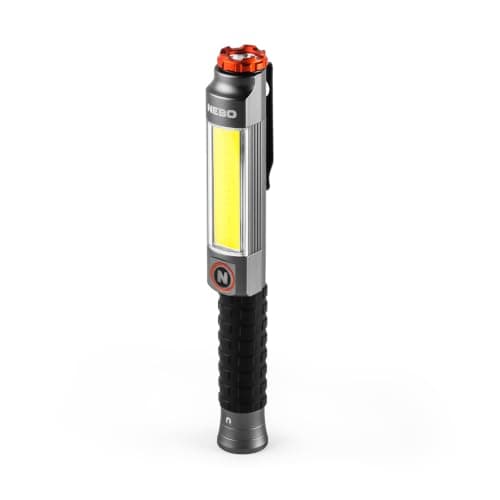
NEBO BIG LARRY 3
A 600-lumen COB panel, a 220-lumen spot and a red task mode, on three AA cells, with a magnet strong enough to hold it under a hood. It is the least glamorous light here and it is the one that gets used most.
Price as of October 23, 2026 — 50 lumens per dollar. #ad How we earn
Disclosure — we earn a commission on qualifying purchases made through the Amazon links on this page, at no extra cost to you. It does not change which lights we pick or what we say about them. The full version.
How we rank. Published ANSI FL1 output divided by the live retail price, with sealed-battery lights marked down because a light you cannot re-cell is a light with an expiry date. Units we claim to have tested: 0 — we compile manufacturers' published figures and show the arithmetic instead. How we work this out.
The short answer, by what you need it for
Four kinds of store near you stock rechargeable flashlights, and they are not interchangeable. A general-merchandise or grocery store is best for an outage light today. A home-improvement store is best for work lighting and is the only channel that reliably stocks flood-beam lights. An automotive or tool store is best for a cheap spare. A warehouse club is best for multipacks. If you want the best lumens per dollar in the category, no store near you carries it, and that is a structural fact rather than bad luck.
This page exists because searching for a flashlight near you is a different question from searching for the best flashlight, and it deserves a different answer. You are not optimizing a purchase over three years; you are solving a problem before the shops close. Everything below is organized around that.
Which aisle to walk to
| The store near you | Genuinely good at | Weak at |
|---|---|---|
| Grocery / general merchandise | An outage light today; AA and AAA cells by the crate; a returns counter you already drive past | Anything above the mid tier; sealed batteries are common; almost no spare cells above AA |
| Home improvement | Flood-beam work lights, lanterns, magnetic bodies, tool-brand systems | Pocket and EDC lights; priced for a contractor rather than a household |
| Automotive / discount tool | A cheap spare for a glovebox or a toolbox; buying three and not caring | Published specifications; runtime and water ratings are frequently absent entirely |
| Warehouse club | Multipacks, which change the per-light arithmetic in your favor | No choice of model; you buy what the club bought this quarter |
| Outdoor / sporting goods | Headlamps and lanterns from brands that publish full runtime tables | Narrow handheld selection; the outdoor premium is real |
The single most useful thing on that table is the right-hand column. Every one of these channels is good at something, and the mistake people make is walking into whichever is closest and buying whatever is there, rather than spending ninety seconds deciding which one suits the job. A grocery store will sell you a perfectly good outage light and a mediocre work light; a home-improvement store will do the reverse.
| # | Light | Max output | Battery | Lumens / $ | Price |
|---|---|---|---|---|---|
| 1 | NEBO BIG LARRY 3 Best cheap magnetic work light | 600 | AA / AAA | 50 | $11.92 on Amazon Price as of October 23, 2026 — 50 lumens per dollar. #ad How we earn |
| 2 | 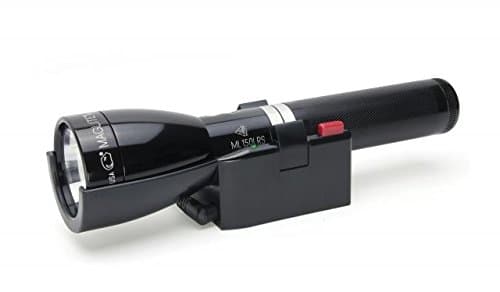 Maglite ML150LR Mag Charger The one built to be repaired instead of replaced | 1,082 | Replaceable | 11 | $99.99 on Amazon Price as of October 23, 2026 — 11 lumens per dollar. #ad How we earn |
| 3 | 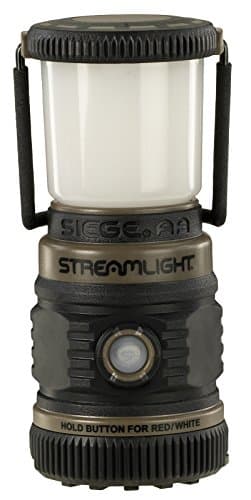 Streamlight Siege AA Best outage lantern that floats | 200 | AA / AAA | 6 | $32.49 on Amazon Price as of October 23, 2026 — 6 lumens per dollar. #ad How we earn |
| 4 | 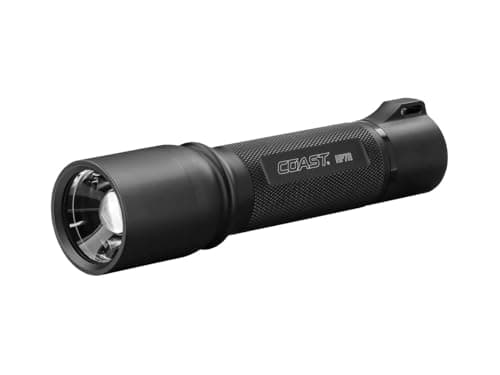 COAST HP7R Longest published runtime in this roundup | 300 | Replaceable | 3 | $118.07 on Amazon Price as of October 23, 2026 — 3 lumens per dollar. #ad How we earn |
| 5 | No listing image NEBO Newton 2000 Best outage light you can feed from a stockpile | 2,000 | AA / AAA | Needs a live price | Check price on Amazon We show a price only when we have pulled a live one. #ad How we earn |
| 6 | No listing image Energizer 3500XT-R Highest published output in a supermarket aisle | 3,500 | Sealed | Needs a live price | Check price on Amazon We show a price only when we have pulled a live one. #ad How we earn |
Prices pulled October 23, 2026. Lumens per dollar is the manufacturer's published maximum output divided by that price, recomputed every time the price moves.
What buying in person actually gets you
More than this site's rankings can capture, and it is worth being explicit about it, because a publication that computes lumens per dollar has an obvious bias toward the channel with the best ratio.
- 1.The light in your hand today. If the power is out or the car is on a shoulder tonight, a light arriving on Thursday has a value of zero.
- 2.Weight and size, which no listing conveys. Nearly everyone who has bought a light online has been surprised by its size in at least one direction.
- 3.Switch feel and mode order. Work the switch through its full sequence in the aisle. A light that passes through strobe on the way to low is a light you will resent at three in the morning.
- 4.A returns counter with a human at it. This is the underrated one. Returning a flashlight to the store you bought it from is a five-minute errand; returning one to a warehouse is a week of messages.
- 5.No shipping wait on the thing you needed to have already.
What it costs you, and this is the honest part
The best-value lights in this category are not stocked anywhere near you, and no amount of driving will fix it. The direct-selling brands that lead our rankings have no retail distribution and no interest in acquiring any, because a shelf costs a margin they have chosen not to pay. That margin is precisely what makes their lights good value. A physical aisle cannot carry them without becoming the thing that makes them expensive.
So the honest framing is not store versus online on price. It is: the shelf near you carries the mainstream tier, and it carries it competently. The value tier exists in a different channel entirely. If you have time, our flagship value ranking is where that money goes furthest. If you do not have time, buy from the shelf and do not feel badly about it.
The second cost is spare cells. Physical stores stock AA and AAA by the crate and almost nothing else. If you buy a light built around an 18650 or a 21700 locally, the replacement cell that makes it a lifetime purchase is a separate online order anyway. Our comparison of 18650 and 21700 formats covers which one to standardize on.
1. Best cheap magnetic work light
NEBO BIG LARRY 3
Lumens per dollar
50
A 600-lumen COB panel, a 220-lumen spot and a red task mode, on three AA cells, with a magnet strong enough to hold it under a hood. It is the least glamorous light here and it is the one that gets used most.
- Max output
- 600 lm
- Runtime
- Not published per mode
- Battery
- AA / AAA
- Water rating
- None published
What it gets right
- A flood panel is the right shape of light for working on something close up
- AA cells, so it survives a year in a toolbox and still lights
- The magnet is strong enough to matter
What it gets wrong
- NEBO publishes no runtime and no water rating for this model
- COB panels have poor color rendering as a class
- Not rechargeable, so the running cost is AA cells
Published specification
- COB work light: 600 lumens high / 150 lumens low — NEBO published specification
- Spot flashlight: 220 lumens high / 60 lumens low — NEBO published specification
- Red task light: 40 lumens high / 12 lumens low — NEBO published specification
- Battery: 3 x AA (included) — NEBO published specification
- Weight: 0.42 lb — NEBO published specification
- Fittings: Magnetic base, steel belt clip, wall-mount hole — NEBO published specification
- Per-mode runtime: Not published on the product page
- Water rating: Not published on the product page
Skip this one if
you need to see color accurately. For paint matching or diagnosing a wiring loom, a high-CRI light is worth the extra money.
Buy it if: the toolbox, the trunk and the shelf above the workbench.
- Output 6.5
- Battery 7.0
- Build 7.5
- Usability 8.5
- Overall 7.3
Price as of October 23, 2026 — 50 lumens per dollar. #ad How we earn
2. The one built to be repaired instead of replaced
Maglite ML150LR Mag Charger
Lumens per dollar
11
A thousand and eighty-two lumens for over three hours, 79 hours in eco, a 458-meter beam, and a LiFePO4 pack rated for cycle counts nothing else here quotes. It costs several times what the value picks cost and it is the only light here likely to outlive its owner's interest in flashlights.
- Max output
- 1,082 lm
- Runtime
- Over 3 h
- Battery
- Replaceable cell
- Water rating
- None published
What it gets right
- Runtime published at full output, not just at the mode that flatters it
- Replaceable pack, spare parts, and a ten-year warranty
- Charging cradle that lives in a vehicle or on a wall
What it gets wrong
- Its lumens-per-dollar figure is poor and always will be
- No published IP rating on the product page
- The cradle system is convenient in a truck and awkward anywhere else
Published specification
- Maximum output: 1,082 lumens — Maglite published specification
- Runtime at full output: Over 3 hours — Maglite published specification
- Eco mode runtime: Up to 79 hours — Maglite published specification
- Beam distance: 500 yards (458 m) — Maglite published specification
- Battery: Rechargeable Mag Charger pack, replaceable — Maglite published specification
- Fast charge: To 80% in about 30 minutes — Maglite published specification
- Weight: Under 1 lb — Maglite published specification
- Warranty: Ten-year limited — Maglite published specification
- Water rating: Not published on the product page
Skip this one if
you are shopping on value. This light is bought for its service life and its parts availability, and if those do not matter to you it is simply expensive.
Buy it if: someone buying a tool for a decade rather than a purchase for this year.
- Output 8.0
- Battery 9.0
- Build 9.5
- Usability 7.5
- Overall 8.0
Price as of October 23, 2026 — 11 lumens per dollar. #ad How we earn
3. Best outage lantern that floats
Streamlight Siege AA
Lumens per dollar
6
Two hundred lumens for seven hours, fifty for thirty-seven, and a red night-vision mode Streamlight rates at 192 hours. It runs on AA cells, it is IPX7, and it floats. For a storm shelf that is the correct specification.
- Max output
- 200 lm
- Runtime
- 7 h
- Battery
- AA / AAA
- Water rating
- IPX7
What it gets right
- AA cells store for a decade and are available anywhere, including mid-outage
- IPX7 and it floats, which is the correct answer for a flooded basement
- Runtime published for all five modes, including the 8-day red mode
What it gets wrong
- Two hundred lumens is dim next to a rechargeable lantern
- No rechargeable option in this version
- Removable cover changes the beam pattern and is easy to lose
Published specification
- White high: 200 lumens, 7 hours — Streamlight published specification
- White medium: 100 lumens, 15.5 hours — Streamlight published specification
- White low: 50 lumens, 37 hours — Streamlight published specification
- Red high: 0.7 lumens, 192 hours (8 days) — Streamlight published specification
- SOS flash: 0.7 lumens, 288 hours (12 days) — Streamlight published specification
- Battery: AA alkaline — Streamlight published specification
- Water rating: IPX7, 1 m — and it floats — Streamlight published specification
- Impact: 2 m tested — Streamlight published specification
Skip this one if
you want a bright camp lantern. This is an endurance light, not an area light.
Buy it if: the storm shelf, the boat and the basement that occasionally has water in it.
- Output 4.5
- Battery 9.5
- Build 9.0
- Usability 8.5
- Overall 7.9
Price as of October 23, 2026 — 6 lumens per dollar. #ad How we earn
4. Longest published runtime in this roundup
COAST HP7R
Lumens per dollar
3
Three hundred lumens, a 352-meter beam and up to 33 hours of runtime on a removable ZITHION-X pack. It is the opposite of a turbo-number light: modest output, enormous endurance, and a cell you can replace.
- Max output
- 300 lm
- Runtime
- Up to 33 h
- Battery
- Replaceable cell
- Water rating
- None published
What it gets right
- Thirty-three hours of published runtime, which almost nothing else here approaches
- Removable battery pack sold as a separate part
- 352 m of throw from only 300 lumens — good optics beat brute force
What it gets wrong
- Three hundred lumens will disappoint anyone shopping by the big number
- COAST does not publish a water rating on this product page
- Its lumens-per-dollar figure will always look poor next to an 18650 light
Published specification
- Maximum output: 300 lumens — COAST published specification
- Beam distance: 352 m — COAST published specification
- Runtime: Up to 33 hours — COAST published specification
- Battery: ZX800 ZITHION-X, 2,400 mAh 3.7V, removable — COAST published specification
- Focus: Pure Beam focusing optic — COAST published specification
- Water rating: Not published on the product page
Skip this one if
you are ranking purely on lumens per dollar. This light loses that contest and wins the runtime one, and which of those matters is a question about you, not the light.
Buy it if: long shifts, night walks and anyone who would rather have light for a day than light for an hour.
- Output 5.5
- Battery 8.5
- Build 8.0
- Usability 8.0
- Overall 7.5
Price as of October 23, 2026 — 3 lumens per dollar. #ad How we earn
listing
image
5. Best outage light you can feed from a stockpile
NEBO Newton 2000
Lumens per dollar
Computed the moment we have a live price for it
Two thousand lumens for two and a half hours on nine AA alkalines, IPX7, with the runtime published for every mode. It is heavy and it is not clever, and for a week without power that is the correct set of trade-offs.
- Max output
- 2,000 lm
- Runtime
- 2.5 h
- Battery
- AA / AAA
- Water rating
- IPX7
What it gets right
- Runtime published at maximum output, which is the number that actually matters
- AA cells store for years and can be bought anywhere, including during an outage
- IPX7 — it survives being dropped in standing water
What it gets wrong
- Nine AA cells is a real weight and a real running cost
- Zoom optics trade beam quality for a party trick
- Nothing about it is pocketable
Published specification
- High: 2,000 lumens, 2.5 hours, 188 m — NEBO published specification
- Medium: 600 lumens, 6 hours, 120 m — NEBO published specification
- Low: 100 lumens, 20 hours, 50 m — NEBO published specification
- Battery: 9 x AA alkaline — NEBO published specification
- Water rating: IPX7 — NEBO published specification
- Body: Aircraft-grade aluminum, impact resistant — NEBO published specification
Skip this one if
you want one light for everything. Running this daily on disposable alkalines costs more in a year than the light did.
Buy it if: the hall closet, the basement, and the shelf you go to when the power has been off for two days.
- Output 8.5
- Battery 7.5
- Build 7.5
- Usability 7.0
- Overall 7.6
We show a price only when we have pulled a live one. #ad How we earn
listing
image
6. Highest published output in a supermarket aisle
Energizer 3500XT-R
Lumens per dollar
Computed the moment we have a live price for it
Thirty-five hundred lumens on the box, 300 meters of beam, twelve hours on low — and no runtime published for the number in the model name. That gap is not an oversight, it is the industry's house style.
- Max output
- 3,500 lm
- Runtime
- Not published at maximum; up to 12 h on low
- Battery
- Sealed
- Water rating
- IPX4
What it gets right
- A very high published output for a mainstream retail price
- USB-C and a power-bank output
- Shatterproof lens and a 1 m drop rating
What it gets wrong
- No runtime published for the 3,500-lumen mode
- IPX4 splash resistance in a light this size is thin
- Digital-focus zoom head, with the usual beam artifacts
Published specification
- Maximum output: Up to 3,500 lumens — Energizer published specification
- Beam distance: Up to 300 m — Energizer published specification
- Runtime on low: Up to 12 hours — Energizer published specification
- Battery: Lithium-ion, USB-C rechargeable — Energizer published specification
- Water rating: IPX4 — Energizer published specification
- Impact: Drops up to 1 m — Energizer published specification
- Runtime at maximum: Not published on the product page
Skip this one if
you are buying it because of the 3,500. Without a published runtime for that mode, the figure tells you what the emitter can do for an unstated period, and nothing about what the light can do.
Buy it if: someone who wants maximum brightness from a shop they can walk into, and understands what they are buying.
- Output 9.0
- Battery 3.5
- Build 7.0
- Usability 7.0
- Overall 6.9
We show a price only when we have pulled a live one. #ad How we earn
The drive-or-order decision, in three questions
- 1.Do you need it tonight? If yes, drive. Nothing else on this list outweighs that, and the mainstream brands sold locally are genuinely competent.
- 2.Is it a light you will carry or use every day? If yes, the in-person check on weight, size and switch feel is worth a great deal, because those decide whether the light gets carried at all.
- 3.Is it a light that will sit in a drawer for two years? If yes, order the one with the right battery architecture rather than buying the closest one. For a stored light, a model that takes ordinary AA cells beats a rechargeable that will be flat when you reach for it, and our outage rankings work that through.
Sixty seconds with the light in your hand
Our page on general-merchandise aisles covers how to read the packaging. This is the other half — what to check on the physical object, which is the whole reason you drove.
- 1.Hold it the way you will use it. A light that is comfortable in a display box and awkward in a fist is a light you have already stopped carrying.
- 2.Work the switch from off to low and back. Count the presses. If low is four presses away, that is four presses every night.
- 3.Check the clip if it has one. Deep-carry clips hold the light almost inside the pocket; shallow ones leave an inch standing proud to snag on everything.
- 4.Unscrew the tailcap if the packaging allows it. A named cell inside means the light can be re-celled for a few dollars; a sealed body means the light has a service life.
- 5.Put it next to your phone. That is the size comparison that predicts whether it ends up in a pocket or a drawer.
The one case where you should always buy locally
An emergency you are already in. If the power is out, if there is weather coming, if a car needs fixing on a shoulder tonight, the correct light is the competent one you can hold within the hour, and the arithmetic that runs the rest of this site becomes irrelevant. Buy the model whose box has a complete mode table, prefer one that takes ordinary cells because a store that sells flashlights sells batteries, and go home.
That is also the case where the mainstream retail brands are at their strongest. NEBO publishes 2,000 lumens for two and a half hours on nine AA cells for the Newton 2000, with an IPX7 rating. Streamlight publishes 200 lumens for seven hours and a red mode rated at 192 hours on the Siege AA lantern, which is IPX7 and floats. Those are genuinely good outage specifications and they come from brands with wide physical distribution.
If the aisle near you has nothing good in it
This happens, particularly in smaller stores, and the answer is not to drive further. Buy the least-bad light on the shelf for the problem you have tonight, spend as little as the job allows, and treat it as a spare from the moment the real one arrives. A cheap light in a glovebox or a kitchen drawer is not a wasted purchase — it is the second light almost everyone should own anyway, and our page on whether cheap flashlights are any good explains why that tier has improved so much.
What to avoid in that situation is spending mid-tier money on a shelf you already judged to be poor. The failure mode is buying the most expensive thing available locally on the assumption that price tracks quality within one aisle. It does not reliably, and a light bought that way tends to be both worse and dearer than either the cheap spare or the considered order.
How we ranked these
Published output over live price, battery architecture, published ratings and usability, as everywhere on this site. The picks below are restricted to brands with wide physical distribution, because a pick you cannot find near you does not answer this page's question. That restriction costs the ranking its usual top end, and we would rather say so than quietly slip an online-only light into a page about local shopping.
Units we claim to have tested: 0
Every publisher in this category says they tested twenty flashlights. We have not tested any, and we say so. What we do instead: compile the manufacturer's own published ANSI FL1 figures, pull the price the light is selling for right now, and divide one by the other. Every number on this page is one you can check yourself in about two minutes.
We do not publish a stock list for this retailer. Assortments change week to week and store to store, and a list written today would be wrong by the time you read it. What does not change is how to read the shelf, and that is what this page is for.
What we cannot tell you
We cannot tell you what is on the shelf nearest you, what it costs there today, or whether the chain you are thinking of has changed its assortment this season. We have no store-level data, we do not accept any, and inventing it would be the exact failure this site was built to avoid. We also have not handled these lights ourselves, so the sixty-second checks above are things for you to do rather than things we have done. What we can tell you is how the channels differ and what each is structurally good at, because that does not change week to week.
Common questions
Where can I buy a rechargeable flashlight near me?
Four kinds of store stock them: grocery and general-merchandise stores, home-improvement stores, automotive and discount tool stores, and warehouse clubs, plus outdoor retailers for headlamps and lanterns. Which one to choose depends on the job — general merchandise for an outage light today, home improvement for work lighting, a tool store for a cheap spare, a club for multipacks. We do not publish stock lists, because assortments change weekly and by location.
Is it cheaper to buy a flashlight in a store or online?
Online, and the gap is structural rather than a matter of sales. The best-value brands in this category sell direct and have no retail distribution, because a shelf costs a margin they have chosen not to pay — and that margin is what makes their lights good value. A store cannot stock them without making them expensive. What the store gives you instead is the light today, the ability to judge size and switch feel, and a returns counter, all of which are worth real money.
What stores sell 18650 batteries near me?
Very few, and this catches people out. Physical stores stock AA, AAA, C, D and coin cells by the crate, and almost never the lithium cells that rechargeable flashlights are built around. If you buy an 18650 or 21700 light locally, plan on ordering the spare cell separately. It is one of the better reasons to prefer a light that takes ordinary cells if it is going to live in a drawer or a car.
Should I buy a flashlight in person or wait for delivery?
Drive if you need it tonight, or if it is a light you will carry daily and want to judge in your hand first. Wait if it is going into storage for an emergency, because for a stored light the battery architecture matters far more than having it three days sooner, and the models with the right architecture are frequently online-only.
Can you replace the battery in a rechargeable flashlight?
It depends entirely on the model, and it is the single most consequential thing to check before buying. Lights built around a standard cell — an 18650, a 21700, a 14500, a 16340 — take a screw-off tailcap and a five-dollar replacement. Lights with a built-in cell, which manufacturers describe as 'integrated' or 'non-removable', cannot be re-celled by an ordinary owner: when the battery reaches the end of its cycle life the whole light is refuse. Energizer, for example, states plainly that the Vision HD Rechargeable uses non-removable lithium-ion batteries.
Sources
- NEBO published product specifications — mode-by-mode lumen, runtime and beam figures, read 2026-09-01; LUXTREME SL75 and SL50 read 2026-09-22; OMNI 2K and SLYDE KING 4K read 2026-10-18
- Energizer published product specifications — read 2026-09-01
- COAST published product specifications — read 2026-09-01
- Streamlight published product specifications — per-mode lumens, runtime, beam distance, impact and IP ratings, read 2026-09-01; Waypoint 400 and Waypoint C-cell read 2026-09-22; FlipMate read 2026-10-18
- Maglite published product specifications — ML150LR read 2026-09-01; MAG-TAC Rechargeable (plain bezel) and Mini Maglite Pro LED read 2026-10-10; ML300LX 3-Cell D and ML50LX 2-Cell C read 2026-10-13
- Lumen & Ledger method — how every figure on this page is derived
Who writes this
Scooter M. — I am an enthusiast who is genuinely into this. I read the manuals, compile the published specs, and do the math. No lab coat, no test bench, no drawer of free samples. What I can tell you is exactly what a light claims on paper, exactly what it costs right now, and what those two numbers mean when you divide one by the other.
Read next
Rechargeable flashlights at Walmart
What the aisle stocks, what those brands publish, and what the same money buys online.
Rechargeable flashlights at Home Depot
A tool aisle sells tool lights. That is a real advantage and a real limitation.
Rechargeable flashlights on Amazon
Why the listings look the way they do, and how to read one without being misled.
Best flashlights for power outages
The outage specification is shelf life, not brightness. That changes the answer.
Rechargeable flashlights at Lowe's
Two aisles with two different logics, and which one you should be standing in.
The Ledger
Every light we cover in one ranked table, sorted by lumens per dollar.