EDC & Keychain
Best EDC Flashlights Under $30
At this price the replaceable cell is the whole argument. Two of these lights keep one and three of them do not, and that single fact reorders the list.
By Scooter M. · Published September 6, 2026

Short answer
Wurkkos TS10 V2
Thirty-two grams, three 90-CRI emitters, and one of the very few budget lights whose maker publishes the runtime at maximum output: one hour fourteen at 1,400 lumens. Publishing that number at all puts Wurkkos ahead of several brands ten times its size.
listing
image
We show a price only when we have pulled a live one. #ad How we earn
Disclosure — we earn a commission on qualifying purchases made through the Amazon links on this page, at no extra cost to you. It does not change which lights we pick or what we say about them. The full version.
How we rank. Published ANSI FL1 output divided by the live retail price, with sealed-battery lights marked down because a light you cannot re-cell is a light with an expiry date. Units we claim to have tested: 0 — we compile manufacturers' published figures and show the arithmetic instead. How we work this out.
What thirty dollars buys in a pocket light
Under thirty dollars, insist on one thing above all others: a standard replaceable cell, which at this size means a 14500 or a 16340. The Wurkkos TS10 V2 publishes 1,400 lumens, a runtime at that output of one hour fourteen minutes, IPX8 and 32 grams on a replaceable 14500; the Sofirn SC21 Pro publishes 1,100 lumens on a replaceable 16340. Everything else on this page seals the battery in, which turns a cheap light into a repeat purchase.
A price cap is a useful way to shop and a bad way to think. Thirty dollars is not a quality tier — it is the point on the curve where manufacturers start deciding which specification to drop, and knowing which one they dropped is worth more than the ranking itself. On pocket lights, the first thing to go is almost always the cell.
One note on prices before the picks. We do not print price figures into our pages, because a number typed into an article starts rotting the day it is written. Where we have pulled a live retail price it appears in the Ledger table with a timestamp; where we have not, the page says to check the current price rather than showing you a stale one. Treat thirty dollars as the bracket these lights sit in rather than as a promise about today.
Criterion one: the cell, which decides everything else
A pocket light with a sealed battery is a consumable with a service life set by its cell. That sounds abstract until you look at the capacities involved. The Olight i1R 2 PRO carries a built-in 130 mAh cell. The NEBO SLIM Mini 500 carries 450 mAh. Small cells are cycled harder and more often than big ones, so they reach the end of their useful life sooner — and when they do, the emitter, the optic, the switch and the machined body go in the bin with them.
A light built around a 14500 or a 16340 avoids that entirely. When the cell tires you unscrew the tailcap, spend a few dollars, and the light is effectively new. Over five years the difference between those two paths is several lights against one light and two cells, and that is exactly the arithmetic this site exists to make visible.
Criterion two: a published runtime, which almost nobody prints
The Wurkkos TS10 V2 leads this ranking partly on a number most brands leave blank. Wurkkos publishes one hour fourteen minutes at the full 1,400 lumens, and six hours forty-three minutes at one lumen, and it publishes the automatic step-down from turbo to high rather than leaving you to discover it. A brand willing to print how long its turbo lasts is telling you something about the rest of the specification.
Two other lights here publish honestly and deserve credit for it. Streamlight publishes 250 lumens for one and a half hours and 50 lumens for three and a half on the MicroStream. NEBO publishes the SLIM Mini 500's turbo outright as 500 lumens for thirty seconds — thirty seconds, printed by the manufacturer as the specification. Almost every light in this class behaves that way and almost none says so. The Sofirn publishes no per-mode runtime at all.
| # | Light | Max output | Battery | Lumens / $ | Price |
|---|---|---|---|---|---|
| 1 | No listing image Wurkkos TS10 V2 Best pocket light under two ounces | 1,400 | Replaceable | Needs a live price | Check price on Amazon We show a price only when we have pulled a live one. #ad How we earn |
| 2 | No listing image Sofirn SC21 Pro Best keychain light with a replaceable cell | 1,100 | Replaceable | Needs a live price | Check price on Amazon We show a price only when we have pulled a live one. #ad How we earn |
| 3 | 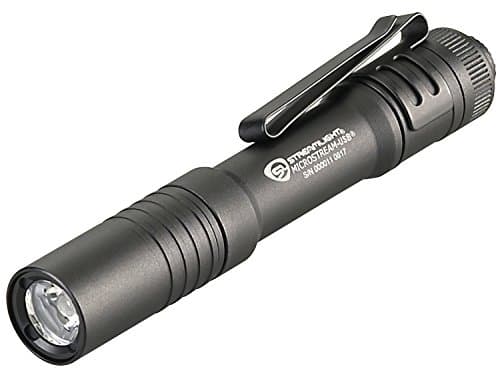 Streamlight MicroStream USB Best pen-clip light with published runtimes | 250 | Sealed | Needs a live price | Check price on Amazon We show a price only when we have pulled a live one. #ad How we earn |
| 4 | No listing image NEBO SLIM Mini 500 Best pocket task light for a toolbag | 500 | Sealed | Needs a live price | Check price on Amazon We show a price only when we have pulled a live one. #ad How we earn |
| 5 | No listing image Olight i1R 2 PRO Smallest light worth putting on a keyring | 180 | Sealed | Needs a live price | Check price on Amazon We show a price only when we have pulled a live one. #ad How we earn |
Lumens per dollar is the manufacturer's published maximum output divided by the price the light is selling for. Where we have not pulled a live price, the column says so instead of showing you a number we cannot stand behind. See how we work this out.
Criterion three: the size you will actually carry
The best pocket light is the one that is in your pocket, and the fastest way to end up with none is to buy one that is slightly too big. The spread here is large: the Wurkkos TS10 is 71.5 millimeters and 32 grams without its cell; the Streamlight MicroStream is 98.3 millimeters and 34 grams; the Olight i1R 2 PRO is about 51 millimeters and disappears on a keyring.
Under about seventy-five millimeters a light rides in a front pocket without announcing itself. Above about ninety-five it starts competing with a phone, and that is a competition the flashlight loses every time. Weight matters far less than length here, which is the opposite of the rule for headlamps.
Criterion four: water rating, and the two blank rows
Wurkkos publishes IPX8 to two meters on the TS10, which is the strongest rating at this price on this site and genuinely unusual. Streamlight publishes IPX4 on the MicroStream and a one-meter impact test; NEBO publishes IPX4 on the SLIM Mini 500. Sofirn publishes no water rating for the SC21 Pro, and Olight publishes none we could find for the i1R 2 PRO on the pages we read.
A missing rating is not proof a light leaks. It means nobody has told you what it survives, and on a light that lives in a pocket with your keys and goes out in the rain, that is a real gap. Our guide to IP ratings covers what each figure promises and why the absent ones matter.
listing
image
1. Best pocket light under two ounces
Wurkkos TS10 V2
Lumens per dollar
Computed the moment we have a live price for it
Thirty-two grams, three 90-CRI emitters, and one of the very few budget lights whose maker publishes the runtime at maximum output: one hour fourteen at 1,400 lumens. Publishing that number at all puts Wurkkos ahead of several brands ten times its size.
- Max output
- 1,400 lm
- Runtime
- 1 h 14 min
- Battery
- Replaceable cell
- Water rating
- IPX8
What it gets right
- Wurkkos publishes runtime at maximum output, which most brands quietly do not
- Thirty-two grams — light enough that you stop noticing it in a pocket
- Standard 14500 cell, replaceable
- Documented automatic step-down instead of an undocumented one
What it gets wrong
- A 14500 is a small cell; sustained output is not this light's job
- RGB auxiliary LEDs are a toy, and they draw from the same cell
- Anduril again, with the same learning curve
Published specification
- Maximum output: 1,400 lumens — Wurkkos published specification
- Runtime at maximum: 1 h 14 min — Wurkkos published specification
- Runtime at 1 lumen: 6 h 43 min — Wurkkos published specification
- Battery: 1 x 14500 Li-ion, user replaceable — Wurkkos published specification
- Water rating: IPX8, 2 m — Wurkkos published specification
- Weight: 32 g +/- 1 g without battery — Wurkkos published specification
- Length: 71.5 mm — Wurkkos published specification
- Thermal behavior: Automatic step-down from turbo to high — Wurkkos published specification
Skip this one if
you need something to run for an hour on high without getting hot. A light this small has nowhere to put the heat, and the step-down is not optional.
Buy it if: the person who wants a real light on them at all times and will not carry anything heavier than a pen.
- Output 8.0
- Battery 8.0
- Build 7.5
- Usability 7.5
- Overall 8.2
We show a price only when we have pulled a live one. #ad How we earn
listing
image
2. Best keychain light with a replaceable cell
Sofirn SC21 Pro
Lumens per dollar
Computed the moment we have a live price for it
Eleven hundred lumens from a keyring-sized body with a 16340 you can actually swap. Almost every rival at this size seals the battery in, which turns the light into a two-year consumable.
- Max output
- 1,100 lm
- Runtime
- Not published per mode
- Battery
- Replaceable cell
- Water rating
- None published
What it gets right
- A replaceable cell in a keychain-sized light, which is genuinely rare
- Magnetic tail, so it doubles as a hands-free task light
- USB-C in the light rather than a proprietary dock
What it gets wrong
- Sofirn publishes neither runtime nor a water rating for this model
- 1,100 lumens out of a 16340 is a very short-lived 1,100 lumens
- Anduril on a light this small means a lot of clicking
Published specification
- Maximum output: 1,100 lumens — Sofirn published specification
- Beam distance: 131 m — Sofirn published specification
- Battery: 1 x 16340 Li-ion, included and replaceable — Sofirn published specification
- Charging: USB-C into the light — Sofirn published specification
- Fittings: Magnetic tailcap and pocket clip — Sofirn published specification
- Water rating: Not published on the product page
- Per-mode runtime: Not published on the product page
Skip this one if
you want a published IP rating. Sofirn does not state one for this model, and we are not going to guess on your behalf.
Buy it if: someone who wants keychain size without accepting a disposable battery.
- Output 7.5
- Battery 8.5
- Build 7.0
- Usability 7.0
- Overall 7.8
We show a price only when we have pulled a live one. #ad How we earn
3. Best pen-clip light with published runtimes
Streamlight MicroStream USB
Lumens per dollar
Computed the moment we have a live price for it
Two hundred and fifty lumens for an hour and a half, fifty for three and a half, at 1.2 ounces. The battery is sealed, which caps its lifespan, but every other number on the sheet is published and checkable.
- Max output
- 250 lm
- Runtime
- 1 h 30 min
- Battery
- Sealed
- Water rating
- IPX4
What it gets right
- Every mode's runtime is published, which is why it scores well here despite modest output
- Deep pocket clip that actually holds in a shirt pocket
- 1.2 ounces — it is easy to forget you have it
What it gets wrong
- The cell is sealed in; when it fails the light is finished
- IPX4 splash rating only
- 250 lumens is not enough to light a yard
Published specification
- High: 250 lumens, 68 m, 1.5 hours — Streamlight published specification
- Low: 50 lumens, 31 m, 3.5 hours — Streamlight published specification
- Battery: Lithium-ion, charges in-product in 4 hours — Streamlight published specification
- Water rating: IPX4 — Streamlight published specification
- Impact: 1 m tested — Streamlight published specification
- Weight: 1.2 oz (34.1 g) — Streamlight published specification
- Length: 3.87 in (9.83 cm) — Streamlight published specification
Skip this one if
you want a light you can re-cell. For a keychain-sized light with a replaceable battery, look at the Sofirn SC21 Pro instead.
Buy it if: a shirt pocket, a scrubs pocket, or anyone who wants a light without a bulge.
- Output 5.5
- Battery 4.5
- Build 8.5
- Usability 9.0
- Overall 7.2
We show a price only when we have pulled a live one. #ad How we earn
listing
image
4. Best pocket task light for a toolbag
NEBO SLIM Mini 500
Lumens per dollar
Computed the moment we have a live price for it
The most honest spec sheet in this whole roundup, and not in the way NEBO intended: turbo is 500 lumens for thirty seconds. High is 250 lumens for two hours. That thirty-second figure is printed by the manufacturer, and it is the clearest illustration of the whole turbo problem you will find.
- Max output
- 500 lm
- Runtime
- 30 seconds at turbo; 2 h at 250 lm high
- Battery
- Sealed
- Water rating
- IPX4
What it gets right
- Genuinely flat — it disappears into a work-pants pocket
- Magnetic base plus green and red modes for inspection work
- NEBO states the turbo duration outright, which is rare and creditable
What it gets wrong
- Turbo lasts half a minute; treat 250 lumens as the real specification
- 450 mAh sealed cell, so this is a light with a service life rather than a lifespan
- IPX4 is splash resistance and nothing more
Published specification
- Turbo: 500 lumens for 30 seconds, 100 m — NEBO published specification
- High: 250 lumens, 2 hours, 250 m — NEBO published specification
- Low: 50 lumens, 5 hours, 50 m — NEBO published specification
- Battery: 450 mAh 3.7V (1.66 Wh) Li-ion, built in — NEBO published specification
- Recharge time: 2 hours, USB-C — NEBO published specification
- Water rating: IPX4 — NEBO published specification
- Weight: 0.07 lb — NEBO published specification
Skip this one if
you want a light for walking outdoors. This is a task light for arm's-length work and it does not throw usefully far in practice.
Buy it if: electricians, mechanics and anyone whose light spends its life eighteen inches from the thing it is lighting.
- Output 6.0
- Battery 4.5
- Build 7.5
- Usability 8.5
- Overall 6.8
We show a price only when we have pulled a live one. #ad How we earn
listing
image
5. Smallest light worth putting on a keyring
Olight i1R 2 PRO
Lumens per dollar
Computed the moment we have a live price for it
One hundred and eighty lumens and 48 meters from something the size of a AAA cell, with 12 hours of published runtime on low. The 130 mAh battery is sealed in, so treat it as a two-year item bought at a two-year price.
- Max output
- 180 lm
- Runtime
- Up to 12 h
- Battery
- Sealed
- Water rating
- None published
What it gets right
- Small enough that it genuinely stays on the keyring
- Twist-head operation with no switch to press in a pocket
- USB-C without disassembling the light
What it gets wrong
- One hundred and thirty milliamp-hours sealed in — this is a consumable
- Twist interface means you cannot operate it one-handed while holding something
- No published water rating
Published specification
- Maximum output: 180 lumens — Olight published specification
- Beam distance: 48 m — Olight published specification
- Low mode: 5 lumens — Olight published specification
- Runtime: Up to 12 hours — Olight published specification
- Battery: Built-in 130 mAh lithium-ion — Olight published specification
- Charging: USB-C, full charge in 100 minutes — Olight published specification
- Length: 2.02 in — Olight published specification
- Water rating: Not stated on the pages we read
Skip this one if
you expect a keyring light to last a decade. It will not, and at 130 mAh nothing this size will.
Buy it if: the keyring, where the alternative is having no light at all.
- Output 4.0
- Battery 3.5
- Build 8.0
- Usability 8.5
- Overall 6.4
We show a price only when we have pulled a live one. #ad How we earn
The case for the sealed lights, which is not nothing
We rank sealed lights down and we should be honest about what they do well. The Olight i1R 2 PRO is smaller than any light with a replaceable cell can be, because the cell is the size constraint — 130 mAh takes almost no room, and a keyring light you never notice is a light you always have. The NEBO SLIM Mini 500 is flat rather than round, which means it sits in a shirt pocket or a toolbag the way a tube light does not, and it publishes a complete mode table.
If the honest description of your use is a light you want on your keys forever and will replace without complaint in three years, buy the small sealed one and enjoy it. Our keychain rankings go into that end of the market properly. What we will not do is pretend the trade is not being made.
The clip is half the light
No manufacturer publishes a specification for a pocket clip and it decides more daily-carry outcomes than any figure that is published. A deep-carry clip holds the light almost entirely inside the pocket, leaving a few millimeters of tail showing: it does not snag, it does not print through a pocket, and it does not look like you are carrying equipment. A shallow clip leaves an inch of light standing proud, which catches on seatbelts and doorframes and is the reason a lot of good lights end up in a drawer.
Two other clip properties matter and neither is on a spec sheet. Whether it is reversible, which decides if the light can ride bezel-up on a cap brim or a bag strap. And whether it is strong enough to hold through a day of sitting down and standing up, because a clip that relaxes over a few months turns a carried light into a lost light. We cannot rank any of this — we have not carried these — so treat it as the first thing to check in your own hand.
The low mode decides how pleasant the light is
Everyone shops on the maximum and then lives on the minimum. A pocket light gets used to find a keyhole, read a label, check under a desk, or move through a house without waking anyone, and every one of those jobs is better served by ten lumens than by a thousand. A light with a usable sub-10-lumen setting is a light you will actually reach for indoors.
It is also the mode where runtime stops being a constraint. Wurkkos publishes six hours forty-three minutes at one lumen on the TS10; Olight publishes up to twelve hours on the i1R 2 PRO's 5-lumen setting. Those figures are the ones worth comparing on a light this size, because they describe how it behaves for most of its life. Our page on how many lumens you actually need has a table by task, and almost every row is lower than people expect.
What to check on the listing before you buy
- 1.The cell. A named format — 14500, 16340 — means replaceable. The words built-in, integrated or non-removable mean the light has a service life.
- 2.Whether a cell is included. At this price it is frequently sold both ways, and a light bought without its battery needs one before it does anything at all. That difference is worth several dollars against a light costing thirty.
- 3.The charge port. USB-C in the body means one cable for everything; micro-USB means a second cable to keep track of, and a magnetic charging puck means a proprietary part to lose.
- 4.The water rating, and whether there is one. Two of the five lights here publish none, which is not proof of failure but does mean nobody has told you what the light survives.
- 5.The published runtime, at any mode. Its presence tells you more about the manufacturer than its value tells you about the light.
How we ranked these
The four scored attributes published on our methodology page — output against live price, battery architecture, build as evidenced by published ratings, and usability — with battery architecture weighted hardest, as everywhere on this site. On this page one further adjustment is applied and stated: a light whose headline output carries a published runtime scores above one whose does not. That is why the ranking does not simply sort by lumens.
Units we claim to have tested: 0
Every publisher in this category says they tested twenty flashlights. We have not tested any, and we say so. What we do instead: compile the manufacturer's own published ANSI FL1 figures, pull the price the light is selling for right now, and divide one by the other. Every number on this page is one you can check yourself in about two minutes.
What thirty dollars cannot buy at this size
- Long runtime. Small cells hold little energy, and every light here is measured in hours rather than days. That is physics, not cost-cutting.
- Serious reach. The Sofirn publishes 131 meters and the Streamlight 68 — fine for a path or a parking lot, not for a field. Beam distance needs a bigger head.
- Batch-to-batch consistency. Tint and finish vary more at this price than above it, and no specification sheet will tell you that.
- A warranty worth invoking. Above roughly eighty dollars you are largely buying documentation, support and spare parts. Below thirty you are buying the parts and nothing else.
What we cannot tell you
We have not carried any of these lights. We cannot tell you how the clips hold up after a year in a pocket, how the tints compare side by side, whether the Wurkkos threads are smooth out of the box, how strong the Sofirn's tail magnet is, or how any of these switches feel after ten thousand presses. Those are the things pocket lights are actually judged on in daily use, and they are exactly what a published specification cannot settle.
Common questions
What is the best EDC flashlight under $30?
On published figures, a light with a replaceable cell and a printed runtime — the Wurkkos TS10 V2 publishes 1,400 lumens, one hour fourteen minutes at that output, IPX8 to two meters and 32 grams on a replaceable 14500. The Sofirn SC21 Pro publishes 1,100 lumens on a replaceable 16340 and adds a magnetic tailcap. Both avoid the sealed battery that turns a cheap pocket light into a repeat purchase.
Are cheap EDC flashlights any good?
At this price, frequently yes, because the emitters, drivers and small lithium cells that budget brands buy are the same commodity parts the expensive brands buy. What you give up is documentation, consistency between batches and a usable warranty. The reliable filter is to buy from a brand that publishes a runtime figure — a manufacturer willing to print how long its turbo lasts is telling you the rest was measured too.
Is a replaceable battery worth it on a pocket flashlight?
It is the most consequential specification on the page. Small cells are cycled hard and reach the end of their useful life sooner than large ones, so a sealed pocket light is a consumable with a service life of a few years. A light built around a 14500 or 16340 is revived for a few dollars instead. The exception is a keyring light, where the sealed cell is the reason it can be small enough to carry at all.
Can you replace the battery in a rechargeable flashlight?
It depends entirely on the model, and it is the single most consequential thing to check before buying. Lights built around a standard cell — an 18650, a 21700, a 14500, a 16340 — take a screw-off tailcap and a five-dollar replacement. Lights with a built-in cell, which manufacturers describe as 'integrated' or 'non-removable', cannot be re-celled by an ordinary owner: when the battery reaches the end of its cycle life the whole light is refuse. Energizer, for example, states plainly that the Vision HD Rechargeable uses non-removable lithium-ion batteries.
Sources
- Wurkkos published product specifications and user manuals — FC11 and TS10 read 2026-09-01; FC11C read 2026-09-21
- Sofirn published product specifications — read 2026-09-01
- Streamlight published product specifications — per-mode lumens, runtime, beam distance, impact and IP ratings, read 2026-09-01; Waypoint 400 and Waypoint C-cell read 2026-09-22; FlipMate read 2026-10-18
- NEBO published product specifications — mode-by-mode lumen, runtime and beam figures, read 2026-09-01; LUXTREME SL75 and SL50 read 2026-09-22; OMNI 2K and SLYDE KING 4K read 2026-10-18
- Olight published product specifications — read 2026-09-01
- Lumen & Ledger method — how every figure on this page is derived
Who writes this
Scooter M. — I am an enthusiast who is genuinely into this. I read the manuals, compile the published specs, and do the math. No lab coat, no test bench, no drawer of free samples. What I can tell you is exactly what a light claims on paper, exactly what it costs right now, and what those two numbers mean when you divide one by the other.
Read next
Best budget EDC flashlights
The light you carry beats the light you own. Ranked on carryability first.
Best pocket flashlights
Ranked on published millimeters and grams, because length is what decides if it gets carried.
Best rechargeable flashlights under $30
The floor at which a replaceable cell is still possible, and what you give up below it.
Best rechargeable keychain flashlights
Tiny cells, short lives, and the one keychain light with a replaceable battery.
IP and IPX ratings explained
What IPX4, IPX7 and IP68 mean, and why a missing rating is information too.
The Ledger
Every light we cover in one ranked table, sorted by lumens per dollar.