Flashlights
Sofirn vs Maglite
These are the two cheapest brands this site takes seriously, and they spend your money in opposite directions. One buys output and lithium. The other buys hours and a battery you can find in a petrol station.
By Scooter M. · Published November 3, 2026
Short answer
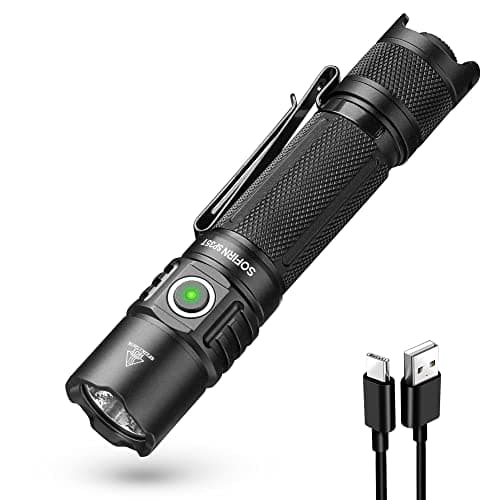
Sofirn SP35T
Thirty-eight hundred lumens, 19,625 candela and 280 meters on a detachable 21700, with lumens, runtime, beam distance AND candela published for all five modes. Fenix charges three times as much for a spec sheet this complete, and most of this site's premium picks never publish one at all.
Price as of November 3, 2026 — 76 lumens per dollar. #ad How we earn
Disclosure — we earn a commission on qualifying purchases made through the Amazon links on this page, at no extra cost to you. It does not change which lights we pick or what we say about them. The full version.
How we rank. Published ANSI FL1 output divided by the live retail price, with sealed-battery lights marked down because a light you cannot re-cell is a light with an expiry date. Units we claim to have tested: 0 — we compile manufacturers' published figures and show the arithmetic instead. How we work this out.
The short answer
Buy Sofirn if the light gets used: at roughly the same money the SP35T publishes 3,800 lumens against the ML300LX's 746, charges over USB-C on a standard 21700, weighs an eighth as much and is rated IPX8 where every Maglite here is IPX4. Buy Maglite if the light waits: the ML300LX publishes 32 hours at its full output against the Sofirn's one hour forty-five, throws 403 meters against 280, and has no cell to degrade while it sits in a cupboard for two years.
What makes this pairing worth a page is that the prices are not the variable. We matched the three pairs below on cost rather than on category, and the middle pair happened to be at the identical figure the day we checked. So this is not a premium-against-budget argument like most brand comparisons on this site. It is two cheap brands giving completely different answers to the same fifty dollars.
Sofirn sells you output. Maglite sells you hours.
Take the headline pair. The Sofirn SP35T publishes 3,800 lumens with 1 hour 45 minutes beside it, down through 1,500 lumens for 2 h 28 min to 5 lumens for 220 hours, on a detachable 21700 rated 5,000 mAh. The Maglite ML300LX publishes 746 lumens — and 32 hours of it, plus 112 hours on low and 298 in eco, on three D cells.
Those are not competing figures so much as different units of account. Five times the light for a twentieth of the duration is a trade, not a win, and which side of it you want depends entirely on whether the light is a tool you reach for or an object that waits. Nothing in a lumens-per-dollar column can arbitrate that, which is why this comparison is written out in prose.
Maglite out-throws Sofirn in all three pairs
This is the result that surprises people and it is consistent down the page. The ML300LX publishes 40,596 candela and 403 meters against the SP35T's 19,625 and 280. The ML50LX publishes 21,197 candela and 291 meters against the SC31 Pro's 226 meters. The little Mini Maglite Pro LED publishes 7,399 candela and 172 meters against the ST10's 5,175 and 144 — on a third of the lumens.
The reason is reflector geometry rather than brand quality. Beam distance is governed by how tightly the optics concentrate light, not by how much of it there is, and a Maglite head is physically larger at every size in the range. We found the same thing comparing Maglite against Fenix, which is the clearest evidence on this site that lumens is the wrong number to shop a thrower on.
Neither spec sheet is clean, and the gaps are not where you would guess
Sofirn's documentation is better than its reputation — on two of these three lights. The SP35T and the ST10 publish lumens, runtime, beam distance and candela for every mode, which is more than most premium brands manage. The SC31 Pro, which is the Sofirn this site has recommended most often, publishes a maximum output, a beam distance and an IPX8 rating and then stops: no candela, no per-mode runtime at all. The brand's disclosure varies by model, and its weakest page belongs to its most popular light.
Maglite is the more consistent of the two: candela, beam distance and three runtimes on all three lights here. What it never publishes is how any of it was measured. And its own pages contradict themselves elsewhere in the range, which we document on the Maglite range page.
Sofirn has the equivalent problem on the ST10, whose specification table says IPX6 while its own description says IP66. We record that light as having no confirmed water rating, because a page that disagrees with itself is not a specification. The SP35T and SC31 Pro both publish IPX8 cleanly, which is the best water story in this comparison and it belongs to Sofirn.
| # | Light | Max output | Battery | Lumens / $ | Price |
|---|---|---|---|---|---|
| 1 | Sofirn SP35T Best documented light per dollar on this site | 3,800 | Replaceable | 76 | $49.99 on Amazon Price as of November 3, 2026 — 76 lumens per dollar. #ad How we earn |
| 2 | 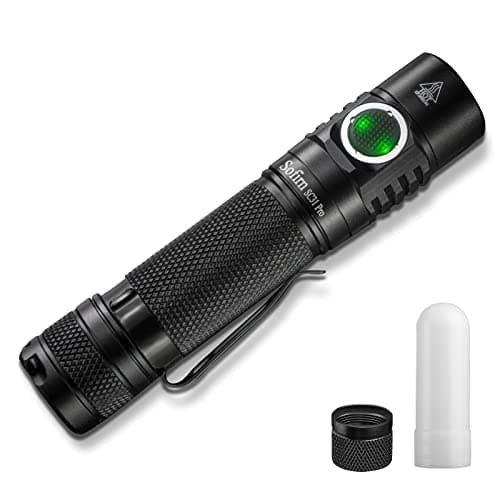 Sofirn SC31 Pro Best lumens per dollar overall | 2,000 | Replaceable | 47 | $42.99 on Amazon Price as of November 3, 2026 — 47 lumens per dollar. #ad How we earn |
| 3 | 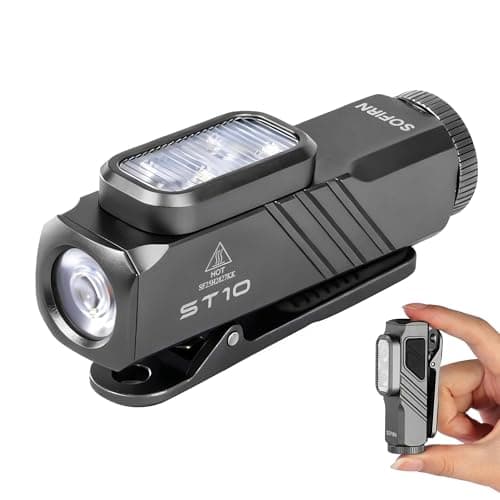 Sofirn ST10 Best Sofirn for a glovebox | 1,000 | AA / AAA | 25 | $39.99 on Amazon Price as of November 3, 2026 — 25 lumens per dollar. #ad How we earn |
| 4 | 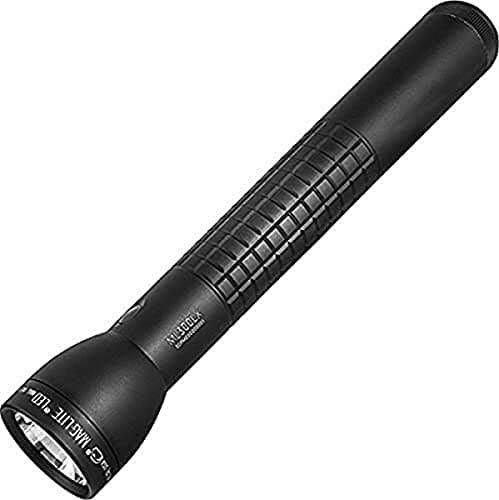 Maglite ML300LX 3-Cell D The longest published runtime on this site | 746 | Replaceable | 14 | $52.99 on Amazon Price as of November 3, 2026 — 14 lumens per dollar. #ad How we earn |
| 5 | 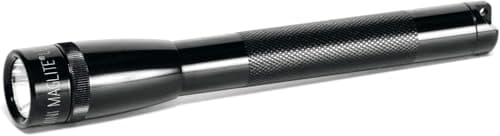 Maglite Mini Maglite Pro LED Best AA pocket light in either range | 332 | AA / AAA | 13 | $24.99 on Amazon Price as of November 3, 2026 — 13 lumens per dollar. #ad How we earn |
| 6 | 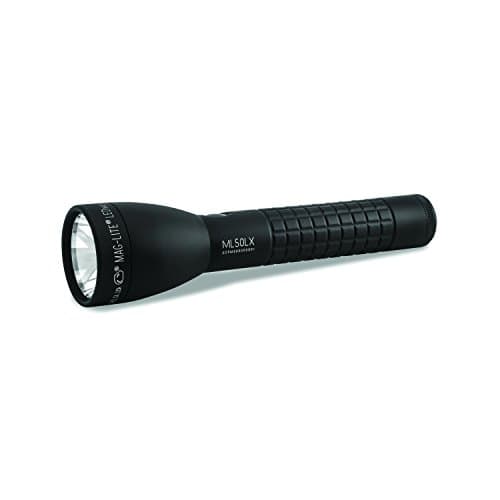 Maglite ML50LX 2-Cell C Best all-round Maglite | 466 | Replaceable | 11 | $42.99 on Amazon Price as of November 3, 2026 — 11 lumens per dollar. #ad How we earn |
Prices pulled November 3, 2026. Lumens per dollar is the manufacturer's published maximum output divided by that price, recomputed every time the price moves.
The three pairs
| Pair | Light | Max output | Runtime at max | Throw | Water | Weight |
|---|---|---|---|---|---|---|
| 1 | Sofirn SP35T | 3,800 lumens | 1 h 45 min | 280 m, 19,625 cd | IPX8, 2 m | 87 g |
| 1 | Maglite ML300LX 3-Cell D | 746 lumens | 32 hours | 403 m, 40,596 cd | IPX4 | 748 g |
| 2 | Sofirn SC31 Pro | 2,000 lumens | Not published | 226 m, no candela | IPX8 | 59 g |
| 2 | Maglite ML50LX 2-Cell C | 466 lumens | 8 h 15 min | 291 m, 21,197 cd | IPX4 | 361 g |
| 3 | Sofirn ST10 | 1,000 lumens | 1 h 20 min | 144 m, 5,175 cd | Page conflicts | 49 g |
| 3 | Maglite Mini Pro LED | 332 lumens | 2 h 30 min | 172 m, 7,399 cd | IPX4 | 118 g |
One honest wrinkle in that table: the weight column is not apples to apples, because Sofirn publishes weights without the cell and Maglite publishes them with the batteries in. The gap is real and large in every pair regardless — a 21700 adds roughly 70 grams, three D cells add far more than the difference — but do not read the exact numbers as a like-for-like measurement.
1. Best documented light per dollar on this site
Sofirn SP35T
Lumens per dollar
76
Thirty-eight hundred lumens, 19,625 candela and 280 meters on a detachable 21700, with lumens, runtime, beam distance AND candela published for all five modes. Fenix charges three times as much for a spec sheet this complete, and most of this site's premium picks never publish one at all.
- Max output
- 3,800 lm
- Runtime
- 1 h 45 min
- Battery
- Replaceable cell
- Water rating
- IPX8
What it gets right
- Lumens, runtime, beam distance and candela published for all five modes — the rarest thing in this category
- A runtime printed beside the 3,800-lumen headline, not only beside the dim modes
- Detachable 21700 at 5,000 mAh, so the cell is an ordinary part
- IPX8 with a stated depth and a 1-meter impact figure, both as numbers
What it gets wrong
- One hour 45 minutes at turbo is a figure that will include thermal step-down, which the page does not break out
- No runtime published for strobe, SOS or beacon
- The page says the cell is detachable without saying the owner may replace it
- An 87-gram, 139.5 mm body is a duty-size light, not a pocket one
Published specification
- Turbo: 3,800 lumens, 1 h 45 min, 280 m, 19,625 cd — Sofirn published specification
- High: 1,500 lumens, 2 h 28 min, 182 m, 8,258 cd — Sofirn published specification
- Medium: 500 lumens, 6 h 58 min, 107 m, 2,858 cd — Sofirn published specification
- Low: 100 lumens, 26 hours, 47 m, 550 cd — Sofirn published specification
- Eco: 5 lumens, 220 hours, 10 m, 26 cd — Sofirn published specification
- Battery: Detachable 21700 Li-ion, 5,000 mAh — Sofirn published specification
- Charging: USB-C, approximately 3 hours for the 5,000 mAh cell — Sofirn published specification
- Water rating: IPX8, 2 m, stated as not for diving — Sofirn published specification
- Impact resistance: 1 m — Sofirn published specification
- Weight: 87 g without battery — Sofirn published specification
- Length: 139.5 mm, 28 mm head diameter — Sofirn published specification
- Emitter: XHP50B, 6000-6500K — Sofirn published specification
- Strobe, SOS and beacon: Output published, no runtime published for any of the three
- Battery replaceability: The page says detachable; it does not use the words user-replaceable
Skip this one if
you want a small light. This is a full-size 21700 tube, and Sofirn sells several smaller models if the specification matters less than the shape.
Buy it if: anyone who wants the most checkable specification available at this price, and does not care that the badge on it is a direct-selling brand.
- Output 9.0
- Battery 8.5
- Build 8.0
- Usability 8.0
- Overall 8.7
Price as of November 3, 2026 — 76 lumens per dollar. #ad How we earn
2. Best lumens per dollar overall
Sofirn SC31 Pro
Lumens per dollar
47
Two thousand published lumens out of a standard 18650 you can buy anywhere for a few dollars, in a light that costs less than most brands charge for a keychain. The cell is the whole argument: when it dies in three years you replace a battery, not a flashlight.
- Max output
- 2,000 lm
- Runtime
- Not published per mode
- Battery
- Replaceable cell
- Water rating
- IPX8
What it gets right
- Standard 18650 cell — replacements cost a few dollars and are sold everywhere
- IPX8, the strongest water rating in this price class
- USB-C charging built into the light, so no separate charger to lose
- Anduril firmware gives real ramping control rather than four fixed steps
What it gets wrong
- Sofirn publishes no per-mode runtime figures on the product page
- Anduril is genuinely confusing for the first week
- Tint varies between batches, which is the price of this price
Published specification
- Maximum output: 2,000 lumens — Sofirn published specification
- Beam distance: 226 m — Sofirn published specification
- Battery: 1 x 18650 Li-ion, user replaceable — Sofirn published specification
- Charging: USB-C, 2.5 hours with a 2A adapter — Sofirn published specification
- Water rating: IPX8 — Sofirn published specification
- Weight: 59 g without battery — Sofirn published specification
- Length: 117.5 mm — Sofirn published specification
- Emitter: SST40, 5000K or 6500K — Sofirn published specification
- Per-mode runtime: Not published on the product page
Skip this one if
you want to press one button and get one brightness. Anduril has a shortcut for everything and a menu for everything else, and if that sounds tiring you will be happier with a three-mode light.
Buy it if: anyone who intends to keep the light for longer than the battery lasts, and does not mind reading a manual once.
- Output 9.0
- Battery 9.5
- Build 8.0
- Usability 7.0
- Overall 8.6
Price as of November 3, 2026 — 47 lumens per dollar. #ad How we earn
3. Best Sofirn for a glovebox
Sofirn ST10
Lumens per dollar
25
A thousand lumens and 5,175 candela from a 49-gram body that runs on its own 14500 or on an ordinary AA cell, with a separate 660 nm red side light. Sofirn publishes a runtime, a beam distance and a candela figure for every level of all three emitters, which is more than most premium brands manage for one.
- Max output
- 1,000 lm
- Runtime
- 1 h 20 min
- Battery
- AA / AAA
- Water rating
- None published
What it gets right
- Runs on an ordinary AA cell when the 14500 is flat, which almost nothing at this output does
- A runtime, a beam distance and a candela figure published for every level of all three emitters
- A real 660 nm red side light with its own four levels, not a red filter
- Forty-nine grams, and the USB-C port is in the cell so a spare charges while the light is in use
What it gets wrong
- The page gives two different water ratings — IPX6 in the spec table, IP66 in the description
- No charge time published, and no runtime figures for AA operation
- One thousand lumens for 1 h 20 min is a modest headline next to a 21700 light
- Three emitters and thirteen levels is a lot of interface for a glovebox light
Published specification
- Maximum output: 1,000 lumens — Sofirn published specification
- Peak beam intensity: 5,175 cd — Sofirn published specification
- Maximum beam distance: 144 m — Sofirn published specification
- Turbo: 1,000 lumens, 1 h 20 min, 144 m, 5,175 cd — Sofirn published specification
- Moonlight: 1 lumen, 150 hours — the published maximum runtime — Sofirn published specification
- Mode table: Five main-beam levels, four side-white levels and four red levels, each with its own runtime — Sofirn published specification
- Red side light: 3 / 45 / 100 lumens plus flash, 660 nm — Sofirn published specification
- Battery: Detachable 14500, 900 mAh, included; also runs on AA alkaline or AA Ni-MH — Sofirn published specification
- Charging: USB-C port built into the cell itself — Sofirn published specification
- Impact resistance: 1 m — Sofirn published specification
- Weight: 49 g without battery — Sofirn published specification
- Dimensions: 69.3 x 33.8 x 20.4 mm — Sofirn published specification
- Emitter: TN-3535 x 2 plus a 660 nm red — Sofirn published specification
- Water rating: The page contradicts itself — the spec table says IPX6 and the description says IP66. We record neither as confirmed.
- Charge time: Not published on the page we read
- Runtime on AA cells: Not published — the figures above are for the included 14500
Skip this one if
you want a sealed, submersible light. Neither of the two water ratings on the page is a submersion rating, and the two do not agree with each other.
Buy it if: a glovebox, a camera bag or a coat pocket — somewhere the light must work after a long wait and can be fed an AA from a drawer.
- Output 6.5
- Battery 9.0
- Build 7.0
- Usability 7.5
- Overall 7.6
Price as of November 3, 2026 — 25 lumens per dollar. #ad How we earn
4. The longest published runtime on this site
Maglite ML300LX 3-Cell D
Lumens per dollar
14
Seven hundred and forty-six lumens, 40,596 candela and 403 meters from three D cells — and 32 hours of it on high. Not 32 hours on a dim setting: 32 hours at the output on the box, published by Maglite. No rechargeable light on this site comes within a factor of ten of that figure.
- Max output
- 746 lm
- Runtime
- 32 h
- Battery
- Replaceable cell
- Water rating
- IPX4
What it gets right
- Thirty-two hours at full output — the longest published high-mode runtime anywhere on this site
- Forty thousand candela and 403 meters, with the candela figure published rather than implied
- Runs on D cells from any shop, so there is no pack to degrade and nothing to charge
- Two hundred and ninety-eight hours in eco mode turns it into a twelve-day outage light
What it gets wrong
- Seven hundred and forty-eight grams with cells in — this is a club, not a carry light
- IPX4 is a splash rating; it is not a light you can drop in water
- Three D cells are not cheap, and the running cost is real if you use it regularly
- No USB-C and no rechargeable option in this model
Published specification
- Maximum output: 746 lumens — Maglite published specification
- Peak beam intensity: 40,596 cd — Maglite published specification
- Beam distance: 403 m — Maglite published specification
- Runtime, high: 32 hours — Maglite published specification
- Runtime, low: 112 hours — Maglite published specification
- Runtime, eco: 298 hours — Maglite published specification
- Battery: 3 x D cell alkaline, not included — Maglite published specification
- Water rating: IPX4 — Maglite published specification
- Drop resistance: 1 m — Maglite published specification
- Weight: 26.4 oz (748.42 g) with batteries — Maglite published specification
- Length: 11.75 in (298.45 mm) — Maglite published specification
- Barrel diameter: 1.5 in (38.1 mm) — Maglite published specification
- Head diameter: 2.25 in (57 mm) — Maglite published specification
- Per-mode output: The specification table publishes a runtime for low and eco but not their lumen figures
Skip this one if
the light has to be carried. At 298 millimeters and three quarters of a kilogram this lives in a truck, a cupboard or a hand, and anybody expecting to put it in a bag will leave it at home instead.
Buy it if: a vehicle, a workshop or a storm cupboard — anywhere the light sits still, has to work after two years untouched, and may need to stay on all night.
- Output 7.0
- Battery 9.5
- Build 8.5
- Usability 5.5
- Overall 7.6
Price as of November 3, 2026 — 14 lumens per dollar. #ad How we earn
5. Best AA pocket light in either range
Maglite Mini Maglite Pro LED
Lumens per dollar
13
Three hundred and thirty-two lumens, 7,399 candela and 172 meters on two AA cells, for less than twenty dollars. It is the cheapest light either of these brands sells here, the only pocket light of the six that takes a battery from a corner shop, and it publishes a runtime for both its modes.
- Max output
- 332 lm
- Runtime
- 2 h 30 min
- Battery
- AA / AAA
- Water rating
- IPX4
What it gets right
- Runs on two AA cells, which store for a decade and can be bought absolutely anywhere
- Three hundred and thirty-two lumens and 7,399 candela published, at the lowest price of any light here
- Runtime published for both modes: 2 hours 30 minutes high, 13 hours low
- Nothing to charge, so it works after two years in a drawer
What it gets wrong
- IPX4 only, so rain is fine and submersion is not
- A 167.8 mm barrel is long for a pocket, and it rolls
- No USB-C charging and no rechargeable option in this model
- Three hundred and thirty-two lumens is modest next to a sealed-cell pocket light of the same size
Published specification
- Maximum output: 332 lumens — Maglite published specification
- Peak beam intensity: 7,399 cd — Maglite published specification
- Beam distance: 172 m — Maglite published specification
- Runtime, high: 2 hours 30 minutes — Maglite published specification
- Runtime, low: 13 hours — Maglite published specification
- Battery: 2 x AA, included — Maglite published specification
- Water rating: IPX4 — Maglite published specification
- Drop resistance: 1 m — Maglite published specification
- Weight: 4.15 oz (117.75 g) with batteries — Maglite published specification
- Length: 6.607 in (167.8 mm) — Maglite published specification
- Head diameter: 1 in (25.4 mm) — Maglite published specification
- Barrel diameter: 0.709 in (18 mm) — Maglite published specification
Skip this one if
you want the smallest possible pocket light or the brightest one. This is a long, thin AA body, and a sealed-cell light of the same length will produce several times the output.
Buy it if: a glovebox, a toolbag or a drawer — anywhere a light has to work the first time without having been charged, and where losing it should not be expensive.
- Output 5.0
- Battery 9.0
- Build 7.5
- Usability 7.5
- Overall 7.4
Price as of November 3, 2026 — 13 lumens per dollar. #ad How we earn
6. Best all-round Maglite
Maglite ML50LX 2-Cell C
Lumens per dollar
11
Four hundred and sixty-six lumens, 21,197 candela and 291 meters on two C cells, for eight and a quarter hours on high and 109 in eco. At 361 grams it is the one size in this range that is genuinely useful in a hand and still runs all evening at full output.
- Max output
- 466 lm
- Runtime
- 8 h 15 min
- Battery
- Replaceable cell
- Water rating
- IPX4
What it gets right
- Eight and a quarter hours at full output, which almost nothing rechargeable here approaches
- Twenty-one thousand candela and 291 meters published, from a light you can hold comfortably
- C cells store for years and are sold everywhere, so nothing degrades on a shelf
- The best size-to-runtime balance in the whole Maglite range
What it gets wrong
- IPX4 only — rain is fine, submersion is not
- Four hundred and sixty-six lumens is modest against a rechargeable of the same price
- C cells are less common and more expensive than AA
- No USB-C, no rechargeable variant of this model
Published specification
- Maximum output: 466 lumens — Maglite published specification
- Peak beam intensity: 21,197 cd — Maglite published specification
- Beam distance: 291 m — Maglite published specification
- Runtime, high: 8 hours 15 minutes — Maglite published specification
- Runtime, low: 13 hours — Maglite published specification
- Runtime, eco: 109 hours — Maglite published specification
- Battery: 2 x C cell alkaline, not included — Maglite published specification
- Water rating: IPX4 — Maglite published specification
- Drop resistance: 1 m — Maglite published specification
- Weight: 12.72 oz (360.61 g) with batteries — Maglite published specification
- Length: 8.184 in (207.87 mm) — Maglite published specification
- Barrel diameter: 1.2 in (30.48 mm) — Maglite published specification
- Head diameter: 1.977 in (50.22 mm) — Maglite published specification
- Per-mode output: The specification table publishes a runtime for low and eco but not their lumen figures
Skip this one if
you want the brightest light for the money. A direct-selling rechargeable will produce several times this output for the same price; what you give up is the eight-hour runtime and the shelf life.
Buy it if: the person who wants one Maglite and does not want a club — a kitchen drawer, a glovebox, or a hand on a long walk.
- Output 6.0
- Battery 9.0
- Build 8.5
- Usability 7.5
- Overall 7.8
Price as of November 3, 2026 — 11 lumens per dollar. #ad How we earn
What Sofirn is actually better at
- 1.Output per dollar, by a wide margin, in all three pairs. If brightness is what you are buying, this is not a contest.
- 2.Water resistance. IPX8 on two of three against IPX4 on all three Maglites. If the light might go in water, Maglite has nothing to offer here.
- 3.Weight and size. Fifty-nine grams against 361 in the middle pair. A light you can carry gets carried.
- 4.Running cost after purchase. USB-C from a cable you own, on standard 18650 and 21700 cells, against alkalines forever in every Maglite on this page.
- 5.Mode tables, on two of its three lights — candela and runtime for every level, which is more than Fenix publishes on most of its range.
What Maglite is actually better at
- 1.Runtime at the rated output, by factors rather than percentages. Thirty-two hours against one hour forty-five is the single largest gap on this page.
- 2.Throw, in all three pairs, for the reflector reason above.
- 3.Shelf life. There is no cell to degrade in any of these three, so a light bought today and ignored for three years works when you pick it up. Nothing with a lithium pack in it can say that.
- 4.Service life and parts. A ten-year limited warranty and spares still sold for lights made decades ago, against a direct-selling brand whose recourse is a support email.
- 5.Consistency of disclosure. Candela and three runtimes on all three lights, where Sofirn's most popular model publishes neither.
Which one should you actually buy
- One light for general household use — Sofirn, and the SP35T if the budget stretches to it or the SC31 Pro if not. More light, less weight, a sealed IPX8 body and USB-C.
- A light for the truck, the cupboard or the storm shelf — Maglite ML300LX. Thirty-two hours at full output and 298 in eco, and it works after two years untouched.
- Something to carry every day — Sofirn ST10, with the caveat about its contradictory water rating. Forty-nine grams, and it runs on an ordinary AA when the 14500 is flat.
- The cheapest competent light either brand sells — Maglite Mini Pro LED, which is the lowest-priced light on this page and still publishes a candela figure and two runtimes.
- You want the most checkable specification at this money — Sofirn SP35T, which is the only light here with a full five-mode table including candela. Just do not expect either brand to tell you how it measured.
How we ranked these
Published output over the live price, adjusted for battery architecture and published ratings, as on every page here. Three adjustments shape this table. An alkaline light with no cell to degrade is credited for that, which lifts all three Maglites. IPX4 against IPX8 is scored as the real gap it is, which pulls them back. And a water claim the manufacturer's own page contradicts counts as no rating, which costs the Sofirn ST10 a point it would otherwise take. The result sits closer than the lumens column alone would suggest, which is the honest outcome for two brands this evenly matched on price.
Units we claim to have tested: 0
Every publisher in this category says they tested twenty flashlights. We have not tested any, and we say so. What we do instead: compile the manufacturer's own published ANSI FL1 figures, pull the price the light is selling for right now, and divide one by the other. Every number on this page is one you can check yourself in about two minutes.
What we cannot tell you
We have not used any of these six lights. The throw comparison that runs through this page rests on two sets of manufacturer figures, neither of which comes with a stated test method, and we have flagged it as directional rather than measured. We also cannot tell you whether a Maglite really outlives a Sofirn by the margin its warranty implies, how either company behaves when something fails, or whether the units you receive match the specifications — and on a direct-selling brand that last question deserves an answer we do not have. This page compares what each maker publishes against what each light costs today.
Common questions
Is Sofirn or Maglite better?
Neither, and the prices are close enough that it genuinely comes down to use. Sofirn gives you several times the output, a fraction of the weight, IPX8 water resistance on two of three models and USB-C charging on standard cells. Maglite gives you runtime measured in tens of hours rather than ones, longer published throw in all three of our matched pairs, no cell to degrade on the shelf, and a ten-year warranty. Buy Sofirn for a light you use and Maglite for a light that waits.
Why does a 746-lumen Maglite throw further than a 3,800-lumen Sofirn?
Because throw is set by beam intensity rather than total output, and intensity depends on how tightly the reflector concentrates the light. A Maglite head is physically larger at every size in the range, so it converts fewer lumens into more candela: the ML300LX publishes 40,596 candela against the SP35T's 19,625. One caveat — neither brand states a test standard on any page we have read, so treat the ordering as a reason to prefer a bigger reflector rather than as a measured result.
Is a Maglite worth buying in 2026?
For a light that sits still, yes, and the figures are not close. The ML300LX publishes 32 hours at its full 746 lumens and 298 hours in eco mode, on three D cells with nothing to degrade between uses, for around the price of a mid-range rechargeable. Where it is genuinely outdated is everywhere else: IPX4 water resistance across the range, no USB-C, a running cost in alkalines, and 748 grams against a Sofirn's 87.
Which is cheaper to own, Sofirn or Maglite?
It depends on how often the light runs, and that is the real answer rather than a dodge. The Sofirns charge over USB-C on standard 18650 and 21700 cells, so after purchase the running cost is effectively nothing until the cell wears out. The Maglites here have no charging at all and eat D, C or AA alkalines for as long as you own them. A light used for five minutes a week will go years on one set and the Maglite wins outright; a light used nightly flips that quickly.
Are cheap rechargeable flashlights any good?
Many are, and for a specific reason: the LED emitters, drivers and 18650 cells that budget brands buy are the same commodity parts the expensive brands buy. What you give up at the low end is documentation, quality control between batches, and a warranty worth using. The way to shop it is to look for a brand that publishes runtime figures — a manufacturer willing to print how long the turbo mode lasts is telling you something about the rest of the specification.
Sources
- Sofirn published product specifications — SC31 Pro and SC21 Pro read 2026-09-01; ST10, SP35T and Q8 Plus read 2026-10-24 on the US Sofirn store
- Maglite published product specifications — ML150LR read 2026-09-01; MAG-TAC Rechargeable (plain bezel) and Mini Maglite Pro LED read 2026-10-10; ML300LX 3-Cell D and ML50LX 2-Cell C read 2026-10-13
- Fenix published product specifications — read 2026-09-01; PD36R Pro product page read 2026-10-18; E18R V2.0 and E35R read 2026-10-23 on fenixlighting.com, E35R IP68 confirmed on fenixlight.com the same day
- Lumen & Ledger method — how every figure on this page is derived
Who writes this
Scooter M. — I am an enthusiast who is genuinely into this. I read the manuals, compile the published specs, and do the math. No lab coat, no test bench, no drawer of free samples. What I can tell you is exactly what a light claims on paper, exactly what it costs right now, and what those two numbers mean when you divide one by the other.
Read next
Best Sofirn flashlights
The cheap brand publishes fuller mode tables than most of the premium ones.
Best Maglite flashlights
The range is battery size, not brightness — and the cheap ones run longest.
Sofirn vs Fenix
One publishes more rows. The other publishes how it measured them.
Fenix vs Maglite
A quarter of the lumens, a longer published throw and nine times the runtime.
Best AA flashlights
The cell that is never flat when you need it, and the six lights worth putting it in.
The Ledger
Every light we cover in one ranked table, sorted by lumens per dollar.