Flashlights
ThruNite Archer 2A V3 Review: Why an AA Light Is Still on This List
This site exists to argue that rechargeable beats disposable. Here is the light that shows where that argument stops being true.
By Scooter M. · Published September 6, 2026
Short answer
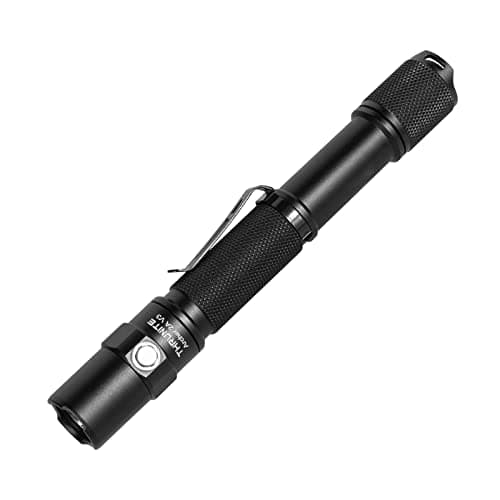
ThruNite Archer 2A V3
Five hundred lumens on two AA cells. It will never win a lumens-per-dollar contest against an 18650 light, and it does not need to: it is the light that still works when you are three days into an outage and the only thing left in the store is alkalines.
We show a price only when we have pulled a live one. #ad How we earn
Disclosure — we earn a commission on qualifying purchases made through the Amazon links on this page, at no extra cost to you. It does not change which lights we pick or what we say about them. The full version.
How we rank. Published ANSI FL1 output divided by the live retail price, with sealed-battery lights marked down because a light you cannot re-cell is a light with an expiry date. Units we claim to have tested: 0 — we compile manufacturers' published figures and show the arithmetic instead. How we work this out.
The verdict in sixty words
Buy the Archer 2A V3 for the glovebox, the storm shelf and the drawer you open twice a year — not for daily use. It publishes 500 lumens on two AA cells, five modes and a forward clicky switch, and its real specification is the one nobody prints: alkaline cells hold usable charge on a shelf for years, and a lithium cell in an unused light does not.
Everything else on this site is ranked by dividing published lumens by a live price, and by that arithmetic this light loses to almost everything. It is here anyway, because value over three years and value in the one hour you actually need a light are different questions, and this page is about the second one.
What ThruNite publishes
| Published figure | ThruNite Archer 2A V3 |
|---|---|
| Maximum output | 500 lumens, turbo |
| Battery | 2 x AA alkaline or 2 x AA NiMH (not included) |
| Modes | Five |
| Switch | Forward clicky with momentary-on |
| Protection | Reversed-polarity protection |
| Clip | Reversible, removable, titanium coated |
| Runtime, any mode | Not published on the product page |
| Water rating | Not published on the product page |
Two blank rows is more than we like, and on a light being recommended for emergencies the missing water rating is the one that stings. A light that lives in a car or a basement will meet damp at some point. ThruNite says nothing about it, so neither will we.
The case for a disposable-battery light on a rechargeable site
A lithium-ion cell ages whether you use it or not. It self-discharges slowly, and calendar aging degrades it independently of how many cycles it has done. The practical consequence is the single most common flashlight failure there is: you reach for the light you bought for exactly this moment, and it is flat, and there is nothing you can do about it in the moment.
Alkaline cells behave the opposite way. They sit in a drawer for years and are still usable, and when they are not, the replacement is on a shelf at every gas station, supermarket and hardware store in the country — including, importantly, during the kind of event that caused you to want a flashlight. That is what you are buying here. It is not brightness and it is certainly not value per lumen.
| # | Light | Max output | Battery | Lumens / $ | Price |
|---|---|---|---|---|---|
| 1 | ThruNite Archer 2A V3 Best light that runs on batteries from any gas station | 500 | AA / AAA | Needs a live price | Check price on Amazon We show a price only when we have pulled a live one. #ad How we earn |
| 2 | No listing image NEBO Newton 2000 Best outage light you can feed from a stockpile | 2,000 | AA / AAA | Needs a live price | Check price on Amazon We show a price only when we have pulled a live one. #ad How we earn |
| 3 | 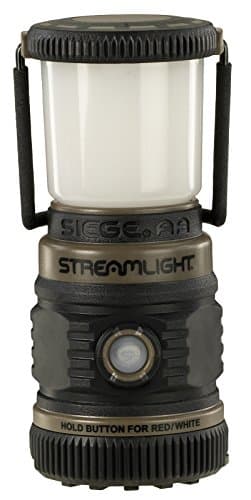 Streamlight Siege AA Best outage lantern that floats | 200 | AA / AAA | Needs a live price | Check price on Amazon We show a price only when we have pulled a live one. #ad How we earn |
Lumens per dollar is the manufacturer's published maximum output divided by the price the light is selling for. Where we have not pulled a live price, the column says so instead of showing you a number we cannot stand behind. See how we work this out.
Where alkalines let you down
Honesty cuts both ways. Alkaline cells have high internal resistance and they sag hard under load, which means 500 lumens out of two AA alkalines is a brief 500 lumens and the light will settle lower quickly. A lithium cell holds its output far more steadily. If you want the AA convenience without the sag, the light also runs on AA NiMH rechargeables, which behave much better under load — at which point you are back to a cell that self-discharges in storage, and you have traded the advantage you bought the light for.
There is no way out of that tension and we are not going to pretend there is. The reasonable answer is to keep alkalines in the stored light and a set of charged NiMH cells nearby for when you know you will be using it hard.
The forward clicky is a real feature
The Archer uses a forward clicky switch with momentary-on: press lightly for light while you hold it, press through for constant on. It sounds like a detail and it is the difference between being able to signal, check something quickly and move on, versus cycling through five modes every time you want two seconds of light.
It is also the opposite design philosophy to the Anduril lights elsewhere on this site. There is no menu, no ramping and nothing to configure. For a light that has to work for somebody who did not buy it — a partner, a houseguest, whoever finds it in the dark — that is a genuine advantage.
1. Best light that runs on batteries from any gas station
ThruNite Archer 2A V3
Lumens per dollar
Computed the moment we have a live price for it
Five hundred lumens on two AA cells. It will never win a lumens-per-dollar contest against an 18650 light, and it does not need to: it is the light that still works when you are three days into an outage and the only thing left in the store is alkalines.
- Max output
- 500 lm
- Runtime
- Not published per mode
- Battery
- AA / AAA
- Water rating
- None published
What it gets right
- Runs on the most widely stocked battery on earth
- No lithium cell to self-discharge in a glovebox for two years
- Forward clicky switch, so you can signal without cycling modes
What it gets wrong
- AA alkalines sag hard under load; 500 lumens is a brief 500 lumens on them
- No published runtime or water rating on the product page
- Rechargeable it is not — the running cost is on you
Published specification
- Maximum output: 500 lumens, turbo — ThruNite published specification
- Battery: 2 x AA alkaline or 2 x AA NiMH (not included) — ThruNite published specification
- Modes: Five — ThruNite published specification
- Switch: Forward clicky with momentary-on — ThruNite published specification
- Protection: Reversed-polarity protection — ThruNite published specification
- Clip: Reversible, removable, titanium coated — ThruNite published specification
- Per-mode runtime: Not published on the product page
- Water rating: Not published on the product page
Skip this one if
this is your only light and you will use it daily. Feeding a daily-use light on disposable AAs is the single most expensive way to own a flashlight, which is the entire reason this site exists.
Buy it if: the glovebox, the storm kit, and the drawer you open twice a year.
- Output 6.0
- Battery 7.0
- Build 8.0
- Usability 8.5
- Overall 7.4
We show a price only when we have pulled a live one. #ad How we earn
listing
image
2. Best outage light you can feed from a stockpile
NEBO Newton 2000
Lumens per dollar
Computed the moment we have a live price for it
Two thousand lumens for two and a half hours on nine AA alkalines, IPX7, with the runtime published for every mode. It is heavy and it is not clever, and for a week without power that is the correct set of trade-offs.
- Max output
- 2,000 lm
- Runtime
- 2.5 h
- Battery
- AA / AAA
- Water rating
- IPX7
What it gets right
- Runtime published at maximum output, which is the number that actually matters
- AA cells store for years and can be bought anywhere, including during an outage
- IPX7 — it survives being dropped in standing water
What it gets wrong
- Nine AA cells is a real weight and a real running cost
- Zoom optics trade beam quality for a party trick
- Nothing about it is pocketable
Published specification
- High: 2,000 lumens, 2.5 hours, 188 m — NEBO published specification
- Medium: 600 lumens, 6 hours, 120 m — NEBO published specification
- Low: 100 lumens, 20 hours, 50 m — NEBO published specification
- Battery: 9 x AA alkaline — NEBO published specification
- Water rating: IPX7 — NEBO published specification
- Body: Aircraft-grade aluminum, impact resistant — NEBO published specification
Skip this one if
you want one light for everything. Running this daily on disposable alkalines costs more in a year than the light did.
Buy it if: the hall closet, the basement, and the shelf you go to when the power has been off for two days.
- Output 8.5
- Battery 7.5
- Build 7.5
- Usability 7.0
- Overall 7.6
We show a price only when we have pulled a live one. #ad How we earn
3. Best outage lantern that floats
Streamlight Siege AA
Lumens per dollar
Computed the moment we have a live price for it
Two hundred lumens for seven hours, fifty for thirty-seven, and a red night-vision mode Streamlight rates at 192 hours. It runs on AA cells, it is IPX7, and it floats. For a storm shelf that is the correct specification.
- Max output
- 200 lm
- Runtime
- 7 h
- Battery
- AA / AAA
- Water rating
- IPX7
What it gets right
- AA cells store for a decade and are available anywhere, including mid-outage
- IPX7 and it floats, which is the correct answer for a flooded basement
- Runtime published for all five modes, including the 8-day red mode
What it gets wrong
- Two hundred lumens is dim next to a rechargeable lantern
- No rechargeable option in this version
- Removable cover changes the beam pattern and is easy to lose
Published specification
- White high: 200 lumens, 7 hours — Streamlight published specification
- White medium: 100 lumens, 15.5 hours — Streamlight published specification
- White low: 50 lumens, 37 hours — Streamlight published specification
- Red high: 0.7 lumens, 192 hours (8 days) — Streamlight published specification
- SOS flash: 0.7 lumens, 288 hours (12 days) — Streamlight published specification
- Battery: AA alkaline — Streamlight published specification
- Water rating: IPX7, 1 m — and it floats — Streamlight published specification
- Impact: 2 m tested — Streamlight published specification
Skip this one if
you want a bright camp lantern. This is an endurance light, not an area light.
Buy it if: the storm shelf, the boat and the basement that occasionally has water in it.
- Output 4.5
- Battery 9.5
- Build 9.0
- Usability 8.5
- Overall 7.9
We show a price only when we have pulled a live one. #ad How we earn
How it fits the rest of an outage kit
One handheld light is not a plan. The pattern that works is a handheld to move around with, a lantern to light a room so nobody is holding anything, and a spare set of cells that fits both. The NEBO Newton 2000 runs on nine AA cells and publishes 2,000 lumens for two and a half hours; the Streamlight Siege AA runs on AA cells too, publishes IPX7 and floats. Standardizing an emergency kit on one cell size is worth more than any individual light in it.
How we scored it
Four attributes out of ten as published on our methodology page. This light scores modestly on output and poorly on the value arithmetic that names this site, and it scores well on usability and on the battery question once battery architecture is read as availability rather than as running cost. That is a deliberate judgment and it is stated here rather than buried: for a stored light, the cell you can get hold of beats the cell that is cheaper per hour.
Units we claim to have tested: 0
Every publisher in this category says they tested twenty flashlights. We have not tested any, and we say so. What we do instead: compile the manufacturer's own published ANSI FL1 figures, pull the price the light is selling for right now, and divide one by the other. Every number on this page is one you can check yourself in about two minutes.
What we cannot tell you
We have not used this light. We cannot tell you how long it actually holds 500 lumens on fresh alkalines, how the tint looks, whether the clip survives a year on a pocket, or how it behaves in rain — and on that last point neither can ThruNite, because it publishes no water rating. Where somebody runs instruments on these lights, read them alongside this page.
What five hundred lumens on two AA cells actually looks like
Five hundred lumens is a genuinely useful amount of light and considerably more than most people need for most things. It lights a garden, a driveway, a basement or a stretch of road well enough to work by. Set against the four-figure numbers on the boxes elsewhere on this site it looks modest, and in use it is not.
The honest caveat is the one already stated: on alkaline cells that figure is a peak rather than a plateau. Alkaline chemistry has high internal resistance, so the voltage sags under a heavy draw and recovers when you turn the light down or off. The practical effect is that the top mode feels bright for a short while, and that the lower modes are where a set of cells does its real work. That is not a defect in this light; it is what alkaline cells do in every light.
The mode you will actually use
ThruNite gives the Archer five modes, and for a stored light the useful ones are at the bottom. A low mode on a light like this will run for a very long time on a pair of cells and is enough to move through a dark house, find a fuse box or read a label. The top mode is for looking at something across a yard, and it is a mode rather than a setting you leave on.
ThruNite does not publish a runtime for any of those modes, which we have already marked against the light and will not restate as a virtue. What that means practically is that you should test the light once when you buy it, on the cells you intend to store it with, so you know roughly what you have rather than discovering it in an emergency.
The NiMH question, worked through
Modern low-self-discharge NiMH cells hold a usable charge for a year or more in storage, which is a genuine middle ground between alkaline and lithium — better under load than alkaline, better on the shelf than lithium. If you already own a charger and a set of them, they are a good fit for this light and they remove the sag problem almost entirely.
What they do not remove is the checking problem. A stored light on NiMH still wants a top-up on a schedule, and the whole appeal of the alkaline version is that it does not. Our comparison of rechargeable and disposable lights works this trade through in full, and the conclusion here is the same: pick the chemistry that matches how the light will be treated, not the one that wins on paper.
The bottom line
If you are buying one flashlight and you will use it, buy a rechargeable and ignore this page. If you are buying the second light — the one for the car, the basement or the shelf beside the fuse box — the arithmetic that runs the rest of this site stops applying, and a light that eats the most widely stocked battery on earth is the right answer.
Common questions
Why recommend an AA flashlight on a site about rechargeables?
Because the advice inverts for stored lights. A lithium cell self-discharges and ages on the shelf, so a rechargeable light left unused for two years is frequently flat when you need it. Alkaline cells hold usable charge for years and can be bought anywhere, including during the outage that made you want a flashlight. Rechargeable for the light you use; AA for the light you store.
Can the ThruNite Archer 2A V3 use rechargeable batteries?
Yes — ThruNite lists it as running on two AA alkaline or two AA NiMH cells. NiMH cells hold their output far better under load than alkalines do, so the light performs better on them. The trade is that NiMH cells self-discharge in storage, which removes the exact advantage that makes this light worth owning as an emergency light.
How long does the ThruNite Archer 2A V3 run?
ThruNite does not publish a per-mode runtime on the product page, so we will not print one. What can be said honestly is that alkaline cells sag under load, so the 500-lumen turbo is brief and the lower modes are where the useful hours are. If a published runtime matters to you, the NEBO Newton 2000 publishes 2,000 lumens for two and a half hours and 100 lumens for twenty on nine AA cells.
Can you replace the battery in a rechargeable flashlight?
It depends entirely on the model, and it is the single most consequential thing to check before buying. Lights built around a standard cell — an 18650, a 21700, a 14500, a 16340 — take a screw-off tailcap and a five-dollar replacement. Lights with a built-in cell, which manufacturers describe as 'integrated' or 'non-removable', cannot be re-celled by an ordinary owner: when the battery reaches the end of its cycle life the whole light is refuse. Energizer, for example, states plainly that the Vision HD Rechargeable uses non-removable lithium-ion batteries.
Sources
- ThruNite published product specifications — read 2026-09-01
- NEBO published product specifications — mode-by-mode lumen, runtime and beam figures, read 2026-09-01; LUXTREME SL75 and SL50 read 2026-09-22; OMNI 2K and SLYDE KING 4K read 2026-10-18
- Streamlight published product specifications — per-mode lumens, runtime, beam distance, impact and IP ratings, read 2026-09-01; Waypoint 400 and Waypoint C-cell read 2026-09-22; FlipMate read 2026-10-18
- Lumen & Ledger method — how every figure on this page is derived
Who writes this
Scooter M. — I am an enthusiast who is genuinely into this. I read the manuals, compile the published specs, and do the math. No lab coat, no test bench, no drawer of free samples. What I can tell you is exactly what a light claims on paper, exactly what it costs right now, and what those two numbers mean when you divide one by the other.
Read next
Rechargeable vs battery flashlights
Five dimensions, one table, and a verdict that depends on where the light lives.
Best flashlights for power outages
The outage specification is shelf life, not brightness. That changes the answer.
Best AA flashlights
The cell that is never flat when you need it, and the six lights worth putting it in.
NEBO vs COAST
Two hardware-store brands with opposite philosophies: NEBO sells output, COAST sells hours.
The best budget flashlight brands
Who publishes real numbers, who does not, and what each brand is good at.
The Ledger
Every light we cover in one ranked table, sorted by lumens per dollar.