Headlamps
Best Budget Rechargeable Headlamps
Below a certain price the runtime table goes first, then the water rating, then the red mode. Here is what to protect and what to let go.
By Scooter M. · Published September 2, 2026

Short answer
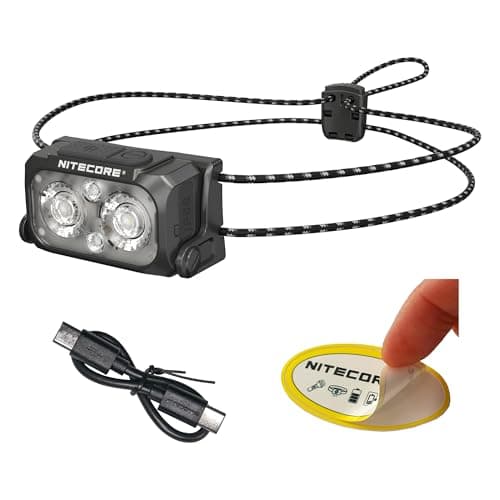
NITECORE NU25 MCT UL
Forty-seven grams including the headband, 400 lumens, and 45 hours at its 6-lumen setting. On a headlamp the weight figure matters more than the lumen figure, because the lamp you stop wearing produces no light at all.
Price as of October 18, 2026 — 11 lumens per dollar. #ad How we earn
Disclosure — we earn a commission on qualifying purchases made through the Amazon links on this page, at no extra cost to you. It does not change which lights we pick or what we say about them. The full version.
How we rank. Published ANSI FL1 output divided by the live retail price, with sealed-battery lights marked down because a light you cannot re-cell is a light with an expiry date. Units we claim to have tested: 0 — we compile manufacturers' published figures and show the arithmetic instead. How we work this out.
What to protect when the budget is tight
On a budget headlamp, protect two things: a published runtime for a low mode, and a published water rating. Let the turbo figure go — you will barely use it. Black Diamond publishes 6 lumens for 225 hours and IP67 on the Spot 400-R; NITECORE publishes 45 hours at 6 lumens and IP66 on the NU25. Both are ordinary prices for extraordinary documentation.
The reason to insist on the low-mode runtime is that it is the number you will actually live inside. A headlamp is used at its lowest usable setting for ninety percent of its working life, and a lamp that publishes 225 hours there has told you it will outlast anything you are likely to do with it.
The reason to insist on a water rating is that headlamps get rained on more than any other light in this category, because you wear them outdoors and you do not put them away when the weather turns.
| # | Light | Max output | Battery | Lumens / $ | Price |
|---|---|---|---|---|---|
| 1 | NITECORE NU25 MCT UL Lightest headlamp with a real published runtime | 400 | Sealed | 11 | $36.95 on Amazon Price as of October 18, 2026 — 11 lumens per dollar. #ad How we earn |
| 2 | 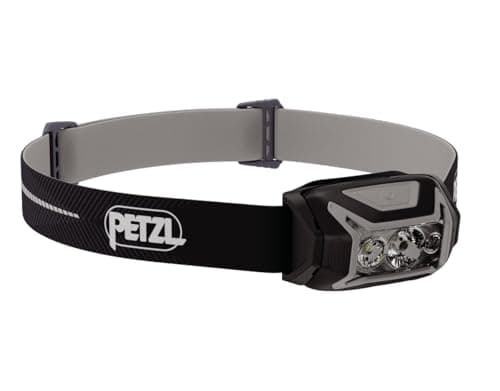 Petzl ACTIK CORE Best hybrid: rechargeable or AAA cells | 625 | Replaceable | 8 | $79.98 on Amazon Price as of October 18, 2026 — 8 lumens per dollar. #ad How we earn |
| 3 | 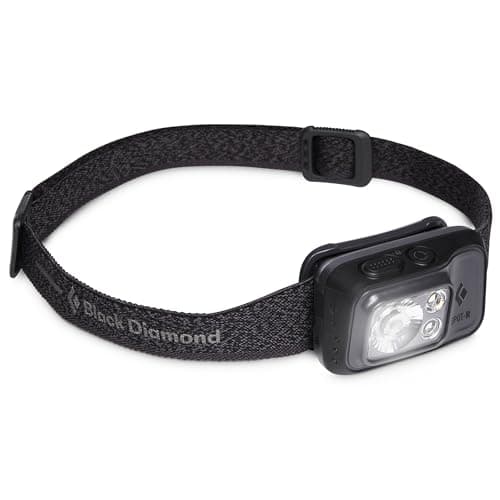 Black Diamond Spot 400-R Most complete published runtime table | 400 | Sealed | 7 | $57.88 on Amazon Price as of October 18, 2026 — 7 lumens per dollar. #ad How we earn |
| 4 | No listing image NEBO LEO 1800 Flex Best dual-power light for a car | 1,800 | Replaceable | Needs a live price | Check price on Amazon We show a price only when we have pulled a live one. #ad How we earn |
Prices pulled October 18, 2026. Lumens per dollar is the manufacturer's published maximum output divided by that price, recomputed every time the price moves.
What a cheap headlamp gets wrong
- No published runtime at any mode, which makes the lumen figure unusable for planning.
- A tilt hinge that will not hold its angle, so the beam creeps down toward your feet over an hour.
- A strap that stretches, needs retightening constantly and eventually will not hold at all.
- A sealed cell with no published capacity, which means no way to estimate how long the lamp will keep working across years.
- A red mode buried three presses into the sequence, so you cycle through white and lose your night vision every time you want it.
Only the first and fourth of those are visible on a specification sheet, which is a real limitation of buying this way. We can tell you what is published and what is not; we cannot tell you whether a hinge holds, because we have not worn these lamps.
1. Lightest headlamp with a real published runtime
NITECORE NU25 MCT UL
Lumens per dollar
11
Forty-seven grams including the headband, 400 lumens, and 45 hours at its 6-lumen setting. On a headlamp the weight figure matters more than the lumen figure, because the lamp you stop wearing produces no light at all.
- Max output
- 400 lm
- Runtime
- 45 h at 6 lm
- Battery
- Sealed
- Water rating
- IP66
What it gets right
- Forty-seven grams with the band on — you forget it is there
- Three color temperatures plus red, which is unusual at any price
- IP66 and a published 45-hour low-mode runtime
What it gets wrong
- Sealed 700 mAh cell; no way to carry a spare
- Four hundred lumens is modest for trail running at speed
- Flat band with no over-the-top strap on the ultralight version
Published specification
- Maximum output: 400 lumens — NITECORE published specification
- Beam distance: 132 m — NITECORE published specification
- Runtime: Up to 45 hours at 6 lumens — NITECORE published specification
- Battery: Built-in 700 mAh Li-ion, USB-C — NITECORE published specification
- Weight: 47 g (1.66 oz) including bracket and headband — NITECORE published specification
- Water rating: IP66 — NITECORE published specification
- Color temperatures: 3,000K / 4,500K / 6,500K plus auxiliary red — NITECORE published specification
Skip this one if
you need to swap a battery mid-shift. A sealed 700 mAh cell means your night ends when it does.
Buy it if: hikers, campers and anyone whose complaint about headlamps is that they bounce.
- Output 6.5
- Battery 4.5
- Weight 9.5
- Usability 8.5
- Overall 7.8
Price as of October 18, 2026 — 11 lumens per dollar. #ad How we earn
2. Best hybrid: rechargeable or AAA cells
Petzl ACTIK CORE
Lumens per dollar
8
Six hundred and twenty-five lumens stated to ANSI/PLATO FL1, 88 grams, and — the part that matters — it runs on the CORE rechargeable pack or on three AAA cells when the pack is flat. That is the answer to the sealed-battery problem, from the only brand here that bothered.
- Max output
- 625 lm
- Runtime
- Published per mode by Petzl
- Battery
- Replaceable cell
- Water rating
- IPX4
What it gets right
- Explicitly states ANSI/PLATO FL1 conformity, which most brands here do not
- Hybrid power: the pack for daily use, AAA cells as the fallback that never fails
- Petzl publishes the CORE pack's cycle rating, so its service life is a stated number
What it gets wrong
- IPX4 — weather resistant, not submersible
- Eighty-eight grams is not ultralight
- The CORE pack is a Petzl part rather than a standard cell
Published specification
- Maximum output: 625 lumens (ANSI/PLATO FL1) — Petzl published specification
- Weight: 88 g — Petzl published specification
- Battery: CORE rechargeable 1,250 mAh / 3.6 V / 4.5 Wh, or 3 x AAA — Petzl published specification
- Battery compatibility: Alkaline, lithium or Ni-MH — Petzl published specification
- Water rating: IPX4, weather resistant — Petzl published specification
- Warranty: Lamp 5 years; CORE battery 2 years or 300 cycles — Petzl published specification
- Lighting levels: MAX BURN TIME, STANDARD, MAX POWER, plus red — Petzl published specification
Skip this one if
you want a submersible headlamp. IPX4 covers rain and nothing beyond it.
Buy it if: anyone whose headlamp has to work at the end of a long trip, when charging is not an option.
- Output 7.5
- Battery 9.0
- Weight 7.0
- Usability 8.5
- Overall 8.3
Price as of October 18, 2026 — 8 lumens per dollar. #ad How we earn
3. Most complete published runtime table
Black Diamond Spot 400-R
Lumens per dollar
7
Four hundred lumens for four hours, 200 for eight, 6 for two hundred and twenty-five. Black Diamond publishes lumens, runtime and beam distance for all three modes, and IP67 on top. There is nothing to guess at here.
- Max output
- 400 lm
- Runtime
- 4 h
- Battery
- Sealed
- Water rating
- IP67
What it gets right
- Lumens, runtime and distance published for every mode
- Two hundred and twenty-five hours on low is a genuine emergency reserve
- IP67 and a battery meter that shows an actual percentage
What it gets wrong
- Micro-USB in a year when everything else is USB-C
- Integrated battery — no spare, no re-cell
- Eighty-six grams is heavy next to the ultralight class
Published specification
- High: 400 lumens, 4 hours, 100 m — Black Diamond published specification
- Medium: 200 lumens, 8 hours, 60 m — Black Diamond published specification
- Low: 6 lumens, 225 hours, 12 m — Black Diamond published specification
- Battery: Integrated 1,500 mAh Li-ion, micro-USB — Black Diamond published specification
- Water rating: IP67, tested to 1.0 m for 30 minutes — Black Diamond published specification
- Weight: 86 g — Black Diamond published specification
Skip this one if
you have standardized on USB-C. Carrying a second cable for one device is a small annoyance that compounds on a long trip.
Buy it if: camp, dog walks and anyone who wants a headlamp whose numbers are all on the box.
- Output 6.5
- Battery 5.5
- Weight 7.0
- Usability 9.0
- Overall 7.7
Price as of October 18, 2026 — 7 lumens per dollar. #ad How we earn
listing
image
4. Best dual-power light for a car
NEBO LEO 1800 Flex
Lumens per dollar
Computed the moment we have a live price for it
Runs on its own rechargeable pack or on three AAA cells, which is the single most useful feature a car light can have. The catch is on the spec sheet: turbo is 1,800 lumens with no runtime beside it, and high is 1,000 lumens for exactly one hour.
- Max output
- 1,800 lm
- Runtime
- Not published at turbo; 1 h at 1,000 lm high
- Battery
- Replaceable cell
- Water rating
- IPX7
What it gets right
- Dual power: rechargeable pack normally, AAA cells when the pack is flat
- IPX7 and a magnetic base — a genuinely good roadside combination
- Runtime published for every mode except turbo
What it gets wrong
- One hour at 1,000 lumens is short for a light this size
- No runtime published for the mode on the label
- Zoom optics again, with the doughnut-shaped beam that comes with them
Published specification
- Turbo: 1,800 lumens, 200 m — no runtime published — NEBO published specification
- High: 1,000 lumens, 1 hour, 150 m — NEBO published specification
- Medium: 400 lumens, 3 hours, 90 m — NEBO published specification
- Low: 100 lumens, 10 hours, 40 m — NEBO published specification
- Battery: Flex-Power: included rechargeable pack or 3 x AAA — NEBO published specification
- Water rating: IPX7 — NEBO published specification
- Fittings: Magnetic base, 6x zoom — NEBO published specification
Skip this one if
you want a clean beam. Zoom heads always cost you beam quality, and at this price they cost you more of it.
Buy it if: the glovebox of a car that occasionally has to change a tire in the dark.
- Output 8.0
- Battery 7.5
- Build 7.0
- Usability 7.5
- Overall 7.4
We show a price only when we have pulled a live one. #ad How we earn
How we ranked these
Published output over live price, weight, battery architecture and usability, with extra credit for a complete published runtime table. On this page in particular, documentation is treated as a feature: at a budget price, a lamp whose maker publishes its low-mode runtime has told you something no amount of marketing can substitute for.
Units we claim to have tested: 0
Every publisher in this category says they tested twenty flashlights. We have not tested any, and we say so. What we do instead: compile the manufacturer's own published ANSI FL1 figures, pull the price the light is selling for right now, and divide one by the other. Every number on this page is one you can check yourself in about two minutes.
Where the extra twenty dollars goes
Between the cheapest usable lamp and the ones on this page, the money buys three things: a published runtime table, a real IP rating, and a battery arrangement that is either very light or replaceable. Beyond that, more money mostly buys output, and output is the attribute a headlamp needs least.
The one exception worth paying for is Petzl's hybrid arrangement — a rechargeable pack that can be swapped for three AAA cells. If your lamp will ever be somewhere without power for more than a day, that feature is the difference between a working lamp and a paperweight, and no amount of extra brightness substitutes for it.
Common questions
Are cheap rechargeable flashlights any good?
Many are, and for a specific reason: the LED emitters, drivers and 18650 cells that budget brands buy are the same commodity parts the expensive brands buy. What you give up at the low end is documentation, quality control between batches, and a warranty worth using. The way to shop it is to look for a brand that publishes runtime figures — a manufacturer willing to print how long the turbo mode lasts is telling you something about the rest of the specification.
Is a cheap headlamp worth buying?
Yes, provided it publishes a runtime for a low mode and a water rating. Those two lines are what separate a usable budget lamp from a gamble, and both are available at ordinary prices — Black Diamond publishes 6 lumens for 225 hours and IP67 on the Spot 400-R. What you give up cheaply is hinge quality, strap durability and beam consistency, none of which appear on any specification.
How long should a headlamp battery last?
On a usable low setting, a good headlamp should run for tens of hours: Black Diamond publishes 225 hours at 6 lumens and 8 hours at 200 lumens on the Spot 400-R, and NITECORE publishes 45 hours at 6 lumens on the NU25. On maximum output, expect a few hours at best — that is a limit set by cell capacity and heat, not by price.
Can you replace the battery in a rechargeable flashlight?
It depends entirely on the model, and it is the single most consequential thing to check before buying. Lights built around a standard cell — an 18650, a 21700, a 14500, a 16340 — take a screw-off tailcap and a five-dollar replacement. Lights with a built-in cell, which manufacturers describe as 'integrated' or 'non-removable', cannot be re-celled by an ordinary owner: when the battery reaches the end of its cycle life the whole light is refuse. Energizer, for example, states plainly that the Vision HD Rechargeable uses non-removable lithium-ion batteries.
Sources
- NITECORE published product specifications — NU25 MCT UL read 2026-09-01; MT2A Pro read 2026-09-13; EDC31 read 2026-10-03; MH25 Pro and Tiki LE read 2026-10-10
- Black Diamond published product specifications — Spot 400-R read 2026-09-01; Storm 500-R read 2026-09-14
- Petzl published product specifications — ANSI/PLATO FL 1 conformity stated by the manufacturer. ACTIK CORE read 2026-09-01 and re-read per mode 2026-09-21; TIKKA CORE read 2026-09-21
- NEBO published product specifications — mode-by-mode lumen, runtime and beam figures, read 2026-09-01; LUXTREME SL75 and SL50 read 2026-09-22; OMNI 2K and SLYDE KING 4K read 2026-10-18
- Lumen & Ledger method — how every figure on this page is derived
Who writes this
Scooter M. — I am an enthusiast who is genuinely into this. I read the manuals, compile the published specs, and do the math. No lab coat, no test bench, no drawer of free samples. What I can tell you is exactly what a light claims on paper, exactly what it costs right now, and what those two numbers mean when you divide one by the other.
Read next
Best rechargeable headlamps
Ranked on weight and published runtime, because a lamp you stop wearing lights nothing.
How to choose a headlamp
Six decisions in order, from battery architecture down, each ending in a lamp that fits the answer.
Best rechargeable headlamps for running
Bounce, not brightness, is what ruins a run. Ranked on grams and strap before lumens.
Best headlamps for reading
Judged on the smallest number on the box, which is the only one that matters here.
NITECORE NU25 MCT UL review
Forty-seven grams and three color temperatures almost nobody else prints.
The Ledger
Every light we cover in one ranked table, sorted by lumens per dollar.