Flashlights
Olight vs Streamlight
Two brands with opposite ideas of what a flashlight buyer is owed. The difference shows up in a single column of the spec sheet.
By Scooter M. · Published September 21, 2026
Short answer
Streamlight Stinger 2020
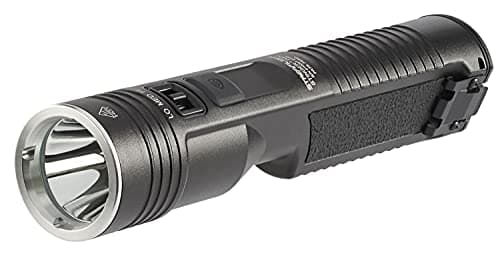
Two thousand lumens for two hours, 850 for four, 100 for twenty-four, 315 meters of throw, IPX7. This is what a 2,000-lumen claim looks like when the manufacturer stands behind it with a duration.
Price as of September 21, 2026 — 16 lumens per dollar. #ad How we earn
Disclosure — we earn a commission on qualifying purchases made through the Amazon links on this page, at no extra cost to you. It does not change which lights we pick or what we say about them. The full version.
How we rank. Published ANSI FL1 output divided by the live retail price, with sealed-battery lights marked down because a light you cannot re-cell is a light with an expiry date. Units we claim to have tested: 0 — we compile manufacturers' published figures and show the arithmetic instead. How we work this out.
The short answer
Buy Streamlight if your light has to work on a schedule: it publishes a runtime, a beam distance, an impact rating and a water rating for every mode of every model we cover, and several of its lights accept CR123A primaries when the rechargeable pack is flat. Buy Olight if you want the most pleasant light to live with: the charging is neater, the bodies are smaller for the output, and the brand discounts heavily and often. The cost of the Olight is that the cells are its own parts and the published specification stops sooner.
These two brands get compared constantly and almost always on the wrong axis. Both make genuinely good lights. Neither is a budget brand in the sense that Sofirn and Wurkkos are, and neither is trying to win a lumens-per-dollar contest. What separates them is not quality, it is disclosure: how much of a light's behavior the manufacturer is willing to print before you have paid for it.
That sounds like a technicality. It is the entire difference between the two companies, and once you have seen it laid out in a table you cannot unsee it.
Published specifications, side by side
| Olight i5R EOS | Olight i1R 2 PRO | Streamlight MicroStream | Streamlight ProTac 2L-X | |
|---|---|---|---|---|
| Maximum output | 350 lumens | 180 lumens | 250 lumens | 500 lumens |
| Beam distance | 64 m | 48 m | 68 m | 165 m |
| Runtime published | 37 h at 15 lm | Up to 12 h | 1.5 h at 250 lm; 3.5 h at 50 lm | 2.75 h at 500 lm; 30 h at 40 lm |
| Runtime for every mode? | No | No | Yes | Yes, and for both cell types |
| Cell | Olight 1,420 mAh 14500 | Built-in 130 mAh | Built-in Li-ion | 2 x CR123A or SL-B26 pack |
| Water rating | Not stated | Not stated | IPX4 | IPX7 |
| Impact rating | Not stated | Not stated | 1 m tested | 2 m tested |
| Weight | 2.2 oz | Not stated | 1.2 oz | 3.9 oz with CR123A |
Streamlight's advantage is one column wide
Look at the runtime row, then at the row beneath it. Streamlight publishes a duration next to every output figure it prints, and for the ProTac 2L-X it does it twice, once for CR123A primaries and once for its own rechargeable pack. That is a manufacturer telling you what the light does for the whole of its charge rather than for the first thirty seconds.
The reason that matters is arithmetic. A lumen figure on its own cannot be divided into anything useful. Five hundred lumens for two and three quarter hours is a quantity of light you can plan an evening around; five hundred lumens with nothing beside it is a headline. Every ranking on this site rests on that distinction, and Streamlight is one of a small number of brands that makes the sum possible at all.
Streamlight extends the same habit to durability. A 2-meter impact rating and an IPX7 water rating are testable claims with a published standard behind them. Olight states neither for the two lights we cover, and an unstated rating is not a low rating. It is an absence, and we will not convert one into the other.
Olight's advantage is everything you touch
None of that means Olight makes a worse light, and anyone who has handled both knows it. The i5R EOS puts its charging port inside the cell rather than in the body, which removes the rubber flap that is usually the first thing to fail on a cheap rechargeable. It weighs 2.2 ounces. It has a tail switch with momentary-on, which is the interface most people actually want. And Olight publishes one genuinely excellent number: 37 hours at 15 lumens, which is the mode a pocket light spends most of its life in.
The i1R 2 PRO is the other half of the argument. One hundred and eighty lumens from something the size of a AAA cell, with a twist head and no switch to snag in a pocket, is a category Streamlight does not really compete in. If the question is what goes on a keyring, Olight has the better answer and Streamlight has no serious rival to it.
The cell is the decision, not the lumens
Olight's 14500 in the i5R EOS is removable, which is better than a sealed cell, but it is an Olight part with the charging circuit built into it. You can replace it; you replace it from one company. The i1R 2 PRO goes further and seals a 130 mAh cell in, which at that capacity makes the light a consumable rather than a possession. That is Olight's own published figure, not our inference.
The ProTac 2L-X answers the same question differently. It takes two CR123A primaries or Streamlight's SL-B26 rechargeable pack, and it publishes a runtime for both. CR123A cells are expensive to run and they sit on a shelf for years without going flat, which means the light has a rechargeable mode for daily use and a primary mode for the drawer. That is the same dual-power logic behind the AA lights we rate highly, applied at a higher price point.
If you expect to own a light for a decade, that difference compounds. If you expect to lose it in three years, it does not matter at all, and you should buy whichever is nicer to carry.
| # | Light | Max output | Battery | Lumens / $ | Price |
|---|---|---|---|---|---|
| 1 | Streamlight Stinger 2020 Highest output with a published runtime to match | 2,000 | Replaceable | 16 | $127.93 on Amazon Price as of September 21, 2026 — 16 lumens per dollar. #ad How we earn |
| 2 | 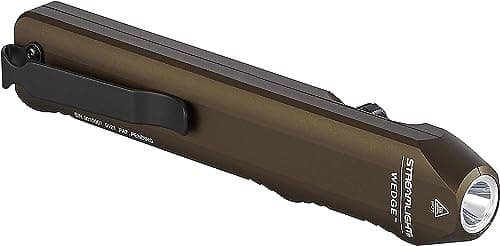 Streamlight Wedge The clearest published turbo duration anywhere | 1,000 | Sealed | 10 | $96.30 on Amazon Price as of September 21, 2026 — 10 lumens per dollar. #ad How we earn |
| 3 | 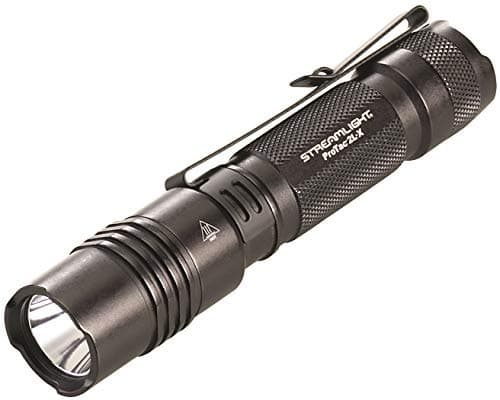 Streamlight ProTac 2L-X Best documented tactical light | 500 | Replaceable | 7 | $66.99 on Amazon Price as of September 21, 2026 — 7 lumens per dollar. #ad How we earn |
| 4 | 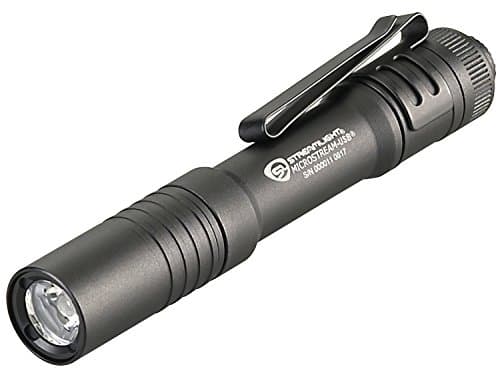 Streamlight MicroStream USB Best pen-clip light with published runtimes | 250 | Sealed | 7 | $37.81 on Amazon Price as of September 21, 2026 — 7 lumens per dollar. #ad How we earn |
| 5 | No listing image Olight i5R EOS Best simple twist-free EDC | 350 | Replaceable | Needs a live price | Check price on Amazon We show a price only when we have pulled a live one. #ad How we earn |
| 6 | No listing image Olight i1R 2 PRO Smallest light worth putting on a keyring | 180 | Sealed | Needs a live price | Check price on Amazon We show a price only when we have pulled a live one. #ad How we earn |
Prices pulled September 21, 2026. Lumens per dollar is the manufacturer's published maximum output divided by that price, recomputed every time the price moves.
1. Highest output with a published runtime to match
Streamlight Stinger 2020
Lumens per dollar
16
Two thousand lumens for two hours, 850 for four, 100 for twenty-four, 315 meters of throw, IPX7. This is what a 2,000-lumen claim looks like when the manufacturer stands behind it with a duration.
- Max output
- 2,000 lm
- Runtime
- 2 h
- Battery
- Replaceable cell
- Water rating
- IPX7
What it gets right
- Two thousand lumens with two hours beside it, published together
- Twenty-four hours on low makes it viable as an outage light
- Duty-grade build with the warranty and spares to match
What it gets wrong
- Twelve and a half ounces — this is a belt light, not a pocket light
- Priced well above everything else in the value tier
- Charging is via a cradle, which is another thing to own
Published specification
- High: 2,000 lumens, 315 m, 2 hours — Streamlight published specification
- Medium: 850 lumens, 200 m, 4 hours — Streamlight published specification
- Low: 100 lumens, 70 m, 24 hours — Streamlight published specification
- Strobe: 3.25 hours — Streamlight published specification
- Water rating: IPX7 — Streamlight published specification
- Impact: 2 m tested — Streamlight published specification
- Weight: 12.3 oz (350 g) — Streamlight published specification
- Length: 7.67 in (19.48 cm) — Streamlight published specification
Skip this one if
you want value. On lumens per dollar it will lose to a Sofirn every time; what it buys is the certainty that the number is real.
Buy it if: professional use, and anyone comparing a budget light's 2,000-lumen claim against a documented one.
- Output 9.5
- Battery 8.5
- Build 9.5
- Usability 7.5
- Overall 8.4
Price as of September 21, 2026 — 16 lumens per dollar. #ad How we earn
2. The clearest published turbo duration anywhere
Streamlight Wedge
Lumens per dollar
10
Three hundred lumens for three hours in normal use, and a boost mode Streamlight publishes as a 1,000-lumen, 35-second burst. Not a footnote, not buried in a manual — printed as the specification. Every brand knows their turbo behaves like this; this one says so.
- Max output
- 1,000 lm
- Runtime
- 35 seconds at 1,000 lm; 3 h at 300 lm
- Battery
- Sealed
- Water rating
- IPX7
What it gets right
- The 35-second burst duration is published outright — an unusual piece of honesty
- Flat, wedge-shaped body sits in a pocket without rolling
- IPX7 in a light this thin
What it gets wrong
- Sealed cell, so the light has a service life
- Three hundred lumens constant is its real specification
- Thumb-wheel switch is divisive and cannot be locked out mechanically
Published specification
- Constant: 300 lumens, 69 m, 3 hours — Streamlight published specification
- THRO boost: 1,000 lumens, 110 m, 35-second burst — Streamlight published specification
- Battery: Built-in lithium-ion, USB-C — Streamlight published specification
- Water rating: IPX7, 1 m — Streamlight published specification
- Impact: 1 m tested — Streamlight published specification
- Weight: 3.3 oz (93.6 g) — Streamlight published specification
Skip this one if
you plan to use the 1,000-lumen mode as a mode. It is a burst by design and Streamlight tells you the duration in seconds.
Buy it if: someone who wants a flat pocket light and appreciates a manufacturer that publishes the uncomfortable number.
- Output 6.5
- Battery 4.5
- Build 8.5
- Usability 8.0
- Overall 7.3
Price as of September 21, 2026 — 10 lumens per dollar. #ad How we earn
3. Best documented tactical light
Streamlight ProTac 2L-X
Lumens per dollar
7
Five hundred lumens with the runtime published for both battery types, 165 meters of throw, IPX7 and a 2-meter impact rating. Streamlight publishes what most brands leave out, and the numbers hold up when you divide them.
- Max output
- 500 lm
- Runtime
- 2 h 45 min (CR123A) / 3 h 15 min (SL-B26)
- Battery
- Replaceable cell
- Water rating
- IPX7
What it gets right
- Runtime published for every mode and both battery chemistries
- IPX7 plus a stated 2 m impact test, not a vague claim of toughness
- Runs on CR123A primaries when the rechargeable pack is flat
What it gets wrong
- Five hundred lumens is modest for the money in raw terms
- CR123A cells are expensive if you run it on primaries
- No high-CRI option
Published specification
- High: 500 lumens, 165 m, 2.75 h on CR123A / 3.25 h on SL-B26 — Streamlight published specification
- Low: 40 lumens, 49 m, 30 hours on either battery — Streamlight published specification
- Strobe: Up to 3.25 h (CR123A) / 4.5 h (SL-B26) — Streamlight published specification
- Battery: 2 x CR123A or the SL-B26 rechargeable pack — Streamlight published specification
- Water rating: IPX7, 1 m for 30 minutes — Streamlight published specification
- Impact: 2 m tested — Streamlight published specification
- Weight: 3.9 oz with CR123A / 4.4 oz with SL-B26 — Streamlight published specification
Skip this one if
you want the biggest number per dollar. Streamlight charges for documentation, warranty and consistency, and none of those show up in a lumens-per-dollar column.
Buy it if: someone whose light has to work every time and who would rather have a small honest number than a large unverifiable one.
- Output 6.5
- Battery 8.5
- Build 9.0
- Usability 8.5
- Overall 8.1
Price as of September 21, 2026 — 7 lumens per dollar. #ad How we earn
4. Best pen-clip light with published runtimes
Streamlight MicroStream USB
Lumens per dollar
7
Two hundred and fifty lumens for an hour and a half, fifty for three and a half, at 1.2 ounces. The battery is sealed, which caps its lifespan, but every other number on the sheet is published and checkable.
- Max output
- 250 lm
- Runtime
- 1 h 30 min
- Battery
- Sealed
- Water rating
- IPX4
What it gets right
- Every mode's runtime is published, which is why it scores well here despite modest output
- Deep pocket clip that actually holds in a shirt pocket
- 1.2 ounces — it is easy to forget you have it
What it gets wrong
- The cell is sealed in; when it fails the light is finished
- IPX4 splash rating only
- 250 lumens is not enough to light a yard
Published specification
- High: 250 lumens, 68 m, 1.5 hours — Streamlight published specification
- Low: 50 lumens, 31 m, 3.5 hours — Streamlight published specification
- Battery: Lithium-ion, charges in-product in 4 hours — Streamlight published specification
- Water rating: IPX4 — Streamlight published specification
- Impact: 1 m tested — Streamlight published specification
- Weight: 1.2 oz (34.1 g) — Streamlight published specification
- Length: 3.87 in (9.83 cm) — Streamlight published specification
Skip this one if
you want a light you can re-cell. For a keychain-sized light with a replaceable battery, look at the Sofirn SC21 Pro instead.
Buy it if: a shirt pocket, a scrubs pocket, or anyone who wants a light without a bulge.
- Output 5.5
- Battery 4.5
- Build 8.5
- Usability 9.0
- Overall 7.2
Price as of September 21, 2026 — 7 lumens per dollar. #ad How we earn
listing
image
5. Best simple twist-free EDC
Olight i5R EOS
Lumens per dollar
Computed the moment we have a live price for it
Three hundred and fifty lumens, 64 meters, and 37 hours at 15 lumens from a 1,420 mAh cell — the low-mode runtime is the number that makes this light useful. The cell is proprietary, which is the trade for how neatly the charging works.
- Max output
- 350 lm
- Runtime
- 37 h at 15 lm
- Battery
- Replaceable cell
- Water rating
- None published
What it gets right
- Charging port is in the cell, so there is no port flap to fail
- Thirty-seven hours at 15 lumens is a genuinely useful published figure
- Tail switch with momentary-on
What it gets wrong
- The 14500 is an Olight part, not a standard cell you can buy anywhere
- No water rating on the product pages we could read
- Three hundred and fifty lumens is modest for the price
Published specification
- Maximum output: 350 lumens — Olight published specification
- Beam distance: 64 m — Olight published specification
- Output range: 15 to 350 lumens — Olight published specification
- Runtime: 37 hours at 15 lumens — Olight published specification
- Battery: Olight 1,420 mAh 14500 with integrated USB-C — Olight published specification
- Weight: 2.2 oz — Olight published specification
- Length: 95.4 mm — Olight published specification
- Water rating: Not stated on the pages we read
Skip this one if
you want to standardize on one battery type across your lights. Olight's ecosystem is convenient right up to the point where you want a spare from a different shop.
Buy it if: someone who wants an EDC light that never needs thinking about, and does not mind buying replacement cells from one company.
- Output 5.5
- Battery 6.5
- Build 8.5
- Usability 9.0
- Overall 7.4
We show a price only when we have pulled a live one. #ad How we earn
listing
image
6. Smallest light worth putting on a keyring
Olight i1R 2 PRO
Lumens per dollar
Computed the moment we have a live price for it
One hundred and eighty lumens and 48 meters from something the size of a AAA cell, with 12 hours of published runtime on low. The 130 mAh battery is sealed in, so treat it as a two-year item bought at a two-year price.
- Max output
- 180 lm
- Runtime
- Up to 12 h
- Battery
- Sealed
- Water rating
- None published
What it gets right
- Small enough that it genuinely stays on the keyring
- Twist-head operation with no switch to press in a pocket
- USB-C without disassembling the light
What it gets wrong
- One hundred and thirty milliamp-hours sealed in — this is a consumable
- Twist interface means you cannot operate it one-handed while holding something
- No published water rating
Published specification
- Maximum output: 180 lumens — Olight published specification
- Beam distance: 48 m — Olight published specification
- Low mode: 5 lumens — Olight published specification
- Runtime: Up to 12 hours — Olight published specification
- Battery: Built-in 130 mAh lithium-ion — Olight published specification
- Charging: USB-C, full charge in 100 minutes — Olight published specification
- Length: 2.02 in — Olight published specification
- Water rating: Not stated on the pages we read
Skip this one if
you expect a keyring light to last a decade. It will not, and at 130 mAh nothing this size will.
Buy it if: the keyring, where the alternative is having no light at all.
- Output 4.0
- Battery 3.5
- Build 8.0
- Usability 8.5
- Overall 6.4
We show a price only when we have pulled a live one. #ad How we earn
How the two brands sell, and why it changes the price
Olight sells primarily through its own store and runs frequent, deep promotions, which is why any fixed price printed here would be wrong within a week. It is also why the two Olight lights on this page carry a tagged Amazon search rather than a direct product link: when we checked on 2026-09-21, the Amazon listing for the i5R EOS returned Currently unavailable. A search link finds whatever listing is live; a link to a dead one does not.
Streamlight sells through distribution — tool suppliers, duty-gear retailers and the general market — so its street price moves less and it is easier to buy at a predictable number. Neither approach is better for the buyer in the abstract. What it means practically is that an Olight is often worth waiting for and a Streamlight rarely is.
Which one to buy
- For a work light, a duty light, or any light whose failure would matter: Streamlight, because the specification is complete and the impact and water ratings are stated.
- For a keyring: Olight, because the i1R 2 PRO is a shape Streamlight does not make.
- For a shirt pocket: either. The MicroStream is lighter and fully documented; the i5R EOS is brighter and charges more neatly.
- For a light that will sit unused in a drawer for a year: Streamlight, specifically a model that takes CR123A primaries.
- If you are buying on price and can wait for a sale: Olight, which discounts far more aggressively than Streamlight does.
What each brand does not make
A comparison is as much about the gaps as the overlap, and these two catalogs barely overlap at all in places. Streamlight has nothing in our coverage that competes with the i1R 2 PRO: no twist-head, keyring-sized light at all. If that is the shape you want, this comparison ends immediately.
Olight, equally, has nothing here that competes with the Stinger 2020 — a 12.3-ounce, 2,000-lumen belt light with 315 meters of throw, a published two-hour runtime and a charging cradle, built to be issued to somebody on a shift. That is a category Streamlight has spent decades in and it shows.
In the middle, between about 200 and 500 lumens in a pocketable body, they compete directly, and that is where the documentation argument decides it.
Where these lights are in three years
Buy the i1R 2 PRO and in three years you own a light with a worn 130 mAh cell you cannot replace, which is fine because you knew that going in and paid a keyring price for it. Buy the MicroStream or the Wedge and the same is true at a higher price, because both are sealed.
Buy the i5R EOS and you can order a new Olight cell, assuming Olight still sells that cell. Buy the ProTac 2L-X and in three years you can put two CR123A primaries in it from any hardware store, or a fresh SL-B26 pack, and it works exactly as it did on day one.
None of those outcomes is wrong. They are different products at different prices. But the sealed-cell lights should be bought with their service life understood, and one of the two brands here is noticeably better at making sure you understand it.
How we ranked these
Published output over the live price, adjusted for cell architecture and published ratings, and weighted on this page toward completeness of the specification — because the question the page asks is which brand tells you more before you buy. Where a manufacturer publishes no figure we record the gap rather than filling it, and a gap costs a brand points here.
A note on comparing their lumen figures at all
One caution before you put these numbers side by side. Streamlight publishes a guide to the ANSI FL 1 standard and describes its figures in those terms; Olight's product pages, on the pages we read, state output without naming a measurement standard.
That does not mean Olight's numbers are wrong. It means a 350-lumen Olight figure and a 250-lumen Streamlight figure may not have been arrived at the same way, and the 100-lumen gap between them is therefore softer than it looks. Comparing output across brands is always an estimate; comparing it across brands where only one names a standard is more of one.
Units we claim to have tested: 0
Every publisher in this category says they tested twenty flashlights. We have not tested any, and we say so. What we do instead: compile the manufacturer's own published ANSI FL1 figures, pull the price the light is selling for right now, and divide one by the other. Every number on this page is one you can check yourself in about two minutes.
What we cannot tell you
We have not used these lights. We cannot tell you whose anodizing wears better, whose switch feels nicer after a year in a pocket, whose tint you will prefer, or how the two companies compare if you have to make a warranty claim. Olight's reputation for customer service and Streamlight's for durability are both things we have read and neither is something we have tested, so neither appears in the scoring above. What we have compared is what each company is prepared to put in writing.
Common questions
Is Olight or Streamlight better?
They are good at different things. Streamlight publishes a runtime, beam distance, impact rating and water rating for every mode of every light we cover, which makes its claims checkable and suits anyone whose light has to work on a schedule. Olight makes smaller, neater lights with better charging and discounts them heavily, but publishes no water or impact rating for the two models we cover and gives a runtime for only one mode. If you want documentation, Streamlight. If you want the nicer object, Olight.
Are Olight batteries proprietary?
In practice, largely yes. The i5R EOS uses an Olight 1,420 mAh 14500 with the USB-C charging circuit built into the cell, so it is replaceable but you replace it from one company rather than buying a standard cell anywhere. The i1R 2 PRO's 130 mAh cell is built in and not user replaceable at all. Streamlight's ProTac 2L-X, by contrast, runs on two CR123A primaries sold in any hardware store, or on Streamlight's own rechargeable pack.
Why do the Olight lights on this page link to a search instead of a product?
Because we only link to a specific Amazon listing when that listing has a buyable offer. When we checked on 2026-09-21 the Amazon listing for the i5R EOS returned Currently unavailable, so the buttons use a tagged Amazon search instead. That finds whatever live listings exist and cannot send you to a dead page. Olight also sells directly through its own store, which is where most of its stock and most of its discounting lives.
Can you replace the battery in a rechargeable flashlight?
It depends entirely on the model, and it is the single most consequential thing to check before buying. Lights built around a standard cell — an 18650, a 21700, a 14500, a 16340 — take a screw-off tailcap and a five-dollar replacement. Lights with a built-in cell, which manufacturers describe as 'integrated' or 'non-removable', cannot be re-celled by an ordinary owner: when the battery reaches the end of its cycle life the whole light is refuse. Energizer, for example, states plainly that the Vision HD Rechargeable uses non-removable lithium-ion batteries.
Sources
- Olight published product specifications — read 2026-09-01
- Streamlight published product specifications — per-mode lumens, runtime, beam distance, impact and IP ratings, read 2026-09-01
- Streamlight, ANSI Information — definitions of light output, beam distance, run time, impact and water resistance under the FL1 standard, read 2026-09-01
- Lumen & Ledger method — how every figure on this page is derived
Who writes this
Scooter M. — I am an enthusiast who is genuinely into this. I read the manuals, compile the published specs, and do the math. No lab coat, no test bench, no drawer of free samples. What I can tell you is exactly what a light claims on paper, exactly what it costs right now, and what those two numbers mean when you divide one by the other.
Read next
NITECORE vs Fenix
Two enthusiast brands that both publish properly. The split is dual power against raw output.
Streamlight vs Fenix
Fenix publishes the bigger numbers. Streamlight publishes how long they last.
Best pocket flashlights
Ranked on published millimeters and grams, because length is what decides if it gets carried.
Best flashlights under $100
Where you stop buying lumens and start buying documentation, sealing and spare parts.
ANSI FL1 explained
The standard behind the numbers, and what a brand is telling you by not citing it.
The Ledger
Every light we cover in one ranked table, sorted by lumens per dollar.